
15 Summer Decorative Tray Ideas for Every Room
There is a surface problem that exists in almost every room of every home, and it is this: objects accumulate without intention. A candle here, a remote control there, a stack of coasters beside a book beside a glass beside something that arrived from another room and never left. The surface becomes a ledger of small decisions unmade, and the room reads accordingly — not messy exactly, but unresolved.

A tray solves this problem not by hiding objects but by framing them. It draws a border around a collection of things and declares that what is inside the border was placed there on purpose. The objects do not change. The tray changes what they mean. In summer especially — when the aesthetic of a room benefits from the same lightness, clarity, and deliberate simplicity that the season itself produces — a well-chosen tray styled with intention becomes one of the most effective and most affordable decorating tools available.
The fifteen ideas below cover a tray for every room, every surface, and every summer aesthetic. Each one covers what you will need, what it will cost, and a practical tip to make it work consistently rather than beautifully for one afternoon and chaotically for every day that follows.
1. The Coffee Table Coastal Tray
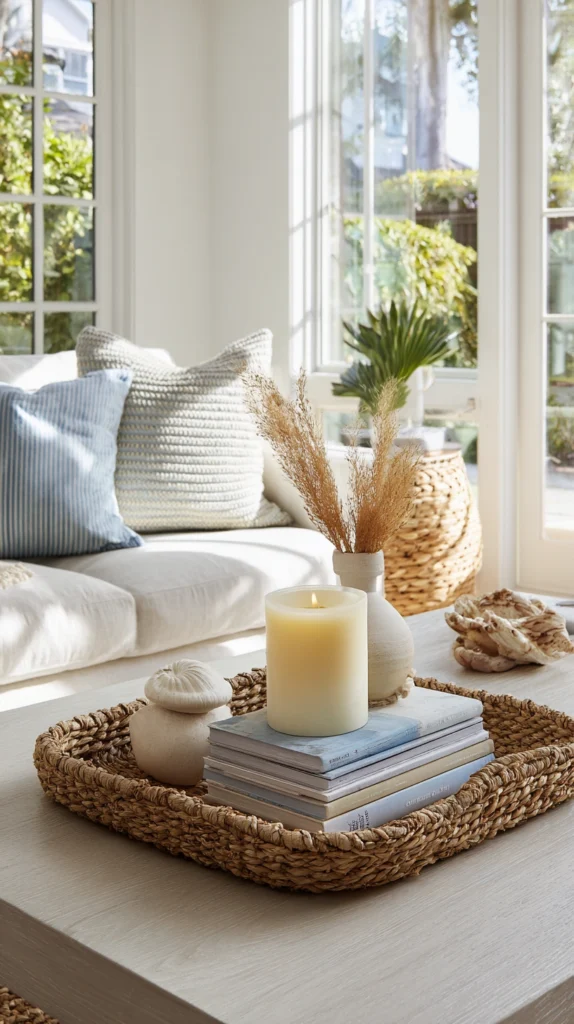
Budget: $30 – $150
A large, low tray on a coffee table — rattan, wicker, or whitewashed timber in keeping with a coastal aesthetic — anchors the table’s surface and gives it a reason to exist beyond holding remote controls and stacked magazines. A coastal summer tray on a coffee table holds a small candle in a white ceramic vessel, a piece of driftwood or a smooth stone, a small stack of two books with complementary spines, and a low glass bowl with a handful of sea glass or shells. Nothing more and nothing else.
A rattan or woven seagrass tray in a standard coffee table size costs $20 – $50. The objects inside it — candle, driftwood, sea glass, two books — add $20 – $60 in total if purchased, or considerably less if drawn from existing household objects. The books are the most important element: their spines contribute colour and indicate something about the person who arranged the tray, which is the quality that separates a styled tray from a display.
Styling tip: Keep the tallest object in a coffee table tray below the sightline of a person seated on the sofa opposite. A tray arrangement that interrupts the view across the table creates a subconscious sense of obstruction. A low arrangement that keeps the table visually open — candle at the tallest point, everything else below — preserves the sightline and makes the room feel more spacious than a tall centrepiece allows.
2. The Bedroom Dresser Fragrance Tray
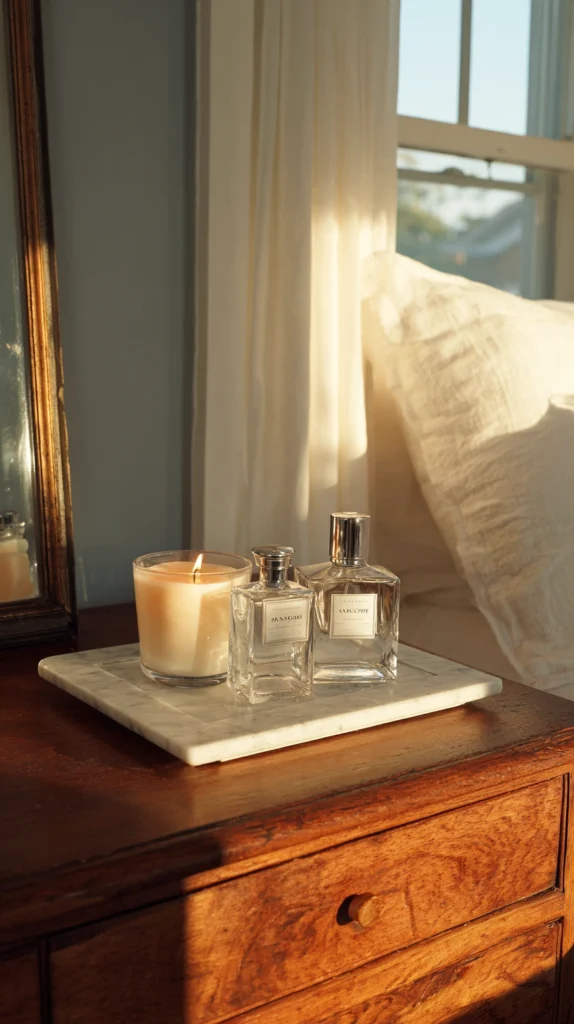
Budget: $25 – $120
A small tray on the bedroom dresser — marble, brass, or pale ceramic — holding a perfume bottle or two, a small candle, a sprig of dried lavender in a tiny vase, and a single piece of jewellery displayed rather than stored, turns a functional surface into a morning ritual object. It is the first thing the eye settles on when entering the room and the last thing seen before leaving it, and the investment it represents — in both cost and intention — is disproportionately small compared to the visual and atmospheric return.
A marble or ceramic small tray costs $15 – $40. A bud vase for a single stem runs $8 – $20. A small summer candle in a complementary fragrance adds $10 – $30. The perfume bottles and jewellery are already owned — they are simply relocated from wherever they currently live to a surface that treats them as objects worth displaying rather than items to be stored. Total new investment sits at $33 – $90 for a bedroom surface that reads as considered every morning.
Styling tip: Edit the perfume bottles on the tray to two or three maximum — the ones currently in use, the ones that represent the current season — rather than displaying the entire collection. A tray holding eight perfume bottles reads as a storage solution. A tray holding two or three reads as a curated selection. The remaining bottles belong in a drawer or a cabinet, visible to the owner but not presented as if on retail display.
3. The Entryway Key and Catch-All Tray
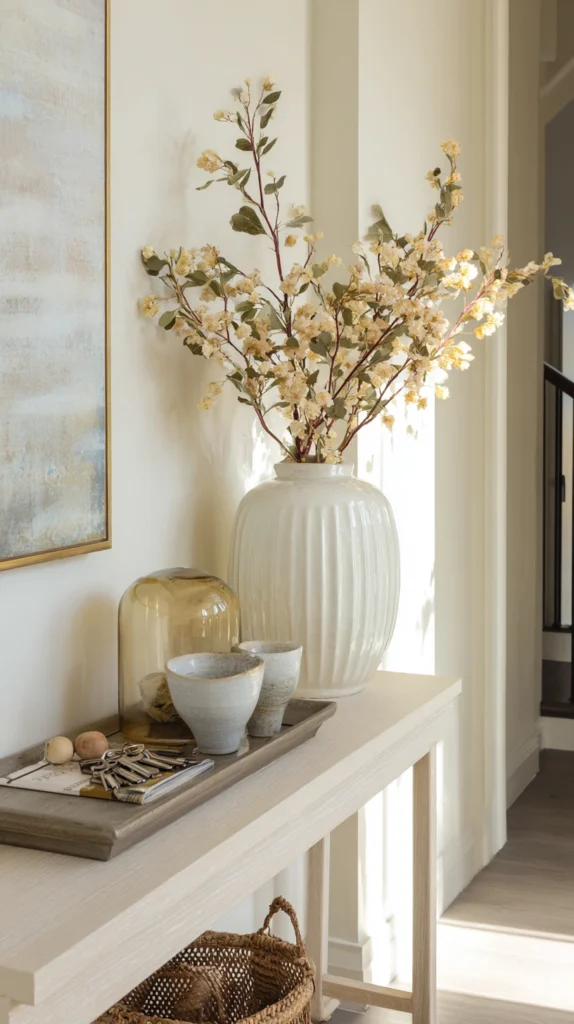
Budget: $20 – $100
An entryway tray — the vessel that catches keys, coins, sunglasses, and the miscellaneous small objects that arrive with every homecoming — is the most functional tray in the house and frequently the least beautiful. A quality ceramic, woven leather, or solid marble tray at the entryway communicates that the home has been considered from the very first surface a visitor encounters. A cheap plastic bowl in the same position communicates the opposite with equal efficiency.
A quality ceramic catch-all tray in a warm neutral — sand, cream, or pale terracotta — costs $15 – $40. A woven leather tray runs $20 – $60. A small marble tray with a lip — the lip preventing small items from sliding off — costs $15 – $45. The tray does not need to be large. An entryway catch-all tray that holds keys, one pair of sunglasses, and a small candle beside it is a more elegant solution than a large tray overflowing with the accumulated contents of every pocket in the household.
Styling tip: Place one decorative object in the entryway tray at all times — a small candle, a single smooth stone, a sprig of dried botanical — rather than leaving it entirely to functional objects. The decorative object signals that the tray is styled rather than merely practical, and it raises the perceived quality of everything else in it. A set of keys beside a beautiful stone reads differently from a set of keys beside another set of keys.
4. The Kitchen Counter Herb Tray
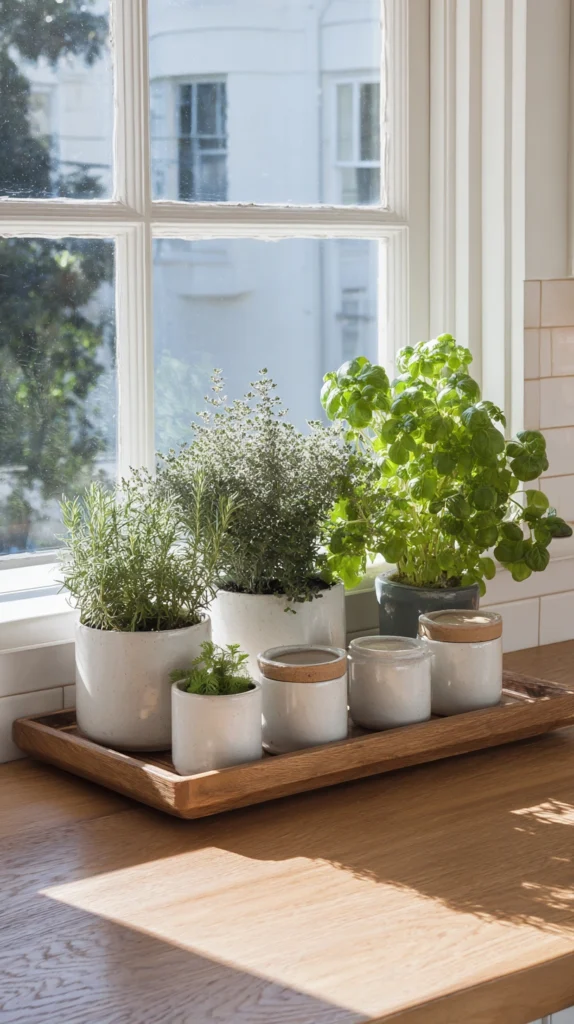
Budget: $20 – $100
A tray on the kitchen counter holding three or four small potted herbs — basil, mint, rosemary, and thyme — is simultaneously the most practical and the most decorative kitchen surface object available in summer. The herbs are used in cooking, releasing fragrance into the kitchen at every harvest. The tray contains the pots and their drips, defines the arrangement as a collection rather than a scattering of individual plants, and gives the kitchen counter a living, seasonal quality that no decorative object can replicate.
A wooden, enamel, or ceramic tray in a standard counter size costs $15 – $40. Herb plants in small pots — $2 – $6 each — sit inside it. Uniform terracotta pots for the herbs — $2 – $5 each — unify the arrangement and improve both drainage and the overall appearance of the display. The total counter herb tray investment sits at $25 – $75 for a kitchen surface object that is useful every day and beautiful throughout summer.
Styling tip: Water the herbs by removing each pot from the tray, watering it over the sink, allowing it to drain fully, and returning it to the tray. Watering in place accumulates standing water in the tray base — which drowns the roots of herbs over time and produces the unpleasant smell of stagnant water in the most food-sensitive room of the house. The thirty-second routine of removing and returning each pot is the difference between herbs that thrive for a season and herbs that deteriorate within a fortnight.
5. The Bathroom Spa Tray
Budget: $30 – $150
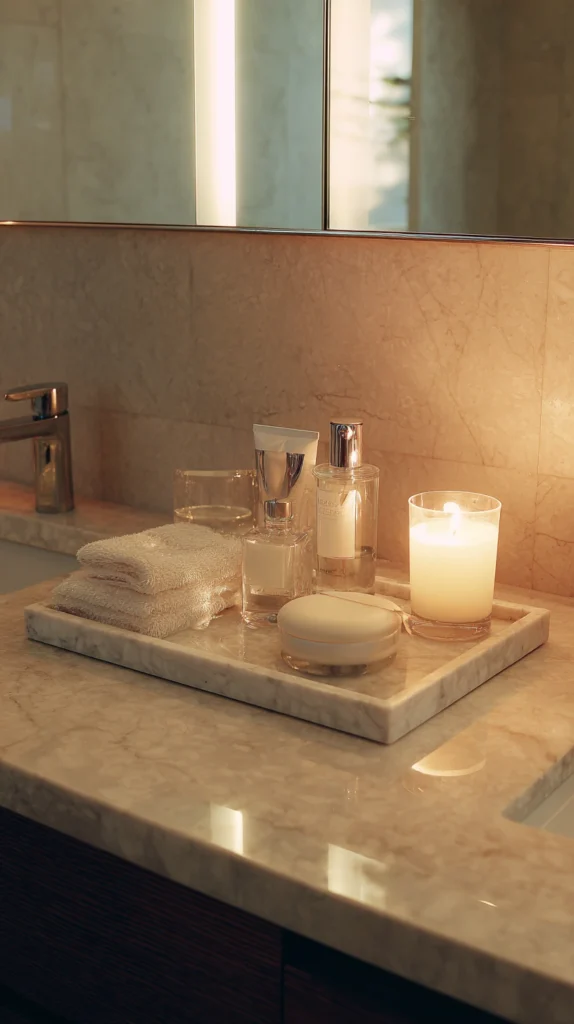
A tray on the bathroom shelf or vanity — holding a small collection of skincare or bath products arranged with the same intention as a hotel amenity display — elevates the experience of using the bathroom from a routine to a ritual. A bamboo, marble, or white ceramic tray holding two or three products currently in use, a small candle, a folded face cloth, and a single dried botanical turns a surface that is usually chaotic into one that communicates care and intention.
A bamboo or teak bathroom tray costs $15 – $40. A marble tray in a small vanity size runs $20 – $50. The products inside it are already owned — only their arrangement changes. A small reed diffuser in a summer fragrance beside the tray adds $15 – $35. A tightly rolled face cloth — white or natural linen — costs $5 – $15 and adds a spa-like quality to the arrangement that no product display alone achieves.
Styling tip: Decant skincare and bath products into matching glass or ceramic pump bottles before placing them on the display tray. Original packaging — particularly the plastic tubes and bottles of mass-market skincare — reads as clutter regardless of how carefully it is arranged. The same products in matching frosted glass or ceramic pumps read as a curated collection. The product quality does not change. The presentation changes everything about how the surface reads.
6. The Dining Table Summer Centrepiece Tray
Budget: $30 – $180
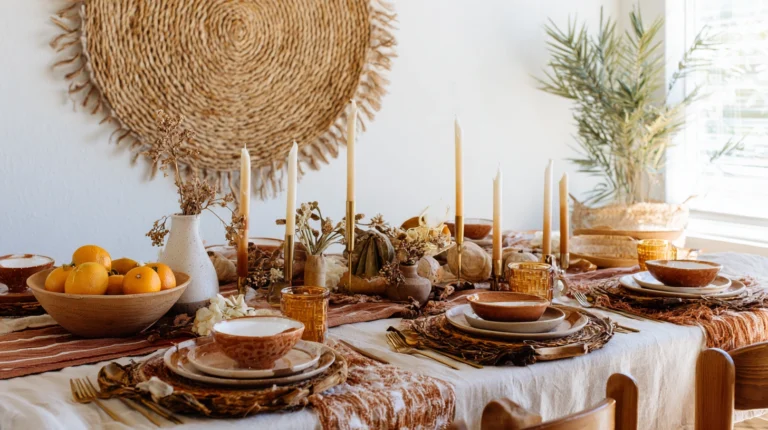
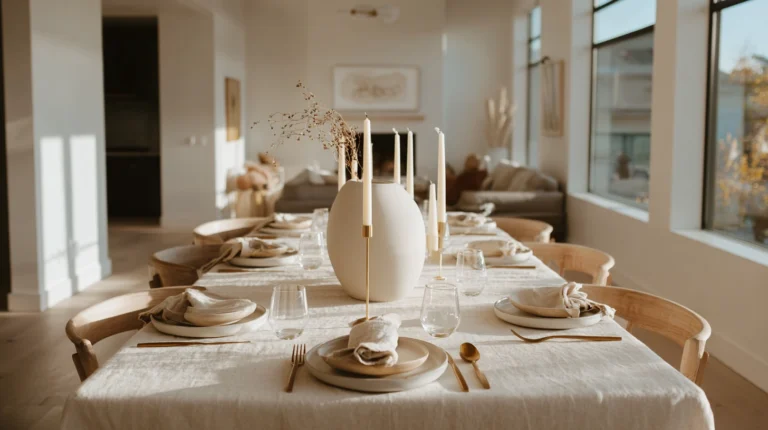
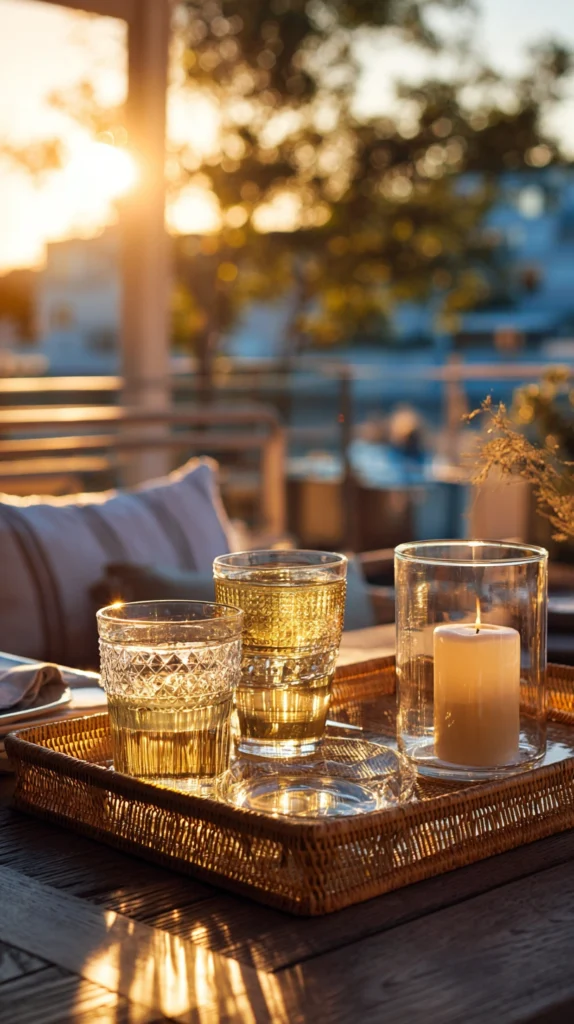
A long, low tray running along the centre of a dining table — holding candles at varying heights, a low floral arrangement or a cluster of dried botanicals, and two or three complementary objects — is a more practical and more visually interesting centrepiece than a single vase in the middle of the table. The tray format allows the centrepiece to be moved as a single unit when dishes need space, distributes visual interest along the length of the table rather than concentrating it at a single point, and creates a surface within a surface that frames its contents deliberately.
A long wooden, rattan, or ceramic tray in a dining table scale costs $20 – $60. Pillar candles at two or three heights — $10 – $25 for a set — provide the vertical variation that a low tray arrangement needs to avoid reading as flat. A small bunch of dried botanicals or a low vessel of fresh flowers adds $10 – $40. Two or three complementary objects — a smooth stone, a ceramic object, a small seasonal fruit — complete the arrangement for $10 – $30. Total centrepiece tray investment sits at $50 – $155.
Styling tip: Keep the centrepiece tray arrangement below the eyeline of seated diners — approximately 25 to 30 centimetres at the tallest point. A centrepiece that interrupts the sightlines across the table prevents the conversation and connection that a dining table exists to facilitate. A low, horizontal arrangement that clears the eyeline keeps the table visually alive without physically dividing the people sitting around it.
7. The Outdoor Terrace Entertaining Tray
Budget: $30 – $150
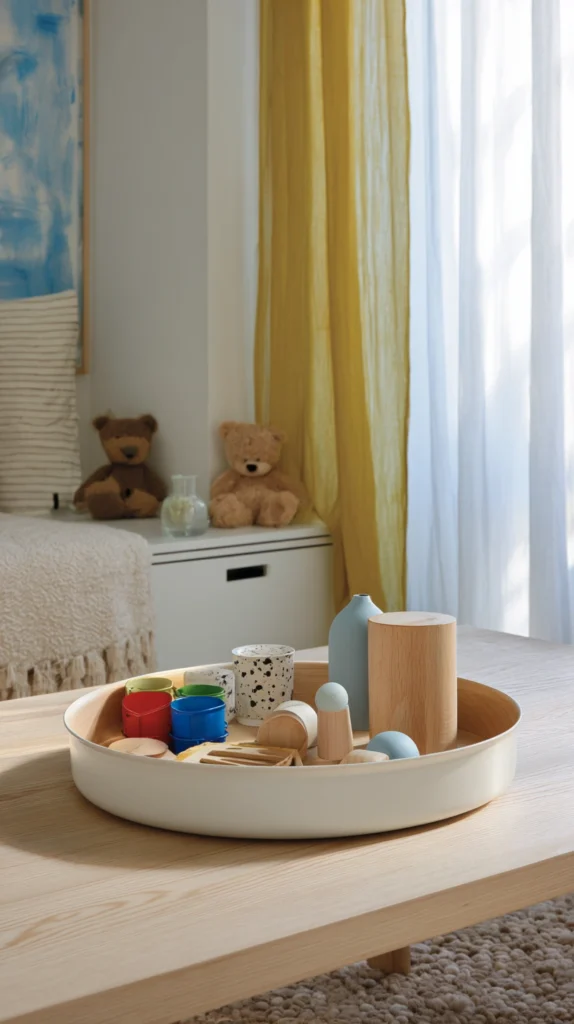
An outdoor tray — weather-resistant, substantial enough to carry drinks and glasses without flexing, and beautiful enough to remain on the table as a surface object when not in active use — is one of the most useful summer purchases available for anyone who entertains outdoors. A tray that moves between the kitchen and the terrace carrying drinks, and then remains on the outdoor table as a styled surface holding a candle, a small plant, and a napkin holder, serves two functions simultaneously and does both well.
A large, weather-resistant tray in teak, powder-coated metal, or fibreglass costs $25 – $80. Teak weathers beautifully outdoors and improves in appearance over seasons. Powder-coated metal in a matte black or natural tone is effectively indestructible in outdoor conditions. The objects placed on it when not in use — a weatherproof candle in a glass hurricane, a small potted succulent, a stack of linen napkins — cost $20 – $60 in total and transform a functional carrying tray into a permanent outdoor surface element.
Styling tip: Choose an outdoor tray with handles rather than a handleless version for any terrace use involving carrying. A large tray without handles loaded with drinks and glasses is extremely difficult to carry safely across uneven outdoor surfaces, and the risk of spillage outweighs the aesthetic advantage of the handleless format. A tray with sturdy, integrated handles performs its carrying function safely and its display function identically to a handleless equivalent.
8. The Children’s Room Activity Tray

Budget: $15 – $60
A tray in a child’s room — positioned on a low shelf or a small table at child height — holding a rotating selection of small activity objects: a set of coloured pencils in a ceramic pot, a small notebook, a collection of smooth stones or natural objects for sorting and examining, and a tiny plant or a small figurine — creates a defined, intentional play surface that communicates that the corner was designed for the child rather than simply allocated to them. In summer, natural objects collected from the garden or a walk — feathers, interesting stones, seed pods, a piece of bark — can rotate through the tray on a weekly basis, making it a seasonal record of the natural world encountered during the warmest months.
A shallow wooden or enamel tray in a child-appropriate size costs $10 – $25. A ceramic pot for pencils runs $5 – $15. A small notebook — $3 – $8 — and a collection of natural objects gathered for free complete the arrangement. Total investment sits at $18 – $48 for a surface that develops independently as the child adds to and rearranges the objects within it.
Styling tip: Resist the adult impulse to tidy the activity tray back to its original arrangement after the child has used it. The rearrangement is the point — a child who has sorted the stones into a pattern, moved the pencils to one side, and added a feather found in the garden has made the tray their own. Returning it to the original arrangement communicates that the adult’s arrangement is more correct than the child’s, which is not the message the tray was designed to send.
9. The Home Office Desk Tray
Budget: $20 – $100
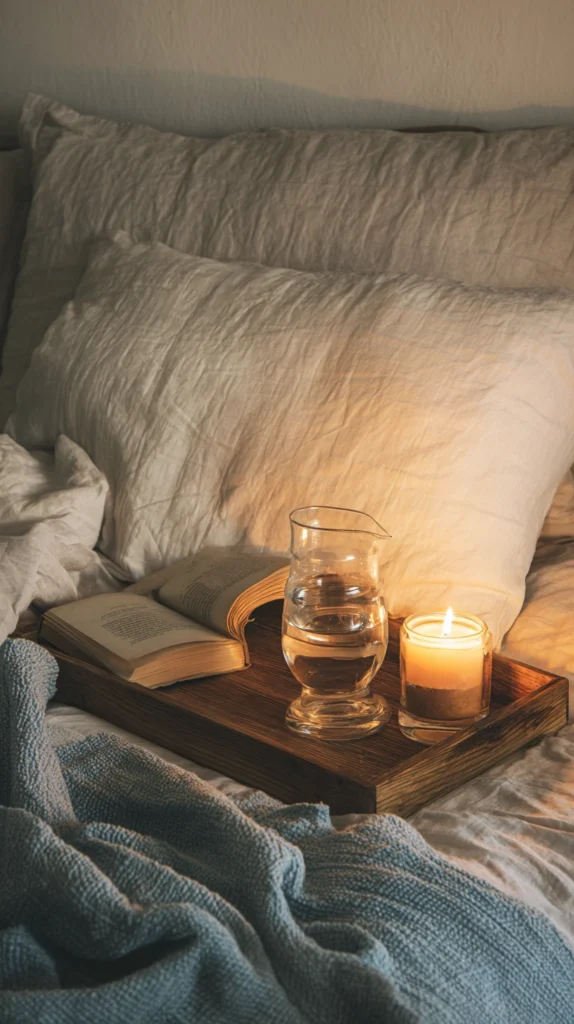
A tray on the desk — holding a small candle, a bud vase with a single stem, a quality pen in a ceramic holder, and the one or two small objects that are genuinely useful rather than merely present — gives a home office surface the discipline and the intention that it reliably lacks without a defined container. In summer, the desk tray is the surface element most likely to be refreshed with a seasonal botanical or a summer candle, and this small refresh — costing almost nothing — is enough to make an otherwise neutral work surface feel current and considered.
A leather, marble, or wooden desk tray in a standard size costs $20 – $60. A ceramic pen holder — $8 – $20 — replaces the scattered pen arrangement that occupies most desk surfaces. A small bud vase with a single dried or fresh stem adds $8 – $20. A summer candle in a fragrance appropriate to focus — rosemary, lemon, peppermint — runs $10 – $25. Total desk tray investment sits at $46 – $125 for a work surface that communicates that the work done on it is worth doing well.
Styling tip: Include one object on the desk tray that is entirely non-functional — present only because it is beautiful or personally meaningful — alongside the practical objects. A small stone from a significant place, a miniature ceramic object, a pressed leaf in a small frame — the single non-functional object is what distinguishes a styled tray from an organised one, and the distinction matters for the quality of the space and the quality of the mind working within it.
10. The Bedside Summer Reading Tray
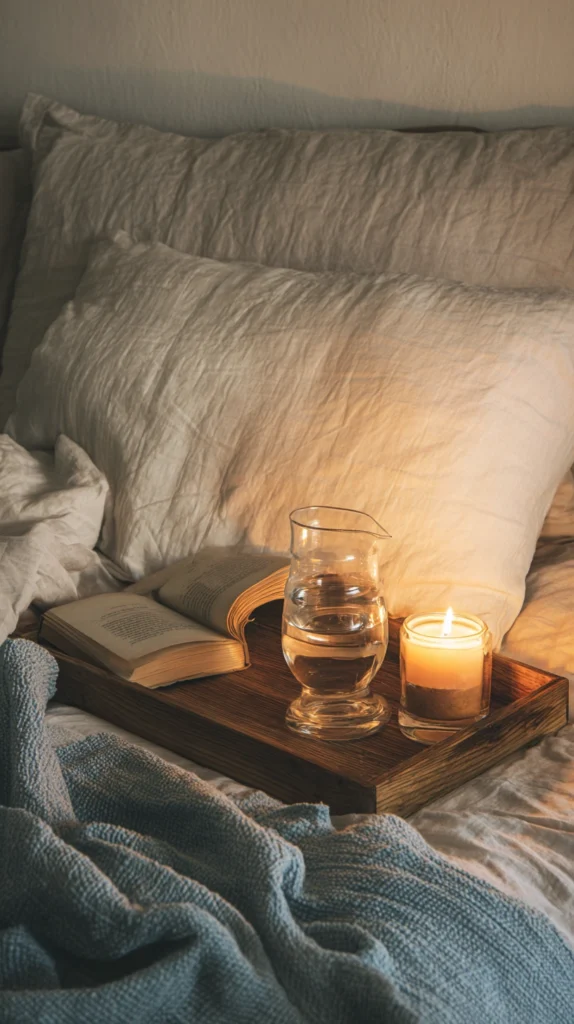
Budget: $20 – $100
A bedside tray — holding a glass of water in a carafe, a small candle, the current book face-down rather than spine-broken, a single sleep-appropriate essential oil or pillow spray, and nothing else — is the bedside table reimagined as a considered surface rather than a depository for the contents of evening pockets. In summer, the bedside tray benefits from a light botanical — a sprig of dried lavender, a small vase with a single fresh flower from the garden — that connects the sleeping space to the season outside the window.
A marble, ceramic, or woven leather bedside tray costs $15 – $40. A small glass carafe for water — $10 – $25 — replaces the glass-left-from-last-night arrangement that most bedside tables accommodate. A sleep candle in lavender or chamomile adds $10 – $25. A dried lavender sprig from the garden or a purchased bundle — $3 – $10 — completes the seasonal element. Total bedside tray investment sits at $38 – $100 for a surface that makes the last minutes of the day feel genuinely restful.
Styling tip: Establish a rule that the bedside tray holds only what is needed for the night — the water, the book, the light, the scent — and that anything else brought to the bedside during the evening returns to its origin room before sleep. A bedside tray that becomes a temporary surface for the evening’s accumulations loses its identity as a restful, curated space and becomes an extension of the day’s business, which is precisely the quality a bedroom surface should not carry into the sleeping hours.
11. The Balcony Morning Coffee Tray
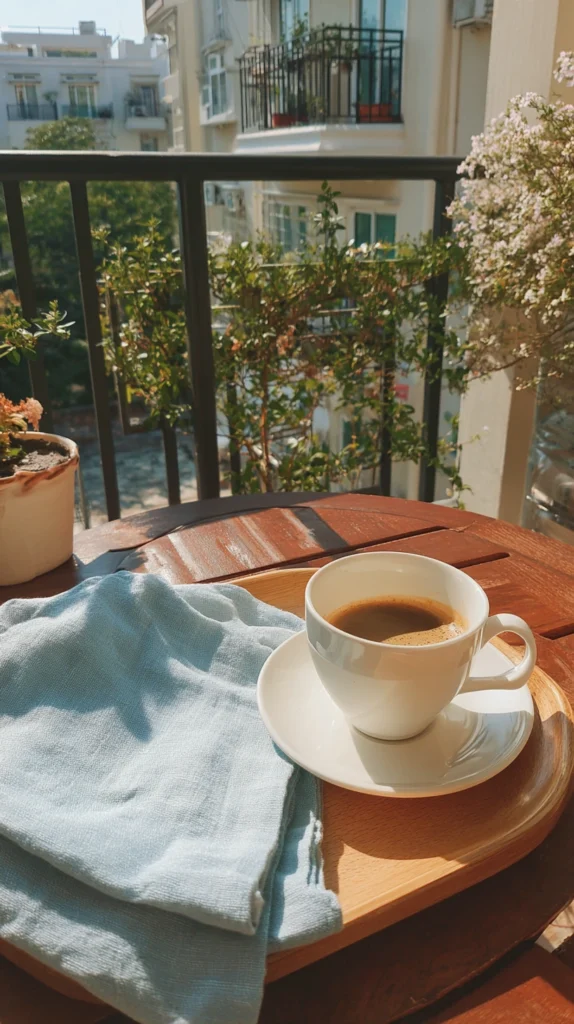
Budget: $25 – $120
A tray kept permanently on the balcony table — holding a small potted plant, a candle in a glass hurricane, a folded linen cloth, and enough space for a coffee cup to be placed on it — turns the morning coffee ritual on the balcony into a designed experience rather than simply a habit performed outdoors. The tray signals that this surface was prepared for this moment, and that signal — even registered unconsciously — changes the quality of the ten minutes spent sitting with the coffee.
A weather-resistant tray in teak or powder-coated metal costs $20 – $60. A small potted succulent or herb — $5 – $15 — tolerates outdoor balcony conditions without requiring daily watering. A glass hurricane candle holder — $10 – $25 — protects a candle flame from the breeze that most balconies produce. A folded linen cloth — $5 – $15 — functions as a surface for the cup and a napkin simultaneously. Total balcony morning tray investment sits at $40 – $115 for a ritual that begins every morning in the same beautifully prepared place.
Styling tip: Position the balcony tray on the side of the table that faces the best available view rather than centring it on the table. A tray centred on a balcony table produces an arrangement that faces every direction equally, which is to say no direction particularly. A tray positioned to one side leaves the rest of the table surface open and positions the styled element where the seated person will naturally look — toward the view, not back toward the house.
12. The Living Room Bar Tray
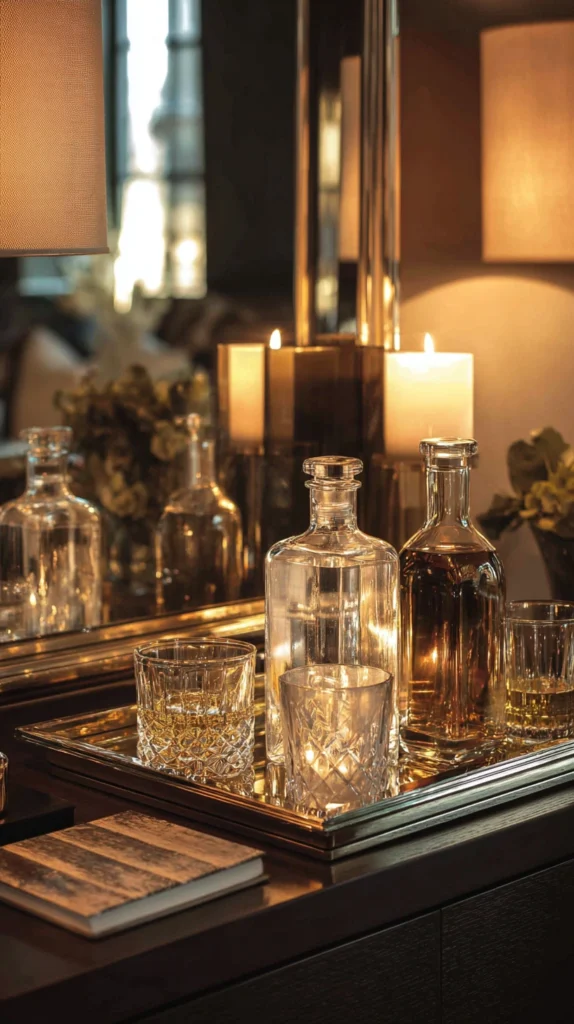
Budget: $30 – $200
A bar tray on a sideboard, a console, or a dedicated bar cart — holding two or three bottles of what is currently being drunk, the appropriate glassware, a small ice bucket, a cocktail stirrer or muddler in a ceramic vessel, and a single summer botanical — is one of the most hospitable surface arrangements a living room can contain. It communicates that guests are expected and that their arrival has been prepared for, which is a form of welcome that no amount of verbal hospitality can replicate.
A large, sturdy bar tray in lacquered timber, brass, or mirrored glass costs $25 – $80. Two or three bottles of summer drinks — gin, aperitivo, a sparkling wine — are the primary occupants and provide their own visual interest through their labels and shapes. Matching lowball or coupe glasses — $15 – $40 for a set of four — unify the arrangement. A small ice bucket — $15 – $40 — functions as both a practical vessel and a polished surface object. A single sprig of fresh mint or a small citrus fruit beside the tray adds the botanical moment for almost nothing.
Styling tip: Face the bottle labels outward toward the room rather than positioning bottles randomly. A bottle with its label facing the wall is anonymous. A bottle with its label facing the room tells the guest what is being offered before a word is spoken — which is the most elegant form of hospitality available at the bar tray level.
13. The Sunroom or Conservatory Plant Tray
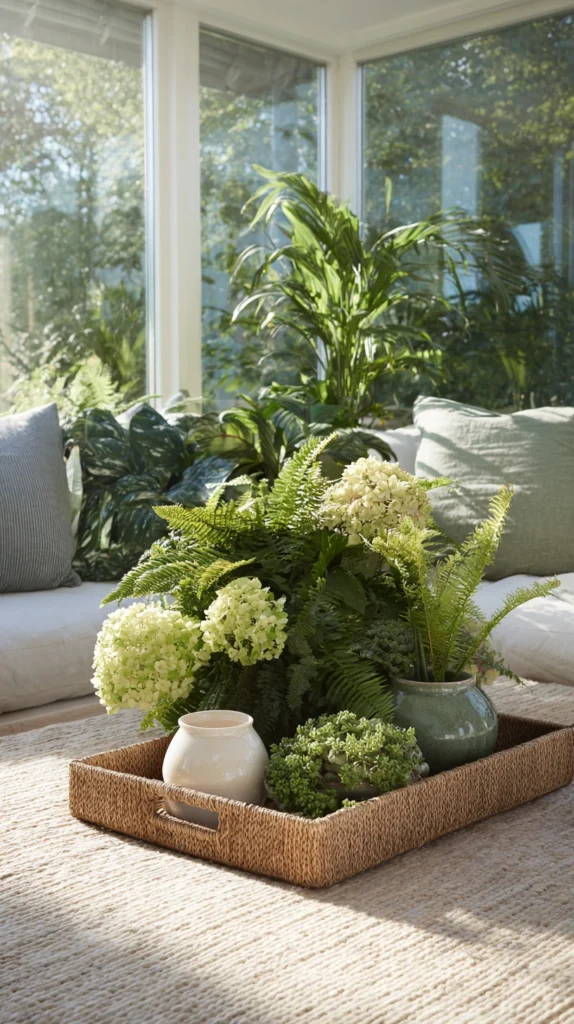
Budget: $20 – $100
A large, deep tray in a sunroom or conservatory — holding a grouping of small plants at varying heights, with pebbles or moss filling the gaps between pots — creates a miniature indoor garden that benefits from the bright light of a glass-walled space and requires minimal individual maintenance because the tray humidifies the collective plant group through its own evaporation. In summer, a conservatory plant tray can be moved outdoors to a sheltered terrace for the warmest weeks, bringing the indoor garden outside without requiring individual pot management.
A large ceramic or enamel tray in a deep format — deep enough to hold a layer of pebbles beneath the pots — costs $20 – $50. A layer of decorative pebbles or horticultural grit at the base — $5 – $15 for a bag — improves drainage and creates the visual base of the mini garden. Four to six small plants in complementary terracotta pots sit within the arrangement for $20 – $60 in total. The collective humidity of the grouped arrangement reduces individual watering frequency and creates a microclimate that benefits all the plants simultaneously.
Styling tip: Fill the gaps between pots in the conservatory plant tray with sheet moss — available from florists and garden centres for $5 – $15 per bag — rather than leaving the pebble base exposed. Moss between the pots creates a ground cover effect that makes the tray read as a miniature garden rather than a collection of individual pots on a surface. The moss also retains moisture and further improves the humidity around the plant group.
14. The Hallway Seasonal Vignette Tray
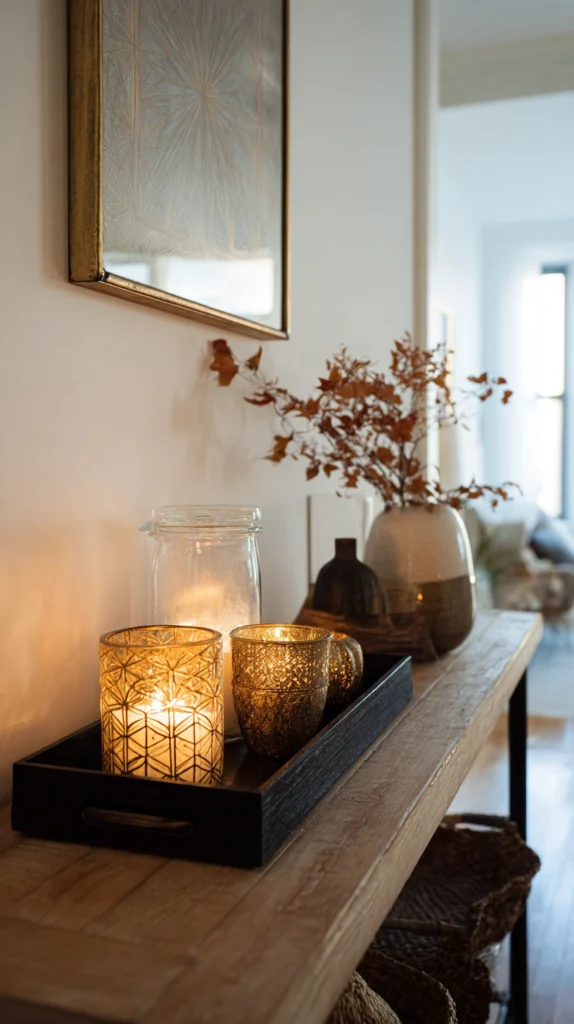
Budget: $25 – $120
A tray on a hallway console or side table — changed seasonally to reflect the current time of year — is the most visible and the most frequently encountered surface in the home, and the one that communicates most efficiently whether the interior is considered or not. A summer hallway tray holds objects that speak of the season: a shallow bowl of lemons, a small vase of something currently blooming in the garden, a single summer candle, and a folded linen cloth. In autumn it will hold something entirely different. In winter, something different again. The tray stays. The season moves through it.
A rattan, wooden, or ceramic hallway tray costs $20 – $50. The seasonal objects inside it — a bowl of citrus, a garden cutting, a candle — cost $15 – $40 per seasonal refresh. The annual investment across four seasonal changes sits at $60 – $160 beyond the initial tray purchase — modest for a surface that is seen and experienced multiple times every day by everyone who lives in or visits the home.
Styling tip: Remove everything from the hallway tray and replace it entirely at each seasonal transition rather than adding new objects to what is already there. A hallway tray that accumulates objects from previous seasons loses its seasonal identity and becomes a mixed collection of things that arrived at different times with different intentions. A clean replacement communicates that the change was deliberate — which is the quality that distinguishes a seasonal refresh from an accumulation.
15. The Garden Potting and Display Tray
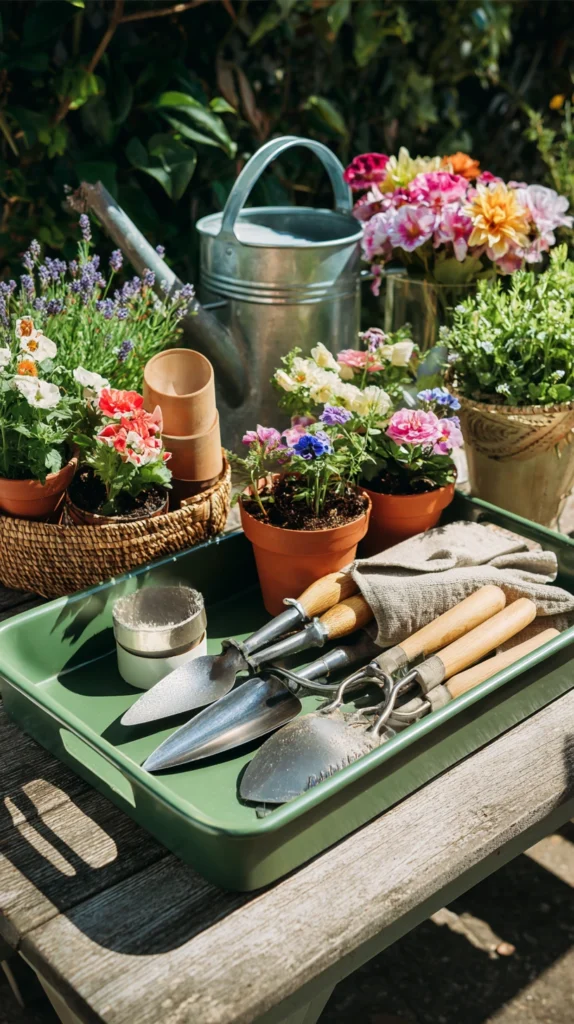
Budget: $15 – $80
A tray kept at the garden potting bench or the outdoor table — holding a small trowel, a ball of jute twine, a ceramic pot of seeds or small bulbs, and a pair of folded gardening gloves — turns a functional working surface into an arrangement that is as beautiful between uses as it is practical during them. In summer, the garden tray becomes the outdoor equivalent of the kitchen herb tray — a working object that does its job beautifully rather than merely adequately.
A galvanised metal, terracotta, or wooden garden tray costs $10 – $30. A ceramic pot to hold small tools and twine — $5 – $15 — replaces scattered individual items with a single contained collection. A small stack of seed packets in their paper envelopes adds visual texture and communicates the productive intention of the surface for almost nothing. A pair of quality gardening gloves — $8 – $20 — folded and placed at the edge of the tray complete the arrangement with an object that is both functional and visually appropriate.
Styling tip: Keep the garden tray covered or stored in a sheltered position when not in use during summer. A tray left exposed to summer sun fades, warps, and accumulates debris rapidly — the combination of heat, UV exposure, and wind-blown material degrades a beautiful outdoor surface object within a single season. A tray that is stored or covered between uses remains beautiful and functional for several seasons without requiring replacement or restoration.
Whatever combination of these fifteen tray ideas finds its way into the home this summer, the principle running through all of them is the same: a tray does not organise a surface — it gives a surface a reason. The objects inside a tray are the same objects that existed on the surface before the tray arrived. The tray changes what they are — from scattered items to a considered collection, from clutter to composition, from a surface that happened to a surface that was made.
Choose the tray for the surface before choosing the objects for the tray. Get the material, the size, and the tone right for the room it will live in, and then fill it with only what genuinely belongs there. Edit before you style. Remove before you add. And treat every tray as the small act of domestic intention that it actually is — because the sum of those intentions, distributed across every room of the house, is what makes a home feel genuinely considered rather than merely furnished.