
12 Budget-Friendly Thanksgiving Decorating Tips
Scroll through enough Thanksgiving inspiration this time of year and it starts to feel like the holiday requires a professional florist, a tablescape stylist, and a budget that rivals the actual grocery bill for the meal itself.
Almost none of that reflects how most Thanksgiving tables actually come together. The gatherings people remember fondly years later were rarely the ones with the most expensive centerpiece, they were the ones that felt warm, considered, and genuinely lived-in.
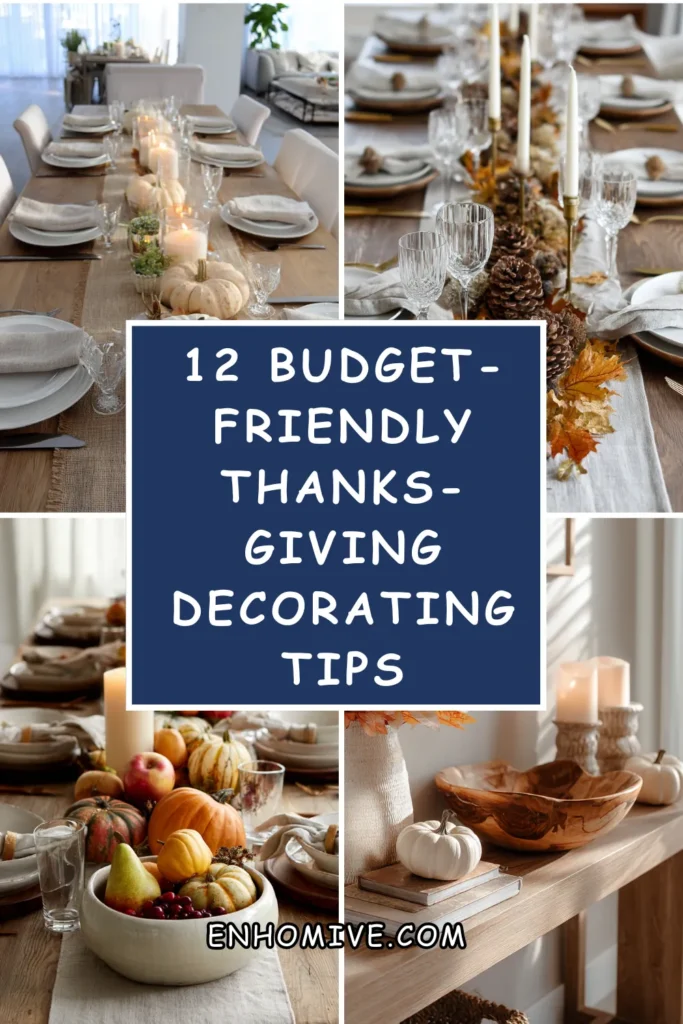
Budget-friendly Thanksgiving decorating isn’t a lesser version of the elaborate version. Done well, it often looks more genuine, since it relies on real materials, actual effort, and a bit of creativity rather than simply the size of a decor budget.
Here are 12 ways to decorate for Thanksgiving that look considered and warm without spending anywhere close to what the more elaborate versions suggest is necessary.
Why Thanksgiving decorating is more forgiving of a tight budget than most other holidays
The season itself supplies much of the visual material for free.
- Fall produces an abundance of naturally beautiful, genuinely free decorating material, from leaves to branches to gourds still in the garden
- The holiday’s overall aesthetic leans rustic and natural rather than polished, meaning imperfect, handmade touches actually suit the mood better than anything overly refined
- Much of what makes a Thanksgiving table feel special has more to do with arrangement and intention than the price of any individual item
Once you start looking at the season itself as the primary material source, rather than a store shelf, the whole budget conversation shifts considerably.
1. Forage Fall Leaves and Branches Instead of Buying Florals
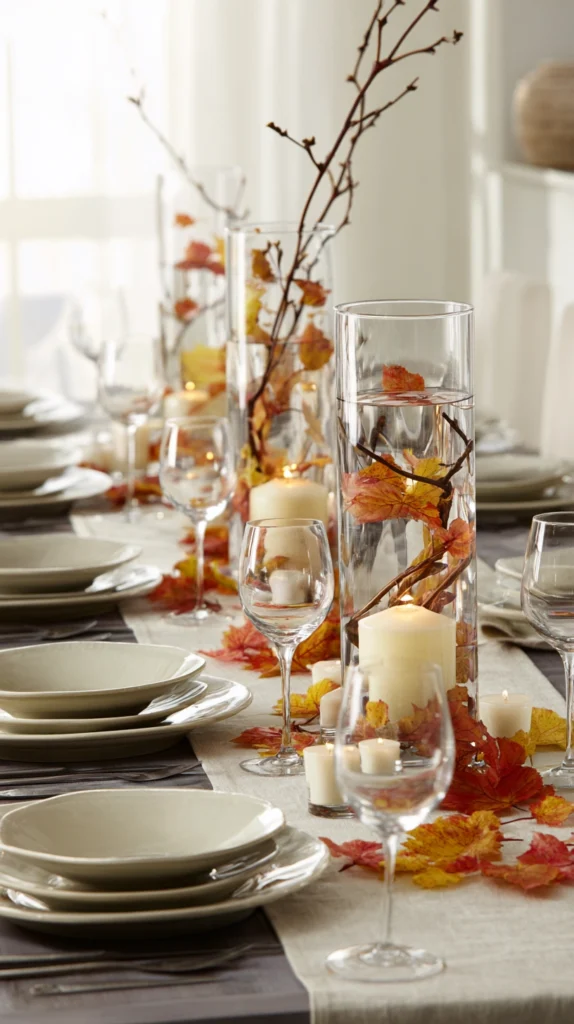
Using what’s already falling from the trees as the primary decorating material.
Build it:
- Fallen leaves in good condition collected during a walk, choosing ones with vibrant color and minimal damage
- Bare branches with interesting shape, or ones still holding a few colorful leaves, gathered from a yard or a permitted natural area
- Both used loosely in vases, laid down a table runner, or scattered directly across a mantel or console surface
Why foraged material can look more genuinely seasonal than anything purchased:
- It’s completely free, using material that’s often actively falling and needing to be raked up anyway
- The natural, slightly imperfect quality of real fallen leaves and branches suits Thanksgiving’s rustic aesthetic better than a uniform purchased arrangement
- It ties the decor directly to the specific location and season, rather than generic decorations that could be purchased anywhere regardless of the actual local landscape
Why choosing leaves at the right stage of drying matters for how long the display actually lasts:
Freshly fallen leaves that are still slightly damp will continue drying and curling after being brought inside, sometimes changing color or texture in ways that can look either charming or simply wilted depending on the specific leaf type. Leaves that have already had a day or two to dry out somewhat before collection tend to hold their shape and color more consistently once displayed, making a quick check of the leaf’s current dryness worth doing before deciding which ones to bring inside for the display.
Cost breakdown: Free, using materials gathered from an existing yard or a nearby walk.
2. Repurpose Grocery Store Produce as Decor
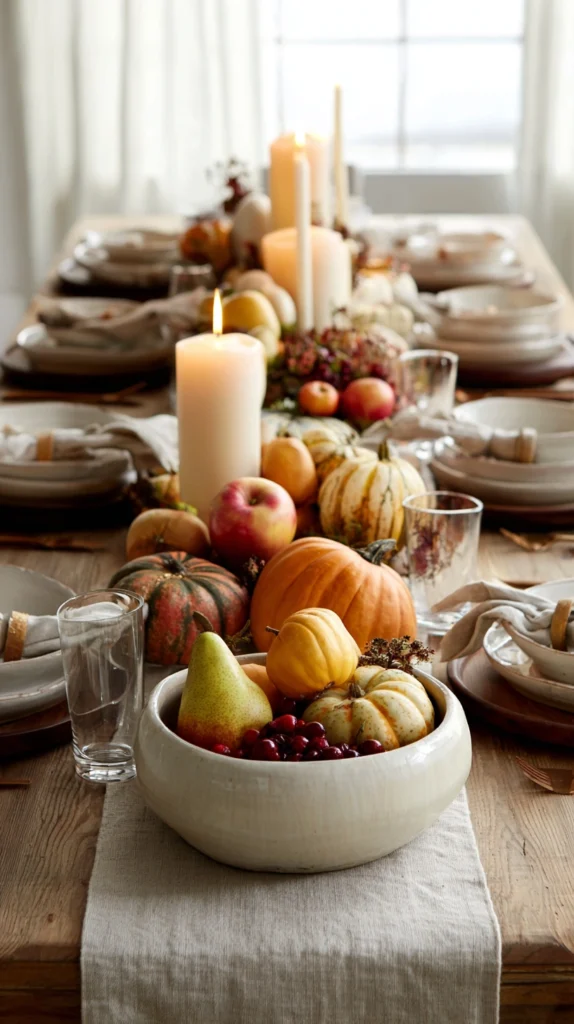
Using the actual ingredients for the meal as decoration before they’re cooked.
Build it:
- Whole squash, gourds, and pumpkins arranged on the table or a console, some purely decorative and others destined for the actual meal later
- Apples, cranberries, or other seasonal produce displayed in a simple bowl as an easy, edible centerpiece
- Items rotated into actual cooking use as the holiday approaches, meaning the decor cost doubles as part of the grocery budget rather than an entirely separate expense
Why using produce already being purchased for the meal maximizes the decorating budget:
- It requires no separate decor purchase at all, since the same squash or gourds bought for cooking can serve a decorative purpose in the days leading up to the actual meal
- Seasonal produce carries genuine visual richness in its natural colors and textures, rivaling purchased decorative gourds at a fraction of the cost
- It reduces waste, since decorative produce doesn’t need to be a separate purchase destined only for display and eventual disposal
Why timing this decision around the actual cooking schedule prevents any wasted food:
Using produce items purely as decoration for several days before eventually needing them for actual cooking requires some planning around when specific items need to move from the table display into the kitchen for meal preparation. Choosing hardier items, like winter squash and gourds that hold up well over a week or two of display, for the longer decorative stretch, while keeping more perishable items like fresh cranberries for closer to the actual meal date, avoids any food spoiling before it gets used.
Cost breakdown: Free beyond what’s already being purchased for the meal itself.
3. Use Mason Jars or Thrifted Glassware Instead of New Vases
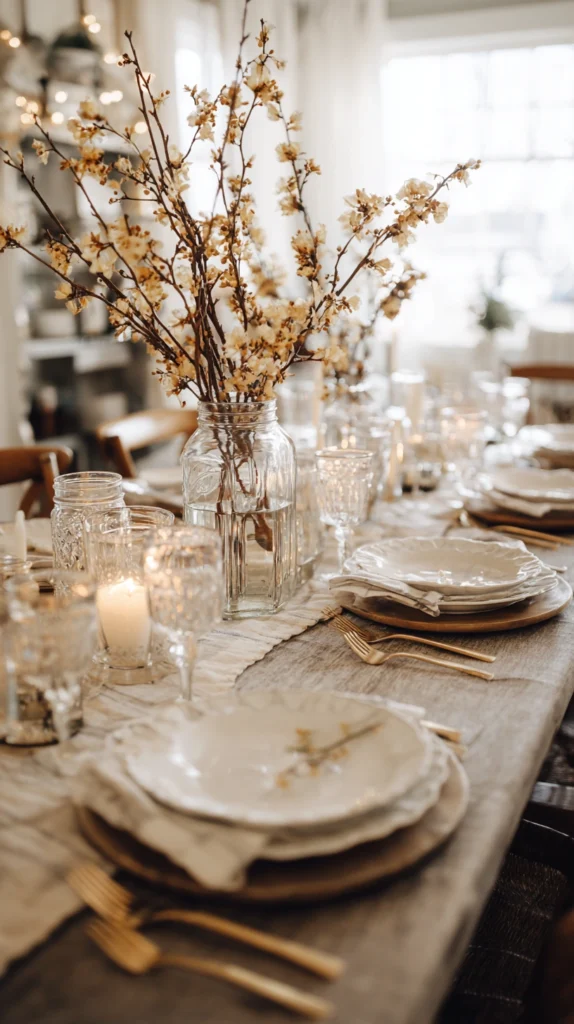
Sourcing vessels from what’s already on hand or inexpensively available secondhand.
Build it:
- Mason jars already in the pantry from canning or food storage, repurposed as simple vases for foraged branches or a few purchased stems
- Mismatched thrifted glassware, sourced for a few dollars each, grouped together for a collected, intentional look
- A cluster of varying heights and shapes used together rather than a single matched set, adding visual interest without requiring uniform purchases
Why repurposed and thrifted vessels work as well as new decorative vases:
- Mason jars already owned cost nothing additional, immediately solving the need for a vase without any new purchase at all
- Thrifted glassware is widely available at very low individual cost, and mismatched pieces grouped together often look more intentional than a uniform new set
- It keeps items already owned in active use rather than sitting unused in a cabinet, getting genuine value from things already paid for
Why grouping mismatched pieces together, rather than trying to match them, produces a better result:
Attempting to find several identical vases at a thrift store is often unrealistic and can lead to spending more time and money chasing a matched set than the budget-friendly approach was meant to save. Embracing a genuinely mismatched collection, grouped together with a shared color thread like clear glass throughout, achieves the same collected, curated look while accepting and even celebrating the natural variation among secondhand finds.
Cost breakdown: Free if using mason jars already owned, or $1 to $5 each for thrifted glassware.
4. Make a No-Sew Table Runner From Burlap
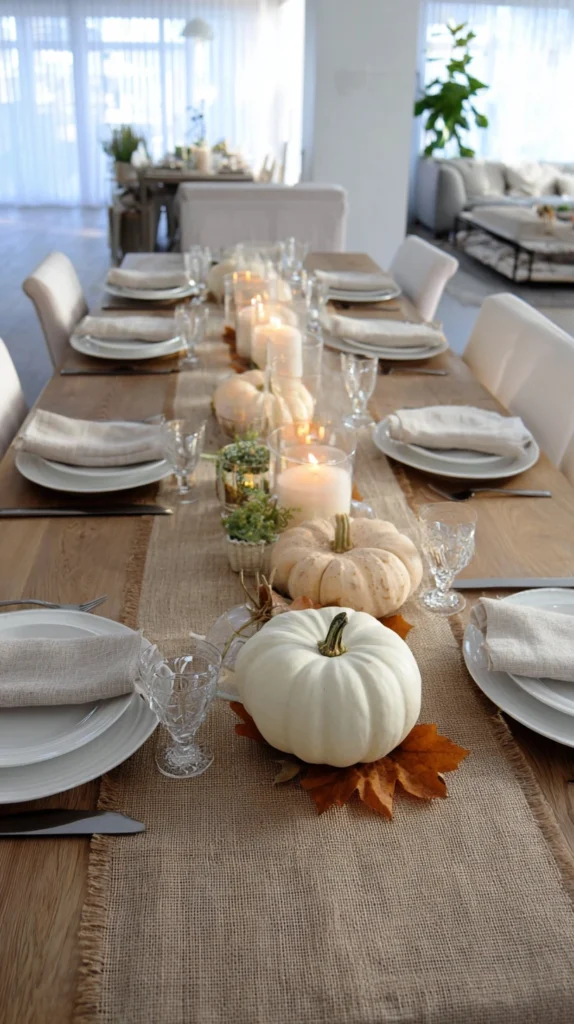
Creating a textured table foundation without any sewing skill or expensive fabric.
Build it:
- Burlap fabric purchased by the yard from a craft store, cut to the table’s length with simple scissors, no hemming required given the material’s natural fray-resistant edge
- Laid directly down the table’s center, either alone or beneath a few simple decorative additions
- Edges left slightly frayed intentionally, which suits burlap’s natural rustic character rather than needing a clean, finished hem
Why burlap specifically suits a no-sew approach better than most other fabrics:
- It’s one of the few fabrics that doesn’t unravel significantly when left with a raw, uncut edge, making it genuinely usable without any sewing
- The material is inexpensive per yard compared to most decorative fabrics, especially relative to a comparably sized purchased table runner
- Its naturally rustic, textured look suits Thanksgiving’s overall aesthetic particularly well, unlike a fabric that might look accidentally unfinished in a more formal context
Why buying slightly more fabric than the exact table measurement matters for a clean final result:
Measuring the table’s exact length and buying fabric to that precise dimension can result in a runner that looks slightly skimpy once laid down, since a small amount of overhang at each end typically improves the overall visual proportion. Adding an extra six inches to a foot beyond the table’s exact length when purchasing the burlap ensures the finished runner drapes properly at both ends rather than looking cut exactly to the table’s edge with no visual ease.
Cost breakdown: Burlap fabric runs $3 to $6 per yard, typically $10 to $20 total for a table-length runner.
5. Print and Frame Free or Low-Cost Seasonal Art
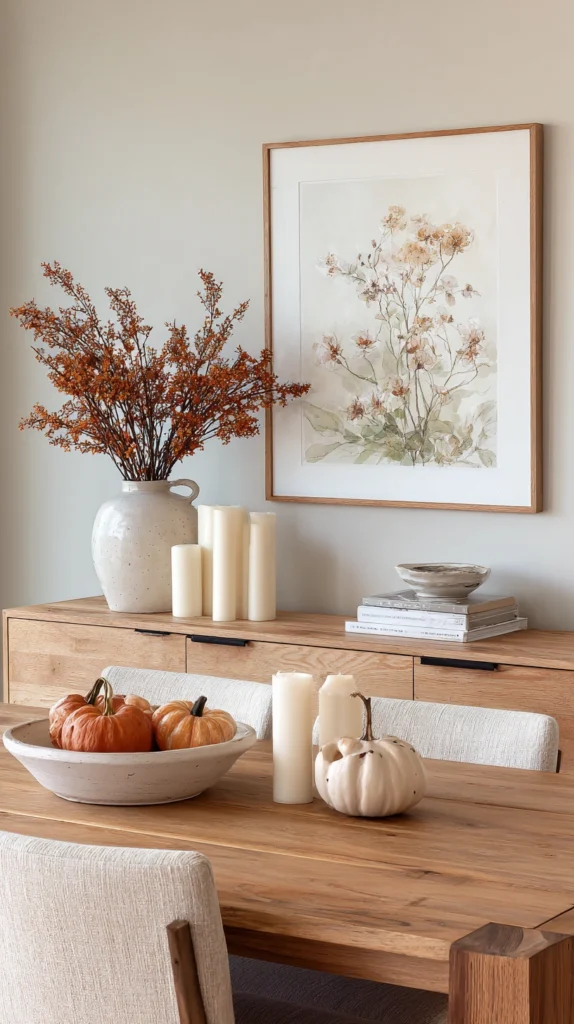
Adding wall or table decor without purchasing new framed pieces.
Build it:
- Free printable seasonal art, widely available from various online sources, printed at home or at a low-cost print shop
- Existing frames already owned repurposed to display the new seasonal print, swapping out whatever was previously displayed
- Positioned in the dining room or entryway, adding a seasonal touch to wall space that might otherwise remain unchanged for the holiday
Why printable art solves the seasonal wall decor question at minimal cost:
- Many printable designs are available entirely free, with only the cost of paper and ink or a low-cost print shop fee required
- Reusing frames already owned avoids any new frame purchase, since the print itself is the only new element being introduced
- It’s easily changed again for the next season or holiday, since printed paper can simply be swapped out repeatedly without the frame itself needing replacement
Why choosing a print sized correctly for existing frames prevents an awkward final result:
Printing seasonal art without first checking the exact interior dimensions of the frames already on hand can result in a print that doesn’t fit properly, either too small with excessive matting space or too large to fit behind the glass at all. Measuring the specific frame’s opening before selecting or resizing a printable design ensures the final printed piece fits cleanly, avoiding an amateurish look from an obviously mismatched print size.
Cost breakdown: Printer paper and ink for a few seasonal prints run $2 to $8 total if printed at home, or $1 to $3 per page at a low-cost print shop.
6. Use Candles as the Primary Light Source Instead of New Fixtures
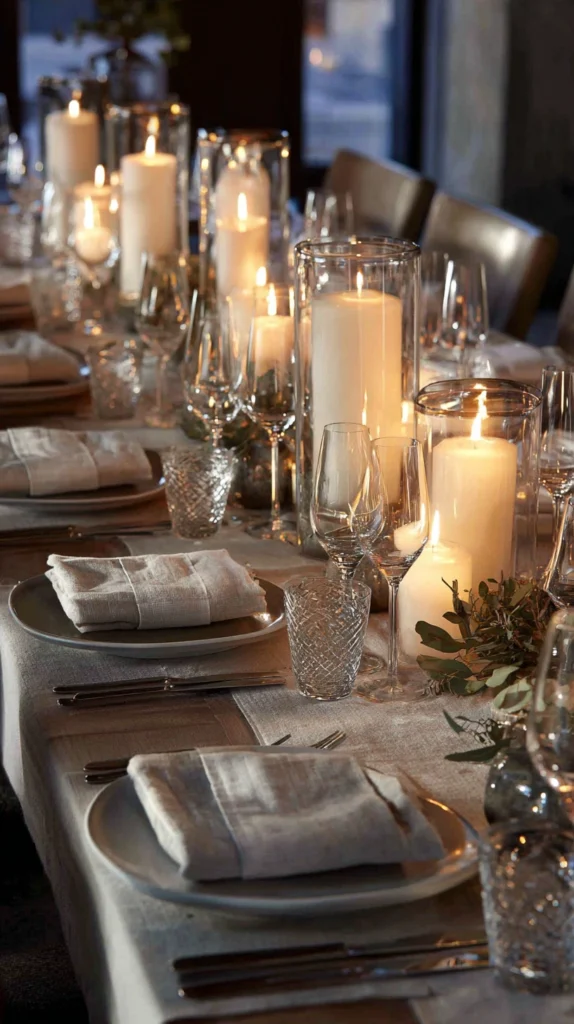
Relying on affordable candlelight rather than purchasing new lighting for the occasion.
Build it:
- A collection of taper or pillar candles, varying in height, positioned down the table’s center or clustered on a console
- Simple, inexpensive candle holders, either already owned or sourced cheaply from a discount store
- Overhead lighting dimmed or turned off entirely during the meal itself, letting candlelight carry the room’s atmosphere
Why candles deliver outsized atmospheric impact relative to their low cost:
- A cluster of affordable candles creates genuine warmth and ambiance that would otherwise require a considerably more expensive lighting fixture to replicate
- It’s one of the most budget-friendly ways to transform a room’s entire mood, since the actual physical cost of several candles remains low even when purchased new
- Candlelight specifically flattens harsh overhead lighting shadows, making both the food and the guests look more flattering throughout the meal
Why buying candles in bulk from a discount or craft store stretches the budget further than smaller individual purchases:
Basic unscented taper and pillar candles purchased in bulk packs from a craft or discount store cost considerably less per candle than buying them individually or from a specialty retailer, and Thanksgiving decorating rarely requires anything beyond these simple, functional candle types. Buying a larger bulk pack, even if some candles end up saved for future use beyond just this one holiday, is typically more economical than purchasing the exact number needed at a higher per-unit price elsewhere.
Cost breakdown: A bulk pack of basic taper or pillar candles runs $10 to $20 for a quantity well beyond what a single Thanksgiving table requires.
7. Create a Pinecone and Acorn Display From a Nature Walk
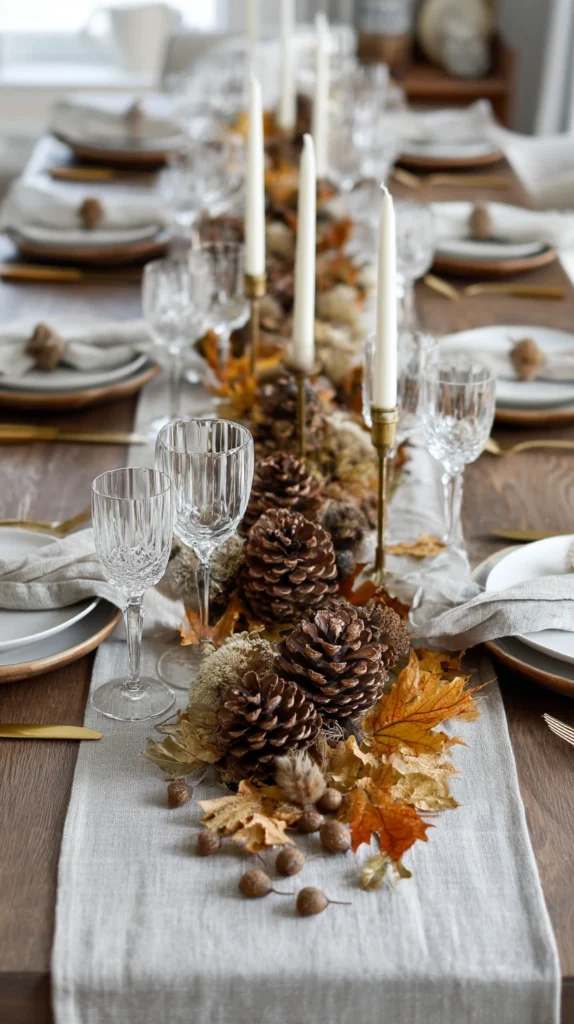
Collecting small natural elements to scatter throughout the table setting.
Build it:
- Pinecones, acorns, and small seed pods gathered during an outdoor walk, chosen for interesting shape and good condition
- Scattered loosely along a table runner or grouped in a small bowl as a simple, textural centerpiece element
- Combined with the foraged leaves and branches from earlier in this list for a cohesive, entirely nature-sourced table display
Why small foraged elements like these add genuine texture at essentially no cost:
- They’re entirely free, requiring only the time spent on an outdoor walk that many families might already be taking during the fall season regardless
- Small scattered elements like these fill in gaps in a table display without requiring any additional larger, more expensive decor pieces
- The activity of collecting these items can itself become a small, enjoyable pre-holiday tradition, particularly for families with kids
Why washing and drying collected natural items before bringing them fully indoors prevents an unexpected pest issue:
Pinecones, acorns, and similar items collected outdoors can sometimes harbor small insects or debris that aren’t immediately visible, and bringing them directly inside without any cleaning can occasionally lead to unwelcome surprises once the item warms up in the house. A quick rinse and a full day of air drying outdoors, or a brief low-temperature bake in the oven for particularly concerning items like pinecones, addresses this concern before the items become part of an indoor table display.
Cost breakdown: Free, using materials gathered outdoors.
8. Make Simple Place Cards From Recycled Materials
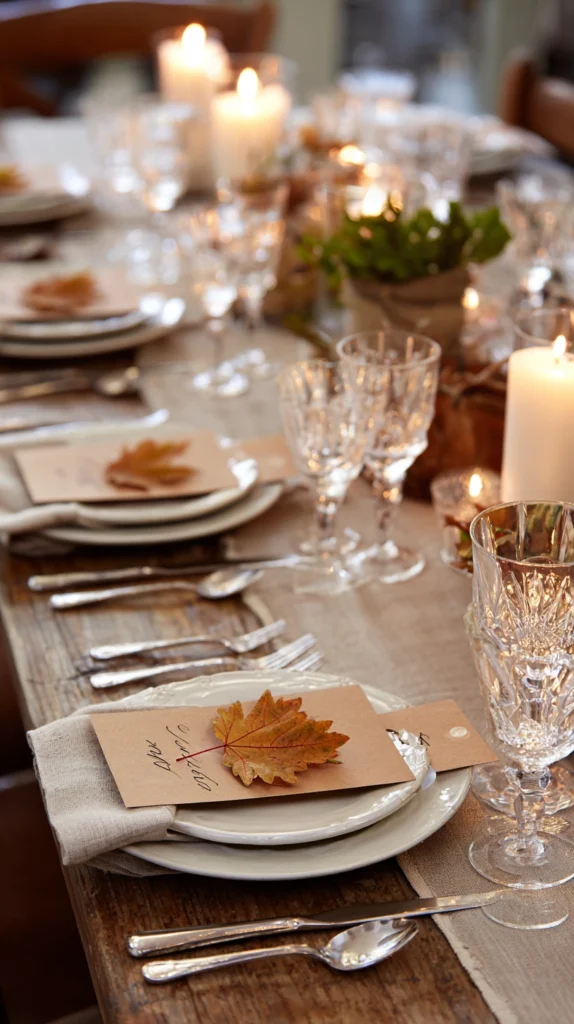
Adding a personal, formal touch using materials already on hand.
Build it:
- Small cardstock cut from an already-owned box or recycled packaging, sized appropriately for a simple place card
- Guest names written by hand in a nice pen, adding a personal touch without requiring any printing or calligraphy service
- A small leaf, acorn, or other foraged natural element attached with a dab of glue for a finished, seasonal look
Why homemade place cards using recycled materials cost essentially nothing while still adding real polish:
- Cardstock cut from recycled packaging costs nothing beyond what’s already been paid for in the original product packaging
- Handwritten names add a genuinely personal touch that a printed card, however nice, doesn’t quite replicate
- The small natural element attached to each card ties the place setting detail back into the same foraged, seasonal materials used throughout the rest of the table
Why practicing the cutting and writing on a scrap piece first improves the final consistency across all the cards:
Cutting cardstock to a consistent size by eye without any practice can result in noticeably uneven place cards once several are lined up together at the table, undermining the polished effect the detail is meant to add. Cutting one template piece first, then tracing around it consistently for each subsequent card, ensures uniform sizing across the whole set, which matters more for the overall polished appearance than any individual card’s specific decoration.
Cost breakdown: Free, using recycled cardstock and a pen already on hand.
9. Layer Thrifted Linens Instead of Buying a New Tablecloth
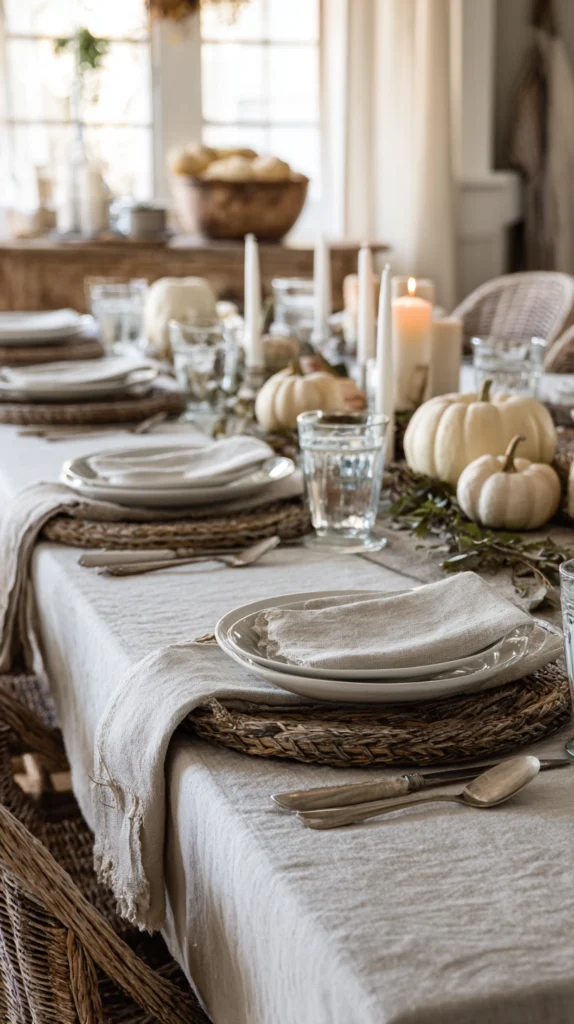
Building the table’s textile foundation from secondhand finds.
Build it:
- A tablecloth or large flat sheet sourced from a thrift store, chosen in a neutral or warm autumn tone
- Cloth napkins, similarly thrifted or repurposed from existing kitchen linens, folded simply at each place setting
- Any stains or minor imperfections in secondhand linens addressed with a basic wash before the holiday, or strategically positioned where they won’t be visible once the table is set
Why thrifted linens deliver the same visual function as new ones at a fraction of the cost:
- A full tablecloth purchased new, particularly in a nicer fabric, can be one of the more expensive individual line items in holiday table decorating, while a secondhand equivalent often costs a small fraction of that price
- Linens sourced this way frequently have genuine natural fiber content, like cotton or linen blends, that can actually feel higher quality than a new budget synthetic tablecloth
- It keeps usable textiles in circulation rather than in landfill, an added benefit alongside the direct cost savings
Why washing any secondhand linens thoroughly before the holiday matters for both hygiene and final appearance:
Thrifted textiles should always be washed before use regardless of how clean they appear, both for basic hygiene reasons and because washing often reveals the linen’s true color and condition once any accumulated dust or storage odor has been addressed. Washing well in advance of the actual holiday, rather than the day before, also allows time to address any unexpected staining that becomes more visible after washing, giving enough buffer to source an alternative if a specific piece doesn’t hold up as hoped.
Cost breakdown: Thrifted tablecloths and napkins run $3 to $15 combined depending on the specific pieces found.
10. Use String Lights for Affordable Evening Ambiance
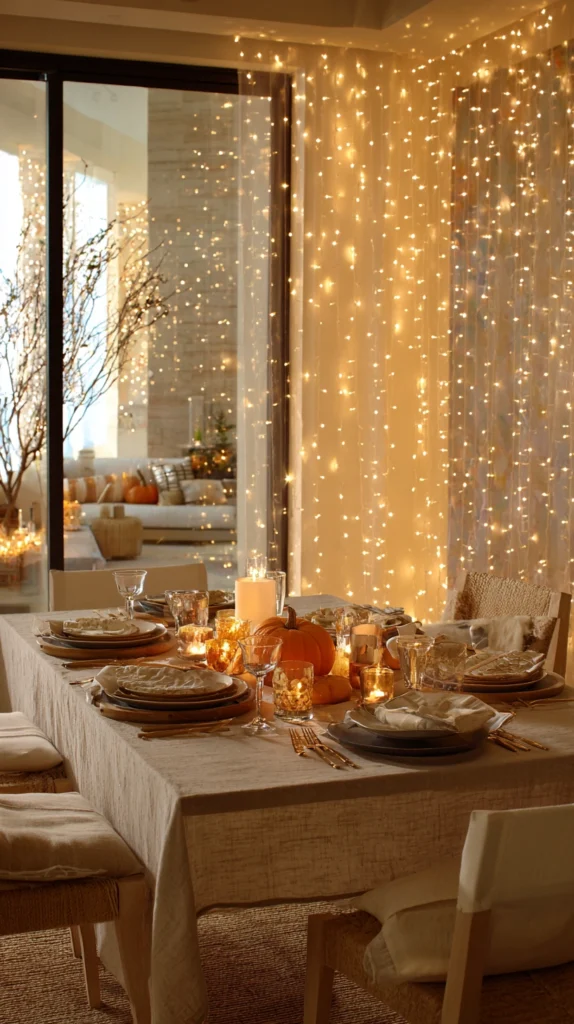
Adding warm lighting throughout the space without an expensive fixture investment.
Build it:
- Basic warm-toned string lights, draped along a mantel, wrapped around a stair railing, or strung along a window frame
- Positioned to add ambient light in areas beyond just the dining table itself, extending the warm atmosphere throughout the gathering space
- Left in place through the following winter holidays if desired, extending the value of the purchase across multiple occasions rather than just Thanksgiving alone
Why string lights deliver considerable atmospheric value at minimal individual cost:
- Basic string lights are widely available at low cost, particularly outside of a premium holiday-specific product line
- They add warmth and ambiance to areas of the home beyond the dining table, like an entryway or living room, extending the decorating budget’s overall reach
- Because they’re a durable, reusable purchase rather than a one-time consumable decoration, the cost effectively amortizes across many future occasions if kept and reused
Why choosing warm white over multicolor lights specifically suits Thanksgiving’s overall aesthetic better:
Multicolor string lights read as more specifically tied to winter holiday decorating traditions, whereas warm white lights suit Thanksgiving’s more neutral, rustic autumn aesthetic considerably better, and importantly, they can continue being used through the following Christmas season without needing to be swapped for a different color scheme in between the two holidays.
Cost breakdown: Basic warm white string lights run $8 to $20 per strand depending on length.
11. Repurpose Existing Home Decor Seasonally
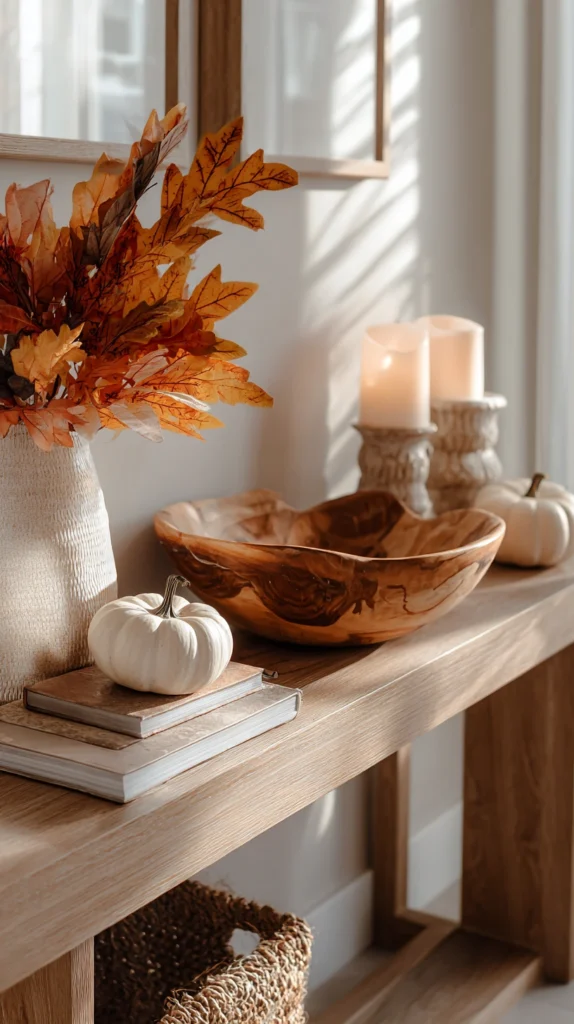
Rearranging what’s already displayed year-round rather than buying anything new at all.
Build it:
- Existing neutral-toned decor items, like wood bowls, ceramic vases, or woven baskets, relocated specifically to the dining or entryway area for the holiday
- Combined with the foraged natural elements and repurposed produce covered elsewhere in this list, creating a cohesive display from entirely existing and free materials
- Returned to their normal spot in the home once the holiday season has passed, requiring no permanent redecorating commitment at all
Why rearranging existing decor is the single most budget-friendly strategy available:
- It requires absolutely no new purchase whatsoever, relying entirely on items already owned and simply relocated for the occasion
- Neutral-toned existing decor, like wood and ceramic pieces already suited to year-round use, often blends naturally with Thanksgiving’s typical autumn palette without needing any seasonal-specific redesign
- It keeps the actual decorating process fast and low-effort, since it’s fundamentally a rearranging task rather than a shopping or crafting project
Why walking through the whole house, not just the dining room, before starting to decorate reveals more usable items than expected:
Limiting the search for repurposable decor items to just the dining room or living room can overlook genuinely useful pieces sitting in a bedroom, home office, or even a garage storage area that could work beautifully relocated to the holiday table setting for just a few weeks. A full walkthrough of the entire home before beginning any Thanksgiving-specific shopping often reveals more usable existing items than initially assumed, further reducing whatever new purchases actually end up necessary.
Cost breakdown: Free, using decor already owned throughout the home.
12. Involve Kids in Making Simple Paper Decorations
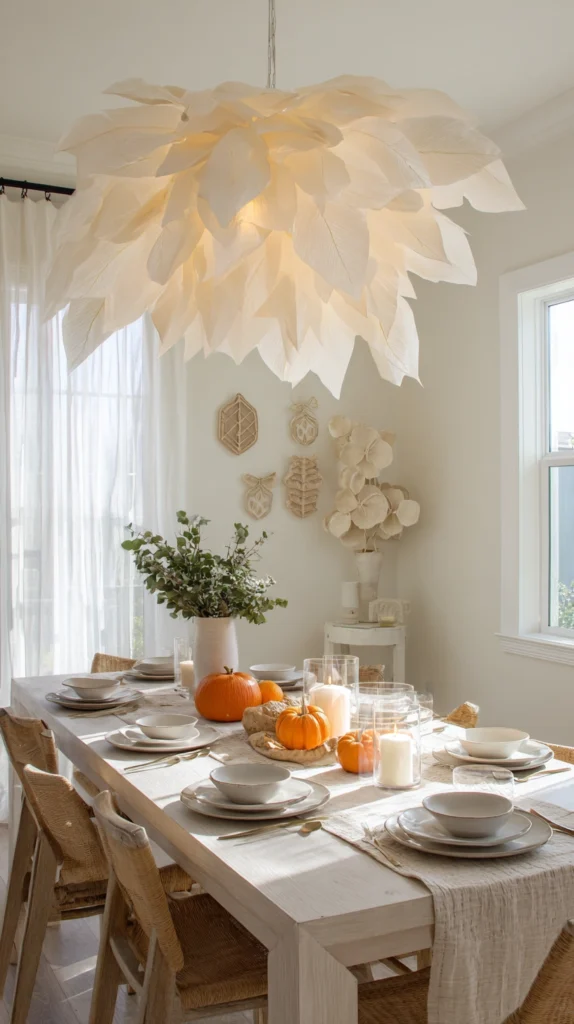
Turning a portion of the decorating process into a low-cost, genuinely engaging activity.
Build it:
- Simple paper leaf or turkey cutouts made from construction paper or recycled cardstock, created by kids in the household
- Strung together as a garland, or displayed individually across a mantel or window
- Displayed prominently among the more foraged and thrifted elements, adding a genuinely personal, handmade layer to the overall decor
Why kid-made decorations add real value beyond just their essentially free material cost:
- Construction paper and basic craft supplies cost very little, especially if already on hand from other household activities
- It gives kids a genuine, hands-on role in preparing for the holiday, adding meaning to the decor beyond its purely visual function
- Handmade decorations, particularly from children in the family, often become some of the most fondly remembered elements of a holiday’s decor in later years, regardless of their technical craft quality
Why displaying these pieces prominently, rather than treating them as an afterthought, matters for how the whole effort is perceived:
Tucking kid-made decorations into a less visible corner can inadvertently signal that the more expensive or store-bought elements matter more, when in practice these handmade pieces are often what guests genuinely comment on and what family members remember years later. Giving these pieces real prominence, positioned alongside rather than beneath the other more polished elements, reinforces that the whole point of budget-friendly decorating is genuine warmth and effort, not simply the least expensive way to approximate a more elaborate look.
Cost breakdown: Basic construction paper and craft supplies run $3 to $10 if not already owned from other household activities.
Getting started this weekend
You don’t need every idea from this list in place well ahead of the actual holiday.
- Start with a foraging walk to collect leaves, branches, pinecones, and acorns, since this single trip supplies material for several other ideas on this list at once
- Add repurposed produce and existing home decor once the foraged materials are collected and ready
- Save the more involved projects, like the no-sew burlap runner or kid-made paper decorations, for a dedicated afternoon closer to the actual holiday
Most Thanksgiving tables that feel genuinely warm and considered got there through a combination of free natural materials, a few thrifted finds, and some hands-on effort, not through a large decorating budget.
Budget reality
Thanksgiving decorating can be done almost entirely for free or at very low cost.
- Free: Foraged leaves and branches, repurposed produce, existing home decor relocated for the season, homemade place cards, kid-made paper decorations
- Under $20: Thrifted glassware and linens, a burlap table runner, printed seasonal art
- $20-50: Bulk candles and holders, string lights, a fuller combination of several ideas together
- $50+: A comprehensive combination of every idea on this list implemented at once across a larger home and guest list
Most of the warmth and visual impact comes from creativity and the season’s own natural materials, not from the total amount spent.
What actually makes budget Thanksgiving decorating look intentional rather than sparse
It was never really about matching an elaborate, expensive tablescape seen online.
It’s the foraged leaves that tie the whole table together for free, the thrifted linens that feel more genuine than anything mass-produced, the kid-made paper turkey given real prominence instead of being tucked out of sight.
Lean into the season’s own free materials, mix in a few thrifted and repurposed finds, and the table ends up feeling considerably warmer and more personal than a store-bought version ever quite manages regardless of its price tag.