
14 No-Grass Front Yard Ideas That Still Look Lush
Ditching a traditional grass lawn doesn’t mean settling for a bare, gravel-only yard, even though that’s often the image people picture first. With the right mix of groundcover, layered planting, and a bit of structure, a no-grass front yard can look fuller and more intentional than a lawn ever did, while using dramatically less water and maintenance time.
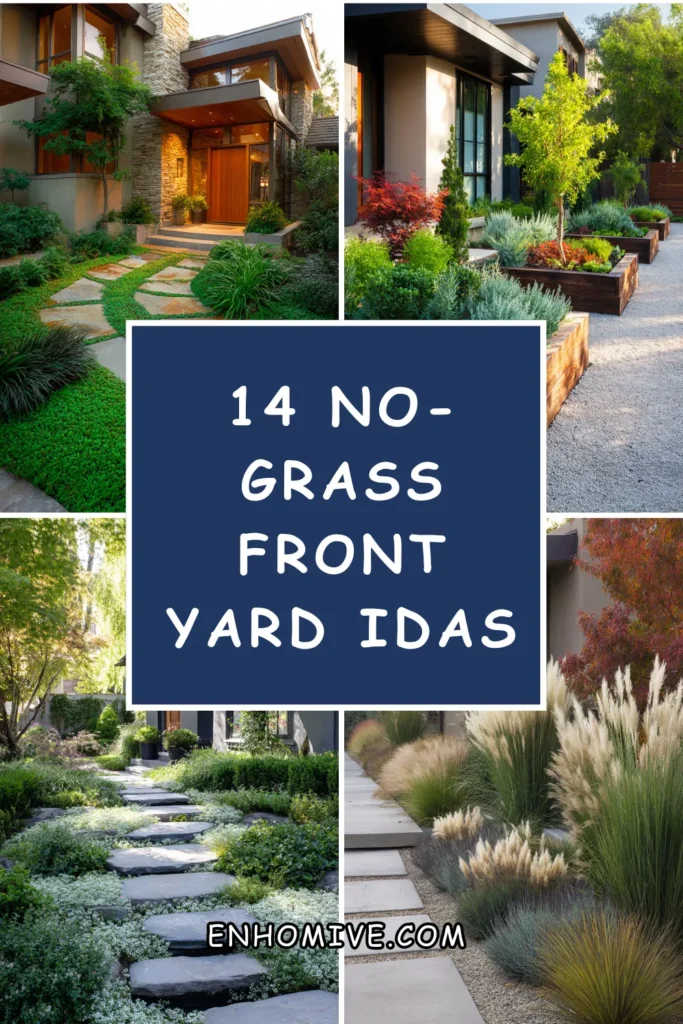
Below are 14 ways to build a lush, grass-free front yard, with real numbers on coverage, plant spacing, and budget so the space reads as designed rather than simply neglected.
Planning a Lush No-Grass Yard
What creates the “lush” feeling without grass:
- Layered plant heights (groundcover, mid-height, taller anchors)
- Dense planting rather than large gaps of bare mulch or gravel
- A mix of textures, not just one groundcover type repeated everywhere
- Some evergreen structure so the yard doesn’t look bare in winter
Common mistakes that read as “neglected” instead:
- Planting too sparsely, leaving large empty mulch gaps
- Choosing only one plant type with no height variation
- Skipping edging, so beds blend messily into the sidewalk or driveway
- No clear pathway or structure guiding the eye through the space
1. Plant a Dense Groundcover Base Instead of Mulch Alone
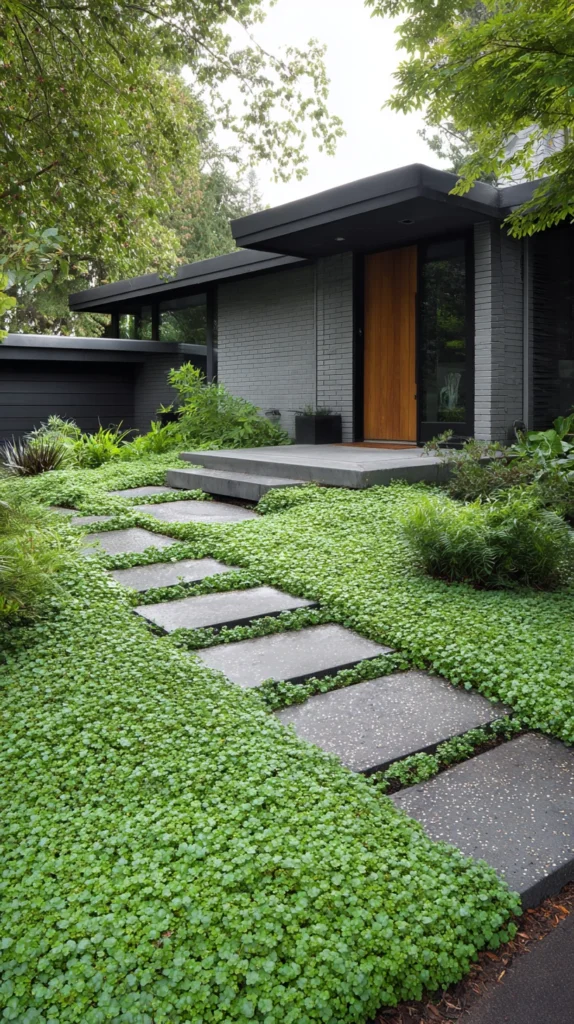
Low-growing groundcover plants, spaced closely enough to eventually knit together into a solid mat, deliver the same “covered” feeling as grass while requiring a fraction of the water and mowing. Standard groundcover plants like creeping thyme or sedum are spaced 8-12 inches apart for full coverage within one to two growing seasons.
Budget: $4-10 per plant, or roughly $300-600 to fill a 200 sq ft front yard bed at standard spacing, plus mulch to fill gaps while the plants establish. Choosing a groundcover suited to your specific sun exposure (thyme and sedum for full sun, sweet woodruff or ajuga for shade) matters more here than almost any other decision, since the wrong light match is the most common reason a groundcover planting fails to fill in.
Filling the gaps between new plants with a thin mulch layer during the first year both suppresses weeds and keeps the bed looking intentional while the groundcover spreads to full coverage. Once established, most groundcover varieties spread on their own, meaning the initial planting investment often expands to cover additional area over the following seasons without further cost.
2. Layer in Ornamental Grasses for Movement and Height
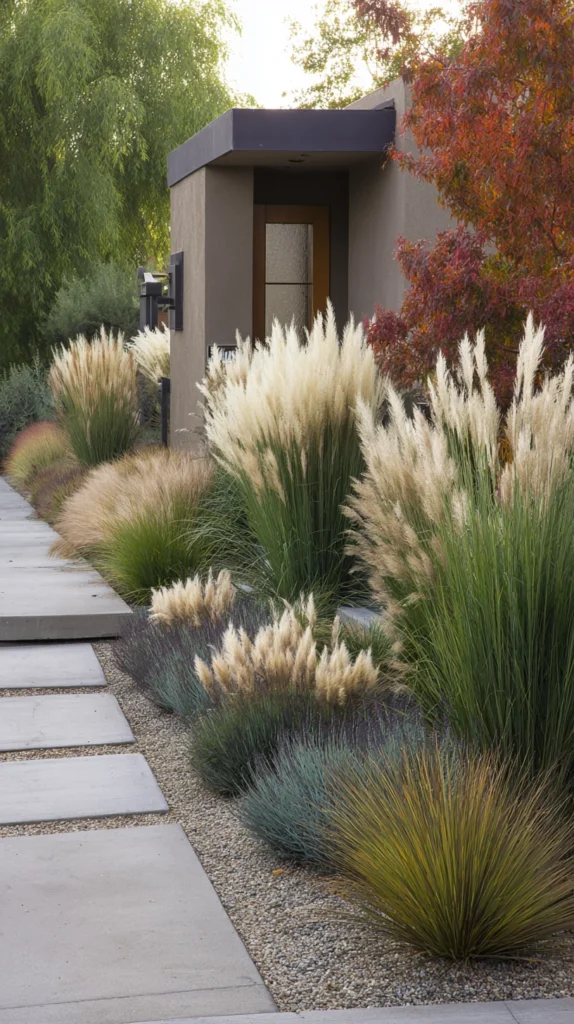
Ornamental grasses, distinct from a mowed lawn, add texture, movement, and vertical interest that a flat groundcover planting alone can’t provide. Standard ornamental grasses are spaced 24-36 inches apart, with mature clumps reaching 2-5 feet tall depending on variety.
Budget: $12-25 per ornamental grass plant, or roughly $200-400 to establish a cluster of 8-12 plants across a front yard bed. Choosing 2-3 varieties with different heights and bloom times (feathery fountain grass, upright switchgrass, and a shorter blue fescue, for example) creates the kind of layered visual interest central to a lush-reading design.
These grasses require minimal water once established and typically need only a single yearly cutback in late winter, making them one of the lowest-maintenance elements available for a no-grass yard. Positioning taller varieties toward the back of a bed or along a fence line, with shorter groundcover in front, creates the kind of depth and layering that makes a yard read as deliberately designed rather than simply “not grass.”
3. Add a Defined Gravel Pathway Through Planted Beds
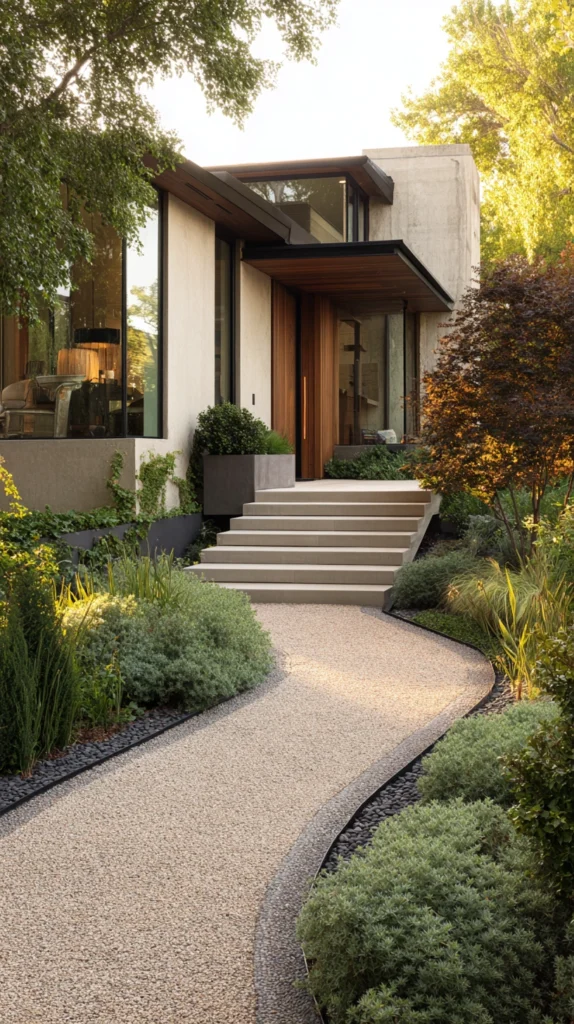
Rather than gravel as the primary yard surface, using it specifically as a defined path winding through dense planting beds gives the space clear structure while still keeping the overall impression lush and green. Standard front yard pathways run 3-4 feet wide, long enough to connect the sidewalk to the front door.
Budget: $8-15 per sq ft for a basic gravel path including edging, or roughly $400-800 for a typical front yard path of 50-75 sq ft. A steel or aluminum edging strip along both sides of the path keeps gravel contained and prevents it from migrating into the planting beds over time.
This structural path is what often separates a yard that reads as “intentionally landscaped” from one that reads as “abandoned lawn,” since a clear walking route signals deliberate design even when the rest of the space is densely and informally planted. Curving the path slightly rather than running it in a perfectly straight line also makes a small front yard feel larger by extending the visual journey from sidewalk to door.
4. Plant Flowering Perennials in Drifts, Not Single Specimens
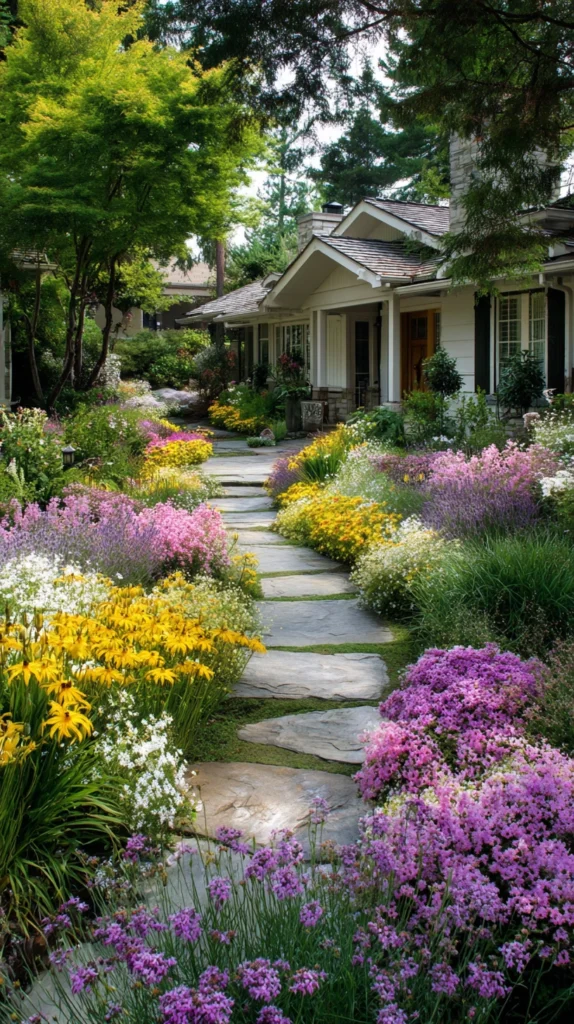
Grouping the same flowering perennial in clusters of 5-7 plants, rather than scattering single specimens of many different varieties, creates the dense, colorful “drift” planting style that reads as lush even in a modestly sized yard. Standard perennial drifts use plants spaced 12-18 inches apart within each cluster.
Budget: $8-18 per perennial plant, meaning a single drift of 5-7 plants runs $50-125, with a full front yard typically needing 3-5 different drifts for good seasonal coverage. Choosing perennials with staggered bloom times (early spring bulbs, summer coneflowers, and fall asters, for example) keeps the yard looking colorful across multiple seasons rather than peaking all at once and then going quiet.
This drift-planting technique is one of the most reliable ways to make a modest plant budget look significantly more abundant than the same number of plants scattered individually across the yard. Repeating the same drift pattern two or three times across the yard, rather than making every cluster completely different, also creates visual rhythm that ties the whole design together.
5. Use Low Evergreen Shrubs for Year-Round Structure
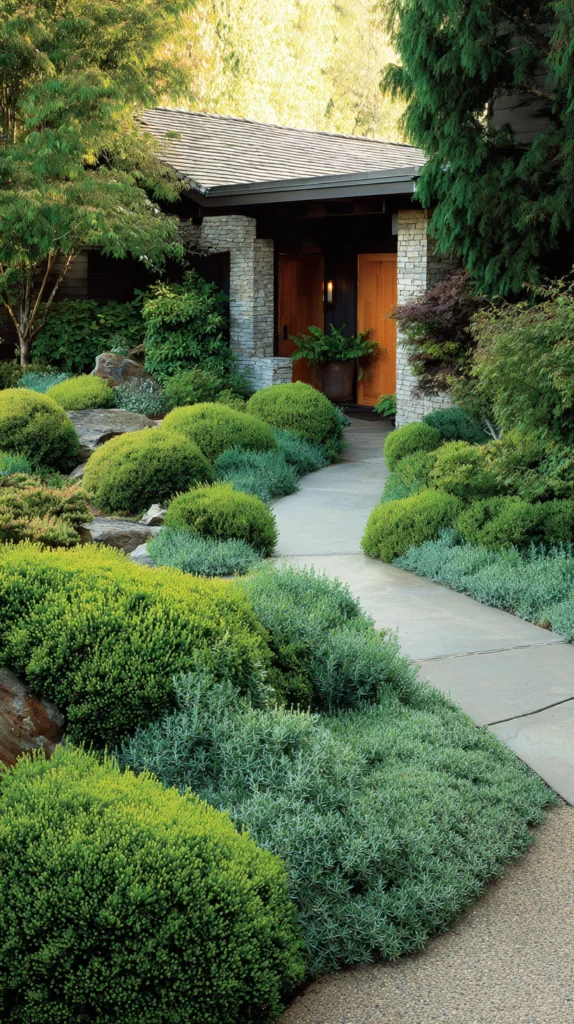
Compact evergreen shrubs, planted as anchor points throughout a no-grass yard, keep the space from looking bare and lifeless during winter months when perennials and grasses have died back. Standard low evergreen shrubs like boxwood or dwarf holly are spaced 24-36 inches apart, reaching 2-4 feet in height and width at maturity.
Budget: $20-45 per evergreen shrub, or roughly $150-350 to add 5-8 shrubs as structural anchors throughout a front yard design. Positioning these shrubs at key points — flanking a front walkway, anchoring the corners of a bed — gives the overall design a sense of permanence and structure that purely seasonal plantings lack on their own.
This is one of the more important categories for achieving a genuinely “lush” look year-round, since a yard planted entirely in perennials and grasses can look sparse and brown for several months each year in most climates. A mix of rounded and more upright evergreen shapes adds subtle variety without needing to introduce additional plant categories.
6. Add a Living Ground Cover Lawn Alternative Like Clover
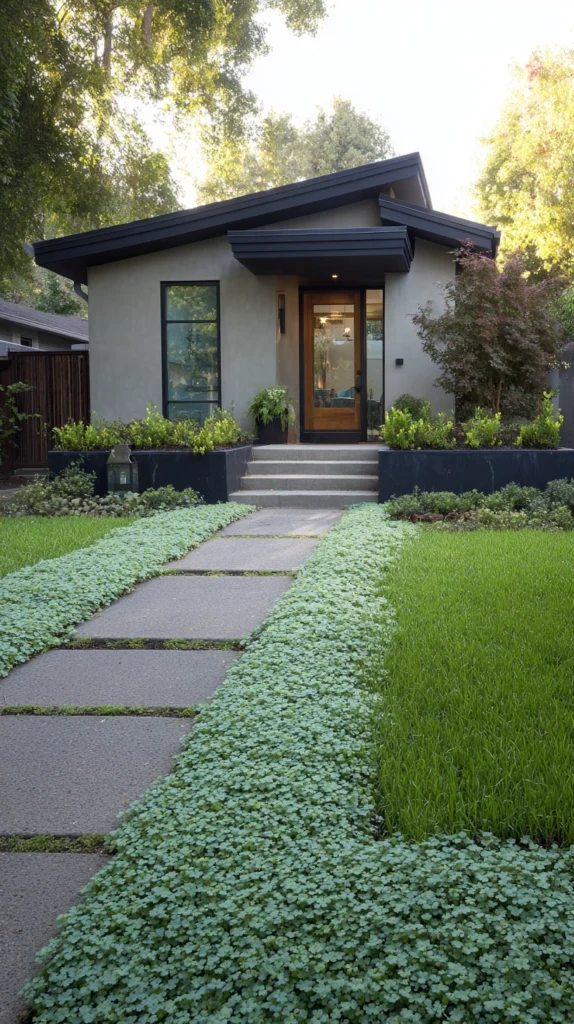
Clover lawns have become a popular grass substitute specifically because they still deliver the soft, walkable, green-carpet look of traditional grass while requiring far less water, no mowing in most cases, and no fertilizer. Standard clover lawns are seeded at a rate of about 2-4 ounces per 1,000 sq ft, similar in application to grass seed.
Budget: $15-30 for enough clover seed to cover a 1,000 sq ft front yard, dramatically less expensive than sod and requiring less ongoing cost than a traditional grass lawn’s fertilizer and water needs over time. Clover also fixes nitrogen in the soil naturally, which can improve overall soil health in the yard over time compared to grass, which depletes nitrogen and typically requires regular fertilizing.
This is one of the few options on this list that most closely replicates the actual function of a traditional lawn (walkable, soft, uniformly green) while still meeting the goal of eliminating a water-and-mow-intensive grass species specifically. Clover does spread readily and can attract bees during its bloom period, which is worth considering for households with young children or bee allergies in the family.
7. Build Raised Garden Beds for a Structured, Productive Look
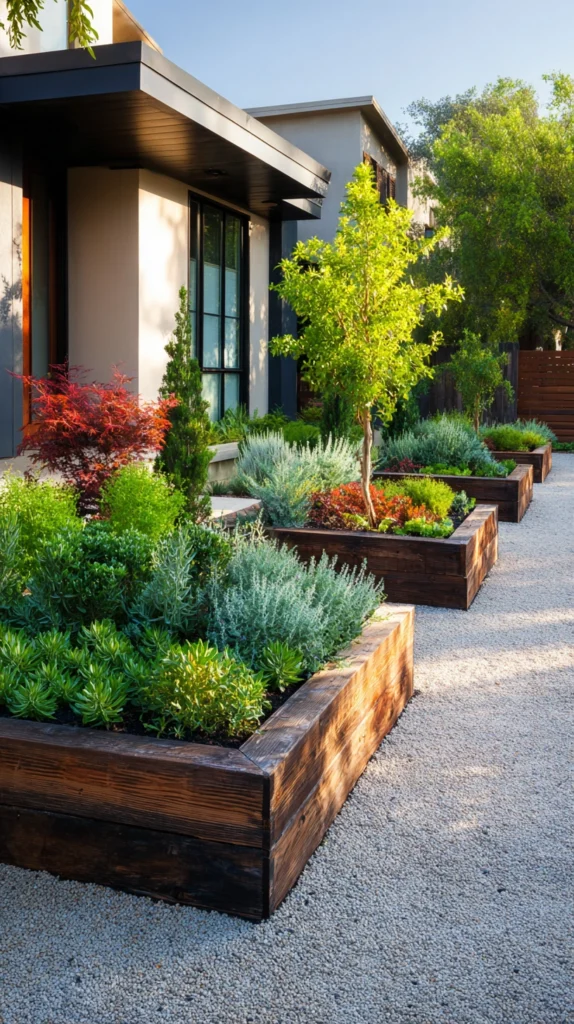
Raised beds filled with a mix of ornamental and edible plants bring both visual structure and genuine function to a front yard, turning unused lawn space into something actively productive. Standard raised beds run 4×8 feet and 12-18 inches deep, sized to fit comfortably within most front yard footprints.
Budget: $150-400 per raised bed including materials and quality soil, with most front yards accommodating 2-4 beds depending on overall yard size. Choosing a consistent material and finish across multiple beds (matching wood stain, or the same metal panel style) keeps a multi-bed front yard looking cohesive rather than like a patchwork of mismatched containers.
This is a particularly good option for households wanting a no-grass yard that also produces food, since raised beds allow much more control over soil quality than working with existing native soil directly. The defined, geometric shape of raised beds also naturally provides the structural clarity that keeps a densely planted yard from reading as overgrown or unintentional.
8. Add a Dry Streambed With Planted Edges
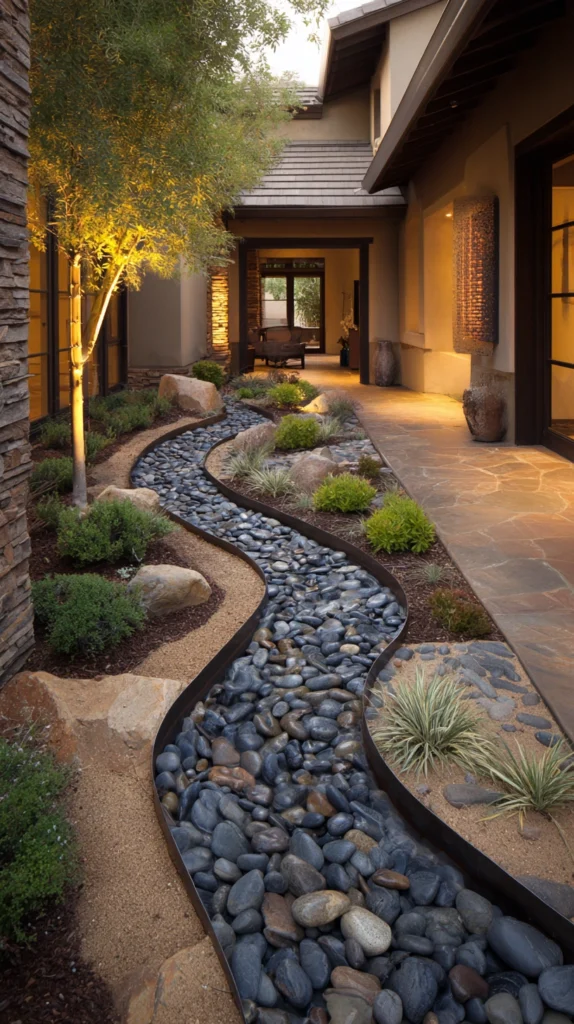
A dry streambed, using river rock arranged to mimic a natural waterway and lined with lush plantings along its edges, manages drainage while adding a striking design feature that breaks up a purely flat planting bed. Standard dry streambeds run 2-4 feet wide, extending as long as needed to follow the yard’s natural drainage path.
Budget: $15-25 per linear foot for a basic dry streambed installation, or roughly $450-1,000 for a 30-foot run, plus the cost of plants for the surrounding edges. This is a particularly practical choice for front yards that deal with runoff from a driveway, downspout, or sloped street, since the streambed manages water functionally while also serving as the design’s visual centerpiece.
Planting moisture-loving perennials or ornamental grasses directly along the streambed’s edges, where they’ll benefit from any runoff moisture collecting there, integrates the hardscape feature naturally into the surrounding lush planting rather than leaving it as an isolated rock feature. This combination of function and design is part of what separates a genuinely well-planned no-grass yard from one that simply replaced grass with bare rock.
9. Plant a Mixed Native Meadow Instead of a Single Groundcover
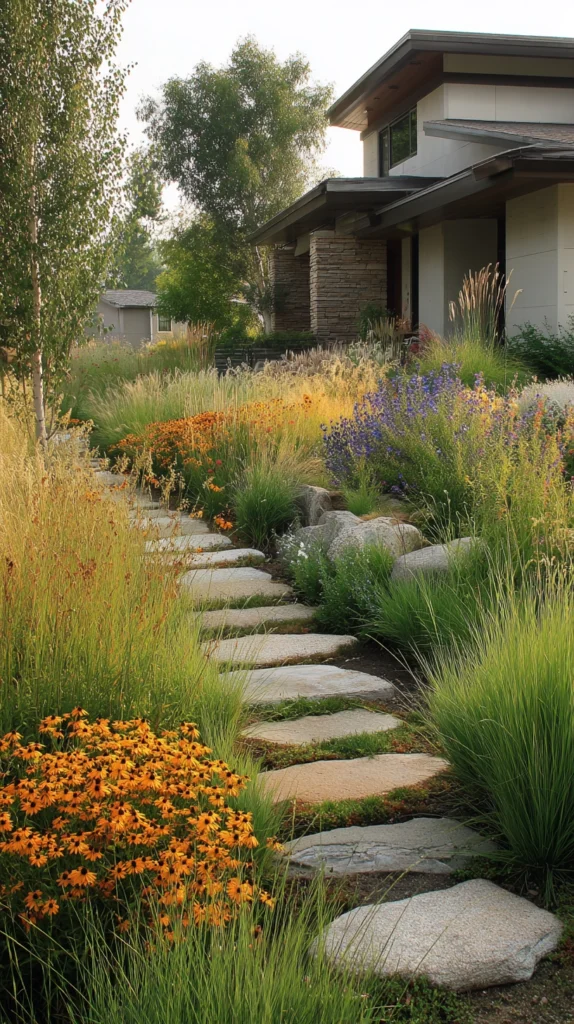
A meadow-style planting using a mix of native grasses and wildflowers suited to your specific region creates a naturalistic, layered look that requires significantly less water and maintenance than turf grass once established. Standard native meadow seed mixes are sown at rates specific to the seed blend, typically covering 500-1,000 sq ft per pound of seed mix.
Budget: $80-200 for a quality native seed mix covering a typical front yard, or more if using transplanted native perennials for faster initial establishment rather than starting entirely from seed. Checking with a local native plant nursery or state extension office for a seed mix specific to your exact climate and soil type produces dramatically better results than a generic national wildflower mix.
This option requires more patience than most others on this list, since a seeded meadow typically takes two to three full growing seasons to reach its mature, full appearance, but the long-term water and maintenance savings are considerable once established. This approach also tends to support significantly more local pollinator and wildlife activity than nearly any other option on this list, adding ecological value beyond the visual and water-saving benefits.
10. Use Stepping Stones Through a Fully Planted Bed
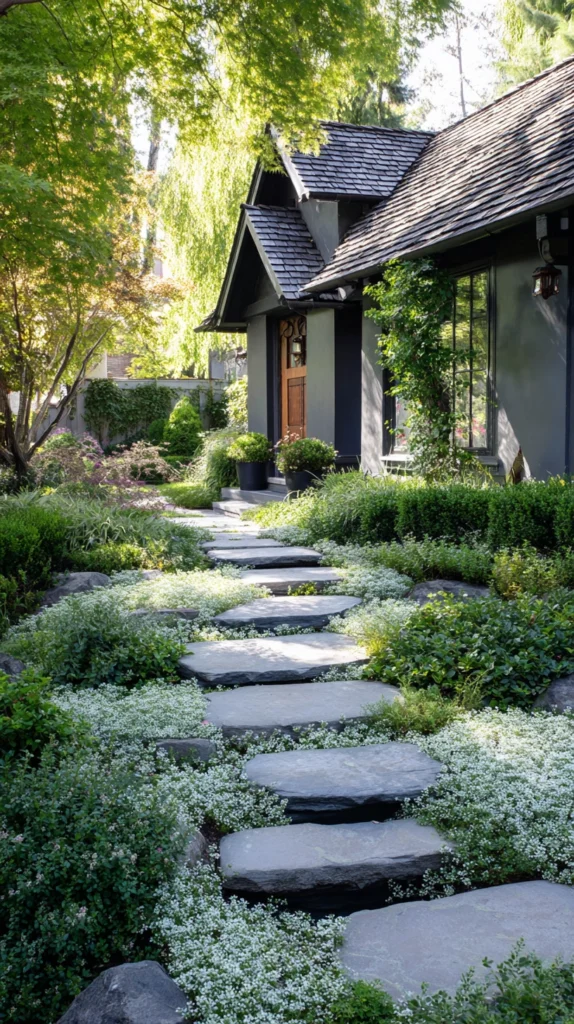
Rather than a defined gravel path, individual stepping stones set directly into a dense planting bed create a more organic, cottage-garden feeling walkway while still providing clear, functional access to the front door. Standard stepping stones run 18-24 inches in diameter, spaced about 24-30 inches apart center to center to match a natural walking stride.
Budget: $15-40 per stepping stone, or roughly $150-350 for enough stones to create a full front walkway, depending on material choice (concrete, natural stone, or a more decorative option). Setting the stones slightly below the surrounding soil or groundcover level, rather than sitting on top, allows low plants to grow right up to and slightly over the stone edges for a more integrated, less hardscape-heavy look than a defined gravel path.
This approach works particularly well combined with a dense groundcover or drift-planted perennial bed, since the stones provide clear functional access while the surrounding plants can grow densely without needing to be kept clear of a wider path edge. This is one of the more visually charming options on this list, often associated with classic cottage garden design specifically.
11. Add Vertical Interest With a Small Ornamental Tree
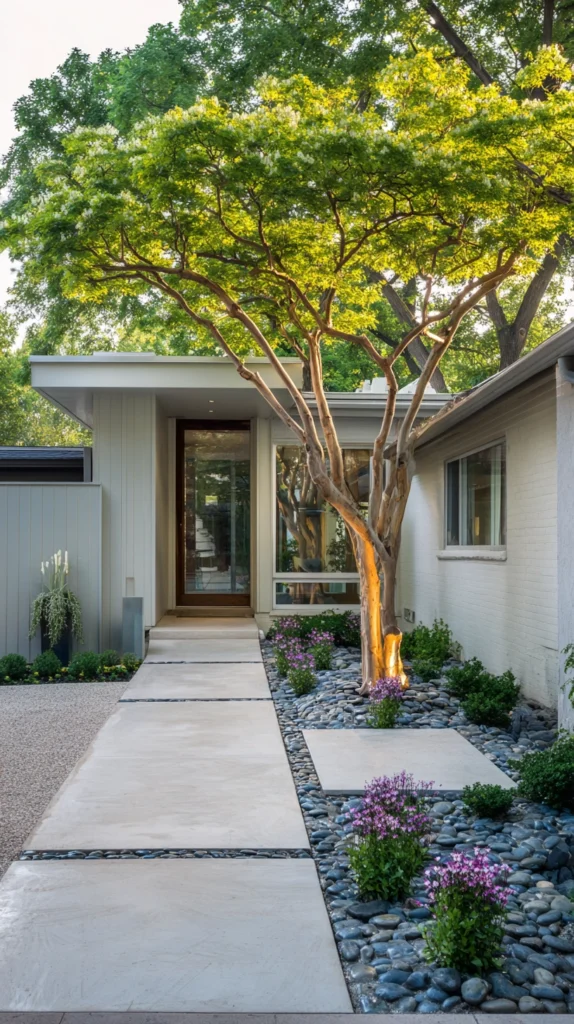
A single well-placed small ornamental tree — a Japanese maple, a crepe myrtle, or a dogwood depending on climate — gives a no-grass front yard the kind of vertical anchor and shade that purely low, ground-level plantings can’t provide on their own. Standard small ornamental trees reach 12-20 feet at maturity, appropriately scaled for most front yard settings without overwhelming the space.
Budget: $80-250 for a quality small ornamental tree depending on size and species at planting, a bigger single investment than most other individual plants on this list, but one that provides the yard’s primary focal point for decades once established. Positioning the tree off-center, rather than dead center in the yard, tends to create a more naturalistic, professionally landscaped look than a perfectly symmetrical placement.
This single element does an enormous amount of visual work in making a yard feel established and mature, even while surrounding plantings are still filling in during their first year or two. Underplanting the base of the tree with a shade-tolerant groundcover, once the canopy is established enough to cast meaningful shade, extends the lush, layered look right up to the trunk rather than leaving bare mulch beneath it.
12. Build a Xeriscape Design With Drought-Tolerant Perennials
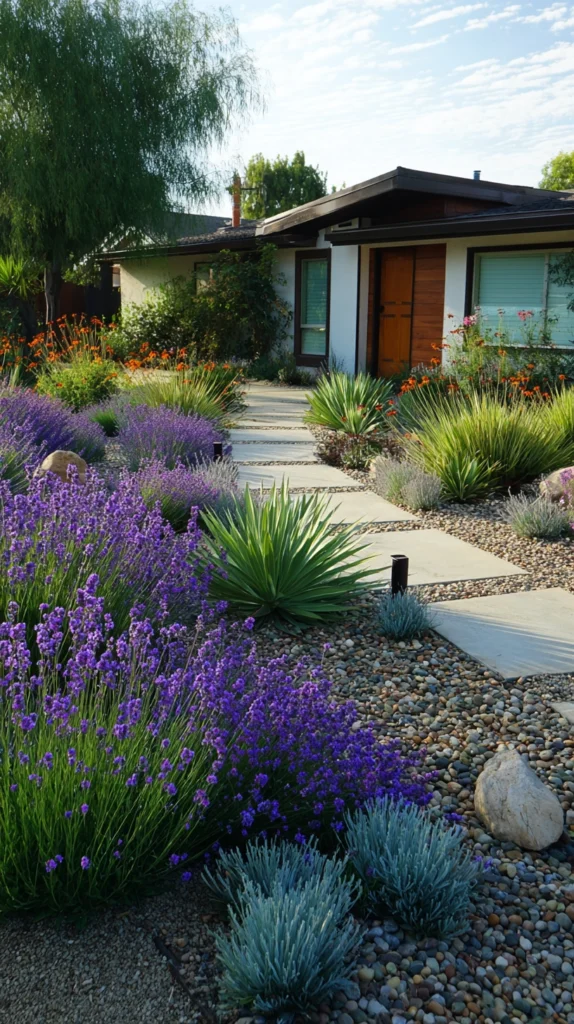
Xeriscaping, which specifically uses drought-tolerant plants suited to low water conditions, can still achieve a genuinely lush look when plants are selected and spaced thoughtfully rather than sparsely scattered across gravel. Standard xeriscape designs use drought-tolerant perennials like lavender, yarrow, and Russian sage spaced 18-24 inches apart.
Budget: $10-20 per drought-tolerant perennial, or roughly $200-450 to plant a 200 sq ft xeriscape bed at appropriate density. The key difference between a xeriscape yard that reads as “lush” versus one that reads as “sparse and rocky” almost always comes down to planting density and the amount of exposed bare mulch or gravel left between plants.
Choosing plants with varying bloom colors and foliage textures, rather than a single repeated species throughout, prevents a xeriscape design from feeling monotonous even though every plant shares the same low-water requirement. This approach delivers some of the most significant long-term water savings on this entire list while still achieving a colorful, textured, genuinely lush-reading front yard once established.
13. Add Container Plantings Along a Walkway or Porch
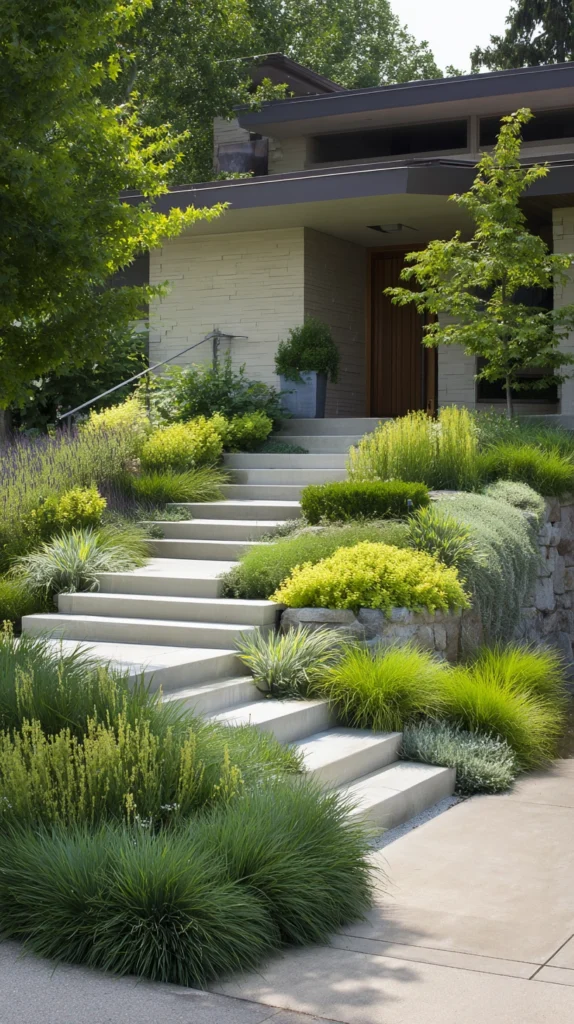
Large planters filled with dense, layered plantings along a front walkway or porch edge add lushness and seasonal flexibility without requiring any permanent bed installation. Standard large planters run 18-24 inches in diameter, spaced every 4-6 feet along a walkway for a rhythmic, welcoming effect.
Budget: $30-60 per planter, plus $15-25 in soil and plants per container, with a full walkway of 4-6 planters running $200-500 total. Following the classic “thriller, filler, spiller” container design principle — one taller anchor plant, several mid-height filler plants, and a trailing plant spilling over the edge — creates a full, lush look in each individual container.
This approach is particularly useful for renters or anyone not ready to commit to permanent in-ground beds, since the entire display can be rearranged or relocated as needed. Grouping a few planters together at the entry, rather than spacing every single one perfectly evenly, creates a stronger visual moment right at the most important sightline guests and passersby actually notice.
14. Combine Multiple Groundcover Types for a Patchwork Effect
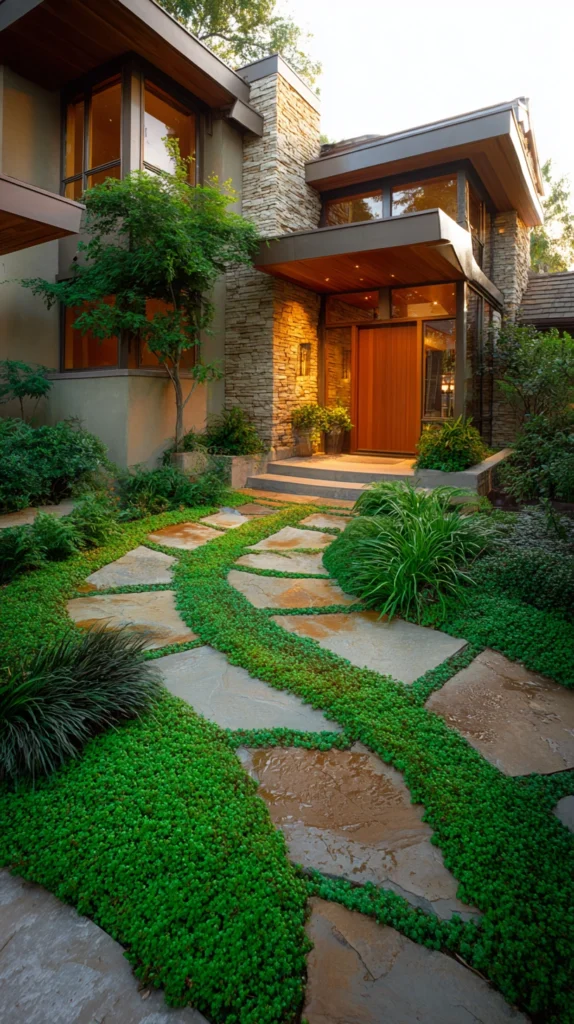
Rather than a single groundcover species covering the entire yard, combining 2-3 different low-growing plants in adjoining patches creates a textured, patchwork look with more visual complexity than one uniform planting. Standard combination groundcover designs use plants like creeping thyme, sedum, and dwarf mondo grass, each planted in its own defined section.
Budget: $4-12 per plant across the combined varieties, with total cost similar to a single-species groundcover planting of the same total square footage, typically $300-600 for a 200 sq ft yard. Choosing groundcovers with genuinely different textures and colors (a fine, feathery thyme next to a chunkier sedum) maximizes the visual contrast this technique is meant to achieve.
Defining the boundary between each groundcover patch with a thin line of edging or a row of small stones prevents the different varieties from competing and blending messily into each other as they spread and mature. This is one of the more visually sophisticated options on this list, delivering a look that reads as more deliberately designed than a single-species groundcover lawn alternative used on its own throughout the whole yard.
Quick Start Project List
This weekend, under $150:
- A small starter patch of groundcover plants: $60
- A cluster of one flowering perennial drift: $75
- Mulch to fill remaining bare gaps while plants establish: $20
Budget-Friendly Version
Lowest-cost ways to start:
- Native wildflower seed mix instead of nursery transplants
- Clover seed instead of sod or extensive perennial planting
- Dividing existing perennials from a neighbor’s yard rather than buying new
- Starting with one small bed and expanding gradually each season
Success Indicators
- Beds look full and layered, not sparse with large gaps of bare mulch
- The yard has visual interest across multiple seasons, not just one bloom period
- Structure (a path, edging, or evergreen anchors) gives the space clear organization
- Water and maintenance needs have dropped noticeably compared to a grass lawn
- Neighbors and passersby read the yard as intentional landscaping, not a neglected lawn
Remember
Prioritize planting density over plant variety if choosing between the two, since gaps and bare mulch are what most commonly read as “unfinished” rather than lush, layer plant heights from groundcover through mid-height perennials to taller anchor shrubs or trees, include some evergreen structure so the yard doesn’t look bare during winter months, add a clear path or edging detail so the design reads as intentional even when planting is dense and informal, and expect a genuinely lush no-grass yard to take one to three growing seasons to reach its full, mature look rather than appearing complete immediately after planting.