
15 Fall Front Door Wreath and Entryway Styling Ideas Beyond Basic Pumpkins
Pumpkins are the default fall styling material for a reason — they’re inexpensive, widely available, and unmistakably seasonal. But default doesn’t mean best, and an entryway built entirely around pumpkins, however well-arranged, ends up looking like every other entryway on the block during October.
The season has a much wider material vocabulary than orange gourds: dried hydrangea, persimmons, cattails, copper foliage, even mushrooms and moss, all carry the same warm, harvest-season feeling without relying on the one ingredient everyone already reaches for first.
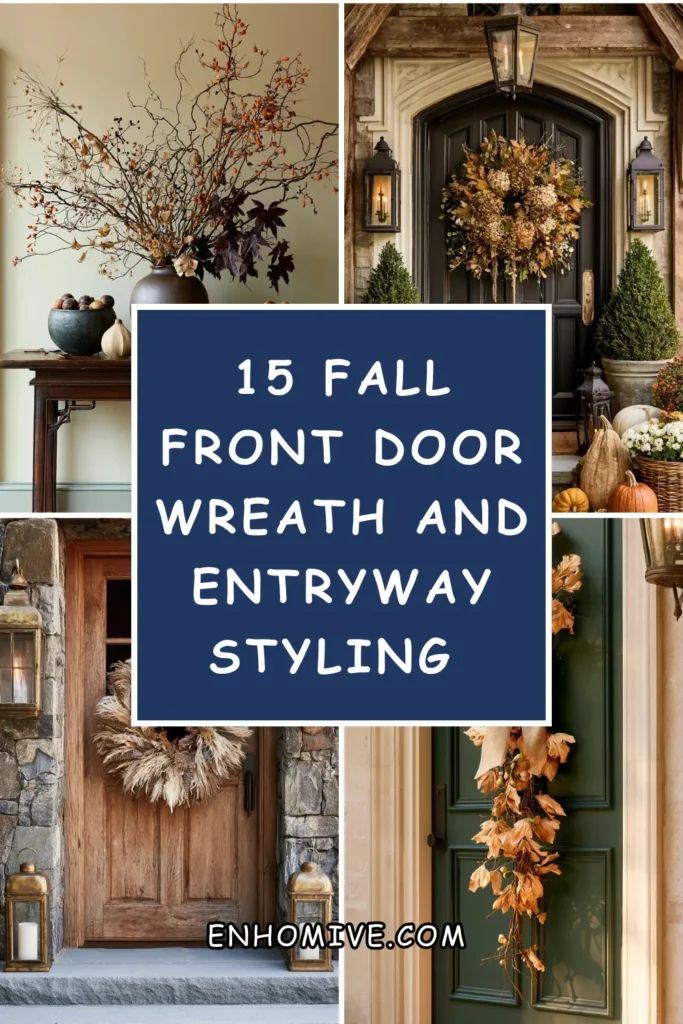
This list treats the front door and entryway as one connected styling zone, built specifically around alternatives to the pumpkin default. None of these ideas reject fall styling’s usual principles — grouping, restraint, warm tones, a mix of heights — they just draw from a different, less expected material palette to get there.
Here are 15 ways to style a door and entryway for fall without a single pumpkin in sight, or with pumpkins reduced to a supporting role rather than the main event.
Why an Entryway Built Only on Pumpkins Starts to Look Generic
The single-material problem:
Without material variety:
- Every seasonal element — the wreath, the table display, the porch styling — built from the same pumpkin-and-orange-mum formula
- No textural or colour variation beyond the expected palette
- The result: reads as the most common, least distinctive version of fall styling available
With material variety:
- Dried botanicals, fruit beyond pumpkins, foraged branches, and unexpected textures like moss or feathers
- A colour palette that draws from fall’s full range — deep plum, warm rust, muted olive, cream — rather than orange alone
- The result: reads as a specifically considered take on the season, not the default one
The scale-of-pumpkin problem:
- Large, bright orange pumpkins used as the primary visual anchor at every scale, from the wreath to the porch steps
- The result: the same bright orange note repeated so many times it becomes the entryway’s entire personality, crowding out every other seasonal element
The one-note colour problem:
- A palette limited entirely to orange and cream, the two tones most associated with the pumpkin default
- The result: even beautifully executed, the palette reads as expected rather than considered
The Five Beyond-Pumpkins Styling Principles
Before choosing any individual idea below, these five principles help build a fall entryway around a wider material and colour vocabulary:
Fruit and produce beyond pumpkins:
- Persimmons, pomegranates, figs, and apples all carry the same harvest association without the visual shorthand pumpkins carry
- Using them instead, or alongside pumpkins in a supporting role, immediately shifts the palette
Foraged and dried materials over purchased seasonal decor:
- Dried hydrangea, cattails, seed pods, and branches, often free or very low-cost
- These materials also carry a more specific, personal quality than mass-produced seasonal items
A wider colour palette than orange and cream:
- Deep plum, rust, olive, and warm brown, drawing on fall’s full range rather than its most obvious two tones
- The same restraint principle that applies to any considered colour palette
Texture as the seasonal signal, not just colour or imagery:
- Moss, feathers, dried seed heads, and rough bark textures read as autumnal on their own, independent of any specific fruit or colour
- Texture-driven styling ages better and feels less tied to a single trend than imagery-driven styling
Pumpkins as an accent, not the anchor, if used at all:
- A single small pumpkin tucked into a larger arrangement, rather than the arrangement’s central feature
- This isn’t about excluding pumpkins entirely, just changing their role in the overall composition
1. A Dried Hydrangea Wreath
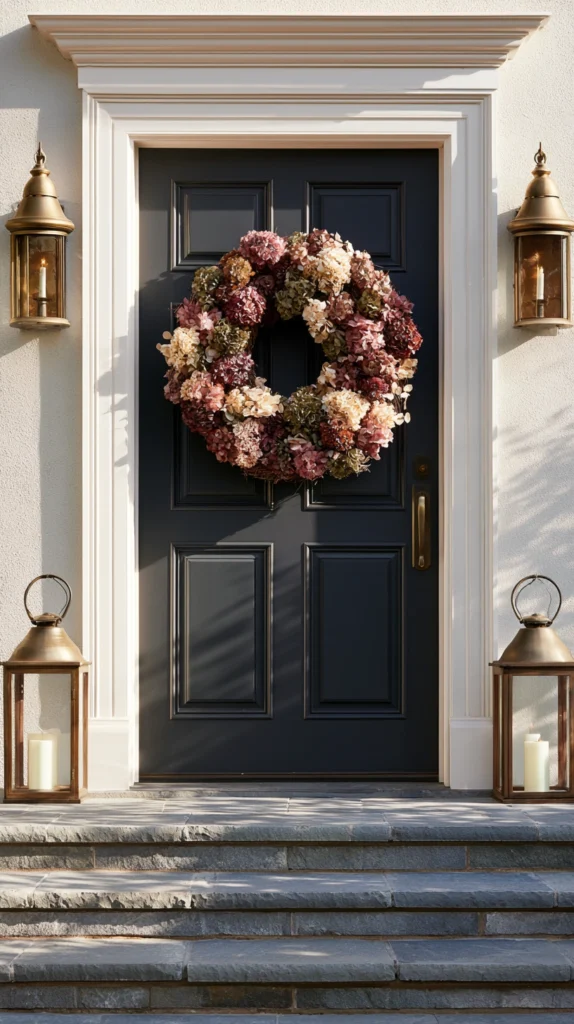
A wreath built from dried hydrangea blooms in muted rust, wine, and cream tones, replacing the more common wheat-and-pumpkin wreath format entirely.
Why hydrangea reads as fall without any pumpkin imagery at all
Dried hydrangea naturally shifts to warm, muted tones as it dries — rust, dusty rose, deep cream — carrying the same seasonal colour palette as more expected fall materials, but with a softer, more textured, less immediately “pumpkin-adjacent” appearance.
Assembly and sourcing
- A grapevine or foam wreath base, covered with dried hydrangea heads secured with floral wire or hot glue
- Hydrangea can be air-dried at home from a fresh bouquet, or purchased already dried from a florist
Cost breakdown
- Wreath base: $10–18
- Dried hydrangea (sufficient to cover a 16-inch wreath): $20–35
- Total: $30–53
2. Moss and Mushroom Door Accents
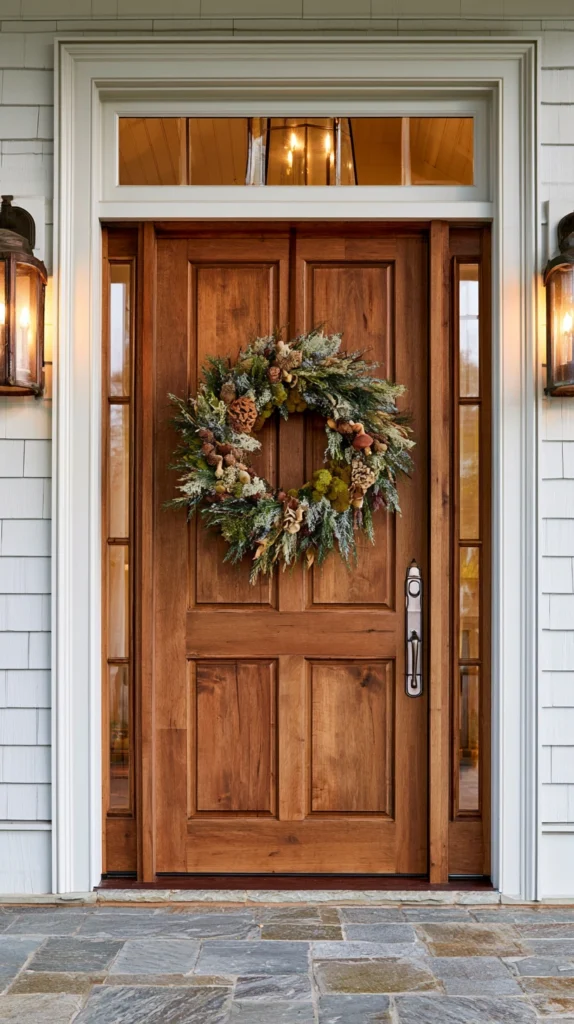
A small cluster of preserved moss and faux mushroom accents, incorporated into a wreath or displayed in a small dish beside the door, drawing on a woodland rather than harvest-farm aesthetic.
Why a woodland material palette offers a genuinely different fall mood
Most fall entryway styling draws from a farm or orchard aesthetic — pumpkins, wheat, apples. Moss and mushroom accents shift the reference point entirely toward a forest floor after autumn rain, a distinctly different seasonal mood that reads just as clearly as fall without repeating the same visual shorthand as every other pumpkin-topped porch.
Placement
- A small dish or shallow bowl of moss and faux mushrooms beside the door, rather than a full wreath built entirely from this material
- Can be incorporated as an accent within a hydrangea or foraged branch wreath (Idea #1 or #13) for a layered effect
Cost breakdown
- Preserved moss: $10–18
- Faux mushroom accents: $8–15
- Total: $18–33
3. A Feather and Grass Wreath
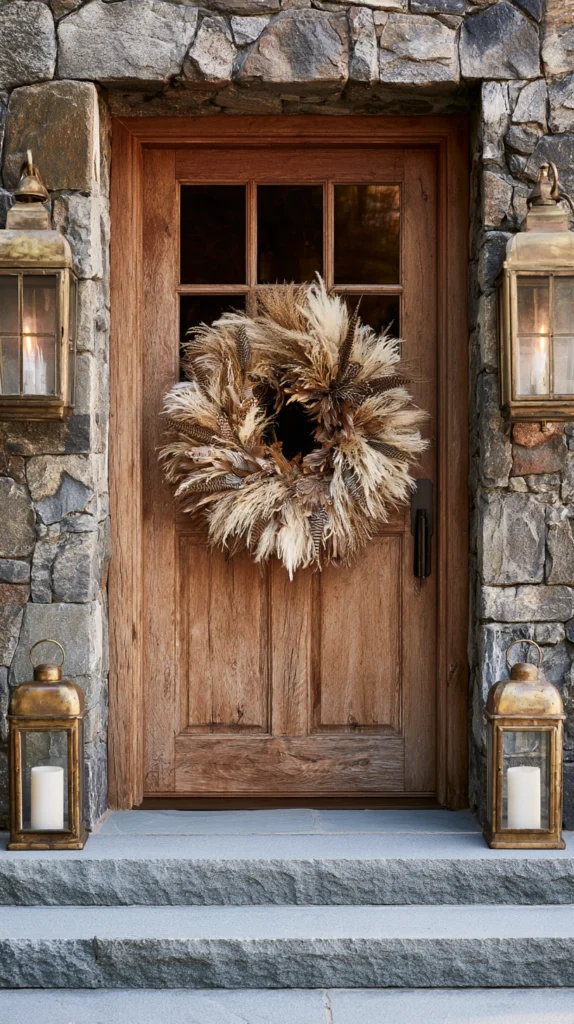
A wreath incorporating natural pheasant or turkey feathers alongside dried grasses, for a textured, slightly wild arrangement distinct from a typical foliage wreath.
Why feathers add a texture no botanical material provides
Feathers introduce movement and a distinctly different tactile quality than any dried foliage or floral material, catching light and shifting slightly in the wind in a way a static wreath doesn’t. The combination with dried grass keeps the overall palette grounded in fall’s typical warm, neutral tones while adding this genuinely different textural note.
Assembly
- A grapevine or twig base, with dried grasses forming the bulk of the wreath and feathers tucked in at intervals, secured with floral wire
- Natural, muted feather tones (brown, cream, warm grey) rather than dyed or brightly coloured feathers
Cost breakdown
- Natural feathers: $12–22
- Dried grass and wreath base: $18–30
- Total: $30–52
4. A Copper and Metallic Foliage Wreath
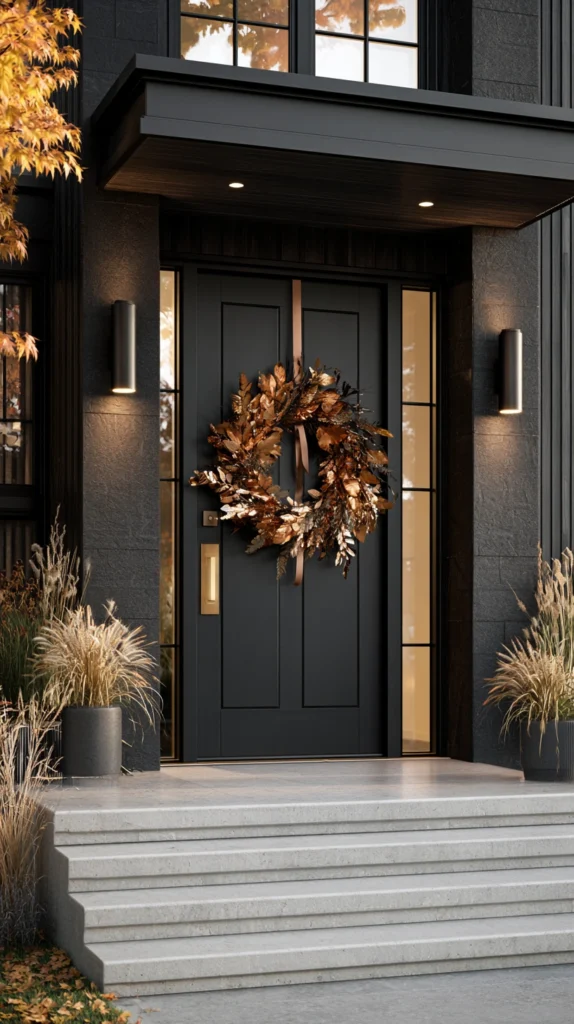
A wreath built from faux foliage in copper and bronze tones rather than the more typical orange and red, paired with a small amount of matte gold or copper ribbon.
Why metallic-toned foliage shifts the palette away from the expected
Copper and bronze sit adjacent to the standard fall orange on the colour wheel but read as considerably more refined and less literal, avoiding the direct visual association with pumpkins that a bright orange wreath carries. The metallic quality also catches light in a way that standard matte foliage doesn’t.
Styling
- A single thin copper or bronze ribbon woven through, rather than a large bow, to keep the metallic note as an accent rather than the wreath’s dominant feature
- Paired with a door in a neutral or dark tone, where the metallic foliage will read most clearly
Cost breakdown
- Copper-toned faux foliage wreath: $28–50
- Total: $28–50
5. A Persimmon and Pomegranate Entry Table Cluster
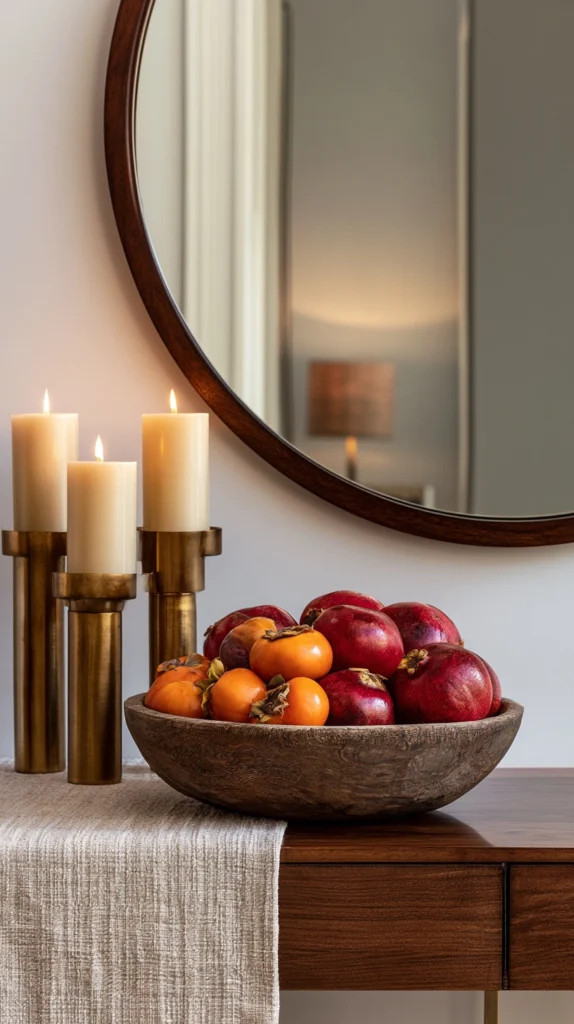
A small grouping of fresh persimmons and pomegranates in a wooden bowl on the entry table, replacing the more common mini pumpkin cluster.
Why these specific fruits carry the same harvest signal without the pumpkin shorthand
Persimmons and pomegranates are both genuinely in season through fall, carrying the same real, edible harvest quality a pumpkin display aims for, but in less immediately expected forms. Their deeper orange-red and true red tones also introduce more colour variation than a uniform pumpkin grouping typically provides.
Assembly
- 4–5 persimmons, 2–3 pomegranates, grouped in a wooden or ceramic bowl
- Positioned as the entry table’s central grouping, following the same odd-number and height-variation principles as any styled arrangement
Cost breakdown
- Persimmons and pomegranates: $12–22
- Total: $12–22 (assuming an existing bowl)
6. A Fig Branch Swag
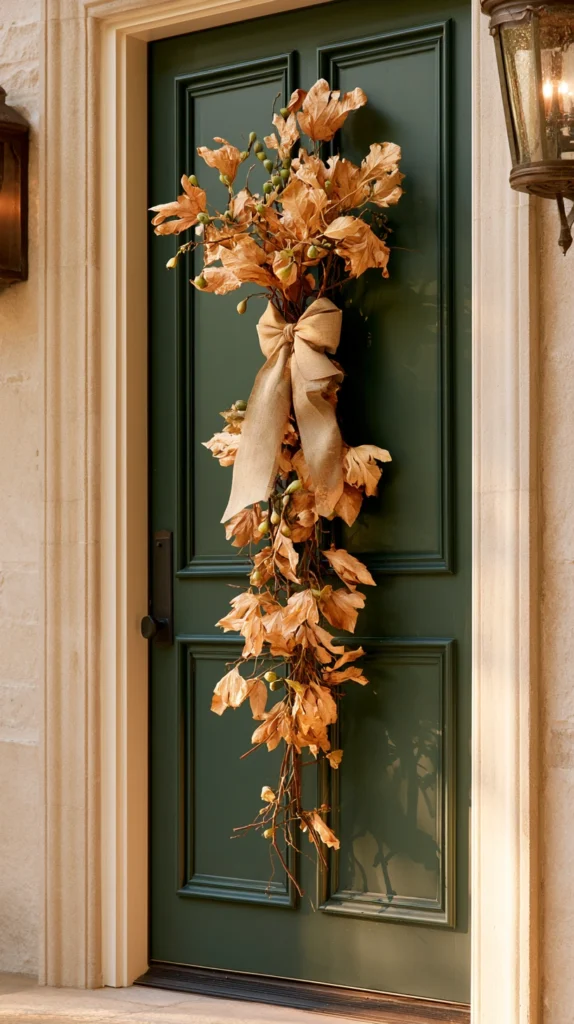
A vertical swag made from dried or faux fig branches and leaves, hung to one side of the door rather than a centred round wreath.
Why fig branches offer an unusual but genuinely seasonal alternative
Fig trees drop their large, distinctively shaped leaves in fall, and a swag built from dried or faux fig branches carries both the leaf’s specific late-season colour shift (deep gold, rust, brown) and an architectural, slightly Mediterranean quality distinct from the typical New England-inspired maple leaf palette.
Placement
- Hung vertically along the door frame or to one side of the door, rather than as a full round wreath, similar to the vertical swag approach for glass-paneled doors
- Left loosely gathered rather than tightly bundled, for a more natural, foraged appearance
Cost breakdown
- Dried or faux fig branches: $22–38
- Total: $22–38
7. A Cattail and Reed Arrangement
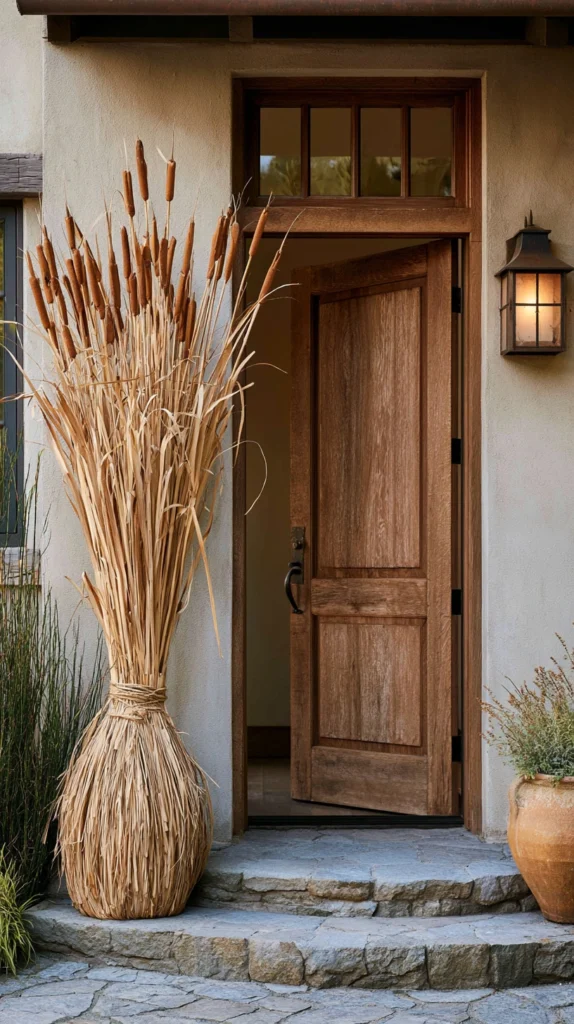
A tall arrangement of dried cattails and reeds in a floor vase beside the door, rather than a wreath at all, drawing on a marsh or wetland-inspired fall palette.
Why cattails suit an entryway that wants height rather than a wreath
Not every entryway styling decision needs to centre on the door itself. A tall floor arrangement beside the entrance introduces vertical presence and a genuinely different fall material — cattails carry a specific, quiet, late-season quality distinct from foliage or fruit-based styling.
Sizing and placement
- Height: 36–48 inches in a tall floor vase, positioned to one side of the door rather than directly in the walking path
- A simple, unadorned bundle rather than mixed with other florals, letting the cattails’ natural form be the full statement
Cost breakdown
- Dried cattails and reeds (bundle): $18–30
- Tall floor vase: $25–50
- Total: $43–80
8. A Dried Chili Pepper Garland
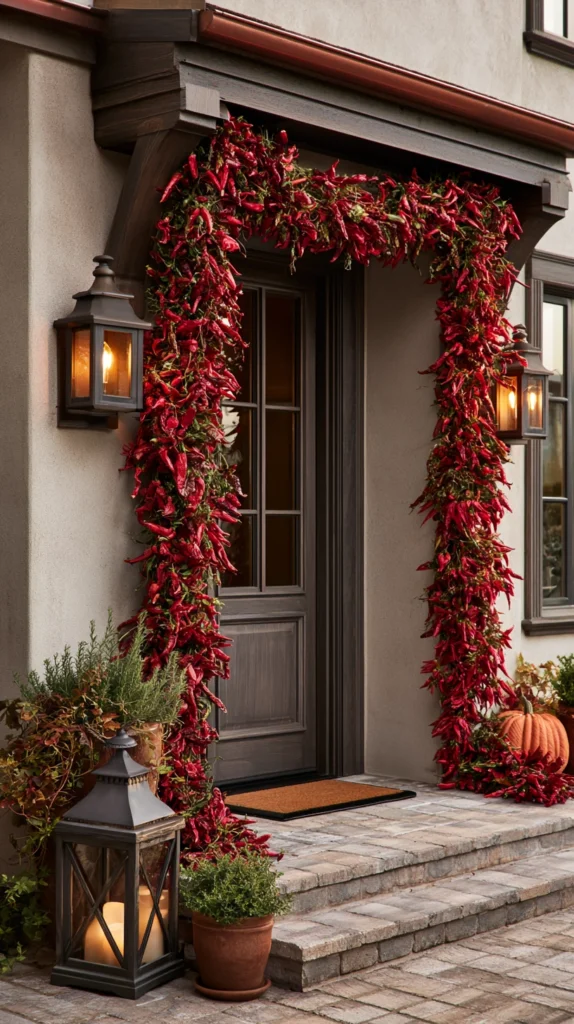
A garland of dried red chili peppers, strung and draped around the door frame or across the entry table, introducing a warm red note distinct from both pumpkin orange and typical berry red.
Why chili peppers work as an unexpected but genuinely warm accent
Dried chili garlands carry a long tradition in Southwestern and Mediterranean entryway styling, offering a deep, saturated red with a slightly rustic, sun-dried quality that reads as harvest-adjacent without any connection to the standard pumpkin palette at all.
Assembly and placement
- Pre-strung dried chili garlands are widely available and require no assembly
- Draped along the door frame or laid across the entry table as a horizontal accent, rather than formed into a round wreath
Cost breakdown
- Dried chili garland: $15–28
- Total: $15–28
9. An Artichoke Accent Wreath
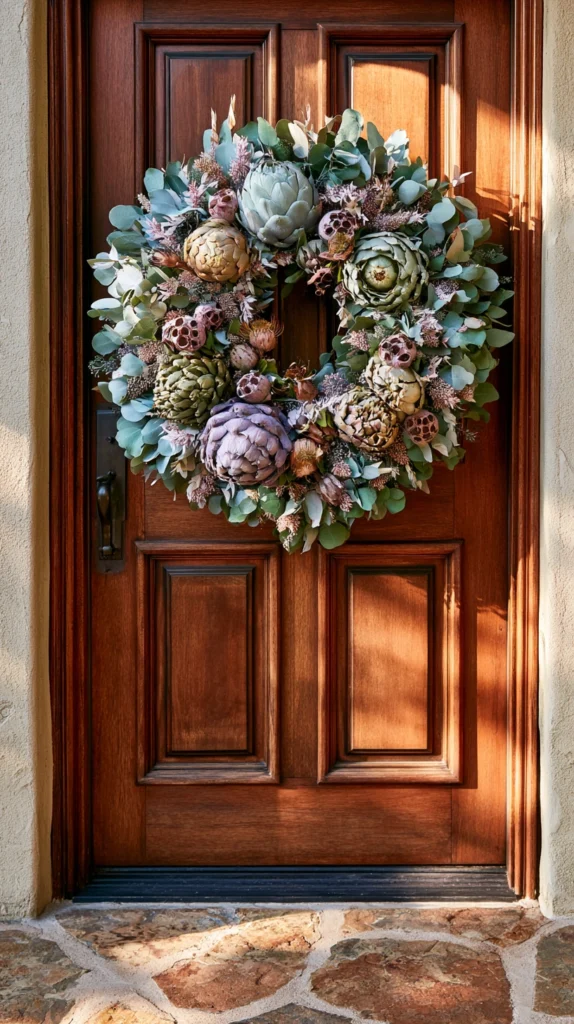
A wreath incorporating dried artichokes alongside eucalyptus or other muted greenery, for a sculptural, textured alternative to a foliage-only wreath.
Why dried artichokes add a sculptural quality no foliage alone provides
A dried artichoke’s layered, geometric form catches light and shadow in a distinctive way, adding a sculptural focal point within a wreath that a flat foliage base alone can’t achieve. The muted, silvery-green to brown colour range also complements a wider variety of door colours than a bright orange element would.
Assembly
- 3–5 dried artichokes wired into a eucalyptus or dried greenery base wreath
- Positioned as focal points at roughly the 10, 2, and 6 o’clock positions around the wreath, rather than clustered in one spot
Cost breakdown
- Dried artichokes: $15–25
- Greenery wreath base: $20–35
- Total: $35–60
10. A Preserved Fern and Moss Door Basket
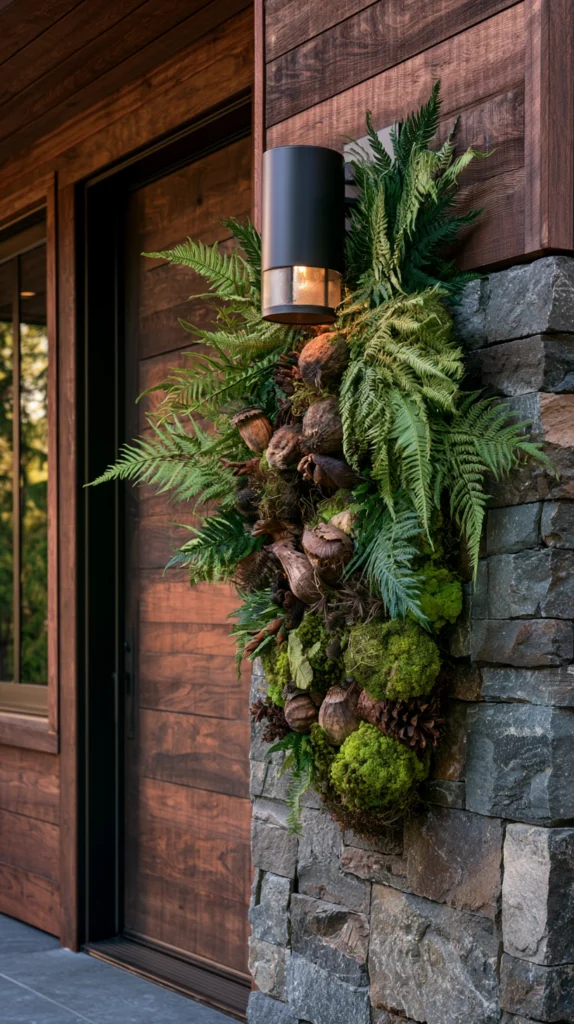
A shallow basket, hung on the door in place of a traditional wreath, filled with preserved ferns, moss, and a few small dried seed pods.
Why a basket format offers a different silhouette than a round wreath
A basket shape, rather than a circular wreath, immediately reads as a different kind of door display, and its slightly deeper, more three-dimensional form suits a woodland-inspired material palette (moss, fern, seed pods) better than a flat wreath base would.
Assembly
- A shallow, flat-backed basket, filled and secured with floral foam or moss to hold the arrangement in place
- Preserved ferns as the base layer, with moss filling gaps and a few dried seed pods as accent details
Cost breakdown
- Shallow flat-backed basket: $15–28
- Preserved ferns and moss: $20–35
- Total: $35–63
11. A Wool Felt Ball Wreath
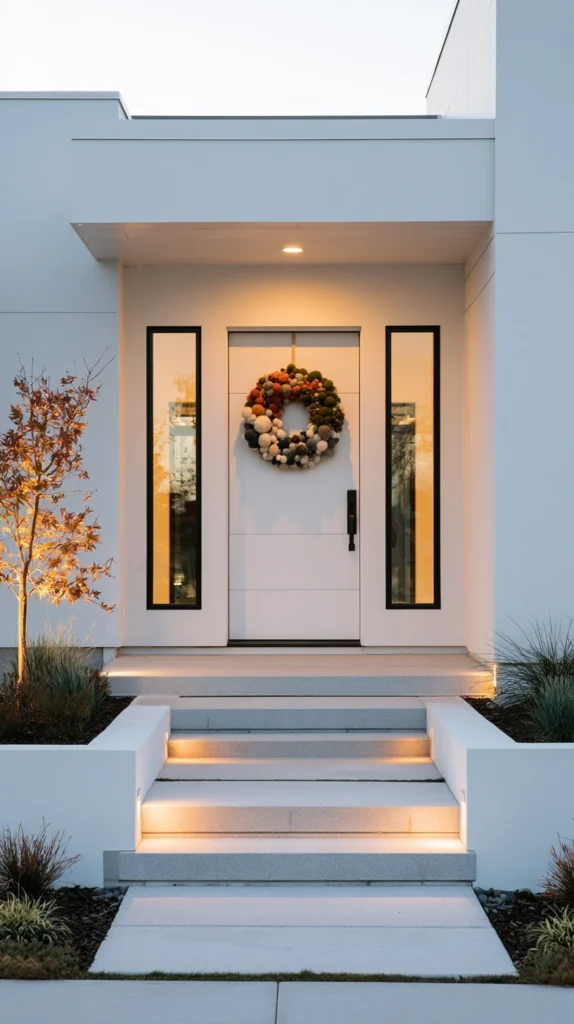
A wreath made from wool felt balls in warm, muted fall tones — rust, olive, warm brown, cream — offering a completely non-botanical alternative to any organic material wreath.
Why a non-organic material still reads clearly as fall
Colour alone can carry a seasonal signal without relying on any literal fall imagery — foliage, fruit, or otherwise. A felt ball wreath in a considered, muted autumn palette reads unmistakably as a fall wreath through colour and texture alone, while offering a distinctly modern, graphic alternative to every other wreath style on this list.
Assembly and sourcing
- Pre-made felt ball wreaths are widely available, or individual felt balls can be purchased and wired onto a wreath base
- A mix of 3–4 tones within the same warm, muted family, rather than a single uniform colour
Cost breakdown
- Felt ball wreath (pre-made or DIY materials): $30–55
- Total: $30–55
12. Sculptural Ceramic Pumpkin Alternatives
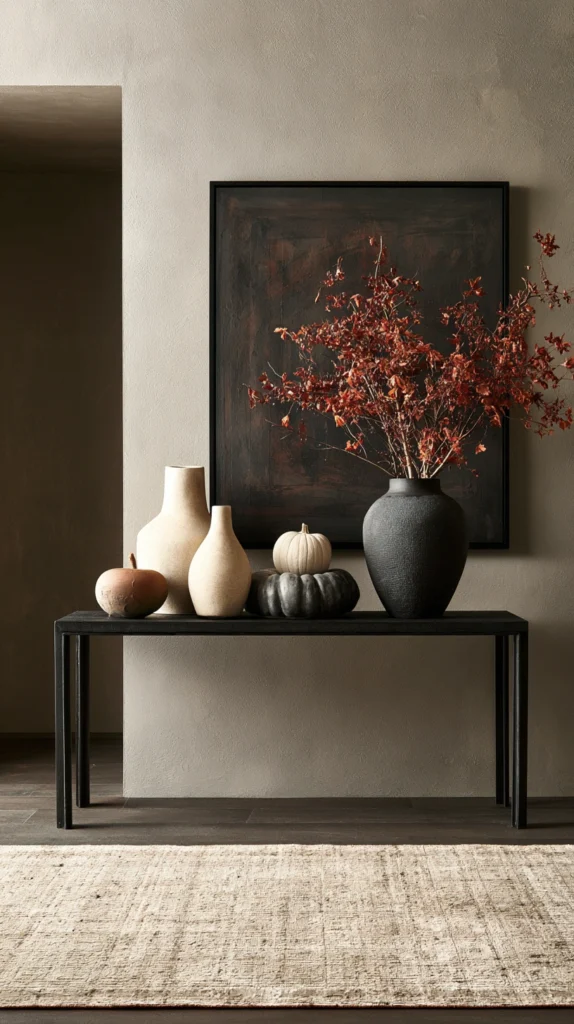
Abstract, sculptural ceramic forms — organic, gourd-inspired shapes without literal pumpkin detailing — used in place of traditional decorative pumpkins on the entry table or porch steps.
Why an abstracted form still nods to the season without repeating it literally
These pieces reference the general silhouette and warmth of a pumpkin or gourd without the literal ridged, stemmed pumpkin shape, allowing the entryway to nod toward the season’s general shape language while reading as a genuine piece of ceramic art rather than seasonal decor.
Selection and styling
- Matte, neutral-glazed ceramic forms (cream, sand, warm grey) rather than orange-glazed pieces, which would reintroduce the exact colour association being avoided
- Grouped in odd numbers, following the same grouping principle as any styled display
Cost breakdown
- Sculptural ceramic accent pieces (2–3): $40–90
- Total: $40–90
13. A Foraged Branch and Berry Arrangement
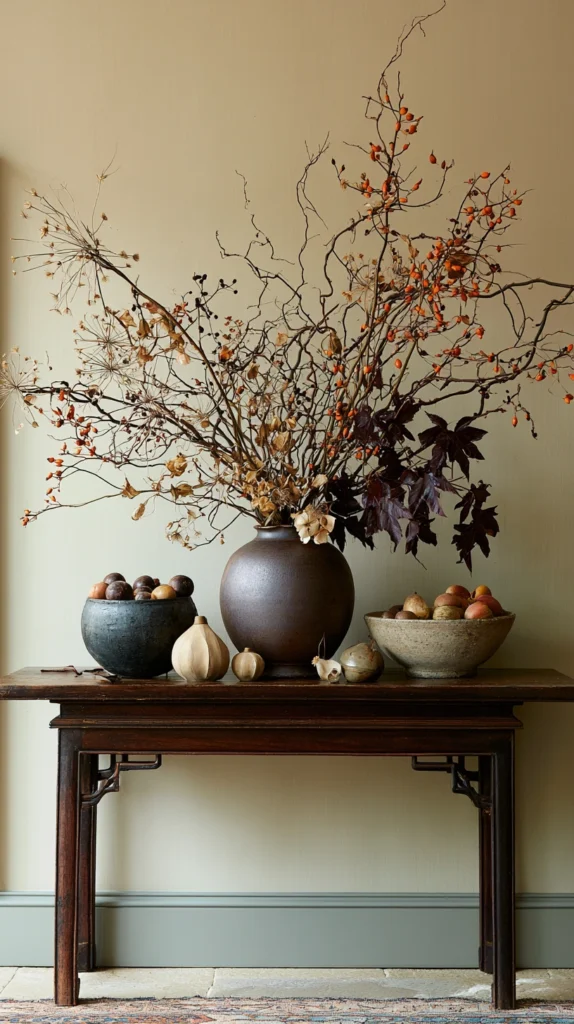
An arrangement built from branches, seed pods, and berries gathered from a yard or a walk, rather than any purchased seasonal decor at all.
Why foraged material offers the most genuinely personal alternative on this list
Every other idea on this list involves a purchase of some kind. A foraged arrangement costs nothing beyond the time spent gathering it, and it carries a specificity — the exact branches and berries available in one particular yard or neighbourhood at one particular moment — that no purchased wreath or arrangement can replicate.
Gathering and assembly
- Look for branches with interesting form (curved, forked), any berries still holding colour, and seed pods or dried grasses
- Arranged loosely in a vase or tied into a simple bundle, without forcing the material into a uniform, purchased-looking shape
Cost breakdown
- Foraged materials: $0
- Vase or twine, if needed: $0–15
- Total: $0–15
14. A Non-Orange Colour-Blocked Entryway
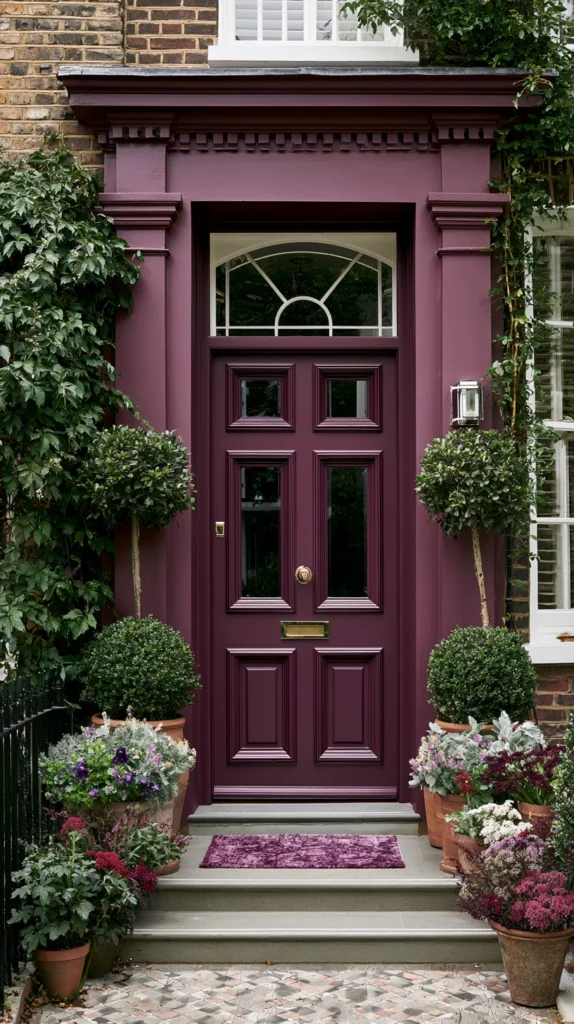
The entryway’s full colour palette — table linens, candle, and any florals — built around deep plum, olive, or charcoal rather than orange and cream, applied consistently across every styled element.
Why a full colour-palette shift changes the entryway’s impression more than any single object
Individual alternative materials help, but a genuinely different overall colour direction — applied consistently across the wreath, table styling, and any additional accents — does more than any single swap to move the entryway away from the expected default. This mirrors the same colour-restraint principle that separates a distinctive Thanksgiving table from a standard orange-and-cream one.
Building the palette
- Choose one dominant non-orange tone (deep plum, olive, or charcoal) and apply it across the wreath ribbon, any candles, and table linens
- Cream or warm white as the supporting neutral, rather than introducing a third competing tone
Cost breakdown
- Coordinated ribbon, candle, and linen in the chosen palette: $30–55
- Total: $30–55
15. The Complete Beyond-Pumpkins Entryway
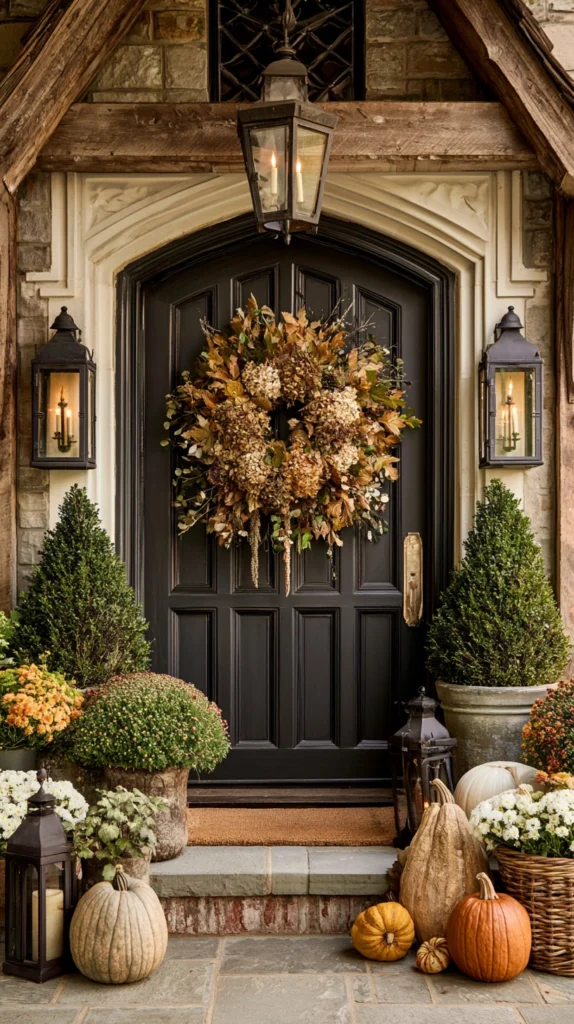
A front door and entryway styled with every principle above applied together — the definitive version of a fall entrance built entirely around materials and colours other than the standard pumpkin default.
What separates the complete entryway from a single alternative wreath
A dried hydrangea wreath on an otherwise standard, pumpkin-styled entry table still reads as one alternative choice within an otherwise expected setup. The complete version extends the same alternative-material thinking to every layer — the door, the table, and the overall palette — so the entire entrance reads as a genuinely different take on fall styling, not just one swapped element.
The elements of the complete entryway
The door:
- A dried hydrangea, feather, or artichoke wreath, chosen to suit the door’s own style (Idea #1, #3, or #9)
- Moss and mushroom accents tucked into the wreath for added texture (Idea #2)
The entry table:
- A persimmon and pomegranate cluster in place of mini pumpkins (Idea #5)
- A cattail arrangement beside the table for height (Idea #7)
- Sculptural ceramic accent pieces (Idea #12)
The palette:
- A consistent non-orange colour direction — plum, olive, or charcoal — applied to ribbon, linens, and any candles (Idea #14)
The personal layer:
- A foraged branch and berry arrangement, gathered rather than purchased (Idea #13)
The entryway on an ordinary fall afternoon:
The wreath on the door carries dried hydrangea and a small tuck of moss, nothing orange in sight. The table inside holds persimmons and pomegranates instead of pumpkins, the cattails beside it adding height without a single piece of purchased seasonal decor doing the obvious thing. Anyone walking up to the door registers “fall” immediately, without registering “pumpkin” at all — the season communicated through colour, texture, and material rather than through the one image everyone already expects.
Cost breakdown for the complete entryway
Assuming a starting point of a bare door and entry table:
- Wreath (hydrangea, feather, or artichoke): $30–60
- Moss and mushroom accents: $18–33
- Persimmon and pomegranate cluster: $12–22
- Cattail arrangement: $43–80
- Ceramic accent pieces: $40–90
- Palette-coordinated ribbon and linens: $30–55
- Foraged arrangement: $0–15
Total: $173–355
Phased for a lighter versus fuller styling pass:
Lighter version ($50–110):
- One alternative wreath
- The persimmon and pomegranate cluster
- A foraged accent
Fuller version ($150–350):
- All of the above, plus the cattail arrangement, ceramic pieces, and full colour-palette coordination
The complete beyond-pumpkins entryway: not a rejection of fall styling’s usual principles, but the same principles applied to a wider, less expected material and colour vocabulary.
The Question Before Any Beyond-Pumpkins Styling Project
Before buying anything:
Is the goal to avoid pumpkins entirely, or just to make them less central?
If the answer is: avoid entirely — build the whole palette around alternative fruit, dried botanicals, and a non-orange colour direction, as in the complete version above.
If the answer is: pumpkins can stay, just shouldn’t dominate — keep one or two small pumpkins as a minor accent within a larger hydrangea, artichoke, or persimmon-based arrangement, rather than removing them completely.
If the answer is: budget is the primary constraint — the foraged branch arrangement costs nothing and delivers a genuinely personal, distinctive result on its own.
If the answer is: unsure which alternative material fits the home’s existing style — a dried hydrangea or artichoke wreath suits most traditional and cottage-style entrances, while the felt ball or copper foliage wreath suits a more modern door better.
The approach follows how strongly the pumpkin default should be avoided, not a strict rulebook. Even one or two swaps — a different wreath material, a persimmon bowl instead of mini pumpkins — meaningfully shifts an entryway away from the most expected version of fall styling.
Getting Started This Weekend
The immediate beyond-pumpkins update:
Swap the mini pumpkin bowl for persimmons or pomegranates.
The fastest, lowest-effort way to shift the entry table’s palette away from the expected.
Choose one alternative wreath material and build or buy a single wreath around it.
Hydrangea, artichoke, or feathers all deliver a genuinely different first impression at the door.
Forage one small branch or seed pod arrangement from a yard or a walk.
Costs nothing and adds a personal, specific quality no purchased item can replicate.
Commit the ribbon, candle, and linen choices to one non-orange tone.
Ties every element together under one considered palette rather than several unrelated swaps.
The rest of the styling: the elaboration of this weekend.
The alternative: the beginning. The beyond-pumpkins entryway: what fall styling becomes once it draws from the season’s full material vocabulary instead of its most obvious ingredient.