

14 Autumn Garden Transition Ideas From Summer Blooms to Fall Interest
The transition plan changed how my garden looked in September more than any single plant purchase ever did. Not the new perennial bed. Not the extra mulch. Not the pruned shrubs or the cleared beds or the fresh edging.
The handoff.
Because planning the actual transition, rather than just letting summer fade, did something no individual plant could manage alone. Before it: a garden that peaked in July and then slowly, visibly declined for two months, brown and spent by the time anyone noticed fall had arrived. After it: a garden with a plan for exactly this moment, summer blooms handing off to fall interest before the decline ever becomes obvious.
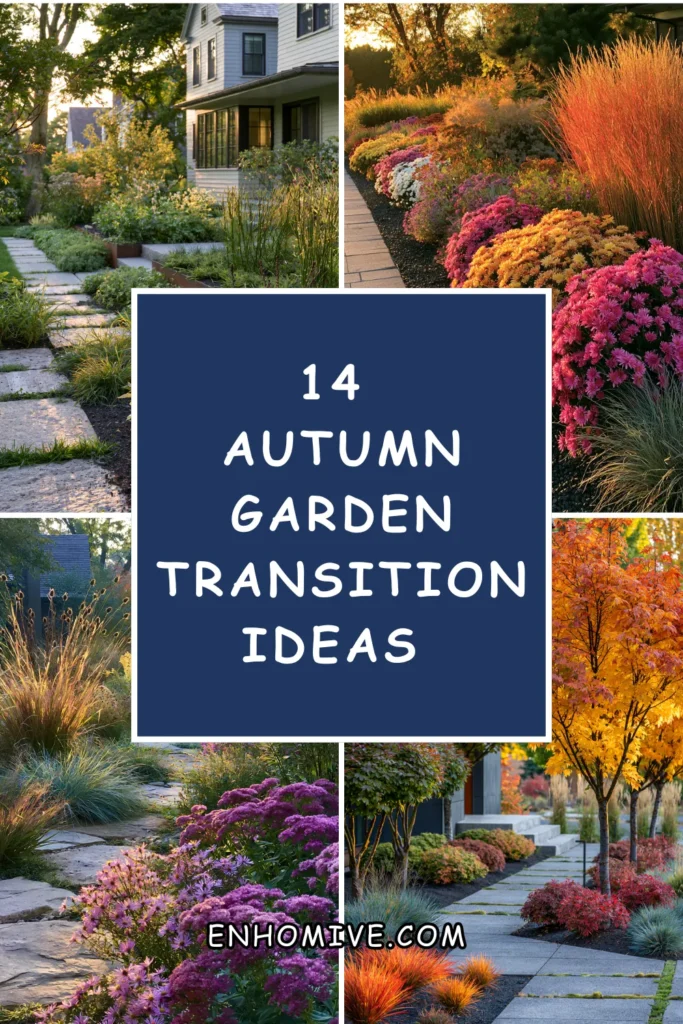
An autumn garden transition is not about replacing the summer garden. It is a sequencing decision, planning which plants take over visual interest as others fade, so the garden never has an empty, tired stretch between two seasons. The garden: no longer good for one season and bad for the gap after it, but genuinely planned from July through November.
Here are 14 autumn garden transition ideas from summer blooms to fall interest — from the simplest deadheading routine to the most fully planned seasonal succession — built on that understanding.
Why Most Gardens Have a Rough Patch Between Summer and Fall
The single-season planting problem
Most home gardens are planted with spring and summer bloom in mind, and relatively little planned specifically for the September-to-November stretch. The result is a garden that looks intentional through August and increasingly accidental through the following two months.
The deadheading gap
Without active management:
Summer annuals and perennials, spent and going to seed, left in place out of habit rather than plan.
The garden: visually tired weeks before it needs to be.
With active management:
Spent blooms removed and beds actively edited as September approaches, making room for the plants whose actual peak is still ahead.
The garden: transitioning deliberately rather than simply declining.
The successive bloom principle
A well-planned garden has at least one plant reaching peak interest in every month from spring through the first hard frost. Late summer and fall specifically call for asters, sedum, ornamental grasses, and ornamental kale — plants most spring-focused garden plans skip entirely.
The structure-over-bloom shift
As actual flowers become less central to the garden’s interest through fall, structure, texture, and color from foliage and seed heads increasingly carry the visual weight that flowers carried through summer.
The Five Techniques for a Smooth Seasonal Transition
Before making any single change:
Strategic deadheading and cutback
Removing spent summer blooms at the right time, rather than too early or too late.
The lowest-cost, most immediately impactful technique.
Requires ongoing attention rather than a single action.
Succession planting
Adding fall-blooming plants into gaps left by fading summer plants.
The most direct way to maintain continuous visual interest.
Best planned before the summer garden fully fades, not after.
Foliage and seed head retention
Leaving certain spent plants standing for their structural and textural value, rather than cutting everything back immediately.
Costs nothing and adds genuine autumn character.
Requires distinguishing which plants are worth leaving from which genuinely need removal.
Container and bed refresh
Swapping summer container plantings for fall-specific ones.
The fastest, most visually immediate transition technique.
Suited to high-visibility areas — entries, patios — needing a quick seasonal update.
Structural and hardscape emphasis
Leaning on the garden’s permanent structure — paths, walls, trellises — as flowers become less dominant.
The technique that requires no new plants at all.
Reveals a garden’s underlying design quality once the seasonal bloom noise quiets down.
1. The Strategic Deadhead-and-Cutback Schedule
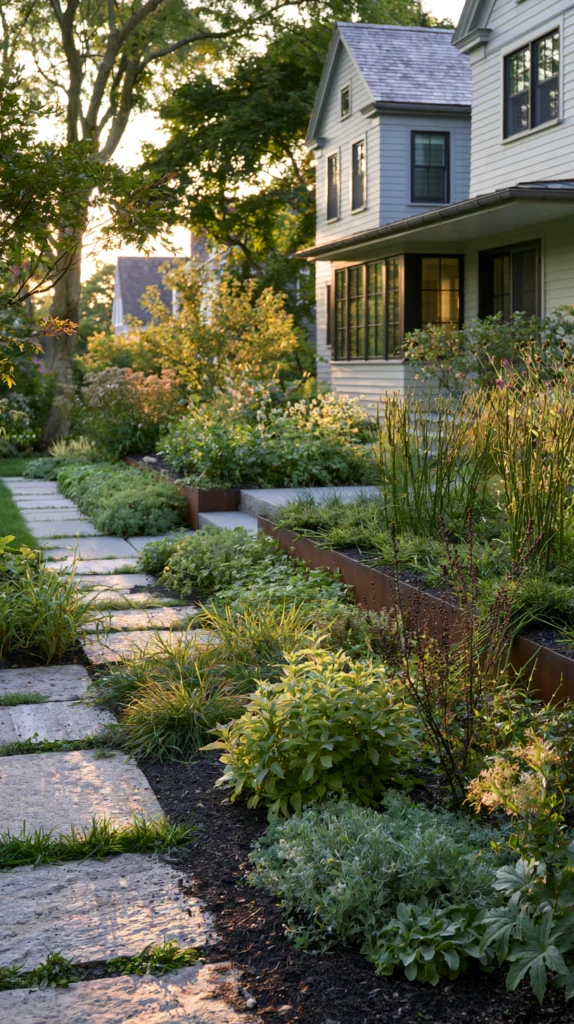
A planned schedule for cutting back spent summer bloomers at the right moment — not too early, losing remaining late blooms, and not too late, letting the bed look visibly tired.
Why timing matters more than the cutback itself
Cutting back too aggressively in early September can remove a plant’s last genuine flush of bloom; waiting too long lets the bed look spent and neglected for weeks longer than necessary.
The early September check
Walking the garden specifically to assess which summer bloomers still have genuine flowering potential left, and which have clearly finished for the season.
The selective cutback
Removing only the plants that have genuinely finished, deadheading rather than fully cutting back anything still actively blooming, even if that bloom is past its peak.
The full cutback candidates
Spent annuals, leggy perennials with no more bud development visible, and anything showing disease or significant pest damage — these get a full cutback rather than selective deadheading.
The staggered approach
Spread across two to three sessions through September rather than one single major cleanup, allowing the garden to transition gradually instead of experiencing one abrupt, visually jarring change.
The compost use
Healthy plant material composted directly, building the following season’s soil amendment from this year’s own garden waste.
Cost breakdown: No material cost, time investment only Total: $0
2. The Aster and Sedum Succession Planting
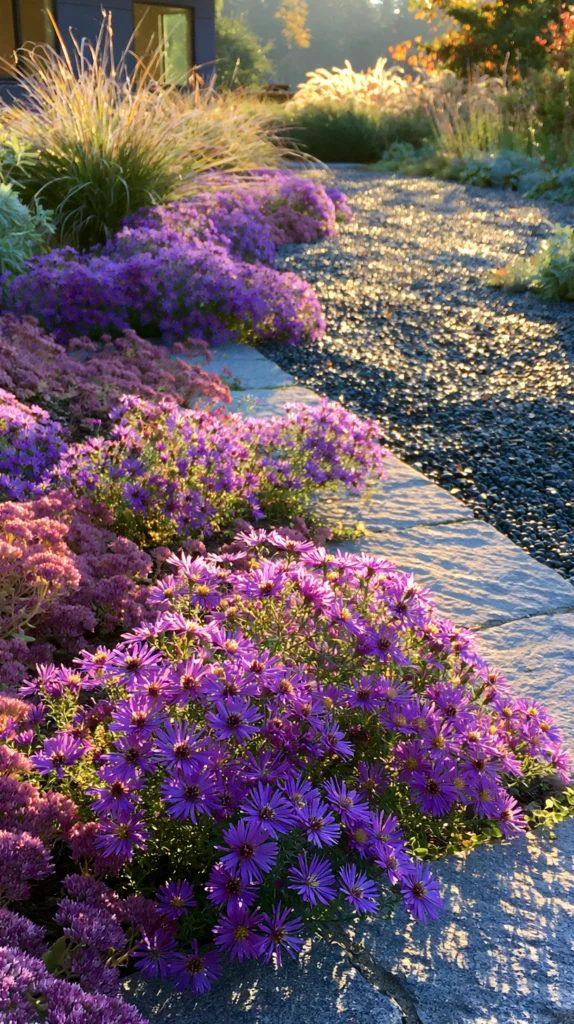
Fall-blooming asters and sedum planted directly into gaps left by faded summer annuals and perennials, providing the garden’s next wave of genuine flower color.
Why asters and sedum are the two most reliable fall bloom anchors
Both genuinely peak in September and October, precisely when most summer bloomers are finishing, making them the most direct plant-for-plant replacement for fading summer color.
The asters
New England aster or New York aster varieties, in shades of purple, pink, and blue, planted into the specific gaps left by spent summer annuals like zinnias or cosmos.
The sedum
‘Autumn Joy’ or similar upright sedum varieties, whose flower heads shift from pale green to deep pink to rust-brown across the fall season, providing color that actually changes over several weeks rather than fading uniformly.
The planting timing
Both asters and sedum are commonly available as more mature nursery plants in early fall, allowing an immediate visual replacement rather than waiting for a spring-planted start to reach bloom size.
The gap-filling approach
Planted directly into the specific bare spots left by removed summer plants, rather than as a separate new bed, maintaining the garden’s existing overall structure while refreshing its content.
The pollinator benefit
Both asters and sedum are significant late-season nectar sources, extending pollinator support well past when most summer flowers have finished providing it.
Cost breakdown: Aster plants (4–6): $30–60 Sedum plants (3–5): $25–50 Total: $55–110
3. The Ornamental Grass Backbone
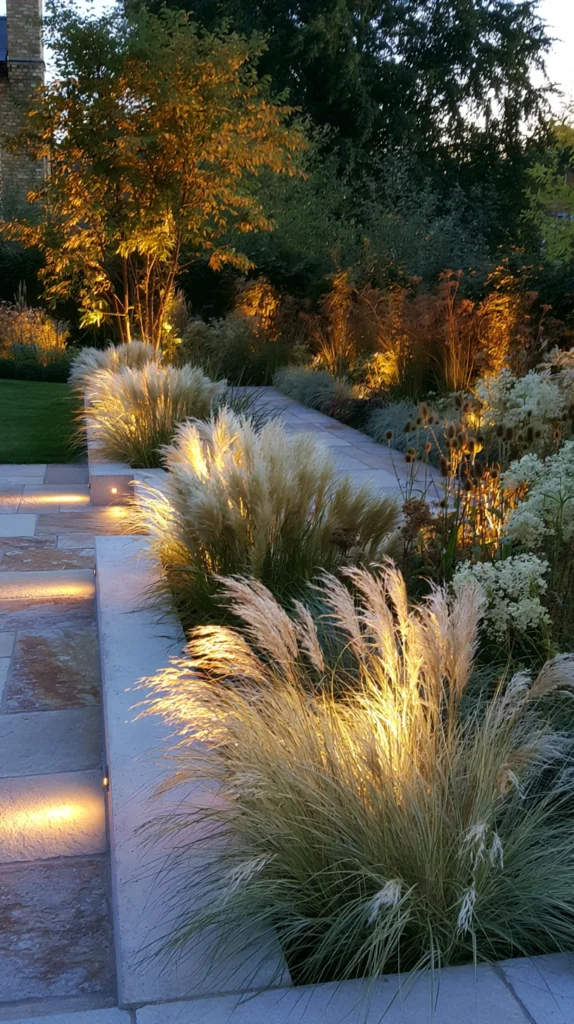
Ornamental grasses planted throughout the garden as a structural backbone, reaching their own visual peak in fall just as most flowering plants are declining.
Why grasses solve the fall interest problem more completely than flowers alone
Most ornamental grasses actually look better in September and October than they did in July, their plumes filling out and their color deepening precisely during the months many gardens otherwise struggle to fill.
The grass selection
Miscanthus, feather reed grass, or switchgrass, chosen for mature height relative to their position in the bed and for the specific plume color and form each variety offers.
The placement strategy
Planted at the back or middle of existing beds, where their height provides a backdrop to fall-blooming perennials in front, or as accent plantings at bed corners and transitions.
The extended season
Grasses that continue looking structurally interesting well into winter, standing through frost and even light snow, extending the garden’s visual season considerably beyond what flowering plants alone provide.
The movement and sound
Adding a dimension no static flowering plant offers — genuine movement and a soft rustling sound in wind, both of which become more noticeable as the rest of the garden quiets down.
The maintenance timing
Cut back only once, in late winter before new spring growth begins, a single annual maintenance task far simpler than the ongoing deadheading many summer flowering plants require.
Cost breakdown: Ornamental grasses (4–6, established plants): $80–200 Total: $80–200
4. The Ornamental Kale and Cabbage Border
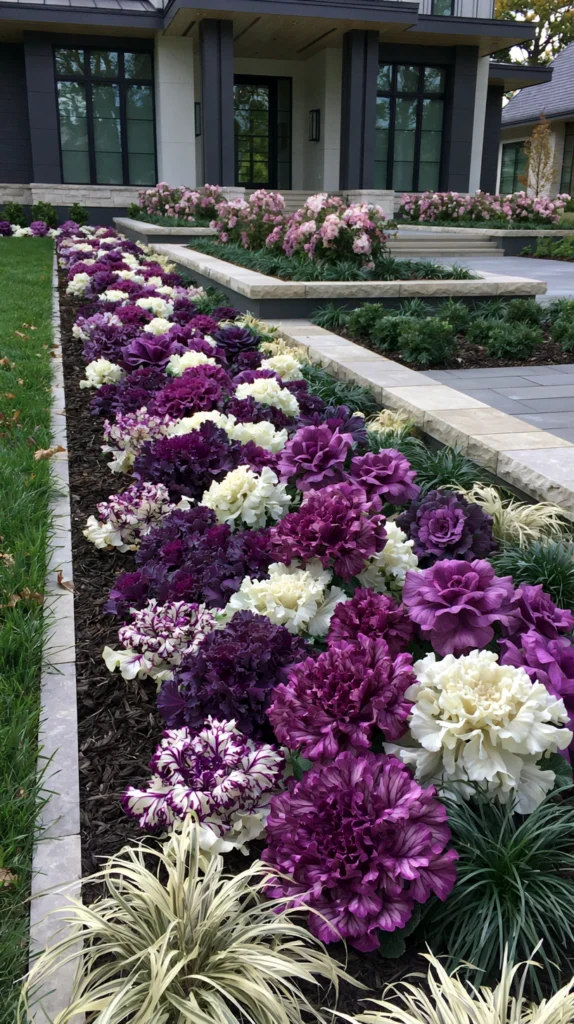
Ornamental kale and flowering cabbage planted along a bed’s front edge, providing color and texture that actually intensifies as temperatures drop rather than fading with the first frost.
Why ornamental kale outperforms most flowers specifically in cold weather
Unlike nearly every summer annual, ornamental kale’s color deepens and becomes more vivid with cooler temperatures and light frost, making it uniquely suited to the exact conditions that end most other fall color.
The variety selection
Deep purple, white, and rose-colored varieties, chosen for the specific color story desired and for leaf shape — some varieties have smooth, ruffled edges, others deeply fringed, ruffled leaves.
The placement
Along a bed’s front border, replacing spent summer edging annuals like alyssum or lobelia, where the kale’s low, rosette form provides similar visual structure.
The bloom timing
Peak color typically develops from mid-October through November, later than most other fall bloomers, extending the garden’s color season into its final weeks before winter fully sets in.
The cold tolerance
Genuinely tolerates hard frost and light snow, often remaining attractive well after nearly everything else in the garden has finished for the season.
The container flexibility
Works equally well in garden beds or containers, making this one of the more flexible options for gardens with limited in-ground space available for the transition.
Cost breakdown: Ornamental kale plants (6–10): $30–60 Total: $30–60
5. The Container Swap From Summer to Fall
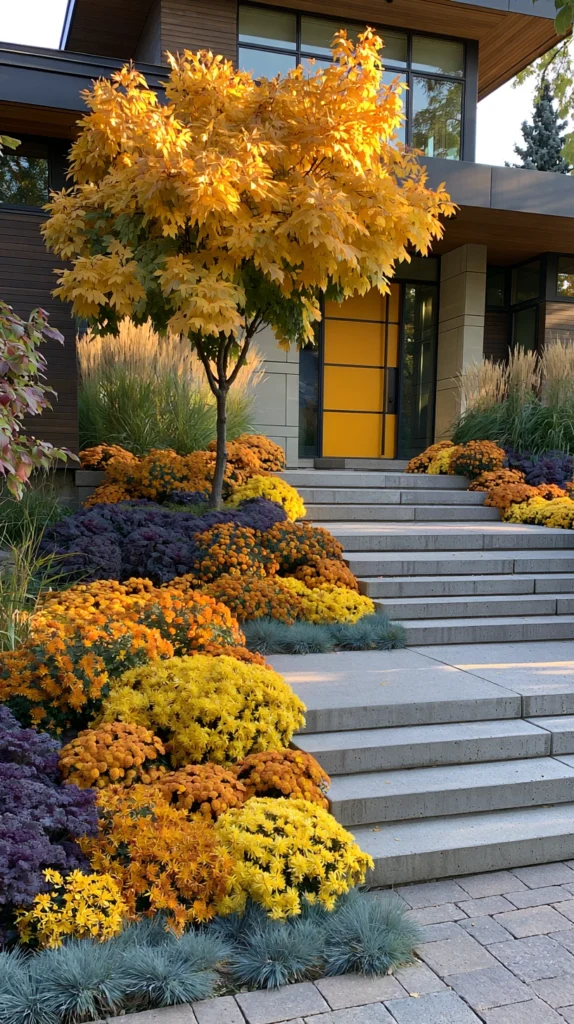
Existing summer container plantings removed and replaced entirely with fall-specific combinations, refreshing the garden’s highest-visibility spots immediately rather than waiting for in-ground transitions.
Why containers deserve their own dedicated transition plan
Entry pots, porch containers, and patio planters are typically the garden’s most visible spots, seen daily by the household and immediately by any visitor, making their timely refresh disproportionately valuable relative to the effort involved.
The removal
Spent summer annuals — petunias, geraniums, sweet potato vine — removed once they have clearly passed their peak, the soil refreshed or amended before replanting.
The fall combination
A classic “thriller, filler, spiller” structure using fall plants — an ornamental grass or kale as the thriller, mums or asters as filler, and trailing ivy or creeping jenny as the spiller.
The seasonal accents
Small pumpkins, gourds, or dried corn stalks tucked into or beside the container, adding a decorative layer beyond the living plants alone.
The timing
Swapped in early-to-mid September, before summer plantings look genuinely spent, so the transition itself reads as a deliberate seasonal refresh rather than a response to decline.
The high-visibility priority
Front entry containers refreshed first, with secondary containers elsewhere in the garden following as time allows, prioritizing the spots with the greatest visual impact.
Cost breakdown: Fall container plants (per container): $25–50 Seasonal accents (pumpkins, gourds): $10–20 Total: $35–70 per container
6. The Seed Head and Spent Bloom Retention
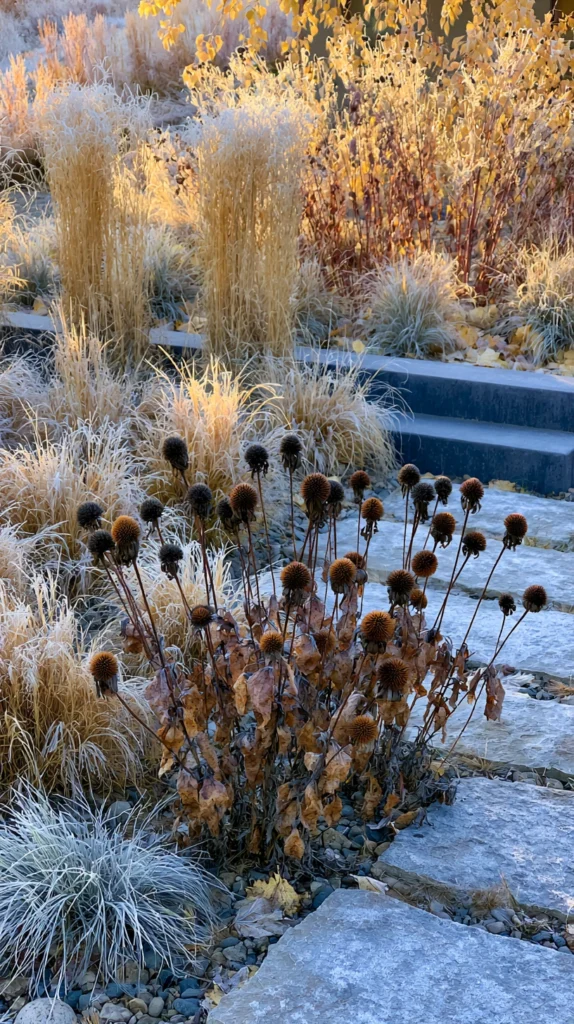
Certain spent summer flowers deliberately left standing rather than cut back, valued for their seed head structure and winter interest rather than removed once flowering finishes.
Why some “spent” plants are more valuable left standing than removed
A rudbeckia or echinacea seed head, left in place, provides genuine structural and textural interest through fall and often into winter — and feeds birds through the colder months that a fully cutback bed does not offer.
The retention candidates
Coneflower (echinacea), black-eyed Susan (rudbeckia), and ornamental alliums, all of which produce seed heads with real sculptural value once their petals have dropped.
The bird benefit
Seed heads left standing provide a genuine food source for finches and other seed-eating birds through the fall and into winter, adding an ecological function beyond the purely visual one.
The frost effect
Many seed heads look more striking after a light frost than they did in late summer, rimmed with frost or dusted with early snow in a way fresh flowers never display.
The selective approach
Not every spent bloom is worth retaining — genuinely diseased, pest-damaged, or simply unattractive spent plants still benefit from removal, while structurally interesting seed heads earn their place standing through the transition.
The eventual cutback
Retained seed heads generally cut back in late winter, once their visual and ecological value has been fully used through the coldest months.
Cost breakdown: No cost — a decision to withhold cutback rather than a purchase Total: $0
7. The Foliage Color Layering
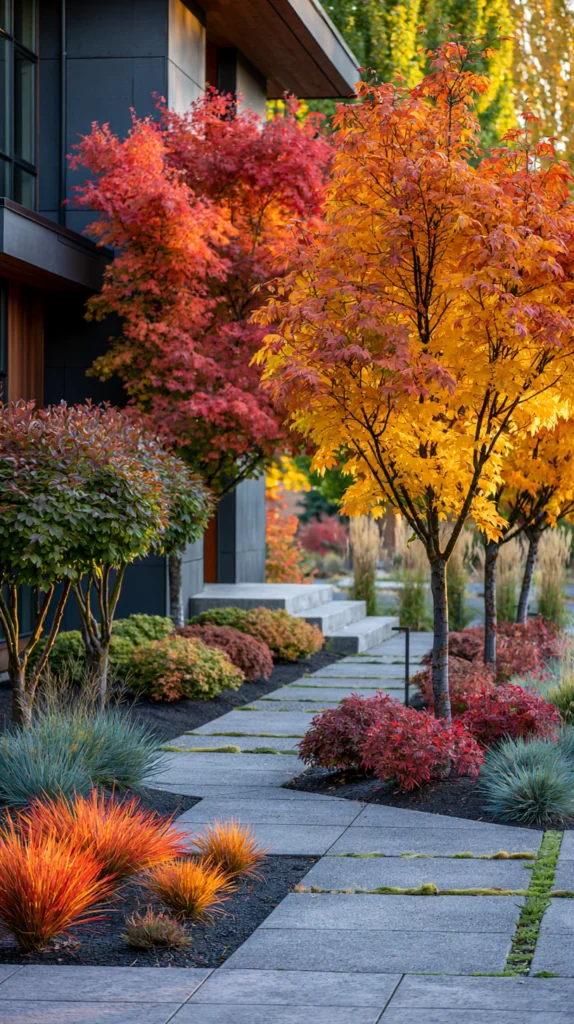
Shrubs and trees chosen or highlighted for their fall foliage color, positioned to carry the garden’s visual interest as flowering plants decline through October and November.
Why foliage color becomes the garden’s primary interest as flowers fade
By late October, in most temperate climates, foliage color from shrubs and trees is doing more visual work than any remaining flower, making this the single most important transition element for the season’s latter half.
The existing inventory
An assessment of which shrubs and trees already in the garden offer genuine fall color, since many gardens already have this resource in place but underutilized or unnoticed until deliberately highlighted.
The highlighting technique
Pruning back neighboring plants that might obscure a colorful shrub’s fall display, or repositioning a container planting to draw the eye toward an existing tree’s peak color window.
The gap-filling additions
Burning bush, oakleaf hydrangea, or Japanese maple, added specifically for their fall foliage color if the existing garden lacks strong seasonal color from its permanent plantings.
The color planning
Red, orange, and gold foliage plants positioned where their color will be visible from the house’s main windows or the garden’s primary seating area, maximizing the display’s daily visibility.
The layered timing
Different species turn color at different points through the season, allowing a garden with several foliage plants to offer a rolling display rather than one single simultaneous color change.
Cost breakdown: No cost if working with existing plants New foliage shrub (if adding): $60–200 Total: $0–200
8. The Pumpkin and Gourd Bed Integration
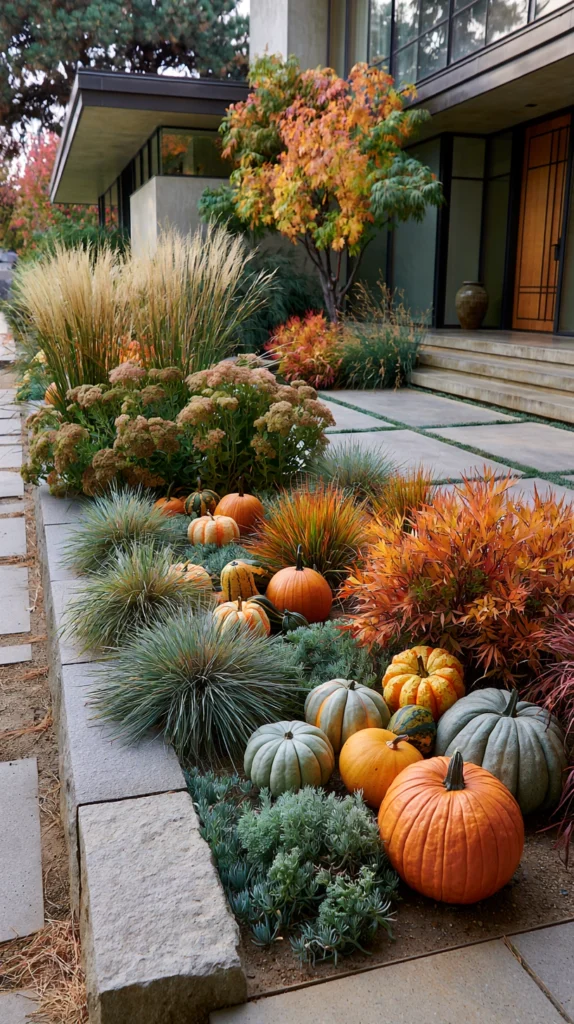
Small pumpkins and ornamental gourds placed directly within garden beds, nestled among the remaining foliage, rather than confined to a separate porch display.
Why integrating pumpkins into the beds themselves outperforms a separate display
A pumpkin display confined only to the porch reads as decoration added on top of the garden. Pumpkins nestled within the beds themselves read as part of the garden’s actual autumn character.
The placement
Tucked among ornamental grasses, at the base of a sedum planting, or along a bed’s front edge where spent annuals have been removed, rather than lined up in a formal row.
The variety selection
A mix of sizes and colors — small sugar pumpkins, white ghost pumpkins, warty ornamental gourds — echoing the same varied, gathered quality valued in other foraged or natural fall displays.
The natural aging
Left in place to slowly soften and weather as the season progresses, an expected part of their late-season display rather than a sign of neglect, similar to how black pumpkins age on a porch display.
The scale consideration
Kept proportional to the surrounding bed — small gourds and pumpkins for a smaller perennial bed, larger pumpkins reserved for more substantial garden areas or entry displays.
The removal timing
Cleared once they have visibly begun to break down or once the first hard freeze arrives, whichever comes first, keeping the display fresh rather than allowing genuine decay to set in.
Cost breakdown: Small pumpkins and gourds (assorted): $20–40 Total: $20–40
9. The Mum Insertion Strategy
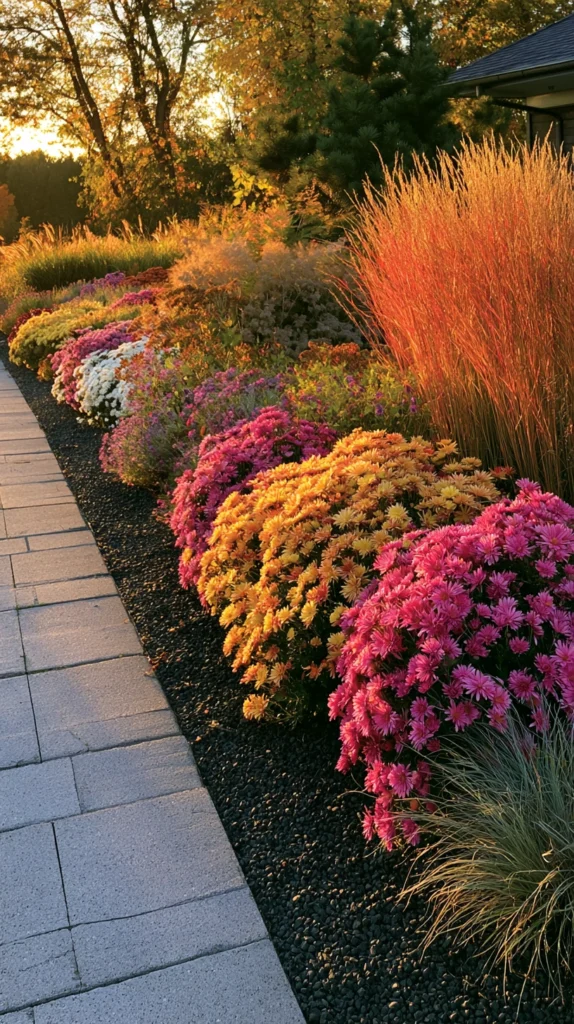
Chrysanthemums added directly into existing perennial beds at the specific spots where summer bloomers have finished, providing immediate, dense color exactly where a gap has opened.
Why mums are the most immediate transition tool available
Unlike most other transition plants, mums are typically sold already in full bloom, making them the fastest way to fill a visually obvious gap with immediate color rather than waiting weeks for a newly planted perennial to establish and flower.
The gap identification
Walking the garden specifically to find the most visually obvious bare or spent patches, rather than adding mums randomly throughout an otherwise still-thriving bed.
The color coordination
Rust, burgundy, and gold mums chosen to complement, rather than clash with, whatever is still blooming nearby — a late-season salvia or aster, for example.
The planting versus container approach
Mums purchased in nursery pots can either be planted directly into the ground or simply set into the bed still in their pots, buried slightly to hide the container edge — a faster, though less permanent, approach for a quick seasonal fix.
The perennial consideration
Many garden center mums are bred primarily for immediate seasonal display rather than reliable winter hardiness — worth treating as an annual-style seasonal fix unless a specifically hardy garden mum variety was chosen.
The layering with existing plants
Mums tucked in front of taller, structurally interesting spent plants like ornamental grasses, rather than replacing them, so the bed gains color without losing its established structure.
Cost breakdown: Chrysanthemum plants (6–10): $30–70 Total: $30–70
10. The Bulb Planting for Next Spring
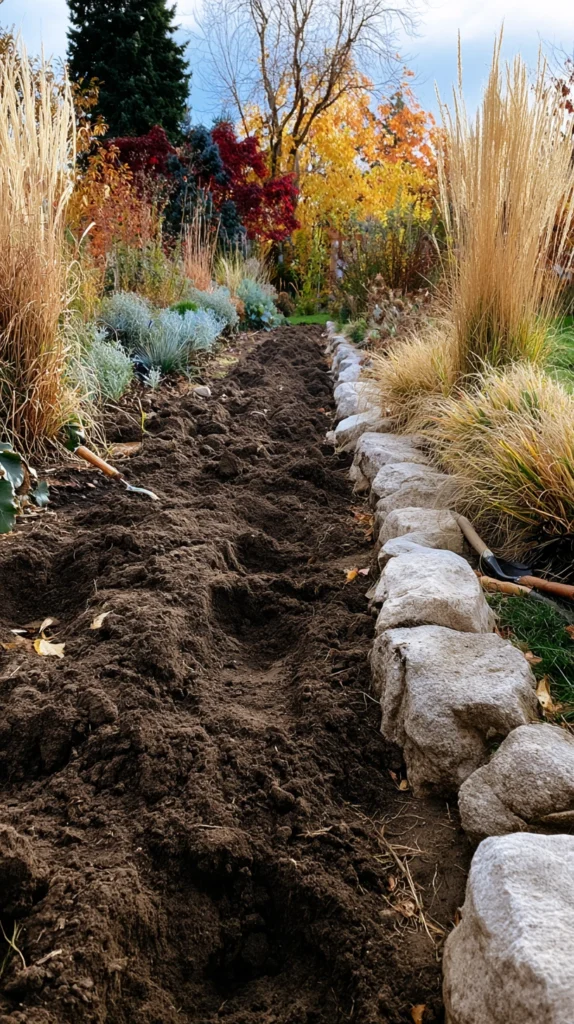
Spring-flowering bulbs planted into the garden in fall, an investment made during the current season’s transition that pays off in the following spring rather than immediately.
Why fall is genuinely the right time for this specific task, even though the payoff is months away
Tulips, daffodils, and crocus all require a cold dormancy period through winter to bloom properly the following spring — this is not simply a convenient time to plant them but the only time that actually works.
The bulb selection
Tulips, daffodils, crocus, and alliums, chosen for bloom time succession so the following spring itself has a planned transition, rather than one single simultaneous bloom.
The planting depth
Generally planted at a depth roughly three times the bulb’s own height, a detail worth confirming for the specific bulb type since depth requirements vary somewhat between species.
The gap-filling logic
Planted into the same beds where summer annuals and perennials are being cleared, using the current transition work as the natural opportunity to also plan for spring.
The timing window
Before the ground freezes, but after temperatures have cooled meaningfully — typically September through November in most temperate climates, with some flexibility depending on the specific regional frost timeline.
The marker system
Small stakes or markers placed at planting sites, since bulbs planted in fall leave no visible trace until the following spring and are easily disturbed by other garden work in the interim without a clear marker.
Cost breakdown: Spring bulbs (50–100, mixed varieties): $30–80 Total: $30–80
11. The Hardscape and Structure Emphasis
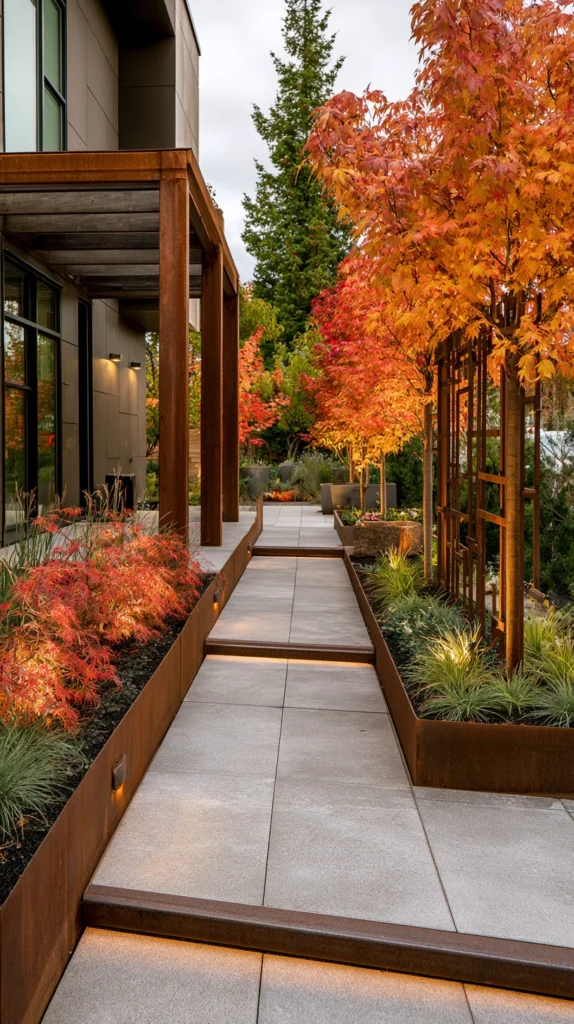
Existing paths, walls, trellises, and other permanent garden structure highlighted and maintained as the season’s flowering interest naturally declines, letting the garden’s underlying design carry more visual weight.
Why structure matters more as flowers become less dominant
A garden’s hardscape — paths, edging, walls, arbors — is present year-round, but tends to recede visually behind a summer garden’s abundant bloom. As that bloom fades, the same structure becomes proportionally more important to the garden’s overall appearance.
The path maintenance
Edges cleaned and redefined, any encroaching plant material trimmed back, restoring the crispness a path may have lost during summer’s more overgrown peak.
The trellis and arbor highlight
Any climbing plant on a trellis or arbor pruned to reveal more of the structure itself, particularly valuable if the structure has an attractive material or form worth showing rather than fully obscuring.
The mulch refresh
A fresh layer of mulch applied to beds as they are cleared of spent summer material, both for the practical winter protection benefit and for the immediate visual tidiness a fresh mulch layer provides.
The lighting emphasis
Path or landscape lighting repositioned or added to highlight structural elements specifically, since fall’s earlier darkness means the garden is visible in low light for a larger portion of each day.
The overall effect
A garden with strong underlying structure looks intentional even in its quietest season, while a garden relying purely on flower volume for its appeal looks emptiest exactly when that structure would otherwise carry it.
Cost breakdown: Fresh mulch: $40–100 Path or structure lighting (if adding): $60–150 Total: $40–250
12. The Herb Garden Fall Transition
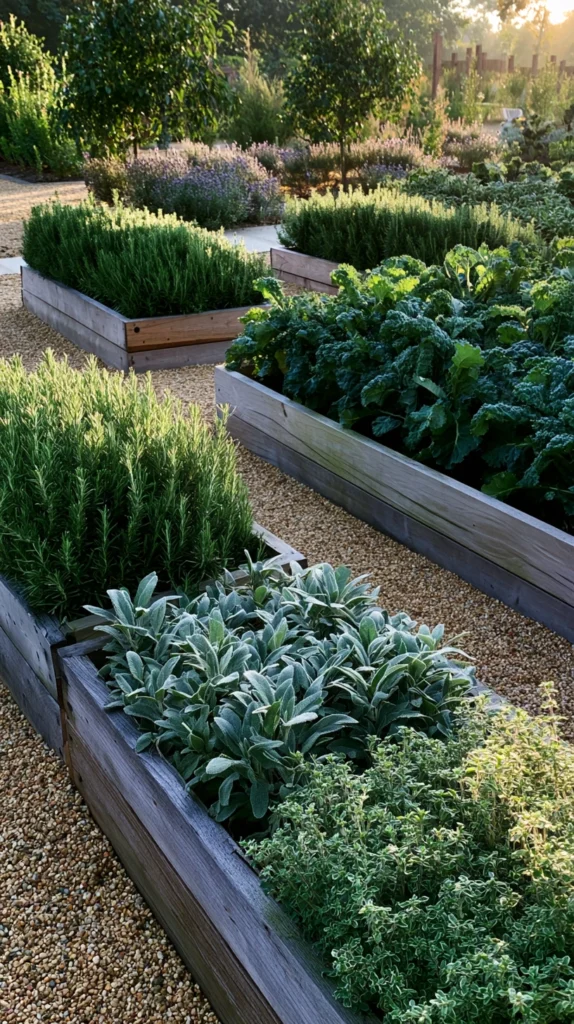
The kitchen herb garden specifically transitioned for fall, with tender annual herbs replaced by hardier perennial varieties or brought indoors before frost.
Why the herb garden needs its own specific transition plan
Many popular culinary herbs — basil especially — are frost-tender annuals that will not survive the first cold night, while others like rosemary, sage, and thyme are genuinely hardy and simply continue through fall with little adjustment needed.
The tender herb assessment
Basil and other frost-sensitive annuals harvested fully before the first frost, either used fresh, dried, or frozen for winter use rather than left to die in place.
The hardy herb continuation
Rosemary, sage, thyme, and oregano left in place, often continuing to provide fresh harvest well into fall and, in milder climates, through much of winter.
The indoor transition
A few pots of the more tender herbs — rosemary in colder climates, or a small basil plant — brought indoors to a sunny windowsill, extending their use past what the outdoor garden alone would allow.
The bed replanting
Space vacated by finished annual herbs replanted with fall-hardy greens like kale or with a cover crop, rather than left bare through the coming months.
The harvest-and-preserve ritual
A final major harvest specifically timed around the first frost warning, treating it as a planned seasonal event rather than a rushed, last-minute scramble once frost has already arrived unexpectedly.
Cost breakdown: Fall-hardy greens for bed replanting: $10–20 No cost for existing hardy herbs Total: $10–20
13. The Wildlife and Pollinator Transition Planning
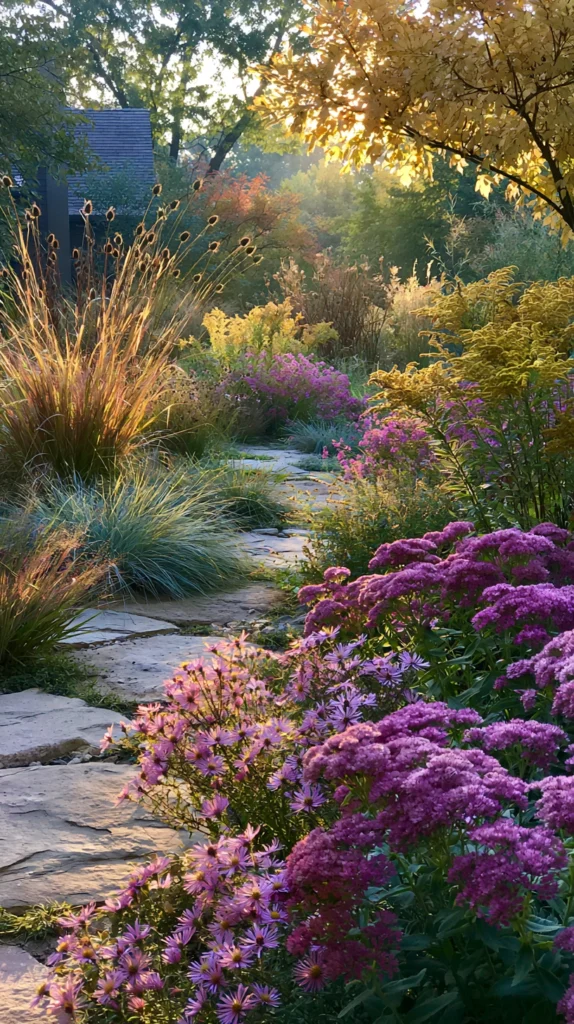
The garden’s fall transition planned with specific attention to the pollinators and wildlife that depend on late-season resources, rather than optimized purely for visual appeal.
Why the transition period matters ecologically as much as aesthetically
Bees, butterflies, and birds all depend on late-season nectar and seed sources precisely during the weeks many gardens are being cleared and tidied for winter — the transition’s timing and choices carry real consequences beyond how the garden looks.
The late-nectar plant priority
Asters, sedum, and goldenrod specifically valued and protected during bed cleanup, since these represent some of the last significant nectar sources before winter for many pollinator species.
The seed head retention connection
The same seed heads valued for structural winter interest also serve as a genuine food source for birds, tying the aesthetic and ecological transition decisions together rather than treating them separately.
The leaf litter consideration
Many beneficial insects overwinter in fallen leaves and garden debris — a fully cleared, pristine bed removes habitat that a slightly less tidy approach would preserve.
The timing of full cleanup
Delaying the most thorough garden cleanup until closer to or after the first hard frost, rather than clearing everything in early September, extends the window of available late-season resources for wildlife.
The balance point
A garden that still looks intentional and cared for, while consciously leaving specific elements — seed heads, some leaf litter, late-blooming natives — in place for their ecological value rather than removing everything for the sake of visual tidiness alone.
Cost breakdown: No additional cost — a shift in timing and priority rather than new purchases Total: $0
14. The Complete Autumn Garden Transition Plan (The Fully Sequenced Garden)
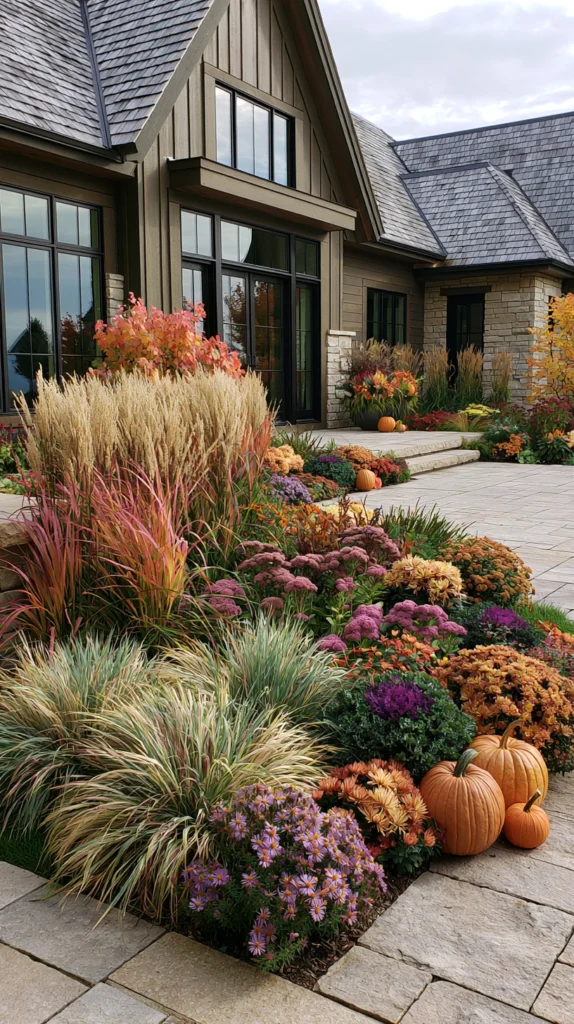
A complete transition combining several of the approaches above — deadheading on the right schedule, succession planting, foliage and structure emphasis, and wildlife consideration — planned as one deliberate sequence from late summer through the first hard frost.
What separates the complete transition from a single fall cleanup day
A single fall cleanup: a reaction to a garden that has already started looking tired. A complete transition plan: a sequence of deliberate moves, spread across September through November, so the garden never actually reaches that tired stretch in the first place.
The elements of the complete autumn garden transition
The early September phase
Selective deadheading and cutback of genuinely finished summer bloomers, while still-blooming plants are left undisturbed.
The succession planting
Asters, sedum, and mums inserted into the specific gaps left by removed summer plants.
The structural backbone
Ornamental grasses and retained seed heads providing texture and form as flower volume naturally declines.
The foliage emphasis
Existing or newly added trees and shrubs highlighted for their fall color, positioned within view of the house’s main windows.
The container refresh
High-visibility entry and patio containers swapped from summer to fall plantings early in the transition, before they visibly decline.
The late-season additions
Ornamental kale and pumpkins added in mid-to-late October, extending color and interest into the transition’s final weeks.
The forward planning
Spring bulbs planted in the same beds being cleared, connecting this season’s transition to the next one already.
The wildlife consideration
Full bed cleanup delayed until closer to the first hard frost, preserving late-season resources for pollinators and birds throughout the transition period.
The complete design in action
A garden walked through the season:
Early September: Selective deadheading, the first asters and sedum going into the gaps left behind.
Late September: Containers refreshed, ornamental grasses now the tallest, most prominent feature in several beds.
Mid-October: Ornamental kale and pumpkins added, foliage color from the garden’s trees and shrubs now at its peak.
November: Mums and asters fading, but seed heads and grasses still standing, the bulbs already planted and waiting beneath the surface for spring.
The complete autumn garden transition: not a single day of fall cleanup, but a planned sequence that keeps the garden genuinely interesting from the last days of summer through the first hard frost.
Cost breakdown for the complete transition: Assuming a starting point of an established summer garden with no fall-specific planning: Aster and sedum succession planting: $55–110 Ornamental grasses: $80–200 Ornamental kale: $30–60 Container refresh (2–3 containers): $70–210 Mums for gap-filling: $30–70 Spring bulbs: $30–80 Pumpkins and gourds: $20–40 Mulch refresh: $40–100 Total: $355–870
Phased across the transition itself:
Early September: Deadheading and cutback First succession plants (asters, sedum) Container refresh
Late September into October: Ornamental grasses established or highlighted Mums for immediate gap-filling Bulb planting for spring
Mid-to-late October into November: Ornamental kale and pumpkins for late-season color Final selective cleanup, timed around the first frost Seed heads and structure left standing for winter interest
The autumn garden transition: not a single fall cleanup, but a deliberate sequence carrying the garden’s interest continuously from summer’s last blooms through the first hard frost.
The Question Before Any Transition Plan
Before deadheading, planting, or clearing anything:
What is the primary gap the garden currently has between summer and fall?
If the answer is: the garden looks tired and spent by early September — start with the strategic deadheading schedule and immediate succession planting.
If the answer is: plenty of green but no real fall color — the foliage layering and ornamental kale additions.
If the answer is: the entry and patio areas look neglected first — the container swap, prioritized for high-visibility spots.
If the answer is: wanting the garden to support wildlife through the colder months — the seed head retention and delayed cleanup timing.
The design follows what the garden is actually missing during this specific transition, more than any single seasonal trend. Every idea on this list addresses a different piece of that gap. The question is which piece matters most in this particular garden, this particular year.
The single bed of asters planted into a September gap: still changes how the garden reads for the following two months. The complete transition plan, sequenced with intention: a garden with no genuinely tired stretch at all, from July’s last blooms to November’s first frost.
That continuity: the whole point of planning the transition rather than simply waiting for it to happen.
Getting Started This Weekend
The immediate transition solution:
Walk the garden and identify the three most visually tired spots.
Not the whole garden. Not a full replant. Just the specific gaps most in need of attention right now.
Deadhead what has genuinely finished, and leave what is still blooming.
The selective approach, rather than one large indiscriminate cutback.
Fill one of those gaps with an aster, a mum, or a sedum already in bloom.
Immediate, visible color exactly where the eye currently lands on the tired spot.
Plant a handful of bulbs in the same bed while it is already open.
The rest of the design: the elaboration of this moment.
The gap: the beginning. The autumn transition: what gets planted, and planned, to fill it.