

15 Seafoam and Sage Bedroom Ideas for a Serene Fall Color Refresh
The color shift in my bedroom happened almost by accident, and it did more for how I sleep than any mattress upgrade ever did. Not the blackout curtains. Not the new pillows. Not the white noise machine or the cooler duvet or the reorganized nightstand.
The palette.
Because seafoam and sage did something no single object could. Before it: a bedroom in warm neutrals that looked fine but never quite felt calm, especially once the fall light turned grey and low. After it: a room that reads as still before a person even lies down, the color itself doing work no amount of tidying ever managed.

Seafoam and sage are not a trend chosen for the sake of novelty. They are a serenity decision. A bright or warm bedroom asks something of the eye. A room in muted seafoam and dusty sage asks nothing. The room: no longer a space to wind down in, but a space already wound down, waiting.
Here are 15 seafoam and sage bedroom ideas for a serene fall color refresh — from the simplest bedding swap to the most fully committed room — built on that understanding.
Why Seafoam and Sage Work Specifically for a Bedroom
The nervous system case
Without a calming palette:
A bedroom in bold or warm tones, stimulating even at rest.
The eye: still working, even in a room meant for stillness.
Sleep onset: slower, however comfortable the bed itself.
With seafoam and sage:
Muted greens sit in the part of the color spectrum most consistently associated with calm and lowered arousal, the reason hospitals, spas, and therapy spaces so often lean on the same family of tones.
The eye: given nothing to react to, only something to rest on.
The autumn logic
Seafoam and sage might read as spring or summer colors at first glance, but muted, dusty versions of both work as well in fall as any warm palette. A greyed-down sage reads as quietly seasonal, not out of place once the leaves turn.
The water-and-earth pairing
Seafoam evokes water; sage evokes the herb garden and dry autumn foliage. Together, the two colors borrow calm from both the coast and the land — a pairing that feels grounded and airy at the same time.
The versatility case
Unlike many strongly seasonal palettes, seafoam and sage do not need to be undone in January. The bedroom that settles into this palette for fall keeps the same calm identity through winter, spring, and summer alike.
The Five Ways to Bring In Seafoam and Sage
Before choosing any design:
Paint (the full commitment)
Every wall in a muted seafoam or sage tone.
The most transformative option and the hardest to reverse without repainting.
The deepest, most enveloping version of the palette.
Accent wall
A single wall, typically behind the headboard, in sage or seafoam.
The lowest-risk entry point into the palette.
Frames the bed as the room’s clear focal point.
Bedding and textiles
No wall paint at all — the palette carried entirely by a duvet, throw pillows, or a large area rug.
The most flexible and least permanent option.
Suits renters and anyone hesitant to commit to paint.
Furniture
A single sage-toned upholstered headboard, bench, or chair, with walls left neutral.
Concentrates the color into one anchor piece rather than the whole room.
Layered greens
Seafoam, sage, and a third muted green (eucalyptus, moss) layered together rather than a single flat tone.
The most sophisticated version of the palette.
Avoids the flat, single-note look a single shade alone can risk.
1. The Full Envelope Sage Bedroom
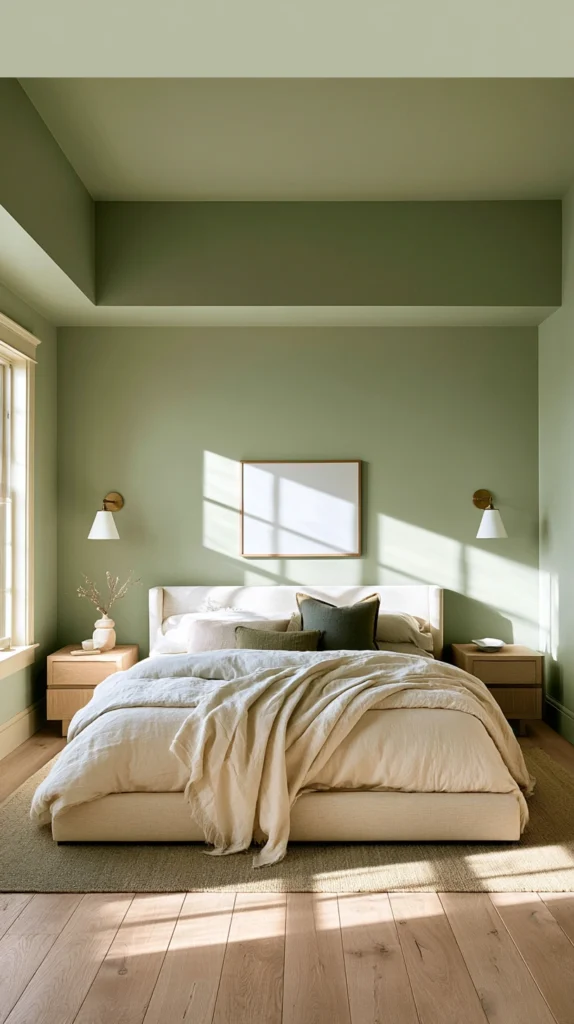
Every wall, and often the ceiling, painted the same muted sage, for the most complete and enveloping version of the palette.
Why full envelope suits a bedroom particularly well
A bedroom is used with the lights low or off more than almost any other room in the house. Full-envelope color reads as atmosphere rather than decoration once the sun goes down, in a way a single accent wall cannot replicate.
The paint
A true muted sage, not bright or overly green — dried herb, eucalyptus, or dusty olive reads correctly for this effect.
A matte or eggshell finish, softening the color rather than making it glossy.
The ceiling
Painted one to two shades lighter than the walls, keeping the room from feeling too low or heavy overhead.
The trim
Left in a soft off-white rather than painted to match, providing a gentle visual break the walls alone would not offer.
The bedding
Layered in warm white and cream, so the room’s only saturated color comes from the walls themselves.
Cost breakdown: Paint (walls and ceiling): $120–250 Bedding refresh: $80–180 Total: $200–430
2. The Seafoam Accent Wall Behind the Bed
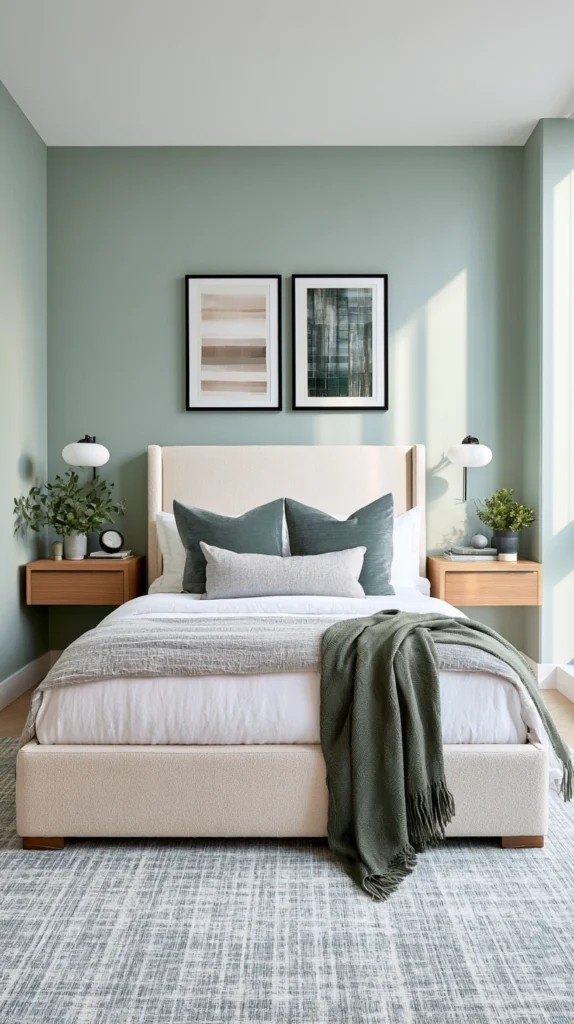
A single wall painted in seafoam directly behind the headboard, used as a backdrop rather than a full room treatment.
Why the headboard wall is the natural first choice
It is the wall the eye returns to most, both when lying in bed and when entering the room, making it the highest-impact single surface to commit to.
The wall selection
The full wall behind the bed, extending beyond the headboard’s width on both sides for a proper backdrop effect rather than a narrow strip.
The headboard
A light wood or cream upholstered headboard creates the clearest contrast against the seafoam wall.
The bedding
Neutral or white bedding, allowing the wall color to remain the room’s primary statement.
The nightstands
Matching light wood nightstands on either side, keeping the palette calm and uncluttered.
The lighting
A pair of wall sconces flanking the headboard, adding warm light directly against the cool wall tone.
Cost breakdown: Paint (one wall): $35–60 Wall sconces (2): $60–120 Total: $95–180
3. The Sage Velvet Headboard
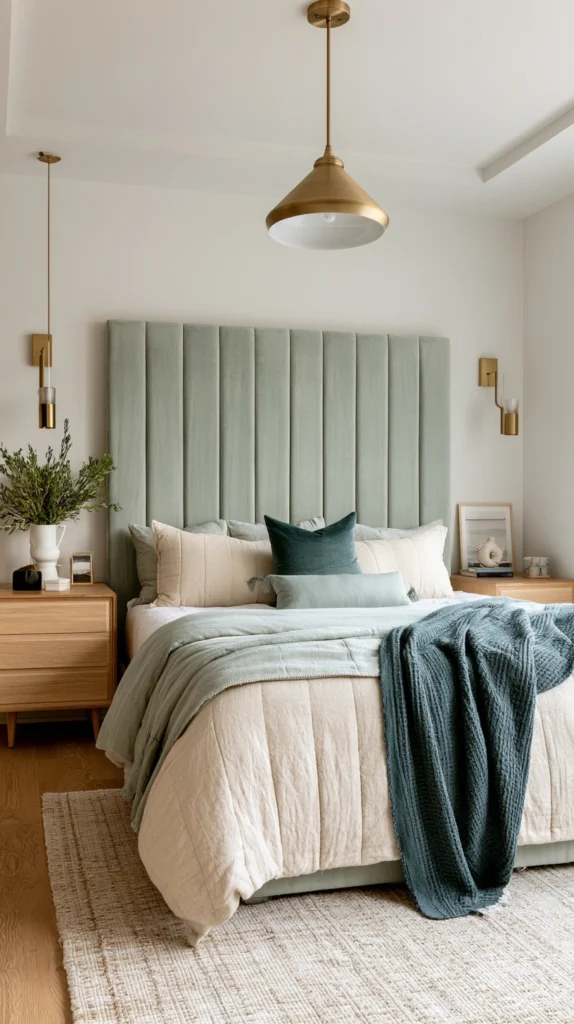
A single upholstered sage velvet headboard as the anchor of the room, with walls left neutral — the fastest way into the palette without touching paint.
Why velvet suits this particular color
Velvet shifts tone with the light and the angle it is viewed from, so a sage headboard reads richer and more dimensional than the same shade would in a flat matte fabric.
The headboard
A tall, channel-tufted or curved sage velvet headboard, sized to extend slightly beyond the width of the mattress for visual presence.
The neutral backdrop
Warm white or soft grey walls, so the headboard remains the room’s clear focal point.
The supporting pieces
Light wood or rattan furniture nearby, softening the velvet’s richness with natural texture.
The bedding
Layered in cream and soft seafoam accents, echoing the headboard without competing with it directly.
Cost breakdown: Sage velvet headboard: $200–450 Bedding accents: $40–80 Total: $240–530
4. The Seafoam and Sage Layered Bedding
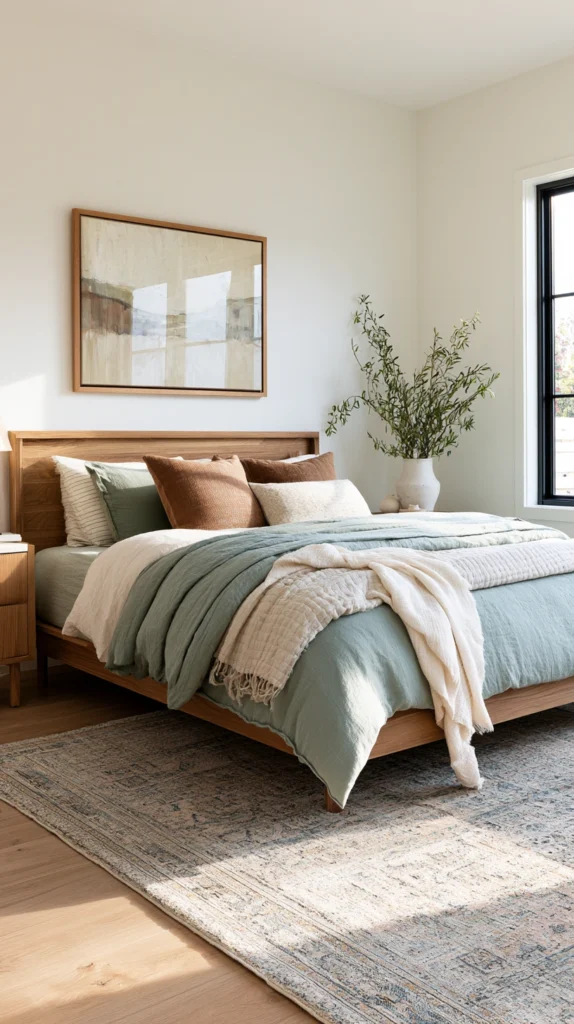
A bed dressed entirely in the palette — sheets, duvet, and throw pillows layered across seafoam, sage, and a neutral cream — with walls left completely untouched.
Why layering two greens avoids a flat look
A single shade of green across an entire bed can read as one flat block of color. Layering seafoam and sage together, with cream in between, creates depth without introducing an unrelated color.
The base layer
A cream or warm white fitted sheet and duvet cover, providing the neutral foundation the greens sit on top of.
The mid layer
A sage-toned quilt or coverlet folded at the foot of the bed or layered partway up, adding the first note of the palette.
The accent layer
Two to three seafoam throw pillows at the head of the bed, the lightest and coolest tone in the layering, positioned closest to where the eye lands first.
The texture mix
Linen, waffle-weave cotton, and a knit throw, varying texture across the layers so the palette does not read as flat even without a wall color to support it.
Cost breakdown: Duvet cover and sheets: $60–120 Sage quilt or coverlet: $50–100 Seafoam throw pillows (3): $45–75 Total: $155–295
5. The Sage Built-In Reading Nook
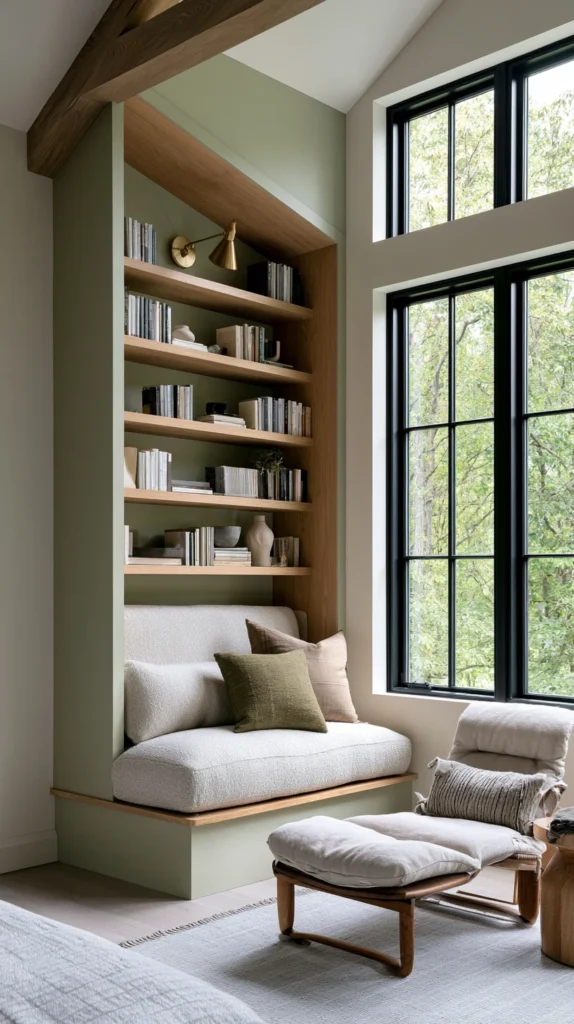
A small reading corner within the bedroom, painted sage and fitted with a chair, positioned to feel like its own quiet pocket separate from the bed itself.
Why a nook extends the palette beyond the bed
A bedroom is not only for sleeping. A dedicated sage corner gives the palette a second, waking-hours purpose within the same room.
The corner selection
A window corner if available, positioned away from the bed for a genuine sense of separation between the two zones.
The wall treatment
Sage paint on the corner’s walls only, or a curtain in the same tone if a full paint job is not wanted in just one section of the room.
The chair
A single accent chair in a warm neutral or cream tone, for contrast against the sage backdrop.
The lamp
A small reading lamp, warm-toned, positioned just behind the shoulder.
The finishing layer
A small side table and a folded throw, completing the nook without crowding it.
Cost breakdown: Paint (corner walls) or curtain: $30–70 Accent chair (existing or new): $0–300 Reading lamp: $30–60 Total: $60–430
6. The Seafoam Ceiling (Walls Left Neutral)
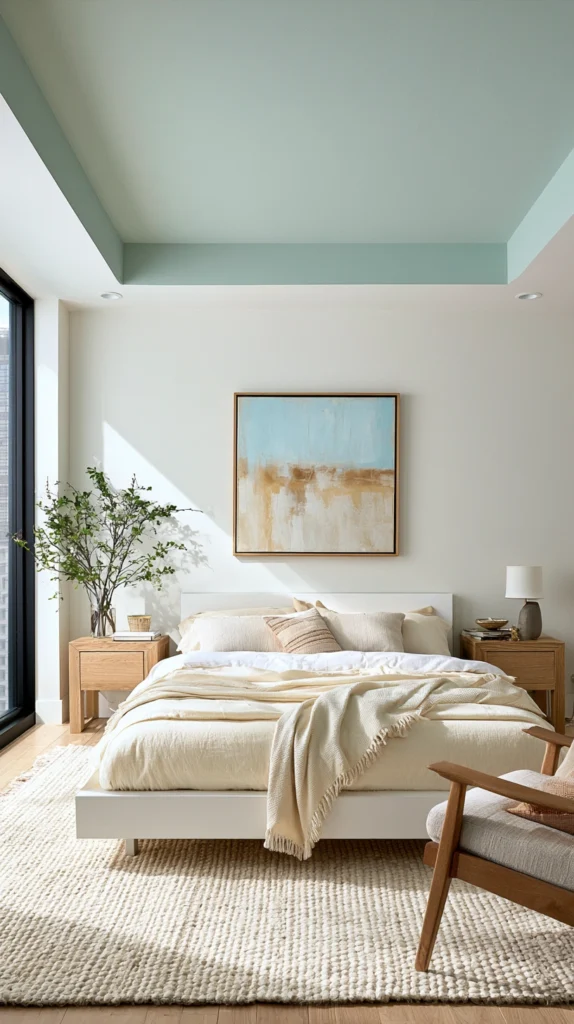
Only the ceiling painted in a soft seafoam, with the walls left in a pale or warm neutral tone — an unexpected treatment that lowers the room’s mood without darkening it.
Why the ceiling works especially well for a bedroom
Lying in bed, the ceiling is the surface most directly in view. A colored ceiling changes the room’s felt atmosphere precisely where the person spends the most passive time looking.
The paint
A soft, pale seafoam, applied in a matte finish to avoid glare from any overhead fixture.
The trim line
A crisp line where ceiling meets wall matters here — any bleed reads as accidental rather than intentional.
The lighting fixture
A simple flush-mount or a small pendant, chosen so as not to visually compete with the ceiling color itself.
The room below
Pale, warm walls and light furniture, keeping the room from feeling heavy while the ceiling alone carries the palette.
Cost breakdown: Paint (ceiling only): $35–65 Light fixture (if updating): $40–100 Total: $75–165
7. The Sage and Rattan Bedroom
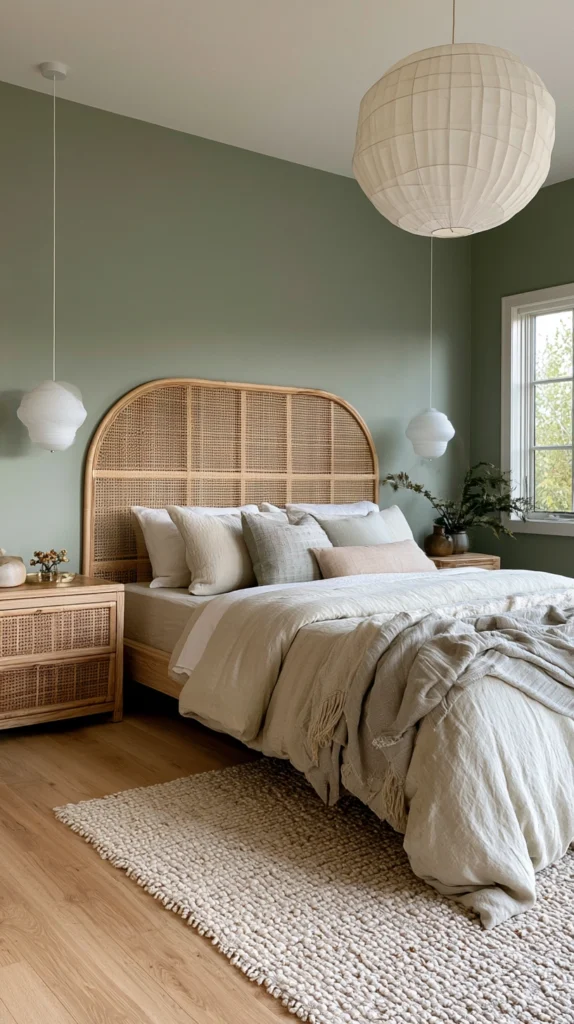
Sage walls or bedding paired deliberately with rattan and woven natural furniture, for a palette that leans organic and textural rather than purely color-driven.
Why rattan pairs naturally with sage
Both draw from the same earthy, plant-based register. Rattan’s warm, woven texture keeps a sage room from feeling cold or overly minimal.
The base
Sage as the wall color or the primary bedding tone.
The rattan pieces
A rattan headboard, bench, or set of nightstands, bringing warmth and texture against the cooler green.
The lighting
A woven rattan or paper pendant shade, continuing the natural material theme overhead.
The connecting layer
Jute or sisal rugs underfoot, in the same natural material family as the furniture.
The plants
One or two low-maintenance plants in unglazed terracotta pots, extending the organic palette into a living element.
Cost breakdown: Rattan headboard or bench: $100–250 Rattan pendant light: $40–90 Jute rug: $60–130 Total: $200–470
8. The Two-Tone Sage and Seafoam Wall Split
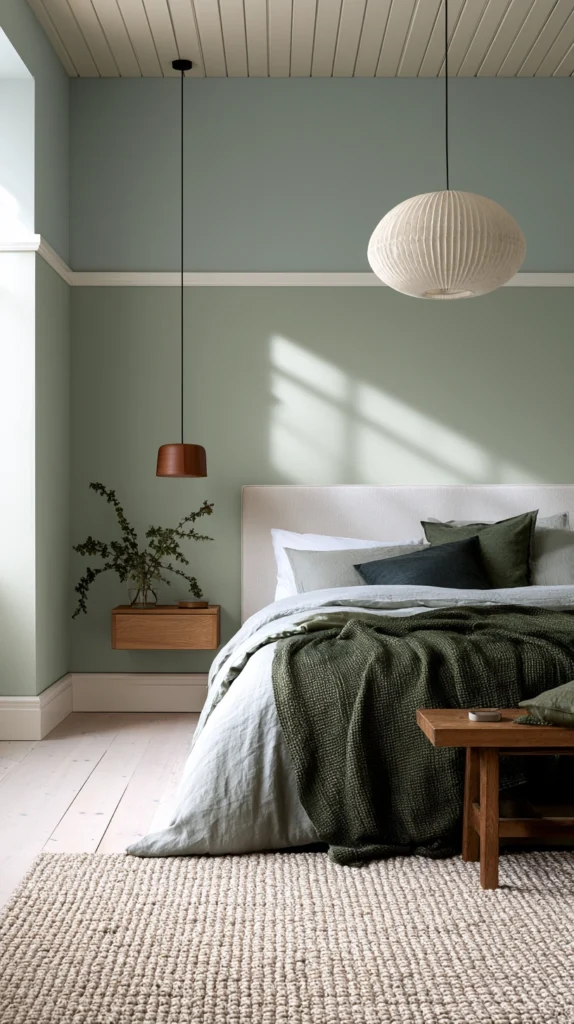
The lower half of the wall painted sage, the upper half seafoam, divided by a simple painted line or a thin trim strip — a graphic, layered approach to combining both colors on the same wall.
Why a horizontal split works better than picking just one shade
This treatment lets both colors live in the room at full strength, rather than one being reduced to an accent, creating a more layered and considered look than a single flat wall.
The split height
Roughly one-third up from the floor, sage below and seafoam above, though the proportion can shift depending on the room’s ceiling height.
The dividing line
A thin strip of trim painted white or left as a crisp taped paint line, marking the transition cleanly between the two colors.
The furniture
Kept simple and light-toned, since the wall itself is already carrying significant visual interest.
The headboard
Positioned so the split line falls at a flattering height relative to the headboard, rather than cutting awkwardly across it.
The finishing
Artwork or a mirror placed to bridge both color zones, tying the two tones together as one composition rather than two separate treatments.
Cost breakdown: Paint (two colors): $60–110 Trim strip: $15–30 Total: $75–140
9. The Seafoam Curtains
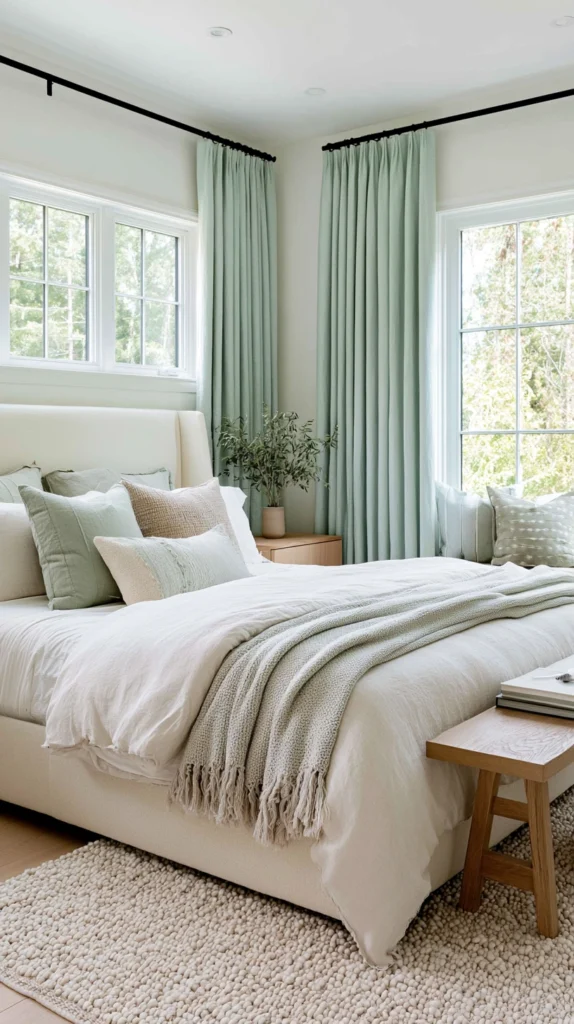
Floor-length seafoam curtains as the primary source of the color, with walls left untouched — the softest and most reversible version of the palette.
Why curtains carry real weight in a bedroom
Full-length curtains, especially closed at night, become one of the largest visible fabric surfaces in the room, meaningfully shaping its overall tone even without any wall paint.
The fabric
Linen or cotton in a soft, slightly muted seafoam, hung from ceiling height rather than just above the window frame for a more dramatic drop.
The hardware
A simple brushed brass or matte black curtain rod, understated rather than ornate.
The layering
Curtains left mostly open during the day for natural light, drawn at night both for privacy and for the calming effect of the color filling the room in the evening.
The repeat
A seafoam or sage throw pillow elsewhere in the room echoes the curtain color without requiring a second large purchase.
Cost breakdown: Seafoam curtains: $60–150 Curtain rod: $25–50 Total: $85–200
10. The Sage Gallery Wall Backdrop
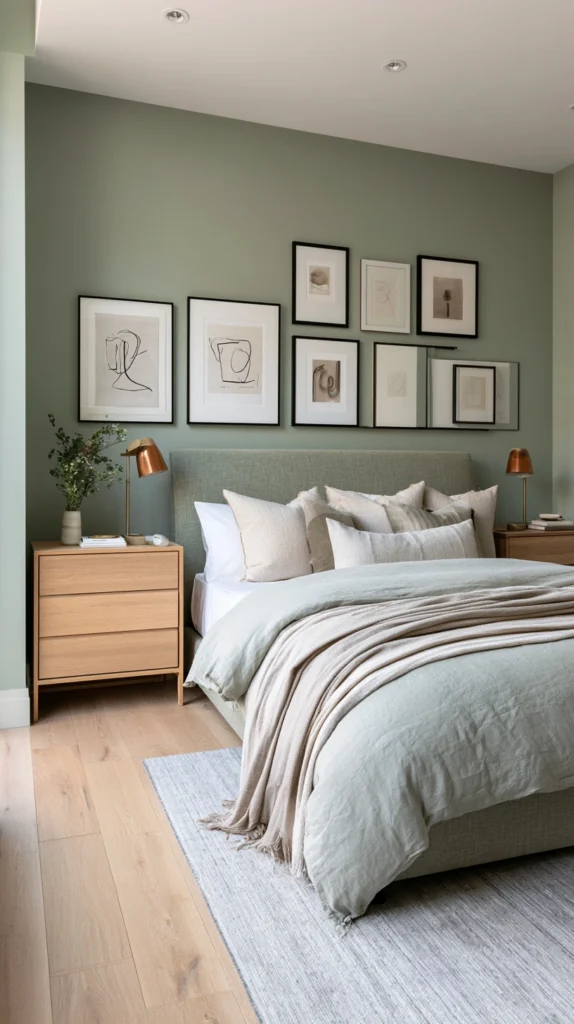
A sage-painted wall used specifically as the backdrop for a small gallery arrangement of framed art or photography above a dresser or reading chair.
Why sage suits a gallery wall in a bedroom
Soft, muted frames and botanical or abstract art tend to sit more calmly against sage than against a stark white wall, where the contrast can feel busier than a bedroom calls for.
The wall
A secondary wall — behind a dresser, beside the reading nook — rather than the main headboard wall, keeping the gallery as a quieter secondary feature.
The frame selection
Light wood or matte black frames, avoiding anything too glossy or ornate that would compete with the wall’s soft tone.
The arrangement
A simple grid or a loose cluster, with generous spacing between frames so the arrangement reads as calm rather than busy.
The art choice
Botanical prints, abstract line work, or soft landscape photography, continuing the room’s overall sense of quiet.
Cost breakdown: Paint (one wall): $35–60 Frames (assuming existing art): $40–100 Total: $75–160
11. The Seafoam Tile Ensuite Connection
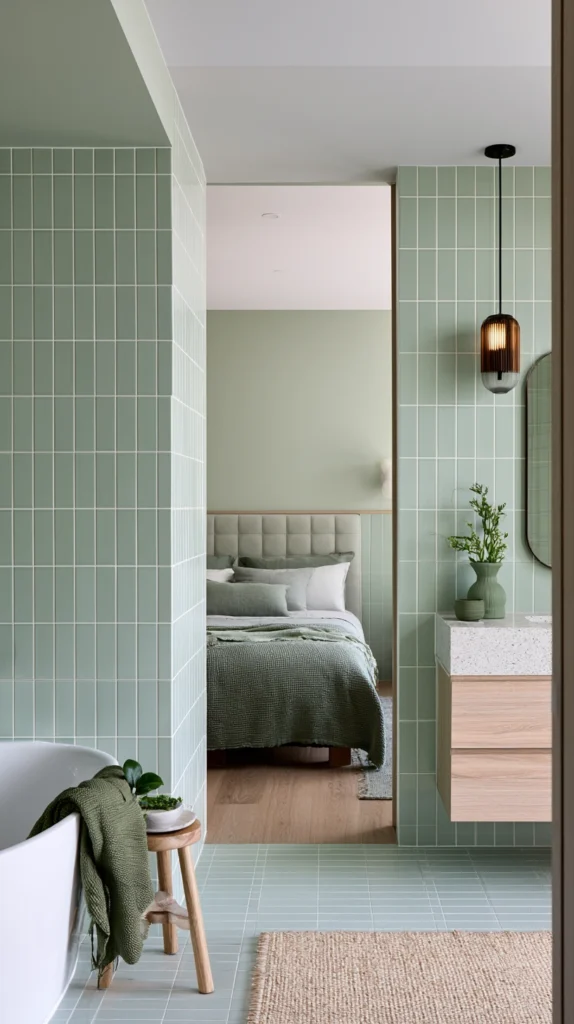
In a bedroom with an attached ensuite bathroom, seafoam tile in the bathroom visually connects to sage or seafoam elements in the bedroom beyond it, unifying the two spaces.
Why the connection matters
A bedroom and its ensuite are often seen together, doors open, especially during the morning and evening routine. Carrying the palette across both keeps the transition from feeling disjointed.
The bathroom tile
Seafoam subway or square tile on the ensuite’s shower wall or backsplash, chosen to echo the bedroom’s palette without needing to match it exactly.
The bedroom side
A single sage or seafoam element — a bench, a throw, a piece of art — placed near the connecting doorway, extending the color across the threshold.
The fixtures
Warm brass or matte black fixtures used consistently in both spaces, tying the two rooms together through hardware as well as color.
The flooring
If replacing flooring, a warm-toned material used in both spaces further smooths the visual transition between bedroom and ensuite.
Cost breakdown: Bathroom tile (partial wall): $150–350 Bedroom connecting accent: $30–80 Total: $180–430
12. The Moody Layered Green Bedroom
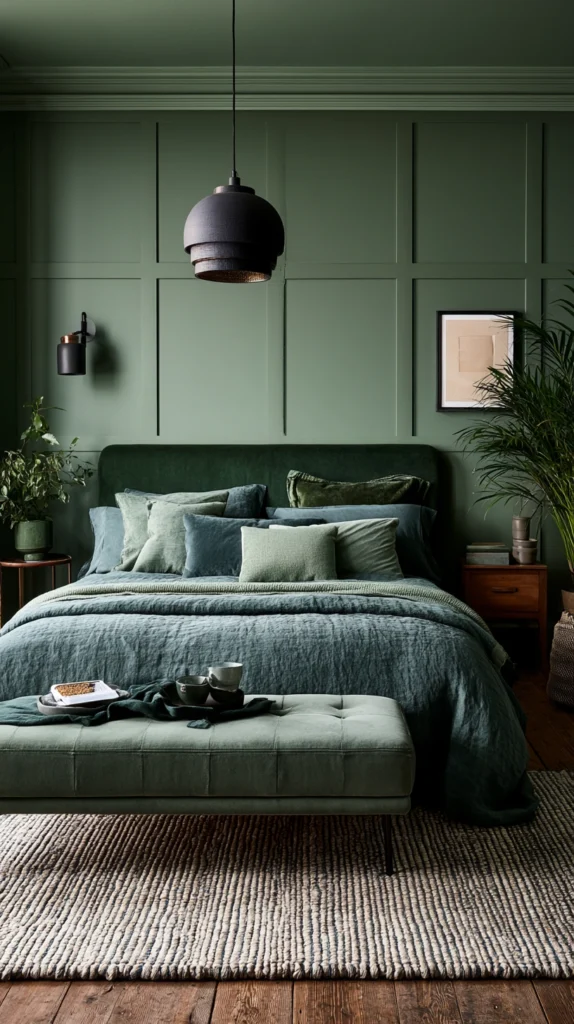
Seafoam, sage, and a deeper forest or moss green layered together across walls, bedding, and furniture — the most saturated and sophisticated version of the green palette.
Why three greens work better than one in a larger room
A single green tone across a large room can read as flat or monotonous. Layering a light, mid, and deep green together creates the same calm palette with far more visual depth.
The wall
The deepest green — forest or moss — as a single accent wall or the lower half of a two-tone treatment.
The mid tone
Sage carried through furniture upholstery or a large area rug.
The light tone
Seafoam reserved for the smallest accents — a throw pillow, a vase, a single piece of art — keeping the lightest shade from being overwhelmed by the two deeper tones.
The metals
Brass or aged gold, consistently applied, which reads warmer and richer against three layered greens than cooler silver tones would.
The lighting
Warm, layered lamp light throughout, since the deeper green tones absorb more light than a single pale wall would.
Cost breakdown: Paint (accent wall, deep green): $35–60 Sage furniture or rug: $150–400 Seafoam accent pieces: $40–90 Brass lighting: $50–120 Total: $275–670
13. The Sage Wallpaper Feature Wall
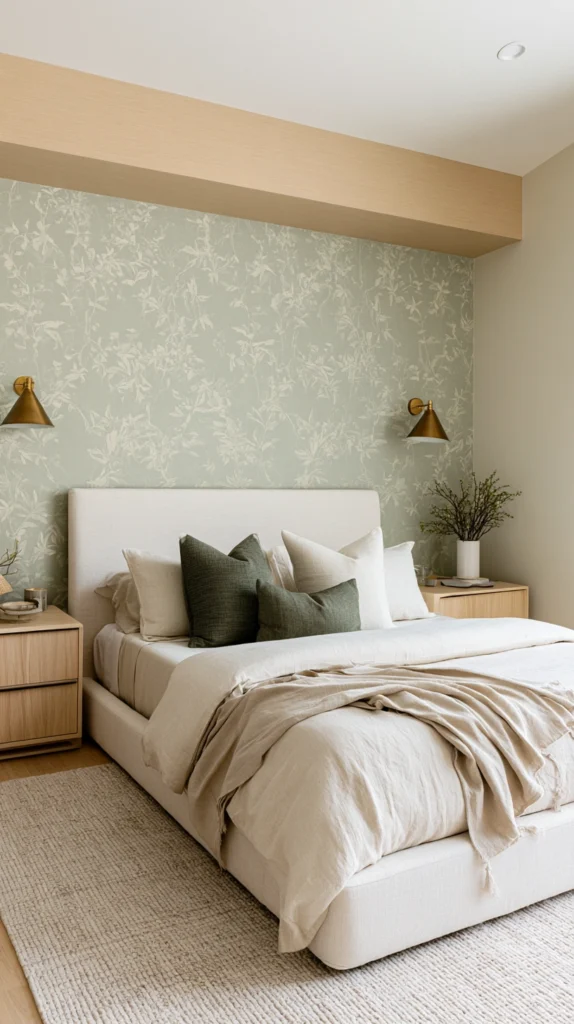
A single wall covered in a botanical or subtly patterned sage wallpaper, rather than flat paint, adding texture and pattern alongside the color itself.
Why wallpaper adds a dimension paint alone cannot
A patterned or textured wallcovering introduces visual depth and interest without needing a second wall color or additional decor to carry the room’s design.
The wall selection
The headboard wall, for the same focal-point reasoning as a painted accent wall, or the wall directly opposite the bed if a view from the pillow is preferred.
The pattern
A subtle botanical, leaf, or grasscloth-style texture in tonal sage, avoiding a pattern with high contrast that would compete with the room’s overall calm.
The application
Peel-and-stick wallpaper for a lower-commitment, renter-friendly option, or traditional pasted wallpaper for a more permanent installation.
The surrounding walls
Left in a plain warm neutral, so the patterned wall remains the room’s singular statement rather than one of several competing surfaces.
The furniture
Kept simple in silhouette, letting the wallpaper’s texture and subtle pattern be the room’s primary visual interest.
Cost breakdown: Sage botanical wallpaper: $50–150 (roll quantity depends on wall size) Installation (if hiring out): $100–300 Total: $50–450 depending on DIY versus professional installation
14. The Sage and Seafoam Nursery-Adjacent Guest Room
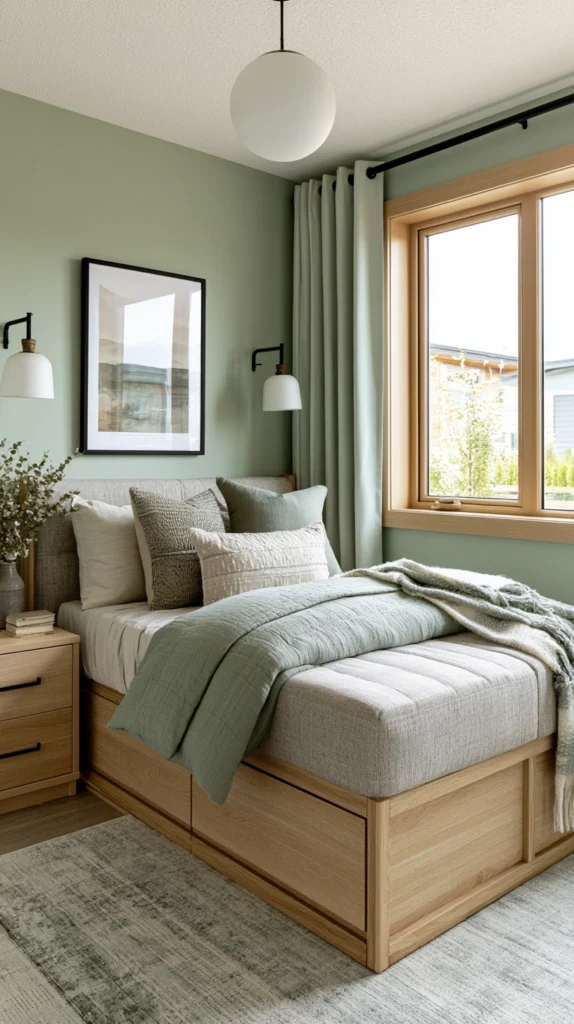
A guest or flex room designed in the palette specifically because it suits both an adult guest room and a future nursery conversion — a practical, dual-purpose approach to the color choice.
Why this palette works for a flexible-use room
Seafoam and sage read as calm and gender-neutral, working equally well for an adult guest staying a weekend or a nursery need arising later, without requiring a full repaint to transition between the two uses.
The wall color
A true sage or seafoam, chosen deliberately for its neutrality across both potential uses of the room.
The furniture
Selected with convertibility in mind — a daybed that could later accommodate a crib nearby, or storage furniture equally suited to guest linens or baby items.
The textiles
Soft, easily swapped bedding and curtains, allowing quick seasonal or purpose changes without altering the room’s underlying palette.
The lighting
A dimmable fixture, useful for late-night baby care in one phase of the room’s life and relaxed evening use as a guest room in another.
The long-term value
Choosing a flexible palette upfront avoids a full repaint if and when the room’s purpose changes, a practical consideration alongside the aesthetic one.
Cost breakdown: Paint (walls): $35–70 Convertible furniture (existing or new): $0–400 Bedding and curtains: $80–180 Total: $115–650
15. The Complete Seafoam and Sage Bedroom (The Fully Committed Room)
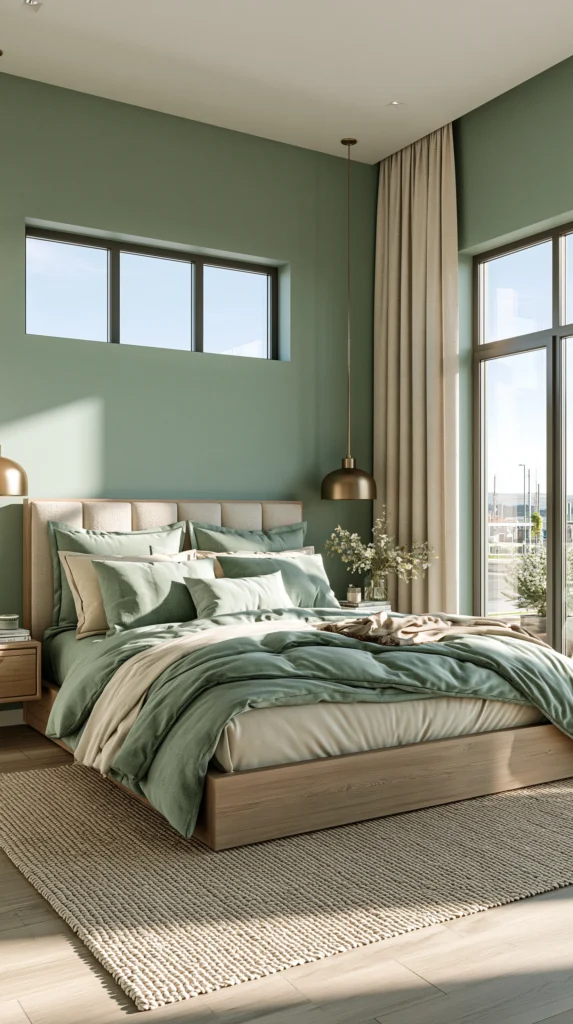
A bedroom designed around seafoam and sage as the base note of every decision — walls, bedding, furniture, and lighting all working from the same calm, layered palette.
What separates the complete room from a single accent
A single sage pillow: an accent. A complete seafoam and sage bedroom: an atmosphere. The difference is whether every other choice in the room was made in response to the palette, or made separately from it.
The elements of the complete seafoam and sage bedroom
The walls
Full sage paint, or a sage accent wall paired with warm neutral walls elsewhere in the room.
The bedding
Layered seafoam, sage, and cream, mixing texture as much as tone.
The furniture
At least one large piece — the headboard or a bench — in a warm neutral or natural wood tone, keeping the room from feeling too saturated in green.
The metals
Brass or aged gold, consistently across lighting, hardware, and frames.
The lighting
Layered: a bedside lamp on each side of the bed, plus one ambient overhead or floor source, none relied on alone.
The textiles
A jute or wool rug in a warm neutral tone, and at least one heavier knit throw at the foot of the bed.
The plants
One or two low-maintenance plants, positioned where they catch the room’s natural light.
The complete design in action
A quiet fall evening:
8pm: The bedside lamps switched on, the room already reading calm rather than merely dim.
8:30pm: The curtains drawn, seafoam filling the window where daylight had been.
9pm: In bed, the sage walls and cream bedding offering nothing for the eye to react to, only somewhere to rest.
The complete seafoam and sage bedroom: not a room that announces itself, but one that quietly does its job every single night.
Cost breakdown for the complete room: Assuming a starting point of a neutral bedroom: Paint (walls or accent wall): $35–250 Bedding (duvet, sheets, pillows): $120–250 Headboard or bench (existing or new): $0–450 Brass lighting (2–3 fixtures): $100–250 Rug: $80–200 Throw and accent textiles: $60–120 Plants (1–2): $30–60 Total: $425–1,580
Phased over two or three seasons:
Season one ($150–350): An accent wall or curtains A layered bedding refresh One brass lamp
Season two ($200–450): A sage or seafoam headboard or bench A rug in a warm neutral tone Plants
Season three ($150–500): Full paint commitment if not already done Additional brass lighting Wallpaper or a gallery wall feature
The seafoam and sage bedroom: not a weekend project but a calm built with intention over time.
The Question Before Any Seafoam and Sage Design
Before choosing a wall, a fabric, a piece of furniture:
What is the primary reason for wanting this feeling in the room?
If the answer is: full transformation — the full envelope of walls and ceiling is the answer.
If the answer is: testing the palette first — the accent wall or the layered bedding.
If the answer is: atmosphere without any paint — the curtains or the bedding layering.
If the answer is: the simplest possible — one sage throw pillow, one lamp, one corner of the room reconsidered.
The design follows the level of commitment available. Every seafoam and sage idea on this list serves that same calm at a different scale. The question is which scale is right for this room and this household.
The single seafoam pillow in the right spot: still better than no calm color at all. The full room, done with intention: an atmosphere that helps every night, not just the ones after a redecorating push.
That calm: the whole point of the palette.
Getting Started This Weekend
The immediate seafoam and sage solution:
Choose one layer to commit to first — bedding, a wall, or a single piece of furniture.
Not the whole room. Not the largest wall. The one already closest to being right.
Buy one true, muted shade — not bright mint, not pastel.
Dried herb, eucalyptus, or dusty sage: the muted depth is the point.
Add brass or warm gold somewhere nearby.
A lamp, a frame, a handle — already in the house, or inexpensive to add.
Turn off the overhead light and turn on a bedside lamp instead.
The room will already feel calmer before anything else has changed.
The rest of the design: the elaboration of this moment.
The color: the beginning. The seafoam and sage bedroom: what grows around it.