
14 Harvest Table Centerpiece Ideas for an Elegant Thanksgiving Spread
The centerpiece changed how my Thanksgiving table felt more than any dish I have ever cooked for it. Not the new china. Not the extra side dish. Not the polished silver or the ironed linens or the place cards.
The center.
Because what sat in the middle of the table did something none of the food itself could. Before it: a table set well enough, food arriving to fill whatever gaps existed, the centerpiece an afterthought grabbed from a grocery store display the day before. After it: a table with a genuine focal point, guests commenting on it before the first dish was even passed, the whole meal feeling more considered because of what sat at its center.
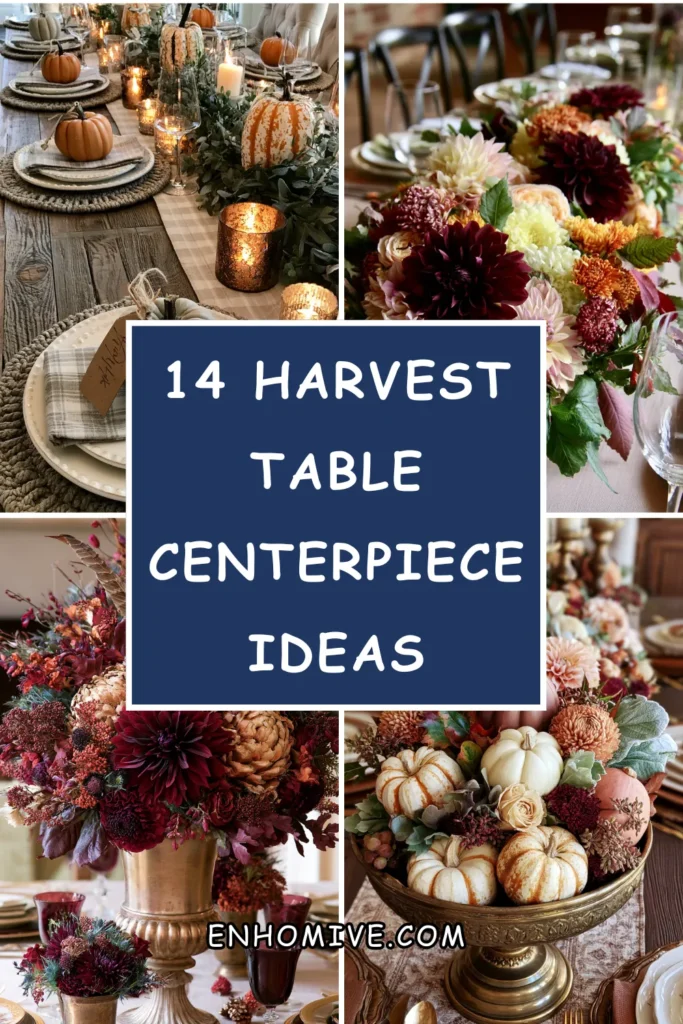
A harvest centerpiece is not a single vase of flowers repurposed for fall. It is a composition, built from the same seasonal materials — gourds, dried grasses, candles, foliage — arranged with real height, color, and restraint. The table: no longer simply set for a meal, but designed around the specific gathering happening at it.
Here are 14 harvest table centerpiece ideas for an elegant Thanksgiving spread — from the simplest running arrangement to the most fully composed table — built on that understanding.
Why the Centerpiece Matters More at Thanksgiving Than Any Other Meal
The gathering-length case
Most meals last thirty minutes to an hour. A Thanksgiving table is often occupied for two to three hours or more, giving the centerpiece far more time to be looked at, discussed, and appreciated than almost any other tablescape all year.
The sightline requirement
Without a height-conscious design:
A tall, dense arrangement blocking sightlines across a table meant for conversation among ten or more people.
The centerpiece: beautiful, but working against the very gathering it is meant to enhance.
With a height-conscious design:
Elements kept low in the center, height concentrated at the ends or used only in candles, preserving every guest’s ability to see and speak to those across from them.
The centerpiece: enhancing the gathering rather than obstructing it.
The seasonal material advantage
Thanksgiving falls at the exact peak of harvest season, meaning gourds, mini pumpkins, dried corn, wheat, and late-season foliage are all near their most available and most beautiful at precisely the moment they are needed.
The running length principle
A centerpiece that runs the table’s length, rather than one central cluster, reads as more generous and more suited to a long, shared holiday table than a single arrangement confined to the middle alone.
The Five Approaches to a Harvest Centerpiece
Before choosing any single design:
The running tablescape
Elements arranged in a loose line down the table’s center, rather than one contained cluster.
The most traditional approach for a long holiday table.
Allows natural variation in height and density along its length.
The single statement arrangement
One substantial floral or foliage arrangement, centered on the table.
Suits a smaller table or a more formal, symmetrical setting.
Requires careful height management to preserve sightlines.
The candle-anchored design
Multiple candles at varying heights as the centerpiece’s primary structure, with botanicals layered around them.
Provides genuine evening atmosphere alongside daytime visual interest.
Works well combined with almost any other approach on this list.
The natural material cluster
Gourds, pumpkins, nuts, and dried botanicals grouped without any floral arrangement at all.
The lowest cost and most easily assembled option.
Suits a more rustic or casual harvest aesthetic.
The multi-vessel arrangement
Several smaller vessels — bud vases, small bowls, individual pumpkins — spaced along the table rather than one central piece.
Adds rhythm and repetition down a long table.
Allows guests near either end to have something close to look at.
1. The Running Foliage and Gourd Table Runner
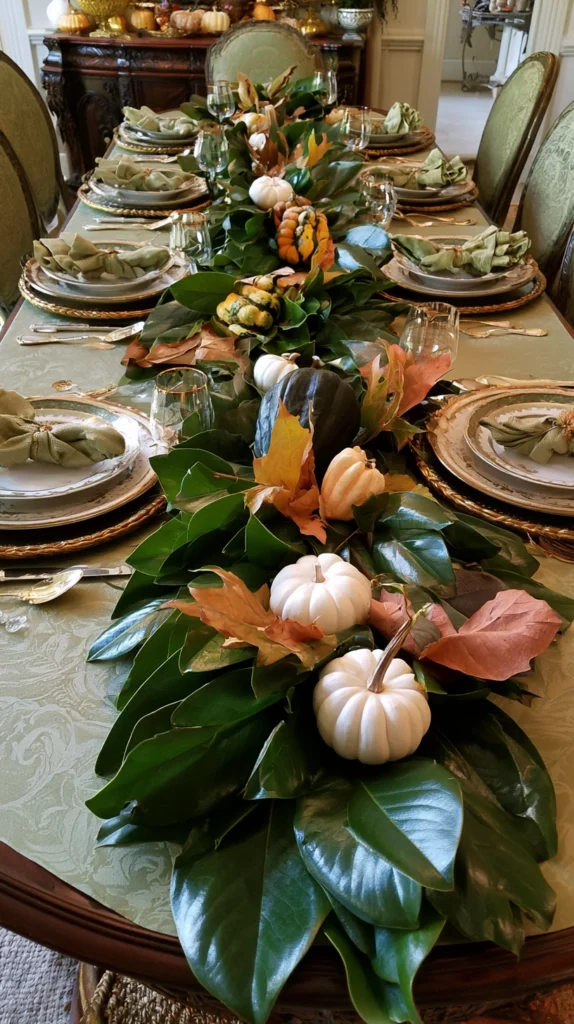
A loose arrangement of foliage, small gourds, and pumpkins running the full length of the table’s center, rather than a single confined centerpiece.
Why a running arrangement suits a long holiday table
A single central cluster leaves the table’s far ends visually empty on a table meant to seat ten or more. Running the arrangement the table’s full length gives every seat proximity to the display.
The base layer
Magnolia leaves, eucalyptus, or other long-lasting foliage, laid loosely along the table’s center line rather than arranged tightly, establishing the runner’s basic shape and length.
The gourds and pumpkins
Small to medium pumpkins and a variety of ornamental gourds nestled into the foliage at intervals, varying in size rather than uniformly matched.
The height management
Kept low throughout — nothing taller than a seated guest’s eyeline — since this arrangement’s length, rather than its height, is what should carry visual weight.
The candle integration
Taper or pillar candles interspersed along the runner’s length, adding vertical interest at specific points without raising the overall arrangement’s average height.
The natural gaps
Small sections of bare table left between denser clusters of gourds and foliage, giving the runner rhythm rather than one uniform, unbroken density.
Cost breakdown: Foliage (magnolia or eucalyptus): $20–40 Gourds and small pumpkins (assorted): $25–50 Candles: $20–40 Total: $65–130
2. The Low Compote Bowl Arrangement
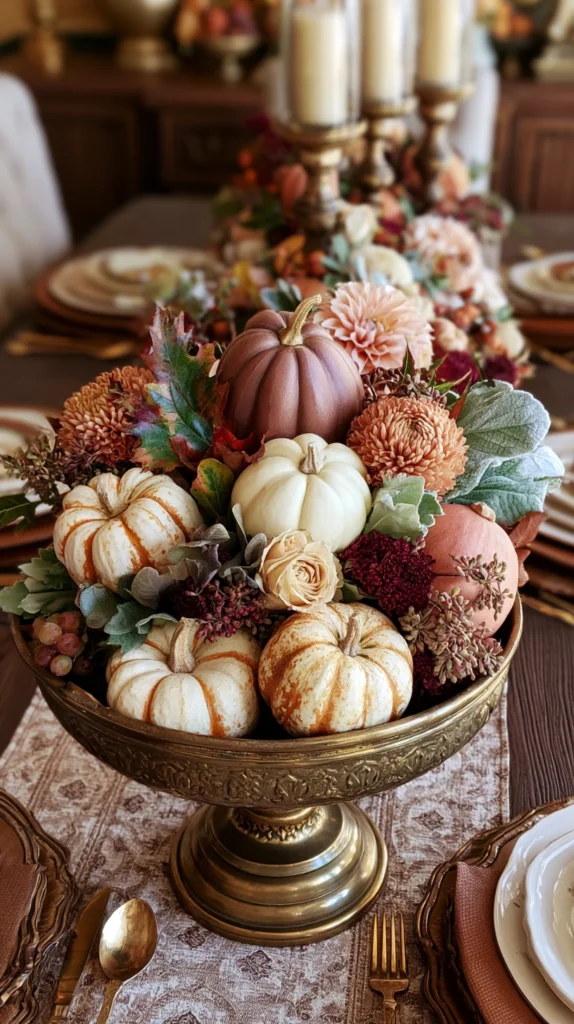
A single wide, low compote or footed bowl filled with a dense arrangement of small pumpkins, nuts, and seasonal fruit, positioned at the table’s center.
Why a low, wide vessel suits a formal sit-down dinner specifically
A tall arrangement blocks conversation across a formal table in a way a low, wide bowl does not, while still providing genuine visual presence and density at the table’s center.
The bowl
A wide, shallow compote or pedestal bowl, ideally in a material — brass, ceramic, or glass — that complements the table’s existing settings.
The fill
Small sugar pumpkins, ornamental gourds, pomegranates, and a scattering of walnuts or chestnuts, layered for height variation within the bowl’s low overall profile.
The height ceiling
Nothing in the arrangement exceeding roughly 10 to 12 inches, keeping sightlines clear even when guests are seated directly across from each other at a standard table width.
The color story
Deep burgundy pomegranates, warm orange and cream pumpkins, and the rich brown of the nuts, creating a cohesive palette without needing any additional floral elements.
The single vessel approach
One substantial bowl rather than several smaller ones, suited to a table where a single strong focal point is preferred over a running, distributed arrangement.
Cost breakdown: Compote or pedestal bowl (existing or new): $0–60 Pumpkins, gourds, pomegranates: $25–50 Nuts (walnuts, chestnuts): $10–20 Total: $35–130
3. The Taper Candle and Dried Wheat Cluster
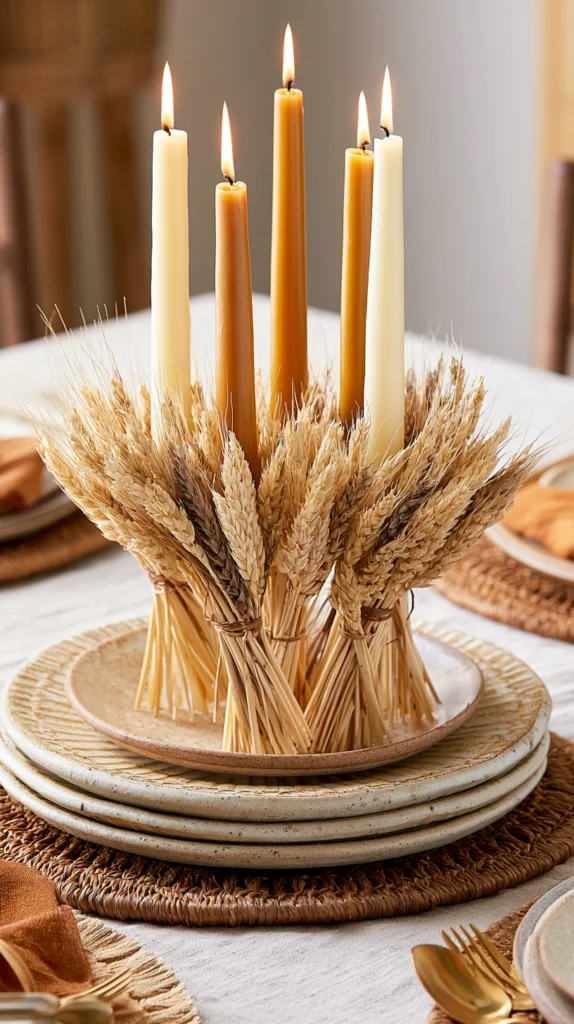
Multiple taper candles at varying heights, surrounded by bundles of dried wheat and small clusters of dried flowers, creating an arrangement built primarily around candlelight.
Why candle height variation carries this arrangement
Rather than height coming from floral elements, this design gets its vertical interest entirely from candles of different lengths, keeping the botanical elements themselves low and out of sightlines.
The candles
Five to seven taper candles in varying heights, clustered rather than evenly spaced, in ivory, warm amber, or a deep burgundy to match the table’s palette.
The wheat bundles
Small bundles of dried wheat, tied with twine, laid at the base of the candle cluster, providing the arrangement’s textural foundation.
The dried flower accents
Dried hydrangea, baby’s breath, or small dried roses tucked among the wheat, adding soft color without requiring any fresh floral elements that would need same-day arrangement.
The safety consideration
Candles positioned with adequate clearance from the dried wheat and any trailing elements, since dried plant material is highly combustible and open flame requires real caution in this specific pairing.
The evening emphasis
Particularly suited to a Thanksgiving dinner served in late afternoon transitioning into evening, since the arrangement’s full effect depends on the candles actually being lit as natural light fades.
Cost breakdown: Taper candles (6–7): $20–40 Dried wheat bundles: $10–20 Dried flower accents: $15–30 Total: $45–90
4. The Brass and Copper Metallic Vessel Display
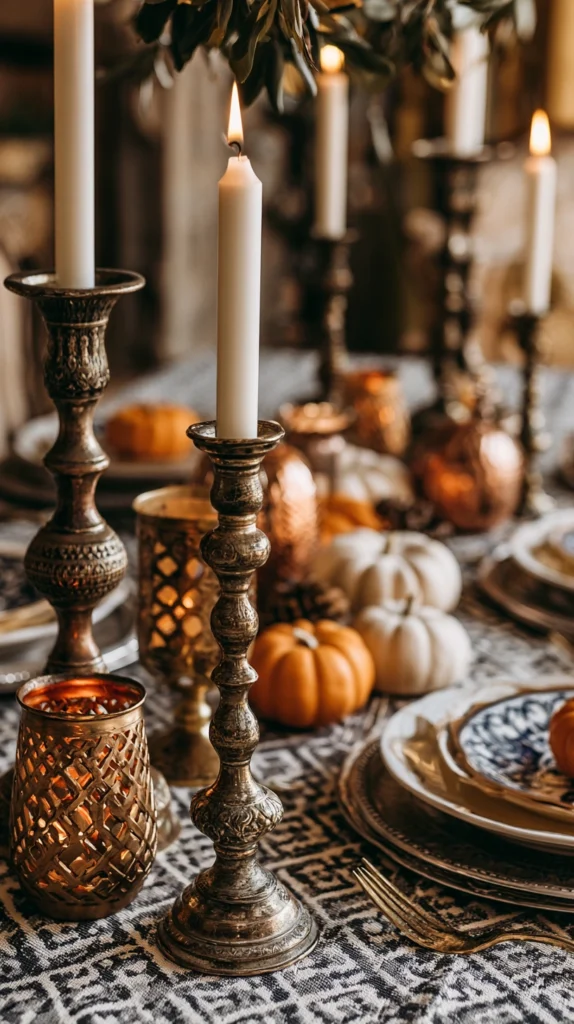
Several small brass or copper vessels — bud vases, small bowls, candle holders — spaced along the table, unified by their shared warm metallic finish rather than by a single arrangement style.
Why a shared metal finish unifies a distributed display
Several different vessel types and shapes read as a cohesive collection, rather than a mismatched assortment, when they share one consistent material and finish.
The vessel types
A mix of small brass bud vases, a low copper bowl, and a few brass candle holders, gathered rather than purchased as a matched set.
The distribution
Spaced along the table’s length at varying intervals, rather than clustered in one central point, giving the display the same running, distributed quality as the foliage runner approach.
The contents
Single stems in the bud vases — a dried seed pod, a small branch, a single dried flower — rather than full arrangements, keeping each individual vessel simple while the overall collection provides the visual richness.
The candlelight
Small candles within some of the brass holders, catching and reflecting off the surrounding metal surfaces for additional warmth once lit.
The tarnish consideration
Both brass and copper develop a natural patina over time — some hosts prefer to let this develop naturally for a warmer, more aged look, while others polish before a major gathering for a brighter shine.
Cost breakdown: Brass and copper vessels (6–8, mixed): $40–100 Candles: $15–30 Total: $55–130
5. The White Pumpkin and Ivory Textural Table
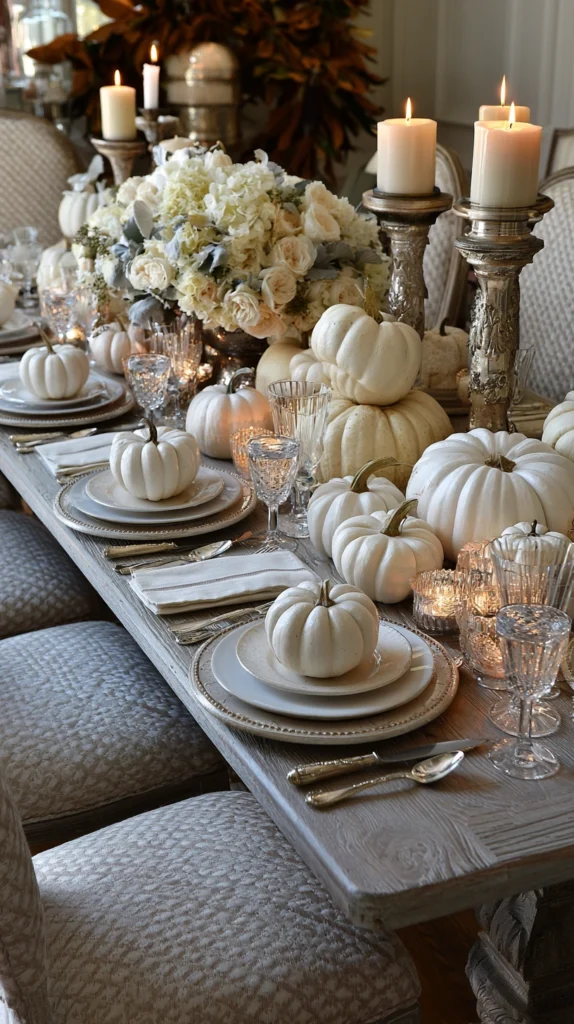
An entirely tonal arrangement built from white and ivory pumpkins, cream candles, and pale dried botanicals, offering a more elegant, monochromatic alternative to the traditional orange-and-rust harvest palette.
Why a tonal palette reads as more formal than the traditional harvest colors
Restricting the palette to a single tonal family — whites, creams, and pale neutrals — immediately signals a more elevated, formal table than the broader orange, rust, and gold mix most associated with casual harvest decor.
The pumpkins
White and pale blue-grey pumpkin varieties, alongside cream-colored gourds, providing the arrangement’s primary shapes within the tonal palette.
The candles
Ivory or cream taper and pillar candles, avoiding warmer amber or orange tones that would pull the arrangement back toward the traditional harvest palette.
The dried botanicals
Bunny tail grass, white dried hydrangea, and pale wheat rather than the deeper rust and burgundy dried material used in a more traditional arrangement.
The texture emphasis
With color restricted to a narrow tonal range, texture becomes the primary source of visual interest — the smooth pumpkin skin against the papery dried hydrangea against the soft grass plumes.
The metal accent
A single warm metal element — brass candle holders or a gold-rimmed vessel — introduced specifically to keep the all-pale palette from reading as cold rather than elegant.
Cost breakdown: White and pale pumpkins: $30–60 Ivory candles: $20–40 Pale dried botanicals: $20–40 Total: $70–140
6. The Fresh Floral and Foliage Arrangement
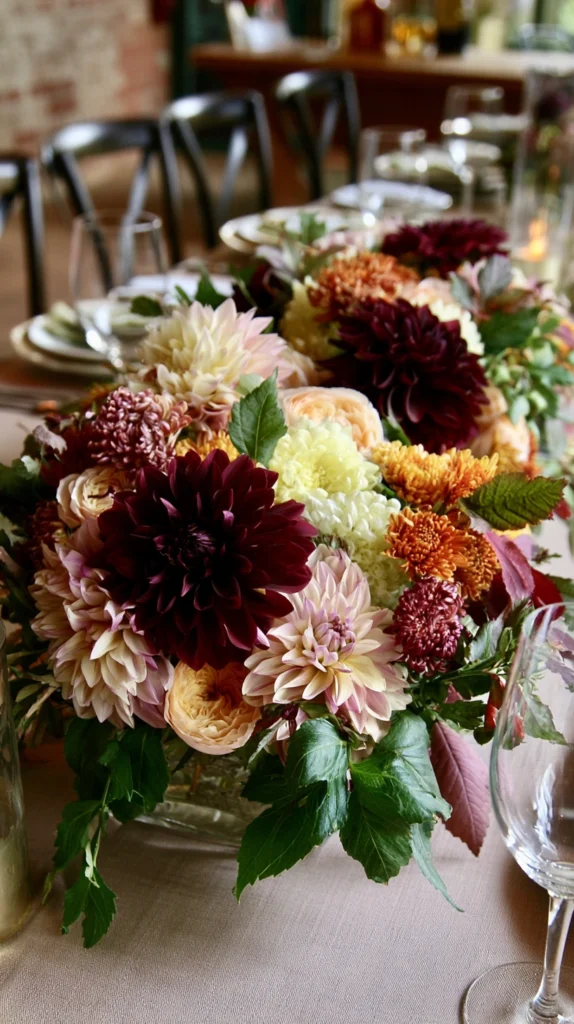
A traditional floral centerpiece built specifically around late-fall flowers — dahlias, chrysanthemums, and late roses — combined with seasonal foliage for a more classically elegant table.
Why fresh flowers still have a place in a harvest table
Not every element needs to be dried or foraged — fresh, in-season flowers add a color saturation and softness that gourds and dried material alone cannot fully replicate.
The flower selection
Dahlias in deep burgundy or orange, garden roses, and chrysanthemums, chosen for their availability and peak quality specifically in late October and November.
The foliage base
Eucalyptus, magnolia leaves, or fall-colored branches providing the arrangement’s structural foundation, with the flowers added as focal points within that base.
The vessel
A low, wide vessel rather than a tall vase, maintaining the same sightline consideration relevant to every low-profile centerpiece approach.
The freshness timing
Arranged as close to the day of the meal as practical, since fresh flowers, unlike dried or natural material, have a limited window of peak appearance.
The water source
Floral foam or a water-filled vessel base, hidden beneath the foliage, keeping the fresh flowers properly hydrated through a multi-hour gathering.
Cost breakdown: Fresh flowers (dahlias, roses, mums): $40–90 Foliage: $15–30 Floral foam or vessel: $10–20 Total: $65–140
7. The Antique Silver and Harvest Fruit Display
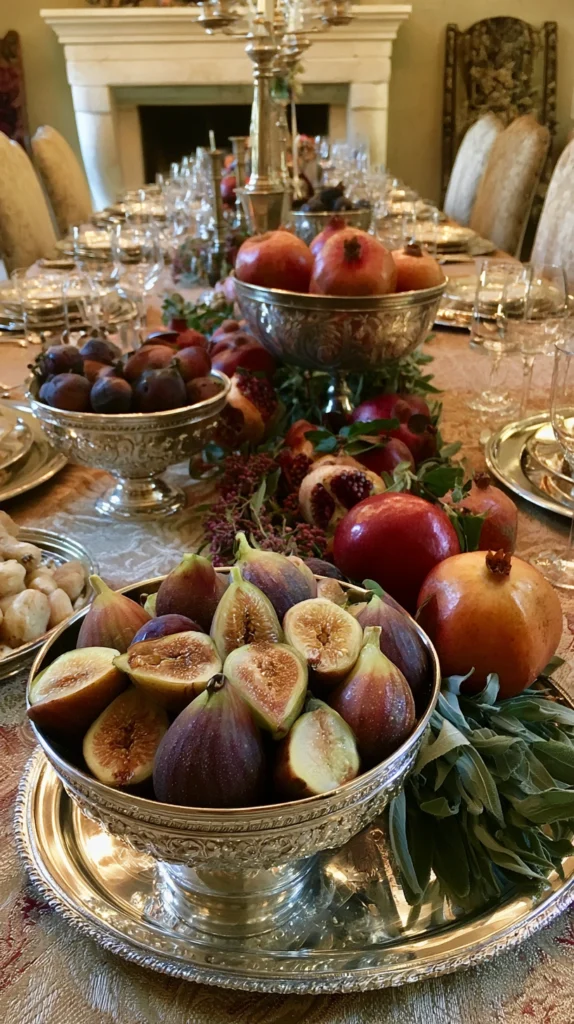
Vintage or antique silver bowls and compotes, filled with seasonal fruit — pomegranates, figs, small apples, grapes — for a table that leans into heirloom formality.
Why silver and fruit together read as classically elegant
This pairing draws on a much older tradition of formal table display, one predating the more rustic gourd-and-pumpkin harvest aesthetic, suited to a household wanting a more heirloom, timeless table.
The silver
Vintage or reproduction silver bowls, compotes, and small trays, sourced from antique shops, estate sales, or a household’s own inherited pieces.
The fruit selection
Pomegranates, fresh figs, small apples, and grape clusters, chosen for their color variety and their traditional association with formal fruit displays.
The arrangement
Fruit piled with generous height within the silver vessels, rather than arranged sparsely, since a fuller fruit display reads as more traditionally opulent.
The polish consideration
Silver polished before the gathering, since tarnished silver undercuts the formal, heirloom quality this specific approach depends on more than the aged patina suited to brass or copper.
The edible display
Fruit that guests can genuinely eat from the display during or after the meal, giving the centerpiece a functional role beyond pure decoration.
Cost breakdown: Silver bowls and compotes (existing, inherited, or secondhand): $0–100 Fruit (pomegranates, figs, apples, grapes): $25–50 Total: $25–150
8. The Individual Place Setting Mini Pumpkins
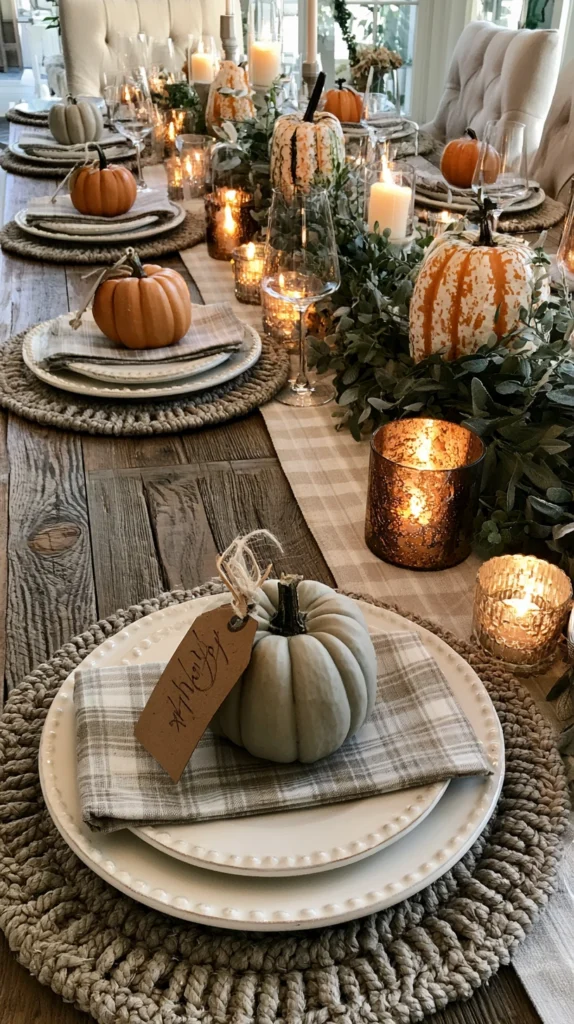
A small pumpkin or gourd placed at each individual place setting, sometimes personalized with a guest’s name, rather than one central shared arrangement.
Why individual pumpkins add a personal layer the central display alone cannot
A single shared centerpiece serves the table as a whole; a small pumpkin at every place gives each individual guest their own small piece of the harvest display, and doubles as a place card if labeled.
The pumpkins
Small mini pumpkins or gourds, one per place setting, chosen in a color that complements the table’s broader palette.
The personalization
A guest’s name written directly on the pumpkin in metallic paint pen, or on a small tag tied to its stem, combining the decorative element with genuine table-setting function.
The central arrangement pairing
Typically paired with a simpler, lower central runner or arrangement, since the individual pumpkins already provide a significant decorative element distributed across the whole table.
The take-home option
Guests able to take their pumpkin home at the meal’s end, giving the small decorative gesture a lasting life beyond the single gathering.
The cost efficiency
One of the least expensive centerpiece elements on a per-guest basis, while still adding a genuinely personal, memorable detail to the table.
Cost breakdown: Mini pumpkins (one per guest, 8–12): $15–35 Metallic paint pen or tags: $5–10 Total: $20–45
9. The Dried Citrus and Cinnamon Garland
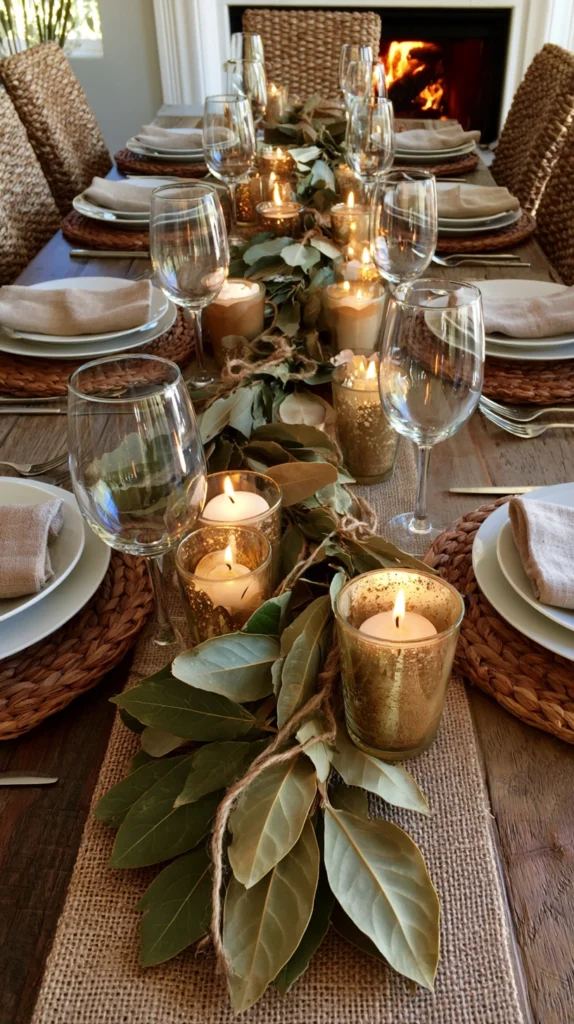
A garland made from dried orange and citrus slices, cinnamon sticks, and dried bay leaves, draped down the table’s center or along its edges.
Why a dried citrus garland adds both visual and sensory interest
Beyond its visual appeal, dried citrus and cinnamon carry a genuine warm, spiced scent, adding a sensory dimension most purely visual centerpiece elements do not offer.
The citrus slices
Orange, lemon, or a mix, sliced thin and dried in a low oven or a dehydrator over several hours until fully dried and slightly translucent.
The stringing
Threaded onto twine or ribbon along with cinnamon sticks and dried bay leaves, creating a garland long enough to run the table’s center or drape along its edge.
The drying process
Dried citrus slices require full drying to avoid mold — a low oven temperature (around 200°F) for two to three hours, checked periodically, is the standard approach.
The layering with other elements
Often combined with the running foliage and gourd approach, the garland woven through rather than replacing the other natural elements.
The reusability
Fully dried citrus and cinnamon last well beyond a single gathering if stored properly, allowing the garland to be reused for subsequent fall and holiday tables in the same season.
Cost breakdown: Citrus for drying: $8–15 Cinnamon sticks and bay leaves: $10–20 Twine or ribbon: $5–10 Total: $23–45
10. The Layered Height Formal Arrangement
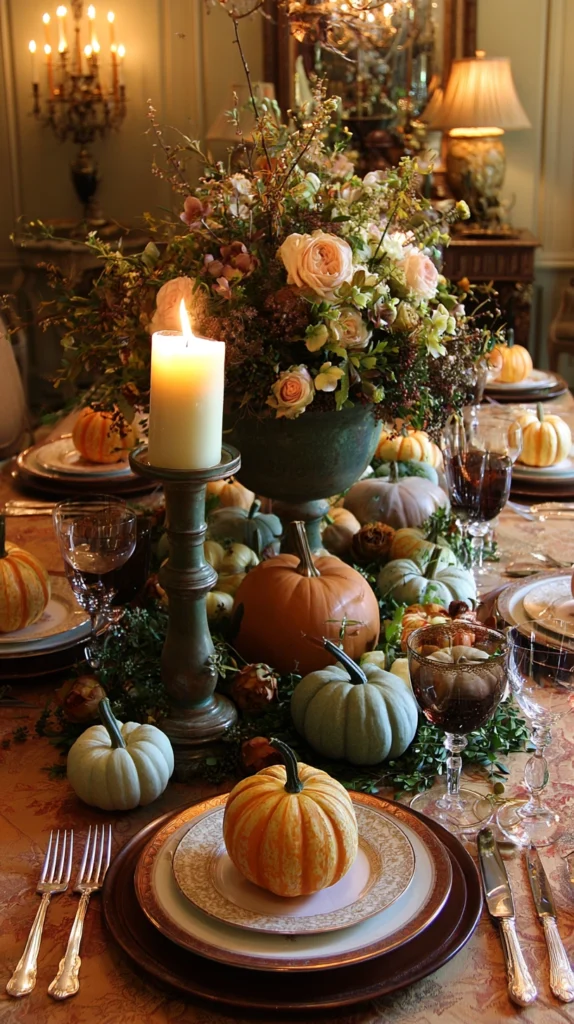
A single central arrangement built with deliberate height layering — low botanicals at the base, medium-height candles, and one or two taller accent stems — positioned carefully to preserve sightlines despite its overall height.
Why height layering allows for a taller centerpiece without blocking conversation
A uniformly tall arrangement blocks every sightline across the table. An arrangement layered so its height is concentrated narrowly, rather than spread across its full width, can include real vertical elements while still allowing guests to see around it.
The base
Low foliage and small gourds spread across the arrangement’s full width, keeping the widest part of the display well below eye level.
The middle layer
Candles at a moderate height, positioned centrally rather than spread the arrangement’s full width, narrowing the visual obstruction to a smaller central column.
The tallest accent
One or two tall dried branches or seed pods, positioned at the very center, providing genuine height and drama concentrated in the narrowest possible column.
The width-to-height ratio
The arrangement’s tallest point kept narrow enough that guests seated across from each other can simply look slightly to either side of it, rather than requiring the entire centerpiece to stay uniformly low.
The formal effect
This approach suits a smaller, more formal table where a genuine height statement is wanted, more than a very long table where the running, low-profile approaches generally work better throughout.
Cost breakdown: Foliage and small gourds: $20–40 Candles: $20–35 Tall dried branches or pods: $10–20 Total: $50–95
11. The Rustic Wood Slab Base Display
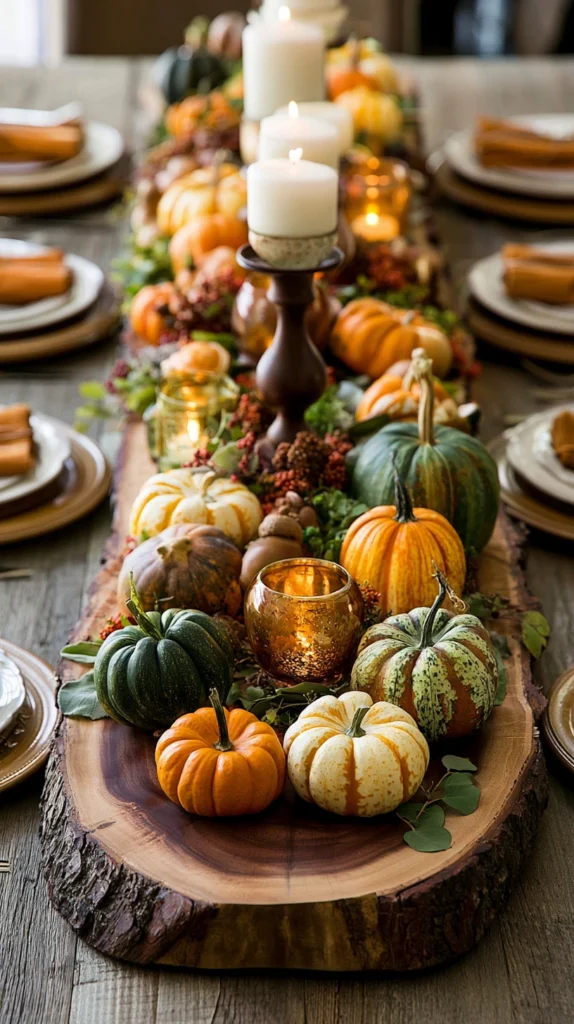
A live-edge or rustic wood slab used as the base surface for the entire centerpiece, rather than a traditional vase or bowl, grounding the arrangement in natural material from the base up.
Why a wood base changes the whole arrangement’s character
Placing pumpkins, candles, and foliage directly onto a wood slab, rather than into a vessel, gives the whole display a more organic, gathered-from-the-land quality, distinct from a more formal vessel-based arrangement.
The slab
A live-edge wood slab or a simple rustic cutting board, sized to run a significant portion of the table’s length.
The arrangement atop it
Small pumpkins, candles, dried botanicals, and scattered nuts arranged directly on the slab’s surface, using the wood grain itself as part of the display’s visual texture.
The protection consideration
A layer of wax paper or a thin protective runner beneath candles, protecting the wood surface from wax drips or moisture from any fresh botanical elements.
The scale
Sized proportionally to the table, with a very long table sometimes using two shorter slabs positioned end to end rather than one impractically large single piece.
The reusability
A genuinely durable, reusable base for future gatherings across multiple seasons, unlike a purely seasonal vessel purchased for one specific display.
Cost breakdown: Wood slab or rustic board: $30–80 Pumpkins, candles, and botanicals: $50–100 Total: $80–180
12. The Feather and Pheasant-Inspired Display
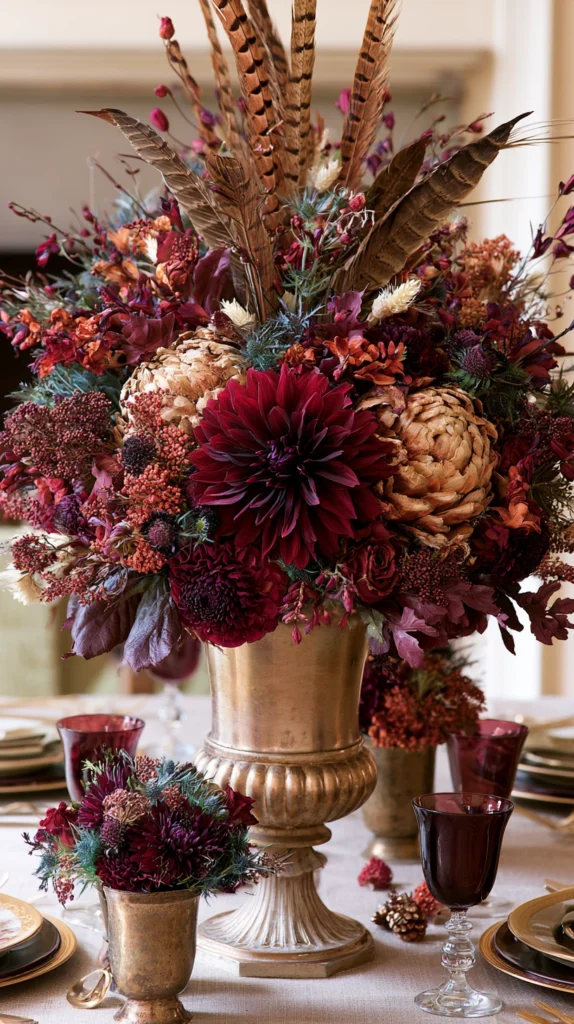
Natural feathers, alongside deep jewel-toned botanicals, incorporated into the centerpiece for a display evoking traditional English hunting-lodge and countryside harvest aesthetics.
Why feathers add an unexpected, elevated texture
Few centerpiece elements are as visually distinctive as natural feathers, and their inclusion signals a more specific, considered aesthetic reference than the more common gourd-and-pumpkin approach alone.
The feathers
Pheasant, peacock, or turkey feathers, sourced from a craft supplier or, where locally appropriate and legal, genuinely foraged, added as accent pieces within the broader arrangement.
The jewel-tone botanicals
Deep burgundy dahlias, dark plum-colored foliage, and rich amber dried grasses, chosen specifically to complement the feathers’ natural coloring and pattern.
The traditional reference
This combination draws directly on English country house and traditional hunting-lodge table design, distinct from the more rustic American harvest aesthetic most gourd-based arrangements reference.
The placement
Feathers arranged with height variation, some laid low within the arrangement and one or two standing taller at the display’s center, echoing the height-layering principle used elsewhere.
The formality level
Suited to a household wanting a more distinctly formal, traditional table, rather than the more casual, farmhouse-leaning harvest look several other approaches on this list lean toward.
Cost breakdown: Feathers (assorted): $15–35 Jewel-tone botanicals: $30–60 Total: $45–95
13. The Edible Centerpiece Combining Decor and Food
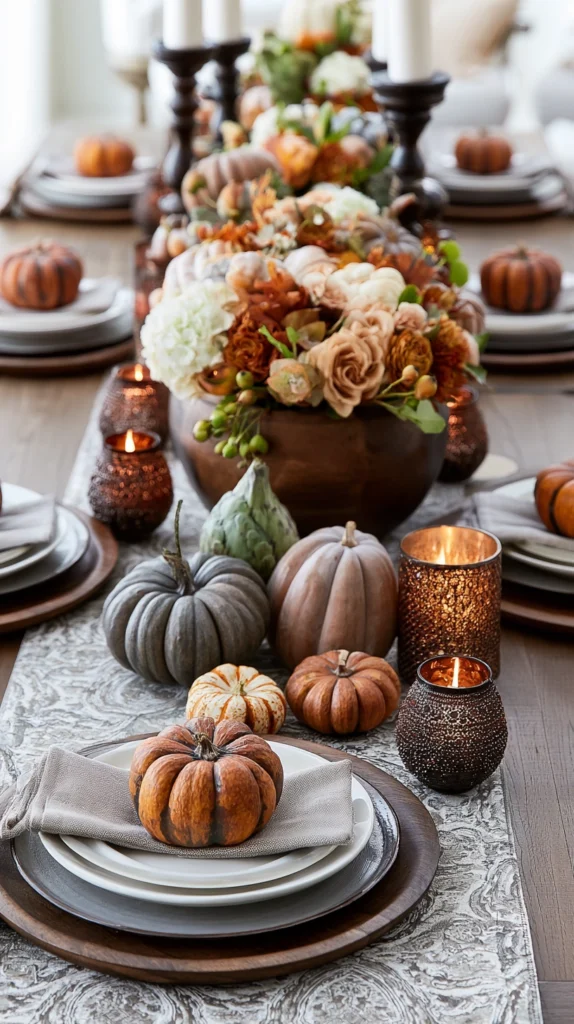
A centerpiece built partly from food itself — a display of decorative squash alongside a genuine cheese and charcuterie spread, or a bowl of nuts guests actually crack and eat during the meal.
Why an edible centerpiece adds function to its decorative role
A purely decorative centerpiece exists only to be looked at. An edible one gives guests something to do with their hands and mouths during the long stretch before the main meal is served, adding genuine hosting function to the display.
The squash and produce
Decorative winter squash arranged alongside genuinely servable items — a wheel of cheese, a small dish of olives, a bowl of shell-on nuts with a nutcracker.
The functional versus purely decorative split
Clearly distinguishing which squash or gourds are for display only and which items are meant to be eaten, avoiding any confusion for guests approaching the table.
The nut display
A shallow bowl of walnuts, chestnuts, or pecans in the shell, with a nutcracker nearby, giving guests a genuinely interactive element as part of the centerpiece itself.
The cheese and charcuterie integration
A small board or platter positioned within the broader centerpiece display, styled with the same seasonal colors and materials as the purely decorative elements around it.
The pre-meal timing
Particularly effective for the period between guests’ arrival and the meal actually being served, giving the centerpiece real use during exactly the stretch of time a purely decorative display would otherwise sit unused.
Cost breakdown: Decorative squash: $15–30 Nuts in shell and nutcracker: $15–30 Cheese and charcuterie items: $20–50 Total: $50–110
14. The Complete Harvest Table Centerpiece (The Fully Composed Table)
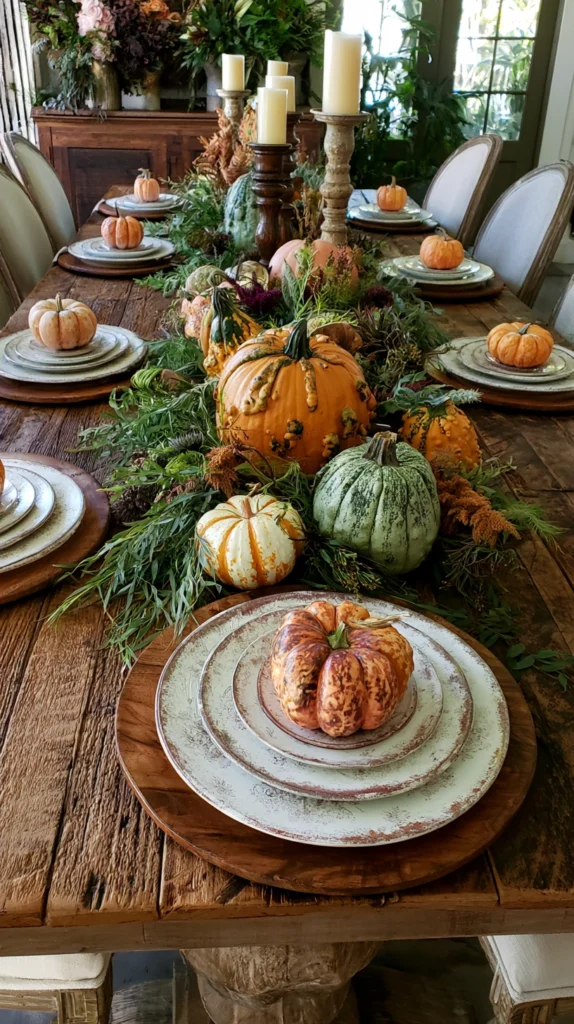
A complete centerpiece combining several of the approaches above — a running foliage base, height-layered candles, individual place-setting pumpkins, and a cohesive color palette — designed as one unified composition running the table’s full length.
What separates the complete centerpiece from a single arrangement in the middle
A single central arrangement: a good start, but visually distant from guests at either end of a long table. A complete harvest table centerpiece: a composition running the table’s full length, with height carefully managed throughout and personal touches reaching every individual place setting.
The elements of the complete harvest table centerpiece
The running base
Foliage, small gourds, and pumpkins arranged loosely down the table’s center, kept low enough to preserve sightlines throughout.
The candlelight
Taper and pillar candles at varying heights interspersed along the runner’s length, providing both daytime texture and genuine evening atmosphere.
The color palette
A cohesive, deliberately chosen palette — whether the traditional rust-and-gold harvest colors or a more tonal white-and-ivory approach — carried consistently across every element.
The personal touch
A small pumpkin or gourd at each individual place setting, personalized if desired, extending the centerpiece’s reach to every guest at the table.
The sensory layer
Dried citrus and cinnamon woven through the arrangement, adding scent alongside the purely visual elements.
The functional element
A small dish of nuts or a modest cheese display integrated into the broader centerpiece, giving guests something to interact with before the meal itself begins.
The complete design in action
Thanksgiving afternoon:
2pm: Guests arriving, the table already set, the running centerpiece catching the last of the afternoon light through the window.
3pm: A few guests picking at the nut bowl and cheese board built into the centerpiece while the meal finishes cooking.
4pm: Everyone seated, the candles lit as the light outside begins to fade, each guest finding their own small pumpkin at their place.
6pm: The meal finished, the candles now the room’s primary light, the centerpiece still doing its quiet work two hours after the first course was served.
The complete harvest table centerpiece: not a single arrangement glanced at once and forgotten, but a considered composition that holds attention and provides warmth for the entire length of the gathering.
Cost breakdown for the complete centerpiece: Assuming a starting point of a bare table: Foliage and running gourd base: $65–130 Candles (taper and pillar): $30–60 Individual place-setting pumpkins: $20–45 Dried citrus and cinnamon garland: $23–45 Nut bowl or cheese display: $30–70 Total: $168–350
Phased for planning purposes:
One to two weeks before: Dried citrus prepared and garland assembled Candles and vessels gathered
The day before: Foliage and gourds arranged into the running base Individual pumpkins labeled if personalizing
The day of: Fresh elements added, candles set out, nut bowl and cheese display assembled just before guests arrive
The harvest table centerpiece: not a last-minute grocery store purchase, but a composition planned with the same care given to the meal itself.
The Question Before Any Centerpiece Design
Before choosing an arrangement style, a palette, a set of vessels:
What is the primary quality wanted from this table?
If the answer is: a long table that needs presence at every seat — the running foliage and gourd table runner.
If the answer is: a smaller, more formal table — the low compote bowl arrangement or the layered height formal design.
If the answer is: elegance over rustic charm — the white pumpkin and ivory tonal table, or the antique silver and fruit display.
If the answer is: something guests can interact with, not just admire — the edible centerpiece or the individual place-setting pumpkins.
The design follows the table’s actual size, the gathering’s formality, and how long guests will realistically be seated around it, more than any single Pinterest trend. Every idea on this list solves that combination differently. The question is which combination fits this particular table and this particular gathering.
The single running foliage garland with a few tucked-in pumpkins: still gives a long table real presence. The complete centerpiece, composed with intention: a table that holds attention for the entire multi-hour gathering it is built for.
That sustained attention: the whole point of a genuinely designed centerpiece.
Getting Started This Weekend
The immediate harvest centerpiece solution:
Measure the table before buying a single gourd.
A running arrangement needs a very different plan than a single central bowl — know which one the table’s actual length calls for.
Choose height first, sightlines second.
Decide how tall the centerpiece can be before choosing any individual element, since every other choice follows from that one constraint.
Start with what is already on hand — pumpkins from the porch, foliage from the yard.
The full display can be purchased, but the first test of the arrangement’s shape costs nothing.
Light one candle and stand back from across the table.
The single fastest way to check whether the arrangement actually works once seated at eye level, rather than viewed from standing above it.
The rest of the design: the elaboration of this moment.
The runner: the beginning. The harvest table: what gets gathered, and lit, around it.