
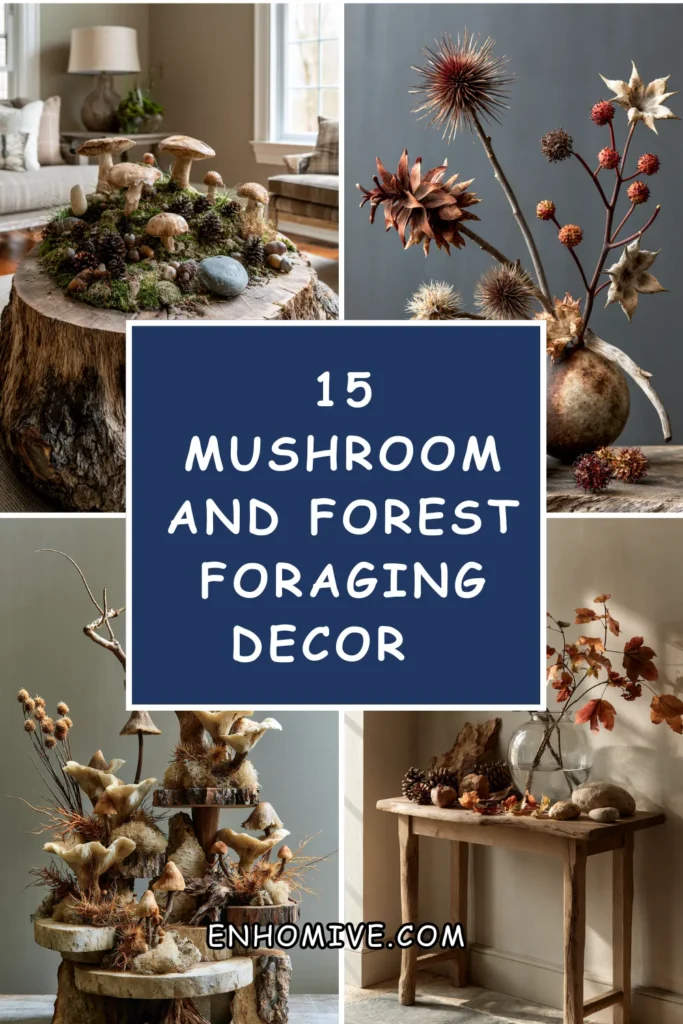
15 Mushroom and Forest Foraging Decor Ideas for a Fall Nature Table
The nature table changed how I brought the outdoors into the house more than any houseplant collection ever did. Not the fiddle-leaf fig. Not the trailing pothos. Not the potted herbs or the cut flowers or the seasonal wreath on the door.
The gathering.
Because a table built from what was actually found on a walk did something purchased greenery never managed. Before it: decor that looked like autumn, bought from a shop, arriving in a box. After it: a table built entirely from a single afternoon in the woods, moss and mushrooms and fallen bark arranged with the same care as anything store-bought, but carrying the actual forest with it.
A nature table is not a craft project for children alone. It is a small, ongoing act of bringing the woods indoors, built from foraged material rather than manufactured decoration. The table: no longer a place for objects bought to look like fall, but a place for objects that actually are fall, gathered rather than purchased.
Here are 15 mushroom and forest foraging decor ideas for a fall nature table — from the simplest single specimen to the most fully developed seasonal display — built on that understanding.
Why a Foraged Nature Table Works Differently Than Purchased Decor
The authenticity difference
Purchased fall decor, however well made, is manufactured to resemble the forest floor. A genuinely foraged table is the forest floor, or a curated piece of it, which no manufactured object can fully replicate.
The seasonal rhythm
Without foraged material:
A single autumn display, set once and left unchanged until the season ends.
The table: static, disconnected from the actual changing woods outside.
With foraged material:
New finds each walk — different mushrooms, different leaves, different textures as the season progresses.
The table: a living record of the season’s actual progression, changing as October moves toward November.
The mushroom identification note
Displaying wild mushrooms is a purely visual and safe activity; eating them is a separate matter entirely requiring expert identification. This distinction matters enough to state plainly before any foraging begins: gather for display, never for the table in a culinary sense, unless identification has been confirmed by a genuine expert.
The impermanence principle
Much of this decor is not meant to last indefinitely. Fresh mushrooms will decay within days; fresh moss dries out; fallen leaves curl and fade. This is not a flaw in the display but part of its honesty — the table changes because the forest changes.
The Five Categories of Foraged Nature Table Material
Before gathering anything:
Fungi
Wild mushrooms, bracket fungi, and puffballs, foraged for visual display rather than consumption.
The most visually striking and the shortest-lived material.
Requires the most care in handling and the most restraint in harvesting.
Botanicals
Moss, lichen, ferns, and fallen leaves.
The most abundant and easiest to gather responsibly.
Provides the base layer most other elements sit within.
Wood and bark
Fallen branches, curled bark, and small logs.
The most durable material, often lasting a full season or longer.
Provides structure and height to an otherwise flat display.
Seeds and nuts
Acorns, pinecones, chestnuts, and seed pods.
Long-lasting and easy to store between seasonal displays.
Adds texture and a sense of the forest’s productive cycle.
Found treasures
Feathers, small stones, and unusual natural formations.
The most personal and least predictable category.
Adds the specific, individual character of a particular walk or place.
1. The Foraging Walk Itself
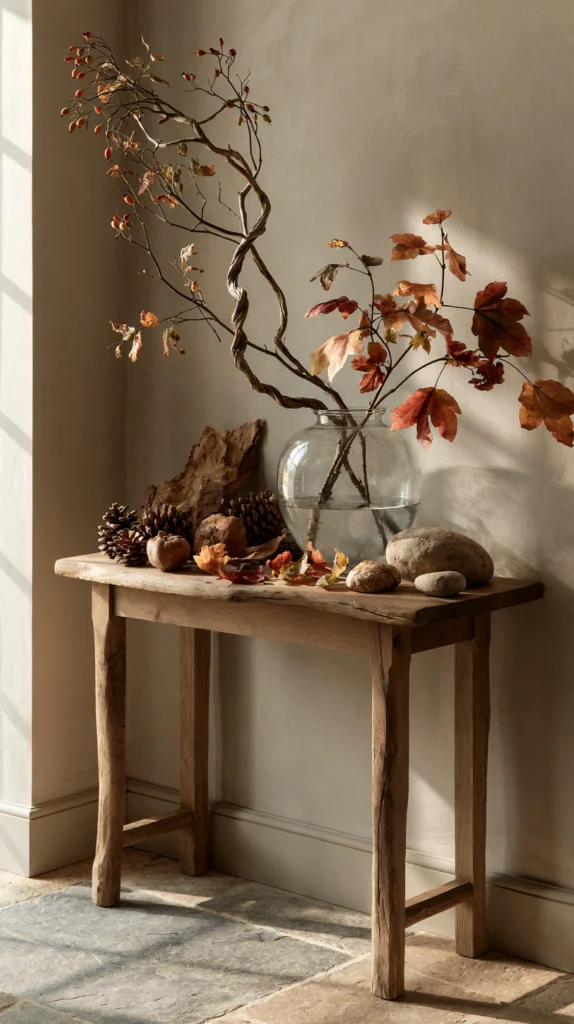
Before any table is built, a deliberate walk through a nearby woods, park, or trail specifically to gather material, treated as the first and most essential part of the decor process.
Why the walk matters as much as the display
A nature table sourced from a single dedicated walk carries a coherence — one place, one afternoon, one specific light — that a table assembled from a craft store’s autumn aisle can never replicate.
The gathering basket
A simple woven basket or a cloth bag, both practical for carrying finds and part of the foraging tradition’s visual language.
The gathering ethic
Take only what is abundant, leave the rare and the singular, and never strip an area bare — a handful of acorns from beneath a tree with hundreds more, not every mushroom found along a short stretch of trail.
The permission consideration
Confirming foraging is permitted on the specific land being walked, since many parks and protected areas restrict or prohibit removing natural material.
The timing
Early morning walks after a recent rain tend to yield the best mushroom finds, since fungi fruit most reliably in cool, damp conditions.
The record
A small note of where and when each item was found, whether mentally noted or written down, adding a layer of story to the eventual table beyond the objects alone.
Cost breakdown: Gathering basket or bag: $10–25 Total: $10–25 (materials themselves gathered at no cost)
2. The Moss-Covered Base Layer
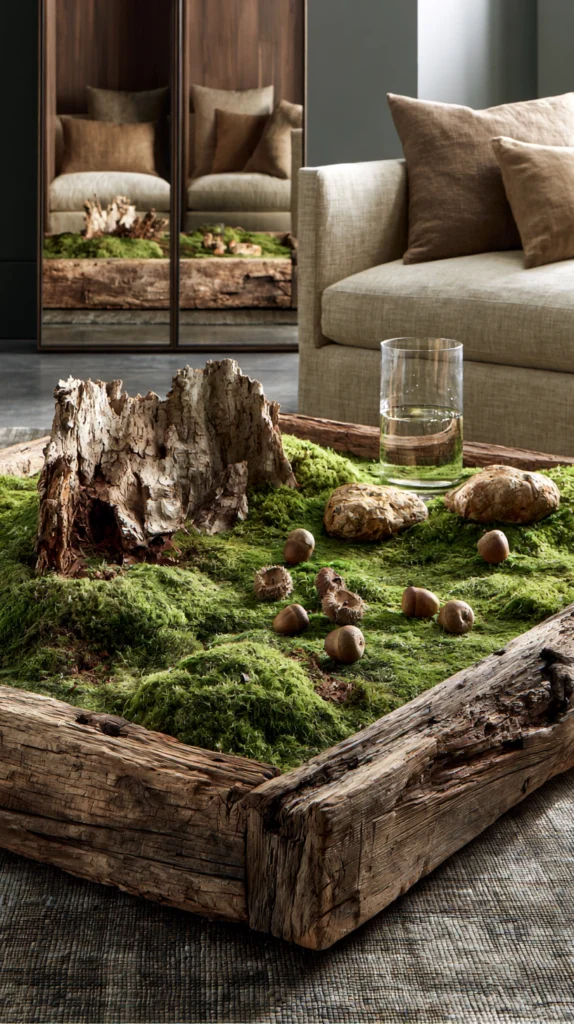
A foundation of real or preserved moss, spread across the table surface or within a shallow tray, providing the soft, green base most other elements will sit within.
Why moss functions as the table’s foundation
Nearly every other element on this list — mushrooms, bark, acorns — looks more at home nestled into moss than placed directly on a bare table surface, echoing how these objects actually appear on a real forest floor.
The moss sourcing
Sheet moss or cushion moss, gathered responsibly from areas where it grows abundantly, or purchased preserved moss for a longer-lasting, lower-maintenance base.
The tray
A shallow wood or metal tray beneath the moss, containing the display and protecting the table surface from moisture if using fresh, living moss.
The care for living moss
Fresh moss needs occasional light misting to stay green and pliable rather than drying out and browning within the display’s first week.
The preserved alternative
Preserved moss, treated to remain soft and green without ongoing care, trading a small amount of authenticity for significantly reduced maintenance.
The finished base
Slightly uneven and textured rather than a flat, uniform mat, mimicking the natural variation of a real forest floor.
Cost breakdown: Fresh or preserved moss: $10–25 Shallow tray: $10–25 Total: $20–50
3. The Bracket Fungi Display
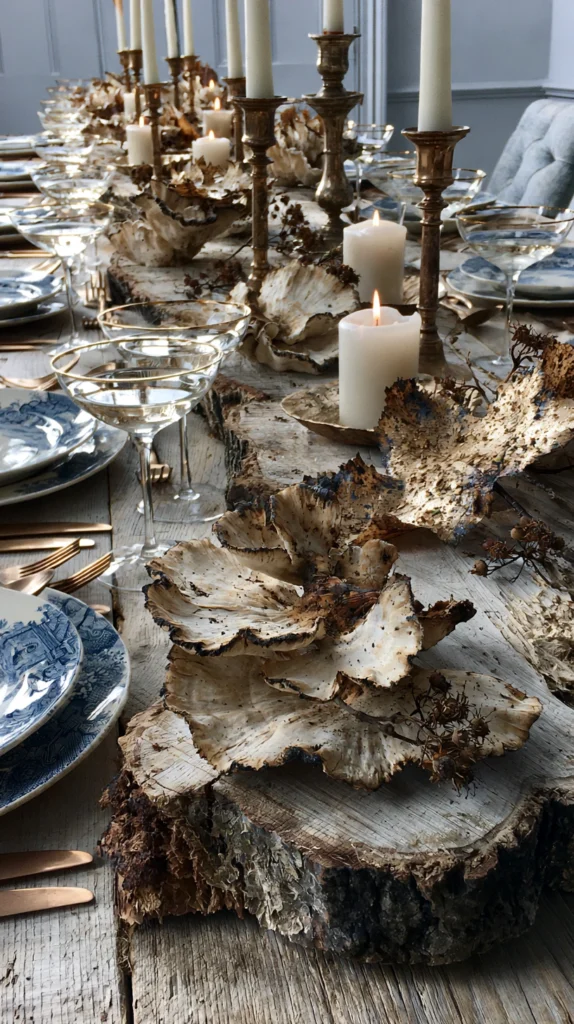
Bracket fungi — the shelf-like, woody fungi commonly found growing on fallen logs and dead trees — collected and displayed for their sculptural, long-lasting quality.
Why bracket fungi outlast most other foraged mushrooms
Unlike soft-capped mushrooms, which decay within days, woody bracket fungi are naturally durable and can remain part of a display for months or even years without special preservation.
The identification
Common, easily recognized varieties — turkey tail, artist’s conk, or similar shelf fungi — gathered from fallen or already-dead wood rather than removed from a living tree.
The cleaning
A gentle brush to remove loose debris, without soaking the fungi in water, which can compromise their naturally dried, woody structure.
The display method
Arranged directly on a piece of display wood or bark, propped to show their natural shelf-like growth pattern, rather than laid flat where their distinctive form is less visible.
The longevity
Left as a permanent or semi-permanent addition to the nature table, unlike the more fleeting fresh mushroom specimens gathered elsewhere on this list.
The visual variety
Different species offering different colors and patterns — the banded rings of turkey tail, the smooth grey-brown of an artist’s conk — providing textural variety within a single durable material category.
Cost breakdown: Foraged at no cost, or purchased dried specimens: $0–20 Total: $0–20
4. The Wild Mushroom Cluster (Fresh, Short-Term Display)
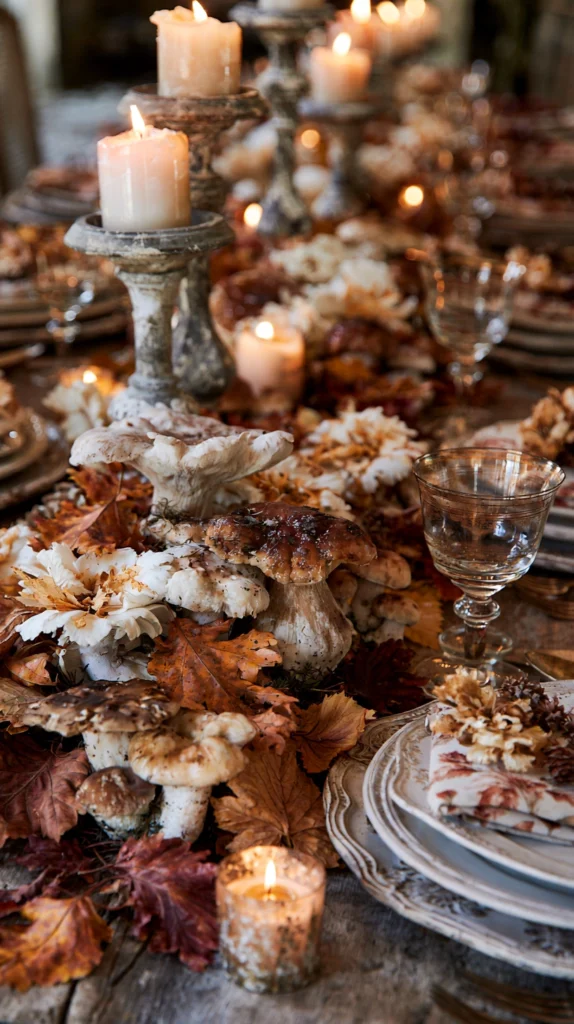
A small cluster of fresh wild mushrooms, arranged as the table’s temporary centerpiece and replaced every few days as they naturally decay.
Why fresh mushrooms are worth the short lifespan
No preserved or artificial mushroom fully captures the specific color, gill structure, and slight translucence of a genuinely fresh specimen — the brief display window is part of what makes this element feel most alive.
The identification caution
Handled for visual display only, never eaten without expert identification, and even then, handled with basic care since some species can cause skin irritation on contact.
The gathering
A small cluster of a single visually striking species — a grouping of amanitas, a cluster of small brown mushrooms, or a single dramatic specimen — rather than an indiscriminate mixed handful.
The staging
Nestled directly into the moss base, positioned as though still growing, rather than laid flat or propped in an obviously artificial arrangement.
The lifespan
Typically fresh and visually appealing for three to five days before noticeable decay sets in, worth planning around if the display is timed for a specific gathering or occasion.
The replacement rhythm
New specimens gathered on a subsequent walk as the previous cluster fades, keeping the table’s most dramatic element in a constant state of gentle renewal through the season.
Cost breakdown: Foraged at no cost, or purchased ornamental mushrooms: $0–15 Total: $0–15
5. The Fallen Bark and Log Slice Base
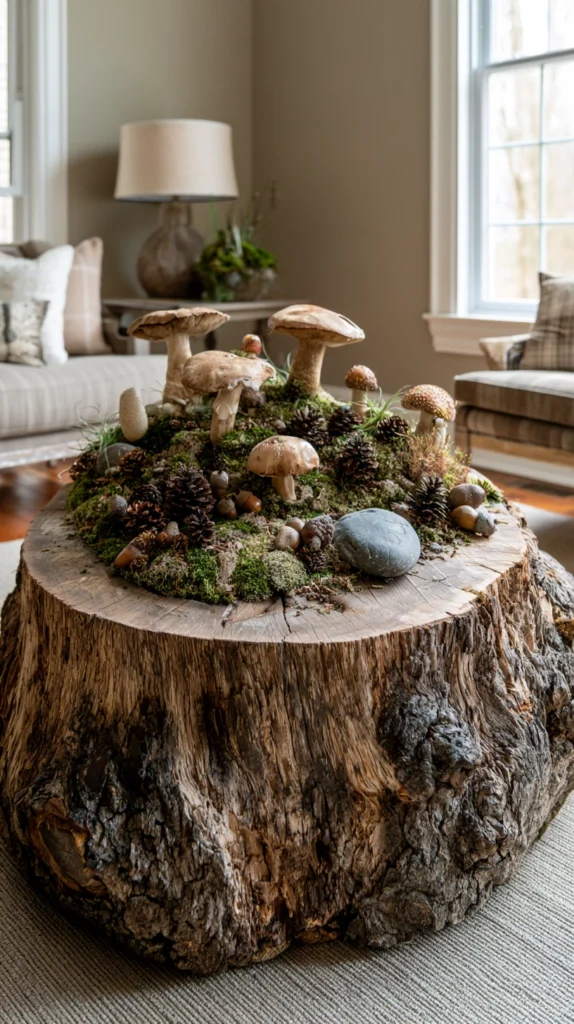
A section of fallen bark or a cut log slice, used as the primary display surface for smaller foraged items, replacing or supplementing the shallow tray.
Why a wood base suits this material better than a smooth tray
Bark and log slices already carry the exact texture and material language of the rest of the display, providing a base that reads as continuous with the objects arranged on it rather than a separate, contrasting surface.
The sourcing
Naturally fallen bark or wind-downed branches, rather than material cut from a living tree, both for ethical gathering practice and because fallen wood typically shows more interesting natural texture and aging.
The log slice option
A cross-section slice of a fallen branch or small log, sanded smooth on the cut face if a cleaner presentation surface is wanted, left rough if a more rustic look is preferred.
The size
Large enough to hold a small grouping of mushrooms, moss, and acorns without overcrowding, while still fitting comfortably within the table’s overall footprint.
The drying
Allowed to dry fully before extended indoor use, reducing the risk of insects or excess moisture being introduced into the home.
The longevity
Genuinely durable, often lasting multiple seasons with proper drying and occasional light cleaning, unlike the fresh fungi displayed on top of it.
Cost breakdown: Foraged bark or log slice: $0 Or purchased log slice: $10–30 Total: $0–30
6. The Acorn and Chestnut Bowl
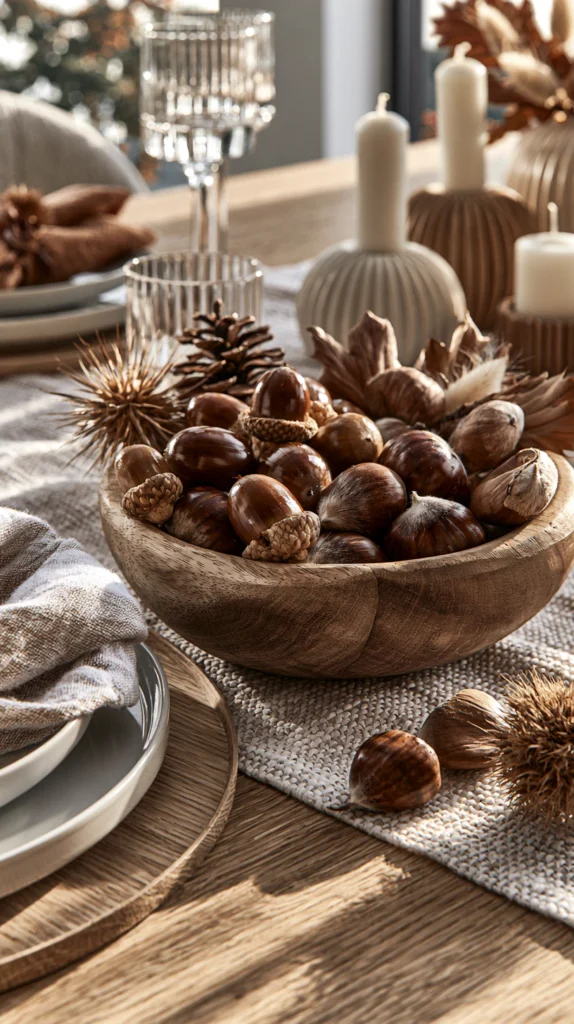
A ceramic or wood bowl filled with foraged acorns, chestnuts, and other tree seeds, providing a dense, textural element that lasts the full season without special care.
Why nuts and seeds are the most forgiving foraged material
Unlike fungi and fresh moss, acorns and chestnuts require no special preservation and simply dry naturally over time, making this one of the lowest-maintenance elements on the entire table.
The gathering
Acorns, chestnuts, buckeyes, and similar tree seeds, gathered in quantity since they are typically abundant and this display benefits from real volume.
The bowl
A wood or ceramic bowl in a warm, earthy tone, sized generously enough that the seeds fill it with real density rather than looking sparse.
The mixed varieties
Different seed types combined for visual variety — the smooth, glossy chestnut against the more matte, capped acorn — rather than a single uniform seed type filling the entire bowl.
The insect consideration
A brief freeze (24–48 hours in a sealed bag) before bringing gathered nuts indoors helps address any insects that may have been present in the shells, a simple precaution worth taking before display.
The longevity
Lasting the full season and often well into the following year if stored appropriately, making this one of the more reusable elements gathered.
Cost breakdown: Foraged at no cost Bowl (existing or new): $0–30 Total: $0–30
7. The Fern and Fallen Leaf Layering
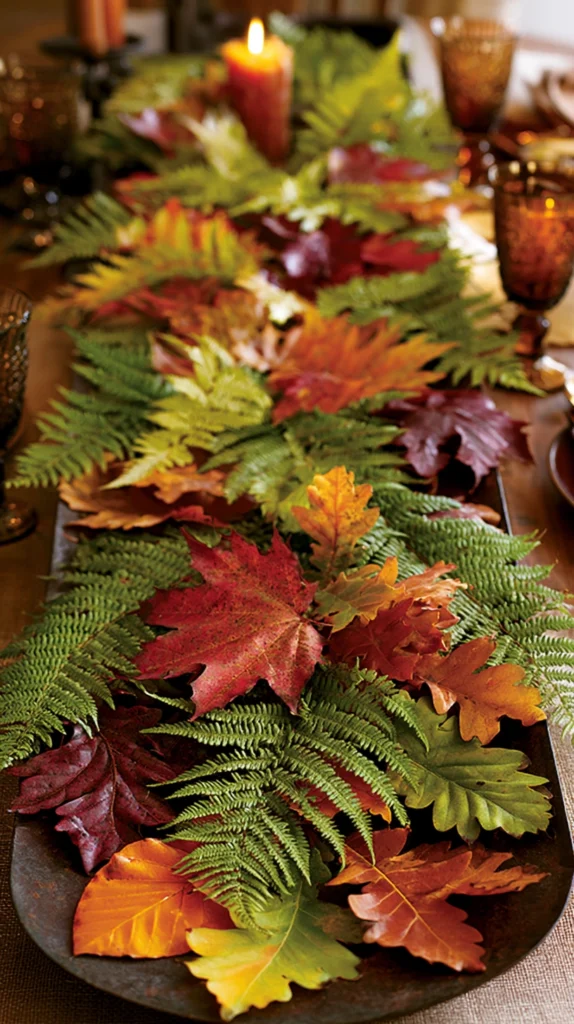
Ferns and a mix of fallen leaves in varying colors, layered around the table’s other elements, adding a softer, more colorful botanical layer than moss alone provides.
Why leaves add the color moss and fungi do not
Moss and fungi both trend toward green, brown, and grey. Fallen leaves bring the season’s actual color range — red, gold, rust, deep burgundy — into the display, rounding out the palette.
The leaf selection
A range of colors and shapes gathered together, rather than a single leaf type, echoing the natural mix found on any real forest floor in autumn.
The pressing option
Some leaves pressed flat under books for a week before use, providing a different, flatter texture that can be layered beneath other objects rather than only scattered loosely on top.
The fresh fern
A small fern frond or two, either a cut piece from a garden fern or a small potted fern positioned beside the table, adding a living green element among the drying leaves.
The color coordination
Leaves loosely sorted by color into small clusters within the display, rather than fully scattered at random, for a slightly more considered arrangement without losing the natural, gathered feeling.
The longevity
Fresh leaves curl and fade within one to two weeks, replaced periodically through the season as new fallen leaves become available on subsequent walks.
Cost breakdown: Foraged at no cost Small fern (optional): $8–15 Total: $0–15
8. The Pinecone and Seed Pod Collection
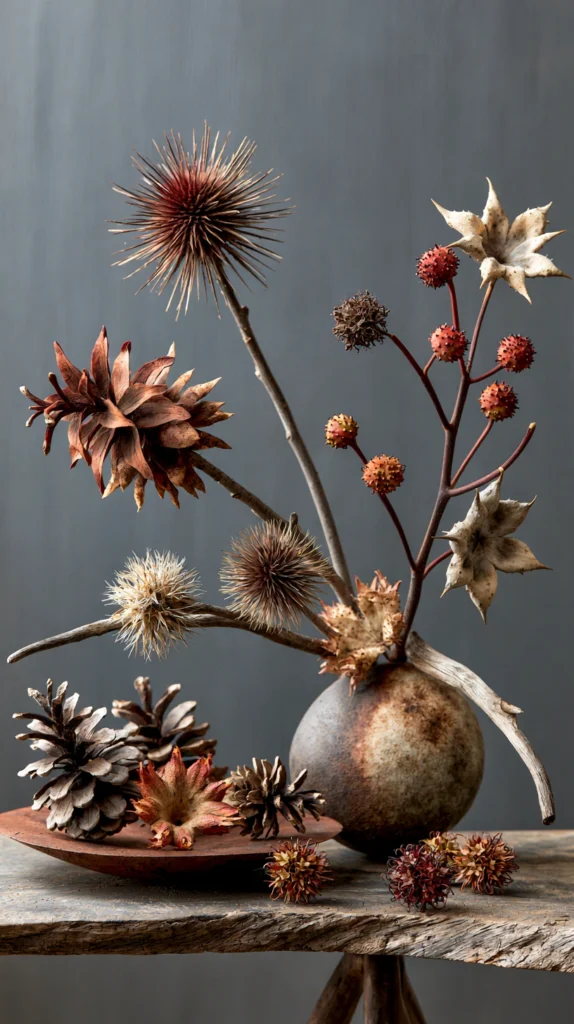
A gathered collection of pinecones in varying sizes, alongside other seed pods such as milkweed or sweetgum, arranged for their sculptural, architectural quality.
Why pinecones and seed pods add structural interest
Their layered, geometric forms provide a different visual rhythm than the softer, rounder shapes of moss and fungi, adding structural variety to the overall table.
The variety
Different pinecone species and sizes, alongside other dried seed pods, gathered for their range of scale and form rather than a single matched type.
The cleaning
A light shake to remove loose debris and any insects, with a brief bake at a low oven temperature (around 200°F for 30–45 minutes) if any concern about hidden insects remains, a common practice for pinecones brought indoors.
The arrangement
Grouped by size, largest toward the back or center of a cluster, smaller pods and cones toward the front, for a sense of depth within the grouping.
The longevity
Among the most durable materials on this list, easily lasting multiple seasons with proper initial cleaning and dry storage between uses.
The seasonal storage
Stored in a simple box or basket at the end of the season, ready to be incorporated into the following year’s display without needing to be re-gathered.
Cost breakdown: Foraged at no cost Total: $0
9. The Feather and Found Object Accent
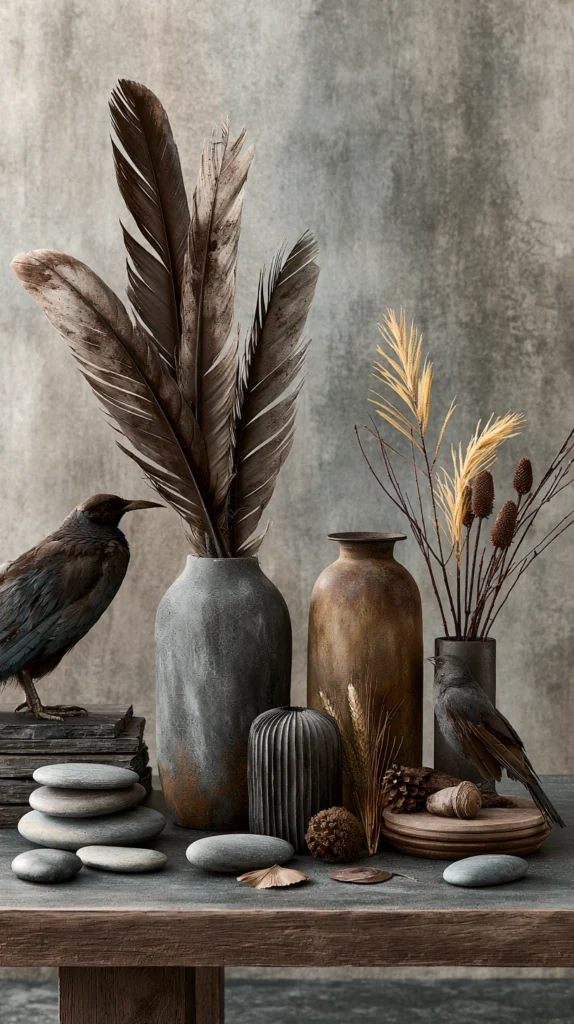
Feathers, interesting stones, and other small found treasures collected during foraging walks, added as individual accent pieces throughout the display.
Why unpredictable finds add the table’s most personal touch
Unlike moss, bark, or acorns, which can be deliberately sought, feathers and unusual stones are typically found unexpectedly — their inclusion in the table records the specific, individual character of a particular walk rather than a planned gathering list.
The feathers
Naturally molted feathers found on the trail, handled with a basic awareness of regional regulations, since some protected bird species’ feathers are restricted from collection even when found rather than taken from a living bird.
The stones
Small stones with interesting texture, color, or shape, gathered in modest quantity rather than in bulk, since their appeal depends on individual character rather than volume.
The placement
Scattered as single accents throughout the broader display, rather than grouped together as their own separate collection, letting each found object stand out individually.
The storytelling element
Kept loosely associated with the memory of where each was found, adding a personal narrative layer that store-bought decor cannot replicate.
The ongoing collection
Added to gradually across multiple walks throughout the season, rather than gathered all at once, keeping the table’s character genuinely accumulated over time.
Cost breakdown: Foraged at no cost Total: $0
10. The Terrarium-Style Enclosed Display
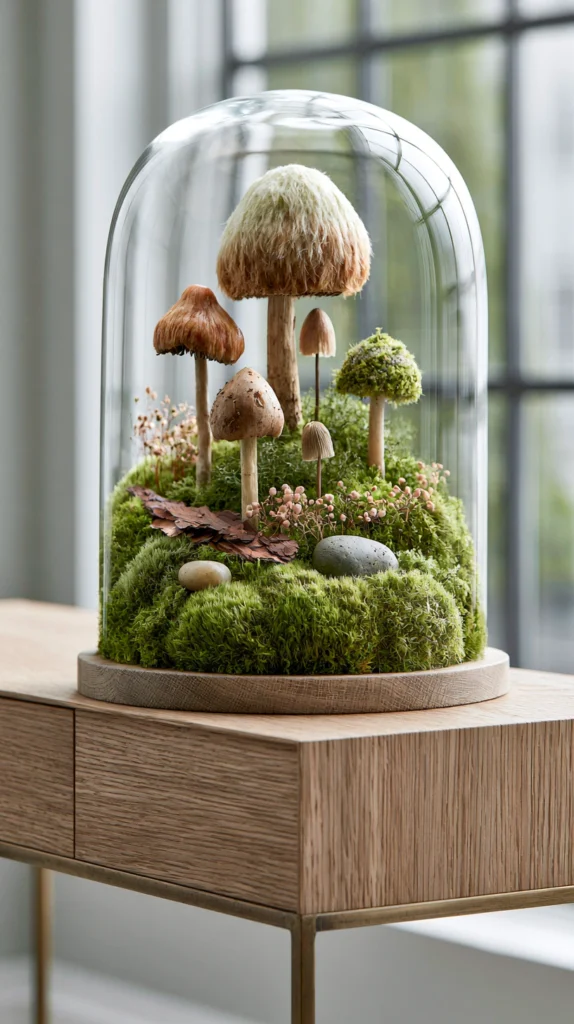
A glass cloche or terrarium enclosure, housing a small, self-contained miniature woodland scene — moss, a small mushroom, tiny ferns — protected from the drying effects of open room air.
Why an enclosed display extends the life of fresh material significantly
A glass cloche traps humidity, meaningfully slowing the drying and decay process for moss, fresh mushrooms, and other delicate fresh material compared with the same elements left exposed to open room air.
The enclosure
A glass cloche or a small open-topped terrarium bowl, sized to house a modest, single-scene miniature landscape.
The base layer
A thin layer of soil or moss forming the terrarium’s own small forest floor, with a very small mushroom, a sprig of moss, and perhaps a single small stone arranged within it.
The humidity management
A fully sealed cloche traps too much moisture and risks mold, so a cloche left slightly propped, or an open terrarium bowl, generally performs better for this specific short-term display purpose than a fully airtight enclosure.
The scale
Kept genuinely small and simple, since an enclosed terrarium scene depends on restraint and precision rather than the looser, more abundant arrangement suited to an open table display.
The longevity
Extends the usable display life of fresh mushrooms and moss from days to one to two weeks, a meaningful improvement over an open-air arrangement of the same fresh material.
Cost breakdown: Glass cloche or terrarium bowl: $15–40 Total: $15–40
11. The Layered Height Composition
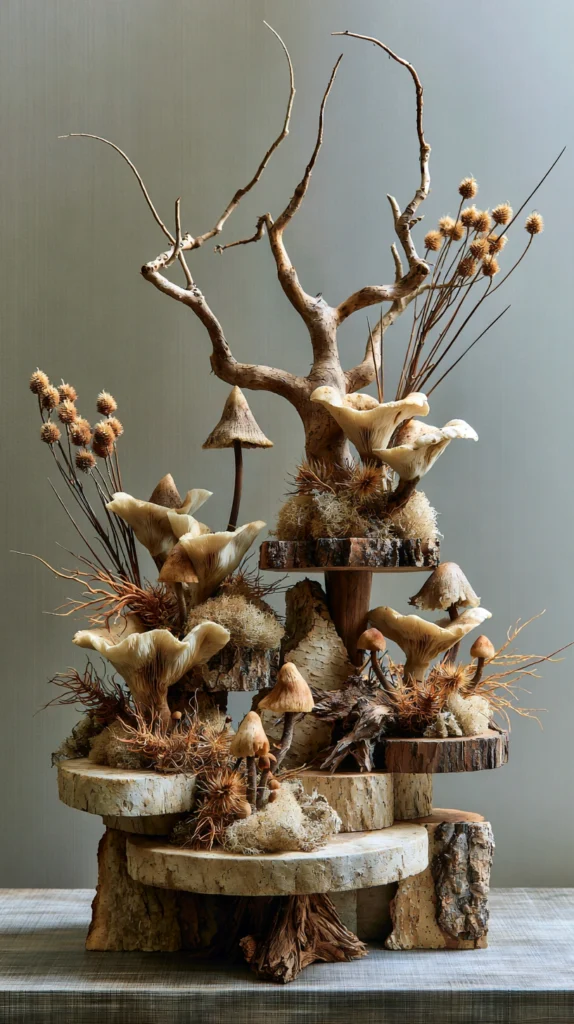
The full nature table arranged with deliberate attention to height variation — tall branches at the back, mid-height bark and mushroom clusters in the middle, low moss and acorns in front — rather than everything at a single flat level.
Why height variation transforms a flat collection into a genuine composition
A table with every object at the same height reads as scattered; a table with genuine vertical variation reads as a considered miniature landscape, echoing the same height-layering principle used in any well-designed vignette.
The back layer
A tall, interesting branch or a small cluster of taller bark pieces, providing height and a sense of scale at the rear of the composition.
The middle layer
Bracket fungi, mushroom clusters, and pinecone groupings, filling the composition’s midground at varying but generally moderate heights.
The front layer
Moss, scattered leaves, and small acorns, kept low and spread toward the front of the display, closest to the viewer.
The negative space
Deliberate gaps left between groupings, resisting the urge to fill every available inch, since the empty moss or bare table between clusters gives the eye places to rest.
The viewing angle
Arranged with the primary viewing angle in mind — typically from one main side of the table — with taller elements positioned so they do not block shorter ones behind them from that angle.
Cost breakdown: No additional cost beyond materials already gathered Total: $0
12. The Candlelit Woodland Evening Display
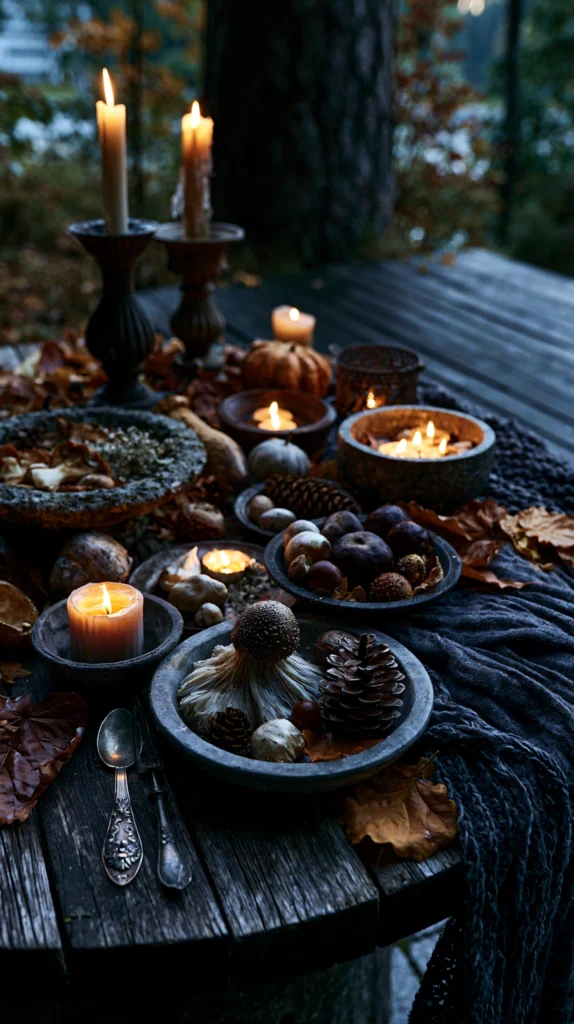
The nature table incorporated with a small candle or two, positioned to cast warm, flickering light across the moss, bark, and fungi after dark.
Why candlelight suits this display particularly well
The natural, matte textures of moss, bark, and mushrooms catch and hold candlelight in a way few manufactured materials do, creating shifting shadows and warmth that overhead lighting flattens out entirely.
The candle placement
A single small candle, or two at slightly different heights, positioned at the edge of the display rather than in its center, both for safety around dry leaf material and for a more atmospheric side-lighting effect.
The fire safety consideration
Dried leaves, moss, and bark are combustible — the candle kept a safe, deliberate distance from the driest elements of the display, or a flameless LED candle used instead for genuine peace of mind.
The evening ritual
Lit at dusk, turning the nature table into a small evening focal point rather than a display only fully appreciated during the day.
The shadow effect
The candle’s flicker casting moving shadows from the branches and bark, adding a subtle sense of life and movement to an otherwise still arrangement.
Cost breakdown: Candle (real or flameless LED): $8–20 Total: $8–20
13. The Rotating Seasonal Documentation
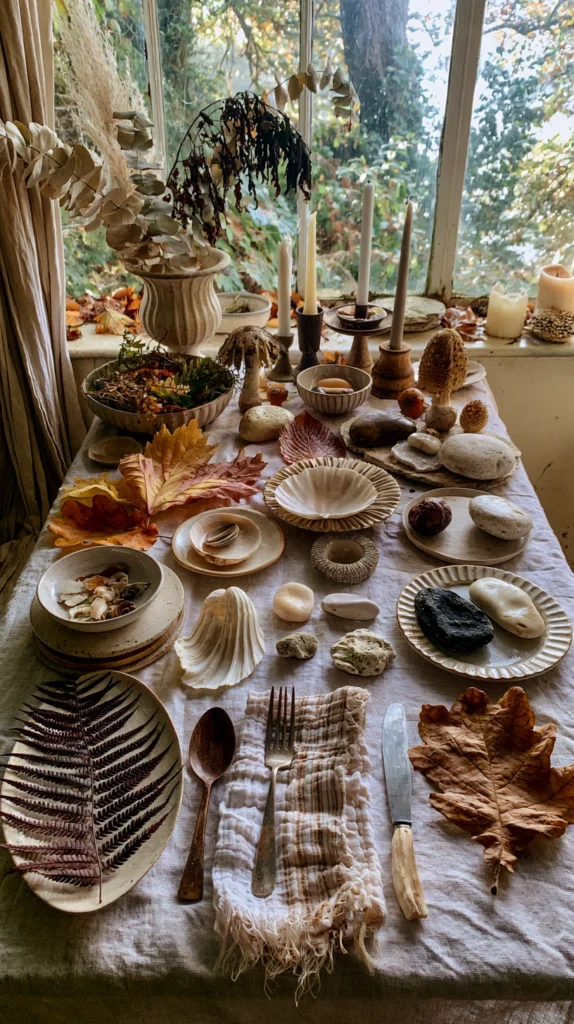
The nature table treated as an ongoing project, photographed or noted at intervals throughout the fall season as new material replaces old, creating a visual record of the season’s actual progression.
Why documenting the table’s change adds a dimension beyond the display itself
A static display, however beautiful, captures only one moment. A table tracked and lightly documented across the season becomes a record of autumn’s actual unfolding — the mushrooms of early October giving way to the bare branches and persistent acorns of November.
The photography
A simple photo taken from the same angle every week or two, requiring no special equipment beyond a phone camera, building a simple visual timeline over the season.
The material rotation
Fresh finds swapped in as older material fades or is removed, with the table’s overall character shifting gradually — more mushrooms and green moss early in the season, more bare branches and dried material as it progresses.
The seasonal peak
Early-to-mid October for the greatest fungi diversity in most temperate regions, shifting toward drier, more structural material — bark, seed pods, bare branches — as the season moves into its later weeks.
The record as its own object
The resulting sequence of photographs becoming its own small seasonal keepsake, separate from but connected to the physical table itself.
The following year
A useful reference for the next autumn’s foraging walks, noting which weeks yielded the best specific finds in a particular local area.
Cost breakdown: No additional material cost Total: $0
14. The Nature Table as a Centerpiece for Gathering
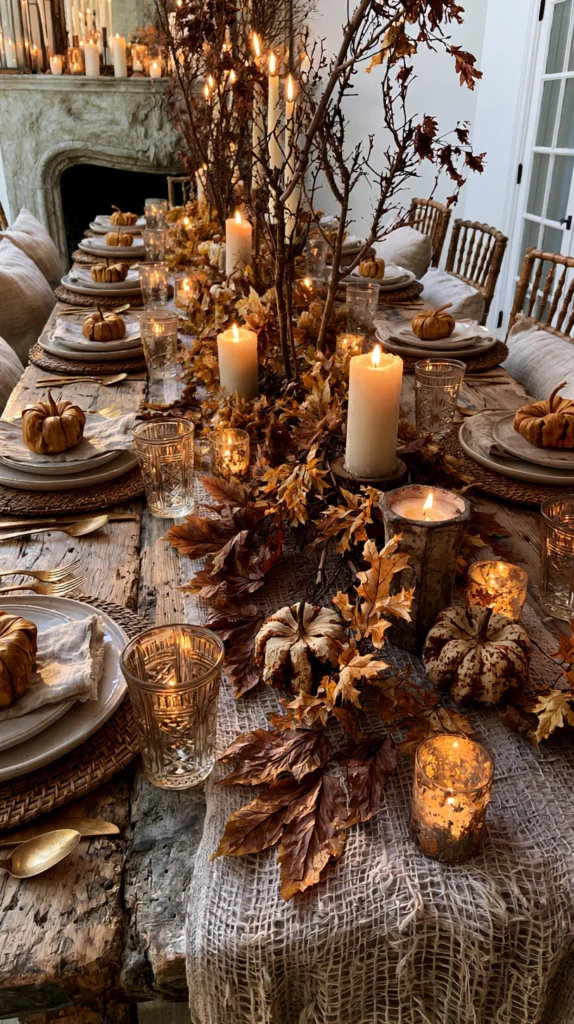
The foraged display scaled up and centered on the dining or gathering table itself for a specific autumn meal or occasion, rather than kept as a smaller side display.
Why scaling the nature table up suits a seasonal gathering
A foraged centerpiece brings the same authentic, gathered quality to a dinner table that a purchased floral arrangement cannot replicate, while directly connecting a shared meal to the season being celebrated.
The scale increase
A longer, wider version of the smaller nature table concept, running down the center of the dining table rather than confined to a small side surface.
The material quantity
More of everything — more moss, more bark, more pinecones and acorns — gathered specifically for the occasion, since a dining table centerpiece needs to read clearly from every seat around it.
The candle integration
Taper or pillar candles interspersed along the length of the display, providing both light for the meal and the same warm, flickering effect described for the smaller evening display.
The height consideration for dining
Kept low enough across the table’s center that guests can see and speak to each other across it, following the same sightline principle used for any dining centerpiece, foraged or otherwise.
The occasion tie-in
Assembled the same day or the day before a specific gathering, using the freshest possible material for the occasion, and disassembled or scaled back down afterward.
Cost breakdown: No additional material cost beyond a larger foraging quantity Candles: $15–30 Total: $15–30
15. The Complete Foraged Nature Table (The Fully Developed Seasonal Display)
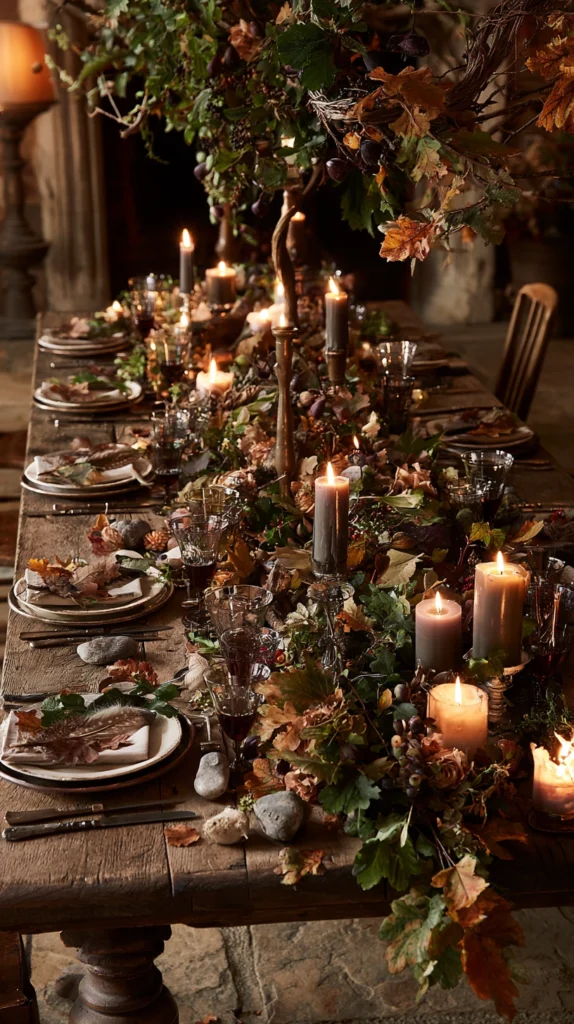
A complete nature table combining several of the approaches above — a moss base, layered height, fresh and durable fungi together, seasonal leaves, and candlelight — maintained and refreshed across the full autumn season.
What separates the complete nature table from a single mushroom on a shelf
A single foraged mushroom: a start. A complete nature table: an evolving small landscape, refreshed on an ongoing basis, combining durable and ephemeral material into one cohesive, living seasonal display.
The elements of the complete foraged nature table
The base
A moss layer within a shallow wood or metal tray, forming the display’s forest-floor foundation.
The structure
A piece of fallen bark or a log slice, and one or two taller branches, providing height and material continuity with the rest of the display.
The fungi
Durable bracket fungi as a lasting anchor, supplemented by fresh wild mushroom clusters replaced every few days.
The seasonal color
Fallen leaves in a range of autumn hues, layered around the base elements and refreshed as they fade.
The lasting texture
A bowl or cluster of acorns, chestnuts, and pinecones, providing the display’s most durable, low-maintenance layer.
The personal layer
Feathers, stones, and other found treasures, added gradually across the season’s walks.
The evening element
A small candle, positioned safely at the display’s edge, lit for evening atmosphere.
The complete design in action
A Sunday afternoon in mid-October:
2pm: Returning from a woodland walk, a small basket of fresh finds — two young mushrooms, a scattering of newly fallen maple leaves, a single interesting stone.
2:30pm: The previous week’s faded mushroom cluster removed, the new finds nestled into the moss in its place, the durable bracket fungi and acorn bowl left undisturbed.
Dusk: The candle lit, its light catching the moss and bark in a way the afternoon sun never quite manages.
The complete foraged nature table: not a fixed autumn decoration, but a small, living record of the actual season happening just outside the door.
Cost breakdown for the complete display: Assuming a starting point of an empty table: Moss base and tray: $20–50 Bark, log slice, or branches: $0–30 Terrarium or cloche (optional): $15–40 Bowl for acorns and pinecones: $0–30 Candle: $8–20 Total: $43–170
Phased across a single season:
Early October: The moss base, bark structure, and first fresh mushroom finds
Mid-October: Fallen leaves, pinecones, and acorns added as they become available on walks
Late October and into November: A shift toward more durable bracket fungi and bare branches as fresh mushrooms become scarcer, candlelight taking on a larger role as evenings darken earlier
The foraged nature table: not a single seasonal purchase, but an ongoing, low-cost practice of bringing the actual woods indoors, one walk at a time.
The Question Before Any Nature Table Design
Before gathering any material:
What is the primary reason for wanting this kind of display?
If the answer is: connecting more directly to the season — the full walk-and-gather practice, refreshed regularly through October.
If the answer is: a low-maintenance, long-lasting autumn display — bracket fungi, acorns, pinecones, and bark, all durable without special care.
If the answer is: something for a specific gathering or meal — the scaled-up dining table centerpiece version.
If the answer is: the simplest possible start — one small mushroom, one piece of moss, one corner of a shelf reconsidered.
The design follows what is actually available on a nearby walk, more than any single planned aesthetic. Every idea on this list depends on what the local woods, park, or trail actually offers on a given day. The question is what that specific place has to give this particular week.
The single foraged mushroom on a saucer: still connects the house to the season outside it. The complete, evolving table, tended across the full autumn: a genuine small record of the forest, brought indoors one walk at a time.
That connection: the whole point of foraging for decor rather than buying it.
Getting Started This Weekend
The immediate nature table solution:
Take one walk with a basket, specifically to gather rather than just to walk.
Not a special trip. Not a planned destination. Whatever nearby trail or park is already part of the regular routine, walked with gathering in mind this time.
Bring home whatever is actually found, not a shopping list of what was hoped for.
The table follows the walk, not the other way around.
Set it on a plain surface or a simple tray, with no further styling required.
The first display does not need to be complete or elaborate — a single mushroom and a handful of leaves is enough to begin.
Take one more walk next week, and add to what is already there.
The rest of the design: the elaboration of this moment.
The walk: the beginning. The nature table: what gets gathered, and grows, from it.