

13 Pumpkin and Gourd Display Ideas for Living Rooms
My living room used to get one plastic pumpkin set on the mantel every October, the same orange shape every year, with no real thought given to how it actually related to the rest of the room or how long it would even hold up once it got there.
A genuine pumpkin and gourd display does more than mark the season. Handled with a bit of actual technique, scale, vessel, color, and a plan for longevity, it can function as real decor the same way a vase of flowers or a styled bowl of fruit would, rather than something that gets quietly thrown out by mid-November looking collapsed and forgotten.

Here’s how to make a few gourds actually look intentional instead of seasonal clutter, along with the specific details, sizing, varieties, and small techniques, that make the difference between a display that reads as styled and one that reads as decorations pulled straight out of a grocery store bin.
1. Group Odd Numbers of Varying Sizes Together
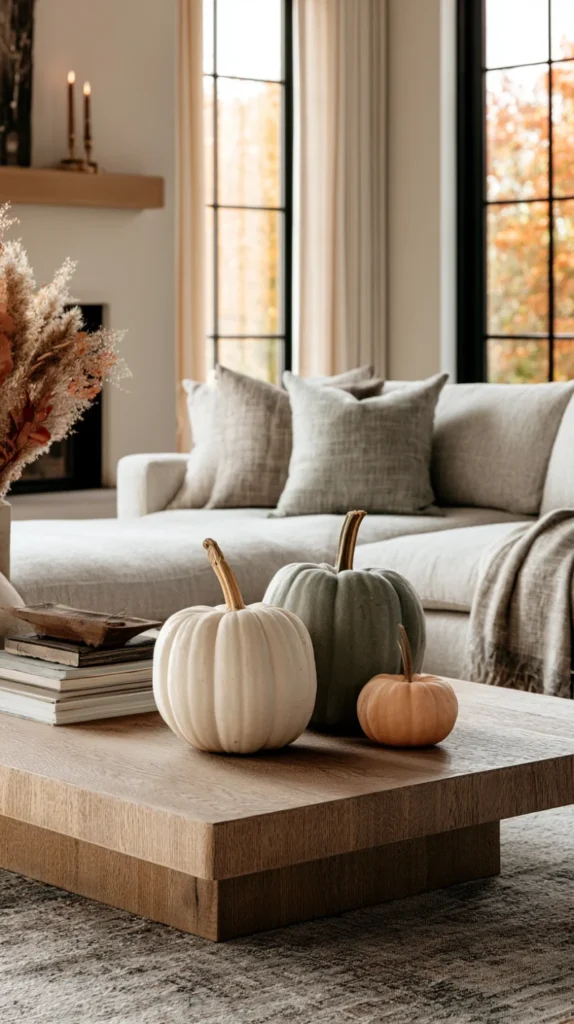
A cluster of three or five pumpkins, varying noticeably in size, reads as deliberate in a way two matched ones or four evenly sized ones doesn’t. This is the same design principle used in styling candles, vases, or any small object grouping: odd numbers create a natural visual triangle for the eye to follow, while even numbers tend to split into pairs that can look static.
For a three-piece cluster, aim for a noticeable size jump between each piece rather than three pumpkins that are only slightly different, something in the range of a 10-inch, a 7-inch, and a 4-inch diameter creates real visual hierarchy. For a five-piece cluster, repeat one size twice (two small, one medium, two larger, for instance) so the grouping still reads as cohesive rather than randomly scattered.
Budget: $15-30 for a mixed cluster of small to medium pumpkins and gourds, depending on local pricing and how many pieces you include.
Place the largest piece slightly off-center within the group rather than dead in the middle, which keeps the cluster from looking too symmetrical and stiff. Turn each pumpkin’s stem to face a slightly different direction as well, since uniformly aligned stems are a small detail that often makes a cluster look mass-produced rather than gathered.
2. Use White or Pale Pumpkins for a More Sophisticated Look
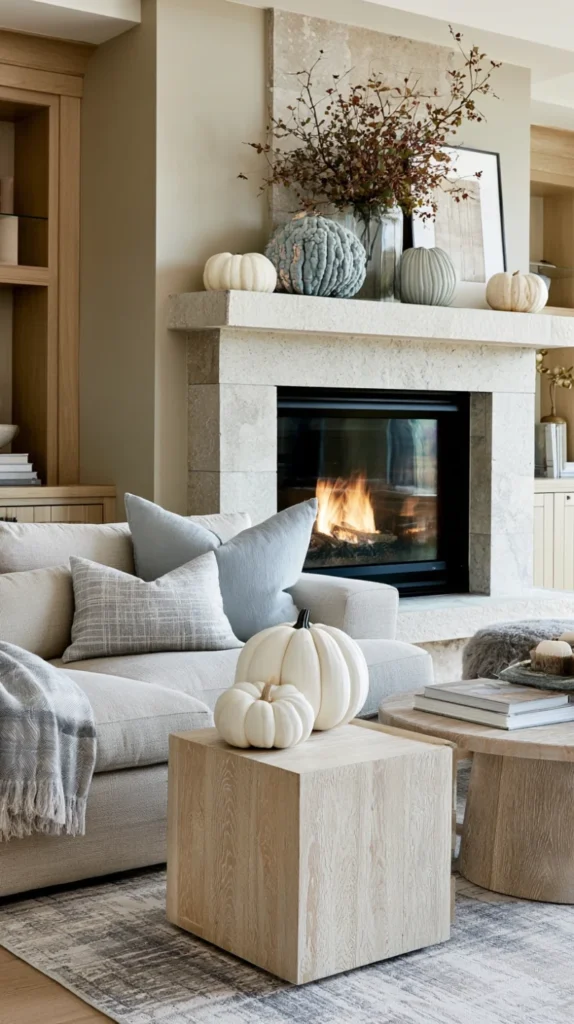
True orange pumpkins can read as more costume-party than decor in a living room with a neutral, muted, or cooler-toned palette. White varieties like Lumina, pale blue-gray “Jarrahdale,” or the flattened, ribbed “Cinderella” style pumpkins blend more naturally into an existing color scheme built around cream, sage, charcoal, or any other non-orange palette.
These varieties are increasingly available at regular grocery stores and farm stands each fall, though selection is usually better earlier in the season, late September through mid-October, before the most popular shapes and colors sell out. If you can’t find white or pale pumpkins locally, a light coat of white or warm gray chalk paint over a standard orange pumpkin achieves a similar effect for very little additional cost.
Budget: $5-15 per pumpkin depending on size and variety availability, or $8-10 for a small can of chalk paint if painting standard pumpkins instead.
Check for pumpkins specifically grown for display rather than cooking varieties, since these tend to hold their shape and color longer without softening. Cooking varieties like sugar pumpkins have thinner skin and higher moisture content, which means they typically start to wrinkle and collapse within three to four weeks, while a display variety can often hold for six to eight weeks in a cool, dry spot.
3. Stack Gourds in a Glass Hurricane or Cloche
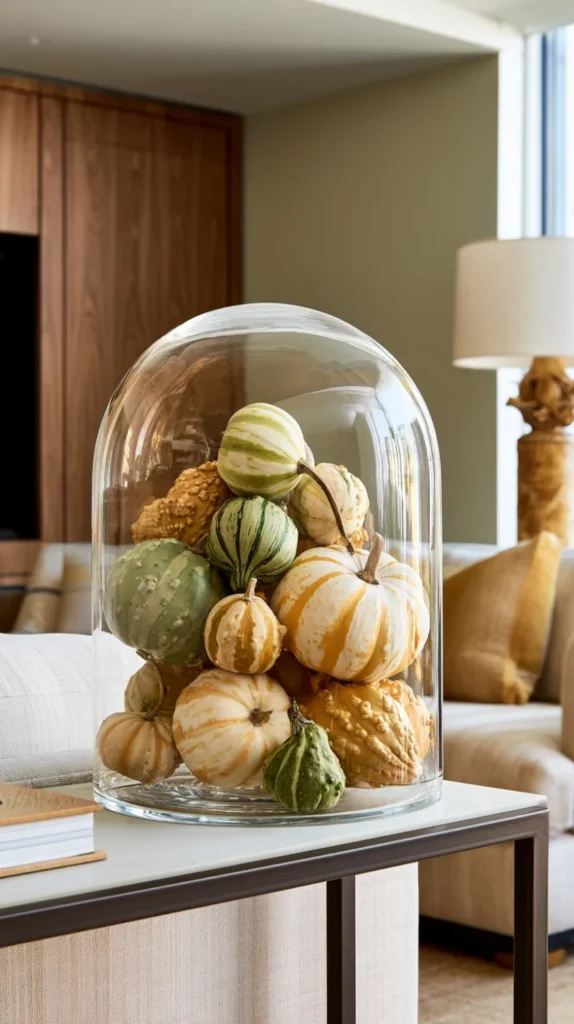
Placing a few small gourds inside a clear glass hurricane or cloche, the same vessel you might use for a candle, turns them into an actual styled object rather than something simply set on a shelf. The glass adds a layer of polish and also protects the gourds slightly from dust and handling, which matters if the display sits somewhere that gets bumped or brushed against regularly.
This works particularly well with smaller ornamental gourds, the warty or striped varieties often sold in mixed bags rather than individually, since their irregular shapes and patterns become the main visual interest once isolated and elevated inside clear glass rather than scattered loosely across a flat surface.
Budget: $20-35 for a glass cloche or hurricane sized for a small gourd cluster, assuming the gourds themselves are inexpensive at $1-3 each from a mixed bag.
Choose gourds slightly smaller than the vessel’s opening so they can be removed and refreshed easily without forcing them through a tight space. A cloche with too narrow an opening relative to the gourds inside becomes frustrating to restyle partway through the season, when one or two pieces inevitably start to soften before the others.
4. Fill a Wood Bowl With a Mix of Pumpkins, Gourds, and Pinecones
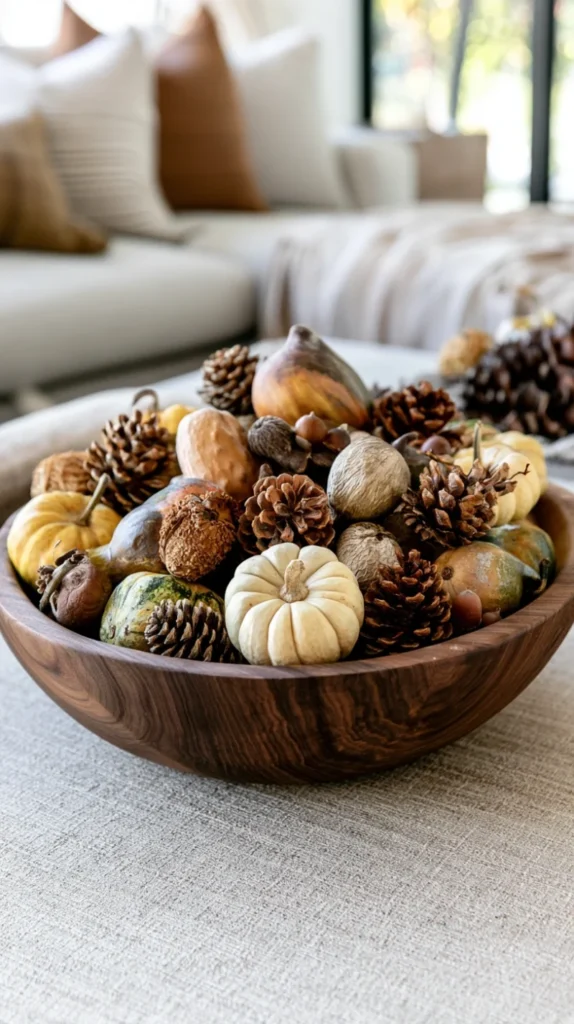
Combining pumpkins with other natural textures, pinecones, acorns, dried corn, dried hydrangea heads, in one wood bowl creates a fuller, more textured display than pumpkins alone, and it suits a mantel or coffee table equally well. The variety of textures, the smooth skin of a small pumpkin against the rough scales of a pinecone, does more visual work than color alone.
A medium to large wood bowl, somewhere in the 12 to 16 inch diameter range, generally holds enough material to look full without requiring an overwhelming quantity of any single item. Layer the heaviest, largest pieces first, settling them into the bowl’s base, then tuck lighter filler material like pinecones and acorns into the gaps between them.
Budget: $20-30 to fill a wood bowl already on hand with a mixed seasonal assortment, or $35-50 if also sourcing a new bowl.
Vary the material’s matte versus glossy finish within the bowl, a few painted gourds against the matte pumpkins, for a bit of visual contrast. A light coat of clear matte sealant on pinecones and acorns also helps them hold together better through the season and resist shedding small debris onto the surrounding furniture.
5. Use Real Pumpkins as a Vase for Fresh or Dried Flowers
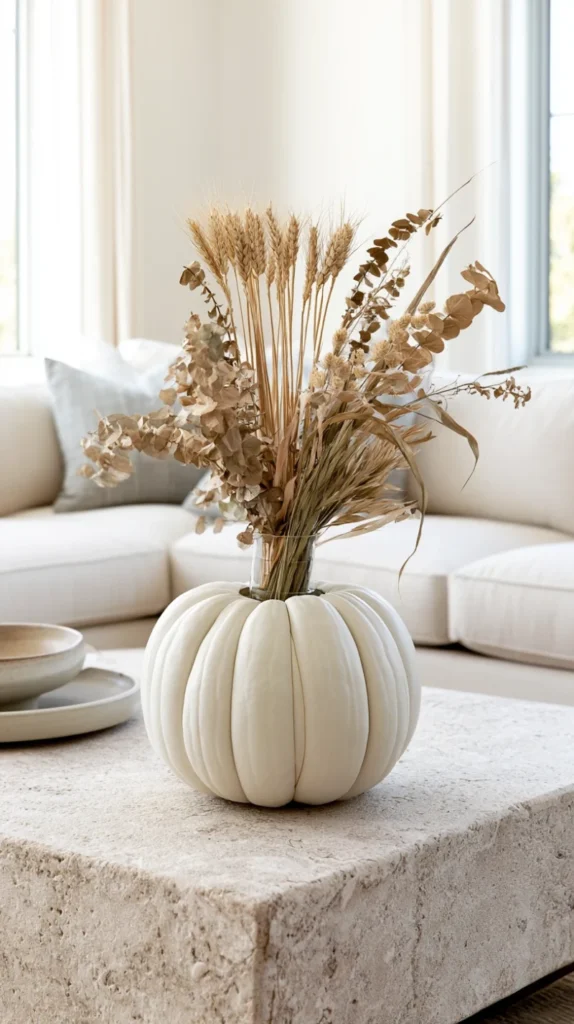
Hollowing out a small to medium pumpkin and fitting it with a simple glass jar insert turns it into a genuine vase, holding either fresh mums or dried wheat and grasses. This is a more involved project than most others on this list, but it produces a result that looks considerably more custom than a pumpkin simply set beside a separate vase.
Choose a pumpkin at least 8 inches in diameter for this project, since smaller ones don’t leave enough cavity space once hollowed to fit a jar of any useful size. Cut the top off in a wide circle using a sharp serrated knife, scoop out the seeds and loose flesh, and let the inside dry for a day before inserting the jar, which helps prevent the cut edge from going moldy as quickly.
Budget: $8-12 for the pumpkin itself, plus whatever flowers or stems you’re using, generally $10-20 for a full bunch of seasonal stems from a grocery store or farm stand.
Line the hollowed cavity with a plastic liner or a small mason jar before adding water, since pumpkin flesh breaks down faster than most people expect once it’s wet inside, often within five to seven days. If using dried rather than fresh stems, you can skip the water and liner entirely, which extends how long the whole arrangement lasts to several weeks instead of less than two.
6. Paint a Single Pumpkin in Metallic Gold or Copper
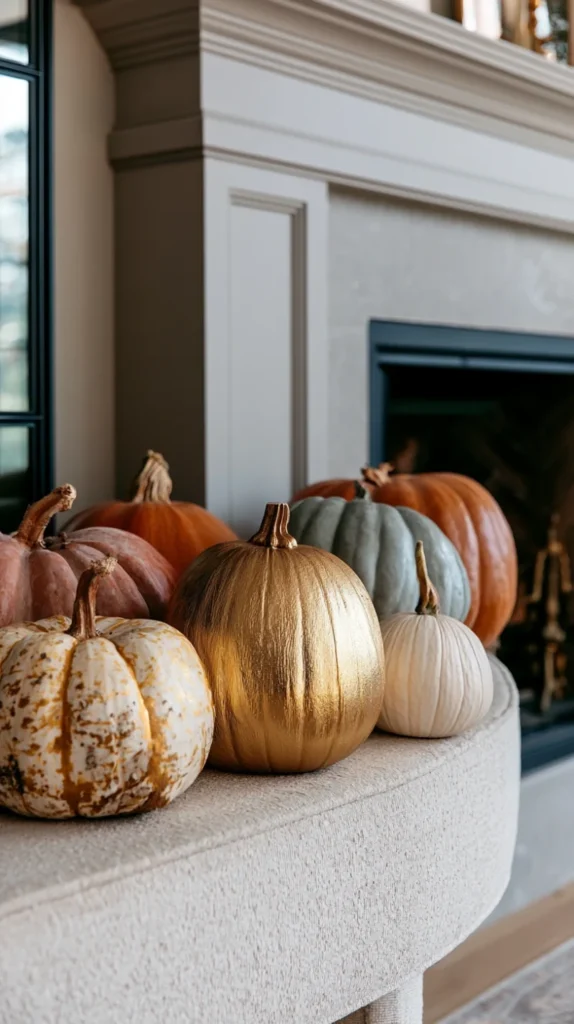
One painted metallic pumpkin, placed among several natural ones, acts as a small accent piece that catches light differently than the matte pumpkins around it, especially under warm lamp light in the evening. This single painted piece does more to elevate a whole cluster than painting every pumpkin in the group, which can tip the display toward looking more like a craft project than a styled room accent.
Choose a real or high-quality faux pumpkin with a relatively smooth surface for this technique, since heavily ridged or warty varieties don’t take spray paint as evenly and can leave the metallic finish looking patchy in the recessed grooves.
Budget: $10-15 for a can of metallic spray paint, enough for several pumpkins across multiple seasons since one can typically covers six to eight medium pumpkins.
Apply two light coats rather than one heavy one, since a single thick coat of spray paint tends to drip and pool on a pumpkin’s curved surface, especially around the stem and base. Let the first coat dry for at least twenty minutes before applying the second, and work in a well-ventilated area or outdoors given how quickly spray paint fumes build up in an enclosed space.
7. Layer Pumpkins on a Tiered Stand for a Mantel Display
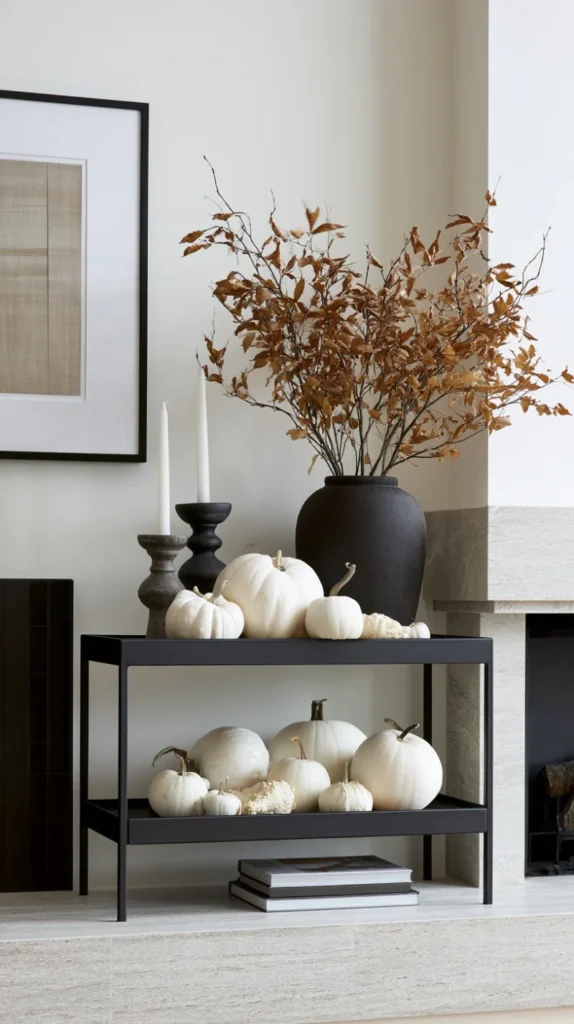
A tiered cake or dessert stand, repurposed for the season, lets you display pumpkins and gourds at different heights on a mantel or console without needing a deep shelf. This solves a common problem with mantel displays specifically, where shallow shelf depth limits how much can actually sit there without crowding.
A two or three-tier stand works best for this purpose, with the smaller, lighter pieces going on the upper tiers and the larger, heavier ones staying on the base level for stability. Check the stand’s weight rating before loading it with anything beyond small decorative gourds, since not every cake stand is built to hold the weight of a genuine pumpkin on its upper tier.
Budget: $20-35 for a tiered stand if not already on hand from another use, or free if repurposing one already owned.
Place the smallest, most delicate gourds on the top tier specifically, since this position is least likely to get bumped or knocked during regular room use, and any minor wobble in a tiered stand affects the top tier most noticeably.
8. Use Gourds as a Natural Centerpiece Instead of Flowers
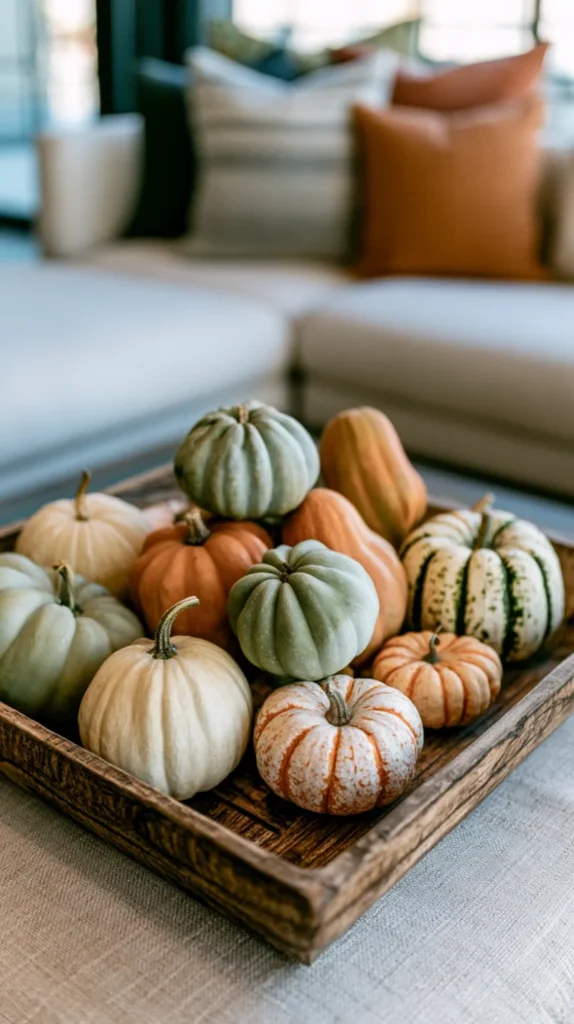
A coffee table centerpiece built from a low, wide arrangement of mixed gourds, rather than a vase of flowers, lasts considerably longer and needs zero water or maintenance through the whole season, while still providing the same anchoring function a floral centerpiece typically serves.
Aim for a centerpiece roughly 18 to 24 inches across for a standard coffee table, using a flat tray or a low wood box as the base to contain the arrangement and keep it from sprawling across the whole table surface. Mix at least three different gourd shapes, round, oblong, and one with a more unusual warty or curved-neck silhouette, to avoid the arrangement reading as flat or repetitive.
Budget: $20-30 for enough gourds to fill a coffee table’s typical centerpiece footprint.
Keep the arrangement lower and wider rather than tall, since a coffee table centerpiece needs to stay below most people’s sightline when seated around it, generally no taller than 6 to 8 inches at its highest point if the table will be used for actual conversation or game nights during the season.
9. Hang a Small Gourd Garland Along a Shelf Edge
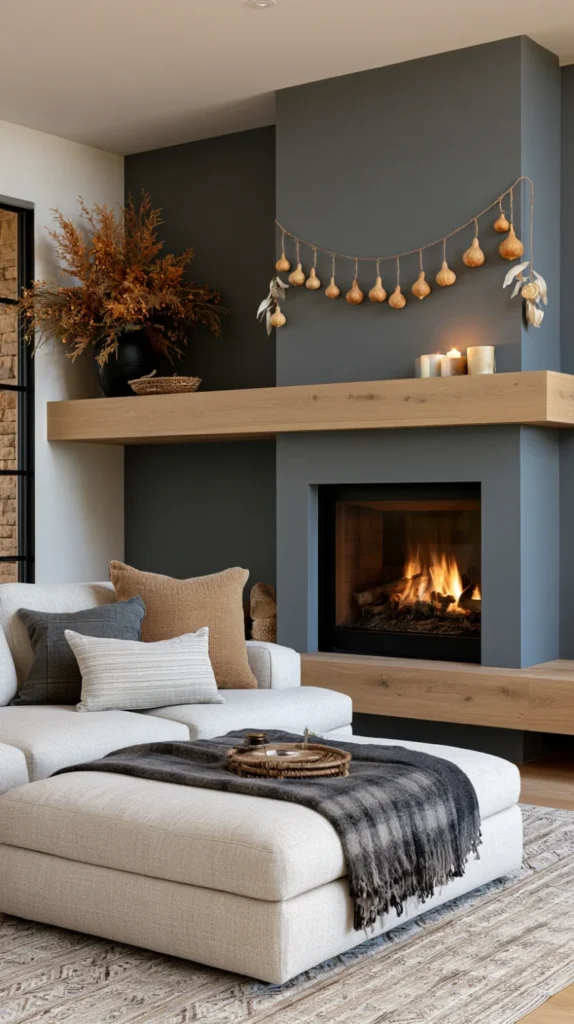
Small gourds, drilled and strung on twine or wire, create a hanging garland that works well along the edge of a bookshelf or mantel where a freestanding display would take up surface space you don’t have. This is one of the more labor-intensive projects on this list, but it produces a result that’s genuinely uncommon and tends to draw more attention than a standard tabletop cluster.
Use a thin drill bit, roughly 3/16 inch, to create a hole through the center of each dried gourd before threading. Space the gourds 4 to 6 inches apart along the twine so the garland has visible gaps and movement rather than looking like a tightly packed string of beads.
Budget: $15-25 for materials to make a small garland from dried mini gourds, generally enough for a 4 to 6 foot length.
Use only fully dried, lightweight gourds for this specifically, since fresh ones are too heavy for a simple twine garland to support without sagging or breaking, and fresh gourds also won’t drill cleanly the way a properly dried one will. Look for gourds labeled as already cured or dried if you’re not growing and drying your own, since this process takes several weeks if started from fresh.
10. Display One Oversized Pumpkin as a Single Statement Piece
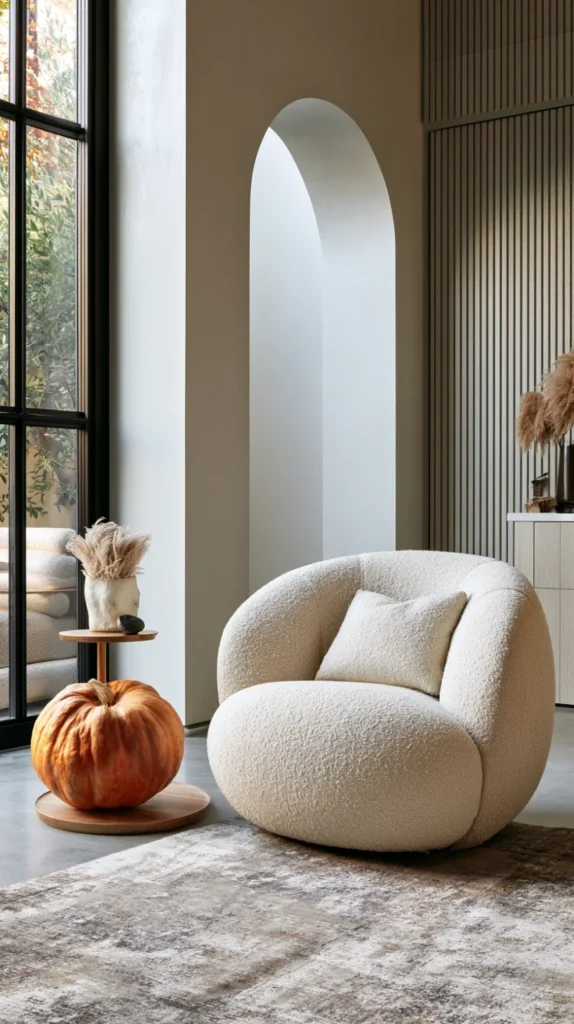
Rather than a cluster, one genuinely large pumpkin, placed alone on the floor beside a chair or at the base of a console, works as a single sculptural object the same way a large vase or plant would. This approach suits a room that’s already busy with other seasonal decor and doesn’t have room for another small grouping, since one large piece makes its point without adding visual clutter.
Look specifically for a pumpkin in the 15 to 25 pound range for genuine floor-level visual impact without becoming unreasonably difficult to move or position. Heirloom varieties with a flatter, more sculptural silhouette, rather than a perfectly round shape, tend to look more intentional in this kind of solo display.
Budget: $15-25 for one large pumpkin, generally in the 15 to 25 pound range, though pricing varies by region and variety.
Place it somewhere it won’t get bumped or rolled, like a stable floor corner, rather than on any furniture surface, given the weight involved. A pumpkin this size can also leave a moisture ring on hardwood or a rug after several weeks, so a simple wood or cork coaster-style base underneath protects the floor without being visually noticeable.
11. Mix Faux and Real Pumpkins for a Display That Lasts All Season
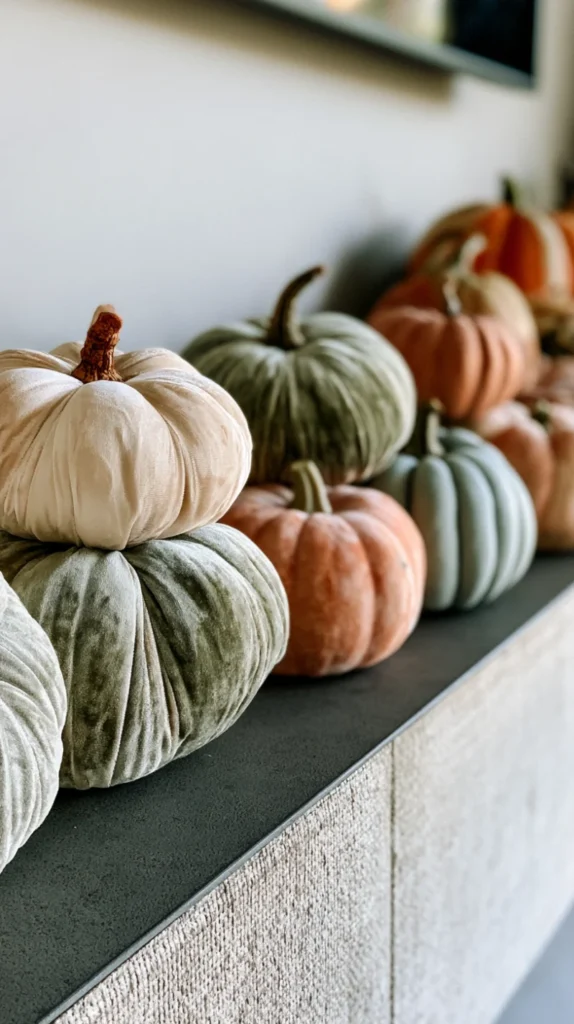
Combining a few high-quality faux pumpkins with real ones lets the display look full from the very start of the season through its end, without needing to keep replacing the real ones as they soften. This hybrid approach solves the most common frustration with an all-real pumpkin display, the awkward stretch in late October when one or two pieces start to visibly wrinkle or collapse before the rest.
Foam pumpkins with a painted, textured finish have improved considerably in recent years and can be genuinely difficult to distinguish from real ones at a normal viewing distance, especially once mixed into a varied cluster rather than displayed alone.
Budget: $10-20 per faux pumpkin for a quality foam version, mixed with a few real ones at $5-10 each.
Place the real pumpkins toward the front of the display where they’re easiest to swap out, and keep the faux ones toward the back where they do most of the bulk and height work. This arrangement also means that as real pumpkins inevitably need replacing partway through the season, you’re only swapping the most visible, easiest-to-reach pieces rather than disassembling the whole display.
12. Use a Patterned Tray to Define the Display’s Footprint
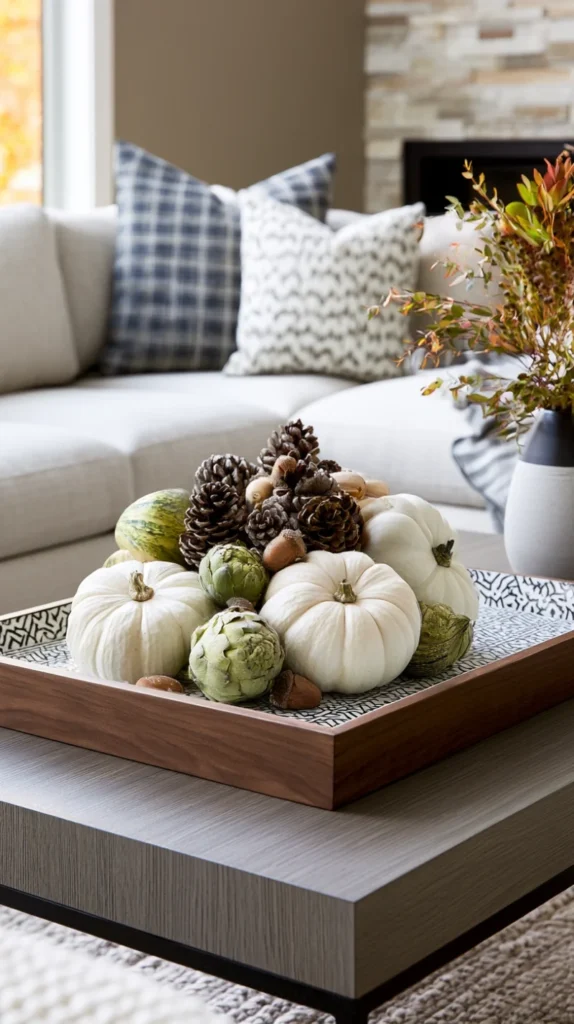
Placing the whole pumpkin cluster on a single tray, rather than directly on a table or shelf surface, contains the display and makes it easy to move as one unit for cleaning or rearranging. A tray also protects the underlying furniture surface from any moisture or staining that real pumpkins and gourds can transfer over several weeks of contact.
Wood, galvanized metal, and woven rattan trays all suit this purpose differently depending on the room’s existing material palette, wood for a warmer, more traditional look, galvanized metal for something slightly more rustic or farmhouse-leaning, and rattan for a softer, more textured base.
Budget: $15-25 for a quality wood or metal tray sized to the display.
Choose a tray with a slight lip or rim specifically, which helps catch any small bits of stem or debris that shed naturally over the season, and also keeps any individual gourd from rolling off the tray’s edge if the surface beneath it isn’t perfectly level.
13. Combine Several of These Into One Layered Mantel or Console Display
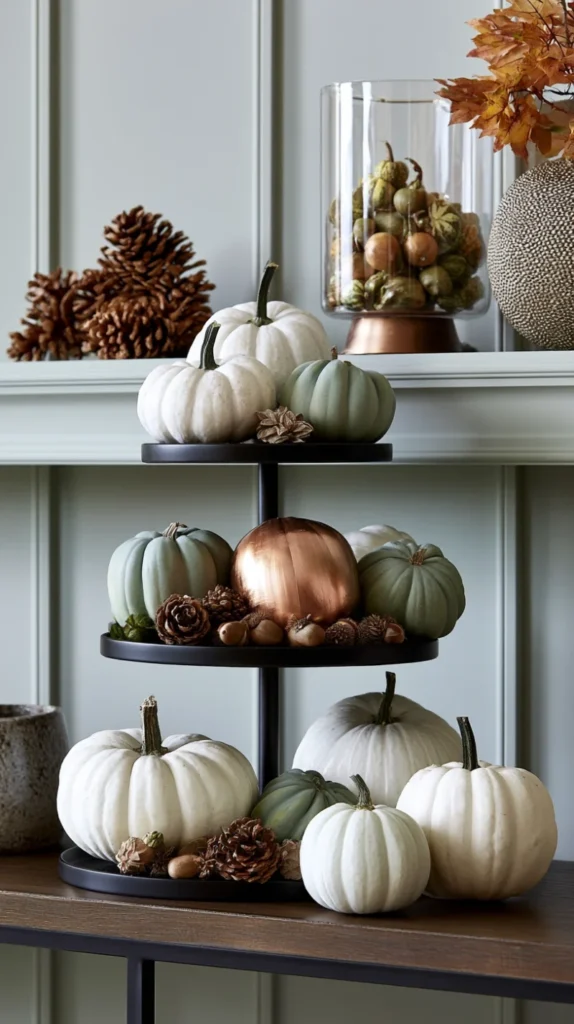
Bringing together varied sizes, a mix of real and faux pieces, a tiered stand, and a few other natural textures into one full display turns a simple cluster of pumpkins into a genuinely styled seasonal moment, the kind that looks intentional rather than like decorations pulled out of a bin. This combined approach also tends to be more resilient through the full length of the season, since no single technique is doing all the visual work alone.
Start by establishing the display’s overall footprint and height using the tiered stand or tray as your structural base, then add the largest pumpkins first to set the general shape before layering in smaller gourds, pinecones, and any painted or metallic accent pieces. Step back and view the arrangement from across the room periodically while building it, since details that look fine up close can disappear entirely from normal viewing distance.
Budget: $60-100 to combine most of the ideas above into one full display, depending on how many individual elements you include and whether you’re starting from scratch or building on items already on hand.
Build the display in layers, height and tier first, then the pumpkins themselves, then smaller filler textures like pinecones, so you can adjust the overall shape before committing to final placement. Photograph the finished arrangement on day one, since this makes it much easier to restyle it back to its original intended look later in the season after individual pieces get swapped out or removed.
Choosing Your Approach
For a quick, low-cost update: the odd-numbered cluster (idea 1) and a wood bowl mix (idea 4) take very little effort, money, or time, and can both be assembled from a single trip to a grocery store or farm stand.
For a more sophisticated look: the white or pale pumpkin swap (idea 2), paired with one metallic accent piece (idea 6), shifts the whole display’s tone without much extra cost or any structural changes to the room.
For a display that lasts the whole season: combine real and faux pumpkins using idea 11’s approach, so nothing softens or needs replacing halfway through October, and pair that with the tray base from idea 12 to keep the whole arrangement easy to maintain and move as needed.
The difference between a pumpkin display that looks like real decor and one that looks like decorations comes down to the same styling logic used everywhere else in a room: varied scale, a defined container or surface, attention to material and texture, and at least one deliberate color or finish choice tying the whole grouping together rather than letting it read as a loose pile of seasonal grocery store items.