

13 Small Living Room Fall Makeover Ideas on a Budget
A small living room in fall has two problems working against it at once. The room is already tight on space, and fall decor has a tendency to add volume — pumpkins, candles, baskets, throws — in a way that tips a compact space from cozy into cluttered.
The answer isn’t doing less. It’s being specific about where each change goes and what it replaces rather than what it adds to.
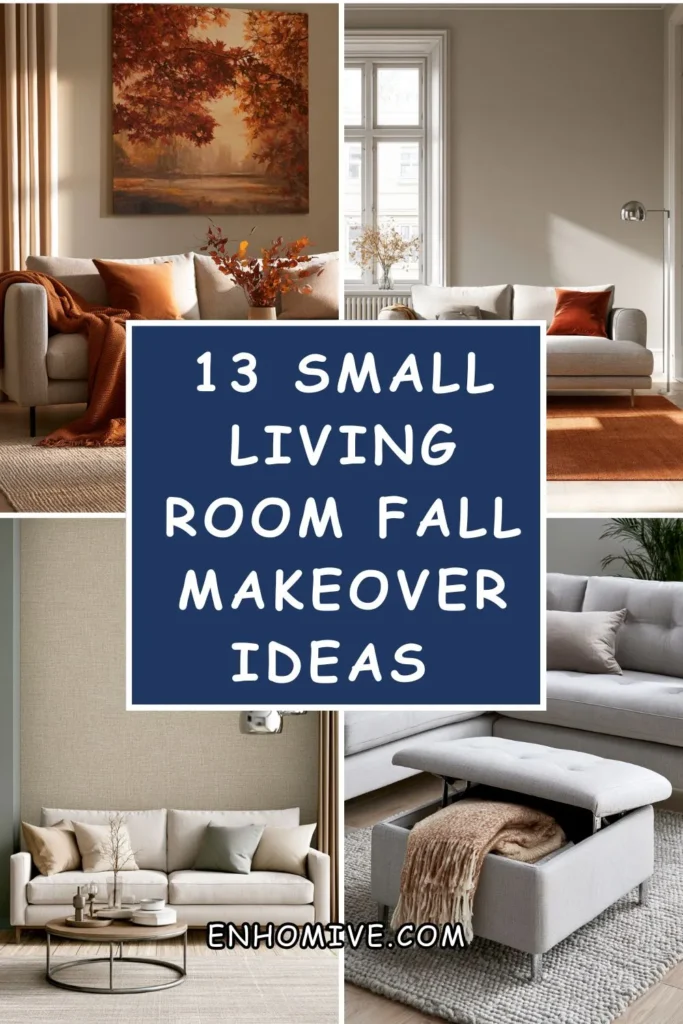
Every idea here is built around the small-space constraint specifically. Not just fall decor that happens to be cheap, but fall decor that makes a small living room feel bigger, warmer, and more intentional without filling every surface.
1. Swap One Large Textile Instead of Adding Small Ones
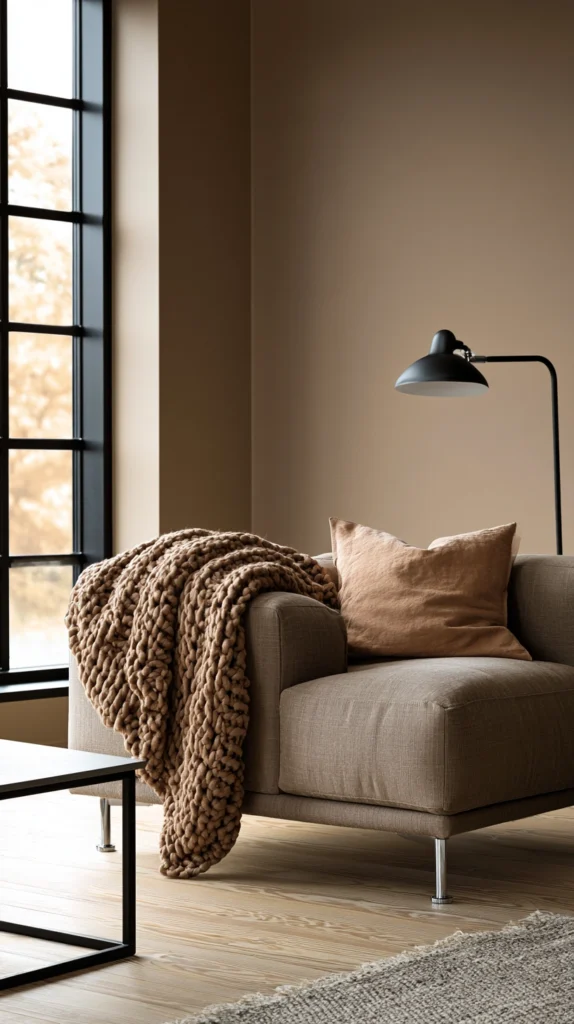
In a small living room, one large textile change outperforms five small ones every time.
A new throw pillow cover here, a small seasonal accent there — these additions multiply visual noise in a compact space rather than creating seasonal warmth. A single large change — a new sofa throw, a new area rug, or a slipcover in a fall tone — shifts the entire room’s color temperature in one move.
The throw is the most accessible entry point. A 50×60-inch chunky knit or woven cotton throw in caramel, rust, or warm cream draped over the sofa arm changes the dominant tone of the seating area without adding any objects to the room.
In a small living room, removing one item before adding the throw — an old pillow, a decorative object that was already looking dated — keeps the net object count neutral.
Tip: Drape the throw over the sofa arm rather than folding it across the back. An arm drape reads as relaxed and natural. A folded-across-the-back throw reads as staged, which in a small space draws attention to the styling rather than letting the warmth register.
Budget: $18–$40
2. Replace the Rug with a Fall-Toned Flat-Weave
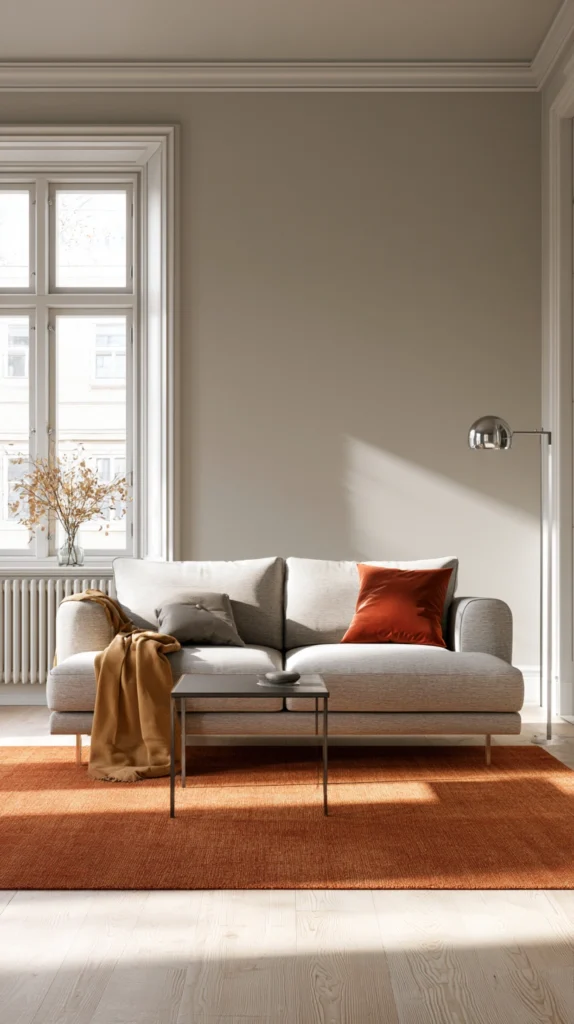
The rug is the largest color field in a small living room. Whatever color it is, the room reads as that color first.
Swapping to a flat-weave rug in a fall tone — rust, terracotta, warm ochre, or a muted geometric in autumn colors — shifts the room’s baseline color before anything else is changed. Everything placed above it — the sofa, the coffee table, the wall art — reads differently against a warm floor color than against a cool or neutral one.
Flat-weave is the right construction for a small space. It lies flat without adding height, it doesn’t create the visual bulk that a high-pile rug does in a compact room, and it’s easier to clean.
For sizing, a 5×7 rug is the most functional in a standard small living room. It covers the seating area floor without extending past the furniture footprint into the walking zones.
Flat-weave rugs in fall tones from Ruggable, Amazon, or Target run $35–$80 for a 5×7.
Tip: Pull the front legs of the sofa and chairs onto the rug rather than leaving all furniture legs off the rug edge. Front-leg placement visually connects the furniture to the rug, which makes the seating area feel defined rather than floating. It also prevents the rug from sliding out from under the furniture.
Budget: $35–$85
3. Add Warm Bulbs to Every Lamp in the Room
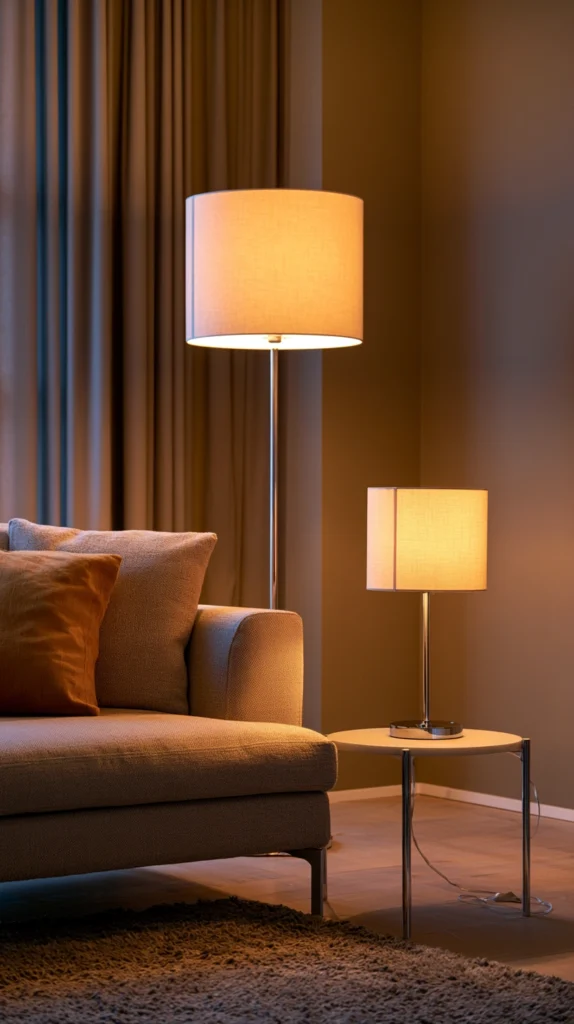
Fall light outside is golden and low. Overhead lighting inside that’s cool or bright fights that quality rather than matching it.
Replacing every bulb in the living room with 2700K warm white LEDs costs under $20 and shifts the room’s atmosphere at every hour of the day — not just in the evening.
In a small living room, lighting quality has an outsized effect because the room is smaller and enclosed. The same warm bulb that makes a large living room feel slightly warmer makes a small one feel genuinely transformed.
Check the existing bulbs before buying. Anything rated above 3000K — “daylight,” “cool white,” or “bright white” — is worth replacing. Anything already at 2700K can stay.
GE Soft White, Philips Warm Glow, and Sylvania Soft White all make 2700K A19 LEDs for $8–$15 per two-pack.
Tip: Replace all bulbs in the room on the same day rather than gradually. A single warm bulb among cool ones creates uneven light color that looks like a burnt-out fixture rather than an intentional warmth change.
Budget: $8–$20
4. Style the Coffee Table with a Tray and Three Objects
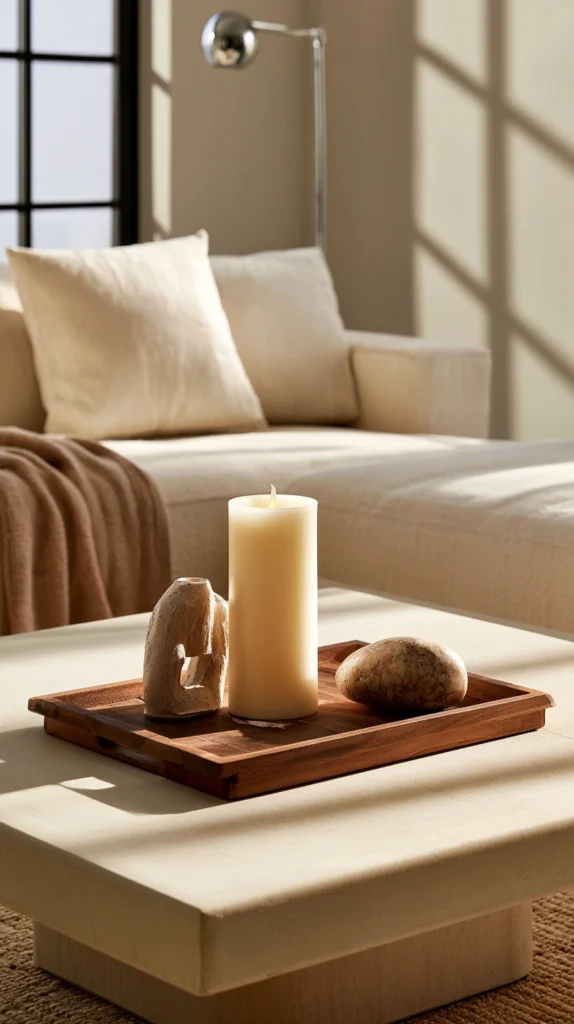
In a small living room, a coffee table that’s fully styled takes up visual space the room can’t afford. A coffee table with one contained arrangement and clear surface around it reads as deliberate.
A tray sized to roughly two-thirds of the table length contains the styling zone. Inside it: three objects at different heights. One candle or small lantern as the tallest element. One medium object — a small ceramic bowl, a votive, a small pumpkin. One low element — a flat stone, a few dried botanicals, a pinecone.
Everything outside the tray stays clear. The clear surface isn’t empty — it’s functional. In a small living room, a coffee table that can actually be used as a surface makes the room feel more spacious than one covered in styling objects.
Tip: Choose a tray in a warm material — dark wood, aged brass, or acacia — rather than a mirrored or clear tray. Warm material trays blend into the fall arrangement. Reflective trays draw attention to themselves and multiply visual activity in a small space.
Budget: $15–$40 for tray plus objects
5. Add a Floor Lamp to Create a Second Light Zone
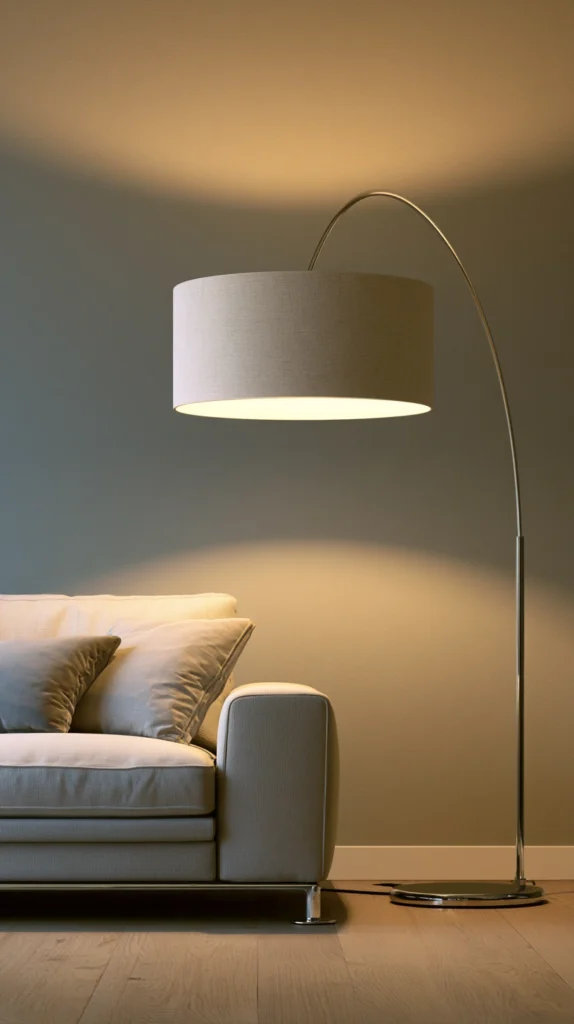
Small living rooms frequently suffer from single-source lighting — one overhead fixture that lights the whole room from above and creates a flat, institutional quality.
A floor lamp in a corner creates a second light zone at a lower height. This second zone makes the room feel like it has distinct areas — a seating area lit warmly by the lamp, a surrounding space with general overhead light — which creates the perception of more space than actually exists.
For fall, choose a floor lamp with a linen or fabric shade in a warm tone. The shade diffuses light in all directions rather than directing it downward, which fills the corner with warm glow that spreads into the rest of the room.
An arc floor lamp positioned beside the sofa to light the seating area from above-and-beside is the most effective single lighting addition in a small living room.
Simple arc floor lamps with a linen shade run $35–$70 at Target, Amazon, and IKEA.
Tip: Position the floor lamp in the corner farthest from the overhead fixture. This creates the maximum spread between light sources, which makes the room feel larger and more dimensional than two light sources close together.
Budget: $35–$70
6. Bring in One Plant at a Tall Height
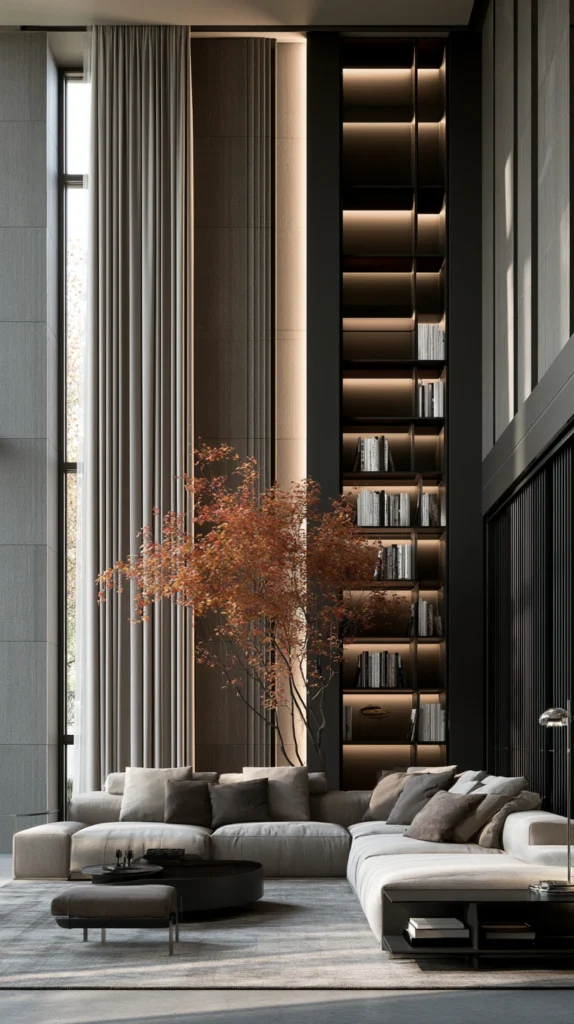
A tall plant in a small living room does something no other element does — it draws the eye upward, which makes the ceiling feel higher and the room feel taller.
For fall, a tall plant in a warm-toned pot — terracotta, matte rust ceramic, or a dark stoneware — connects to the seasonal palette while functioning as a living architectural element.
The best tall plants for low fall light in a small living room: a snake plant (Sansevieria) at 3–4 feet, a rubber tree (Ficus elastica) in burgundy or dark green, or tall pothos trained on a pole. All three tolerate the reduced daylight of November without significant decline.
One tall plant in the right corner contributes more to the room than three small plants distributed across surfaces, which add visual clutter in a compact space.
A 4-foot snake plant or rubber tree from a local nursery or Home Depot runs $20–$45 with a basic pot.
Tip: Place the tall plant in the corner beside the floor lamp rather than across the room from it. The lamp light in the evening backlights the plant from below, creating a warm shadow effect on the ceiling and wall that no decor object replicates.
Budget: $20–$50 including pot
7. Use Peel-and-Stick Wallpaper on a Single Accent Wall
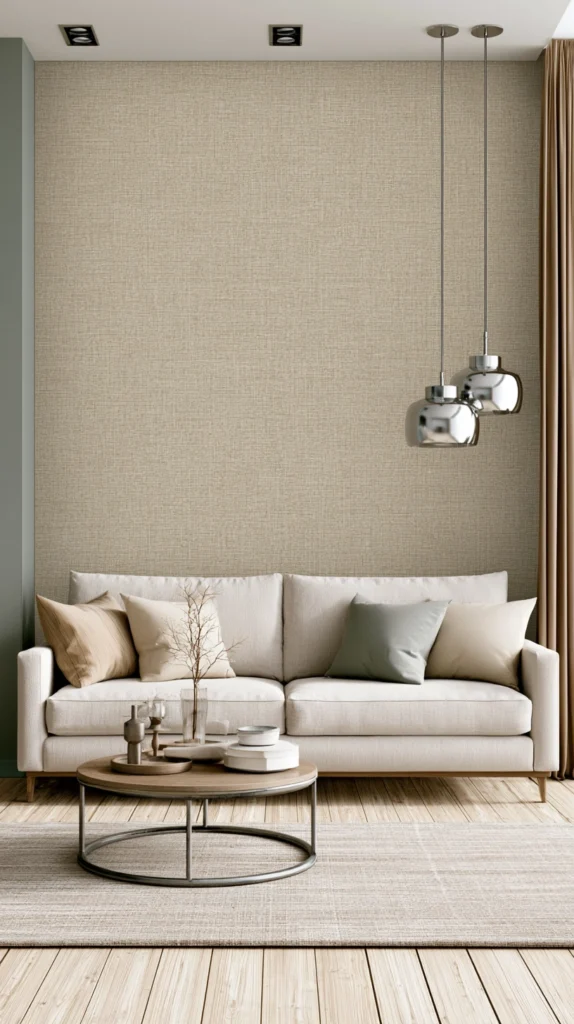
A single accent wall in a small living room creates depth by giving the eye a surface that reads differently from the others. This optical effect makes the room feel wider or deeper than its actual dimensions.
Peel-and-stick wallpaper in a fall-appropriate pattern — a warm linen texture, a subtle botanical in ochre and brown, a geometric in warm neutrals — changes a flat wall into a considered surface for under $55 with no permanent modification.
In a small living room, the accent wall should be the one directly opposite the entrance — the first wall visible on entry — or the wall behind the sofa. Either position gives the pattern the visual stage it needs to work as a depth-creating element.
For small rooms specifically, choose a small-repeat or textured pattern rather than a large-scale print. Large patterns need scale to read clearly and become visually demanding in a compact space.
NuWallpaper and RoomMates both offer options suited to this use for $25–$55 per roll.
Tip: Apply the wallpaper to a completely clean, dry wall. Bathroom humidity advice applies in living rooms near cooking areas too — grease and dust on a wall surface cause peel-and-stick edges to lift within weeks. Wipe with isopropyl alcohol and allow 30 minutes before application.
Budget: $25–$55
8. Arrange Existing Furniture for Better Fall Use
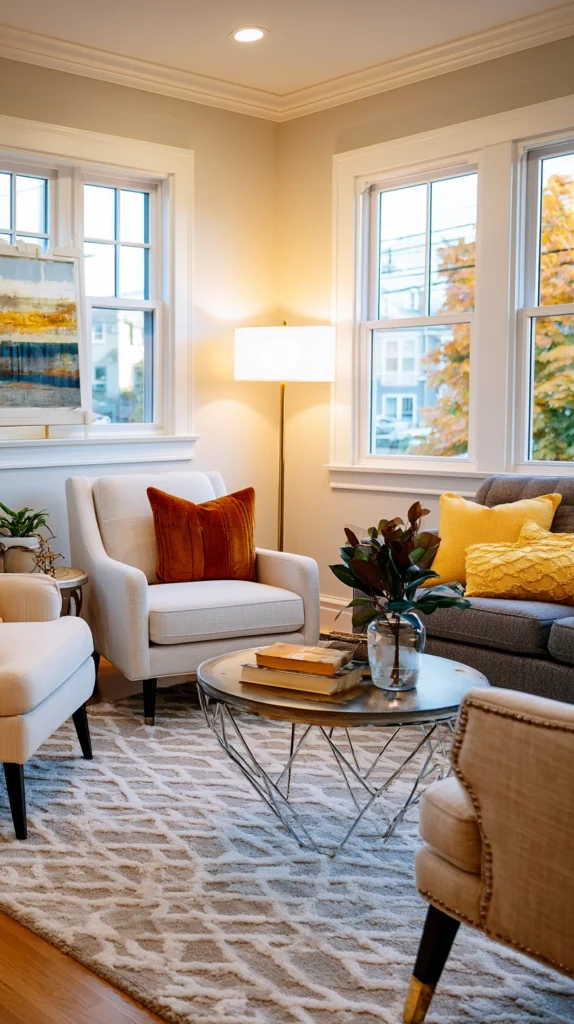
The furniture arrangement that worked in summer — oriented toward windows for light and views — may not be the arrangement that works best for fall evenings spent inside.
A small living room rearranged for fall orients the seating toward a fireplace if one exists, creates a clear focal point on the most used wall, and positions the main seating within the reach of the floor lamp and the warmest lighting zone.
This costs nothing and often makes more difference to how the room feels in fall than any decor purchase. A sofa turned 30 degrees toward a fireplace, a chair moved from across the room to beside it — these changes shift the room’s energy toward interior warmth rather than exterior views.
Sketch the existing arrangement and one or two alternatives on paper before moving anything. Moving furniture twice because the first arrangement didn’t work is harder in a small space than elsewhere.
Tip: Pull seating slightly away from the walls rather than pushing everything to the perimeter. Furniture against every wall in a small room actually makes it feel smaller — a few inches of space between the sofa back and the wall gives the eye room to circulate.
Budget: $0
9. Hang One Fall-Toned Print Above the Sofa
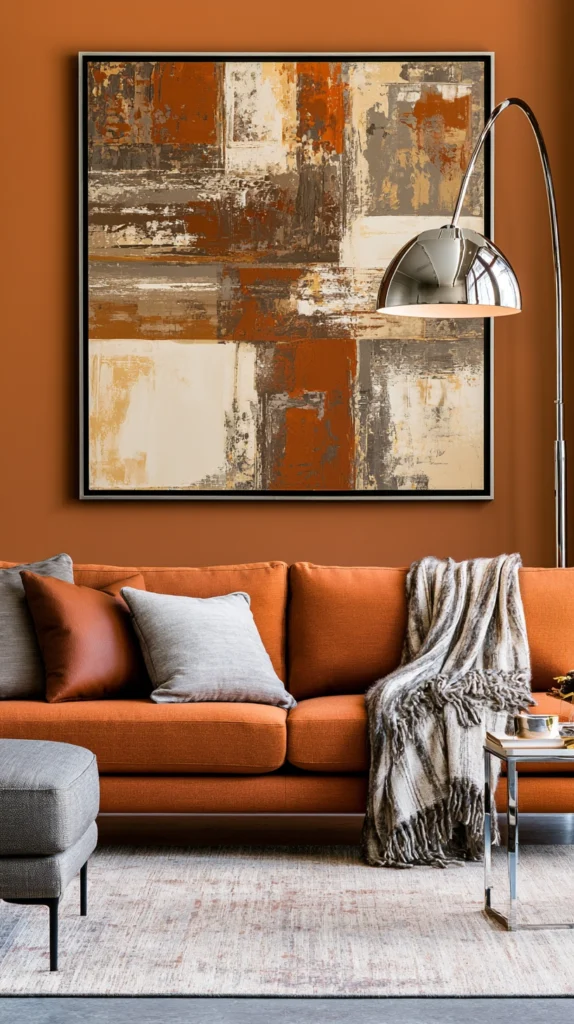
A blank wall above a sofa in a small living room contributes to the feeling that the room isn’t quite finished. One piece of art addresses this without requiring gallery wall commitment or significant expense.
For fall, choose a print in the 18×24-inch to 24×30-inch range — large enough to be proportional to the sofa below it, not so large it dominates the wall. Warm-toned botanical prints, abstract art in rust and ochre, or landscape photography in autumn golden hour light all work without being explicitly fall-themed.
Printable digital art files from Etsy cost $4–$12. Print at a local print shop in the exact size needed. An IKEA RIBBA frame in the correct size runs $8–$15.
Total for a statement piece above the sofa: under $30.
Tip: Hang the print so its lower edge sits 6–8 inches above the sofa back rather than higher. Art hung too high above a sofa disconnects visually from the furniture below it — the 6–8 inch gap is the standard that keeps them reading as a related pair.
Budget: $12–$30
10. Add a Small Woven Basket for Blanket Storage
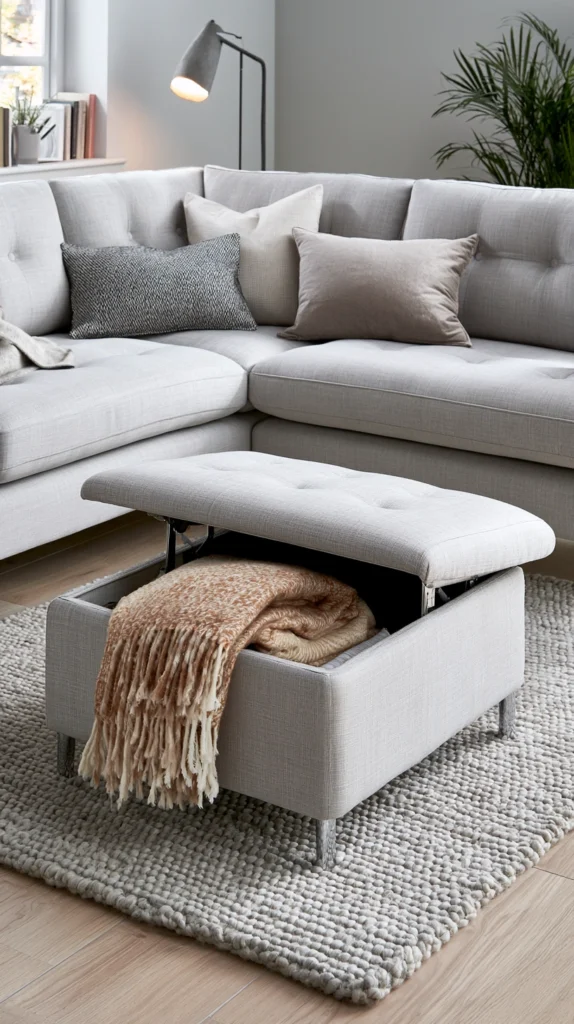
A small living room with throws and blankets in use throughout fall needs somewhere for those blankets to go that isn’t a pile on the sofa arm or a corner of the floor.
A woven basket — jute, seagrass, or rattan in a size that holds two medium throws — gives blankets a visible home that’s part of the room’s decor rather than a storage solution trying to hide. The organic texture of natural fiber baskets contributes to the fall palette in a way that fabric bins or plastic containers don’t.
For a small living room, keep the basket at or near floor level — beside the sofa, in the corner nearest the seating area — rather than on a shelf or counter where it takes up visual space at eye height.
A seagrass basket in the 14–16 inch diameter range holds two folded throws comfortably. These run $15–$30 at TJ Maxx, Target, or Amazon.
Tip: Store throws folded in half lengthwise rather than into quarters before placing in the basket. Half-fold allows each throw to drape slightly over the basket edge when retrieved, which makes removal easy without disrupting the rest of the arrangement.
Budget: $15–$30
11. Use Candlelight at Table Level for Evening Warmth
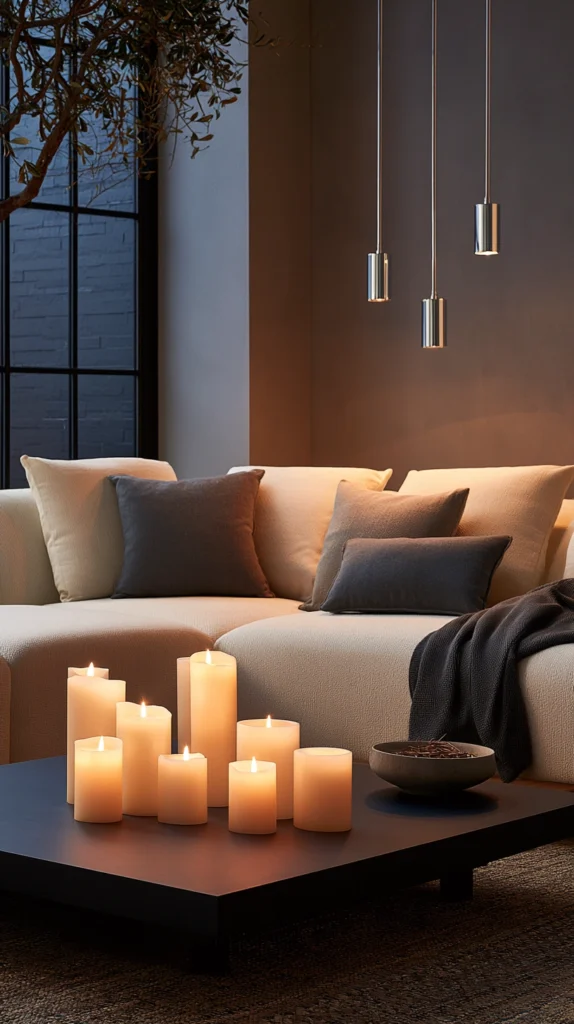
In a small living room, candles at table height — on the coffee table and a side table — create a warm light zone at exactly the level where people are sitting and looking.
This low-level candlelight supplements overhead and lamp lighting to create the layered warmth that makes a small room feel genuinely cozy rather than just lit.
For fall, use pillar candles in cream or beeswax yellow on simple holders, or small votives in amber glass at the base level of the coffee table tray arrangement. Two or three candles in the seating zone creates enough ambient light to change the room’s quality without requiring any fixture change.
LED candles are the practical choice for a small living room where candles would be lit during the evening several days per week — real candles at this frequency require regular replacement and produce soot on nearby surfaces over time.
LED pillar candles with a realistic flicker run $8–$20 for a set of two to three.
Tip: Place candles at the edge of the coffee table tray nearest the seating rather than toward the center. Candles positioned toward the people in the room cast light upward onto faces, which is the warm, flattering candlelight quality. Candles at the far edge of a table cast light away from the seating and lose most of their atmospheric effect.
Budget: $8–$25
12. Style the Window Ledge or Sill as a Fall Vignette
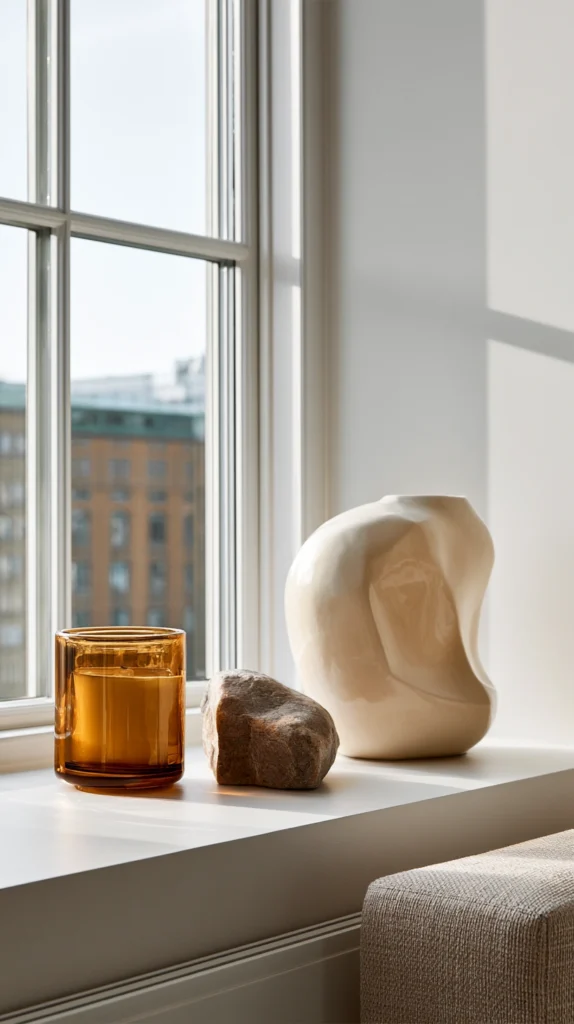
A window sill in a small living room is usually unused — and in fall, it becomes a naturally lit display surface that costs nothing to use.
Three or four objects in warm fall tones on the sill: a small plant in a terracotta pot, a candle in amber glass, one or two small seasonal objects — a miniature pumpkin, a smooth stone, a small ceramic piece. These objects are backlit by natural light during the day and front-lit by lamp light in the evening.
In a small room, a window sill vignette uses vertical space that wall shelves would need to be installed to provide — without any installation, any wall damage, and any added furniture footprint.
Keep the total number of objects to four or fewer. A sill overloaded with small objects creates visual noise at eye level from the sofa — the position from which most of the room is seen.
Tip: Use objects with varied silhouettes on the sill rather than objects of similar shape. A round pot, a vertical candle, and a flat stone read as a composition from across the room. Three round objects of similar size read as a collection of one type of thing.
Budget: $5–$20 for any new objects needed
13. Combine Five Changes for a Complete Makeover Feel
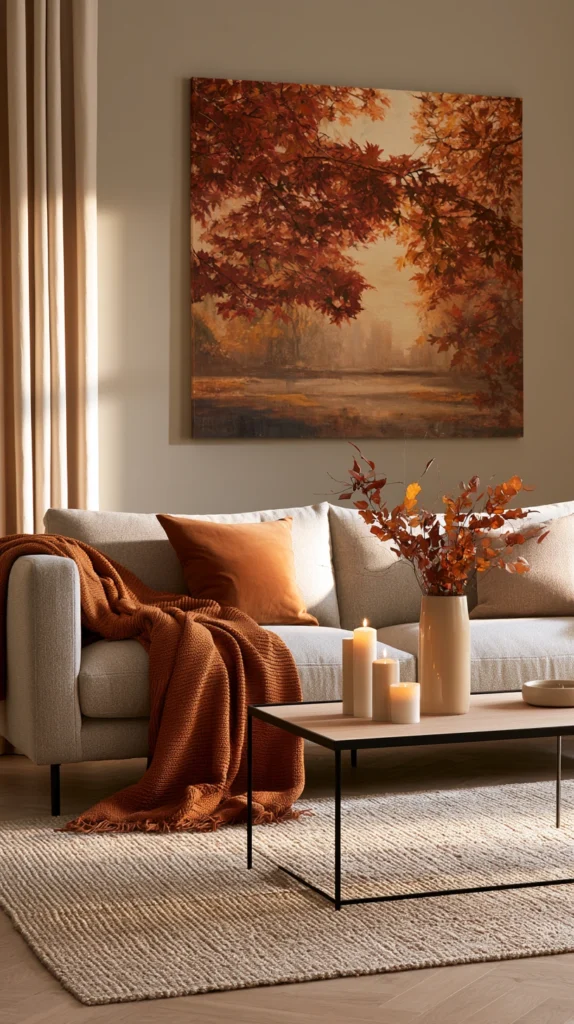
No single change in a small living room produces a makeover. Five specific changes, chosen to address different zones of the room, do.
The five that cover the most ground for the least money in a small living room: warm bulbs in every lamp (lighting), a fall-toned throw on the sofa (large textile), a three-object tray arrangement on the coffee table (central surface), one framed print above the sofa (blank wall), and a woven basket for blanket storage (functional object). Together they address the room’s light quality, its dominant textile color, its most-used surface, its most visible blank wall, and its daily clutter problem.
Total budget for all five: $60–$120 depending on what’s already owned. That’s less than most single home decor purchases and produces changes across five zones of the room simultaneously.
Do them in the order listed. Lighting first — it changes everything else immediately. Textile second. Surface third. Wall fourth. Storage fifth. Each one shifts the context for what follows.
Tip: Wait one week after completing the five changes before assessing whether more is needed. New changes take a week to stop looking new and start looking like they belong. Assessing immediately after installation is how good makeovers get over-decorated — additions made before the first changes have settled.
Budget: $60–$120 total for all five
Final Thoughts
A small living room fall makeover works on the same principle as any small-space design: each change needs to earn more than the space it takes.
The ideas here that work best are the ones that change the room’s quality — light temperature, textile warmth, surface organization — rather than adding objects to it. A warm bulb costs $4 and changes how every other element in the room reads. That’s the kind of return a small space needs from each investment.
Start with light and one large textile. The room already feels different before the coffee table is touched.