

14 Fall Coffee Table Styling Ideas
The coffee table is the most visible surface in a living room. It sits at eye level from the sofa, it’s the first thing people see when they walk in, and it stays in the sightline for the entire time anyone is sitting in the room.

In fall, that visibility makes it the highest-impact surface to update. A well-styled fall coffee table changes how the whole living room feels — not just the table itself.
These fourteen ideas focus on specific objects, arrangements, and proportions that actually work on a real table rather than a staged photo. Each one includes what to use, how to arrange it, and the practical logic behind why it works.
1. Build Around a Central Tray
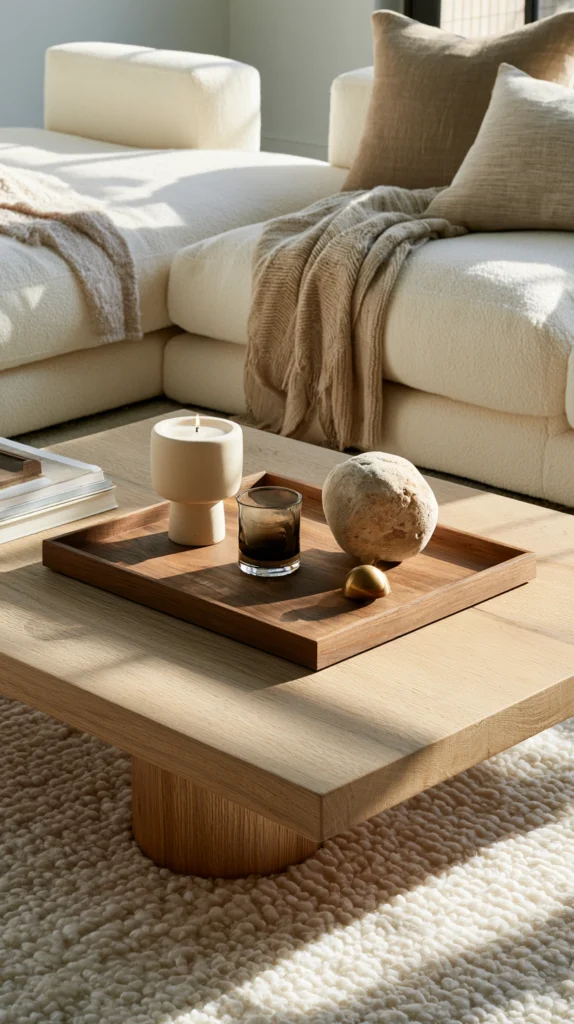
A tray is the most useful starting point for any coffee table arrangement. It contains the styling zone, defines the center of the composition, and makes the whole setup easy to move when the table needs to be functional.
For fall, choose a tray in a warm material — dark walnut wood, acacia, aged brass, or matte black. The material sets the tone for everything placed inside it. A warm wood tray reads as organic and autumnal; a brass tray reads as more formal and festive.
Size the tray to occupy roughly two-thirds of the table’s length. A tray that’s too small looks like it got placed there by accident. One that’s too large leaves no breathing room for anything outside the tray.
Inside the tray, limit objects to three to five items at varied heights. Everything else on the table lives outside the tray.
Tip: If the table surface is glass, use a tray with feet or a slight base so it sits slightly elevated. A flat tray directly on glass can look like it’s floating awkwardly — feet give it a grounded, intentional placement.
Budget: $15–$45 for the tray
2. Use the Rule of Three for Object Groupings
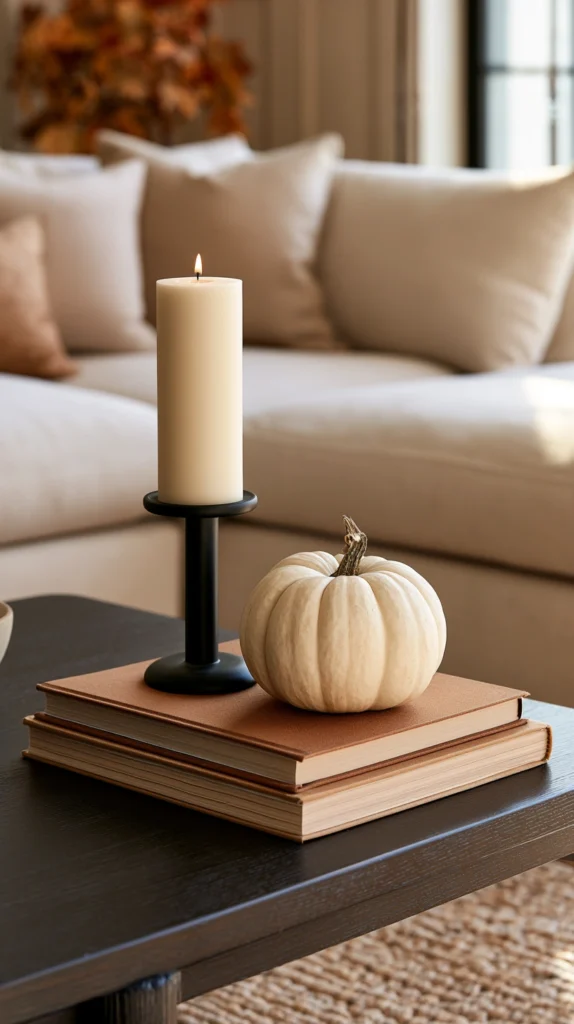
Outside the central tray, objects on a coffee table work best in groupings of three rather than pairs or singles.
A single object on a coffee table looks forgotten. A pair looks deliberate but static. Three objects at different heights create movement — the eye travels between them rather than stopping at one fixed point.
For fall, a practical grouping of three: a medium pillar candle or lantern as the tallest element, a small pumpkin or gourd at mid-height, and a low ceramic dish or a stack of two books at the base. Three materials, three heights, three tones — all within the same warm palette.
Apply this logic across every grouping on the table rather than treating each object as an individual decision.
Tip: The tallest item in a three-object grouping should be no taller than the sofa cushion height. A tall arrangement blocks sightlines across the room and makes the table feel heavy from the sofa.
Budget: $0 — this is an arrangement principle
3. Anchor with a Stack of Fall-Toned Books
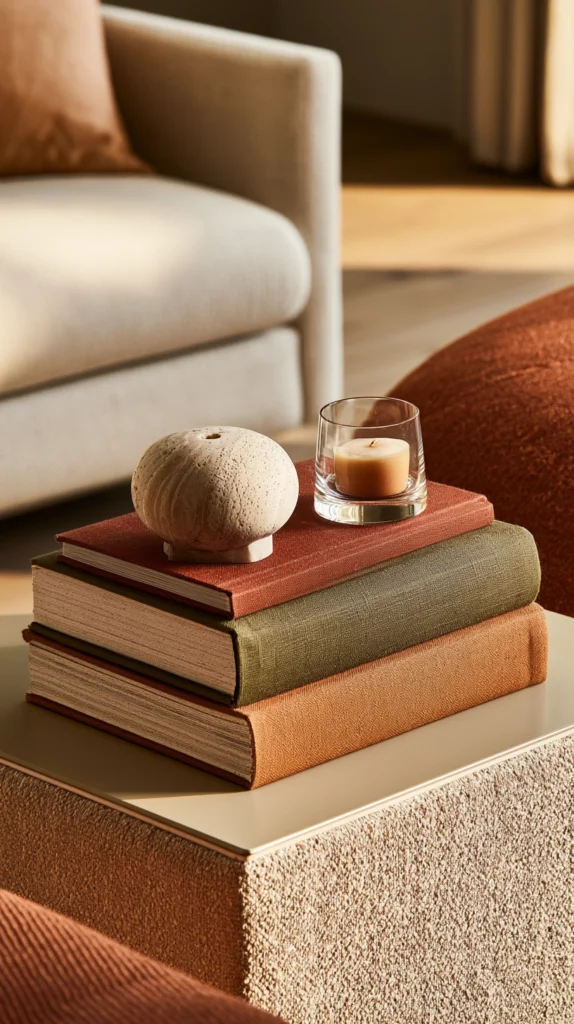
A stack of two or three books is the most versatile coffee table element because it functions as both a surface and an object — the books themselves are decorative, and whatever sits on top of them gains height without a riser.
For fall, pull books with warm-toned spines from bookshelves elsewhere in the house. Deep orange, burgundy, brown, olive, and cream all read as seasonal without being seasonal subjects. The content doesn’t matter — the spine color is the contribution.
Stack them horizontally with the largest book at the bottom and the smallest on top. Place one small object on top — a votive candle, a small ceramic piece, a single acorn or pinecone — to complete the grouping.
This is also the cheapest element on any coffee table because it uses books you already own.
Tip: Remove dust jackets from hardcover books before stacking. The exposed cloth or board cover underneath is almost always a more interesting texture and color than the printed jacket, and it reads as more intentional.
Budget: $0 using existing books
4. Add a Low Floral or Botanical Arrangement
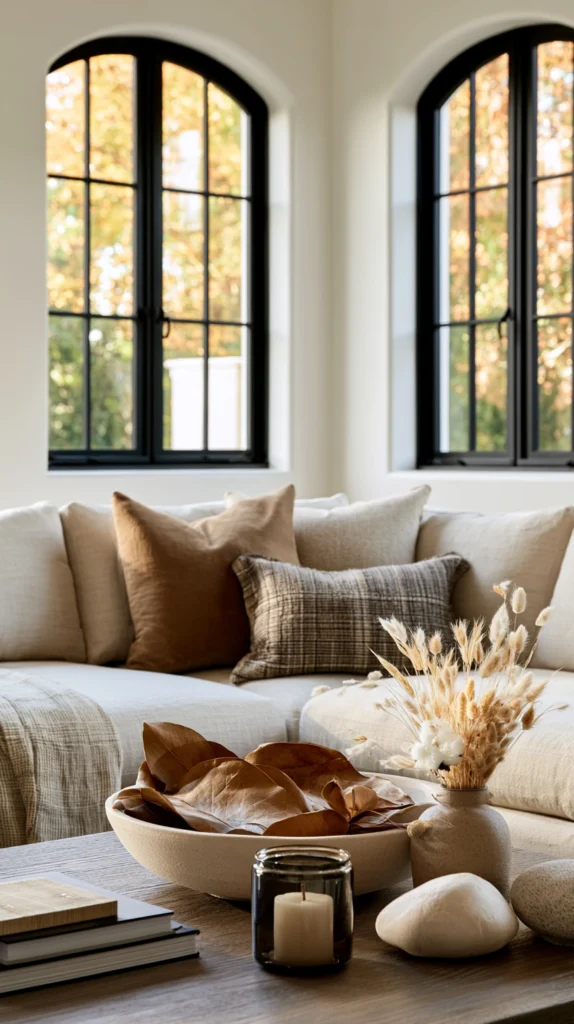
Fresh or dried botanicals introduce the only living element to a coffee table arrangement — and in fall, the options extend well beyond flowers.
Dried arrangements that work in fall: eucalyptus branches, dried pampas grass in small bundles, preserved magnolia leaves, dried wheat or cotton stems, and dried orange slices in a low bowl. These hold their appearance for weeks without water, which makes them practical for a surface that needs to look good continuously.
For fresh options, seasonal grocery stores stock small bundles of chrysanthemums, marigolds, and dahlias in October through November. These last 7–10 days in water and come in exactly the right fall color range.
Use a vessel proportional to the table. A tall vase on a coffee table is a sightline problem — keep floral arrangements in low, wide vessels: a short ceramic crock, a shallow bowl, a squat glass vase no taller than 6 inches.
Tip: Trim fresh stems at a 45-degree angle and change the water every two days to extend vase life. Adding a small piece of copper to the water — a copper coin or a short piece of copper wire — inhibits bacterial growth and keeps the water clearer longer.
Budget: $8–$25 for fresh or dried botanicals
5. Incorporate Real or Faux Pumpkins in Varied Sizes
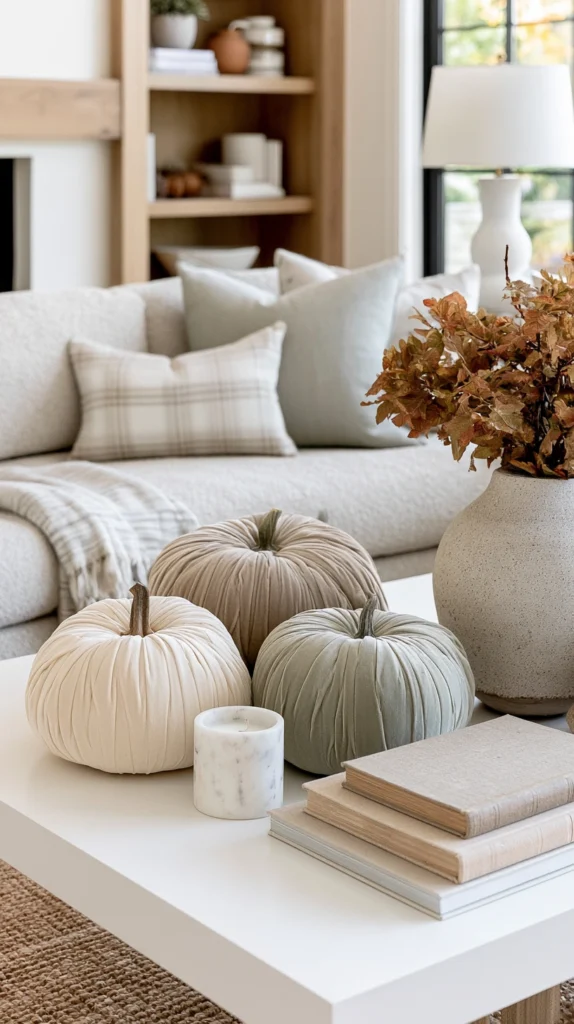
Pumpkins on a coffee table work when they’re treated as sculptural objects rather than holiday decorations. The key is size variation and restraint.
Use two or three pumpkins in different sizes rather than one large statement pumpkin or a cluster of identical small ones. A medium pumpkin (4–5 inches), a small pumpkin (2–3 inches), and a miniature pumpkin (1–2 inches) grouped together create a natural-looking cluster that reads as collected rather than purchased as a set.
White, cream, and buff pumpkins work better on most coffee tables than bright orange ones. They read as neutral enough to fit into a range of interior palettes, and they photograph better in interior lighting. Cinderella pumpkins (the flat, ribbed orange variety) are an exception — their shape is sculptural enough to work as a single statement piece.
For a coffee table that needs to remain functional, use faux velvet or foam pumpkins rather than real ones. They’re lighter, don’t rot, and hold their position when the table is used daily.
Tip: Group pumpkins at the same end of the tray rather than spreading them across it. A concentrated grouping reads as intentional; scattered pumpkins across a surface read as random placement.
Budget: $8–$25 for a set of mixed sizes
6. Use Candles Strategically for Height and Warmth
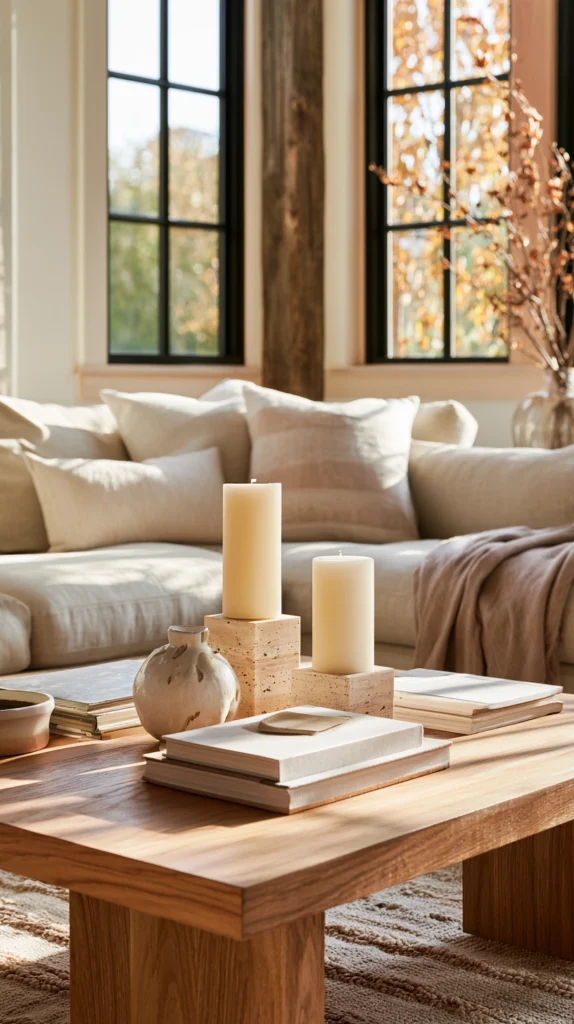
Candles on a coffee table are both decorative and functional — they provide the warm ambient light at table level that overhead lighting never reaches.
For fall, use pillar candles rather than jar candles on a coffee table. Pillar candles show their full height, which contributes to the arrangement’s vertical range. Jar candles sit low and add little to the overall composition height.
Taper candles in candelabras work on larger coffee tables but can feel top-heavy on compact ones. For most standard coffee tables (36–48 inches long), a 4–6 inch pillar candle on a simple candleholder is the right scale.
Fall candle colors: cream, ivory, beeswax yellow, rust, and deep burgundy all work. Avoid bright white candles in a warm fall arrangement — they read as too cool against warm tones and draw the eye in a way that competes with the rest of the arrangement.
Tip: Place a small disc of aluminum foil under pillar candles on wood surfaces. Wax drips damage wood finishes in a way that’s difficult to reverse, and a small foil disc is invisible under the candle but protective.
Budget: $8–$25 for candles and a simple holder
7. Create a Seasonal Scent Element
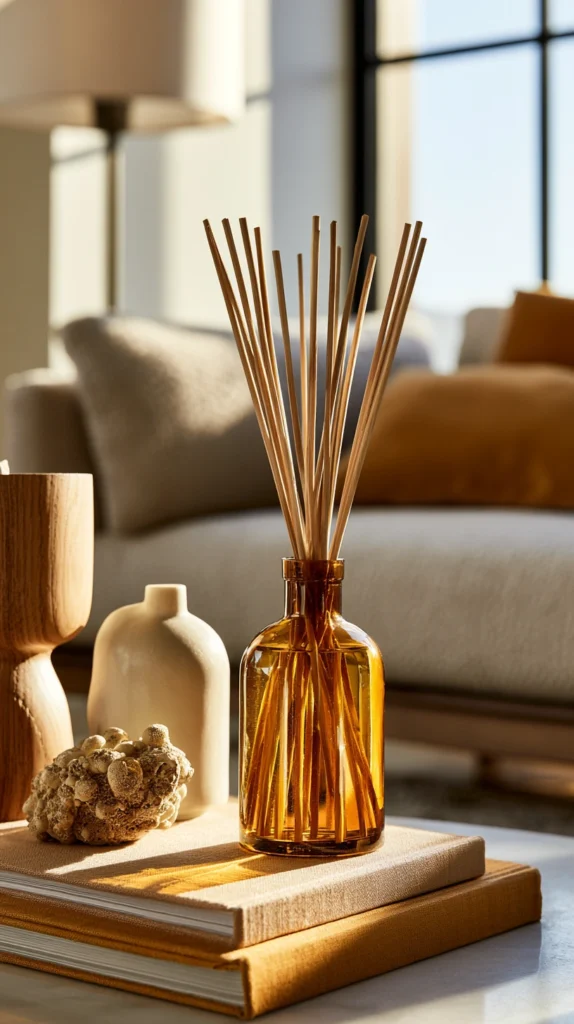
A coffee table at the center of a living room is ideally placed to diffuse scent into the most-used space in the home. A small scent element — an oil diffuser, a decorative bowl of potpourri, or a scented candle — adds a sensory layer that purely visual styling doesn’t.
For fall, the scent choices that work best in a living room context are earthy and warm rather than sweet: cedarwood, sandalwood, cinnamon bark, clove, amber, and smoky oud. These diffuse naturally and stay in the background during a long evening.
A reed diffuser in a small clear or amber glass bottle with 4–6 reeds looks clean on a coffee table and provides continuous low-level scent without any maintenance. An oil diffuser (ultrasonic type) produces a visible mist that adds a visual element alongside the scent.
Avoid heavily sweet fall scents — pumpkin pie, apple cider, cinnamon sugar — in a room where people are socializing. They’re pleasant briefly but become overwhelming during a two-hour gathering.
Tip: Turn reed diffuser sticks every 3–4 days to refresh the scent output. The saturated end that was in the oil goes up, allowing the dry end to draw fresh oil and maintain consistent diffusion.
Budget: $10–$30 for a reed diffuser or small oil diffuser
8. Layer Different Textures Within the Same Color Family
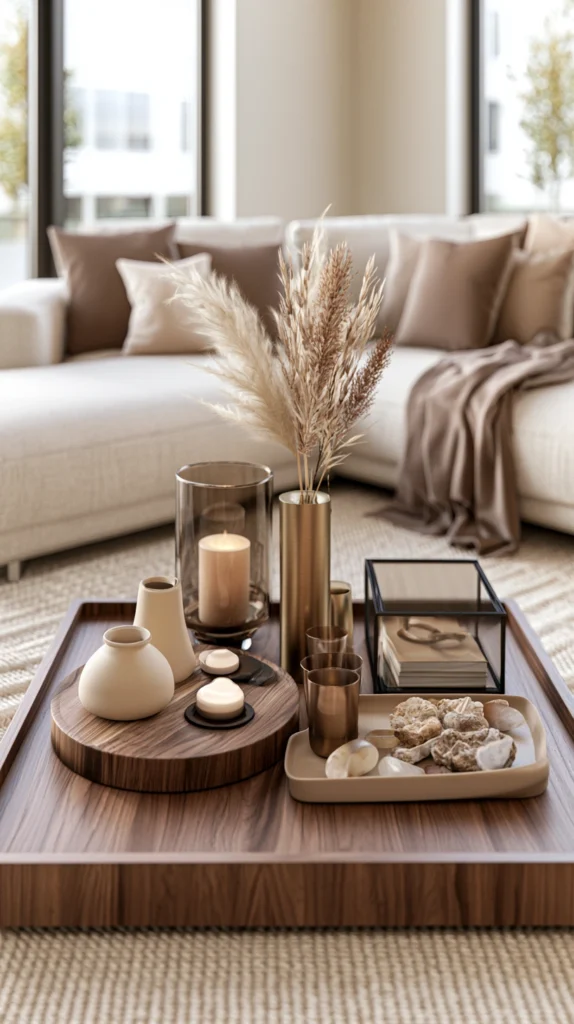
A fall coffee table that uses the same material throughout — all ceramic, or all wood, or all fabric — looks flat regardless of how well the individual objects are chosen.
Texture contrast is what makes a styled surface look considered. In fall tones, the contrast between smooth ceramic, rough-woven linen, matte wood, and shiny glass creates visual depth even when every object sits in the same warm color palette.
A practical combination for a fall coffee table: a smooth ceramic bowl (smooth), a woven rattan coaster set (rough texture), a wood tray (warm matte), and a glass votive (reflective). Four objects, four materials, all within the same warm amber-brown palette.
The palette unity holds the composition together while the material variation creates the interest that makes it worth looking at.
Tip: Avoid more than one shiny or reflective surface in a coffee table arrangement. Glass, polished ceramic, and metallic finishes compete for visual dominance when grouped. Limit reflective elements to one and let matte surfaces carry the rest.
Budget: $0 — this is a curation principle
9. Add a Natural Element from Outside
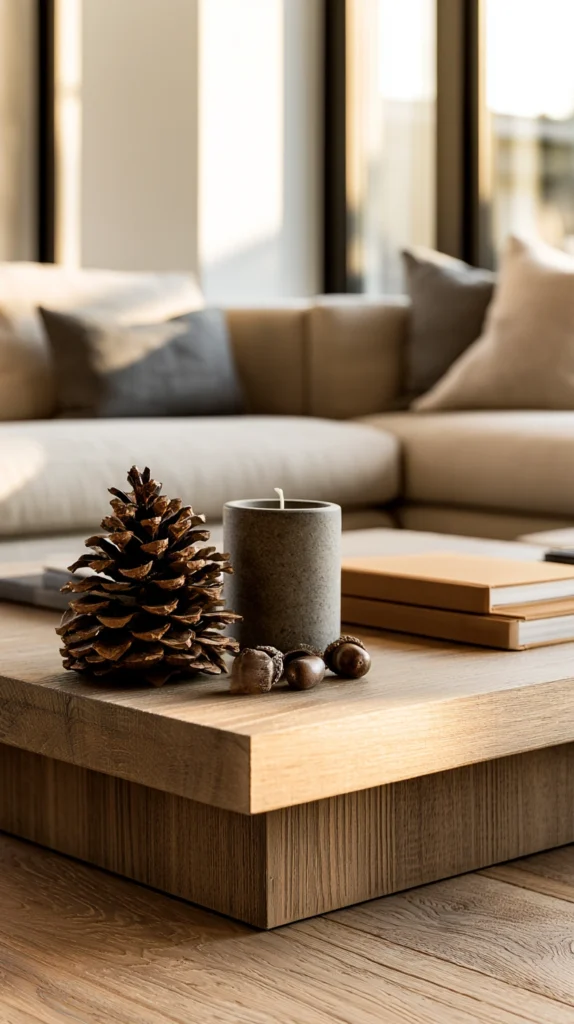
Bringing something directly from the fall landscape into the coffee table arrangement grounds it in the actual season rather than a retail interpretation of it.
Pinecones gathered from a park or backyard, smooth river stones, interesting seed pods, dried fallen leaves pressed flat, a piece of driftwood, or a cluster of acorns all function as genuine fall objects that no store-bought decoration fully replicates.
These work best when paired with more finished objects rather than grouped with each other. One large pinecone beside a ceramic bowl reads as deliberate. A bowl full of pinecones reads as rustic to the point of cliché.
Place one or two natural elements within the tray arrangement at base level. Their irregularity and natural variation contrast productively with the clean lines of manufactured objects.
Tip: Bake pinecones and acorns at 200°F for 30 minutes before bringing them indoors. This kills any insects or larvae that may have taken up residence — a step that is easy to overlook and genuinely matters if the items will sit on a table in a living space for weeks.
Budget: $0 — foraged from outdoors
10. Include a Functional Element That Gets Used Daily
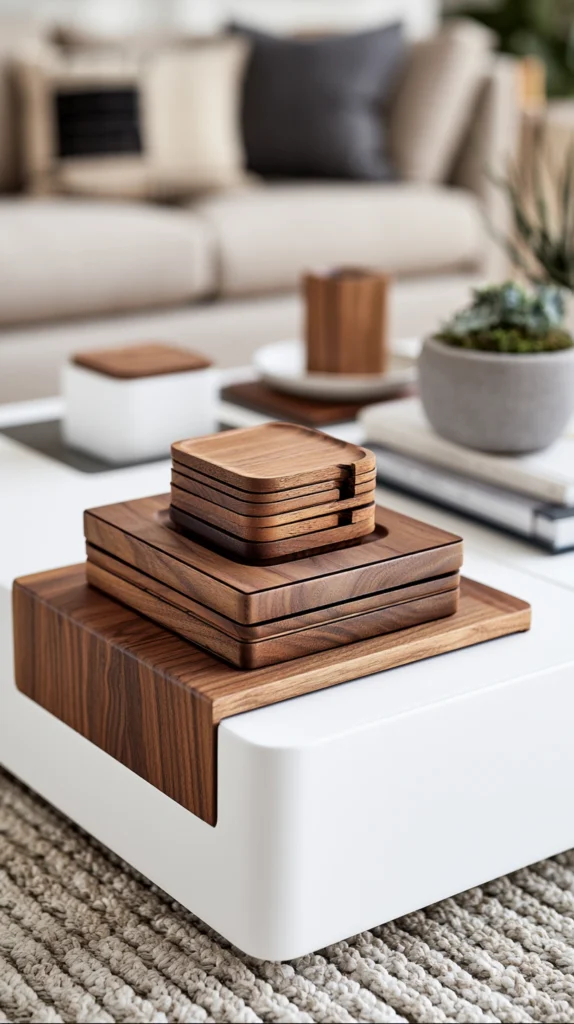
A coffee table arrangement that can’t be disturbed by daily use stops being a living space and becomes a display case.
Including one functional element — a coaster set, a small dish for a TV remote, a decorative box with a lid that holds charging cables, a small tray for glasses — integrates the styling into how the table actually gets used rather than styling around it.
For fall, a set of woven seagrass coasters or a small wooden coaster set with a holder does both. It’s a functional object that guests use, it stays on the table daily, and it contributes to the warm-texture fall aesthetic.
A lidded decorative box in matte ceramic or dark wood is another useful option — it hides the practical clutter that accumulates on a coffee table (remote controls, chapstick, hair ties) while contributing to the overall arrangement as an object.
Tip: The functional element should be the easiest thing to reach on the table — positioned at the edge nearest to where most people sit rather than tucked inside the tray. Function that requires reaching over decorative objects gets used less and eventually stops being used at all.
Budget: $12–$30
11. Use Negative Space Intentionally
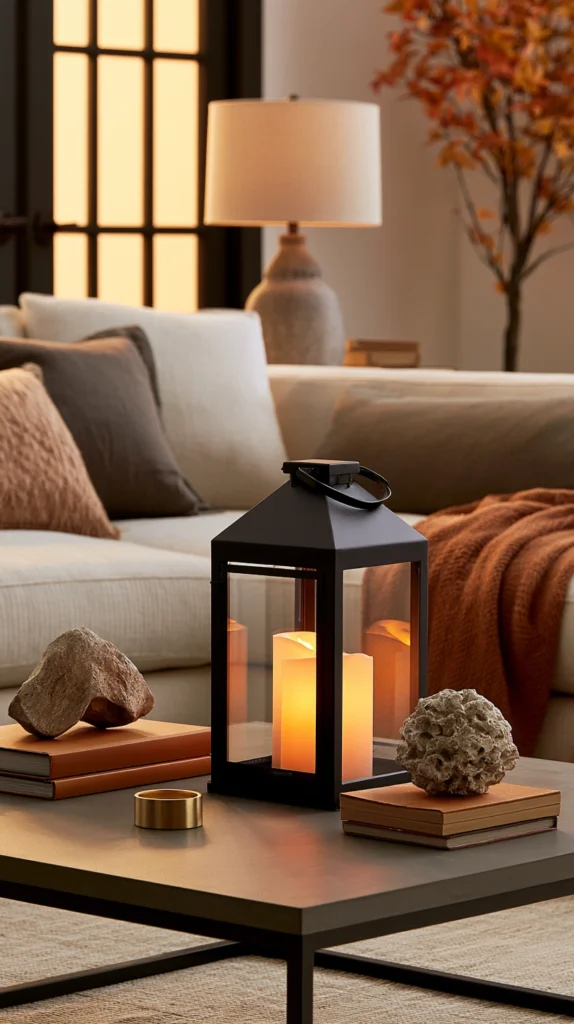
The most common coffee table styling mistake is filling every inch of available surface.
A coffee table needs approximately one-third of its surface area to remain clear for actual use — glasses, books, phones, a plate during movie night. If the arrangement takes up the whole table, it gets moved and then looks disheveled within an hour.
For fall, use the two-thirds rule: arrange styling objects on two-thirds of the table surface and leave one-third — typically one end — completely clear. This end becomes the functional zone without requiring any reorganization of the styled area.
Within the styled two-thirds, leave breathing room between objects. Objects that touch each other look crowded; objects with small gaps between them look curated.
Tip: Step back from the table and look at the arrangement from the sofa after setting it up. This is the actual viewing angle, not the overhead angle you have while placing objects. Adjustments that look obvious from the sofa are invisible from above.
Budget: $0 — this is a spatial principle
12. Incorporate a Small Lantern for Evening Atmosphere
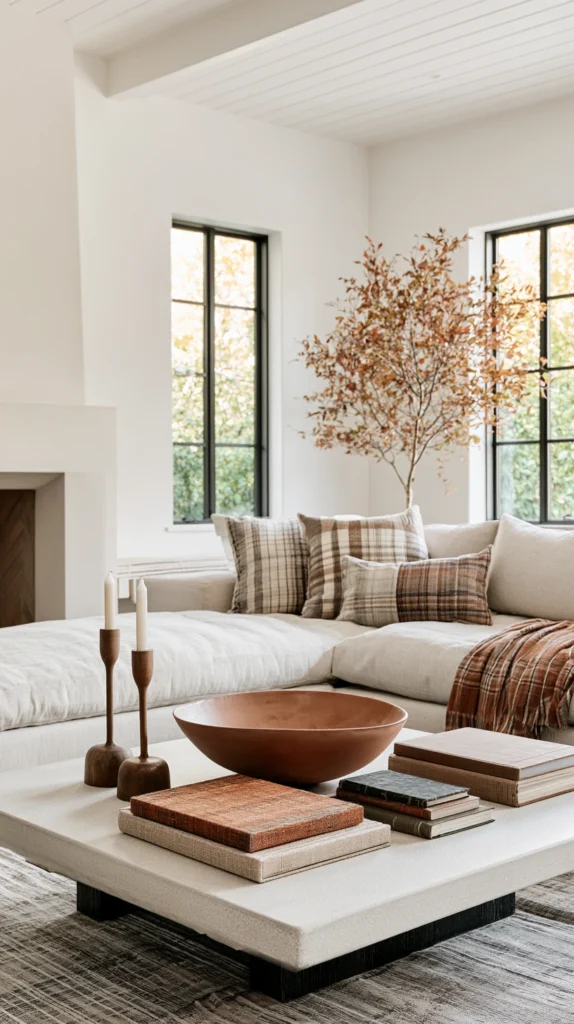
A lantern on a coffee table does something a standalone candle doesn’t — it encloses the light source in a way that makes the glow directional and contained, projecting warm light in a sphere around itself rather than broadcasting it upward.
For fall, a small metal lantern in matte black, aged brass, or oil-rubbed bronze with an LED pillar candle inside provides evening atmosphere without the fire risk of an open flame at table height in a living room.
Keep the lantern scale appropriate to the table. A lantern taller than 10–12 inches dominates most standard coffee tables. Look for styles in the 7–10-inch height range that sit comfortably within the overall arrangement without becoming the only thing you see.
Lanterns in fall-appropriate finishes are widely available at HomeGoods, Target, and At Home in the $18–$40 range.
Tip: For the most realistic LED candle effect inside a lantern, choose a flickering LED candle with a warm amber tip rather than a flat-top LED. The flicker is visible through the lantern glass and is significantly more convincing than a steady-state LED at close range.
Budget: $18–$45
13. Style Around a Statement Object
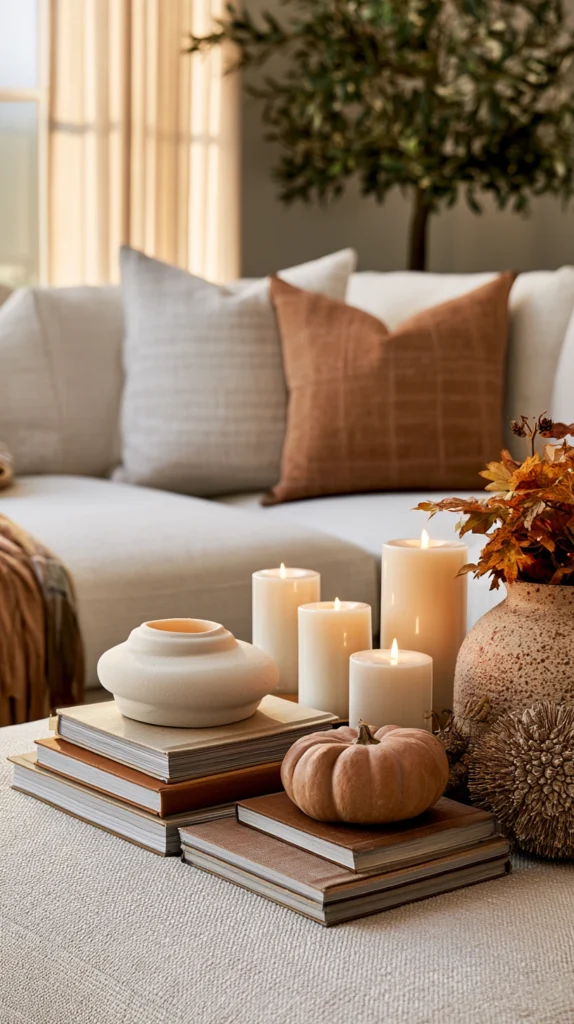
Sometimes a coffee table arrangement works best when it’s built around one strong central object rather than a balanced collection of equally weighted pieces.
A statement object has visual presence that commands the center of the arrangement — a large ceramic vessel, an oversized decorative gourd, a sculptural driftwood piece, a hammered brass bowl, or a substantial stack of art books. Everything else in the arrangement supports rather than competes with it.
For fall, a large matte ceramic bowl in terracotta or deep rust makes an effective statement object. Place it at the center of the tray or at the visual center of the table. Fill it loosely with pinecones, acorns, or dried botanicals if it feels too empty alone, or leave it bare if the form is strong enough to hold attention.
Statement object styling is particularly effective on smaller coffee tables where a balanced multi-piece arrangement starts to feel cramped.
Tip: The statement object should be the first thing you place, not the last. Every other object in the arrangement should be positioned in response to the statement piece — placed to complement it rather than crowd it.
Budget: $15–$60 for a quality ceramic or decorative vessel
14. Refresh the Arrangement Every Two Weeks
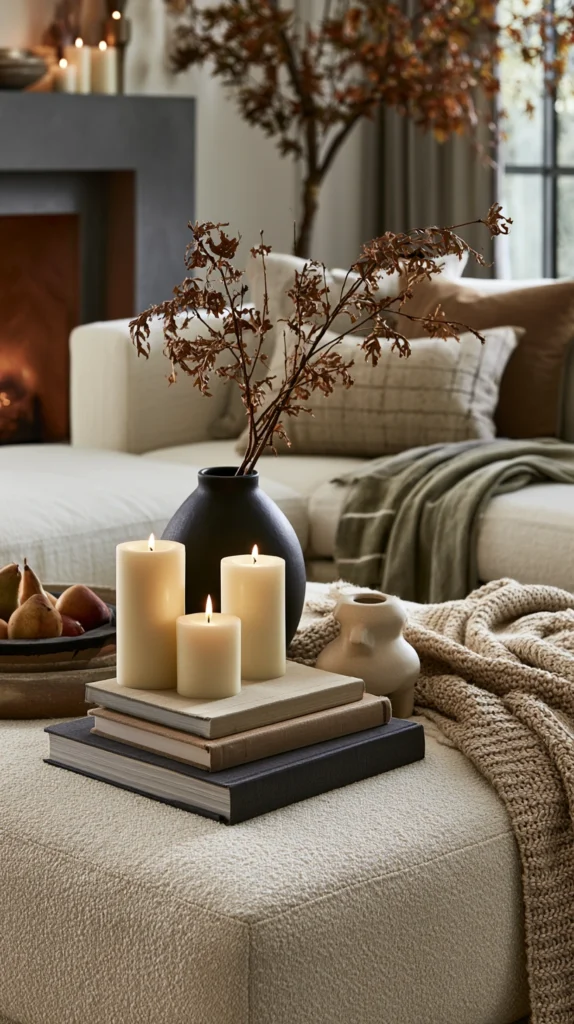
The final idea isn’t an object — it’s a practice.
A coffee table arrangement that stays identical from September through November stops being noticed after the first week. The seasonal feeling fades not because the objects change but because familiarity renders them invisible.
Refreshing the arrangement every two weeks — not necessarily replacing objects, but moving them, swapping the tray orientation, replacing the fresh botanicals, changing the candle color, moving the books to a different position — keeps the space feeling current and considered rather than set-and-forgotten.
This is also the point at which seasonal progression becomes possible. An arrangement in early October can feel harvest-abundant with gourds and dried corn. The same objects scaled back and paired with deep burgundy candles and bare branches shift the arrangement toward late fall by November. By Thanksgiving, a simpler, more stripped-back arrangement with a single statement bowl and natural elements feels right for the season’s more contemplative mood.
Tip: Take a photo of the arrangement each time you refresh it. Over a full season this builds a visual record that shows which combinations worked and which didn’t — useful reference for the following year that’s faster and more accurate than trying to remember what you did.
Budget: $0 — time, not money
Final Thoughts
A fall coffee table works when it feels like it belongs to the season and to the room — not like a seasonal display dropped into an otherwise unchanged space.
The arrangements that hold up best have three things in common: a contained central zone (the tray), varied heights and textures within the same warm palette, and enough clear surface that the table remains usable without disturbing the styling.
Start with the tray and three objects. Step back and look from the sofa. Add or remove from there until it reads as balanced from that angle. The rest — scent, lanterns, botanicals, natural elements — layers on top of that foundation.