

14 Rest Corner Ideas for Your Home — A Dedicated Space to Unwind
The rest corner changed how I use my own home more than any renovation ever did. Not the kitchen island. Not the walk-in closet. Not the new sofa or the fresh paint or the reorganized shelving.
The rest corner.
Because the rest corner is the only addition that changed a habit. Before it: scrolling on the couch, half-present, television on out of default. After it: fifteen minutes a day that belong to nothing but stillness. A place built for one purpose, used for that purpose.

A rest corner is not a decorating choice. It is a permission slip. A chair with nothing to do but hold a person who is doing nothing. A window with nothing to do but let in light. The corner: the quietest room inside a busy home.
Here are 14 rest corner ideas — from the simplest cushion-and-throw setup to the most elaborate designed retreat — built on that understanding.
Why Every Home Needs a Dedicated Rest Corner
The permission problem
Most homes have comfortable furniture. Few homes have a place whose only job is rest.
A sofa: shared, multipurpose, often facing a screen.
A bed: for sleep, not for sitting quietly with a cup of tea at 3pm.
A rest corner: the one seat in the house that asks nothing of the person sitting in it.
The five-minute threshold
A chair across the room: rarely used.
A chair built into a corner, dressed and ready: used almost daily.
The difference is not the chair. It is the invitation.
The sensory case
A rest corner works because it engages more than sight. Texture under the hand. Warm light instead of overhead light. Weight on the lap, from a blanket or a book. The corner: a small collection of senses, arranged on purpose.
The Four Rest Corner Types
Before choosing any design:
The reading nook
Built around a single comfortable chair and good light.
The book always within reach.
The most classic rest corner, and the easiest to build in almost any home.
The window seat
Built into or against a window, using the light and the view as the anchor.
Often includes storage beneath.
The most architectural of the rest corner types.
The meditation corner
Built low, often floor-based, with cushions rather than a chair.
Minimal in objects, maximal in intention.
The rest corner for stillness rather than distraction.
The tea and coffee corner
Built around a small table alongside the seat.
A ritual object — the kettle, the pot, the cup — nearby or visible.
The rest corner that turns a daily habit into a daily pause.
1. The Armchair-and-Lamp Corner
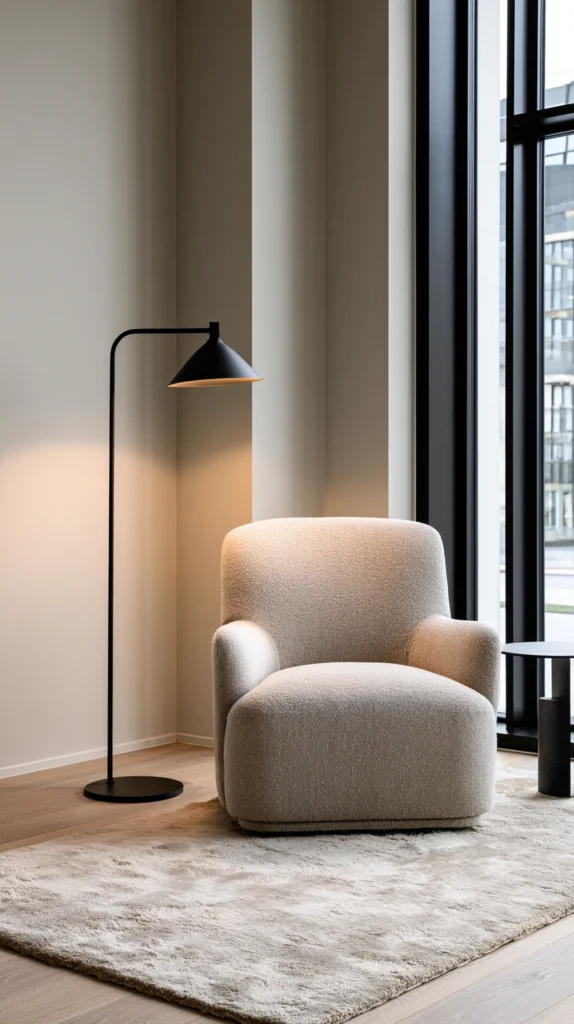
A single upholstered armchair, a floor lamp, and nothing else — the simplest rest corner and often the most-used one.
Why simplicity works here
The fewer objects in the corner, the fewer reasons not to sit down. A chair and a lamp: that is the entire requirement.
The chair
Deep enough to tuck the legs up.
Upholstered in a fabric that feels good against skin, not just good in a photograph.
A high back, for the head to rest against.
The lamp
Positioned just behind or beside the shoulder, not overhead.
Warm bulbs (2700K or below): the tone that makes a corner feel restful rather than clinical.
The floor
A small rug beneath the chair, even in a carpeted room. The rug: the visual boundary that says this spot is different from the rest of the floor.
Cost breakdown: Upholstered armchair: $150–400 Floor lamp: $40–90 Small rug: $30–70 Total: $220–560
2. The Built-In Window Seat
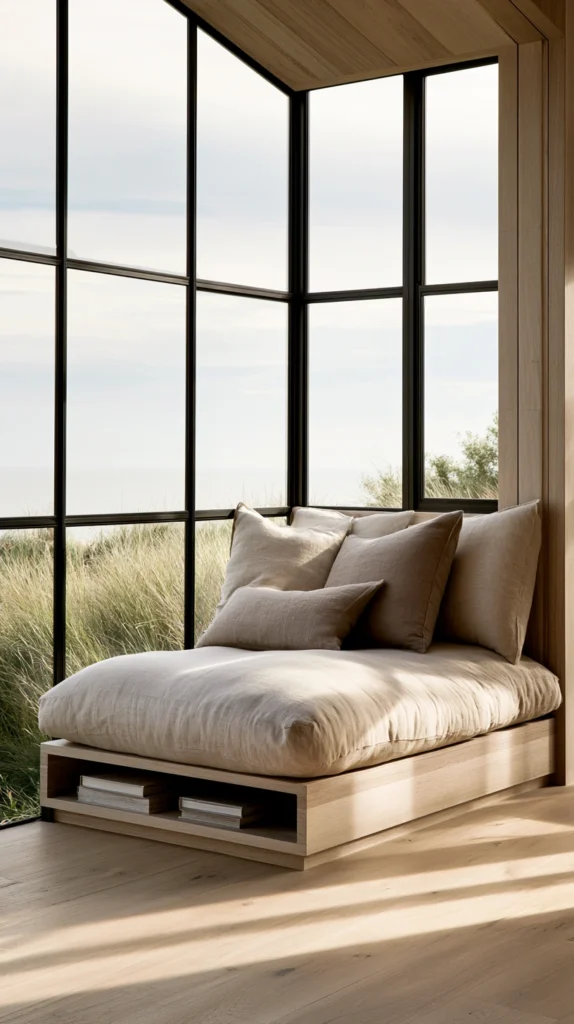
A bench seat constructed into a window bay, cushioned and dressed for daily use — the rest corner that makes use of a home’s best natural light.
Why the window changes everything
Daylight is the single most restorative element available in a home. A rest corner built around a window: rest and light, in the same act.
The construction
Plywood box built to the width of the window bay.
Cushion foam cut to the seat dimensions, minimum 4 inches thick for real comfort.
Fabric cover, ideally removable and washable.
The storage option
A hinged seat lid over the box: hidden storage beneath.
Blankets and throws for the corner itself, stored exactly where they are used.
The cushions
One long seat cushion.
Two to three back bolsters, angled against the window frame.
The view
Position the seat so the view is the reward, not an afterthought. A window seat facing a blank wall: half the value lost.
Cost breakdown: DIY built-in bench: $80–150 Cushion foam and fabric: $60–120 Bolsters: $40–70 Total: $180–340
3. The Floor Cushion Meditation Corner
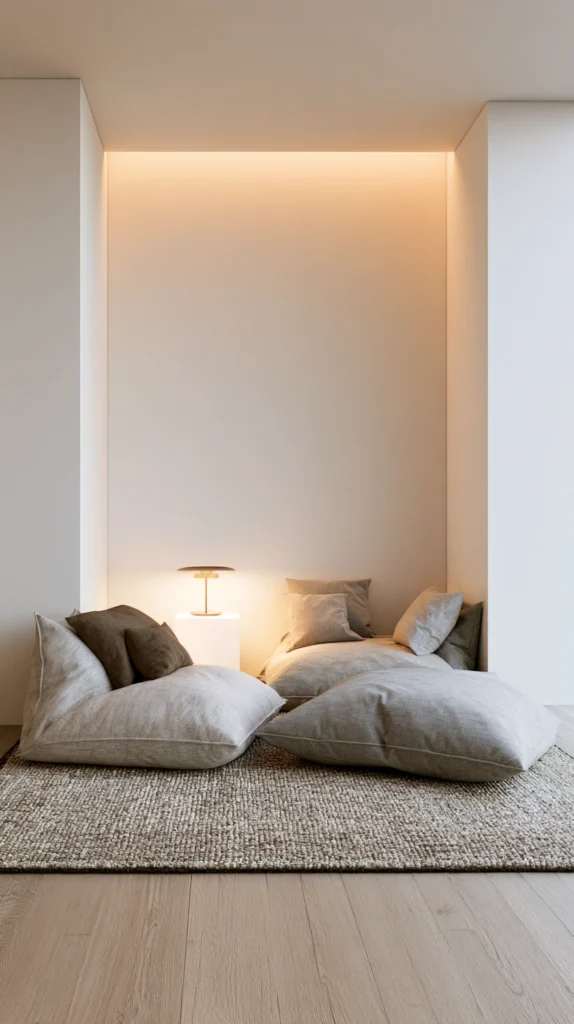
A low arrangement of floor cushions and a folded blanket, with no furniture above knee height — the rest corner built for stillness rather than lounging.
Why low seating changes the mood
Sitting close to the floor slows a person down before they have done anything else. The posture itself signals the shift from the rest of the day.
The base layer
A floor mat or low rug, larger than the cushions themselves.
Natural fiber (jute, cotton, wool) rather than synthetic, for the way it feels underfoot.
The cushions
One firm meditation cushion or zabuton for the seat.
Two to three soft cushions arranged loosely around it.
The corner’s only rule
Nothing above eye level when seated. No shelving, no artwork requiring the neck to tilt up. The corner: designed to be looked out from, not looked up in.
The light
A single candle or a small salt lamp, never overhead lighting.
Cost breakdown: Meditation cushion: $35–60 Floor mat or rug: $30–60 Additional cushions (3): $45–75 Candle or salt lamp: $15–30 Total: $125–225
4. The Reading Nook With a Wall of Shelves
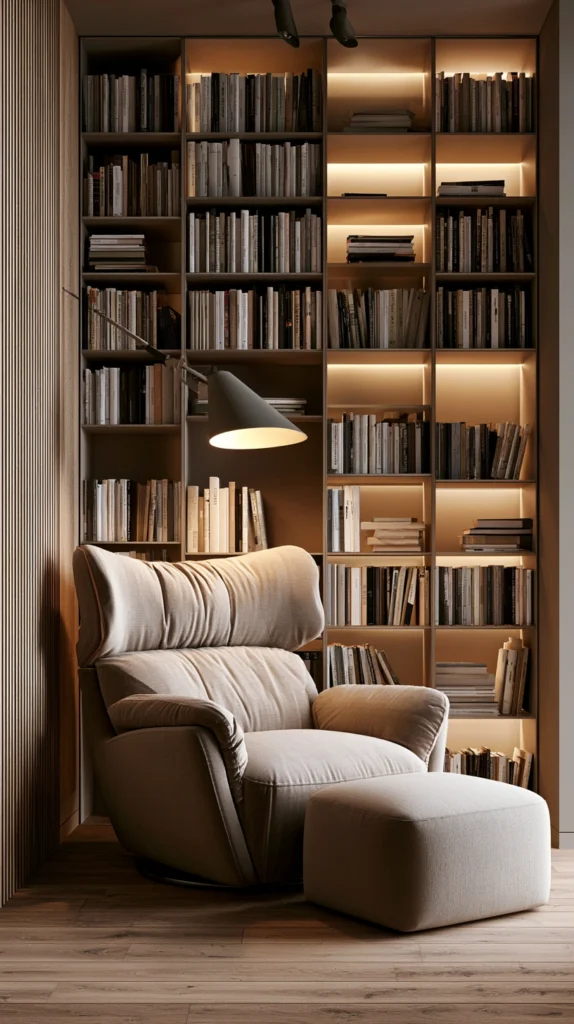
A chair positioned within or beside a built-in bookshelf, using the books themselves as the backdrop — the rest corner for the household reader.
Why the shelf backdrop matters
Being surrounded by books, even unread ones, produces a specific calm. The corner: framed by everything the household values enough to keep.
The chair placement
Tucked into a shelf recess if one exists, or positioned directly in front of a full shelf wall.
Angled slightly, not facing straight into the room — the nook feeling comes from partial enclosure.
The shelving
Books at eye level and below: the most-read section.
Higher shelves: display and less frequent volumes.
A small gap left at chair height for a stack of current reading.
The reading light
A clip-on or wall-mounted reading light, directed at the page rather than the room.
The footrest
A small ottoman or pouf, low enough not to crowd the chair.
Cost breakdown: Armchair (existing or new): $0–350 Wall-mounted reading light: $30–60 Ottoman: $50–100 Total: $80–510
5. The Bay Window Daybed
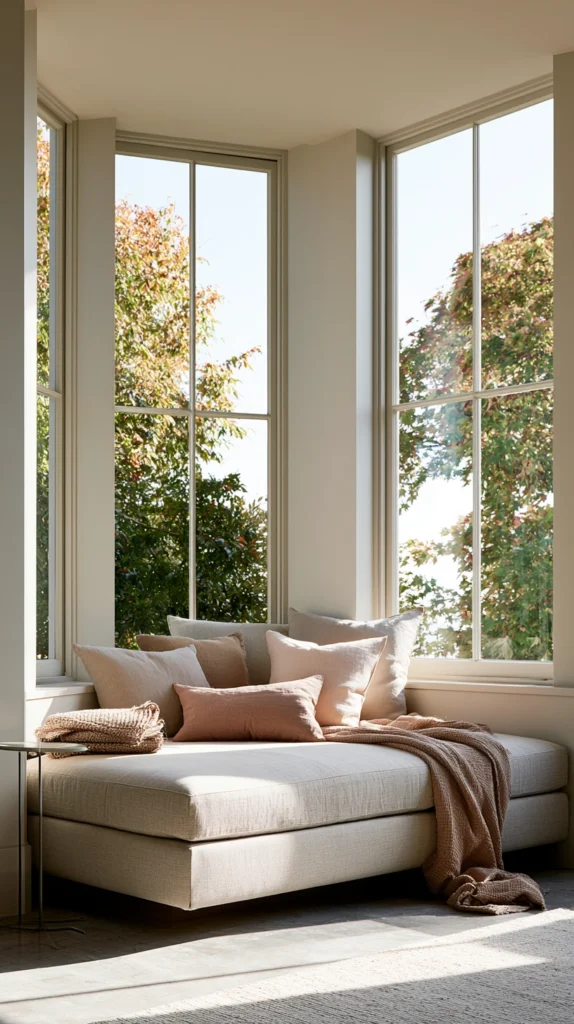
A daybed positioned across a wide window, dressed with cushions and a throw — the rest corner for lying down as much as sitting.
Why a daybed outperforms a chair
A chair invites twenty minutes. A daybed invites an hour. The horizontal position: the body’s clearest signal that this is a rest space, not a waiting space.
The daybed
A narrow daybed frame or a simple mattress on a low platform.
Positioned lengthwise along the window for the longest possible light exposure.
The dressing
A fitted cover in a neutral or soft tone.
Four to six cushions, mixed sizes, arranged loosely rather than symmetrically.
One heavy throw, folded at the foot.
The nearby surface
A small side table within arm’s reach, for a book or a cup.
Cost breakdown: Daybed frame and mattress: $200–450 Cushions (6): $60–120 Throw: $30–50 Side table: $40–90 Total: $330–710
6. The Tea Corner
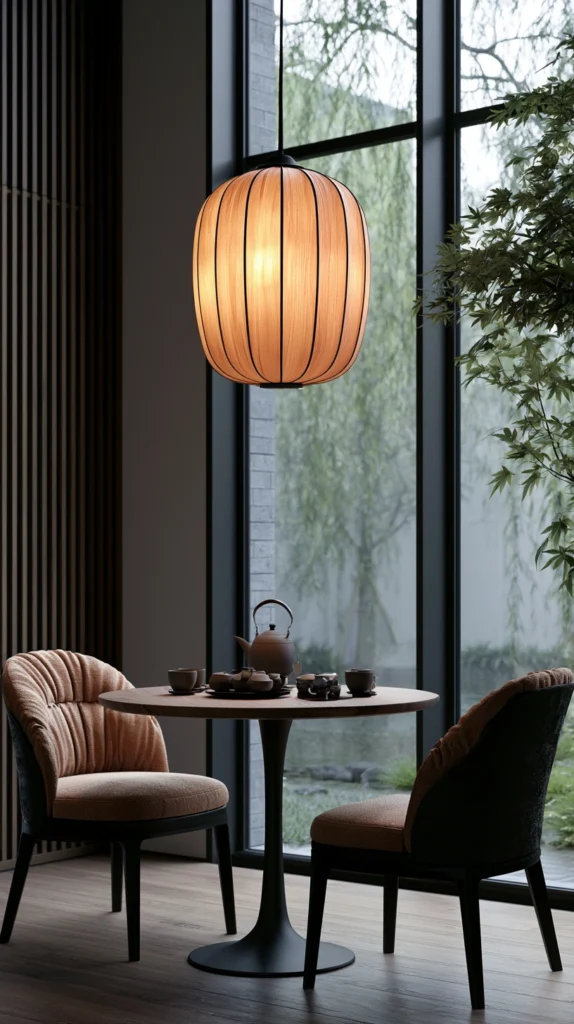
A small table and two chairs, dressed permanently for tea or coffee — the rest corner built around a daily ritual rather than around silence.
Why the ritual object matters
A rest corner does not have to be empty to be restful. Sometimes the object itself — the pot, the cup, the kettle — is what invites the pause.
The table
Small enough for two cups and a book, no larger.
A round table softens the corner more than a square one.
The chairs
Two, even in a single-person household. An empty second chair: an invitation, not a waste.
The tea station
A small tray kept permanently on the table or a nearby shelf: kettle, cups, a tin of tea.
The visible readiness: the reason the ritual actually happens.
The light
Morning light if the corner is used at breakfast; warm lamp light if it is used in the evening.
Cost breakdown: Small bistro table and two chairs: $90–200 Tea tray and cups: $30–60 Total: $120–260
7. The Hammock Chair Corner
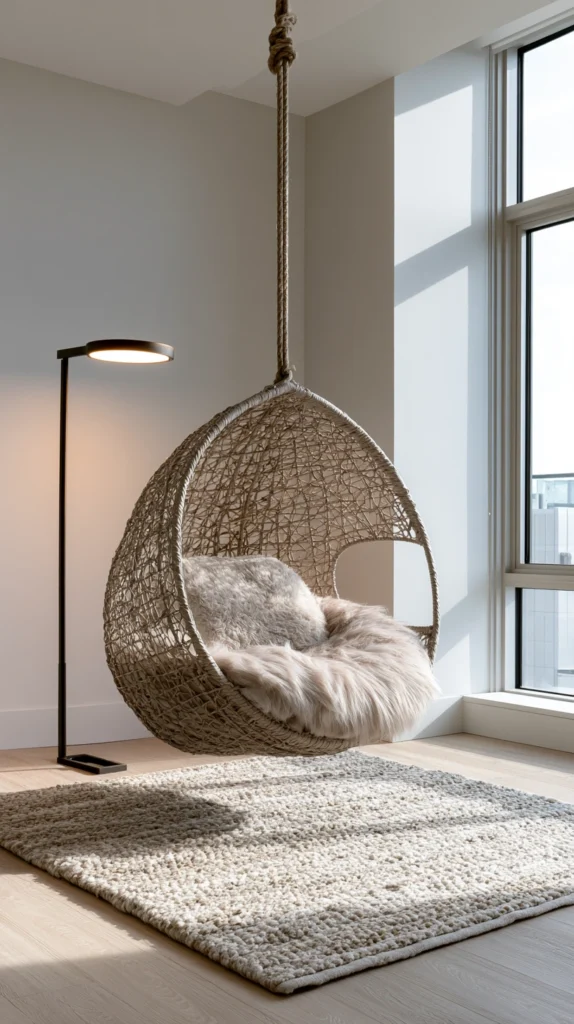
A hanging hammock chair suspended from the ceiling or a stand, positioned in an underused corner — the rest corner with movement built in.
Why gentle motion matters
A slow, self-generated sway is one of the most reliably calming physical sensations available. A hammock chair offers this without leaving the house.
The mounting
Ceiling mount: requires a joist and a rated hook, the most stable option.
Freestanding stand: no structural work required, fully portable.
The chair
Woven cotton or macramé for texture and give.
A cushion insert for the seat base, for comfort beyond the weave alone.
The clearance
At least 3 feet of swing radius in every direction, clear of furniture and walls.
The floor beneath
A soft rug or floor cushion below, for bare feet and for softening the visual weight of the hanging chair.
Cost breakdown: Hammock chair: $60–120 Ceiling mount hardware or stand: $30–150 Seat cushion: $20–35 Total: $110–305
8. The Corner Banquette
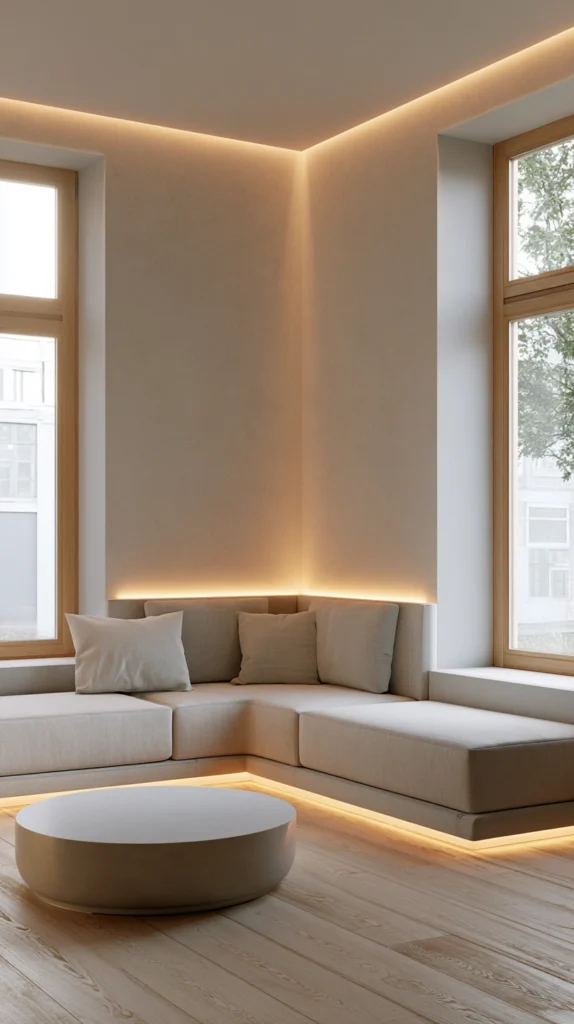
An L-shaped built-in bench filling an underused corner of a room, cushioned and layered — the rest corner that also solves an awkward footprint.
Why corners are the natural home for this
Most rooms have one corner that furniture never quite fits into. A banquette: built for exactly that shape, rather than fighting it.
The construction
Plywood frame following the corner’s two walls.
Foam-topped bench cushions, custom cut to each wall’s length.
A row of back cushions along both sides.
The seating capacity
A corner banquette seats two to four, more than any single chair.
Useful for a rest corner that occasionally becomes a gathering spot.
The table
A small low table pulled into the L, for drinks, books, or a lamp.
The storage option
As with the window seat, a hinged lid beneath the bench cushions adds hidden storage.
Cost breakdown: DIY banquette construction: $150–300 Cushions and covers: $100–200 Small table: $50–120 Total: $300–620
9. The Balcony or Patio Rest Corner
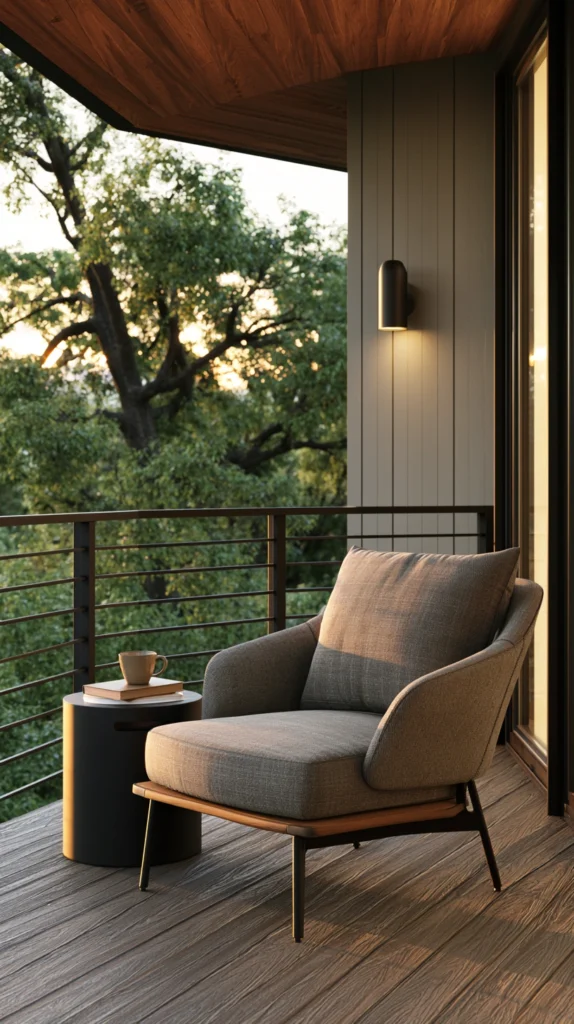
A single chair and small table positioned on a balcony or patio, dressed for daily outdoor use — the rest corner that borrows the whole sky as its backdrop.
Why outdoor rest corners work differently
Fresh air changes the quality of stillness. A rest corner outdoors asks less effort to feel like an escape, because it already is one.
The chair
Weather-resistant material: resin wicker, teak, or powder-coated steel.
A cushion rated for outdoor use, to prevent mildew and fading.
The shade
A small umbrella or the shadow of an overhang, positioned for at least part of the day.
The plant boundary
Two or three potted plants at the chair’s edge, to soften the hard lines of a balcony rail or patio wall.
The small table
Large enough for one cup and one book. No larger — the goal is intimacy, not a full outdoor dining setup.
Cost breakdown: Outdoor chair: $80–180 Weather-resistant cushion: $30–60 Small side table: $30–70 Potted plants (3): $30–60 Total: $170–370
10. The Fireplace-Adjacent Rest Corner
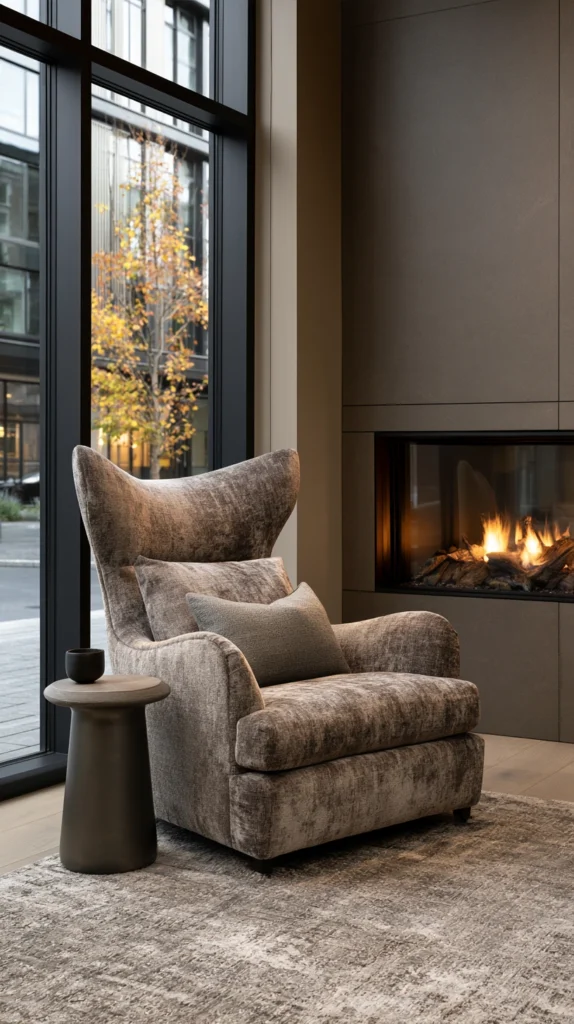
A single chair positioned beside, rather than in front of, an existing fireplace — the rest corner that claims the warmest spot in the house for one person rather than the whole room.
Why beside beats in front
The seating in front of a fireplace usually belongs to the whole household, arranged for television or conversation. A single chair to the side: a smaller, quieter claim on the same warmth.
The chair placement
Angled slightly toward the fire, not directly facing it.
Close enough to feel the heat, far enough to avoid the direct glare of flame in the eyes.
The chair itself
A wingback or a chair with a high side, for a sense of partial enclosure even this close to an open room.
The surface
A small table for a drink, positioned on the side away from the fire.
The seasonal use
The corner earns its place most in the colder months; a cushion swap or a folded throw signals the seasonal return to the spot.
Cost breakdown: Wingback or accent chair: $150–350 Small side table: $30–70 Total: $180–420
11. The Bedroom Reading Corner
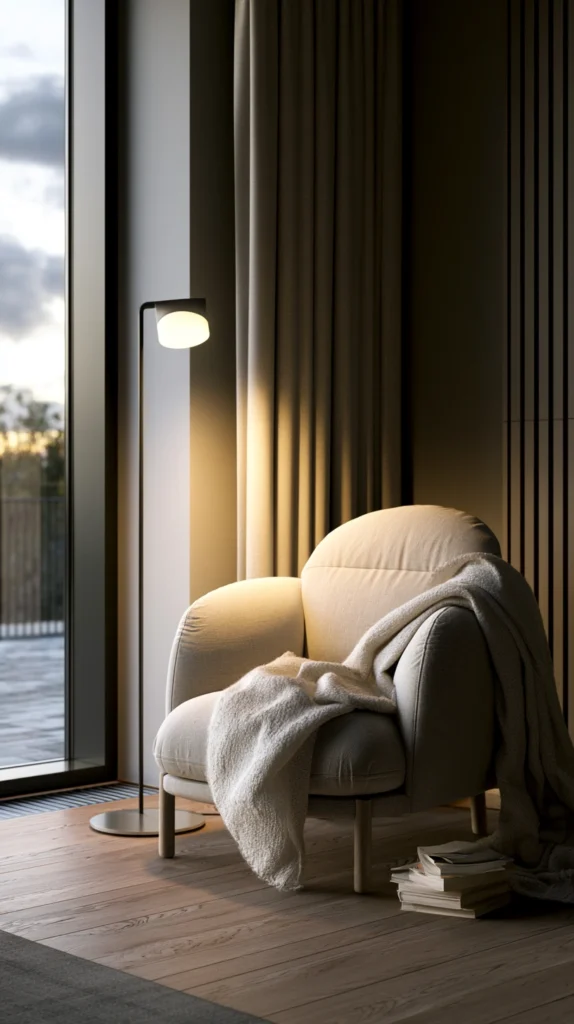
A chair and small lamp positioned in a bedroom corner, separate from the bed — the rest corner that gives a bedroom a second purpose beyond sleep.
Why the bed alone is not enough
Reading, scrolling, and resting in bed can blur the line between rest and sleep, and often costs sleep quality. A separate chair in the same room: rest without that trade-off.
The placement
As far from the bed as the room allows, ideally facing away from it.
Near a window if one is available in the room.
The chair
Smaller in scale than a living room armchair, to suit the bedroom’s proportions.
A slipper chair or a compact accent chair works well here.
The light
A dedicated reading lamp, separate from the bedside lamp used for sleep.
The small addition
A folded throw over the chair arm and a small basket for current reading material, kept beside the chair rather than on the nightstand.
Cost breakdown: Slipper or accent chair: $100–250 Reading lamp: $30–60 Small basket: $15–25 Total: $145–335
12. The Minimalist Zen Corner
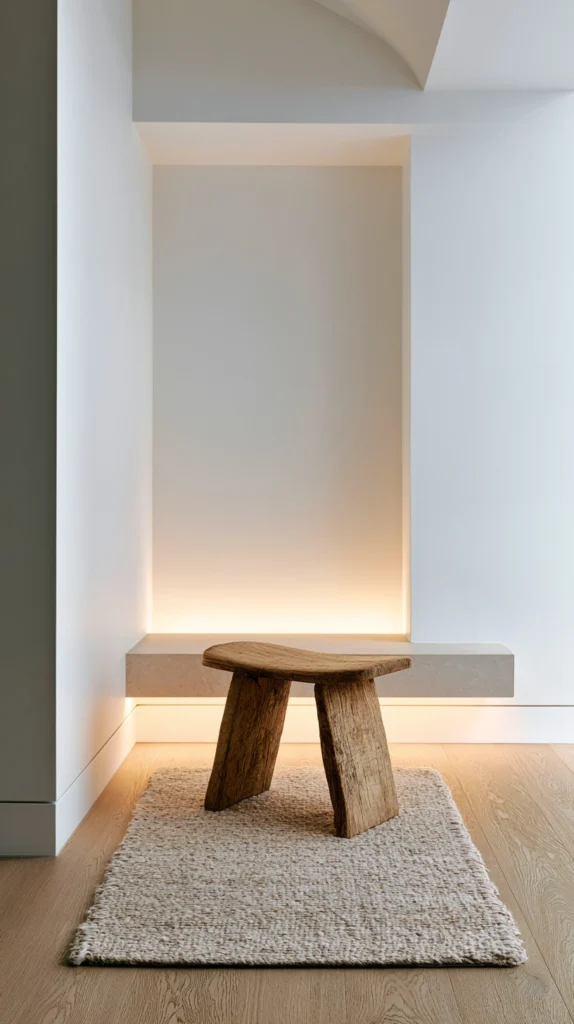
A single low stool, one plant, and bare walls — the rest corner built on subtraction rather than addition.
Why less can be more restful
A cluttered corner asks the eyes to keep working. A near-empty corner gives the eyes, and the mind, somewhere to stop.
The seat
A single low wooden stool or a floor cushion, nothing more.
No back support: the upright, alert posture is part of the intention here.
The single plant
One structural plant — a snake plant, a fiddle-leaf fig, or a small bonsai — placed beside the seat.
One plant, not a collection. The restraint is the design.
The wall
Left bare, or with a single piece of art at eye level when seated.
The light
Natural light if available; if not, one small, warm lamp and nothing overhead.
Cost breakdown: Low stool: $30–70 Structural plant: $25–60 Total: $55–130
13. The Garden-View Rest Corner
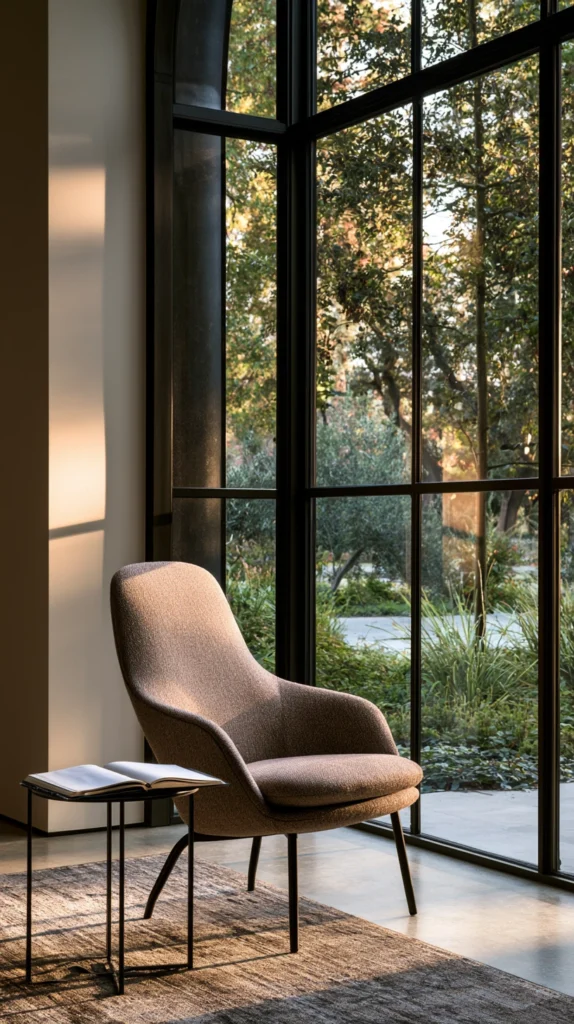
A chair positioned at the room’s best-facing window, specifically to overlook a garden or green view — the rest corner that borrows the landscape as its decoration.
Why the view does the work
A rest corner does not need elaborate styling if the view outside is doing the visual work. The garden: the artwork, already framed by the window.
Finding the position
Walk the room at different times of day and note where the eye is drawn outward. That spot, not the room’s geometric center, is the correct one for the chair.
The chair
A single chair, angled toward the window rather than square to it, so the body faces the room and the eyes fall naturally outward.
The obstruction check
Nothing between the chair and the window — no plant stand, no lamp, no shelf edge cutting into the sightline.
The seasonal changes
Curtains left open more in this corner than elsewhere in the room. The view: the rest corner’s real decoration, changing with the seasons on its own.
Cost breakdown: Chair (existing or new): $0–300 Total: $0–300
14. The Complete Rest Corner (The Designed Retreat)
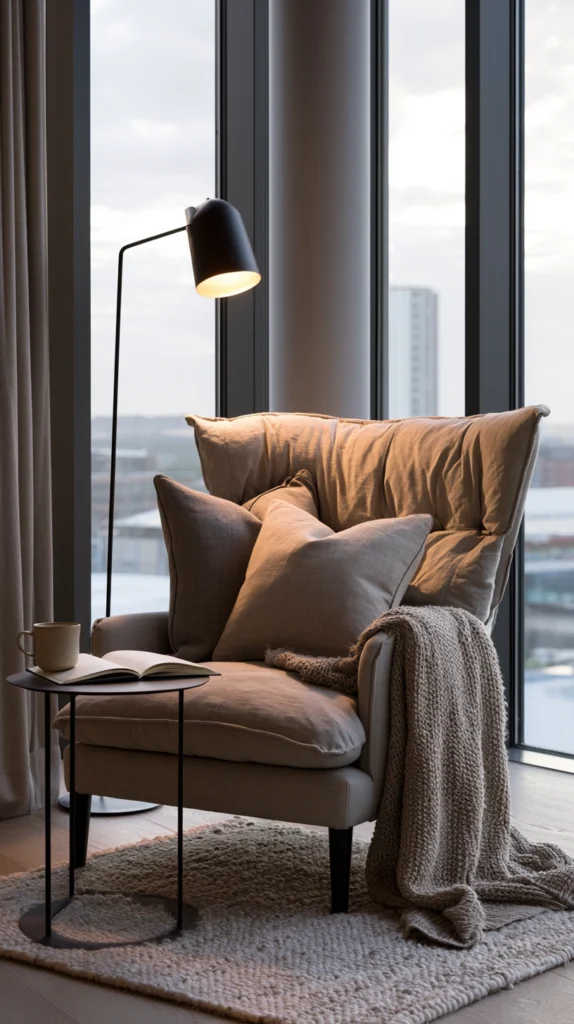
A rest corner built with the same intention as a fully designed room, using several of the ideas above together — the definitive dedicated space to unwind.
What separates the complete rest corner from a chair in the corner
A chair placed in a corner: functional. A rest corner designed as a whole: intentional. The intention is visible in every element, and it is what makes the space get used every day rather than once.
The elements of the complete rest corner
The seat
The right type for the household — chair, daybed, floor cushion, or hammock — chosen from the ideas above.
Positioned near natural light or the best available view.
The layering
A rug beneath, even a small one, to define the boundary of the space.
A throw and two to three cushions, textures mixed rather than matched.
The light
Warm, low light at seated height, never a single overhead source.
The ritual object
A cup, a book, a candle — something that signals what the corner is for, kept visibly in place.
The plant
One plant at minimum, positioned within the sightline from the seat.
The boundary
A rug edge, a low shelf, or the natural line of a wall corner — something that separates this space from the rest of the room, even without a physical partition.
The complete design in action
An ordinary weekday evening:
7pm: The lamp switched on before the overhead light, the corner already warmer than the rest of the room.
7:15pm: The throw pulled over the lap. The cup filled and set on the small table.
7:30pm: Fifteen minutes with no phone, no task, no destination.
8pm: Back to the evening, but the day: interrupted on purpose, once.
The complete rest corner: not a large space and not an expensive one, but a daily pause claimed back from a full house and a full schedule.
Cost breakdown for the complete rest corner: Assuming a starting point of nothing: Chair or seat: $100–350 Rug: $30–70 Cushions and throw: $70–130 Lamp: $30–70 Small table: $30–90 Plant: $25–60 Total: $285–770
The Question Before Any Rest Corner Design
Before choosing a type, a position, a style:
What is the primary reason for wanting a corner like this?
If the answer is: a place to read — the armchair-and-lamp corner or the shelf-backed reading nook is the answer.
If the answer is: a place to be still — the floor cushion meditation corner or the minimalist zen corner.
If the answer is: a place tied to a daily habit — the tea corner or the fireplace-adjacent chair.
If the answer is: the simplest possible — one chair, one lamp, one corner that was previously empty.
The design follows the purpose. Every rest corner on this list serves a purpose. The question is which purpose is the right one for this home and this person.
The imperfect corner in the right spot: still better than no corner at all. The right corner in the right spot: a habit that lasts, a pause built into an ordinary day.
That pause: the whole point of the rest corner.
Getting Started This Weekend
The immediate rest corner solution:
Choose one underused corner in the home.
Not the largest room. Not the one that needs the most work. The one already being walked past every day.
Move one comfortable chair into it.
Already in the house: no need to buy anything for the first attempt.
Add one lamp and one throw.
Warm light, and something soft within reach.
Sit in it for fifteen minutes before doing anything else.
The rest of the design: the elaboration of this moment.
The chair: the beginning. The rest corner: what grows around it.