

14 Cozy Reading Nook Ideas for Fall Living Rooms
My living room had a chair that was technically available for reading, but nothing about it actually invited anyone to sit down with a book for more than five minutes.
It was one of those pieces of furniture that looked perfectly fine from across the room. It filled an empty corner, matched the rest of the decor, and served its purpose whenever extra seating was needed. But when it came time to actually curl up with a novel or spend a quiet afternoon flipping through magazines, I always ended up somewhere else. The chair wasn’t uncomfortable—it just didn’t feel like a place that encouraged you to slow down.

I realized that simply placing a chair next to a wall doesn’t magically create a reading nook. The spaces we naturally gravitate toward have something more. They feel intentional. They offer comfort, good lighting, a little privacy, and the subtle invitation to linger just a bit longer.
That’s when I stopped thinking about the corner as empty square footage that needed furniture and started treating it as its own tiny retreat within the living room. Instead of asking, “What chair fits here?” I started asking, “What would make someone want to stay here for an hour?”
The answer turned out to be a combination of thoughtful details rather than one perfect piece. A cozy throw, a small side table within arm’s reach, layered lighting that made evening reading comfortable, and a few personal touches completely changed how the space felt. Suddenly, the chair wasn’t just another seat—it became the first place I wanted to head with a cup of tea and a good book.
A real reading nook needs more than just a chair. It needs light, warmth, and a reason to stay.
Here’s what actually made the difference once I started treating one corner of the room as its own small destination.
1. Choose a Chair Deep Enough to Tuck Your Legs Up
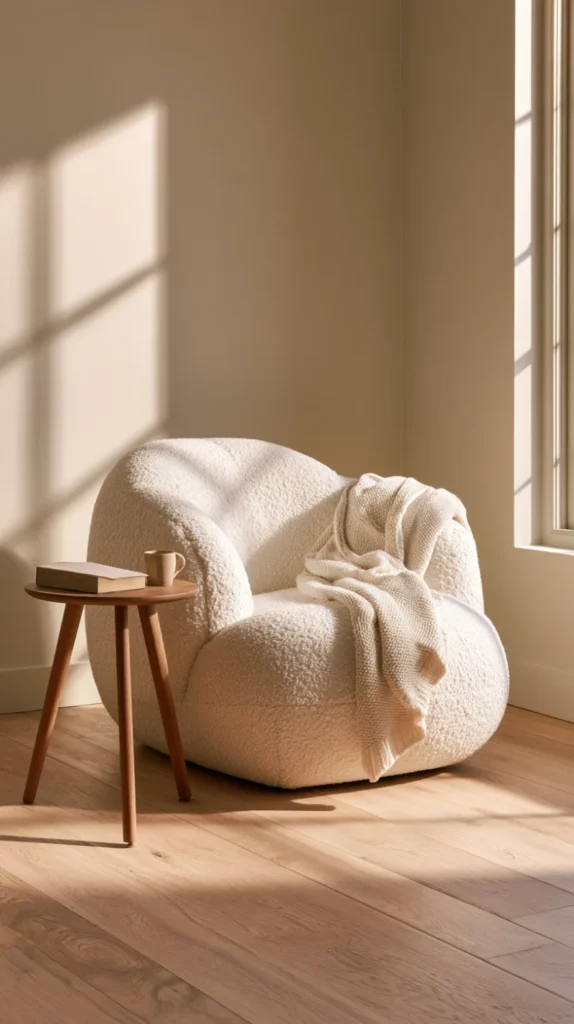
Most living room chairs are built for sitting upright, not curling into. A chair with a seat at least 22 inches deep gives enough room to tuck your legs sideways or pull them up underneath you.
This single measurement matters more than the chair’s style or fabric.
Budget: $200-450 for a quality deep-seat accent chair, or less if reupholstering one already on hand.
Sit in the chair at the store or showroom with your shoes off and actually try curling into it sideways before buying; a chair that looks deep in photos can still feel too narrow in person.
2. Add a Floor Lamp Positioned at Shoulder Height When Seated
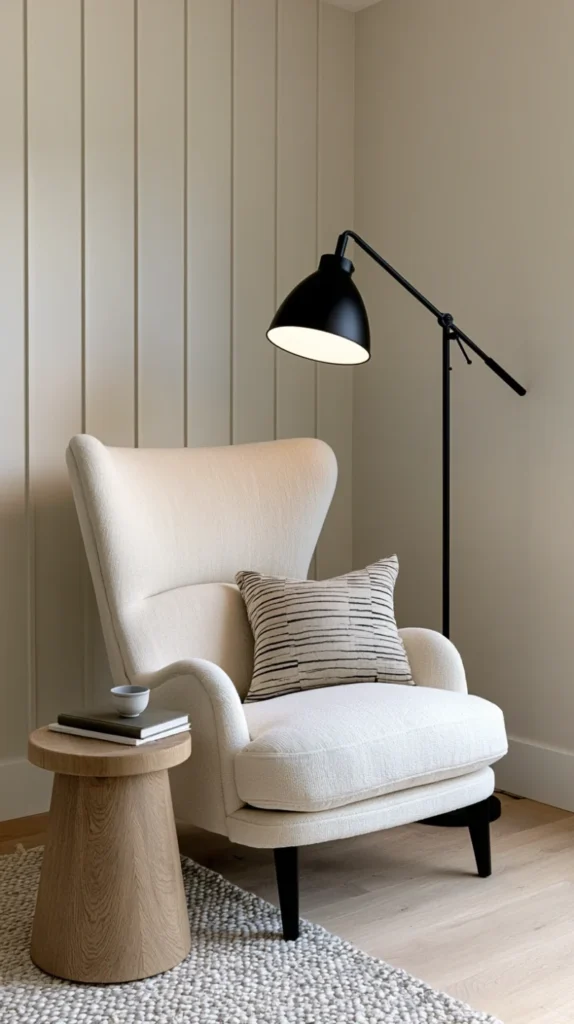
A reading light needs to land at shoulder height once you’re actually seated, not standing. Most floor lamps are sized for general room lighting and sit too high for this specific purpose.
An adjustable arc or pole lamp lets you dial in the exact height for your particular chair.
Budget: $60-120 for a floor lamp with an adjustable arm or height.
Measure from the seat cushion to your shoulder while sitting in the actual chair, then match the lamp’s shade height to that measurement before buying.
3. Drape a Throw Specifically Sized for One Person
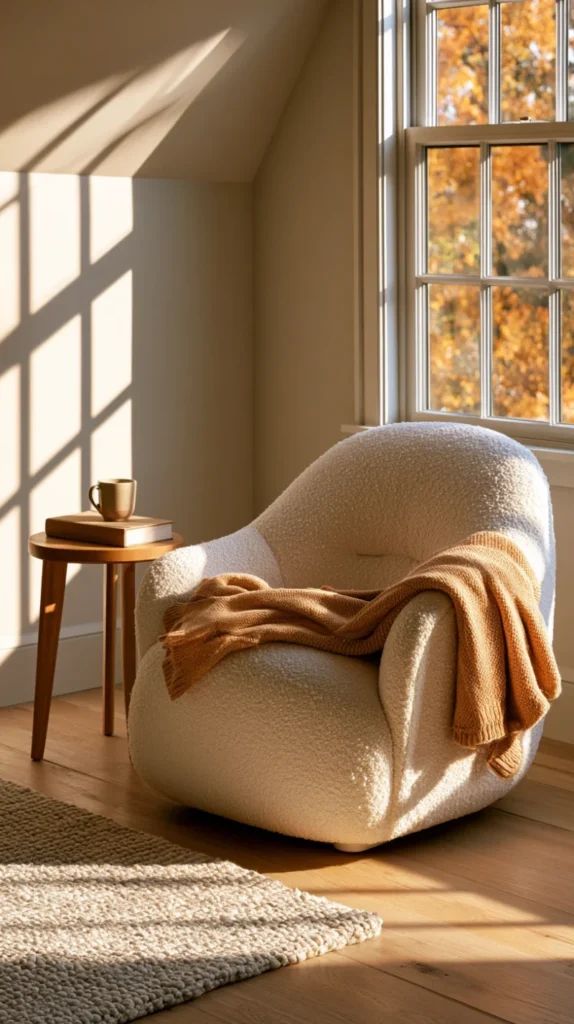
A throw built for a full sofa bunches awkwardly over a single chair. A smaller “lap” throw, generally in the 50-by-60-inch range, drapes more naturally over one person in one chair.
Budget: $25-40 for a quality lap-sized throw in a heavier knit or sherpa material.
Keep it folded in thirds and draped over one arm of the chair rather than balled up on the seat, so it’s ready to grab the moment you sit down.
4. Add a Small Side Table Just Wide Enough for a Mug and a Book
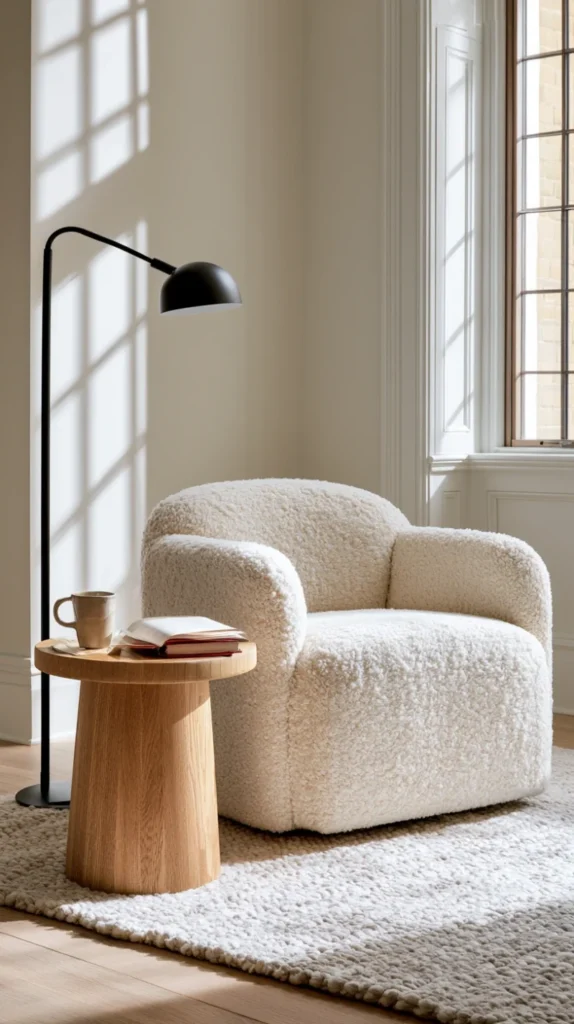
The table doesn’t need to be large. It needs to be close. A table positioned within arm’s reach, even a narrow 12-inch round one, does more for actual use than a larger table set slightly too far away.
Budget: $40-80 for a small side table sized to fit beside the specific chair.
Place the table on the same side as your dominant hand, since this small detail determines whether you’ll actually use it or keep setting things on the floor instead.
5. Use a Footstool or Ottoman That Tucks Fully Under the Chair
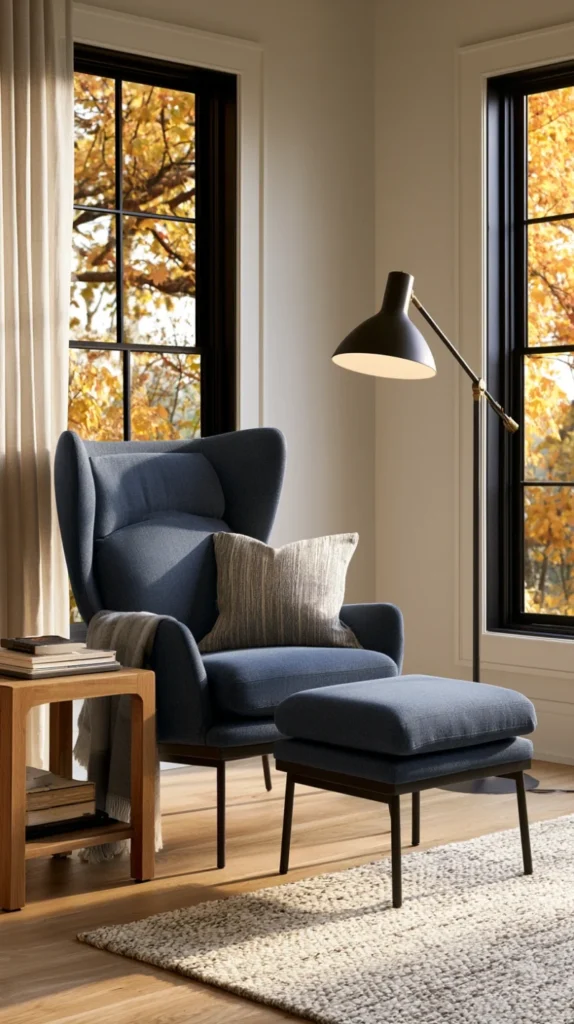
An ottoman that can slide completely out of the way when not in use means it won’t crowd a smaller nook, but it’s still there the moment you want to put your feet up.
Budget: $50-90 for a low-profile ottoman sized to slide beneath the chair’s front edge.
Measure the chair’s underside clearance before buying, since not every chair has enough open space beneath the seat to tuck a stool fully out of sight.
6. Add a Small Bookshelf Within Arm’s Reach, Not Across the Room
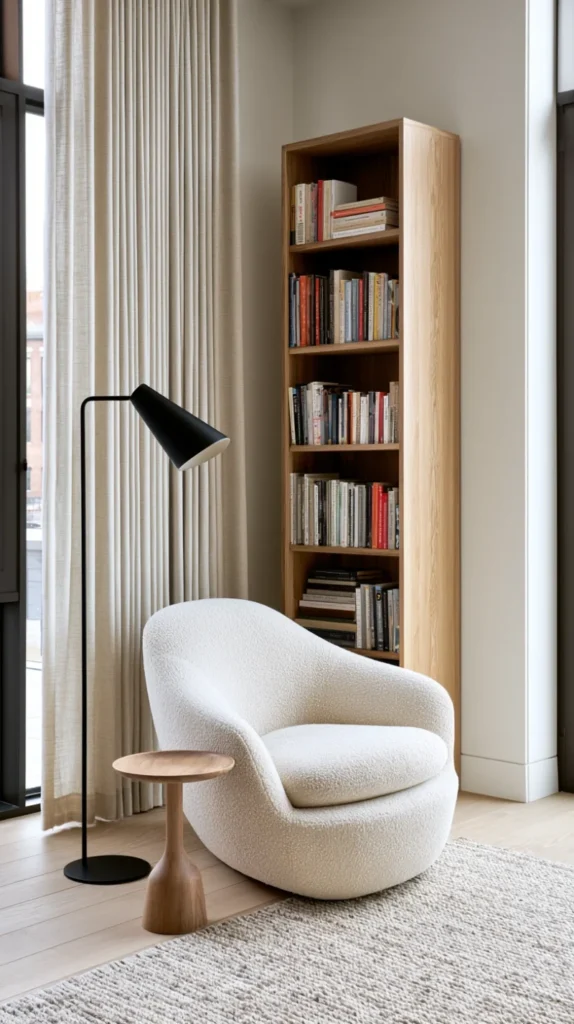
A nook works better when the books themselves live right there, not in a shelf on the opposite wall. Even three or four shelves, or a single floating shelf, holding current reads nearby removes the friction of getting up mid-evening.
Budget: $30-60 for a small floating shelf or narrow bookcase.
Keep only the books you’re actually reading or about to read on this shelf, and store the rest of your collection elsewhere, so the nook doesn’t start to feel cluttered.
7. Layer a Small Rug Specifically Under the Reading Chair
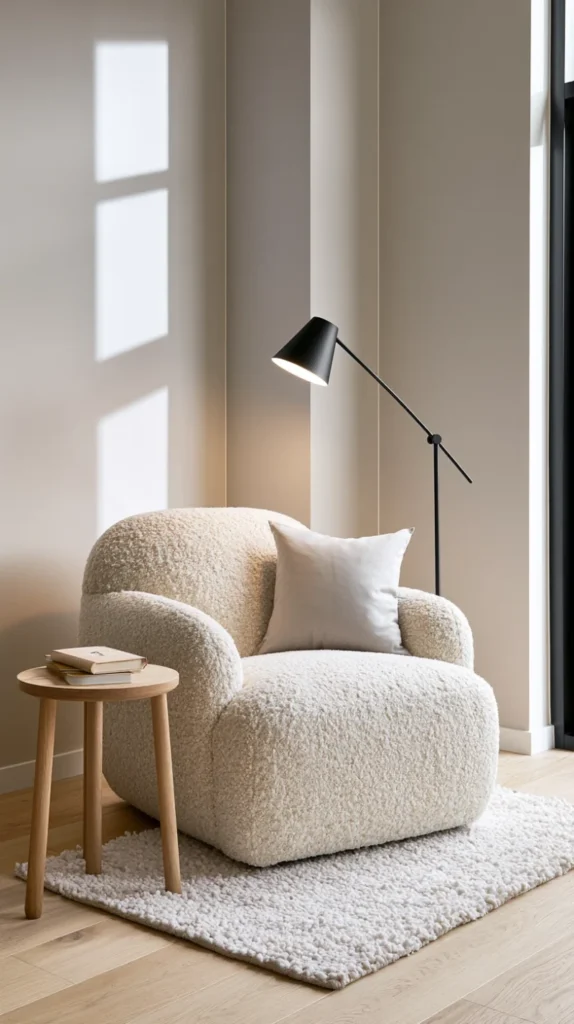
If the nook sits on a hard floor, a small rug, even just a 3-by-5, grounds the space and adds warmth underfoot specifically where your feet will land getting in and out of the chair.
Budget: $30-55 for a small area rug in a soft pile.
Use a thin rug pad underneath even on carpet, since a pad keeps a smaller rug from sliding and curling at the edges over time.
8. Add a Small Curtain or Screen to Partially Section Off the Corner
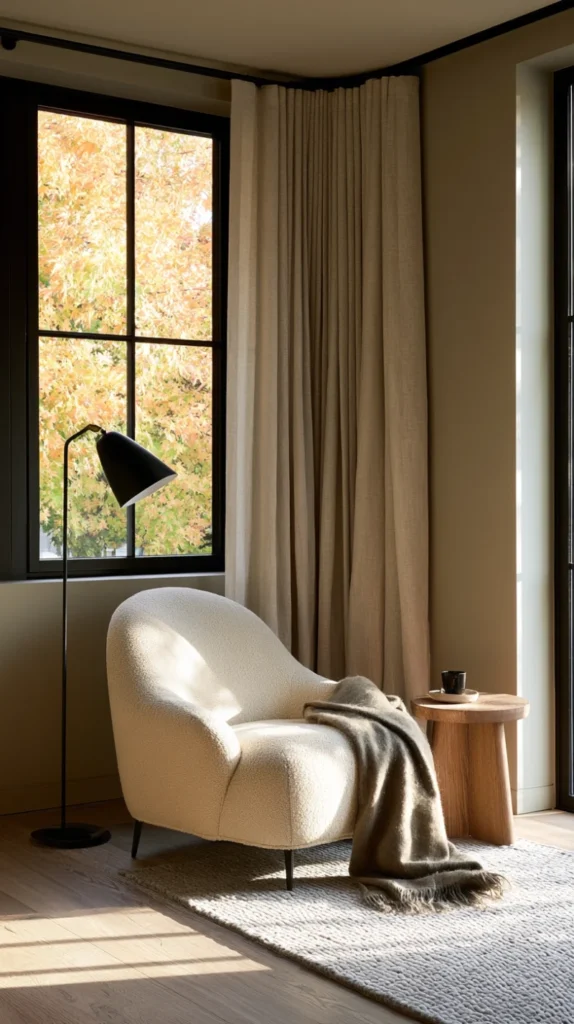
A reading nook benefits from feeling slightly separate from the rest of the room, even if it’s technically still part of the same open space. A single curtain panel on a ceiling-mounted track, or a slim folding screen, creates that sense of enclosure without a real wall.
Budget: $50-90 for a curtain panel and basic ceiling track, or $70-120 for a folding screen.
Choose a fabric with real weight and drape for the curtain option, since a lightweight or sheer fabric won’t create the enclosed feeling this idea depends on.
9. Add a Wall Sconce Instead of (or Alongside) a Floor Lamp
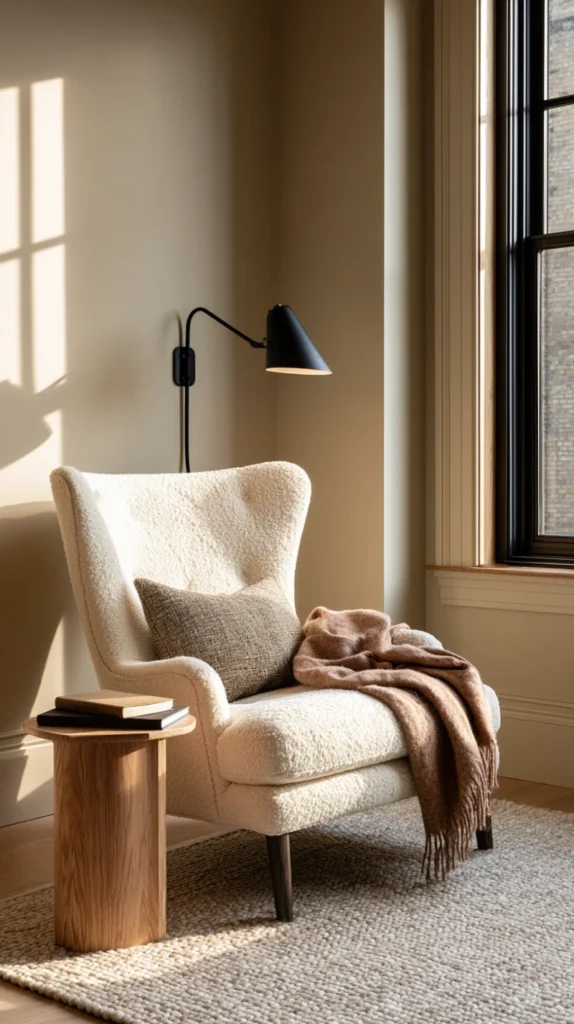
A wall-mounted sconce, positioned beside the chair rather than behind it, frees up the floor space a lamp would otherwise need and casts light at a more flattering angle for reading.
Budget: $40-80 for a plug-in wall sconce, avoiding the cost of hardwiring.
Mount it roughly 60 to 66 inches from the floor and slightly forward of where your shoulder sits when seated, so the light falls onto the page rather than directly into your eyes.
10. Use a Basket for Blankets Instead of a Closed Bin
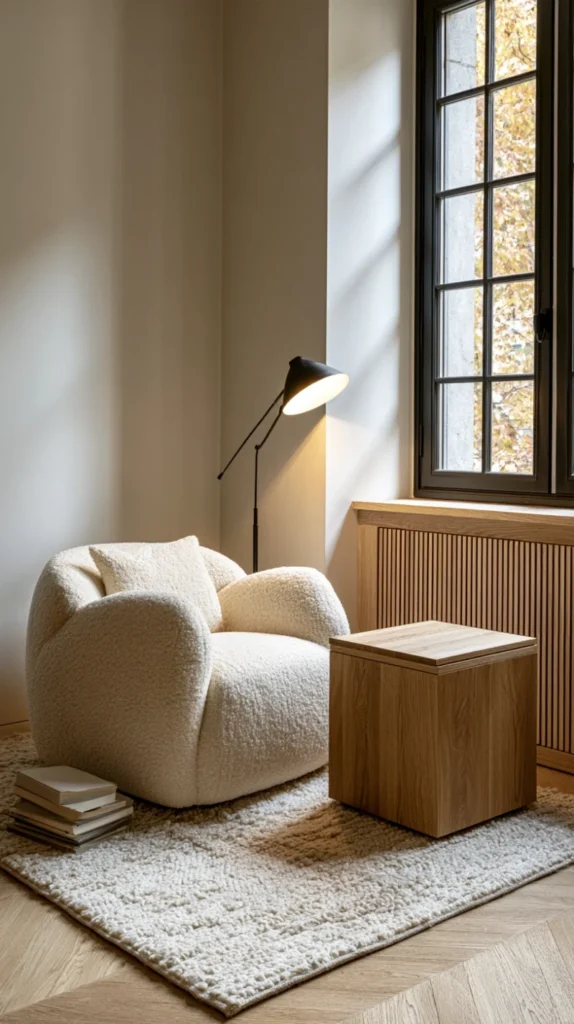
A basket beside the chair, holding one or two extra throws, keeps backup warmth visible and within reach rather than stored away in a closet you won’t bother walking to.
Budget: $25-45 for a woven basket sized for two or three folded blankets.
Choose a basket with handles specifically, so it’s easy to move the whole thing to a different spot if you rearrange the room later.
11. Add a Small Diffuser or Candle Specifically for This Corner
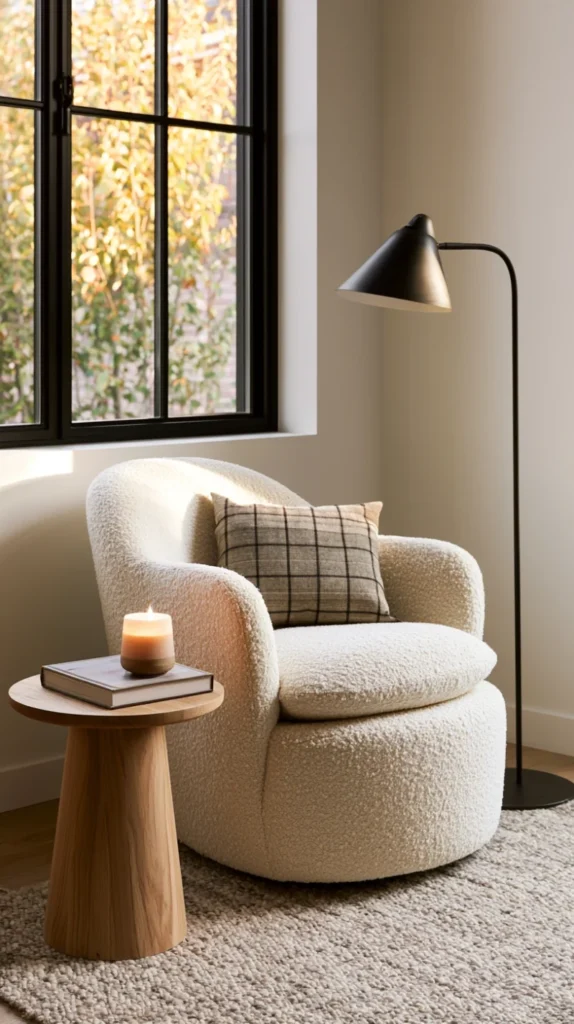
A scent used only in the reading nook, distinct from whatever’s burning elsewhere in the house, helps signal that sitting down here is its own small, deliberate ritual rather than just another spot on the couch.
Budget: $15-25 for a small candle or reed diffuser.
Choose a lower-intensity scent than you might use in a larger room, since the nook is a small, contained space where a strong scent can feel overwhelming up close.
12. Choose a Chair With a High Back for Better Sound and Light Containment
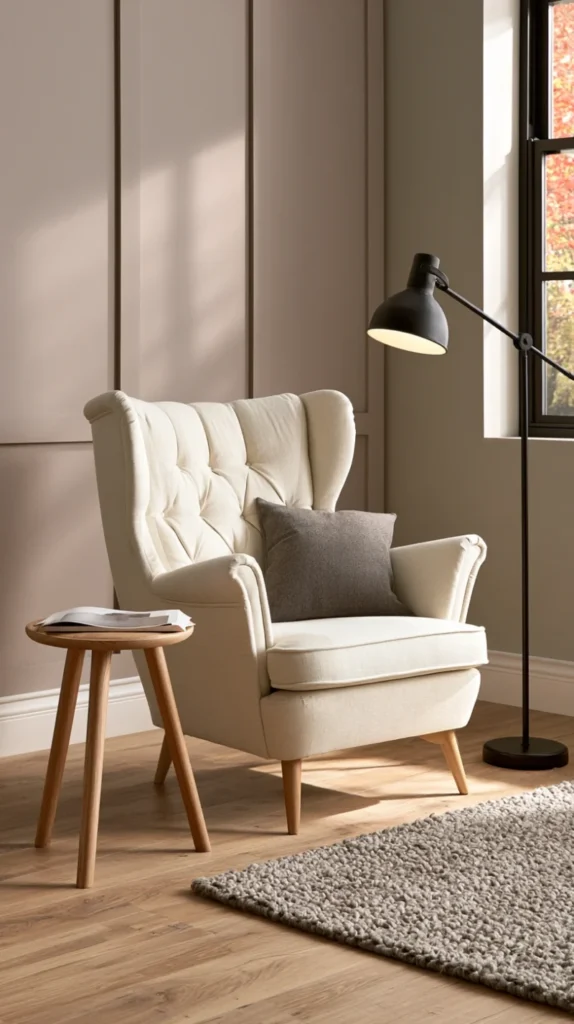
A wingback or other high-backed chair partially blocks ambient room light and sound from the side, creating a more contained, focused feeling than an open-backed chair in the same exact spot.
Budget: no separate cost beyond the chair itself from idea one; this is a style consideration within that same purchase.
Position the chair with its back toward the busiest part of the room, like a doorway or the TV, rather than facing that activity directly.
13. Add a Small Plant Beside the Chair at Eye Level When Seated
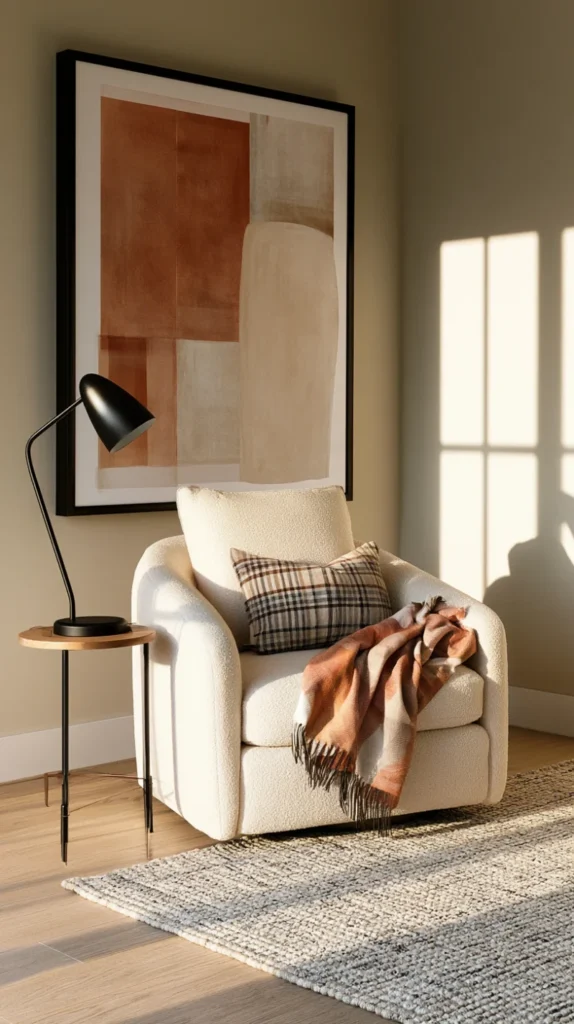
A single plant, positioned on a stand or shelf at roughly eye height for someone seated, adds a living element to the nook without taking up floor space near your feet.
Budget: $20-35 for a small plant and a stand sized to the right height.
Choose a low-light tolerant variety specifically if the nook isn’t right beside a window, since most reading corners get positioned for coziness over direct sun exposure.
14. Combine a Few of These Into One Complete Corner
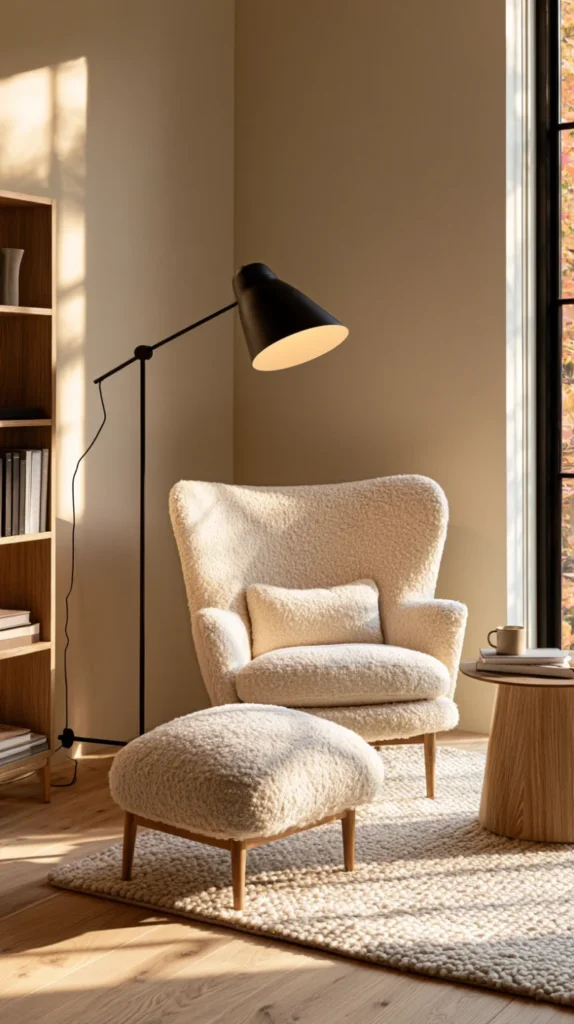
Doing the deep chair, the properly positioned lamp, a nearby shelf, and a rug all together turns one ordinary corner into a space that actually gets used most evenings, rather than looking nice but sitting empty.
Budget: $300-600 to combine several of the ideas above into one complete nook from scratch.
Set up the seating and lighting first, then add the shelf, rug, and smaller textiles once you’ve actually sat in the space a few times and know what’s missing.
Choosing Your Approach
For a nook that already has a decent chair: focus on the lamp height (idea 2), the right bulb (idea 2.5), and a nearby shelf (idea 6).
For a corner starting from scratch: prioritize the chair depth (idea 1) and rug (idea 7) before anything decorative.
For the fullest version: combine several ideas using idea 14’s approach, building seating and light first.
A reading nook works when it removes friction, light that’s already right, a book that’s already close, a blanket that’s already there, rather than asking you to set all of that up fresh every single evening.