
14 Bright Maximalist Porch Ideas Full of Color and Personality
My porch stayed a safe, forgettable beige for years because every “porch refresh” idea I found online amounted to one new doormat and a pumpkin, nothing that actually committed to color or pattern in a way that would make the space feel like mine.
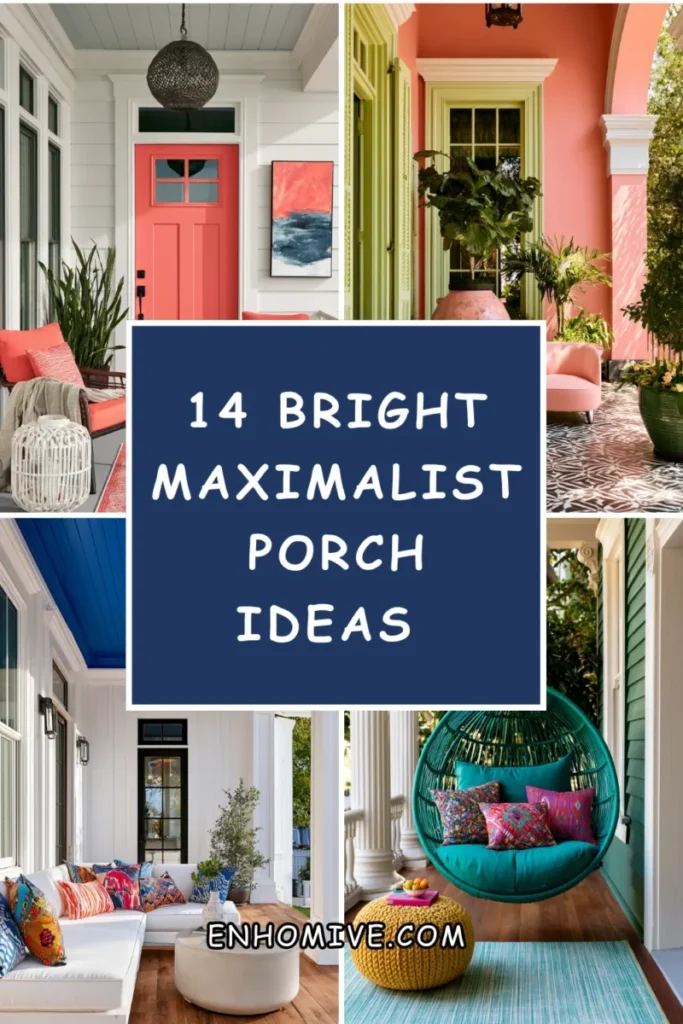
Then I started researching maximalist porches specifically, the kind that layer pattern on pattern and commit to genuinely saturated color, and found that the difference between a chaotic-looking porch and a confidently styled one comes down to a few specific, repeatable techniques rather than just “adding more stuff.”
1. Paint the Ceiling a Saturated Color, Not Just “Porch Blue”
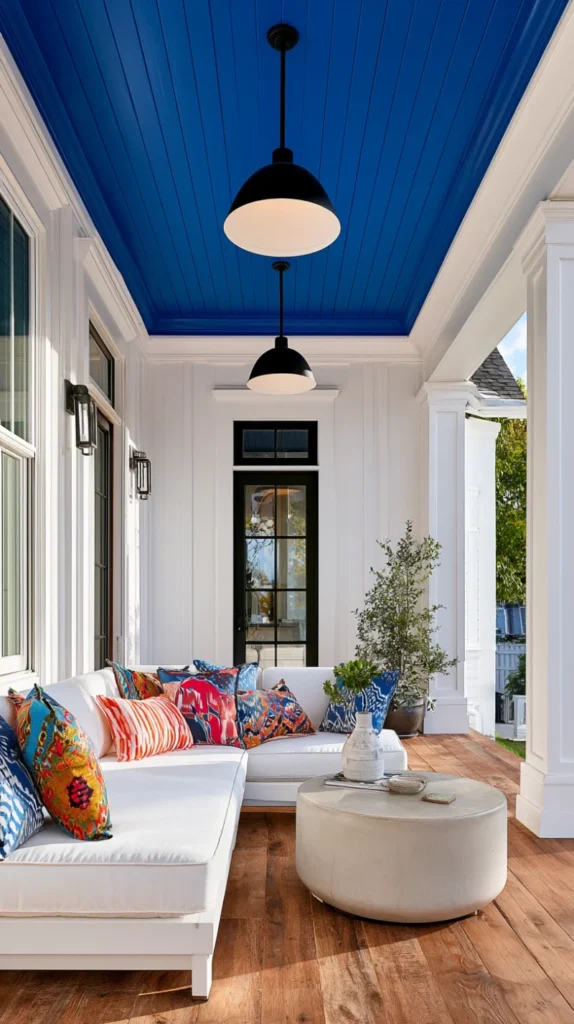
Traditional porch ceilings default to a pale haint blue, originally meant to repel insects, but a maximalist approach swaps that pale tint for something fully saturated: a true cobalt, a deep coral, or even a black-green. Because the ceiling is a relatively small, contained surface, it’s a lower-risk place to test real color commitment before touching the walls or floor. Budget: $35-55 for a gallon of exterior acrylic paint in a satin finish, enough to cover a porch ceiling up to roughly 200 square feet.
Use a flat or satin finish rather than gloss specifically, since gloss on an overhead surface shows roller marks and lap lines far more obviously than it would on a wall.
2. Layer at Least Three Patterns on the Seating Textiles
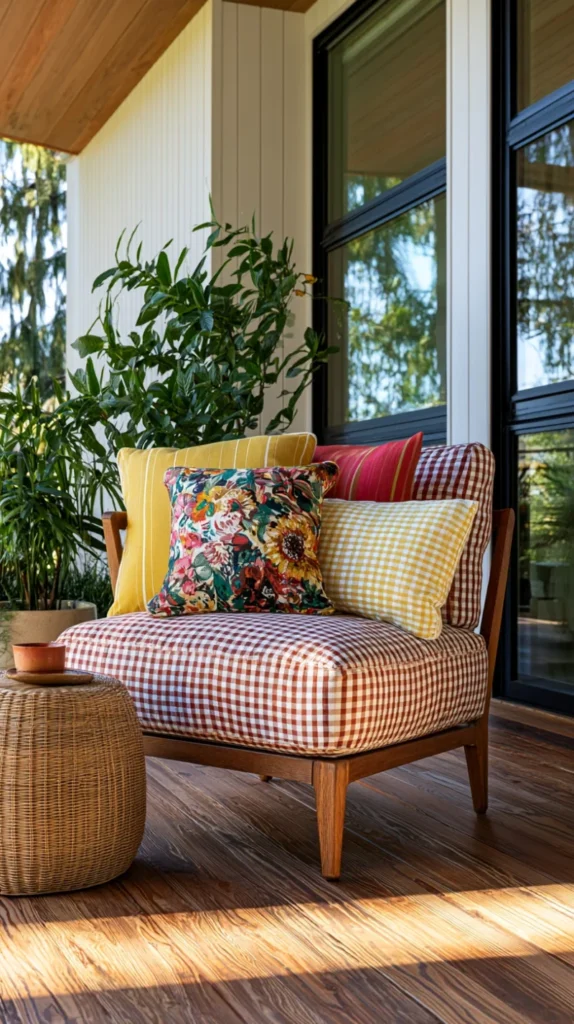
A genuinely maximalist look depends on combining patterns rather than picking one safe print and stopping there. The most reliable formula is one large-scale pattern (a striped cushion), one medium-scale pattern (a floral or block print throw pillow), and one small-scale pattern (a fine gingham or ditsy print accent pillow), all sharing at least one common color to tie them together. Budget: $90-160 for a coordinated set of four to six outdoor pillows and one larger cushion across three pattern scales.
Lay every textile out on the floor before committing to a final arrangement, since patterns that look fine individually in a catalog photo can clash once placed directly next to each other at full scale.
3. Paint the Front Door in a Color That Contrasts, Not Matches
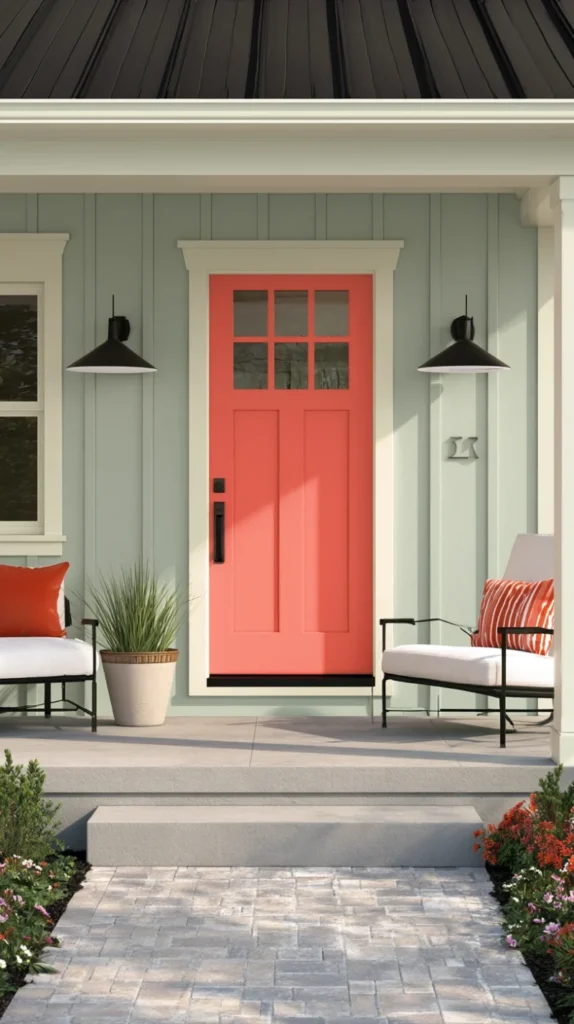
A maximalist porch benefits from a front door that reads as its own statement rather than blending into the trim or siding. Choose a color positioned roughly opposite the house’s main siding color on the color wheel, a true red against sage green siding, or a hot pink against a gray-blue house, for genuine contrast rather than a tonal variation of the same hue. Budget: $40-60 for a quart of exterior door paint, which typically covers a standard door with two coats.
Sand and prime any previously painted door first with a 120-grit sanding sponge, since skipping this step is the most common reason saturated door paint chips within the first year.
4. Mix at Least Four Planter Sizes at Varying Heights
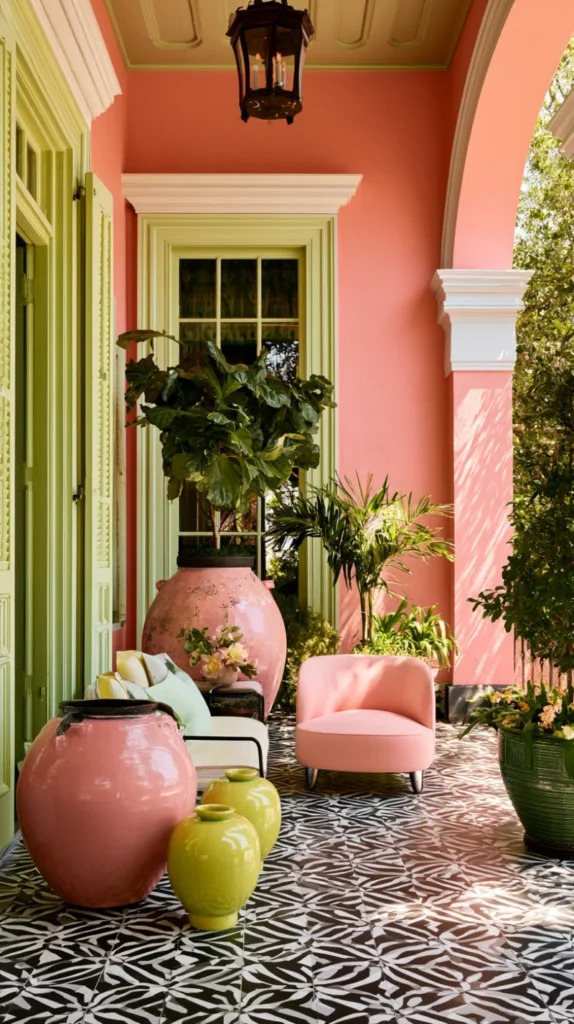
Rather than a uniform row of matching planters, a maximalist porch uses a deliberately uneven cluster: one tall floor planter around 24 to 30 inches, two mid-height options around 14 to 18 inches, and a few smaller 8 to 10 inch pots tucked at the base. This height variation does more visual work than the planter color or material choice itself. Budget: $80-150 for a mixed cluster of four to six planters across varying sizes, before plants.
Group planters in odd numbers, three or five rather than two or four, since odd-numbered clusters read as more intentional and less like a matched set bought in bulk.
5. Choose Furniture in Two Different Bold Colors, Not Matching Pieces
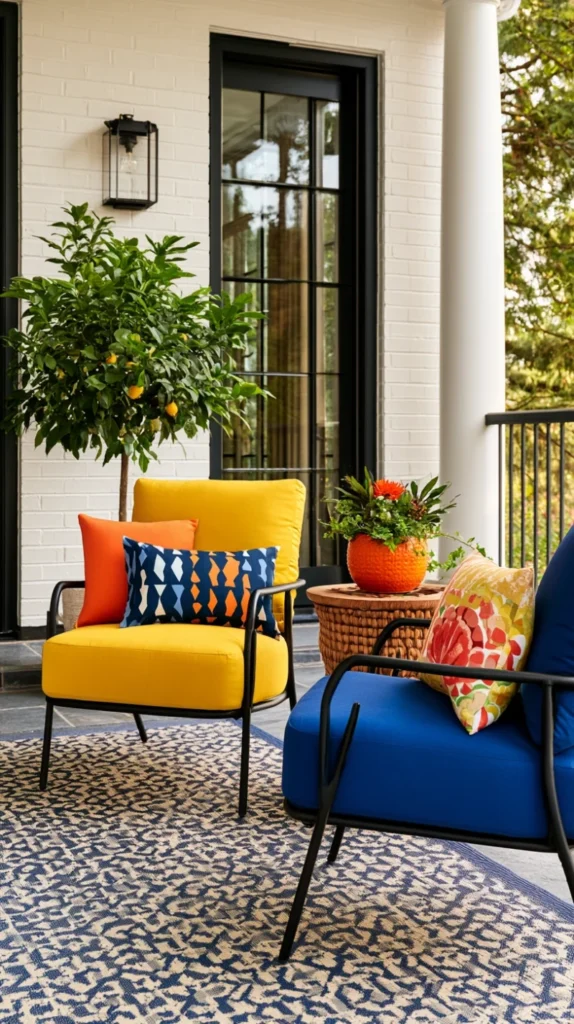
Instead of a matched bistro or seating set, choose two chairs in genuinely different saturated colors, a mustard yellow chair beside a cobalt blue one, for example, unified only by a shared material or leg style. This single choice does more to establish a maximalist identity than any amount of pattern layered onto a uniform beige set. Budget: $250-450 for two distinct accent chairs in contrasting colors.
Keep the chair frames in the same material and finish even though the colors differ, since matching the hardware or wood tone keeps the contrast looking deliberate rather than mismatched.
6. Add a Patterned Outdoor Rug Sized for the Full Porch Footprint
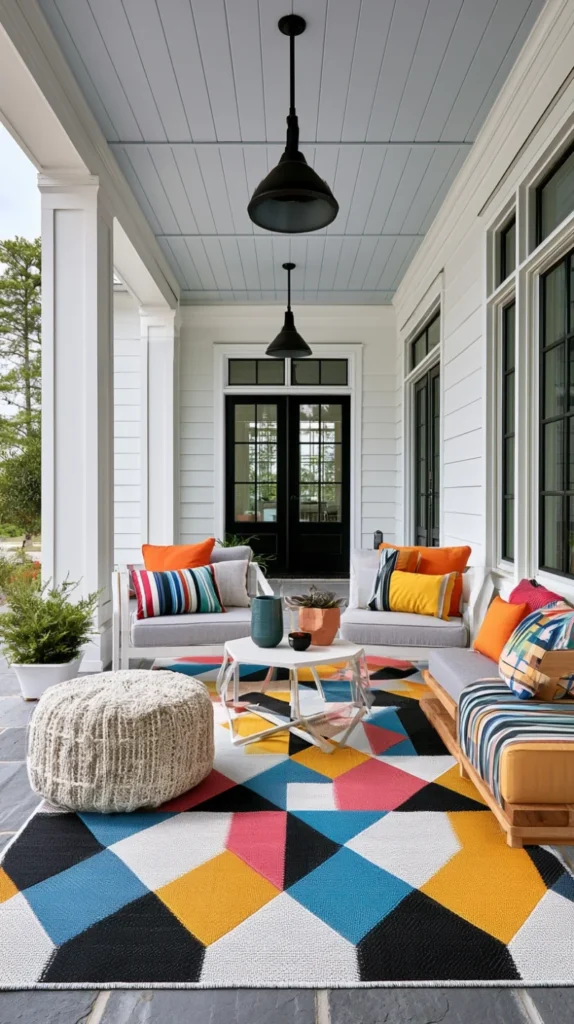
Measure the porch’s usable floor space and size the rug to leave a 6 to 12 inch border of visible flooring on all sides, rather than choosing a rug that floats in the middle of the space or one so large it runs wall to wall. A bold geometric or floral pattern here grounds every other color choice happening at furniture and textile height. Budget: $90-180 for a quality outdoor rug in the 5×7 to 8×10 range depending on porch size.
Choose a flatweave polypropylene rug specifically for any porch without full roof coverage, since this material resists mold and dries fully within hours after rain, unlike a higher pile rug.
7. Hang a Patterned Pendant or Lantern Instead of a Plain Fixture
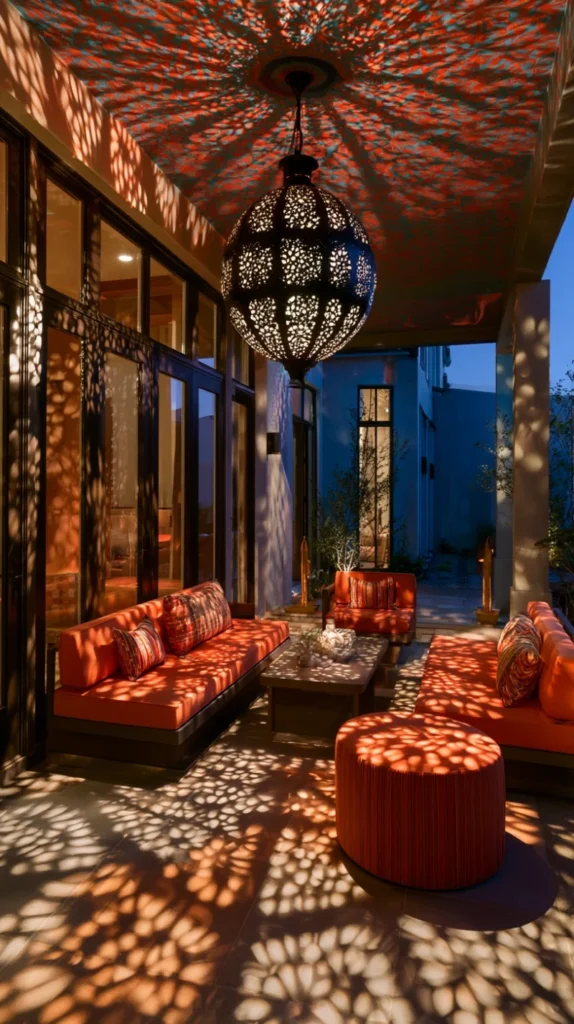
Swap a builder-grade flush mount fixture for a patterned glass or perforated metal pendant that casts shadow patterns onto the porch ceiling and floor after dark. This adds visual interest even when the porch itself is in use after sunset and the rest of the bold color scheme is harder to see. Budget: $80-180 for a quality outdoor-rated pendant fixture, plus installation if the porch isn’t already wired for a hanging fixture.
Confirm the fixture carries a wet-rated or damp-rated outdoor designation specifically, since an indoor-rated fixture will corrode considerably faster under direct weather exposure.
8. Use Bold Striped Curtains as a Soft Architectural Frame
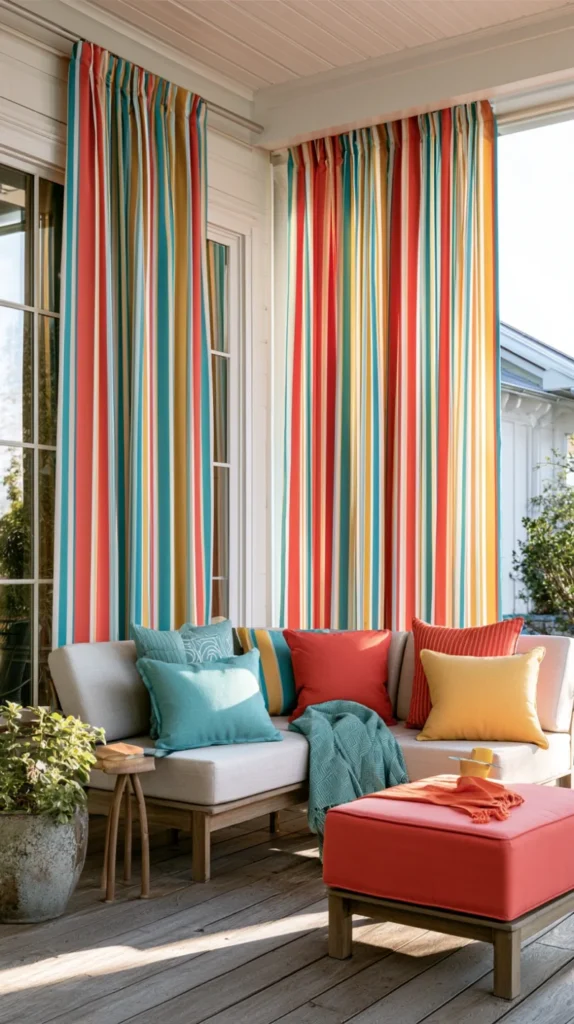
Outdoor curtain panels, hung from ceiling-mounted hardware at the porch’s open sides, in a wide, bold stripe pattern, add height, movement, and another full layer of pattern without requiring any permanent structural change. Standard panel width runs 50 inches, so plan for at least one and a half panel widths per opening for a properly gathered look rather than a flat, stretched one. Budget: $120-220 for two to four outdoor curtain panels and basic ceiling-mounted hardware.
Hang the rod 4 to 6 inches above the actual opening rather than tight against the header, which makes the ceiling read as taller and gives the stripes more visual room to breathe.
9. Paint or Stencil a Bold Pattern Directly on the Porch Floor
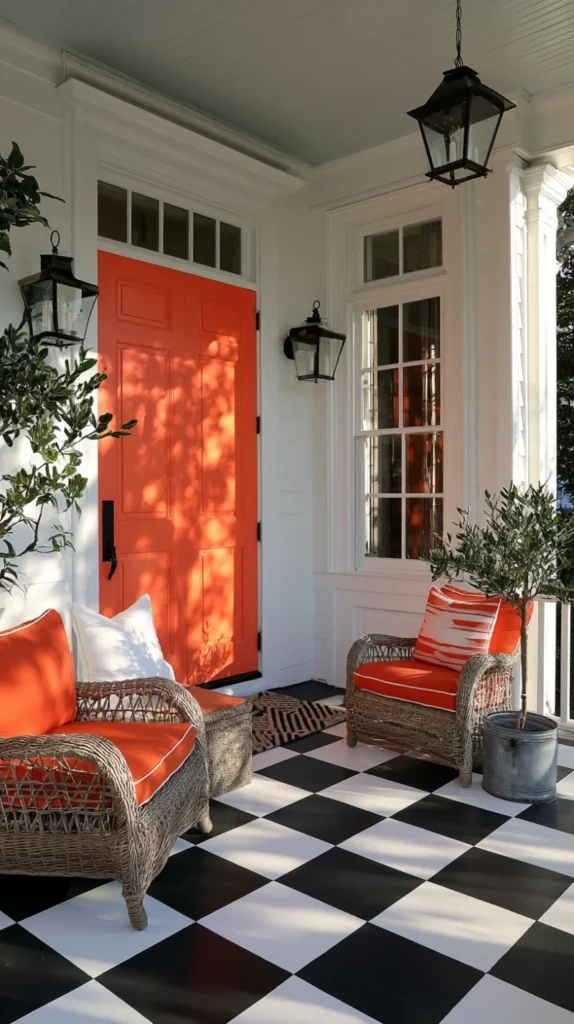
A painted floor pattern, a checkerboard, a Moroccan-style stencil, or simple wide stripes, adds a layer of visual interest that furniture and textiles alone can’t achieve, and it’s one of the most cost-effective high-impact choices on this entire list. Standard checkerboard squares for a porch floor run 12 to 16 inches per square, large enough to read clearly from the yard or street. Budget: $50-90 for exterior floor paint and a stencil kit, or $30-50 if hand-taping the pattern with painter’s tape.
Use a porch-and-floor rated paint specifically labeled for foot traffic, since standard exterior wall paint wears through considerably faster underfoot.
10. Add a Gallery of Small Weatherproof Art Pieces
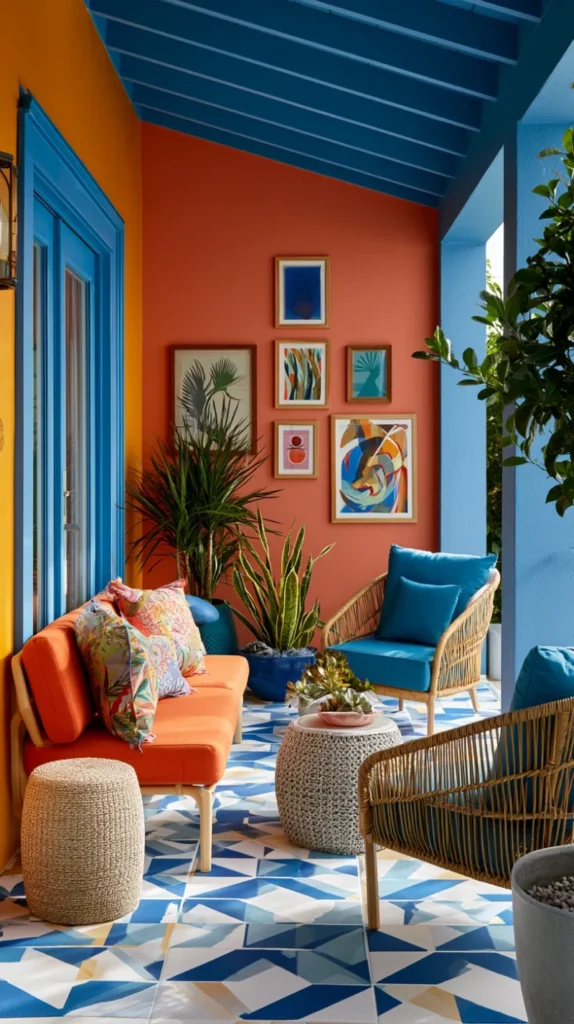
A cluster of four to six small framed prints or metal wall art pieces, hung in an irregular grid rather than a perfectly even one, brings the same maximalist layering principle to the walls that the textiles bring to the seating. Keep individual pieces in the 8×10 to 12×16 range so the cluster reads as collected rather than overwhelming on a typically modest porch wall. Budget: $60-120 for a small gallery of weatherproof prints and frames.
Choose frames rated for outdoor use or apply a clear waterproofing sealant to standard frames, since humidity will warp untreated wood or cause cardboard backing to degrade within a season.
11. Add a Daybed or Hanging Chair in an Unexpected Color
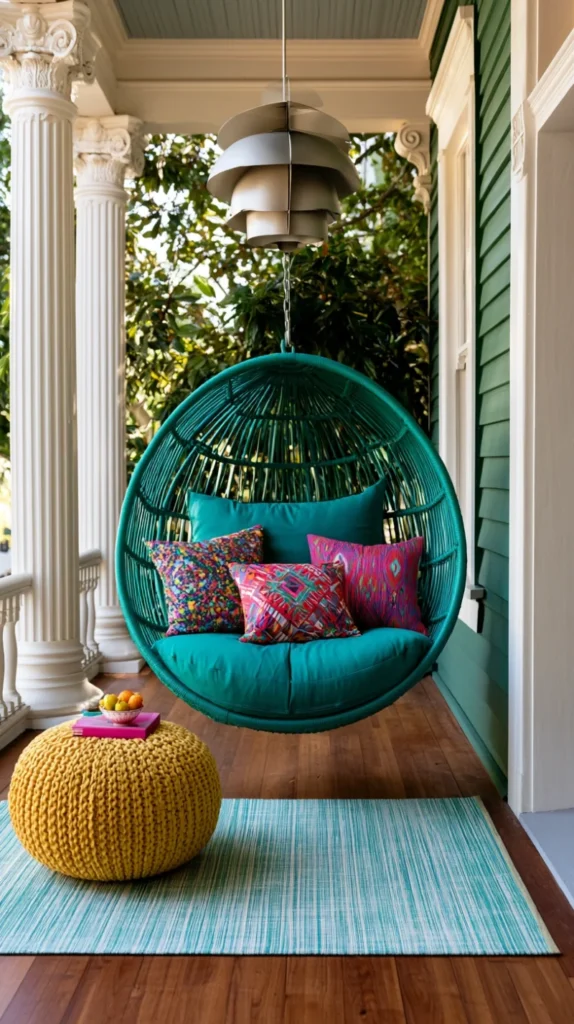
A hanging egg chair or a small daybed in a saturated jewel tone, emerald or magenta rather than the standard neutral wicker finish, becomes the porch’s natural focal point and gives the whole maximalist scheme one clear anchor piece to build the rest of the palette around. Budget: $300-600 for a quality colored hanging chair or daybed with a stand.
Check the stand’s weight rating specifically before hanging anyone in the chair, since stands vary considerably in capacity and this is the single most common safety oversight with hanging seating.
12. Use a Bold Wallpaper or Removable Mural on One Wall Section
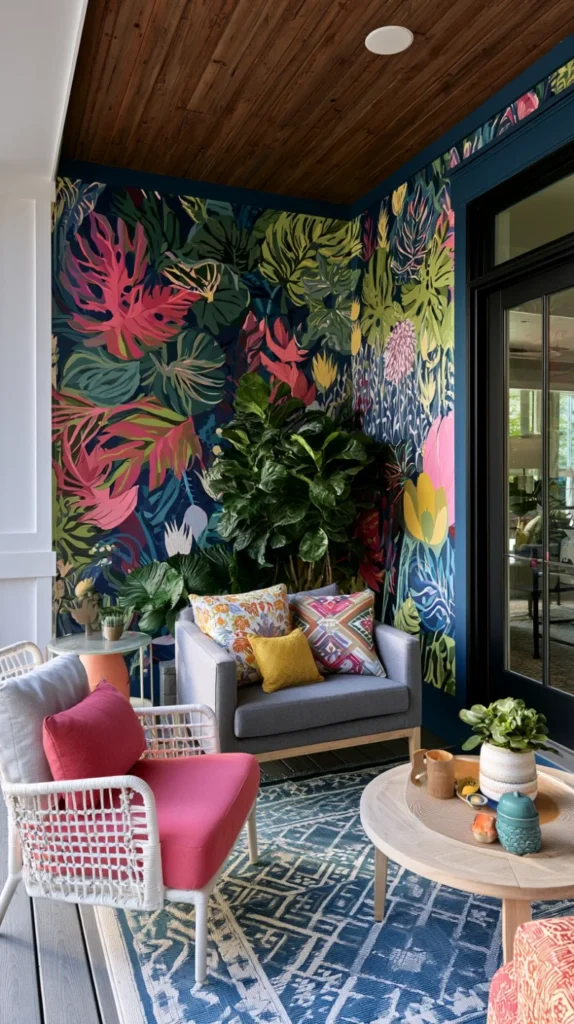
If the porch has any solid wall section, even a narrow strip between windows, a bold botanical or geometric wallpaper, ideally a vinyl-coated, weather-rated product made for covered outdoor use, adds pattern at a scale paint alone can’t achieve. Measure the section’s height and width and add 10 percent extra material to account for pattern matching at the seams. Budget: $60-120 for enough weather-rated wallpaper to cover a typical porch wall section of roughly 30 to 50 square feet.
Apply only to a fully covered, weather-protected wall section, since even weather-rated wallpaper isn’t intended for direct, repeated rain exposure.
13. Add Multiple Light Sources at Different Heights for Evening Color
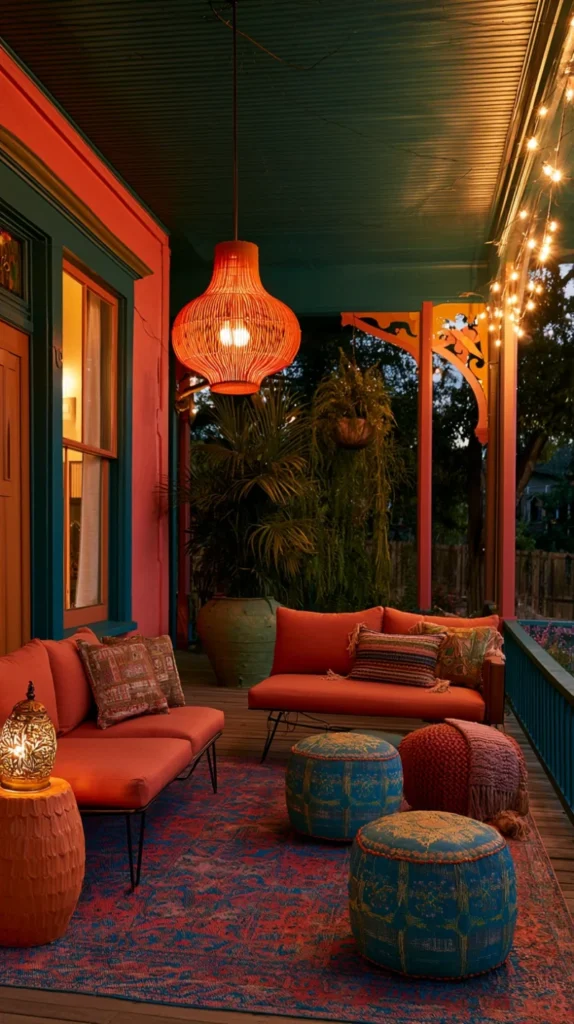
Beyond the main pendant, add string lights at roof height, a few colored glass lanterns at table height, and a small uplight aimed at a planter or piece of art near the floor. This layered lighting approach, the same height-variation principle used with planters in idea four, keeps the bold color scheme visible and dynamic after dark rather than going flat once the sun sets. Budget: $70-130 for string lights, two to three lanterns, and a small uplight fixture combined.
Choose warm white or amber-toned bulbs specifically for any white light source in the mix, since a cool white bulb will visually clash with saturated reds, pinks, or oranges elsewhere in the scheme.
14. Commit to One Unifying Color That Repeats at Least Five Times
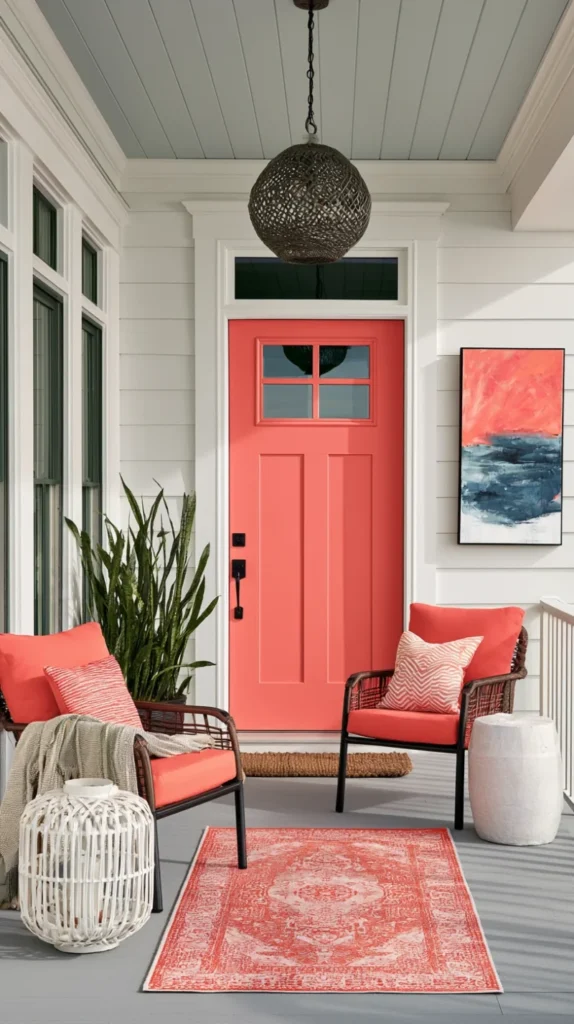
The technique that separates a cohesive maximalist porch from a genuinely cluttered one is repetition: choosing one specific color, a particular shade of coral or chartreuse, and making sure it reappears in at least five different spots, a pillow, the door, a planter, a piece of art, and a lantern, so the eye has a consistent thread to follow through all the other pattern and color happening around it. Budget: no separate cost, since this is a planning principle applied across the budgets already listed for the other ideas above.
Pick your repeating color first, before buying any individual item on this list, and hold a paint chip or fabric swatch up against every other potential purchase to confirm it genuinely matches rather than just being in the same general color family.
Choosing Your Approach
For a renter-friendly refresh with no permanent changes: the planter cluster (idea 4), layered textiles (idea 2), and string lights (idea 13) require no painting or installation at all.
For one high-impact, lower-cost change: the painted ceiling (idea 1) or a painted floor pattern (idea 9) transforms the whole porch for under $100 in most cases.
For a full maximalist transformation: combine the door color, floor pattern, layered textiles, and a repeating accent color using idea 14’s approach as the organizing principle that ties everything else together.
The difference between a maximalist porch that looks confidently designed and one that looks like accumulated clutter almost always comes down to those two things: deliberate pattern-scale layering, and one specific color repeating often enough that it reads as a choice rather than an accident.