

15 Cozy Sunroom Ideas for Fall That Feel Like a Warm Hug
My sunroom always felt like it belonged to summer. The minute the leaves started turning, the same glass walls that felt so airy in July started to feel cold and a little abandoned.

I wanted the room to feel like an actual hug once fall hit, not just slightly less bright.
These are the specific changes that made that happen, each one small enough to do in an afternoon.
1. Build a Window Seat With a Deep, Squishy Cushion
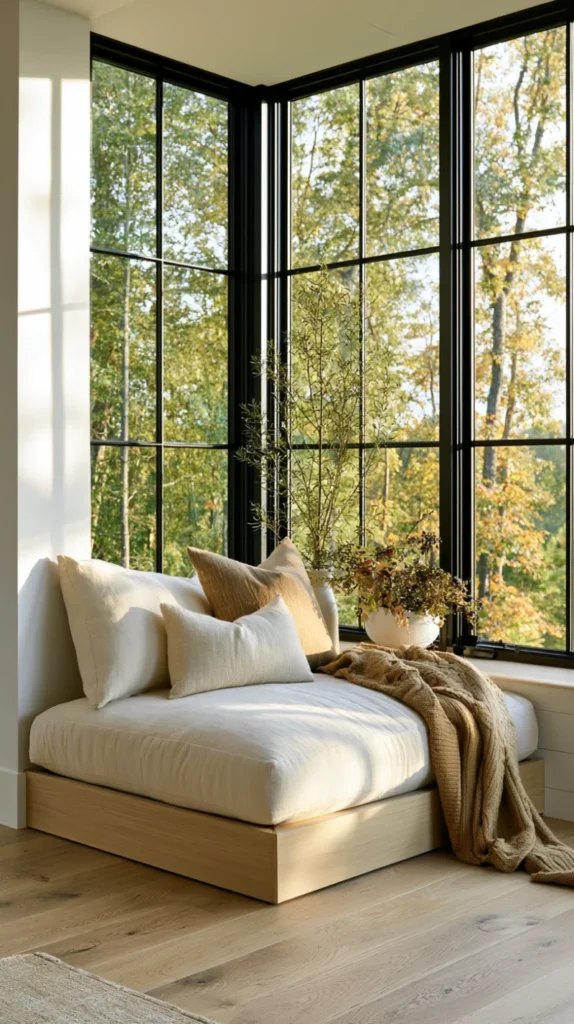
A window seat gives the sunroom’s best feature, the view, an actual reason to sit still and use it.
The cushion is what makes or breaks this. Go at least 4 inches thick in high-density foam, not the thinner 2-inch pads sold for porch benches.
Budget: $60-110 for a custom-cut foam cushion and cover sized to your specific seat.
Wrap the foam in a layer of polyester batting before adding the cover; it rounds the edges and keeps the cushion from looking flat and slab-like.
2. Hang a Curtain to Create a Smaller, Enclosed Reading Corner
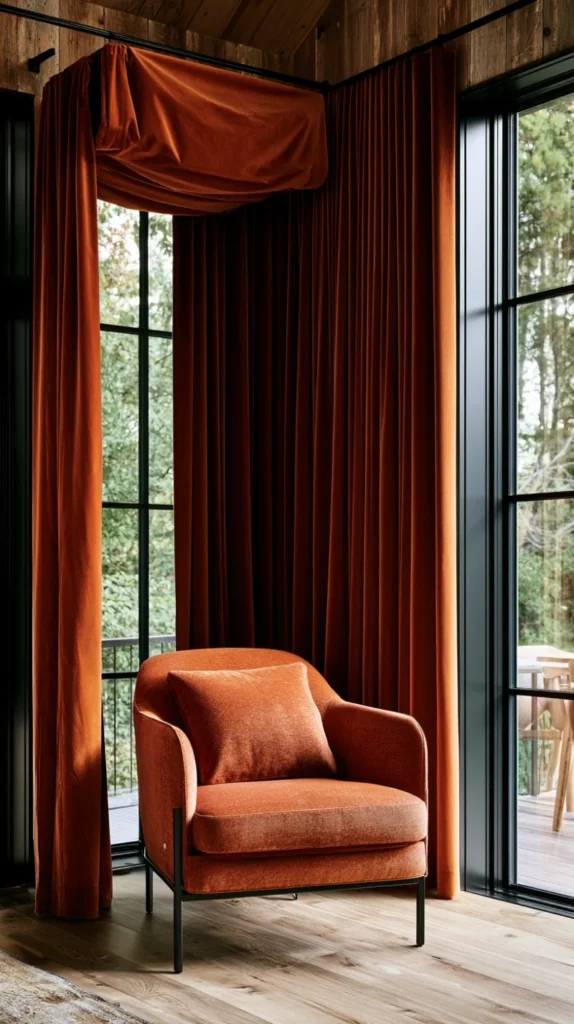
A sunroom’s open glass walls can feel exposed once it’s cold and dark earlier in the evening.
A single curtain panel, hung from a ceiling track around just one corner, lets you section off a smaller, more enclosed nook without any construction.
Budget: $40-70 for one heavy curtain panel and a basic ceiling track kit.
Choose a curtain with real weight and drape, like a cotton velvet, rather than a sheer; the heavier fabric is what actually makes the corner feel enclosed.
3. Add Warm-Glow String Lights Tucked Inside Glass Jars
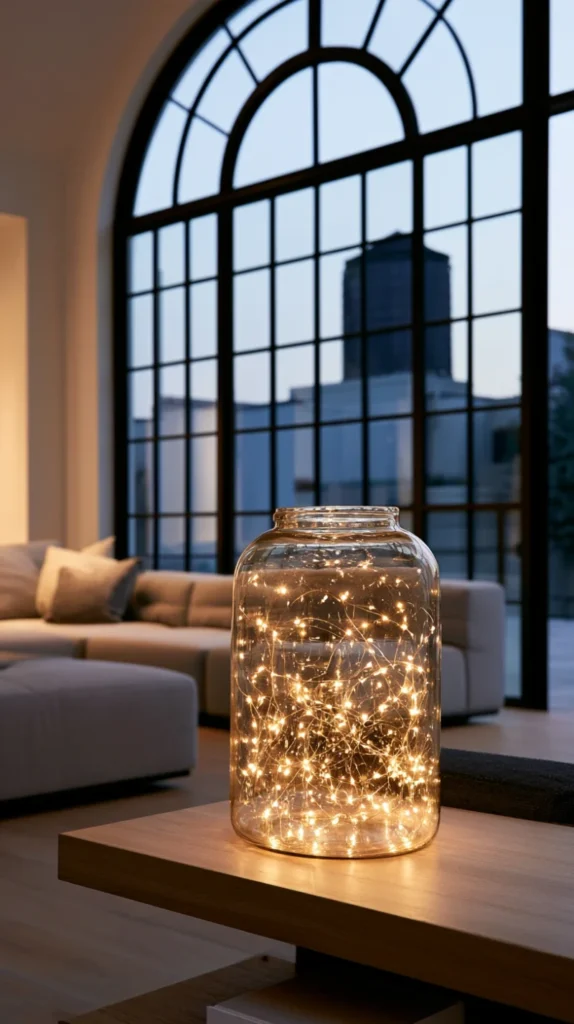
Bare string lights can look a little dorm-room. Tucking each light cluster inside a small glass jar diffuses the glow and adds a soft, lantern-like quality instead.
This works especially well along a windowsill or a low shelf where the jars can sit at eye level.
Budget: $20-35 for a warm white LED strand and a set of small glass jars.
Drill or melt a small hole in the jar’s lid for the cord, rather than leaving the lid off, so dust and bugs don’t collect inside over the season.
4. Add a Stained or Painted Wood Treatment to the Ceiling
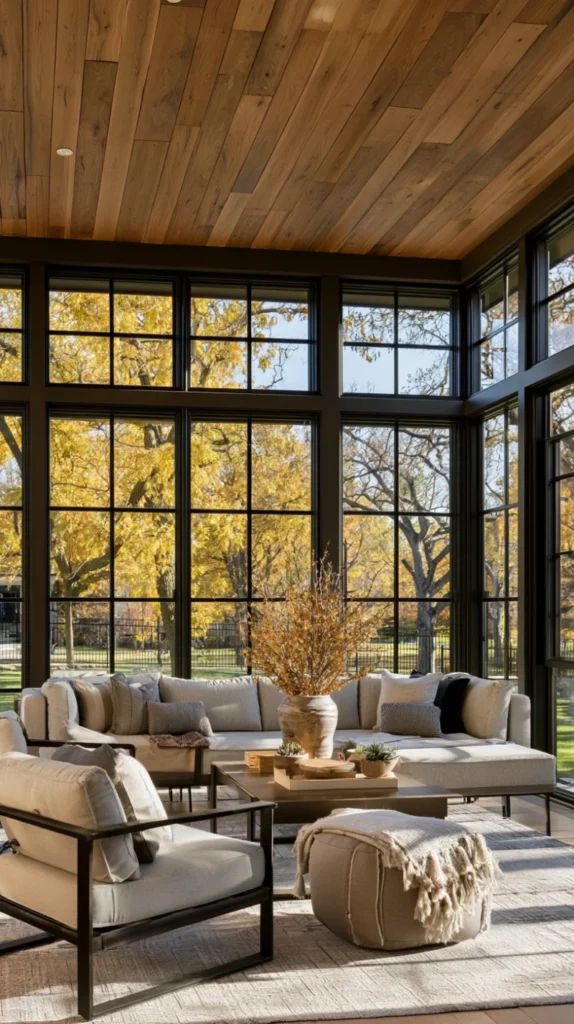
Sunroom ceilings are almost always left plain white, which keeps the room feeling more like an extension of the patio than an actual room.
A simple stained wood plank ceiling, or even paint in a warm tone, makes the space feel more enclosed and finished overhead.
Budget: $150-300 for tongue-and-groove pine planking over a modest sunroom ceiling, or $40-60 in paint alone for a color-only approach.
If painting, choose a flat or matte finish specifically, since a glossier sheen on the ceiling reflects too much light back down and can feel harsh.
5. Use a Heated Throw Instead of Running the Furnace
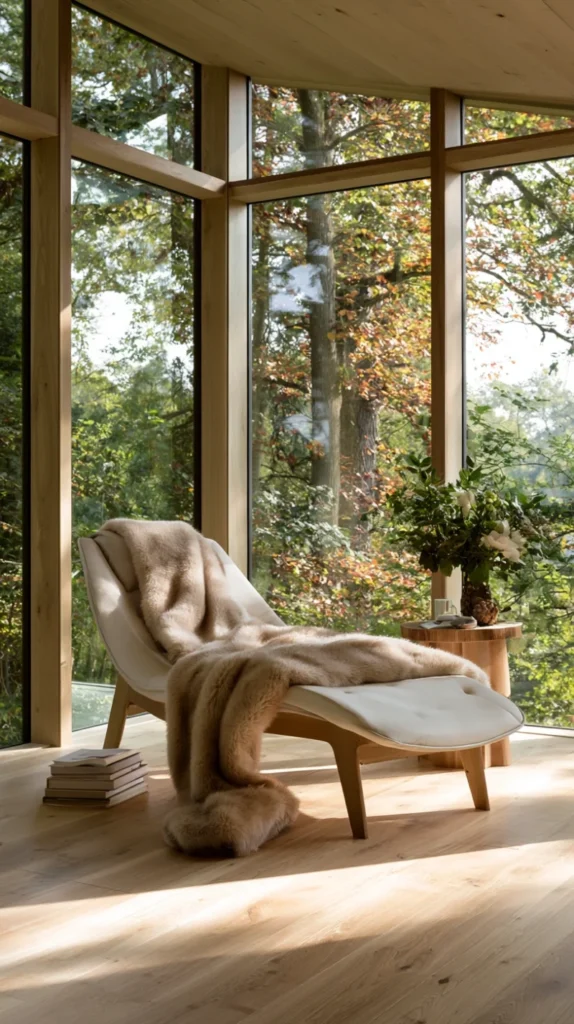
A heated throw, run on its own low setting, can make a chilly sunroom usable for an hour of reading without needing to heat the whole room.
This matters most in early fall, when daytime temperatures don’t justify running the furnace but evenings still feel cold.
Budget: $35-55 for a quality USB or plug-in heated throw with an auto-shutoff timer.
Confirm the auto-shutoff feature specifically before buying; this matters more here than in any other room, since a sunroom often sits unattended for stretches.
6. Layer Two Rugs of Different Texture, Not Just Different Pattern
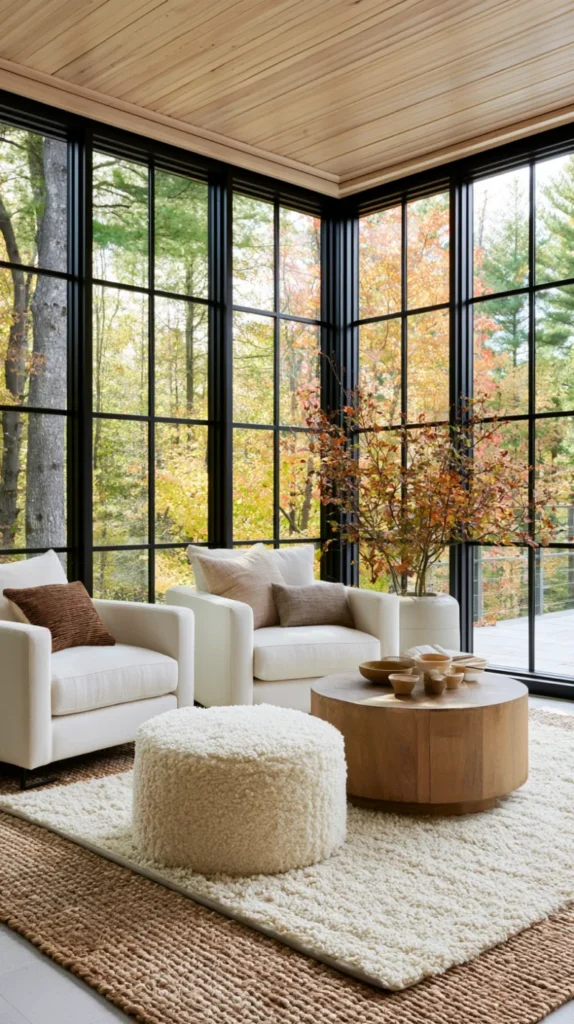
Most rug layering advice focuses on pattern, but texture does more of the actual warmth work underfoot.
Pair a flatweave jute base with a plush, higher-pile rug on top, rather than two flat rugs in different prints.
Budget: $70-130 combined for a jute base rug and a smaller plush accent rug.
Size the top rug to cover roughly two-thirds of the base rug’s area, leaving an even jute border visible on all sides.
7. Add a Small Cluster of Trailing Plants on a High Shelf
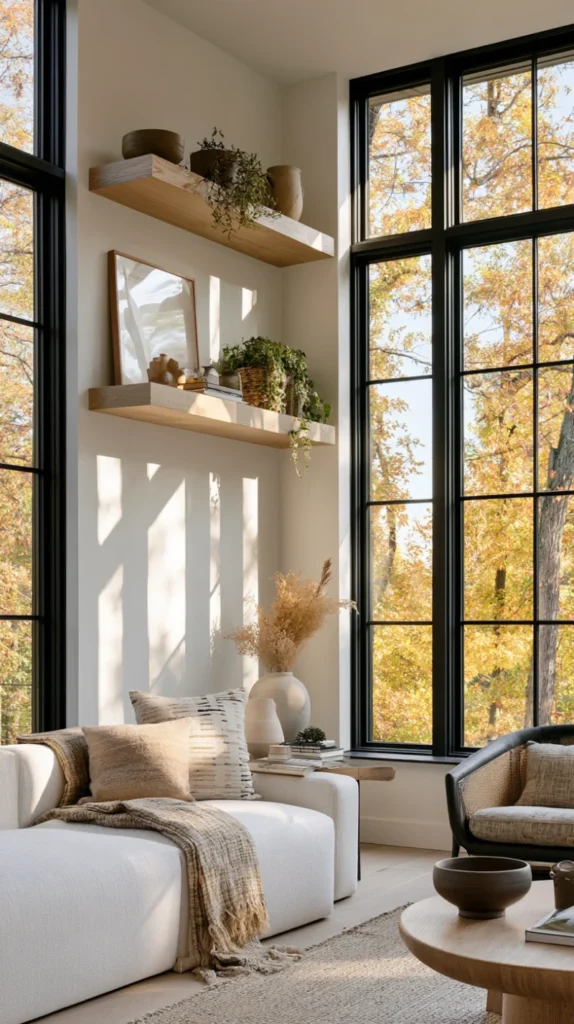
A few trailing plants, positioned on a shelf above eye level rather than at floor level, soften the hard lines of a glass-walled room without taking up any actual floor space.
Pothos and string of pearls both tolerate the lower light a sunroom often gets once the sun angle drops in fall.
Budget: $25-45 for two or three small trailing plants and simple hanging or shelf pots.
Rotate the pots a quarter turn every week or two, since plants near glass tend to grow lopsided, reaching toward the strongest light source.
8. Set Up a Small Tea or Cider Station on a Side Cart
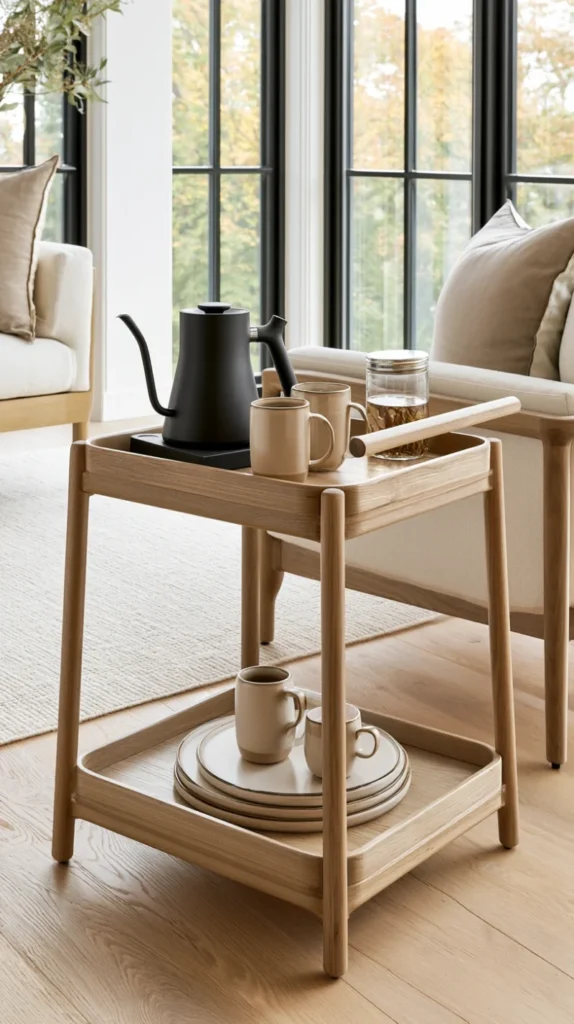
Keeping the actual makings for a warm drink in the sunroom itself, rather than the kitchen, removes the one extra step that usually keeps you from actually sitting down with one.
A small cart with a kettle, two mugs, and a tin of tea or cider mix takes up very little space.
Budget: $40-70 for a small cart, an electric kettle, and a couple of mugs if not already on hand.
Use an extension cord rated for kitchen appliance use if the sunroom doesn’t already have a nearby outlet, not a basic lamp-grade cord.
9. Choose a Fabric Window Valance Instead of a Full Curtain
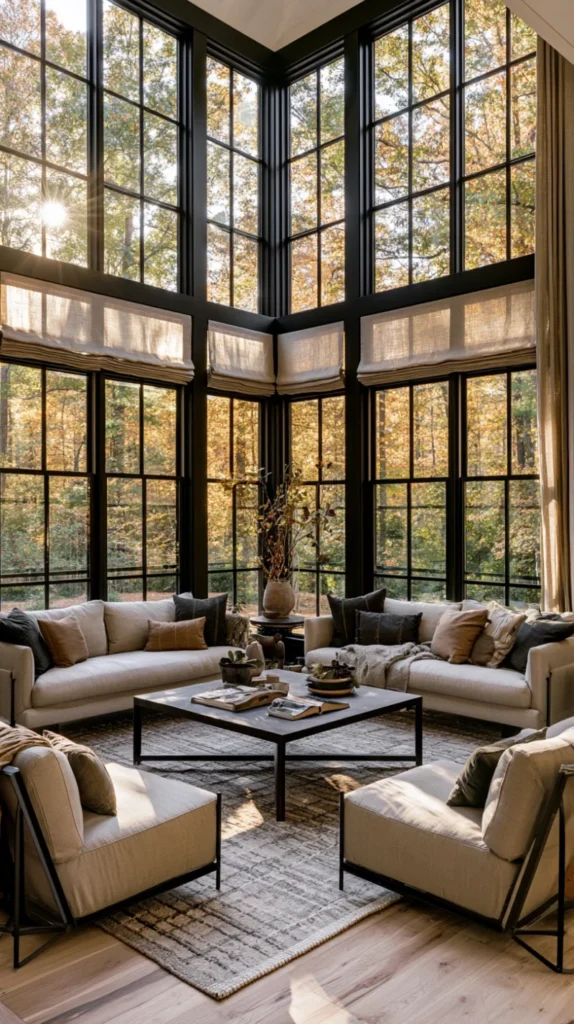
A full curtain can feel heavy and closed-off in a room whose whole appeal is the view, but a valance along just the top few inches of each window adds warmth and softness without blocking the actual sightline.
This is a smaller, lower-cost project than full curtains across every window.
Budget: $15-25 per window for a simple fabric valance and basic mounting hardware.
Mount valances at a consistent height across every window in the room, even if the windows themselves are slightly different sizes, so the line reads as intentional rather than uneven.
10. Add a Low Floor Pouf for Casual, Ground-Level Seating
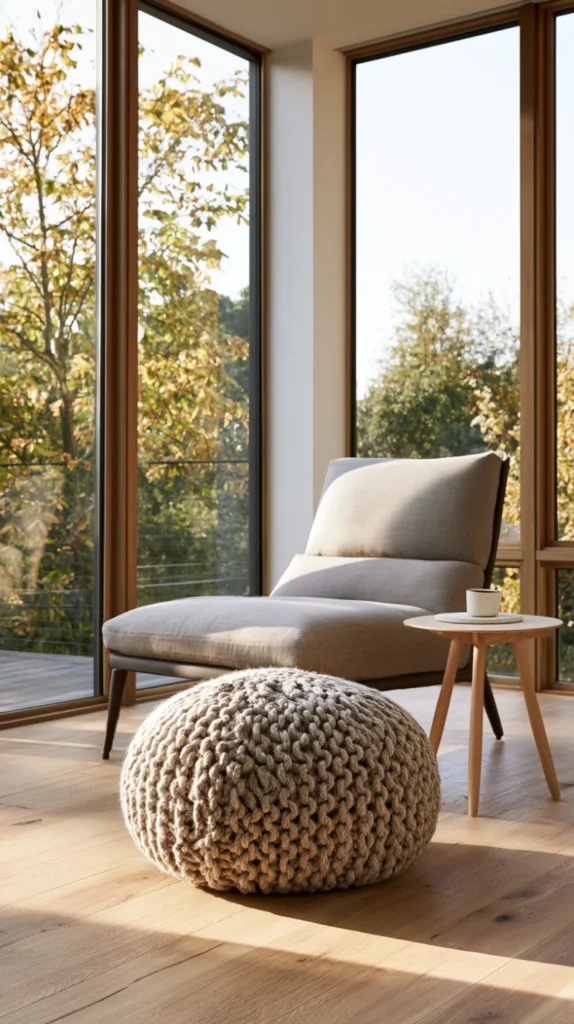
A pouf gives the room a second, more relaxed seating option beyond the main chairs, useful for anyone who wants to sit lower and closer to a side table or a pet.
This also makes the room feel more flexible for a few extra people during a gathering.
Budget: $35-60 for a quality knit or woven pouf.
Choose a pouf with a flat, stable base rather than a fully round one if the sunroom floor is tile or another hard surface, since round bases can roll slightly underfoot.
11. Swap Out Summer Art for Pieces With Warmer Tones
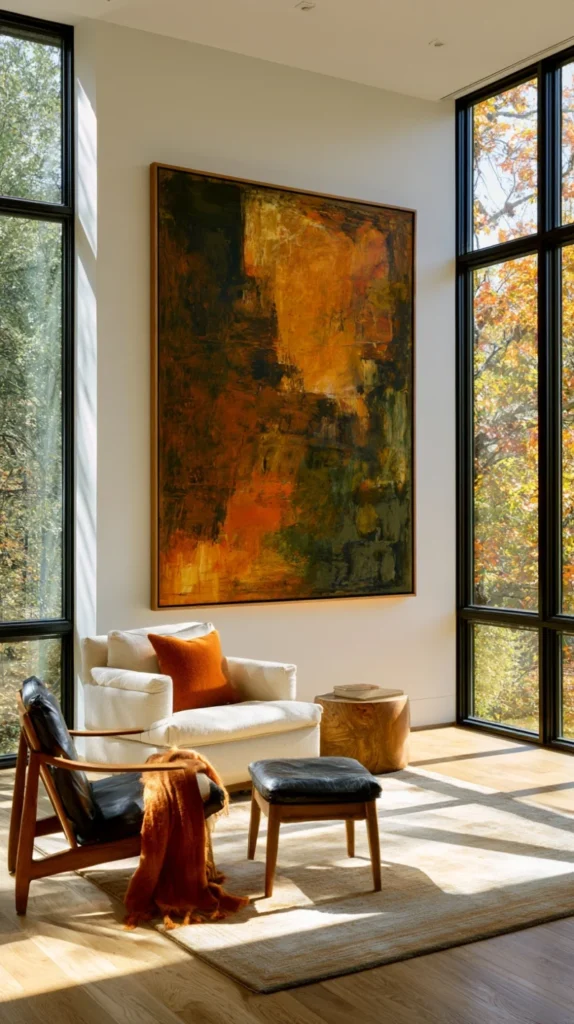
The same wall art that worked in a bright, beachy summer sunroom can look out of place once the season shifts. Swapping in two or three pieces with warmer color palettes, rust, ochre, deep green, recalibrates the whole room’s mood without touching the furniture.
Budget: $30-60 for a couple of seasonal prints and basic frames, assuming the existing frames or art get rotated rather than replaced entirely.
Keep your summer pieces in a flat box rather than discarding them, so the seasonal swap costs nothing the following year beyond the time it takes to switch them back.
12. Add Soft Furnishings Specifically to Cut Down on Echo
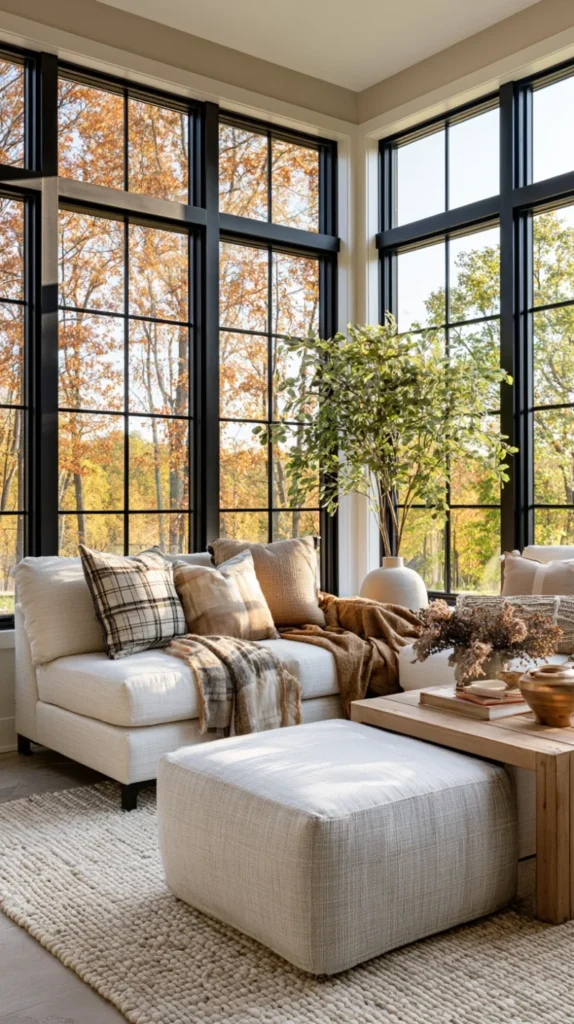
Sunrooms, with their glass and hard flooring, often have a slight echo that subconsciously makes them feel less cozy, even before anyone consciously notices the sound itself.
Heavier curtains, a rug, and upholstered seating all absorb sound, and adding even one of these specifically for that purpose can change how the room feels to talk in.
Budget: no separate cost beyond whichever textile addition from this list you choose; the acoustic benefit comes along with ideas already covered above.
Notice the difference by clapping once in the empty room before adding textiles, then again afterward; the change is usually more obvious than people expect.
13. Keep a Rotating Bin of Seasonal Throws Just for This Room
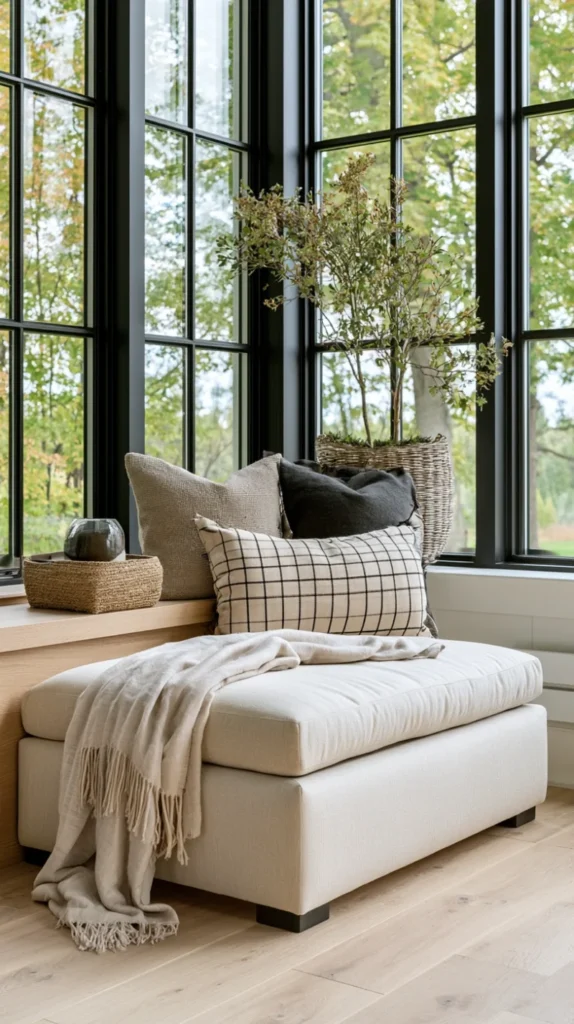
Rather than pulling throws from the rest of the house, keep a small dedicated bin specifically for the sunroom’s fall textiles, swapped in as one complete set rather than piece by piece.
This makes the seasonal shift feel deliberate rather than gradual and half-finished.
Budget: $15-20 for a storage bin, with the throws themselves counted under whichever specific textile ideas above you choose.
Swap the whole bin in one sitting rather than over several days, since seeing the full seasonal change at once has more visual impact than a slow trickle of single items.
14. Add a Hanging or Swing Chair if the Structure Allows
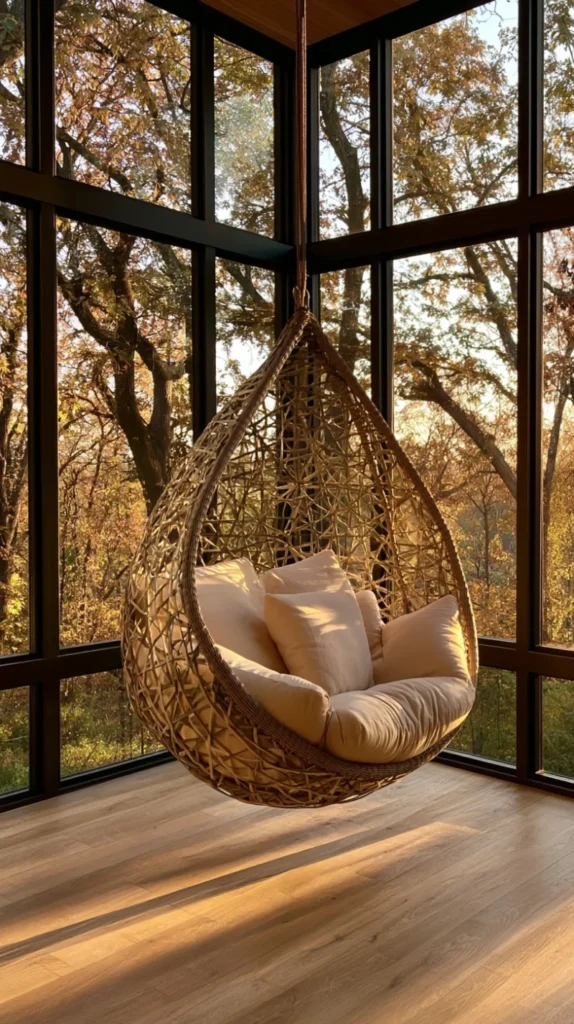
A hanging chair, suspended from a reinforced ceiling beam or a freestanding stand, brings a different kind of relaxed, enclosed seating that a standard chair doesn’t offer, and the slight motion itself reads as cozy in a way stationary furniture can’t replicate.
Budget: $150-300 for a quality hanging chair and a freestanding stand, or less if the ceiling structure can support a direct mount.
Have the ceiling’s load-bearing capacity checked before a direct mount specifically; a freestanding stand is the safer default unless you’ve confirmed the structure can take the weight.
15. Combine a Few of These Into One Deliberate Fall Reset
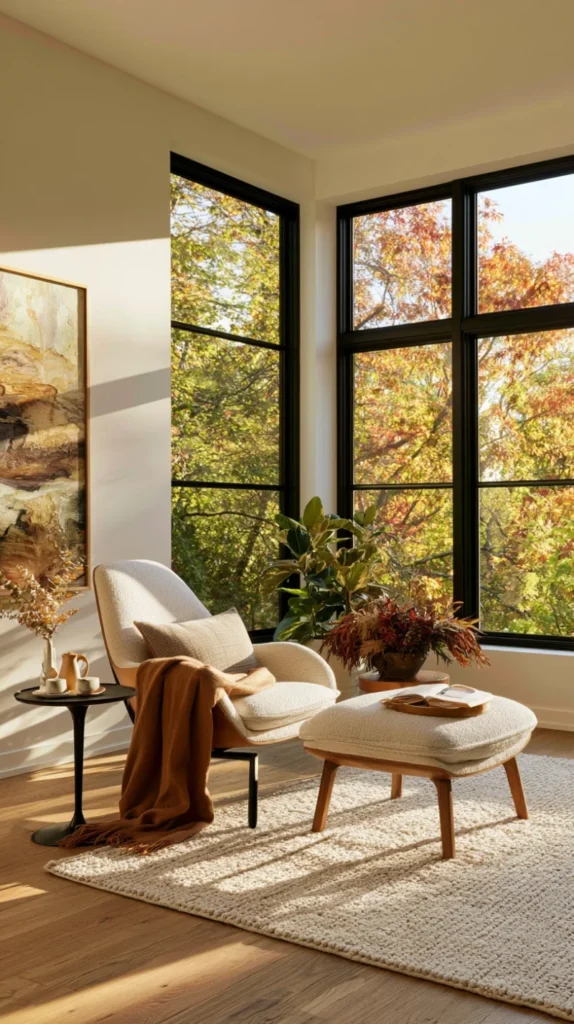
Doing the rug layering, the heated throw, a tea station, and an art swap all in one weekend turns the room over fully rather than leaving it half-summer and half-fall for the next month.
Budget: $150-300 total to combine several of the ideas above into one complete seasonal reset.
Do the textile and lighting changes first, then add the cart and any plants last, since rearranging furniture around already-placed rugs and curtains is easier than the reverse order.
Choosing Your Approach
For the fastest change: the string lights in jars (idea 3) and an art swap (idea 11) take under an hour combined.
For genuine added warmth: the heated throw (idea 5) and layered rugs (idea 6) matter more than anything purely visual.
For the fullest transformation: combine several ideas using idea 15’s approach, doing textiles and lighting first.
A sunroom built for summer light needs deliberate, specific changes to feel like fall, not just fewer hours of sun. The room itself doesn’t know the season changed until you tell it.