

14 Bathroom Vanity Tray Styling Ideas
The tray changed how my whole bathroom counter looked more than any product upgrade ever did. Not the nicer soap. Not the new faucet. Not the better lighting or the fresh towels or the reorganized cabinet beneath the sink.
The containment.
Because corralling everything into one defined space did something scattered products never managed. Before it: a counter with a toothbrush holder here, a lotion bottle there, a hand towel draped wherever it landed, every object competing for the same open surface without any real relationship to each other. After it: one tray, one considered grouping, the rest of the counter left genuinely clear for the first time in years.

A vanity tray is not simply a place to put things so they look slightly tidier. It is a containment tool, giving a handful of genuinely used objects a defined boundary and a reason to be arranged with intention rather than scattered. The counter: no longer a landing zone for whatever needs a surface, but one clear expanse with a single, well-considered vignette at its center.
Here are 14 bathroom vanity tray styling ideas — from the simplest three-object grouping to the most fully layered display — built on that understanding.
Why a Tray Changes a Counter More Than Any Individual Product Can
The containment principle
A tray gives a loose collection of bottles and objects a defined boundary, immediately making them read as one considered grouping rather than several separate items that happen to be nearby. This is true even without changing a single object within the tray.
The negative space case
Without a tray:
Products spread across the full counter, each one occupying its own patch of surface, with no genuine empty space anywhere.
The counter: cluttered regardless of how nice any individual product actually is.
With a tray:
Products contained to one defined zone, leaving the rest of the counter genuinely clear.
The counter: reading as spacious and considered, the tray itself becoming the counter’s single styled focal point.
The daily-use compatibility
Unlike a purely decorative vignette, a bathroom vanity tray needs to hold genuinely used items — hand soap, lotion, a toothbrush holder — while still reading as styled rather than merely functional. This balance is the specific challenge and opportunity a bathroom tray presents that a purely decorative living room vignette does not.
The cleaning efficiency benefit
A tray also simplifies actual cleaning, since wiping down the counter requires lifting one tray rather than repositioning several individual items, a practical benefit alongside the purely visual one.
The Five Elements of a Well-Styled Vanity Tray
Before styling any specific tray:
The tray itself
The material and shape chosen as the styling’s foundation.
Sets the tone for everything placed within it.
Worth selecting deliberately rather than using whatever tray happens to be on hand.
Height variation
At least one taller object, one medium, and one shorter, following the same rule-of-three principle used in any well-composed vignette.
Prevents the tray from reading as flat or accidental.
The single most transformative styling principle available.
A mix of function and beauty
Genuinely used items — soap, lotion — alongside one or two purely decorative objects.
Keeps the tray honest and practical rather than only for show.
Balances daily usefulness with visual interest.
Material variety
Glass, ceramic, and metal objects together, rather than everything in the same material.
Adds textural interest within a small, contained space.
Echoes the same material-mixing principle relevant to any styled surface.
Consistent refilling and upkeep
Products decanted into matching containers, kept topped off and clean.
The detail most responsible for whether a tray looks styled or simply cluttered in miniature.
Requires ongoing attention rather than a one-time setup.
1. The Marble Tray With Brass Accents
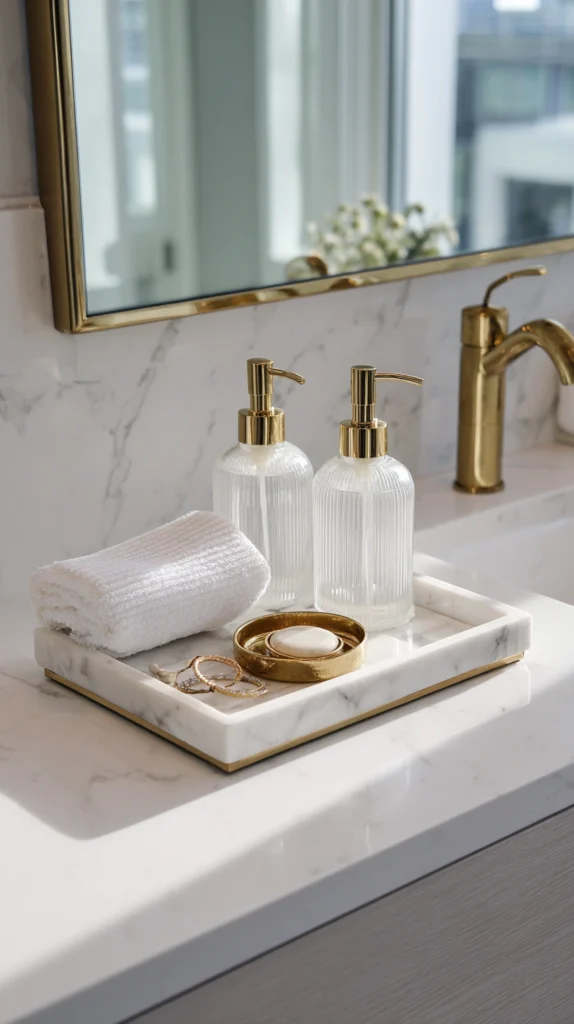
A cool, veined marble tray as the base, styled with brass-topped bottles and a single brass dish, pairing two of the most classically elegant bathroom materials.
Why marble and brass remain a reliably elevated pairing
Marble’s natural veining and brass’s warm glow complement each other in a way that reads as timeless rather than trend-dependent, a pairing worth defaulting to for anyone uncertain where to start with vanity tray styling.
The tray
A genuine marble tray, or a marble-look resin alternative for a lower-cost, more water-resistant option, chosen in a size proportional to the counter’s available space.
The bottle selection
Glass or ceramic soap and lotion dispensers with brass pump tops, replacing the products’ original plastic packaging for a considerably more elevated look.
The brass dish
A small brass ring dish or catchall, providing a spot for jewelry removed before washing hands or showering, adding genuine daily function alongside the purely decorative elements.
The height arrangement
A taller lotion bottle, a medium soap dispenser, and the low brass dish, following the same varied-height principle relevant to any well-composed small vignette.
The maintenance
Marble requiring occasional sealing to resist water staining, a modest but real maintenance consideration worth factoring into the choice between genuine marble and a more water-resistant alternative material.
Cost breakdown: Marble or marble-look tray: $20–50 Brass-topped dispensers (2): $30–70 Brass ring dish: $15–30 Total: $65–150
2. The Woven Rattan Tray for a Natural, Warm Look
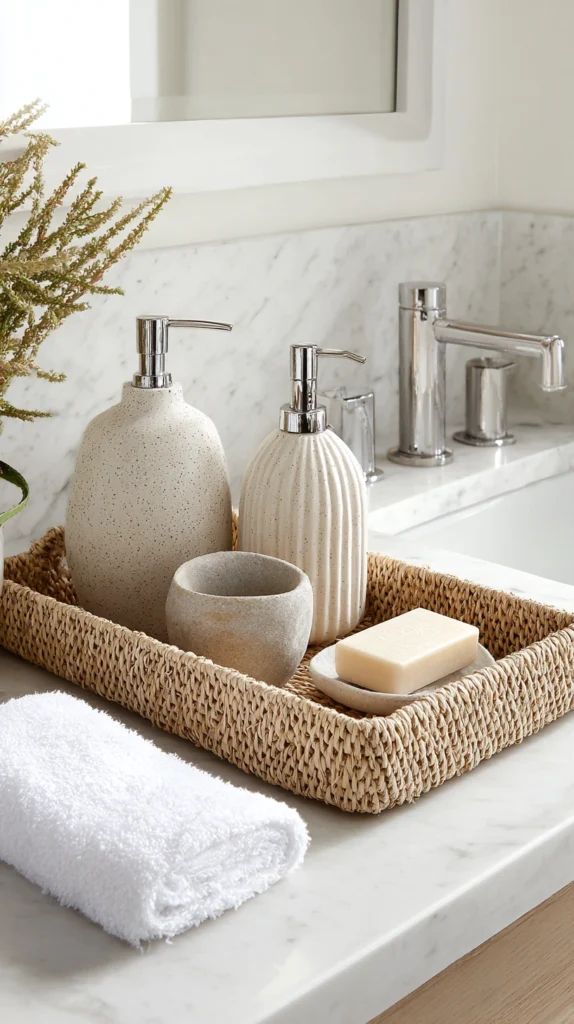
A woven rattan or seagrass tray, styled with ceramic vessels and a small plant, bringing organic texture and warmth to the counter rather than a cooler, more formal material approach.
Why rattan suits a bathroom aiming for a warmer, more natural aesthetic
Rattan’s woven texture introduces genuine organic warmth that a smooth marble or glossy ceramic tray does not provide, particularly well suited to a bathroom already leaning toward a natural materials palette.
The tray
A woven rattan or seagrass tray, chosen with a tight enough weave to hold small items securely without gaps large enough for bottles to tip through.
The vessel selection
Ceramic soap dispensers and a small ceramic cup, in warm, earthy glazes that complement the tray’s natural fiber tone.
The plant addition
A small potted plant — a mini succulent or a sprig of eucalyptus in a small vase — adding a living element that pairs naturally with the woven material’s organic quality.
The water resistance consideration
A rattan tray benefiting from a protective finish or a saucer beneath any water-exposed items, since natural woven fiber is more vulnerable to water damage than a sealed ceramic or metal alternative.
The overall effect
A counter styling that reads as warm and organic rather than cool and formal, suited to a bathroom with an already-established natural, earthy material palette throughout.
Cost breakdown: Rattan or seagrass tray: $15–35 Ceramic vessels (2): $25–50 Small plant: $10–25 Total: $50–110
3. The Monochromatic White and Cream Display
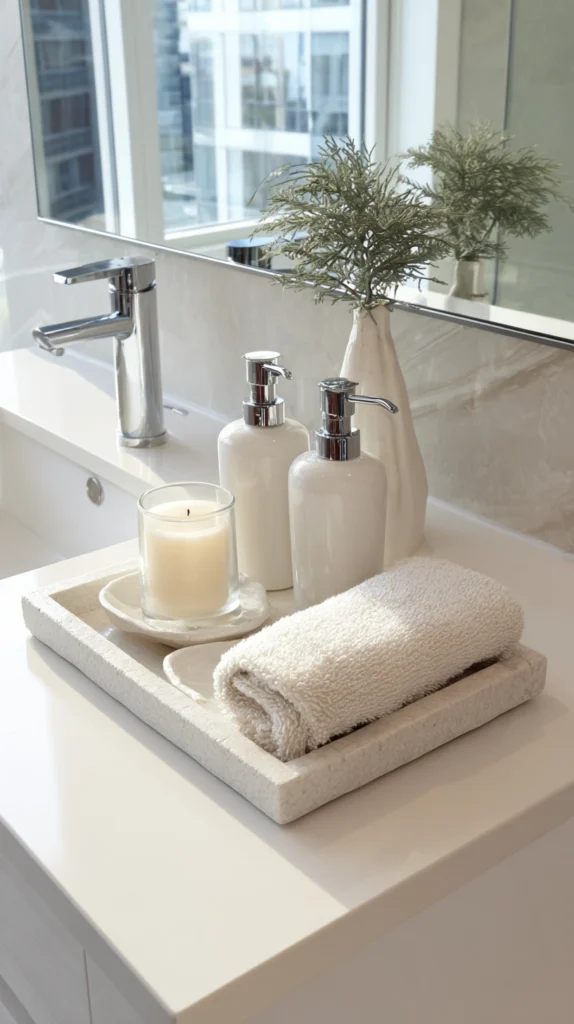
A tray styled entirely in white and cream tones — matching soap and lotion bottles, a white ceramic dish, a cream-colored candle — for a clean, cohesive, spa-like appearance.
Why a tightly controlled monochromatic palette reads as more elevated than a mixed-color display
Restricting the tray’s color palette to a single tonal family removes any visual competition between the individual objects, letting texture and form, rather than color contrast, carry the display’s visual interest.
The bottle selection
Matching or coordinating white and cream ceramic or glass dispensers, decanted from their original colorful packaging for a fully unified appearance.
The candle
A cream-colored candle in a simple glass or ceramic holder, adding both a decorative object and genuine evening ambiance to the display.
The texture variation
Matte ceramic against smooth glass against a slightly textured stone dish, ensuring the tightly controlled color palette does not read as flat or one-dimensional despite the lack of color contrast.
The tray material
A white marble, ceramic, or simple painted wood tray, continuing the same tonal restraint established by the objects it holds.
The overall effect
A genuinely spa-like, serene counter display, the monochromatic approach suiting a bathroom aiming for calm, minimal sophistication over bold color or pattern.
Cost breakdown: White or cream tray: $15–40 Matching dispensers (2–3): $30–70 Candle: $15–30 Total: $60–140
4. The Apothecary-Style Glass Bottle Collection
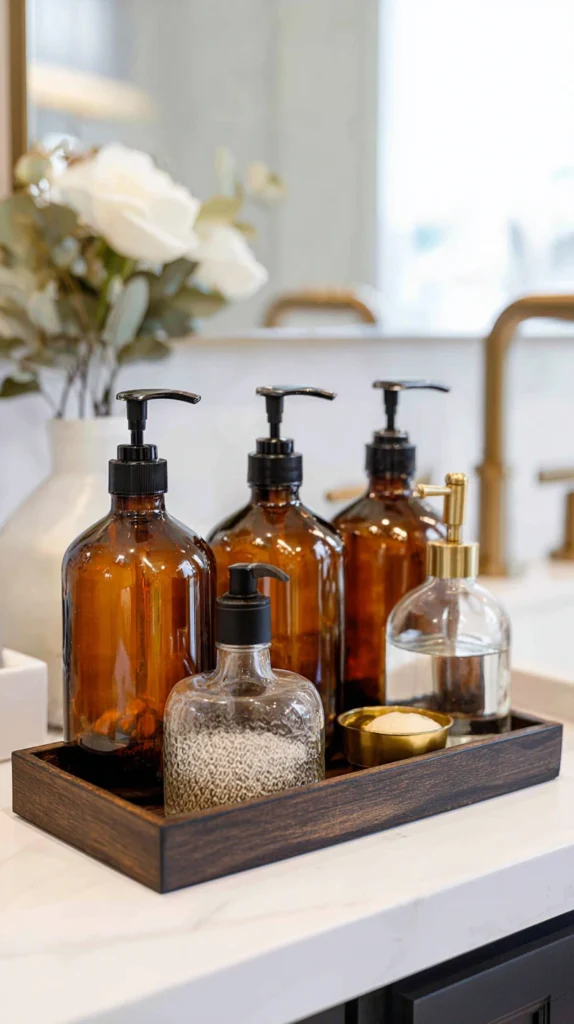
A tray styled with amber or clear glass apothecary bottles, evoking an old-fashioned pharmacy or herbalist’s counter rather than a contemporary bathroom display.
Why apothecary-style bottles suit a bathroom vanity particularly well
The apothecary aesthetic has genuine historical ties to personal care and grooming, making it a natural, authentic reference point for a bathroom counter specifically, rather than a purely decorative style borrowed from an unrelated context.
The bottle selection
Amber or clear glass bottles with simple stoppers or pump tops, sourced from a specialty retailer or a secondhand shop for genuine vintage character.
The labeling
Small handwritten or printed labels on select bottles, identifying contents in an old-fashioned apothecary style, adding charm without requiring every single bottle to be labeled.
The tray material
A dark wood or aged metal tray, complementing the bottles’ vintage character better than a bright white or contemporary marble option would.
The functional contents
Mouthwash, hand soap, and a favorite fragrance or essential oil decanted into the collected bottles, ensuring the vintage aesthetic serves genuine daily function rather than existing purely for display.
The overall mood
A counter that feels like a considered personal apothecary rather than a contemporary retail display, suited to a bathroom with a broader vintage or traditional design sensibility.
Cost breakdown: Apothecary bottles (4–5): $25–60 Dark wood or metal tray: $20–45 Labels: $5–10 Total: $50–115
5. The Single Statement Object Approach
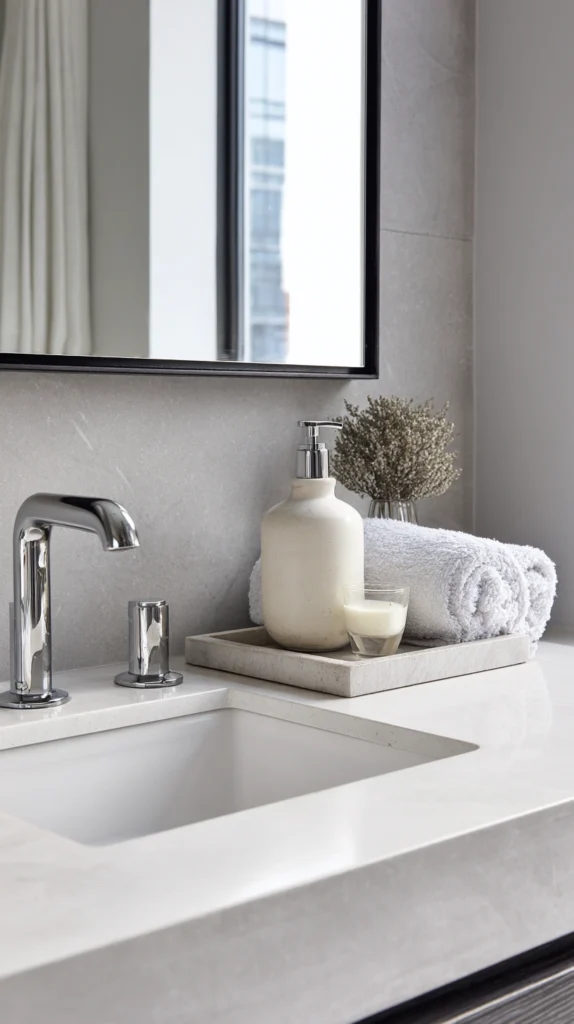
A tray styled around one substantial, eye-catching object — a sculptural soap dispenser, an interesting vase, a small piece of art — rather than several smaller items competing for attention.
Why a single statement piece can outperform a busier grouping
Not every tray benefits from the rule-of-three approach — sometimes one confidently chosen, substantial object, given generous surrounding space, reads as more sophisticated than a denser collection of smaller pieces.
The statement object
A sculptural ceramic soap dispenser, an unusually shaped vase, or a small decorative object with genuine visual weight, chosen specifically for its individual presence rather than as part of a coordinated set.
The surrounding restraint
Minimal additional items — perhaps one small candle or a single hand towel — kept deliberately secondary to the main statement piece, rather than competing with it for attention.
The negative space
Generous empty tray space surrounding the statement object, since this approach depends on that negative space to let the single piece register with real visual impact.
The tray choice
A simple, understated tray material, allowing the statement object itself to remain the display’s clear focal point rather than competing with an equally bold tray design.
The overall effect
A counter styling that reads as confident and curated, appropriate for a bathroom where a single beautiful object genuinely deserves to be the focus rather than sharing attention with several smaller items.
Cost breakdown: Statement object: $30–90 Simple tray: $15–35 Total: $45–125
6. The His-and-Hers Divided Tray
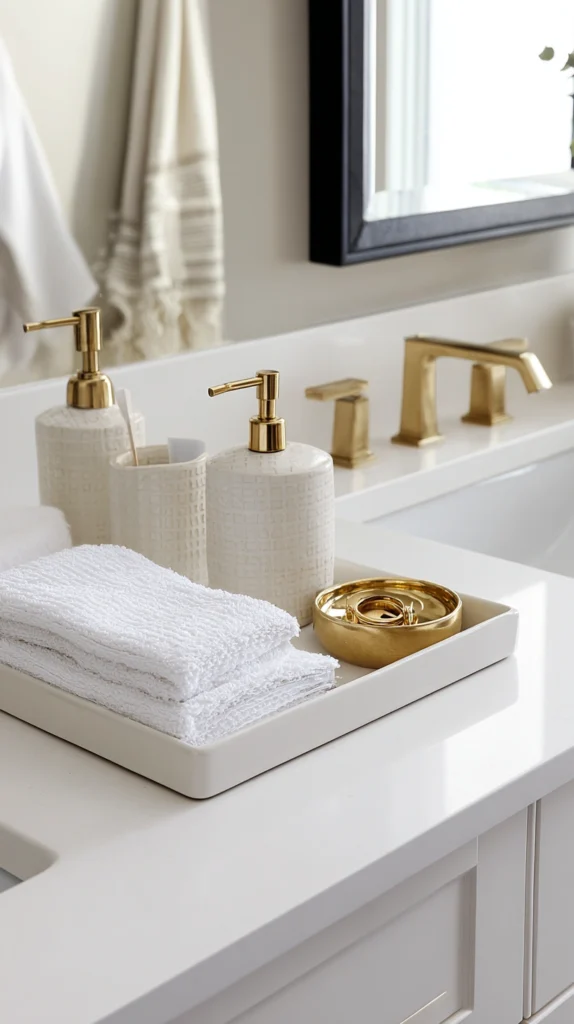
A wider tray divided visually into two sections, each styled slightly differently to reflect two different people’s specific products and preferences within one shared display.
Why a divided approach suits a shared bathroom counter specifically
Where two people share a single counter and sink, a tray split into two zones acknowledges that shared reality directly, giving each person’s specific products a clearly defined, respected space rather than fully mixing everything together.
The tray
A single wider tray, or two smaller matching trays positioned side by side, providing the overall visual unity of one styled display while still allowing for the internal division.
The zone styling
Each half styled with that specific person’s actual products — one side perhaps holding a cologne and shaving products, the other holding a specific skincare routine — rather than assuming identical needs on both sides.
The connecting element
A shared object at the tray’s center — a single candle or a small dish both people use — providing a unifying detail between the two otherwise distinct zones.
The material consistency
The same tray material and general styling approach used across both zones, ensuring the division reads as considered rather than simply two unrelated displays placed near each other.
The practical benefit
Reducing the same kind of ongoing product-ownership ambiguity relevant to any shared bathroom space, similar to the labeling principle useful in a shared double vanity’s drawer storage.
Cost breakdown: Wide tray or two matching trays: $25–60 Products and dispensers (per side): $30–60 Total: $55–120
7. The Guest Bathroom Welcome Tray
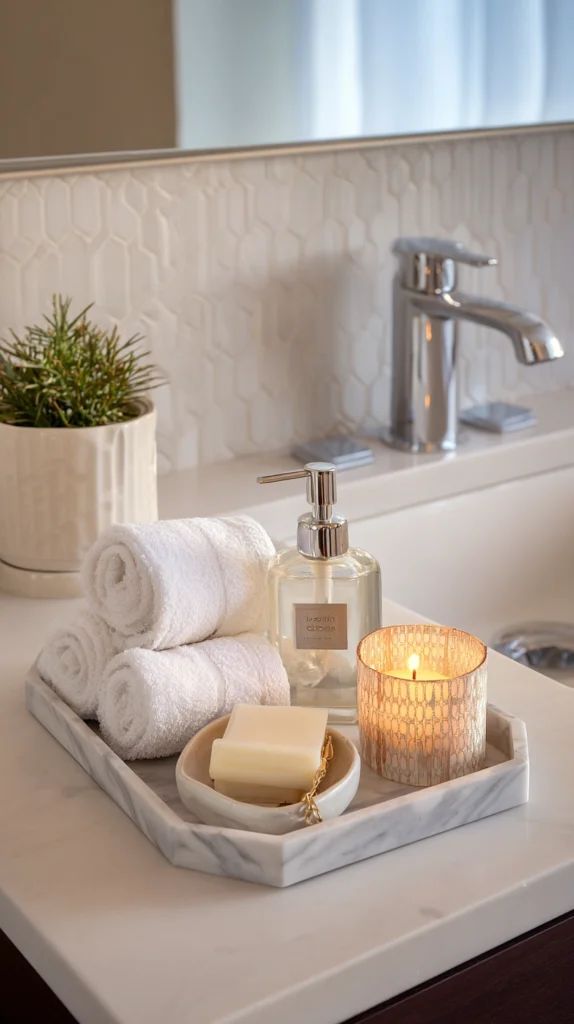
A tray specifically styled for a guest bathroom, including fresh hand towels, a small guest soap, and a candle, functioning as a small hospitality gesture rather than an everyday personal styling display.
Why a guest bathroom tray serves a different purpose than a primary bathroom’s daily display
A guest bathroom is used briefly and occasionally, by people who are not the household’s daily residents, meaning its tray should prioritize a welcoming, hospitable impression over the household’s own daily product needs.
The hand towels
Small guest hand towels, rolled or folded neatly, positioned within the tray or immediately beside it, providing a genuine hospitality touch beyond a single shared bath towel.
The guest soap
A decorative or specialty guest soap, chosen for its appearance as much as its function, since guests typically use it only briefly rather than depending on it for a daily routine.
The candle
A small candle, unlit during the day and available to light for an evening guest, adding a welcoming detail beyond pure function.
The seasonal refresh
The tray’s specific styling refreshed seasonally — a different candle scent, a seasonal accent — since a guest bathroom’s tray is more often refreshed for appearance’s sake than a primary bathroom’s daily-use tray.
The overall purpose
A small, deliberate hospitality gesture, signaling that the household considered a guest’s comfort specifically, rather than simply repurposing whatever tray styling works for the household’s own daily bathroom.
Cost breakdown: Guest hand towels: $20–40 Decorative guest soap: $10–25 Small candle: $10–20 Tray: $15–35 Total: $55–120
8. The Minimalist Two-Object Tray
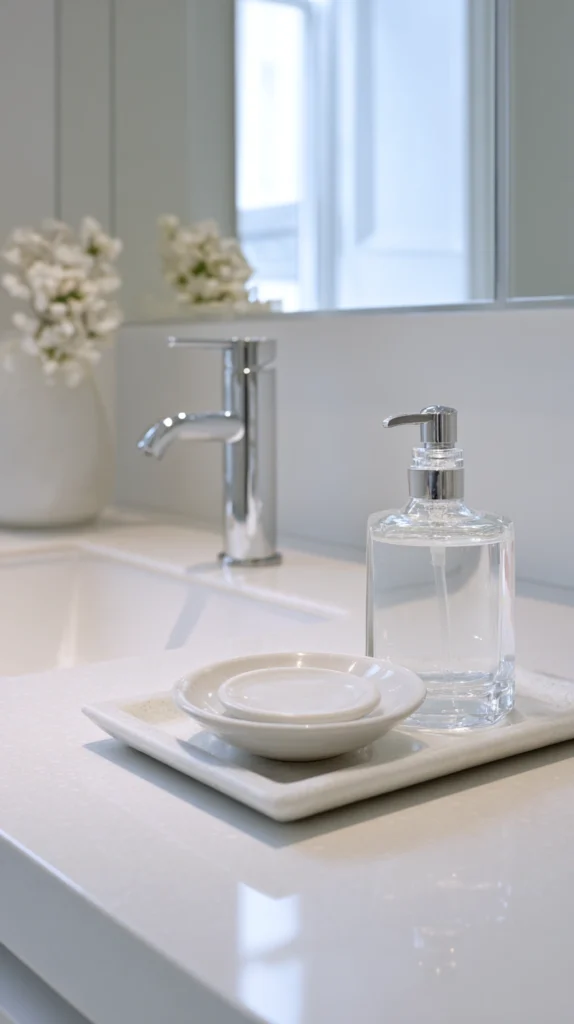
A tray styled with only two carefully chosen objects, embracing genuine minimalism rather than the more common three-or-more object grouping.
Why two objects can work when chosen and placed with enough intention
While three objects is the more commonly cited styling rule, a genuinely minimalist household may prefer just two, provided both are chosen specifically for their individual quality and the negative space around them is generous enough to prevent the pairing from reading as sparse or incomplete.
The two objects
One taller object and one shorter, maintaining at least this basic height variation even within a minimal two-piece approach, rather than two objects of identical height that would read as flat.
The quality bar
Both objects held to a higher individual quality standard than might be necessary in a denser grouping, since with only two items, each one needs to genuinely earn its place without other objects to distract from any weaker choice.
The tray restraint
A simple, unadorned tray, continuing the overall minimalist approach rather than introducing a heavily patterned or ornate tray that would compete with the deliberately spare object selection.
The negative space commitment
Considerably more empty tray space than a denser arrangement would leave, since this approach depends specifically on that negative space to read as intentional restraint rather than an underdeveloped display.
The overall effect
A counter styling that suits a genuinely minimalist household’s broader aesthetic, avoiding the temptation to add a third object purely to follow a general styling rule that does not fit this particular preference.
Cost breakdown: Two quality objects: $40–100 Simple tray: $15–35 Total: $55–135
9. The Layered Textural Tray With a Small Plant
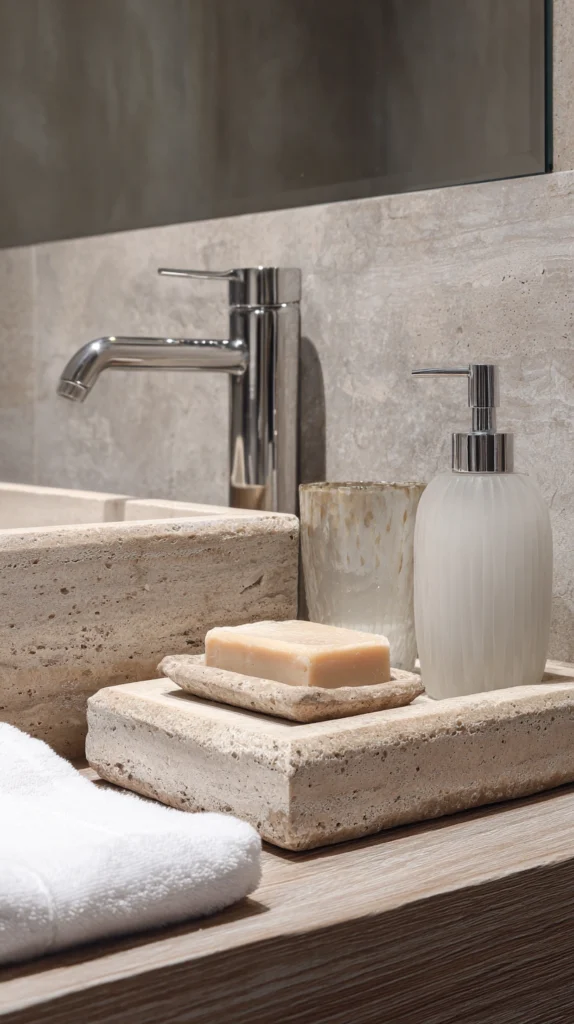
A tray combining varied textures — a woven base, a smooth ceramic dispenser, a rough stone dish, and a small trailing plant — for a richly layered, sensory display.
Why texture variety matters as much as color or height in a small tray
In a display this small and viewed this closely, subtle textural differences between objects register more distinctly than they might across a larger room-scale vignette, making textural variety a particularly effective tool for this specific application.
The base layer
A woven or textured tray, providing the display’s foundational texture.
The smooth element
A glass or glazed ceramic soap dispenser, providing a smooth, reflective counterpoint to the tray’s woven texture.
The rough element
A small unglazed stone or raw ceramic dish, adding a third, rougher texture to the mix, perhaps used to hold a bar of soap or a small ring.
The living element
A small trailing plant — a sprig of pothos in a tiny vase, or a small air plant — adding genuine organic texture and a touch of living green to the otherwise static display.
The overall sensory richness
A tray that rewards close inspection and touch as much as visual appreciation, the combination of textures doing considerable styling work even without relying heavily on color or a large number of objects.
Cost breakdown: Woven tray: $15–35 Ceramic dispenser and stone dish: $30–60 Small plant and vase: $15–30 Total: $60–125
10. The Black and Gold Dramatic Tray
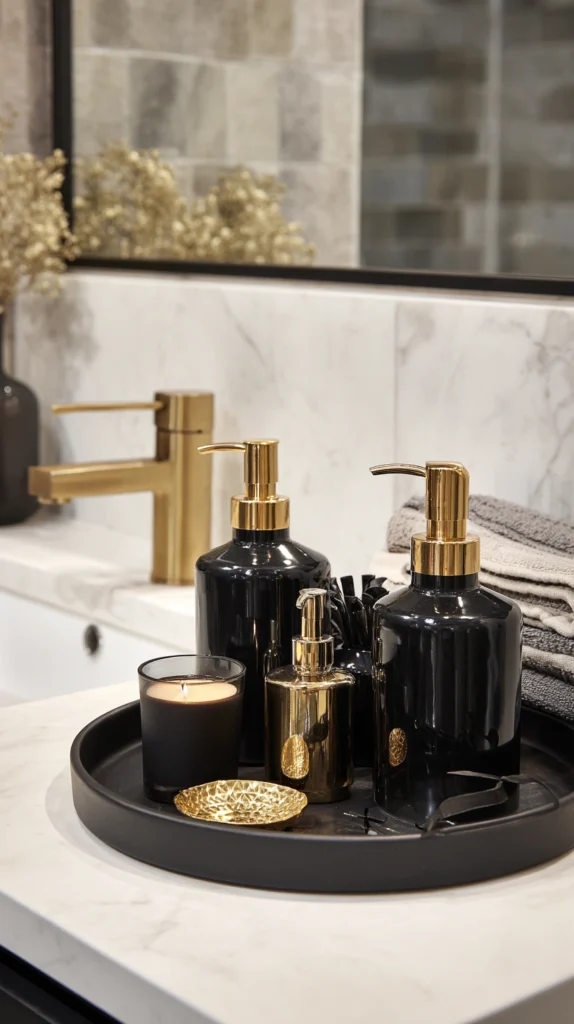
A tray styled in a bold black and gold palette, using a black tray, gold-topped bottles, and a black candle, for a more dramatic, glamorous counter statement.
Why black and gold suit a bathroom wanting genuine drama over quiet neutrality
Where most vanity tray styling leans toward soft neutrals and calm materials, a black and gold palette offers a considerably bolder, more glamorous alternative, suited to a bathroom already embracing a similarly dramatic overall design direction.
The tray
A black marble, lacquered wood, or matte black metal tray, providing the display’s dark foundation.
The gold accents
Gold-topped glass dispensers, a small gold dish, and gold-rimmed drinking glass, all in a consistent warm gold or brass finish rather than a mix of competing metal tones.
The candle
A black candle in a gold holder, continuing the palette while adding genuine evening ambiance to the display.
The contrast principle
The stark contrast between the black base materials and the warm gold accents doing most of this display’s visual work, rather than relying on textural variety or a wide range of objects.
The overall mood
A counter styling suited to a bathroom with a genuinely bold, glamorous design sensibility, offering real visual drama rather than the quieter, more neutral approach common to most vanity tray styling.
Cost breakdown: Black tray: $20–45 Gold-accented dispensers (2): $35–75 Black candle and gold holder: $15–30 Total: $70–150
11. The Seasonal Rotating Tray
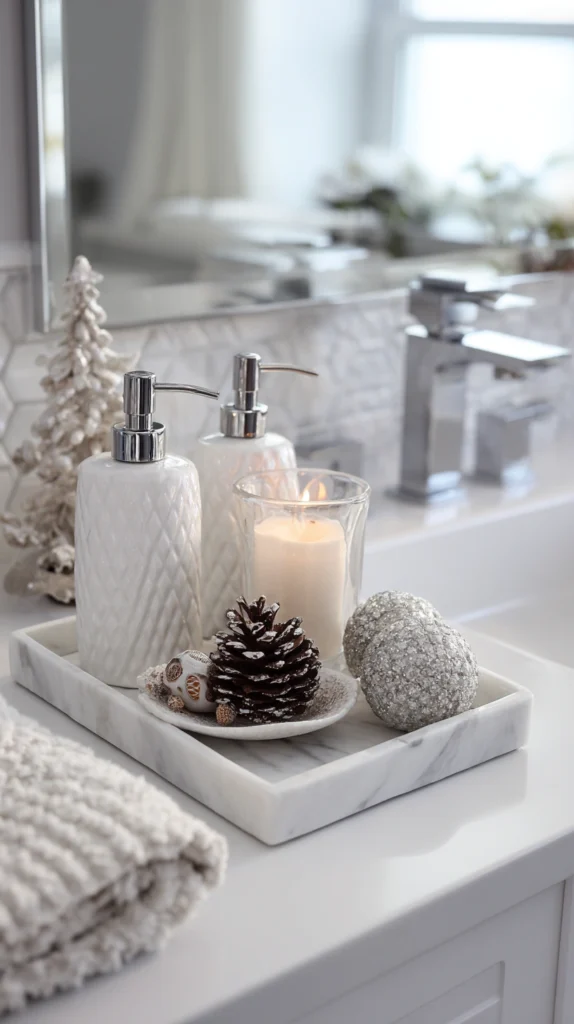
A tray whose contents are deliberately refreshed each season — a small pumpkin in fall, a sprig of holly in winter, fresh flowers in spring — while the base tray and primary functional items remain constant year-round.
Why isolating seasonal change to the tray keeps the rest of the bathroom stable
Rather than redecorating an entire bathroom seasonally, a single tray serving as the designated rotating element lets the rest of the space remain settled and consistent while still providing a genuine, regularly refreshed point of seasonal interest.
The constant base
The tray itself and the primary functional soap and lotion dispensers remaining the same throughout the year, providing visual continuity across every seasonal rotation.
The seasonal accent
One small, specifically seasonal object — a mini pumpkin or dried wheat sprig in fall, a small sprig of greenery in winter, a single stem of fresh flowers in spring — swapped in and out as the year progresses.
The consistent styling principle
The same height-variation and restraint principles applied regardless of the season, ensuring each seasonal version of the tray remains equally well-composed rather than becoming cluttered as new seasonal items are added without corresponding removal of the previous season’s accent.
The low-cost, low-effort rotation
A meaningfully lower-cost and lower-effort way to keep a bathroom feeling current through the year than redecorating the entire room seasonally, isolating that seasonal refresh to one small, manageable element.
The overall value
A bathroom that feels attended to and current without requiring seasonal effort disproportionate to the room’s actual size and use.
Cost breakdown: Base tray and dispensers (one-time): $50–120 Seasonal accent (per season): $8–20 Total: $50–120 (plus $8–20 per seasonal refresh)
12. The Travel-Inspired Collected Tray
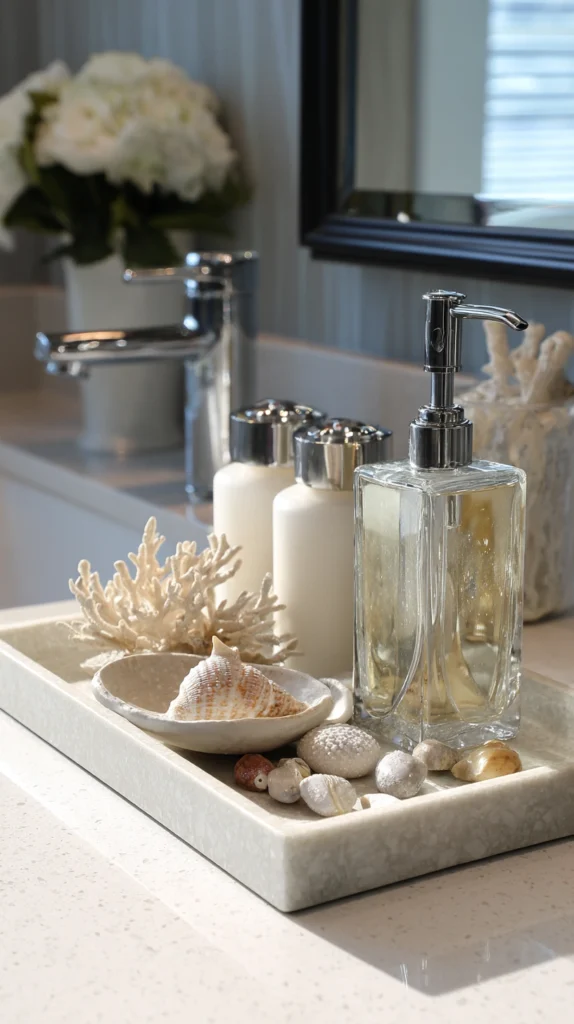
A tray styled with small objects gathered from specific trips or travels — a small shell, a piece of pottery, a miniature bottle — creating a personal, storied display rather than a purely purchased one.
Why travel-collected objects add a genuine personal narrative to the display
Unlike objects purchased specifically for this purpose, items gathered from actual travel carry real personal history and memory, giving the tray a specific, individual story rather than a generic, replicable styling formula.
The object selection
A small shell from a specific beach, a piece of local pottery from a trip abroad, a miniature perfume bottle purchased somewhere memorable — genuinely personal items rather than objects acquired specifically to fill this particular display.
The functional integration
A genuinely used soap or lotion dispenser included alongside the travel objects, ensuring the tray still serves its practical daily function rather than becoming purely a memory display disconnected from actual bathroom use.
The ongoing collection
Added to gradually over subsequent trips, rather than assembled all at once, allowing the tray’s specific character to develop and change genuinely over time.
The storytelling value
A tray that prompts a specific memory or conversation for the household, distinct from a display assembled purely for its visual coordination.
The overall effect
A vanity tray with real individual character and history, reflecting the specific household’s actual experiences rather than a purely aesthetic, interchangeable arrangement.
Cost breakdown: No new cost — assembled from existing travel objects Functional dispenser: $15–35 Total: $15–35
13. The Candlelit Evening Tray
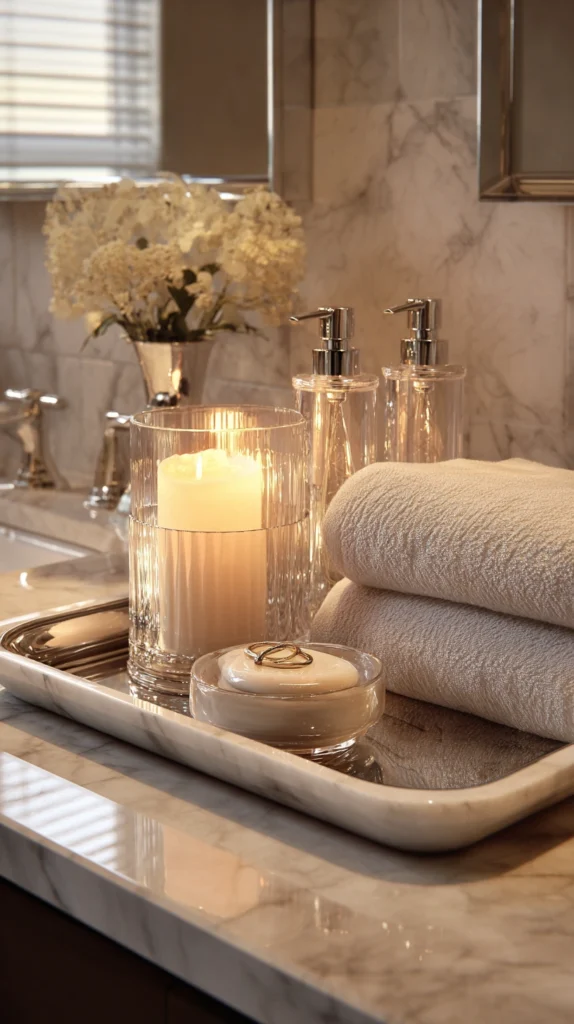
A tray specifically designed with evening use in mind, incorporating one or two candles positioned to provide genuine ambient light during a nighttime routine, rather than relying solely on the bathroom’s main overhead lighting.
Why a tray can serve an evening lighting function beyond pure daytime styling
Bathroom overhead lighting is often bright and utilitarian, well suited to grooming tasks but poorly suited to a calming evening routine. A tray with its own candlelight offers an alternative, softer light source specifically for that use.
The candle placement
One or two candles positioned within the tray, lit specifically during an evening bath or skincare routine, providing a warm, low light alternative to the room’s main overhead fixture.
The safety consideration
Candles kept clear of any nearby fabric or particularly flammable objects, and never left unattended, a genuine practical safety concern regardless of how considered the overall display.
The functional items
Evening-specific products — a nighttime skincare routine’s key items — positioned within easy reach of the lit candles, reinforcing the tray’s specific evening-use function.
The daytime appearance
The unlit candles still functioning as attractive styling objects during the day, so the tray works equally well as a daytime display and an evening lighting tool.
The overall value
A tray that does genuine double duty, serving both the daily styling function relevant to every other idea on this list and a specific, practical evening lighting role beyond pure decoration.
Cost breakdown: Candles (2): $15–30 Tray and functional items: $30–70 Total: $45–100
14. The Complete Vanity Tray Styling (The Fully Considered Counter)
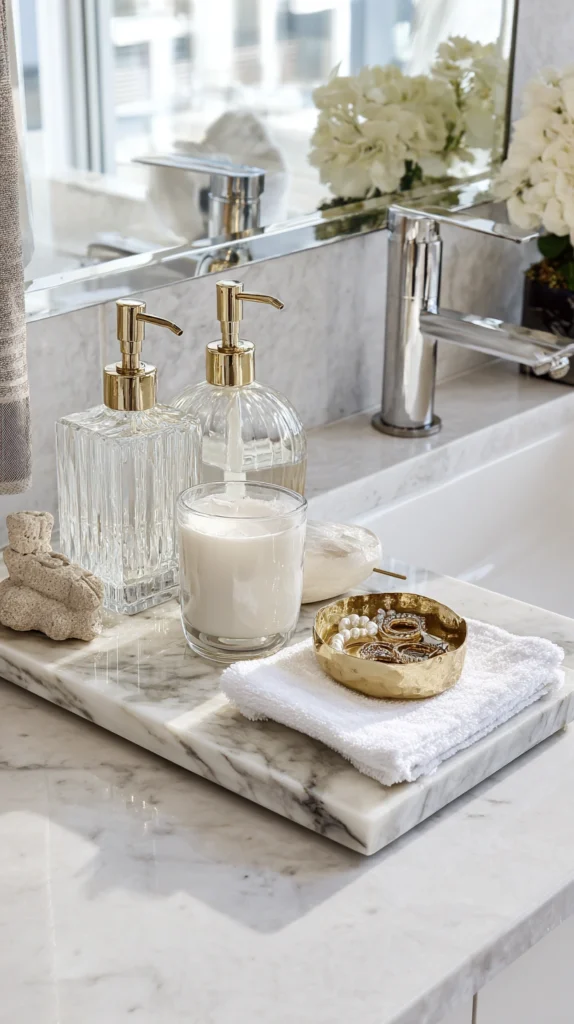
A complete vanity tray combining several of the approaches above — a well-chosen tray material, genuine height variation, a mix of function and beauty, and seasonal flexibility — treating the small display as a fully considered composition rather than a simple product arrangement.
What separates the complete tray from a few products placed in a dish
A few bottles placed in a shallow dish: a small improvement over a bare counter. A complete vanity tray: every element — material, height, function, and seasonal refresh — deliberately considered, so the small display reads as genuinely styled rather than simply tidied.
The elements of the complete vanity tray
The tray itself
A material chosen deliberately — marble, rattan, or another considered option — rather than whatever tray happened to be on hand.
The height variation
At least three objects at genuinely varied heights, following the same rule-of-three principle relevant to any well-composed small display.
The function and beauty balance
Genuinely used soap and lotion, decanted into attractive dispensers, alongside one or two purely decorative objects.
The material variety
A mix of glass, ceramic, and metal, adding textural interest within the tray’s small footprint.
The seasonal element
One small, easily swapped seasonal accent, keeping the display feeling current throughout the year without requiring a full restyling.
The upkeep
Products kept topped off, containers kept clean, and the tray itself wiped down regularly, maintaining the display’s considered appearance through actual daily use.
The complete design in action
A morning routine:
Reaching for soap: A refillable glass dispenser, its brass pump catching the bathroom’s morning light.
Applying lotion: A matching dispenser, positioned beside a small dish holding a ring removed for handwashing.
A glance at the tray: A small seasonal accent and a candle unlit for now, the whole grouping reading as considered rather than simply functional.
The complete vanity tray: not a bare counter with a few products scattered across it, nor a purely decorative display disconnected from actual use, but a small, genuinely styled composition that serves the bathroom’s real daily function every single day.
Cost breakdown for the complete tray: Assuming a starting point of a bare counter with products in original packaging: Tray: $20–50 Refillable dispensers (2–3): $40–90 Decorative accent object: $20–50 Small plant or seasonal accent: $10–25 Candle: $10–20 Total: $100–235
Phased for a gradual approach:
Immediate: The tray itself and one refillable dispenser, the foundational containment step
Following weeks: Additional dispensers, a decorative accent object, and a candle
Ongoing: Seasonal accents rotated as the year progresses, keeping the display current
The complete vanity tray: not a large investment, but a small, consistently maintained styling choice that changes how the entire bathroom counter reads every single day.
The Question Before Any Vanity Tray Styling Decision
Before choosing a tray or arranging any objects:
What is the primary problem the current bathroom counter has?
If the answer is: too many scattered products with no organization — start with the tray itself as pure containment, before worrying about any further styling.
If the answer is: the counter looks fine but feels uninspired — the black and gold dramatic approach or a single statement object.
If the answer is: two people share the counter with competing products — the his-and-hers divided tray.
If the answer is: wanting the bathroom to feel seasonally current without much effort — the seasonal rotating tray, isolating that change to one small, manageable element.
The design follows the counter’s actual current problem, more than any single universal tray-styling formula. Every idea on this list solves a different specific version of what makes a bathroom counter feel cluttered, uninspired, or simply unconsidered. The question is which specific issue matters most for this particular counter.
The single tray containing three well-chosen objects: still transforms a scattered counter into one considered display. The complete, ongoing styling, maintained with real attention: a bathroom counter that reads as genuinely designed every single day, not just when company is expected.
That everyday polish: the whole point of styling a vanity tray in the first place.
Getting Started This Weekend
The immediate vanity tray solution:
Clear the counter completely and choose one tray to contain everything.
Not a full restyling — just the single act of containment, which does most of the initial visual work on its own.
Decant the two most-used products into matching, attractive dispensers.
The single change most responsible for shifting the display from functional to styled.
Arrange whatever remains at three genuinely different heights.
The rule-of-three principle, tested even with whatever objects are already on hand.
Add one purely decorative object, chosen specifically rather than whatever was already there.
The rest of the design: the elaboration of this moment.
The tray: the beginning. The vanity display: what gets arranged, and maintained, within it.