

15 Clever Laundry Room Storage Ideas That Save Space
The laundry room may be one of the hardest-working spaces in your home, but it’s often one of the most overlooked when it comes to organization.
Whether you have a spacious utility room or a compact laundry closet, smart storage solutions can make the space more functional, organized, and enjoyable to use. By maximizing every inch of available space, you can reduce clutter, streamline your laundry routine, and keep everyday essentials within easy reach.

The secret to an efficient laundry room isn’t simply adding more cabinets—it’s making the most of the space you already have. Vertical storage, multifunctional furniture, hidden organizers, and clever space-saving accessories can transform even the smallest laundry area into a well-organized workspace.
These 15 clever laundry room storage ideas will help you create a cleaner, more efficient room that works harder while looking stylish and clutter-free.
1. Vertical Cabinetry That Uses Wall Height
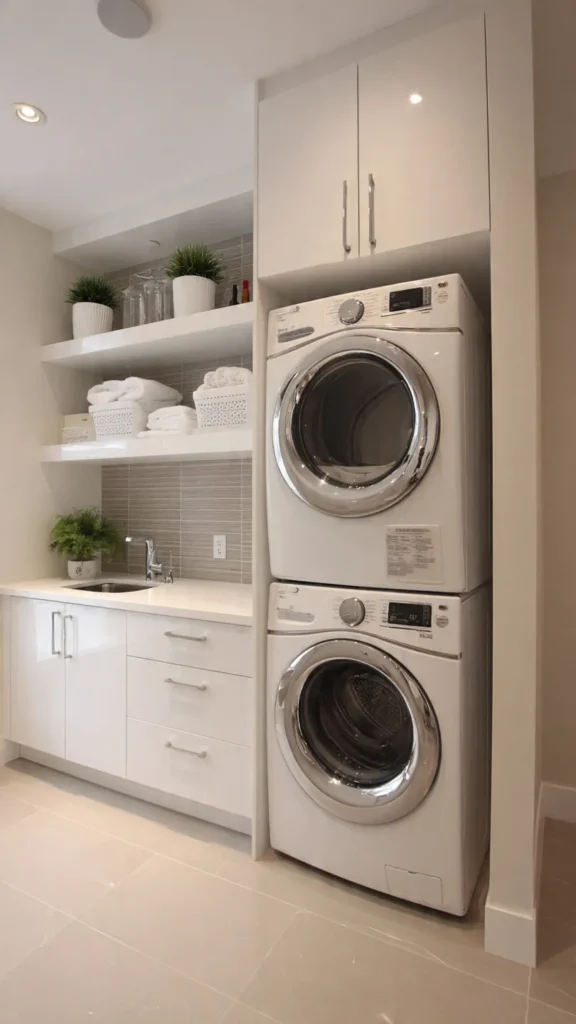
One of the most underused opportunities in any laundry room is the wall space above eye level. Standard upper cabinets typically stop at 7 feet, leaving a gap of wasted space between the cabinet top and the ceiling. Extending cabinetry all the way to the ceiling — even with a simple open shelf at the top — adds significant storage without touching the floor plan.
Make it work: Use the highest shelves for items you access infrequently: backup cleaning supplies, seasonal linens, or overflow paper products. Pull-down shelf systems (available at most hardware stores) make high shelves accessible without a step stool. If full custom cabinetry is out of budget, IKEA’s SEKTION system can be configured floor-to-ceiling at a fraction of the cost.
Pro tip: Paint the inside of cabinet interiors in a light, bright color — even white — so items stored in deep cabinets are easier to spot and retrieve.
2. Floating Shelves for Easy Access

Floating shelves provide practical storage without the visual weight of traditional upper cabinets. Installed above washers, dryers, or folding counters, they keep detergents, fabric softeners, and spray bottles within arm’s reach while maintaining an open, airy feel.
Make it work: Space shelves at least 18 inches above a top-loading washer so the lid can open fully without obstruction. For front-loaders, shelves can sit closer — 12 to 14 inches above the machine is typically sufficient. Use heavy-duty bracket-mounted shelves rather than keyhole brackets if you plan to store anything heavier than spray bottles, since laundry room humidity can weaken adhesive-mounted hardware over time.
Pro tip: Decant detergents into uniform glass or acrylic canisters with labels. It looks dramatically cleaner, and you can see at a glance when you’re running low — no more lifting heavy jugs to check.
3. Overhead Storage Above Appliances
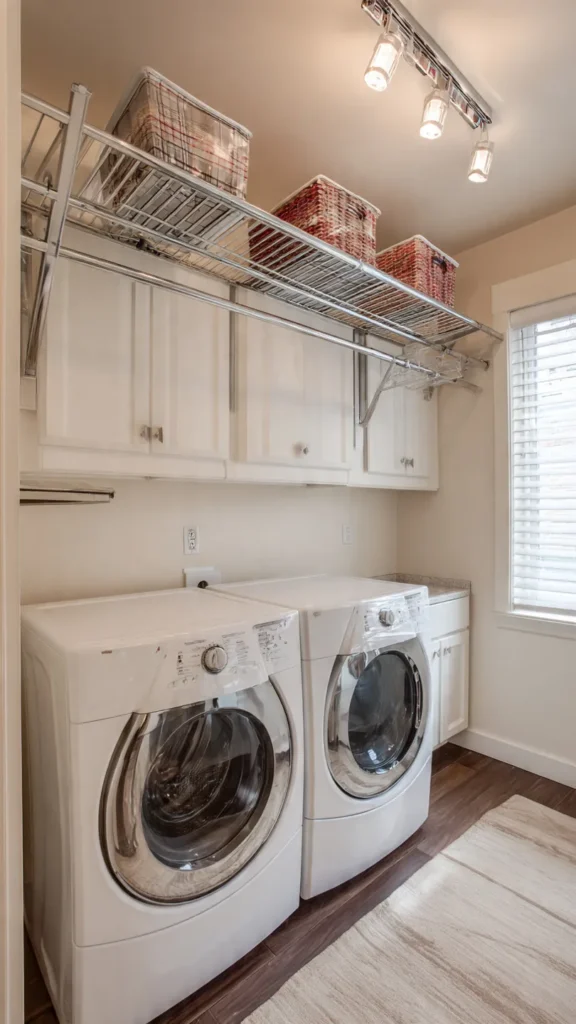
The zone directly above your washer and dryer is prime real estate that most laundry rooms completely ignore. A shelf or cabinet installed here turns dead air into a dedicated landing spot for the things you reach for every single load.
Make it work: Build or buy a shelf that spans both appliances to create a continuous surface. Depth matters — a 12-inch deep shelf above standard appliances is functional without feeling oppressive. Add a lip or small rail along the front edge to prevent items from vibrating off during spin cycles. If you have stackable units, a single shelf at about 6.5 feet works well and leaves room for a hanging rod below the ceiling.
Pro tip: Store a small basket here specifically for items found in pockets — coins, receipts, hair ties, lip balm. It stops the clutter from spreading across other surfaces and makes it easy to return things to their owners.
4. Pull-Out Storage for Narrow Spaces
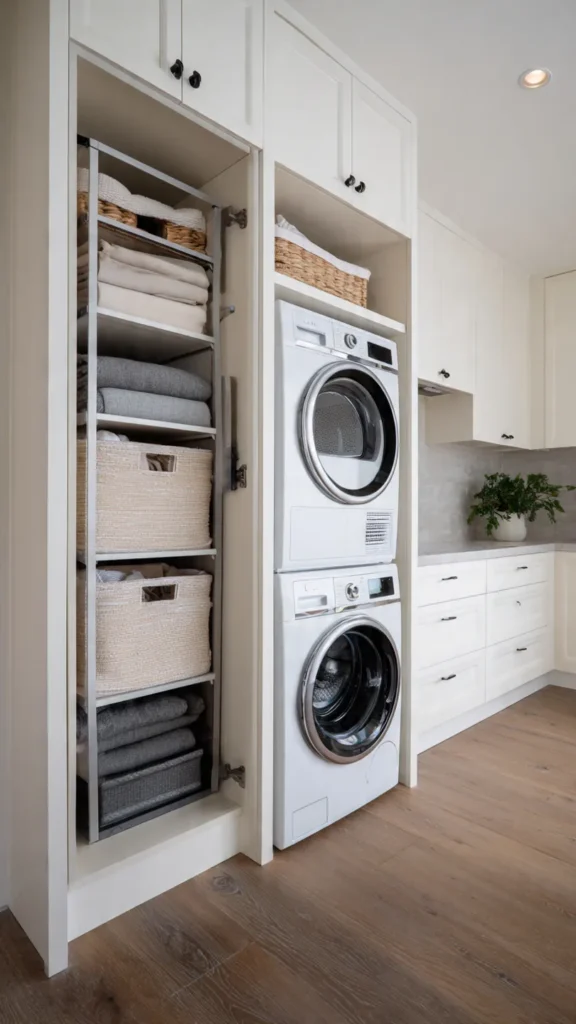
A gap of just 6 to 9 inches between an appliance and a wall or cabinet is enough to install a slim pull-out tower — one of the most space-efficient storage solutions in any laundry room. These slide in flush and reveal a surprisingly useful column of shelving when pulled out.
Make it work: Pre-made pull-out pantry inserts from hardware stores can be cut to height and fitted with casters for a DIY version. Alternatively, companies like Rev-A-Shelf make laundry-specific pull-out units designed to hold tall bottles upright. Measure your gap carefully — account for baseboards, which can reduce the true usable width by half an inch or more.
Pro tip: Mount a small hook on the side of the pull-out unit to hang a hand brush or lint roller. Every inch of a pull-out is usable, including the sides.
5. Built-In Storage Cabinets with Multiple Functions
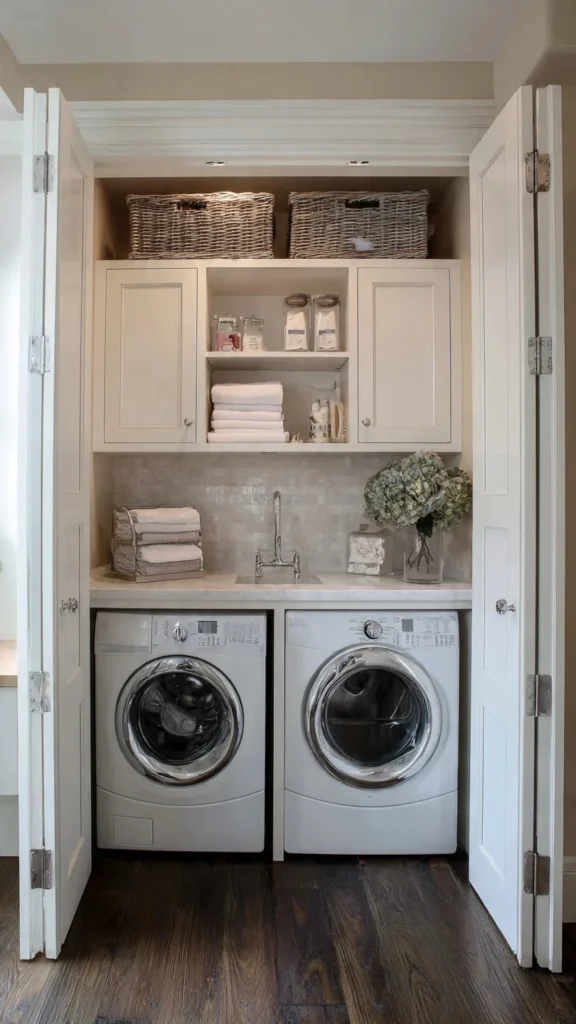
A purpose-built laundry cabinet does more than store supplies — it organizes the entire workflow of the room. The best built-ins include dedicated zones for dirty laundry, clean folded clothes, cleaning products, and small tools, so everything has a defined home and nothing piles up on the floor.
Make it work: When planning a built-in, include at least one pull-out hamper section (two if you sort by color), a tall broom closet section for mops and the ironing board, and a counter-height folding surface. Cabinet interiors can be customized with adjustable shelving, door-mounted organizers, and pull-out drawers. If hiring a carpenter is out of budget, modular systems from IKEA, Home Depot, or The Container Store can be combined to achieve a near-custom look.
Pro tip: Integrate a power strip inside one cabinet section to charge small appliances or power a steamer without cords trailing across the floor.
6. Wall-Mounted Drying Racks
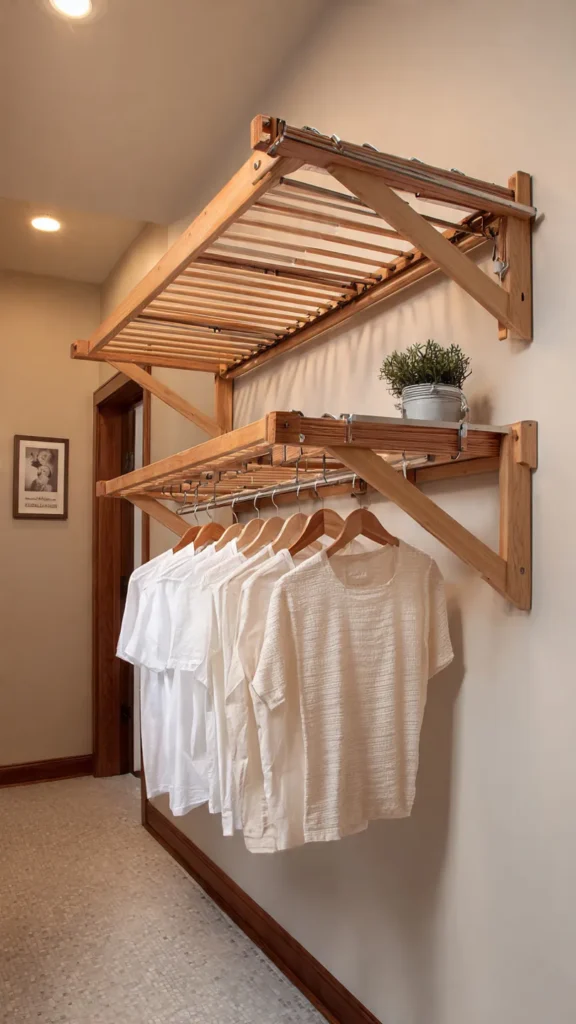
A wall-mounted drying rack is one of the highest-value space-saving additions to a laundry room. It handles delicates, activewear, and anything that can’t go in the dryer — then folds flat against the wall when not in use, occupying almost no space.
Make it work: Choose a rack with a weight rating that matches your needs — most quality wall-mounted racks hold 30 to 45 pounds when extended. Mount it into wall studs, not just drywall, since wet laundry is heavier than it looks. Position it at a height where hanging garments clear the floor by several inches so they can air-dry fully without pooling.
Pro tip: Install your rack near a vent or window so air circulation speeds up drying time. A small clip-on fan positioned nearby can cut drying time almost in half compared to still air.
7. Hidden Storage Behind Cabinet Doors
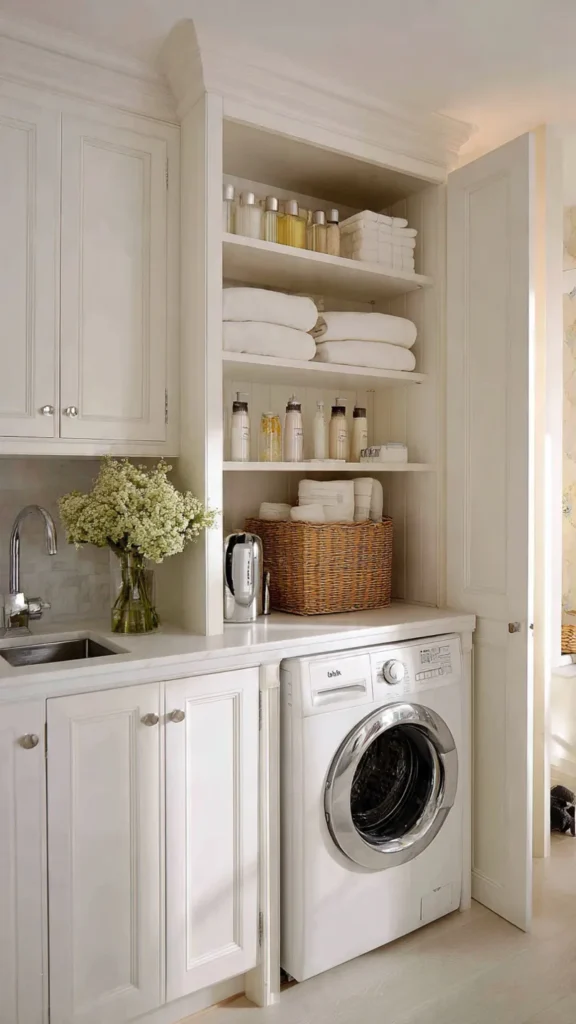
Visible clutter is the enemy of a calm laundry room, and the back of a cabinet door is one of the most underused storage surfaces in the house. Door-mounted organizers can hold an enormous amount — spray bottles, dryer sheets, stain sticks, lint rollers, rubber gloves — entirely out of sight.
Make it work: Over-door wire racks work well for this application. For a cleaner look, mount a shallow wooden panel with hooks and small shelves directly to the cabinet door interior. Check the door clearance carefully — interior shelving must have enough room to clear the cabinet frame when the door closes. Typically a 2- to 3-inch depth is the maximum for most standard cabinets.
Pro tip: Mount a small whiteboard or magnetic notepad inside one cabinet door to track what supplies are running low. You can update it during a laundry session and bring the list to the store without having to memorize anything.
8. Under-Counter Storage Solutions
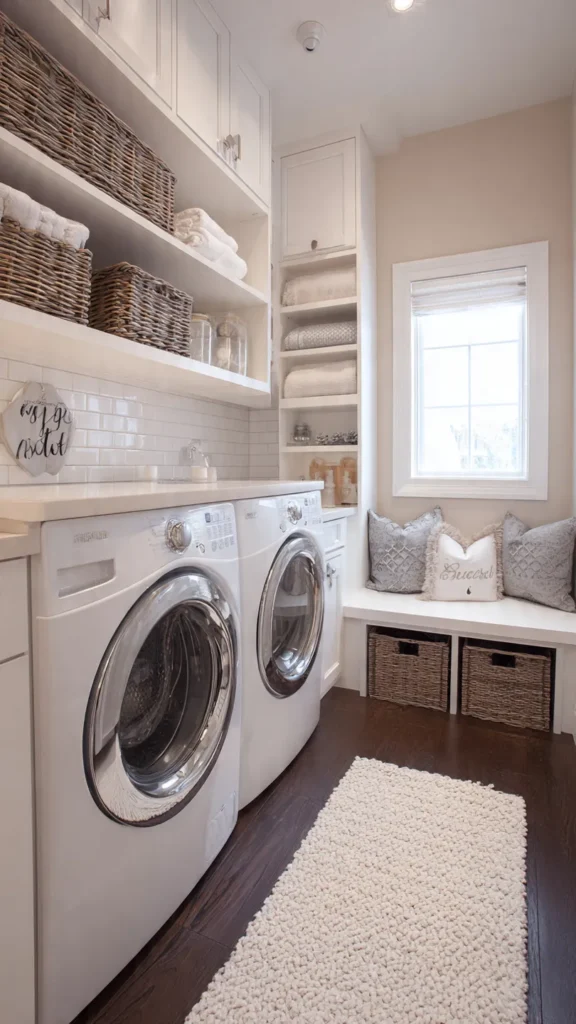
Counter-height surfaces in a laundry room are invaluable for folding and sorting, but the space below the counter is just as valuable — and often wasted. Under-counter storage keeps the worktop clear by relocating supplies, tools, and bins to a spot that’s still fully accessible but out of the visual field.
Make it work: If your washer and dryer are front-loading, consider raising them on pedestals with built-in drawers — manufacturers sell these as accessories, and they turn previously dead floor space into legitimate storage. For rooms with a dedicated counter separate from the appliances, install drawers rather than open shelving below. Drawers hide mess better and make it easier to organize small items like stain sticks, dryer balls, and clothespins.
Pro tip: Line the bottom of under-counter drawers with non-slip drawer liner to prevent bottles and tools from sliding and tipping every time a drawer is opened.
9. Stackable Storage Bins and Baskets
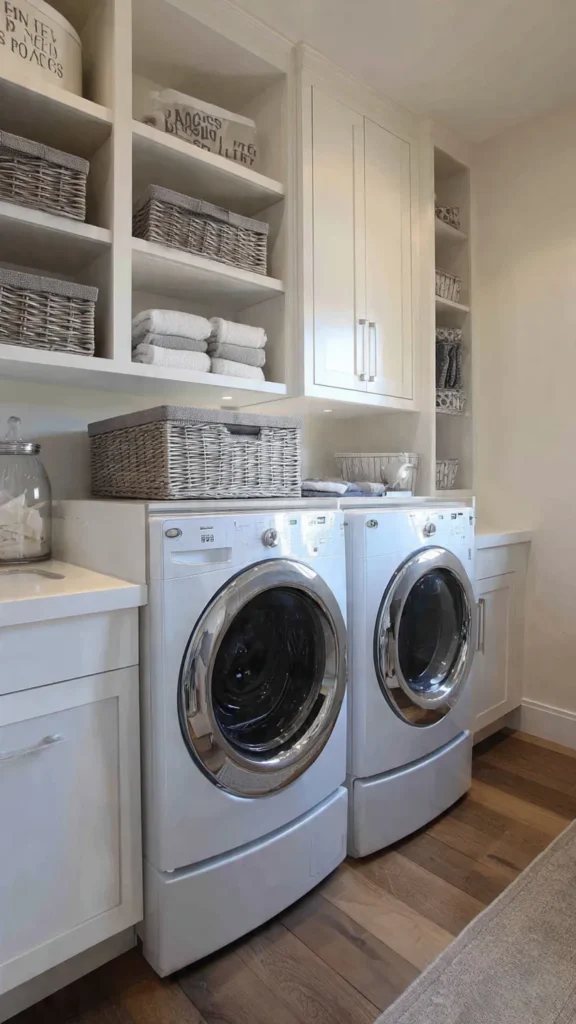
The right bins and baskets don’t just store things — they create a sorting system that saves time on laundry day. Stackable containers allow you to build vertical organization inside cabinets and on shelves without needing additional furniture.
Make it work: Assign each basket a specific category: one for whites, one for darks, one for delicates, one for items needing spot treatment. Labeling — whether with a label maker, chalkboard tags, or woven basket labels — makes the system easy for every household member to follow. Choose baskets with open fronts or handles for easy removal from high shelves.
Pro tip: Wire mesh stackable bins work especially well for laundry supplies because you can see contents at a glance without pulling anything out. Solid bins are better for items you want hidden, like cleaning rags or worn-out dryer sheets waiting to be repurposed.
10. Multi-Purpose Laundry Furniture
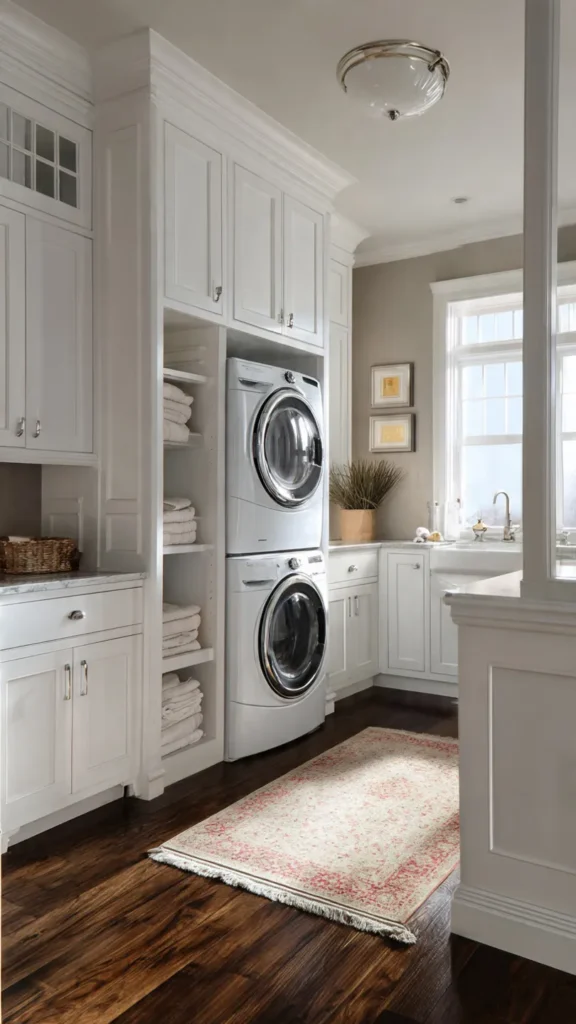
In small laundry rooms, every piece of furniture must earn its place by doing more than one job. A bench that opens for storage, a cabinet that doubles as a folding counter, or a cart that functions as both hamper and transport — these dual-purpose pieces cut the need for additional items that would crowd the room.
Make it work: A rolling utility cart with multiple tiers is one of the most flexible pieces you can add — it serves as extra counter space, a hamper station, a supply caddy, and can be wheeled out of the way when not needed. Storage ottomans or benches at the laundry room entrance are ideal for sitting while removing shoes and storing cleaning rags or reusable bags inside.
Pro tip: Look for furniture pieces that are standard dimensions — 24 inches wide, 36 inches tall — so they fit neatly beside appliances without awkward gaps. Custom gaps invite clutter to accumulate.
11. Door-Mounted Storage Solutions
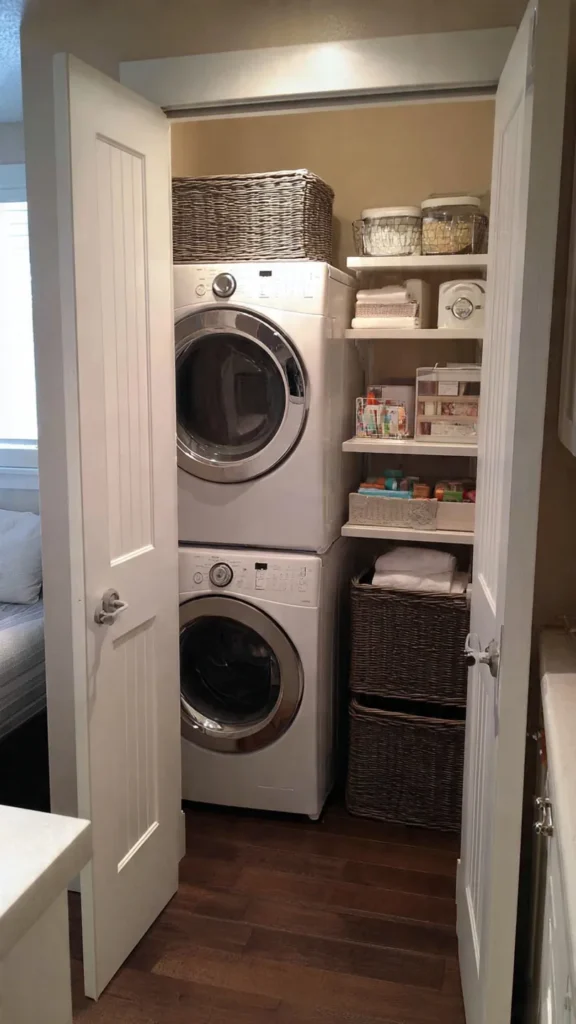
The back of the laundry room door is a full-height storage surface that costs nothing to use. In a small laundry room, a well-organized door can hold the equivalent of an entire cabinet’s worth of supplies.
Make it work: Over-door organizers with clear pockets are ideal for small flat items — dryer sheets, stain wipes, measuring scoops, spare buttons. A few sturdy hooks can hold the ironing board, a broom, or reusable shopping bags. Ensure the organizer doesn’t prevent the door from opening or closing fully — measure the clearance between the door and any adjacent wall, cabinet, or appliance before purchasing.
Pro tip: Attach a small hanging file pocket to the back of the door to store instruction manuals for your appliances, warranty cards, and care labels you’ve clipped from garments. It’s one of those small organizational wins that pays off repeatedly when you need to troubleshoot an error code at 9 p.m.
12. Open Shelving with Organized Containers
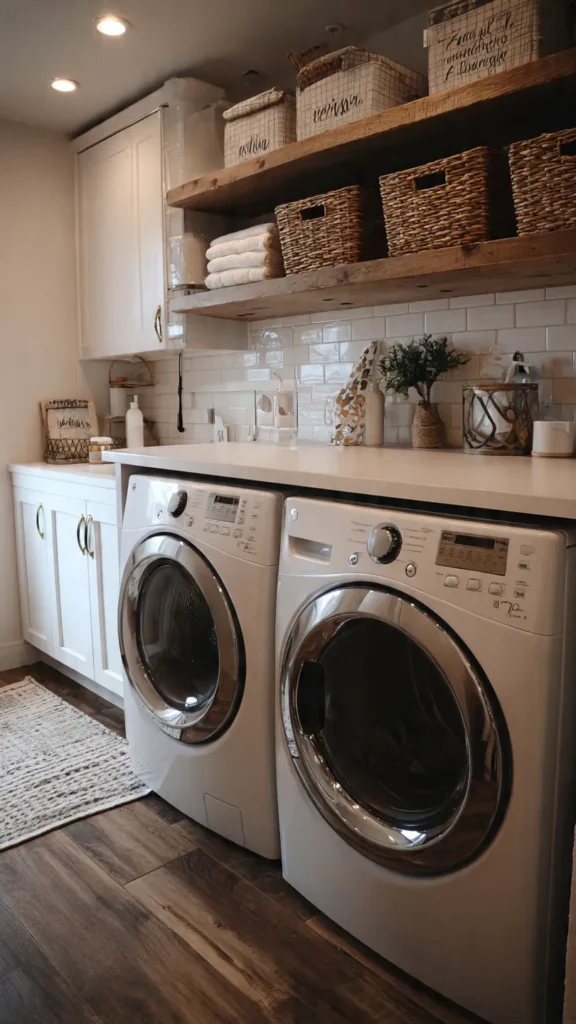
Open shelving creates a laundry room that feels light and accessible — but only when the containers on those shelves are consistent, labeled, and thoughtfully arranged. Without that discipline, open shelves become cluttered faster than any other storage format.
Make it work: Commit to a single container family — all matching baskets, all matching bins, or all matching canisters — for everything on open shelves. Uniform containers make the shelves look intentional even when they’re full. Group items by use: a basket for detergents, a basket for fabric care, a basket for cleaning supplies. Reserve the most visible shelf for the items used most frequently.
Pro tip: Adjustable bracket shelving systems like Elfa or the IKEA BERGSHULT allow you to reconfigure shelf heights as your storage needs change — far more practical than fixed-position shelving in a room where needs evolve over time.
13. Hanging Rods for Vertical Organization
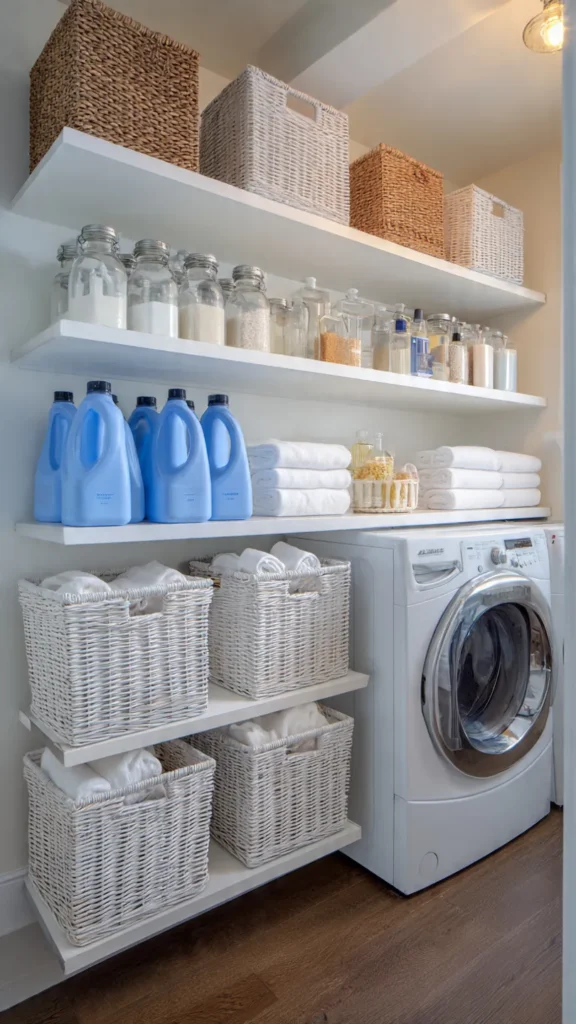
A hanging rod in the laundry room transforms the room’s utility dramatically. It handles freshly ironed shirts, air-drying garments, clothes waiting to be returned to closets, and pre-sorted outfits — all without occupying any floor or shelf space.
Make it work: Position a rod at a height that allows long garments like dresses and pants to hang without touching the counter or floor below. A rod installed 72 to 78 inches from the floor works well for most garments. For a tiered system, install a second rod lower down for shorter items like shirts. Tension rods that fit between two walls or cabinet sides require no drilling and can be repositioned easily.
Pro tip: Add a few velvet hangers to the rod permanently so you never have to hunt for one while transferring clothes from the dryer. The velvet prevents slipping and takes up far less space than plastic or wood hangers.
14. Corner Storage to Maximize Awkward Areas
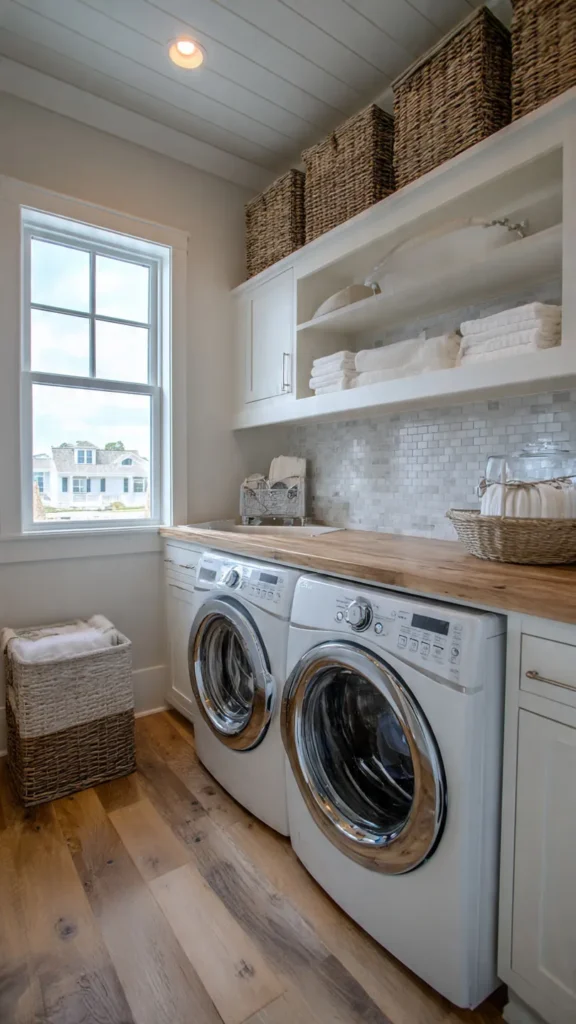
Corners are the most neglected areas in any laundry room and also some of the most valuable. Most laundry rooms have at least one interior corner that currently holds nothing but dead space — and with the right solution, that corner can hold a surprising amount of storage.
Make it work: Pie-cut lazy Susans, triangular corner shelves, and L-shaped corner cabinets all work well in laundry rooms. For a simpler approach, a freestanding corner shelf unit can be placed with no installation required, making it ideal for renters. If your washer and dryer are positioned along one wall, the corner beside them is perfect for a tall slim tower unit that holds supplies vertically.
Pro tip: If the corner is too awkward for shelving, use it as a dedicated broom and mop station. Mount a wall-mounted broom holder strip with grip clips to keep long-handled tools flat against the wall and completely off the floor.
15. Custom Storage Tailored to Your Needs
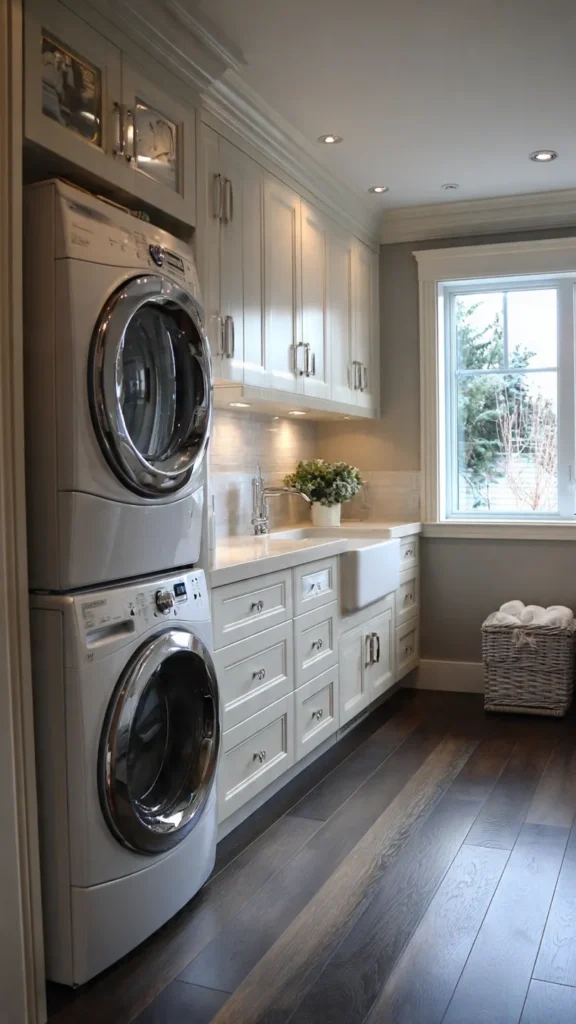
No two laundry rooms are exactly alike — different layouts, appliance configurations, household sizes, and sorting habits mean that the most effective storage solution is always one designed around your specific routines. Custom storage eliminates the compromises that come with one-size-fits-all solutions.
Make it work: Before investing in any storage system, spend one full week paying attention to how you actually use the room. Note what you reach for every single load, what causes friction, and where clutter accumulates. Use those observations to prioritize your storage decisions. A family that sorts laundry into five categories needs more hamper capacity than shelf space; a single person who line-dries everything needs more rod space than cabinet depth.
Pro tip: Custom does not have to mean expensive. Semi-custom solutions — IKEA cabinet systems, modular wire shelving, and a skilled handyman — can achieve a near-custom result at 20 to 30 percent of the cost of a true built-in. The investment is in the planning, not necessarily the materials.
Clever laundry room storage transforms even the smallest spaces into efficient and enjoyable environments. By thinking vertically, using hidden and multi-functional solutions, and tailoring storage to your specific needs, you can save significant space while improving daily organization. These fifteen ideas demonstrate that smart storage is the key to creating a laundry room that works harder, functions more smoothly, and feels genuinely better every single day.