
14 Biophilic Living Room Ideas That Bring Nature Indoors
Our living room used to sit under fluorescent overhead light with a single sad succulent slowly dying on the windowsill.
I started reading about biophilic design almost by accident, chasing a reason my apartment felt so lifeless.
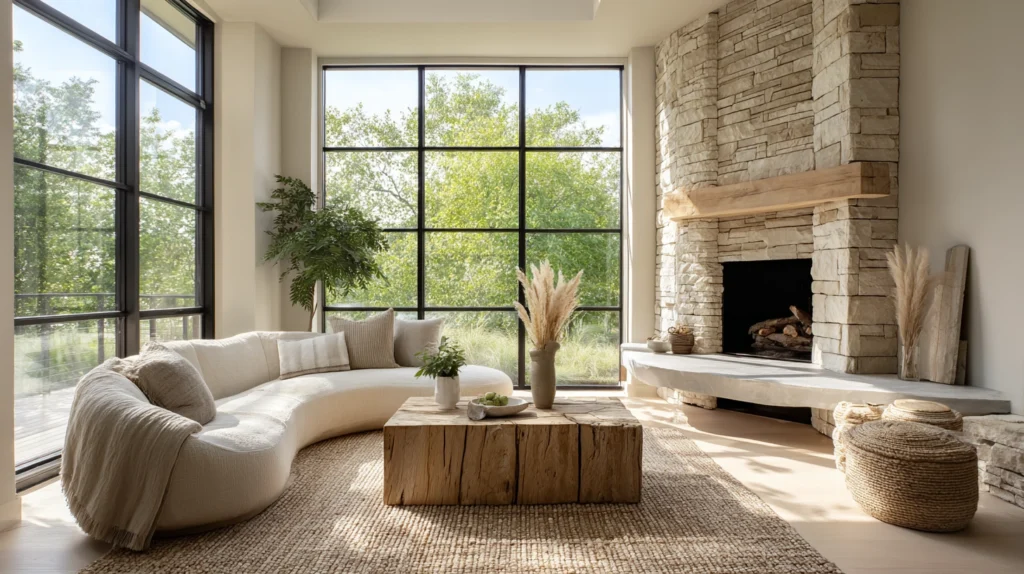
The core idea was simple. Humans feel calmer around natural light, texture, and living things, and most rooms have almost none of it.
I rebuilt the room around that one idea, and it stopped feeling like a place I was just passing through.
Here are 14 ways to bring real, functioning nature into a living room, not just a decorative nod to it.
What biophilic design actually means in practice
The concept is built on a documented human preference for natural elements, not just an aesthetic trend.
- Real plants, natural light, and organic materials measurably reduce stress compared to synthetic, artificial environments
- It’s not about a single houseplant in the corner, but about layering multiple natural elements throughout the whole room
- Texture, sound, and even scent matter as much as visual greenery
Once you treat nature as a design system rather than a decoration, the room starts working differently.
1. A Living Wall of Layered Plants
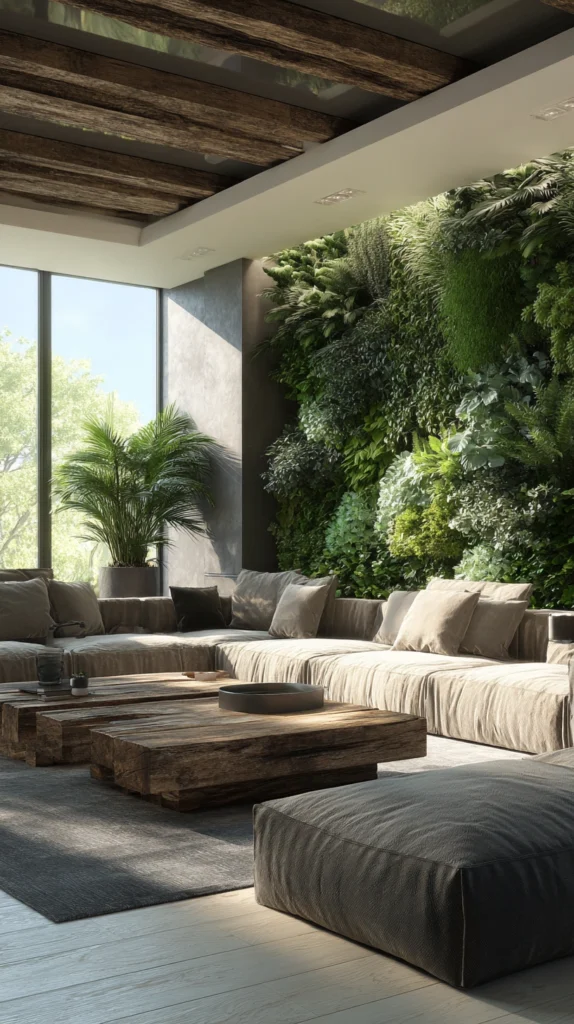
A dense, vertical planting that turns an entire wall into a green feature.
Build it:
- A modular wall-mounted planting system or a simple series of wall-hung planters arranged in a grid
- A mix of trailing pothos, ferns, and small flowering plants for varied texture and height
- A drip irrigation line or a consistent watering schedule, since a living wall dries out faster than ground-level pots
Why a full wall outperforms scattered individual plants:
- It creates genuine visual and air-quality impact in a way a few small pots on a shelf can’t match
- The layered texture mimics an actual forest understory, which is part of what makes it feel calming
- It turns an otherwise blank, unused wall into the room’s central feature
Cost breakdown: A modular living wall system runs $150 to $400 depending on size, plus $50 to $100 in plants to fill it.
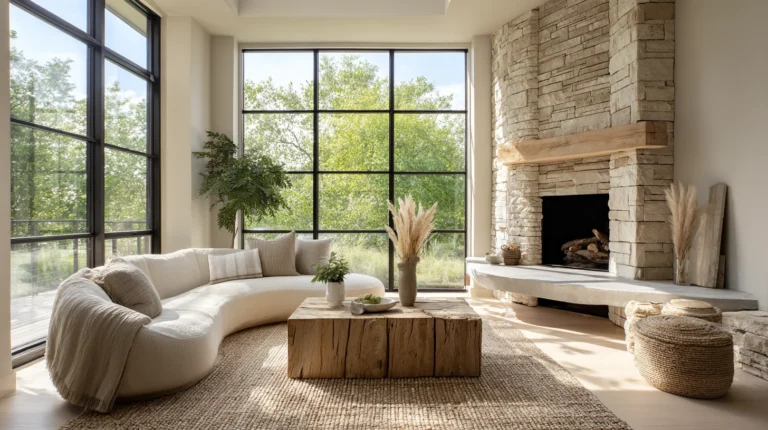
2. Floor-to-Ceiling Windows Left Uncovered
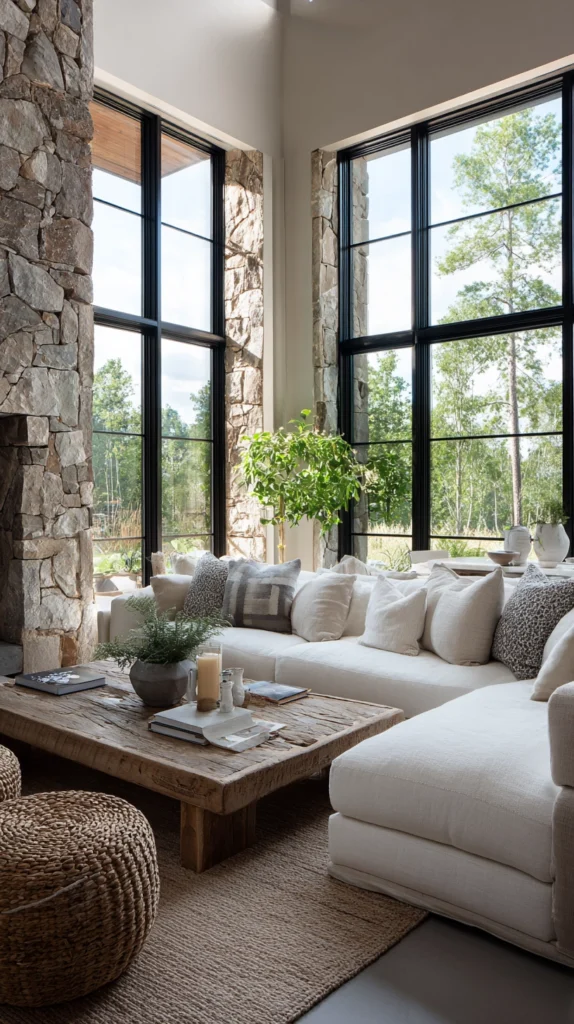
Maximizing natural light instead of filtering it away.
Build it:
- Existing windows left bare or covered only with sheer, light-filtering fabric rather than heavy drapes
- Furniture arranged to avoid blocking window sightlines, keeping the view and light flow unobstructed
- A simple retractable or top-down bottom-up shade added only where privacy genuinely requires it
Why natural light matters more than any single design object:
- Sunlight exposure is directly tied to mood and circadian rhythm regulation, more than any other single design factor
- Uncovered windows blur the line between indoors and outdoors, a core principle of biophilic design
- It reduces the need for artificial lighting during the day, which also lowers energy use
Cost breakdown: Sheer curtain panels run $15 to $30 per panel, considerably less than heavier drapery alternatives.
3. Reclaimed Wood Furniture With Visible Grain
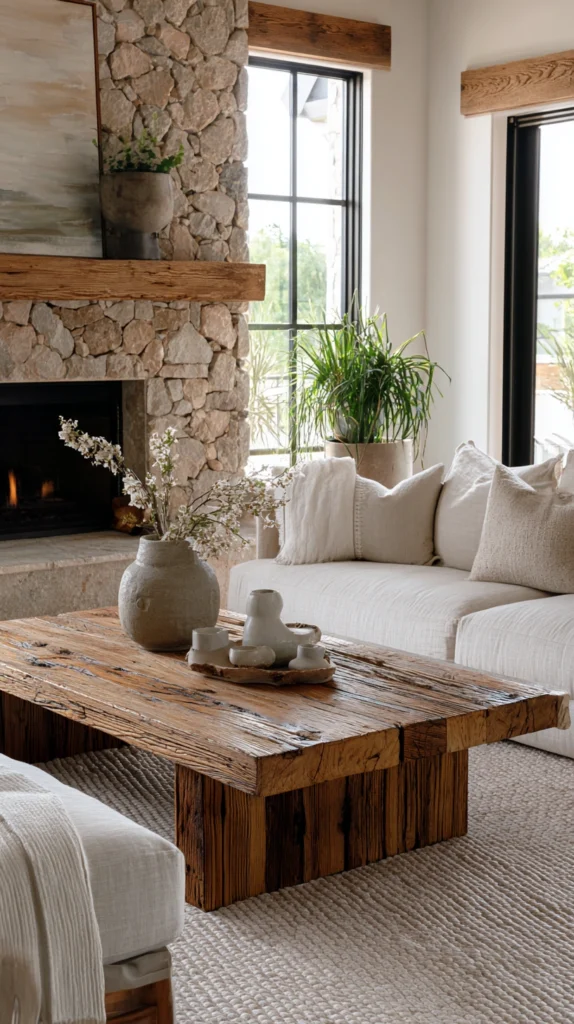
Furniture chosen specifically for its organic material honesty.
Build it:
- A coffee table or media console built from reclaimed or live-edge wood, grain and knots left visible
- A natural oil finish rather than a heavy lacquer, preserving the wood’s tactile texture
- Positioned as a central piece in the room, rather than tucked against a wall
Why visible wood grain does real psychological work:
- Natural material patterns, like wood grain or stone veining, are processed by the brain similarly to how it processes actual outdoor scenery
- It introduces genuine texture variation into a room that’s otherwise flat fabric and painted drywall
- Reclaimed wood also carries a story and age that new, uniform lumber can’t replicate
Cost breakdown: A reclaimed wood coffee table runs $200 to $500 depending on size and wood source.
4. A Water Feature or Small Indoor Fountain
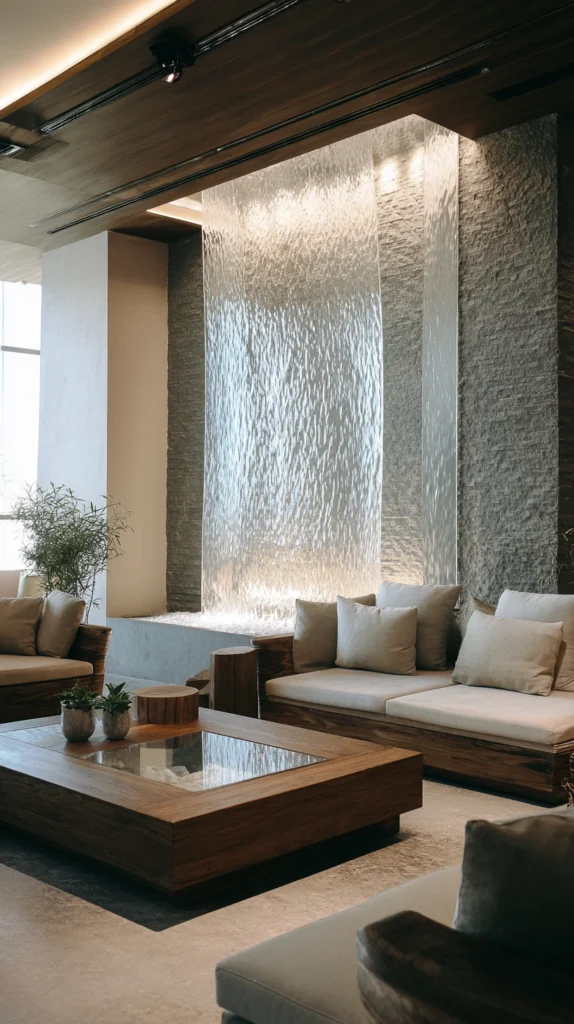
Introducing the sound of moving water into the room.
Build it:
- A small tabletop fountain or a larger freestanding water wall, depending on available space
- Positioned away from direct sunlight to reduce algae growth in the water basin
- Kept running at a low, consistent flow rather than a loud, splashing volume
Why the sound of water matters as much as any visual element:
- Ambient natural sound, like flowing water, has a measurable calming effect that pure visual greenery can’t replicate alone
- It also masks unwanted background noise from traffic or neighboring rooms
- A small fountain requires relatively little maintenance once the basic water level routine is established
Cost breakdown: Small tabletop fountains run $30 to $80, while larger freestanding water features run $150 to $400.
5. Natural Fiber Rugs and Textiles
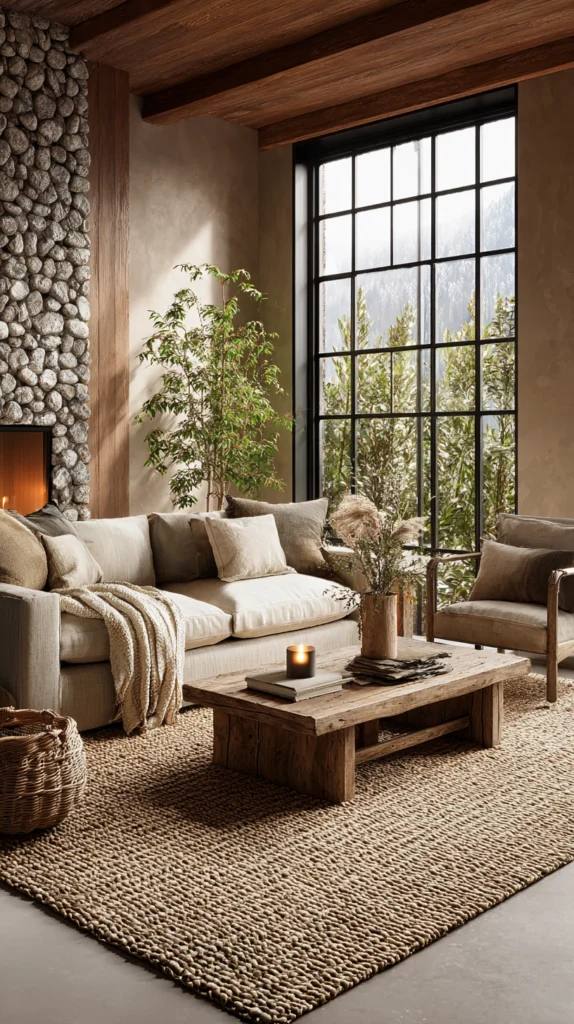
Flooring and soft furnishings made from raw, organic materials.
Build it:
- A jute, sisal, or wool area rug layered over existing flooring
- Linen or cotton throw pillows and blankets in undyed or naturally dyed tones
- Textures left slightly irregular rather than perfectly uniform, echoing the same organic variation found in real plants and wood
Why natural fiber textiles reinforce the room’s whole sensory experience:
- Synthetic materials rarely replicate the tactile warmth of natural fibers underfoot or against skin
- These materials tend to be more breathable and often carry fewer synthetic chemical off-gassing concerns
- The slightly irregular weave and texture mirror the same imperfection found throughout nature itself
Cost breakdown: A natural fiber area rug runs $100 to $300 depending on size and material, with linen throw pillows running $20 to $40 each.
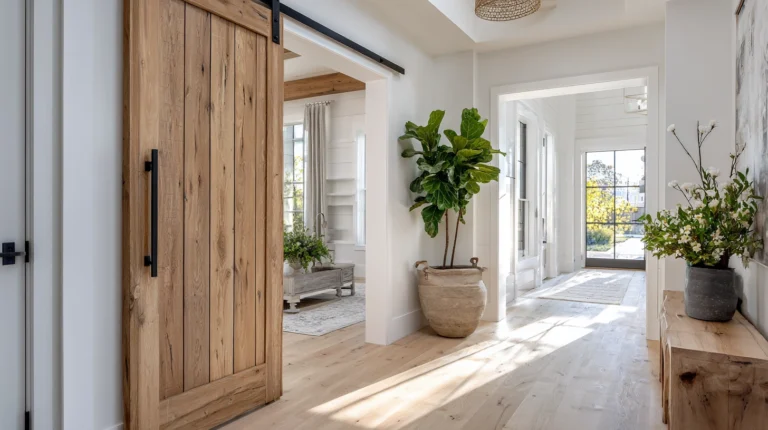
6. A Statement Tree in a Large Floor Planter
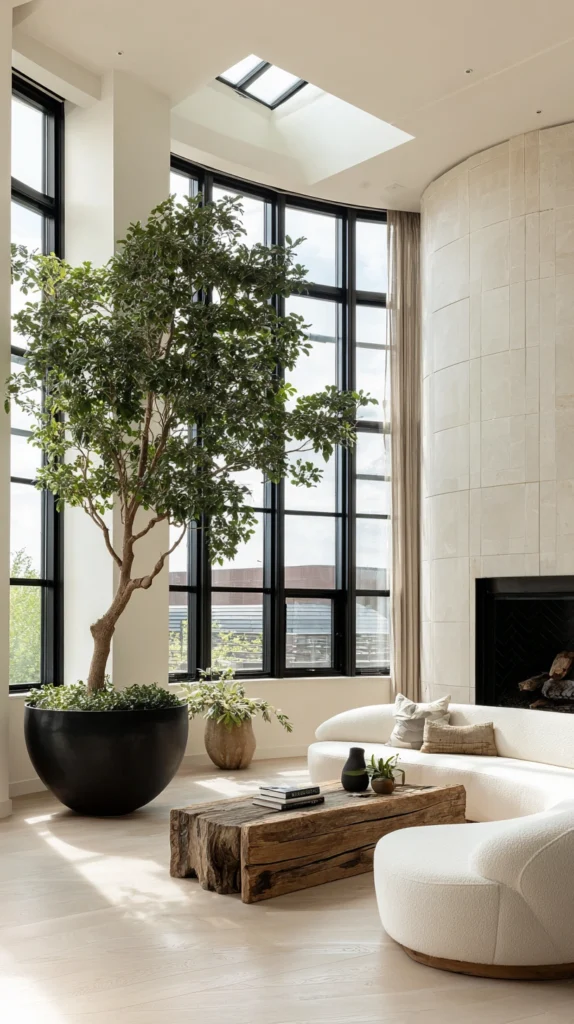
A single large plant used as genuine architecture within the room.
Build it:
- A fiddle leaf fig, olive tree, or bird of paradise, sized to reach near the ceiling in a large floor planter
- Positioned near a bright window, but out of direct harsh afternoon sun for more sensitive varieties
- Rotated occasionally to encourage even growth on all sides rather than leaning toward the light source
Why one large tree outperforms several smaller plants:
- It adds genuine vertical scale and presence, functioning almost like a piece of living furniture
- A single well-placed tree requires less overall maintenance than managing many smaller pots scattered throughout the room
- It creates a visual anchor point the rest of the room’s smaller natural elements can build around
Cost breakdown: A mature statement tree runs $60 to $200 depending on species and size, plus $30 to $60 for an appropriately sized floor planter.
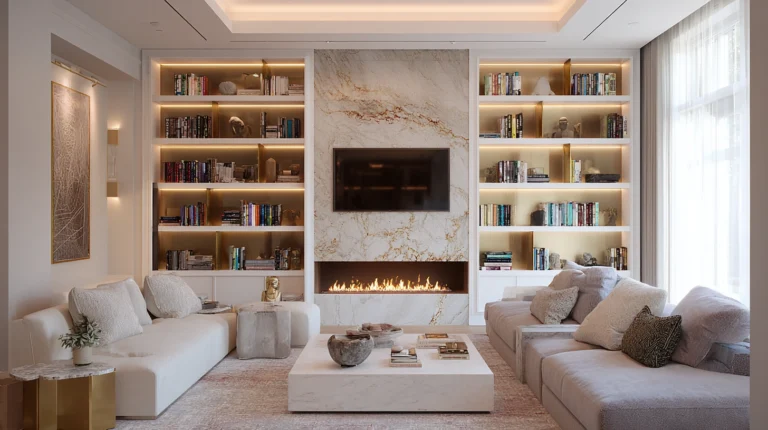
7. Natural Stone Accents
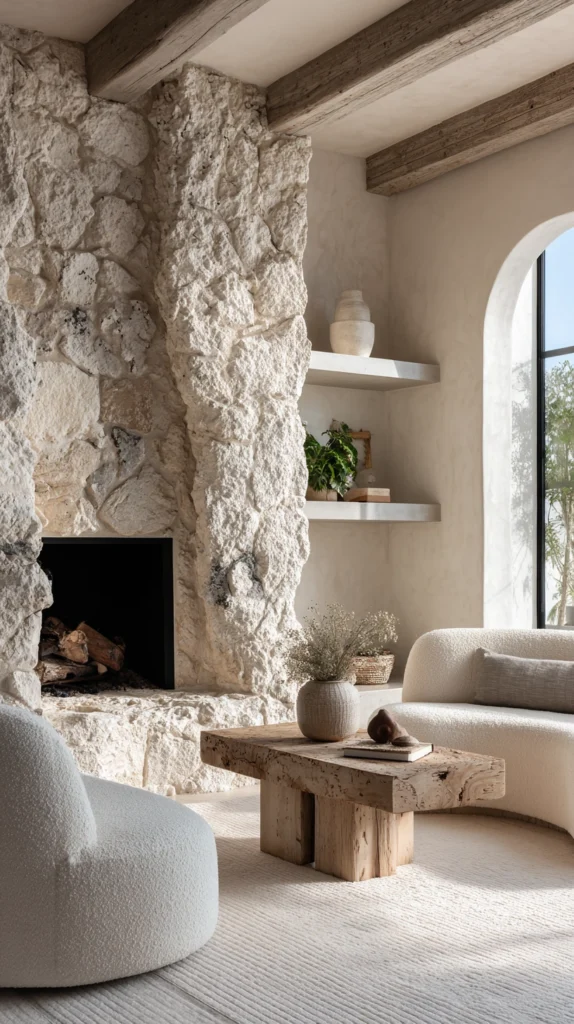
Hard surfaces chosen for their raw, unpolished mineral texture.
Build it:
- A stone side table, fireplace surround, or decorative stone bowl left in a matte, natural finish
- Varied stone types and colors used sparingly rather than a single uniform slab throughout the room
- Paired with warmer materials like wood nearby, balancing stone’s cooler visual temperature
Why stone belongs in a biophilic room alongside plants and wood:
- Natural stone connects the room to the earth itself, expanding the concept beyond just living plants
- The mineral veining and color variation function the same way wood grain does, offering visual complexity the brain reads as organic
- A matte, unpolished finish keeps the material feeling raw rather than manufactured and cold
Cost breakdown: A natural stone side table runs $80 to $250 depending on stone type and size.
8. Large-Scale Botanical or Nature Photography
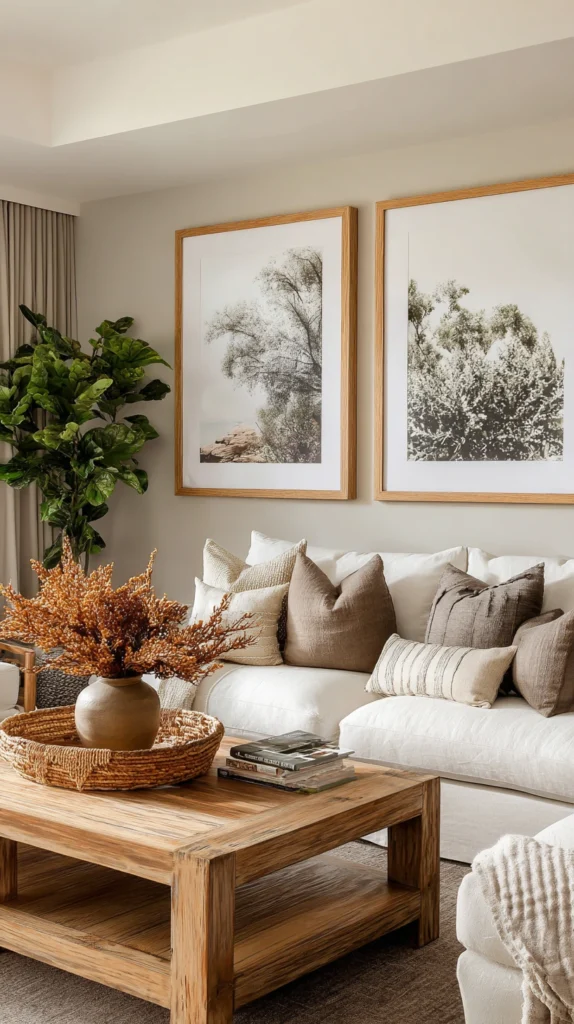
Artwork chosen specifically to depict actual natural scenery.
Build it:
- Large-format prints of forests, botanical close-ups, or landscape photography
- Framed simply, in wood or matte black, avoiding ornate framing that competes with the image itself
- Positioned at a scale large enough to feel immersive rather than a small, decorative accent
Why depicting real nature works even when the actual view outside doesn’t:
- Research on biophilic design shows that even imagery of nature can trigger some of the same calming responses as the real thing
- Large-scale prints can effectively extend a room’s sense of space, especially in a space without much natural view
- It’s a lower-cost way to bring a nature connection into rooms without easy access to outdoor greenery or water features
Cost breakdown: Large-format nature photography prints run $60 to $200 depending on size and framing.
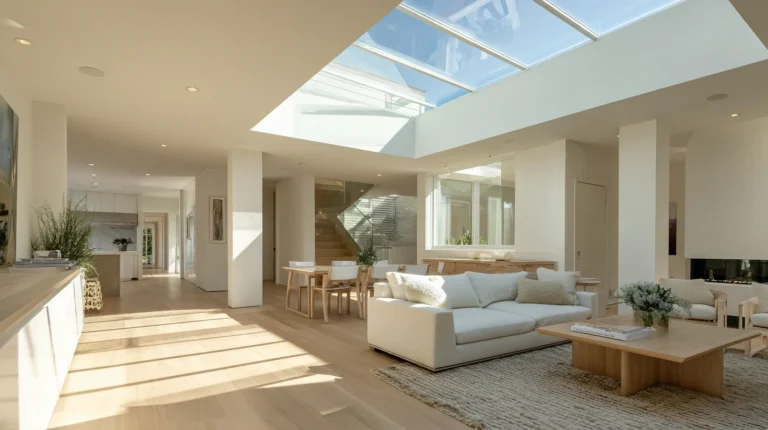
9. Skylights or Additional Window Openings
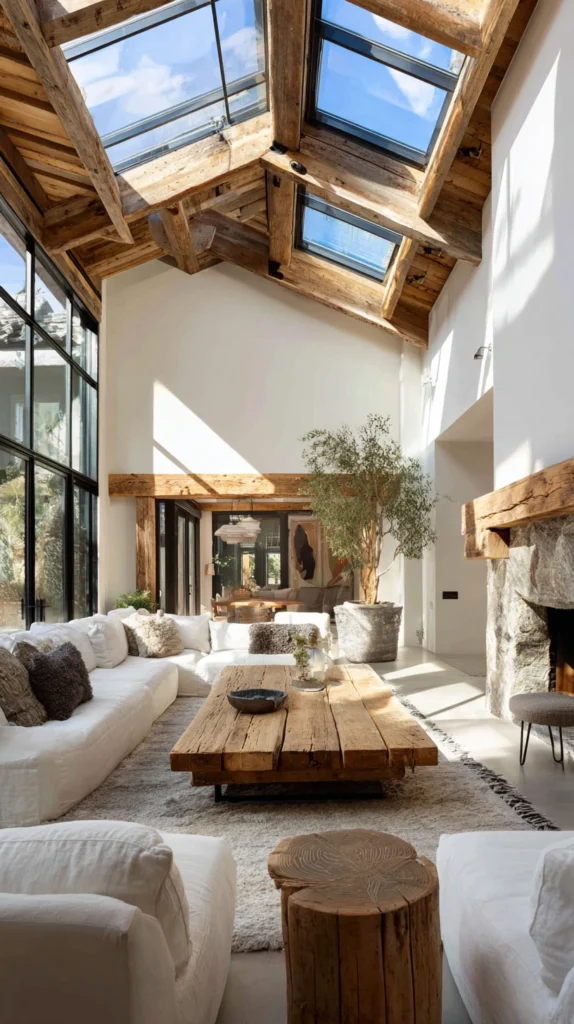
Structural changes that maximize natural light exposure.
Build it:
- A skylight installed above a seating area, positioned to track the sun’s path through the day
- Additional window openings added where structurally feasible, particularly on walls that currently sit blank
- Light-diffusing glass used where direct glare could be an issue, softening rather than blocking the light entirely
Why structural light changes deliver the most significant long-term impact:
- Increasing the actual amount of natural daylight is one of the most well-documented ways to improve a room’s biophilic quality
- Skylights specifically bring in the sky’s changing light and cloud movement, adding a dynamic element static wall windows can’t
- It’s a larger investment, but one that affects the room’s feeling every single day rather than only when specific decor is refreshed
Cost breakdown: Skylight installation runs $1,500 to $4,000 depending on size and roof structure, considerably more than any other single change on this list.
10. Curved, Organic Furniture Shapes
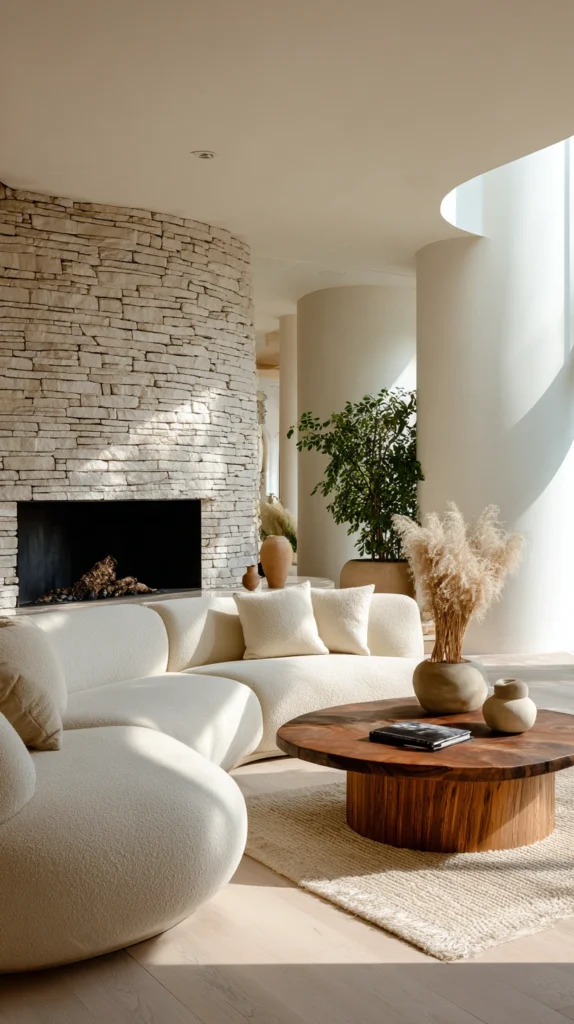
Softening the room’s furniture silhouettes to echo natural forms.
Build it:
- A curved sofa or an organically shaped coffee table rather than strictly rectangular furniture
- Rounded edges throughout, avoiding sharp corners on side tables or shelving units
- Paired with the room’s other natural materials, like wood or stone, for a cohesive organic feeling
Why curved shapes matter beyond just aesthetic preference:
- Organic curves are far more common in the natural world than straight lines and sharp corners
- Rounded furniture silhouettes are processed as more calming and approachable than rigid, angular shapes
- It softens a room that might otherwise feel dominated by the hard edges of standard furniture
Cost breakdown: A curved accent chair or organic-shaped coffee table runs $200 to $600 depending on size and material.
11. Herb and Edible Plants Grown Indoors
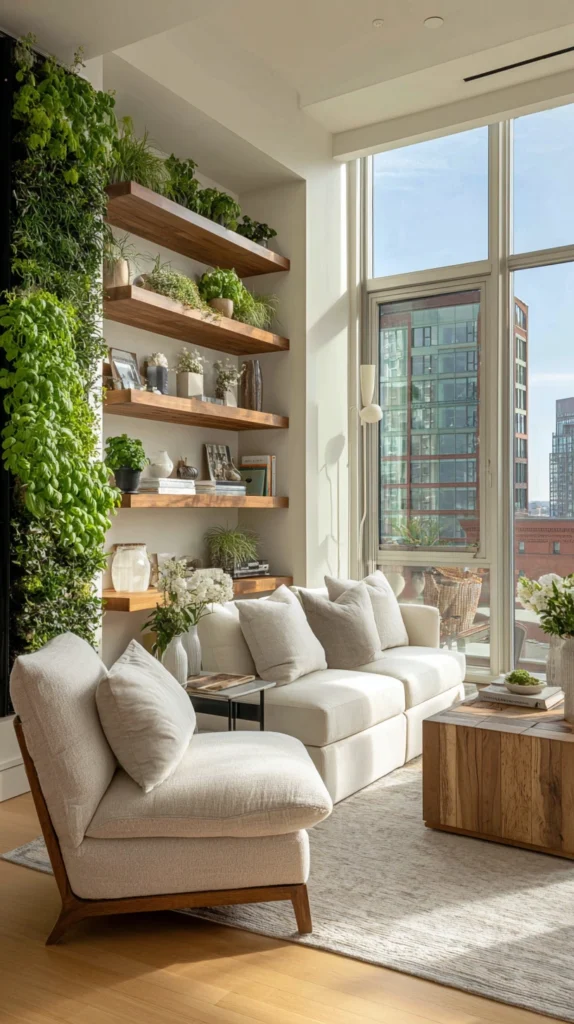
Living plants that serve a genuine daily function beyond decoration.
Build it:
- A small indoor herb garden positioned near the brightest window in the living room
- Basil, mint, or rosemary grown in simple terracotta pots, easily snipped for actual cooking use
- A small grow light added if natural window light isn’t consistently strong enough through winter months
Why edible plants add a layer beyond purely ornamental greenery:
- Actively tending and harvesting plants creates a more engaged relationship with the greenery than passive decoration
- It brings a genuine daily-use function into the room, similar to how a kitchen herb garden works
- The fragrance released when herbs are brushed or harvested adds a sensory layer beyond visual greenery alone
Cost breakdown: A small indoor herb garden setup runs $25 to $50 in pots, soil, and starter plants.
12. Cork, Bamboo, or Other Renewable Material Flooring
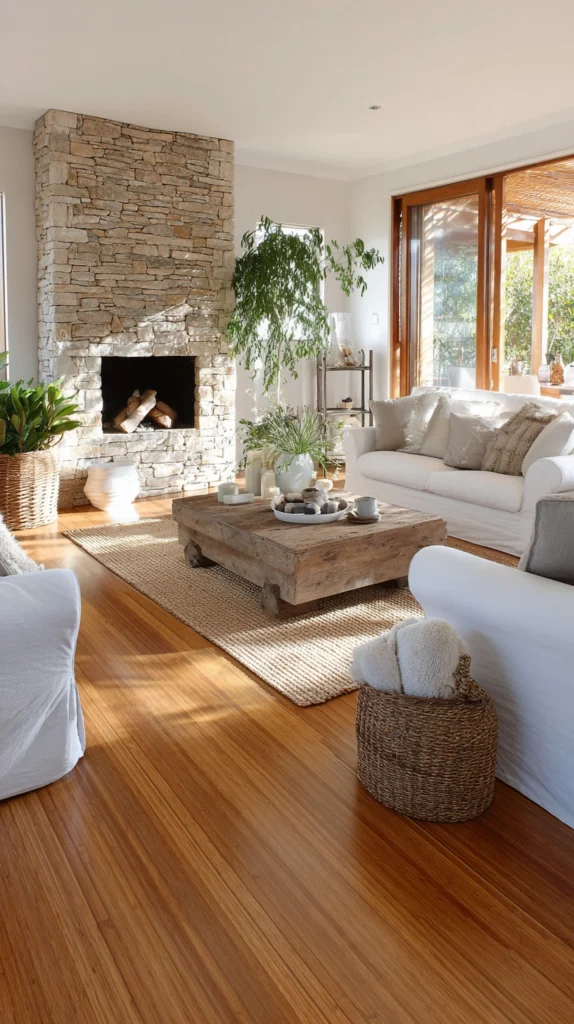
Flooring chosen for both its natural texture and sustainable sourcing.
Build it:
- Cork or bamboo flooring installed in place of standard hardwood or laminate
- A natural, unstained finish that preserves the material’s inherent color and grain pattern
- Paired with a natural fiber rug layered on top for added warmth and texture underfoot
Why renewable materials fit the biophilic philosophy more fully:
- These materials regenerate far faster than traditional hardwood, aligning with the broader philosophy of working with natural cycles rather than depleting them
- Cork specifically offers a genuinely soft, cushioned underfoot texture unlike harder wood or tile flooring
- Bamboo’s visible grain pattern adds the same organic visual complexity found in reclaimed wood furniture
Cost breakdown: Cork or bamboo flooring installation runs $5 to $10 per square foot, generally comparable to mid-range hardwood options.
13. Views Framed Deliberately Toward Existing Greenery
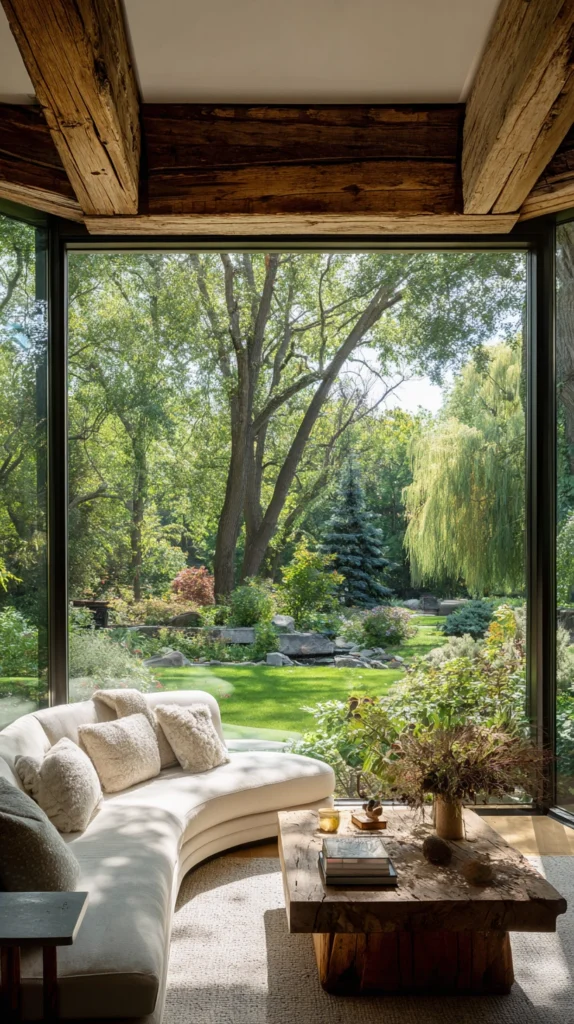
Arranging the room around whatever outdoor nature is already visible.
Build it:
- Furniture rearranged so the primary seating faces toward a window with a tree, garden, or sky view
- Obstructions like tall bookshelves or curtains moved away from the sightline to that view
- A single chair positioned specifically as a reading spot facing the best available outdoor view in the home
Why framing an existing view costs nothing but changes daily experience significantly:
- Many rooms already have decent natural views that furniture arrangement accidentally blocks or ignores
- Consistently seeing outdoor greenery throughout the day, even through glass, provides real biophilic benefit
- It’s one of the only ideas on this list that requires no purchase at all, only a rearrangement of what’s already there
Cost breakdown: Free, since this only requires rearranging existing furniture.
14. Natural Ventilation and Fresh Air Circulation
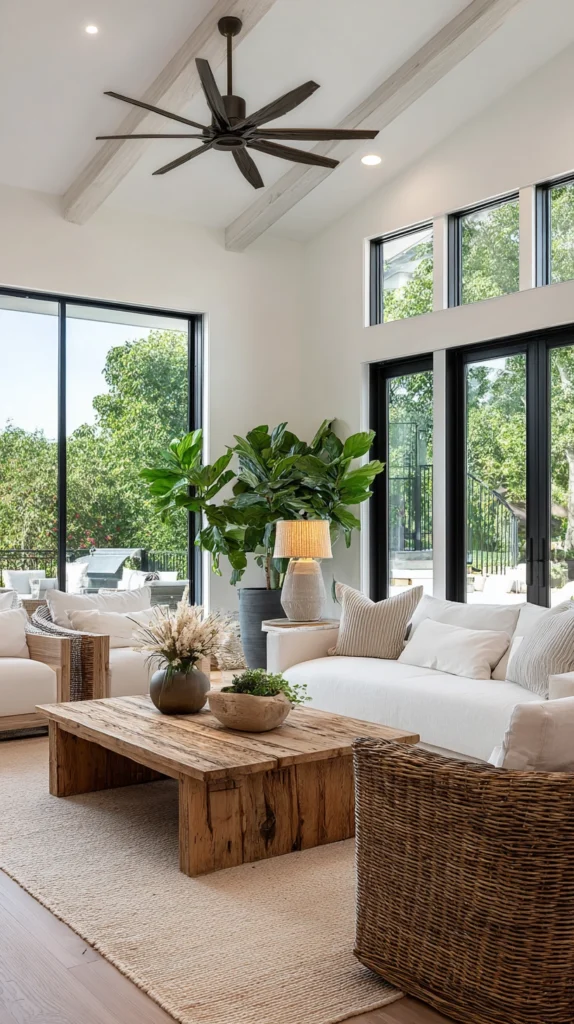
Prioritizing actual airflow, not just the appearance of a fresh, natural room.
Build it:
- Windows designed or retrofitted to open easily, encouraging regular natural airflow rather than relying solely on HVAC
- A ceiling fan added to keep air moving on days when windows stay closed
- House plants chosen partly for their air-purifying qualities, like snake plants or peace lilies, working alongside genuine ventilation
Why fresh air circulation is easy to overlook in a purely visual design plan:
- Biophilic design is as much about air quality and freshness as it is about visual greenery
- Stagnant, purely climate-controlled air can undercut even a beautifully plant-filled room’s overall feeling
- Combining actual ventilation with air-purifying plants addresses both the physical and sensory sides of the concept together
Cost breakdown: A ceiling fan installation runs $150 to $350, while window retrofits vary widely depending on the home’s existing structure.
Getting started this weekend
You don’t need to renovate the whole room before the difference starts to show up.
- Start by rearranging furniture to face your best existing window view and adding one large statement plant
- Add natural fiber textiles and a piece of large-scale nature photography before considering structural changes
- Save larger investments like a living wall or skylight for a dedicated second phase
My own living room felt different within a single weekend, just from rearranging the furniture and finally giving that dying succulent some real company.
Budget reality
Biophilic design scales from a free rearrangement to a significant structural investment.
- Free: Furniture rearranged toward existing views, uncovering windows already in the room
- Under $100: Indoor herb garden, natural fiber pillows, tabletop fountain
- $100-400: Statement floor tree, natural fiber rug, reclaimed wood coffee table, living wall starter kit
- $400+: Cork or bamboo flooring, curved organic furniture, skylight installation
Most of the calming effect comes from light, plants, and material texture working together, not the size of the investment.
What actually brings nature indoors
It was never really about owning the most plants or the most expensive natural materials.
It’s the chair finally turned to face the window, the wood grain left visible instead of painted over, the herbs on the sill that get snipped for dinner instead of just looked at.
Start with the view you already have, add one real plant that gets genuine daily attention, and let the rest of the room grow from there.