
15 Window Seat Ideas for Cozy Reading Corners
Our bay window used to hold a single dying plant and a stack of mail nobody sorted.
I finally built a simple bench into it one weekend, mostly to stop the mail pile from spreading.
Within a week it became the spot I actually wanted to sit, coffee in hand, before anyone else woke up.

A window seat turns wasted architectural space into the one corner of the house everyone fights over.
Here are 15 ways to build that same cozy reading corner, whatever kind of window you’re working with.
Why a window seat earns its keep more than almost any other nook
It combines natural light, a defined boundary, and genuine comfort in one small footprint.
- Daylight from the window makes it one of the best-lit reading spots in the house without any additional lamp
- The recessed or framed shape naturally signals “sit here,” unlike an open corner of floor
- It often reclaims otherwise underused space beneath a window, turning dead square footage into a destination
Once the seat exists, it tends to get used every single day, not just on special occasions.
1. Built-In Bench With Storage Drawers Beneath
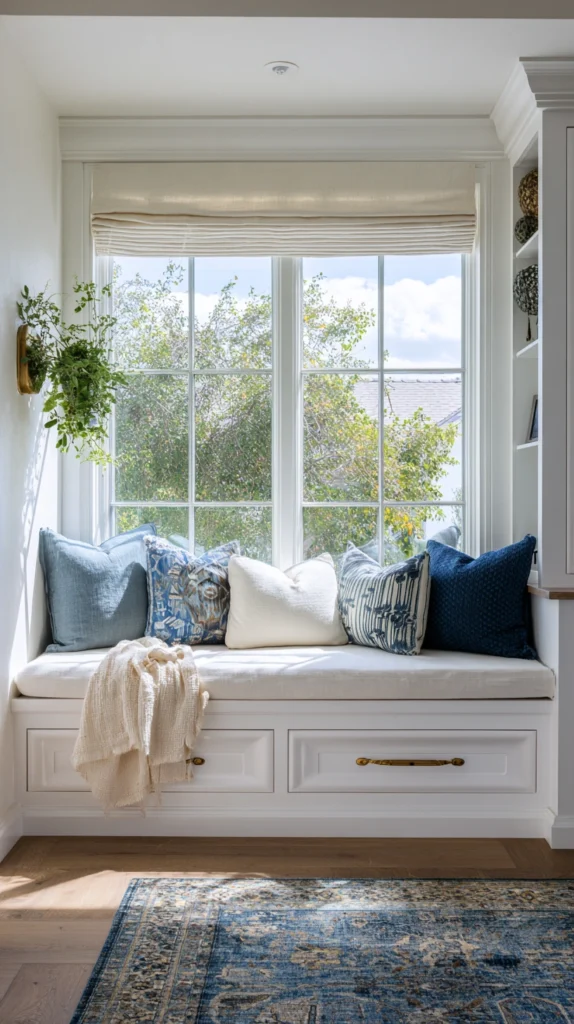
The most functional version, combining seating with genuine storage.
Build it:
- A solid plywood or hardwood bench frame built directly into the window recess
- Drawers on full-extension slides built into the base, sized to hold blankets, books, or off-season items
- A cushioned top secured with hidden hook-and-loop fasteners so it lifts off easily for drawer access
Why storage underneath makes this the most practical option available:
- It solves two problems at once, adding both seating and genuine storage in a footprint that was previously empty
- Drawers keep the room looking tidy, since blankets and books have a defined home rather than sitting in loose piles
- It works especially well in smaller homes where every bit of built-in storage meaningfully reduces clutter elsewhere
Cost breakdown: A built-in bench with drawers runs $600 to $1,500 depending on size and whether it’s custom-built or a modified kit.
2. Simple Cushioned Bench With No Storage
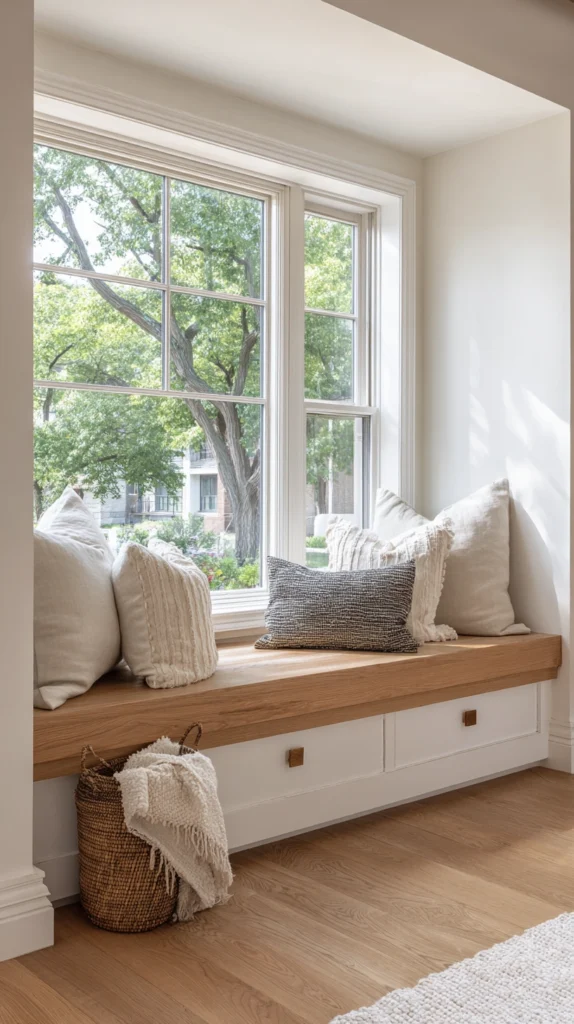
The fastest and most affordable way to create a window seat.
Build it:
- A basic plywood platform built to fit the window recess, supported by simple leg brackets or a solid base
- A foam cushion cut to size, wrapped in a removable fabric cover for easy cleaning
- No moving parts or hardware beyond basic mounting screws, keeping the whole build straightforward
Why simplicity is sometimes the better choice:
- It’s the quickest project on this list, often completed in a single afternoon
- It avoids the added cost and complexity of storage hardware for anyone who doesn’t need the extra space
- It’s easy to modify or remove entirely later if the room’s layout changes
Cost breakdown: A simple cushioned bench runs $150 to $350 depending on cushion quality and platform material.
3. Bay Window Seat With Wraparound Cushions
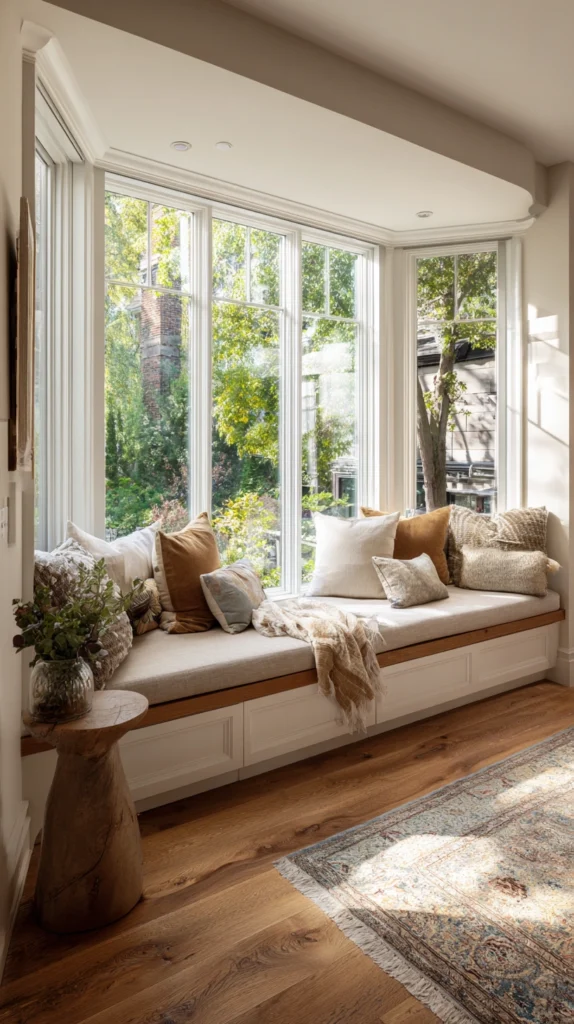
Filling a full bay window’s three-sided shape with continuous seating.
Build it:
- A bench built to follow the bay window’s full angled or curved footprint
- Cushions custom-cut to match each individual angle rather than a single uniform rectangle
- Bolster pillows added at the corner transitions to soften the angle where two cushion sections meet
Why a bay window deserves a fully wraparound treatment:
- It maximizes the seat’s total length, comfortably fitting two or more people rather than a single spot
- The angled shape creates a natural, cocoon-like reading nook unlike a straight, flat bench
- Custom-cut cushions avoid the awkward gaps a standard rectangular cushion would leave in an angled space
Cost breakdown: A full bay window bench with custom cushions runs $500 to $1,200 depending on the bay’s total size and cushion complexity.
4. Window Seat With Built-In Bookshelves on Either Side
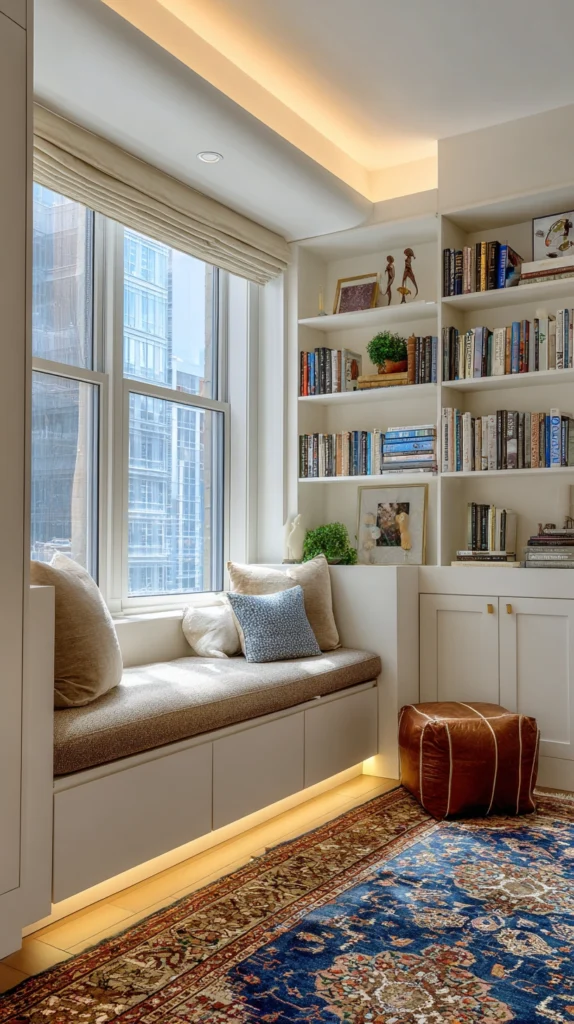
Flanking the seat with dedicated storage for the books actually being read there.
Build it:
- Shallow bookshelves built into the wall space on either side of the window bench
- Shelf depth kept modest, typically 8 to 10 inches, sized appropriately for standard book widths
- A small reading light mounted on one side, positioned to avoid glare on the window glass itself
Why flanking shelves make the whole nook more self-sufficient:
- It keeps a rotating selection of books within arm’s reach, rather than requiring a trip elsewhere in the house
- Symmetrical shelving on both sides gives the whole nook a genuinely architectural, built-in appearance
- It’s a natural place to also display a few decorative objects alongside the books themselves
Cost breakdown: Adding built-in shelving on both sides of a window seat runs $300 to $700 depending on shelf depth and finish.
5. Upholstered Window Seat With Tufted Detailing
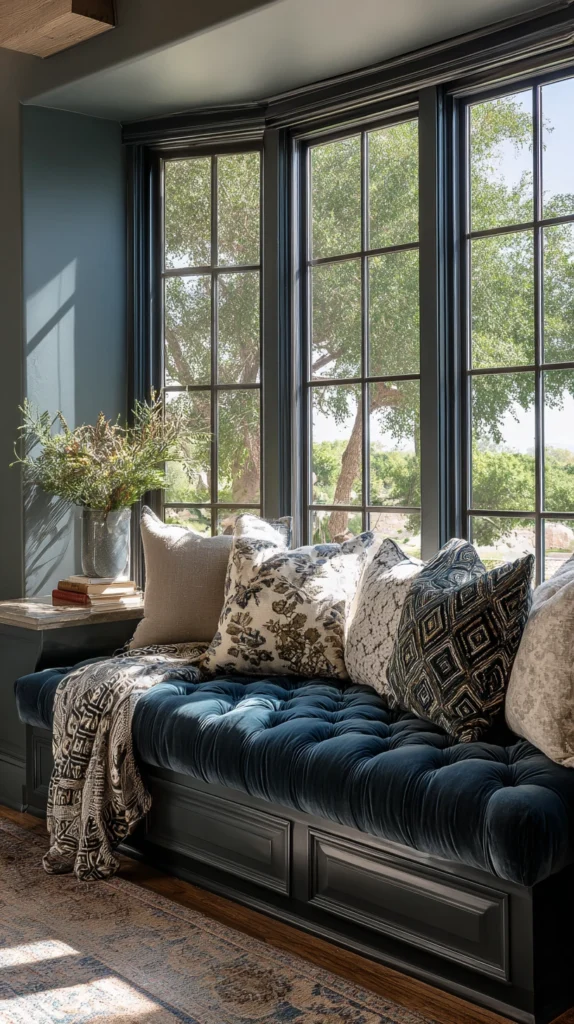
A more formal, furniture-like finish for the seat cushion itself.
Build it:
- A cushion or fully upholstered bench base finished with deep button tufting
- A durable upholstery fabric, like a performance velvet or tightly woven cotton blend, suited to daily use
- Piping added along the cushion’s edges for a more tailored, finished look
Why tufted upholstery elevates the seat beyond a basic cushion:
- The tailored detailing reads as considerably more polished than a plain foam cushion with a flat cover
- It suits more formal or traditional interiors, where a simple flat cushion might feel underdressed
- The tufting also helps keep cushion filling in place over years of regular use
Cost breakdown: A fully upholstered tufted bench runs $400 to $900 depending on size and fabric choice.
6. Window Seat With a Hidden Radiator Cover Integration
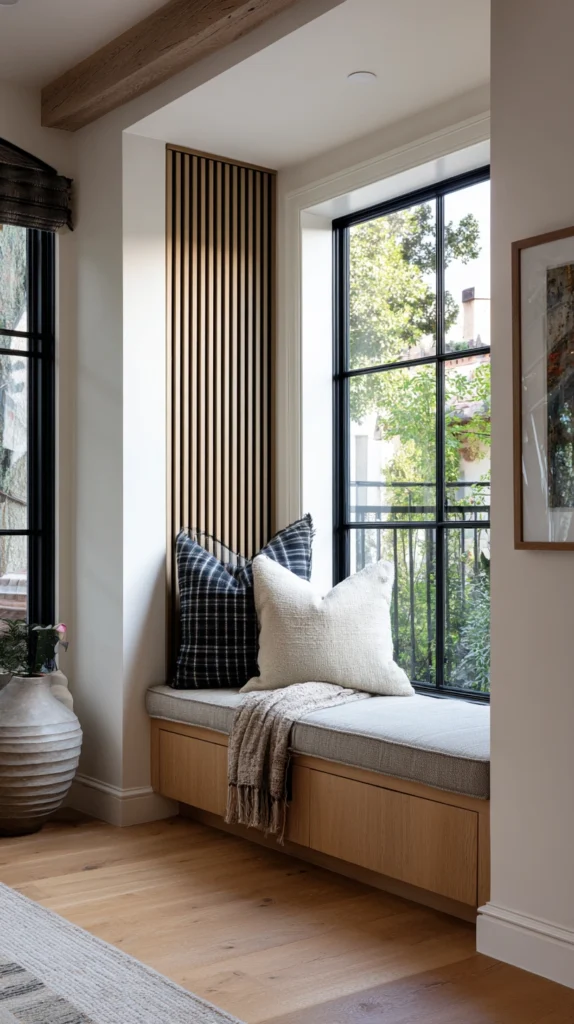
Solving the common problem of a window seat built directly over a heating unit.
Build it:
- A bench frame built with a perforated or louvered front panel, allowing heat to pass through freely
- The cushion top removable or hinged, so the radiator remains accessible for maintenance
- Materials chosen specifically to withstand consistent heat exposure without warping or discoloring
Why this detail matters in homes with older radiator systems:
- Many classic window seats sit directly above cast iron radiators, and covering them incorrectly can be both uncomfortable and unsafe
- A properly vented design keeps the room heating efficiently while still gaining the seating and storage benefit
- It solves a specific structural challenge that a generic window seat plan often overlooks entirely
Cost breakdown: A radiator-integrated window seat runs $500 to $1,000 depending on venting complexity and materials used.
7. Small Apartment Window Nook With a Floating Shelf Bench
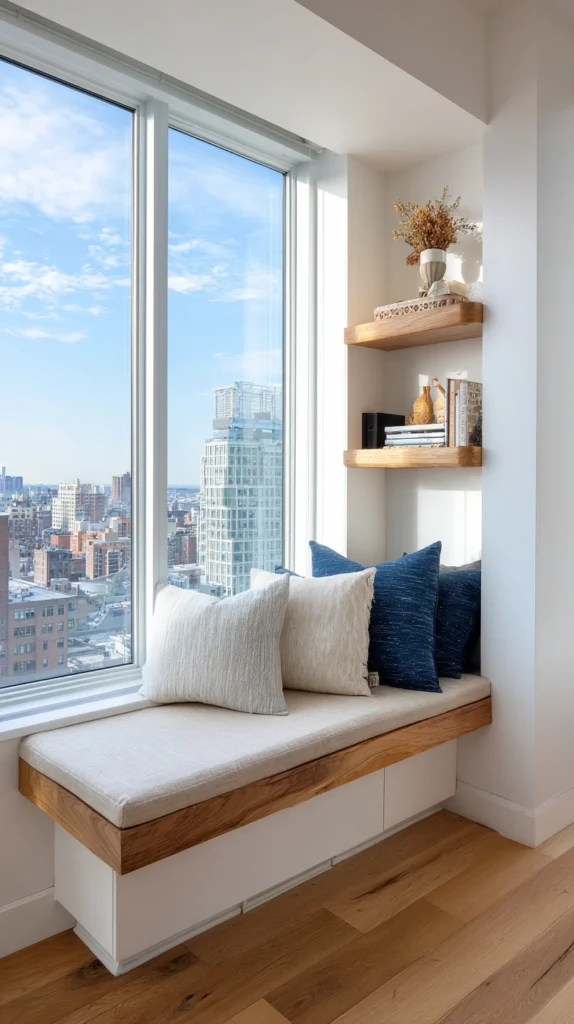
A lightweight, non-structural option for renters.
Build it:
- A sturdy floating shelf bracket system installed at seat height beneath the window
- A cushion placed on top rather than built into a permanent frame, making the whole setup fully removable
- Weight capacity confirmed for the bracket system before adding a cushion and regular use
Why this suits renters better than a fully built-in bench:
- It requires no permanent structural changes to the window recess itself
- It can be fully removed and the wall patched easily when moving out
- It still delivers the core cozy, defined-space benefit of a true window seat at a fraction of the commitment
Cost breakdown: A floating shelf bench setup runs $80 to $200 depending on bracket quality and shelf material.
8. Window Seat With a Canopy or Curtain Framing
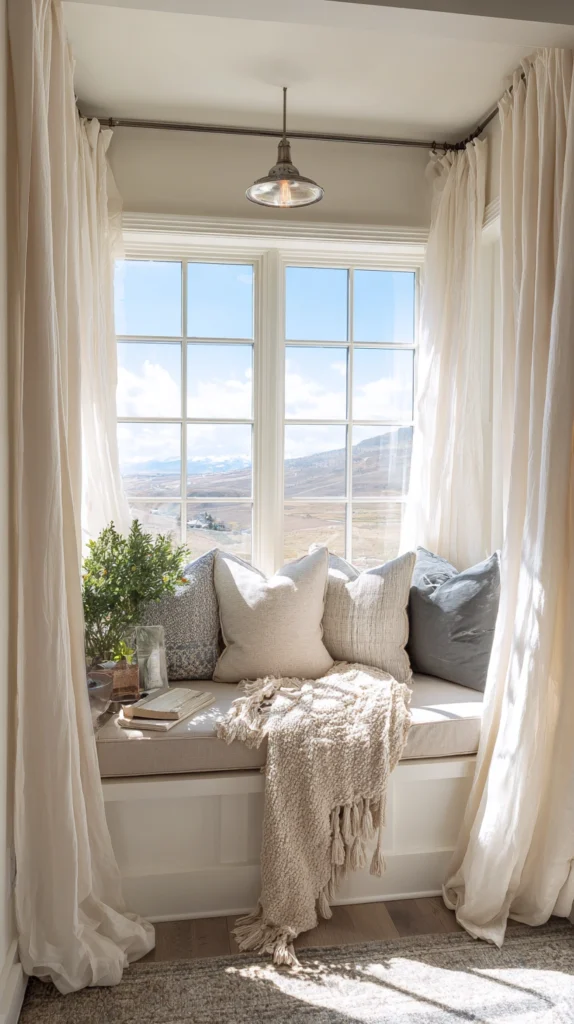
Adding a soft architectural frame around the seating nook itself.
Build it:
- A simple curtain rod mounted just outside the window recess, holding sheer or lightweight fabric panels
- Panels that can be pulled closed for a more enclosed, private reading nook, or tied back for an open feel
- A small canopy or fabric drape added overhead if the window recess has enough depth to support it
Why framing the seat with fabric adds a genuinely cozy, enclosed feeling:
- It gives the reading nook a sense of its own defined space, separate from the rest of the room
- Sheer fabric still allows light through even when closed, keeping the spot from feeling too dark or closed off
- It’s a low-cost addition that significantly changes the nook’s overall atmosphere
Cost breakdown: Curtain rod and sheer fabric panels for a window seat frame run $40 to $90.
9. Window Seat With Integrated Reading Lamp
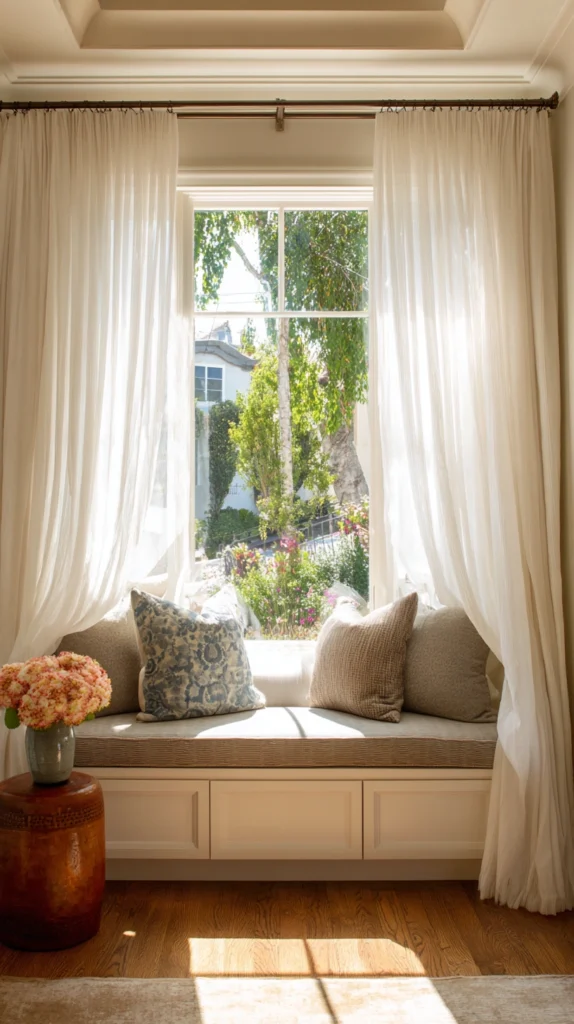
Task lighting built directly into the nook’s design rather than added as an afterthought.
Build it:
- A wall-mounted swing-arm lamp positioned just above and to the side of the seat, avoiding glare directly on the window
- Wired through the wall if possible for a clean look, or a plug-in version routed discreetly along the baseboard
- A warm-toned bulb chosen specifically for evening reading rather than a bright, cool white
Why dedicated lighting is essential for year-round use:
- Natural window light disappears in the evening, and a nook without its own light source becomes unusable after dark
- A swing-arm design lets the light be adjusted precisely for whatever book or activity is happening in the moment
- It signals that the space was genuinely planned as a reading corner, not just a seating afterthought
Cost breakdown: A wall-mounted swing-arm reading lamp runs $50 to $120 depending on style and whether it’s hardwired or plug-in.
10. Window Seat With a Small Built-In Side Table
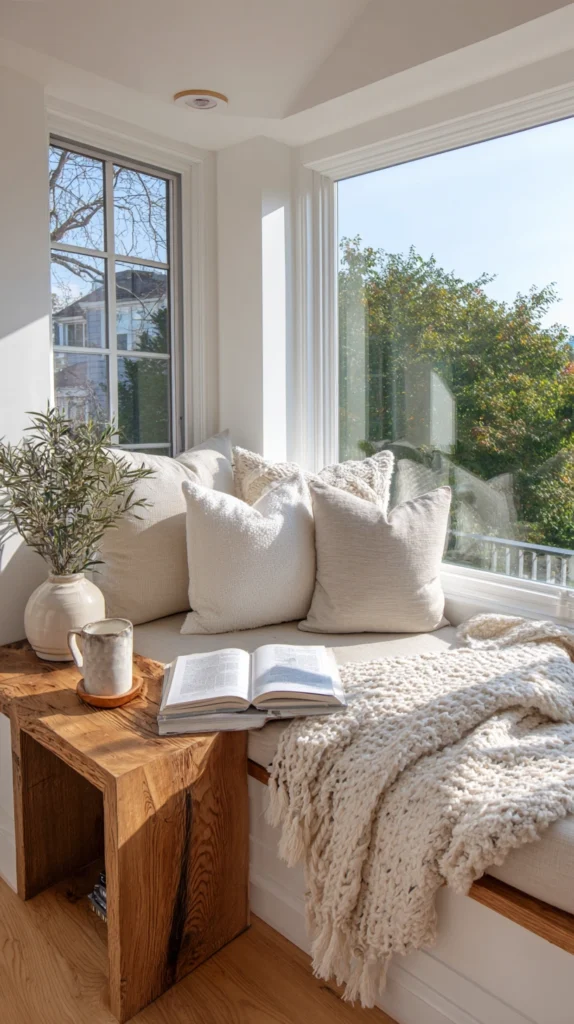
A tiny surface for a mug, book, or reading glasses.
Build it:
- A narrow shelf or small drop-leaf table built into one end of the window seat’s frame
- Sized just large enough for a mug and a book, avoiding a surface so large it crowds the seating area
- Finished to match the bench’s existing material and color for a cohesive built-in look
Why even a small surface changes how usable the nook actually is:
- Without a nearby surface, drinks and books end up balanced precariously on the cushion itself
- A built-in table keeps the surface permanently available without needing to drag in a separate side table
- It’s a small addition that meaningfully increases how long someone comfortably lingers in the spot
Cost breakdown: A small built-in side shelf or drop-leaf table adds $60 to $150 to the overall bench project.
11. Window Seat in a Stair Landing or Unused Alcove
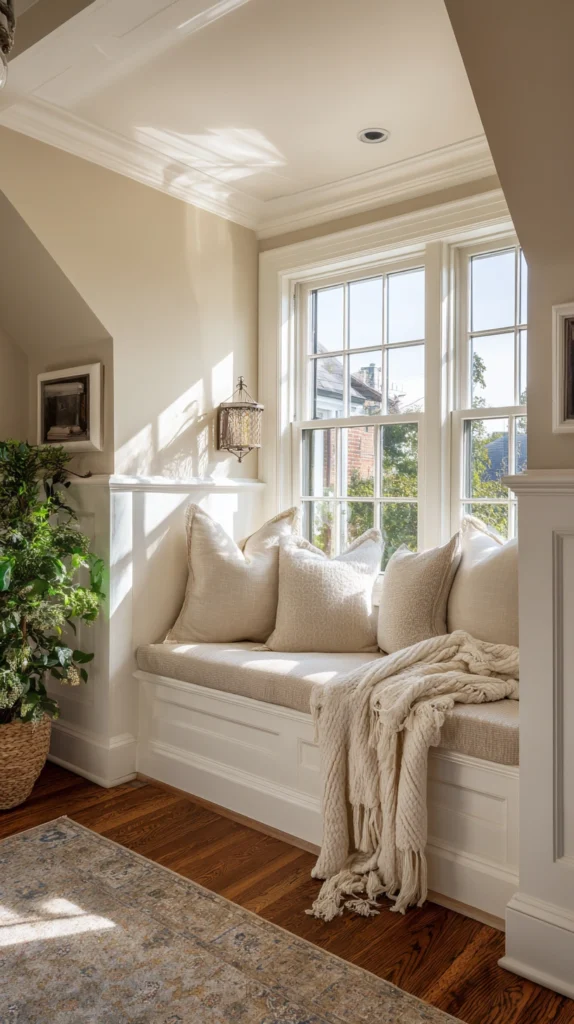
Repurposing an overlooked architectural nook beyond a traditional window.
Build it:
- A cushioned bench built into a stair landing’s window alcove or any similarly shaped unused wall recess
- Cushion and trim finished to match the surrounding trim or millwork already present
- A small pillow or two added for softness, sized appropriately to the alcove’s often narrower depth
Why overlooked alcoves make for some of the most charming reading spots:
- These spaces are frequently wasted entirely, serving no function beyond a spot to walk past
- Adding a seat here creates a genuinely unexpected, delightful discovery within the home’s existing layout
- It often requires very little structural modification, since the recess and window already exist
Cost breakdown: A bench built into an existing alcove runs $200 to $500 depending on the recess size and finish level.
12. Window Seat With a Trundle or Pull-Out Guest Bed
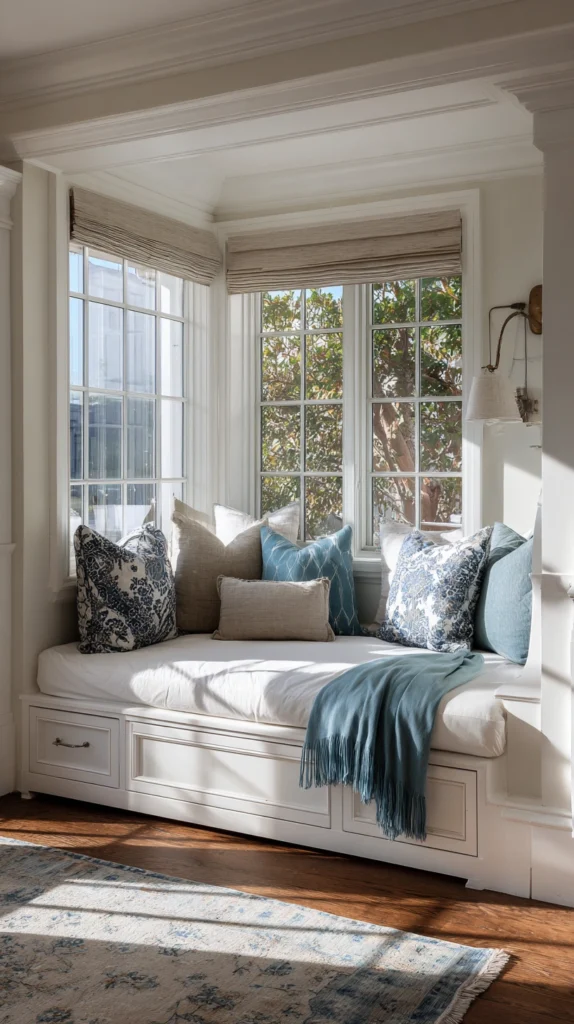
Dual-purpose seating that converts into overnight sleeping space.
Build it:
- A bench built on a raised platform with a trundle bed frame stored underneath
- The trundle mattress sized to slide out fully into the room when needed, then tuck away completely out of sight
- A cushion on top styled and sized to double as the trundle’s own headboard cushion when pulled out
Why this version suits smaller homes without a dedicated guest room:
- It gives the room genuine multi-purpose function, serving as a reading nook by day and a guest bed when needed
- The trundle stays completely hidden during regular daily use, preserving the nook’s cozy reading appearance
- It’s a practical solution for households that host guests occasionally but can’t dedicate a full room to it
Cost breakdown: A window seat with an integrated trundle bed runs $800 to $1,800 depending on mattress quality and construction complexity.
13. Window Seat With Panoramic Views Left Deliberately Unobstructed
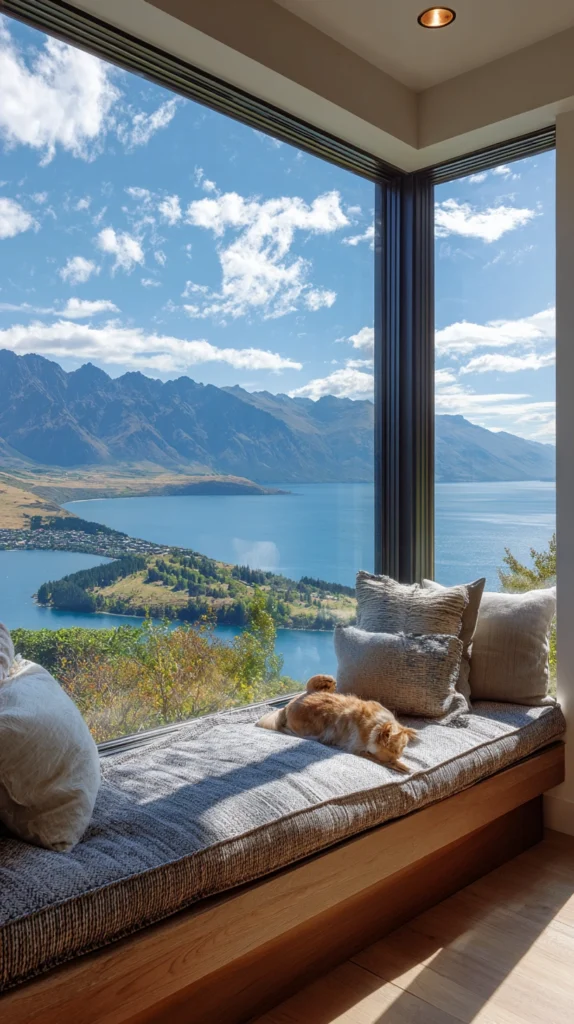
Prioritizing the view itself as the nook’s main feature.
Build it:
- Minimal window treatments, or none at all, keeping the full view completely visible from the seat
- Furniture and shelving positioned to avoid blocking sightlines to the window from other parts of the room
- A simple, low-profile cushion that doesn’t raise the seating height enough to interfere with the window’s sill line
Why an unobstructed view matters more here than any added feature:
- If the window looks out onto genuinely beautiful scenery, that view alone often does more work than any decorative addition
- Minimal treatments keep the focus entirely on the outdoor scene rather than competing with fabric or trim details
- It’s one of the only ideas on this list that costs nothing at all, simply requiring restraint in what gets added
Cost breakdown: Free, since this approach specifically avoids additional treatments or obstructions.
14. Window Seat With a Patterned Tile or Wood Inlay Base
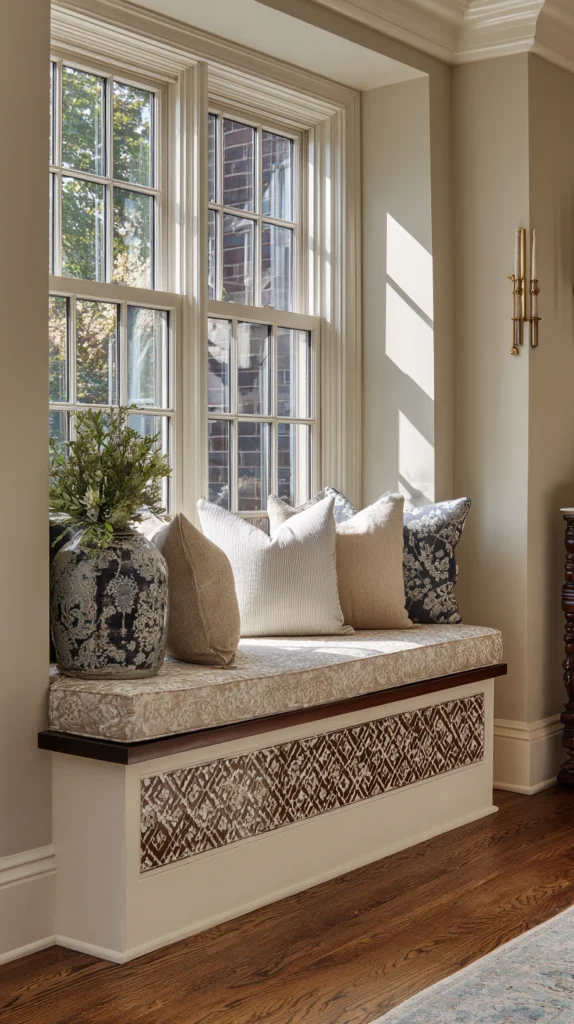
Adding decorative detail to the structure beneath the cushion.
Build it:
- A decorative tile or inlaid wood pattern applied to the bench’s front-facing panel, visible even when the seat is occupied
- A geometric or classic pattern chosen to complement the room’s existing flooring or trim details
- Sealed appropriately depending on material, ensuring durability against regular kicks and bumps at seating height
Why decorative detailing on the base elevates a simple bench structure:
- It gives the window seat genuine visual interest even when nobody is sitting on it or the cushion is removed
- A pattern echoing the room’s existing flooring ties the whole space together more cohesively
- It turns what could be a plain wood or painted panel into an intentional design feature in its own right
Cost breakdown: Adding a tile or wood inlay panel to the bench’s front runs $100 to $300 depending on material and pattern complexity.
15. Window Seat Styled With Layered Textiles and Throw Pillows
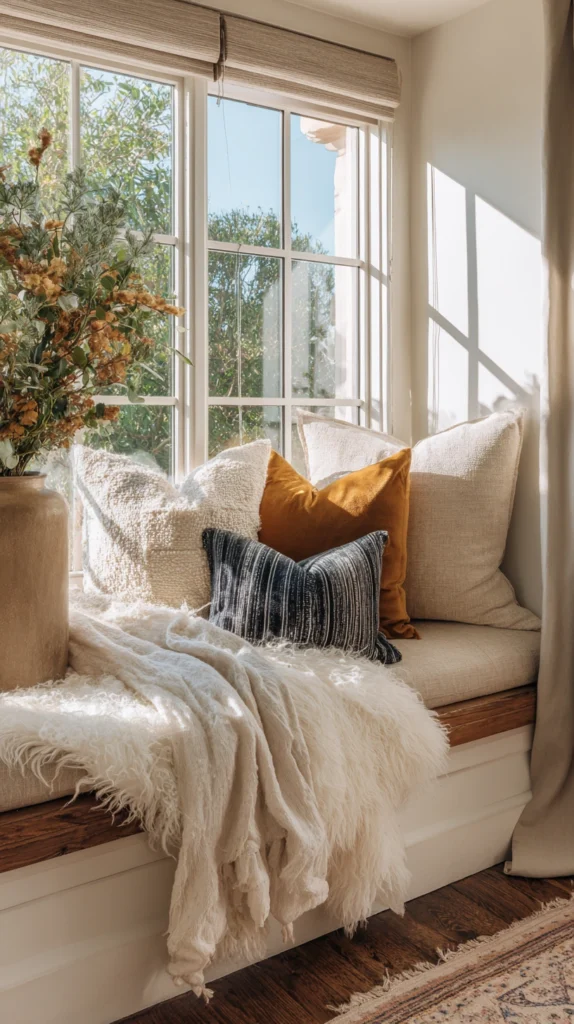
Finishing touches that make the nook feel genuinely inviting rather than just structurally complete.
Build it:
- A base cushion in a durable, neutral fabric, layered with two to three smaller decorative throw pillows in varied textures
- A folded throw blanket draped over one corner, both for warmth and visual softness
- Textures mixed intentionally, pairing something smooth like velvet with something more textured like a woven or knit pillow cover
Why the final styling layer matters as much as the bench construction itself:
- A bare cushion, however well built, can still look unfinished and uninviting without additional layering
- Varied textures signal a genuinely considered, cozy space rather than a purely functional bench
- These finishing touches are also the easiest and cheapest element to update seasonally without touching the bench itself
Cost breakdown: Throw pillows and a folded blanket for styling run $60 to $120 depending on fabric quality and quantity.
Getting started this weekend
You don’t need the full built-in structure before the corner starts feeling cozy.
- Start with a simple cushioned platform and a couple of layered throw pillows in your sunniest window
- Add a reading lamp and a small side surface once you know the spot gets regular use
- Save larger structural additions like storage drawers or a trundle bed for a dedicated second phase
My own window seat took a single weekend to build, and it’s been the most-used corner of the house ever since.
Budget reality
Window seats scale from a simple weekend cushion project to a full custom built-in.
- Under $200: Simple cushioned bench, floating shelf setup, styled throw pillows and blanket
- $200-500: Bay window bench, alcove seat, tile or wood inlay base
- $500-1,000: Built-in with storage drawers, flanking bookshelves, radiator-integrated bench
- $1,000+: Full trundle bed integration, custom tufted upholstery across a large bay window
Most of the everyday coziness comes from cushion quality, lighting, and styling, not the structure’s total cost.
What actually makes a window seat feel like a reading corner
It was never really about building the most elaborate bench possible.
It’s the light that falls just right in the morning, the small table within reach for a mug, the blanket already draped and waiting instead of stored away in a closet.
Build the simplest version first, spend real time in it, and let what you actually need guide whatever comes next.