
14 Skylight Ideas That Brighten Any Room
Our upstairs hallway used to stay dim all day, lit only by a single bulb nobody bothered replacing when it burned out.
We cut a skylight into the roof above it almost as an experiment, not expecting much beyond slightly better lighting.

The hallway became the brightest room in the house by mid-morning, and people started lingering there instead of walking straight through.
A single hole cut into a roof changed how the whole space got used.
Here are 14 ways to bring that same daylight transformation into rooms that never quite get enough natural light.
Why skylights outperform windows for pure daylight impact
Roof-mounted glazing captures light more efficiently than any wall-mounted window can.
- Overhead light delivers roughly three times the illumination of a same-sized vertical window, since it’s not blocked by trees, fences, or neighboring buildings
- It reaches deep into a room’s interior, unlike wall windows that mostly light the perimeter
- It works in rooms that have no exterior wall available for a traditional window at all
Once daylight reaches the center of a room, artificial lighting becomes a backup rather than the default.
1. Fixed Flat Skylight for Simple Daylighting
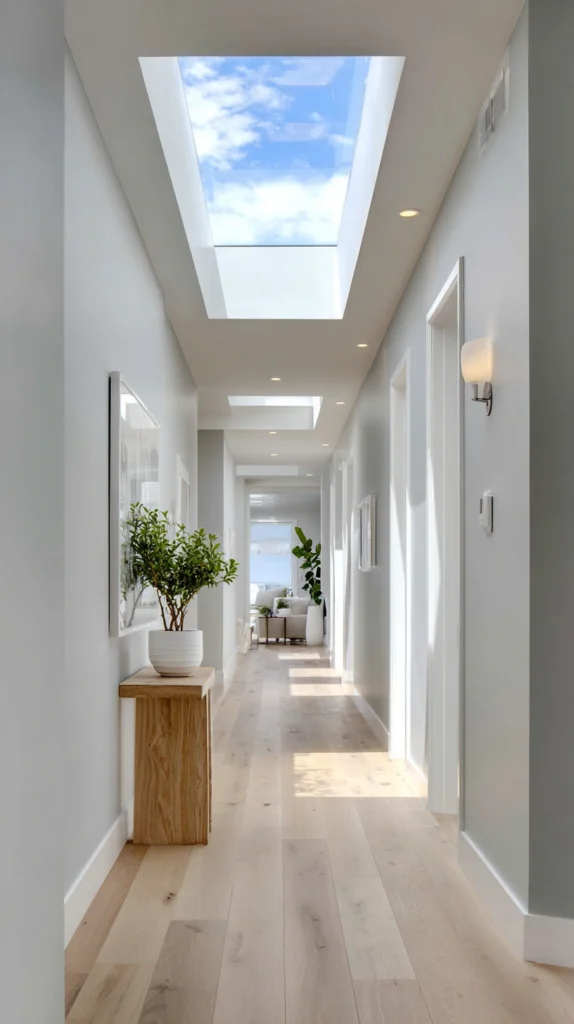
The most straightforward option for adding overhead light.
Build it:
- A single fixed-glass panel installed directly into the roof structure, sized to the ceiling joist spacing
- Low-emissivity, double-glazed glass to reduce heat transfer in both summer and winter
- Positioned above a specific dark spot in the room, like a hallway or a windowless bathroom corner
Why a fixed unit suits most first-time skylight projects:
- It has no moving parts, meaning fewer seals to fail or maintain over the structure’s lifespan
- It’s generally the most affordable skylight style, since it doesn’t require ventilation hardware or a remote control mechanism
- It delivers the core benefit, daylight, without any added features that increase installation complexity
Cost breakdown: A fixed flat skylight runs $600 to $1,200 installed depending on size and roof pitch.
2. Ventilating Skylight With Remote Control
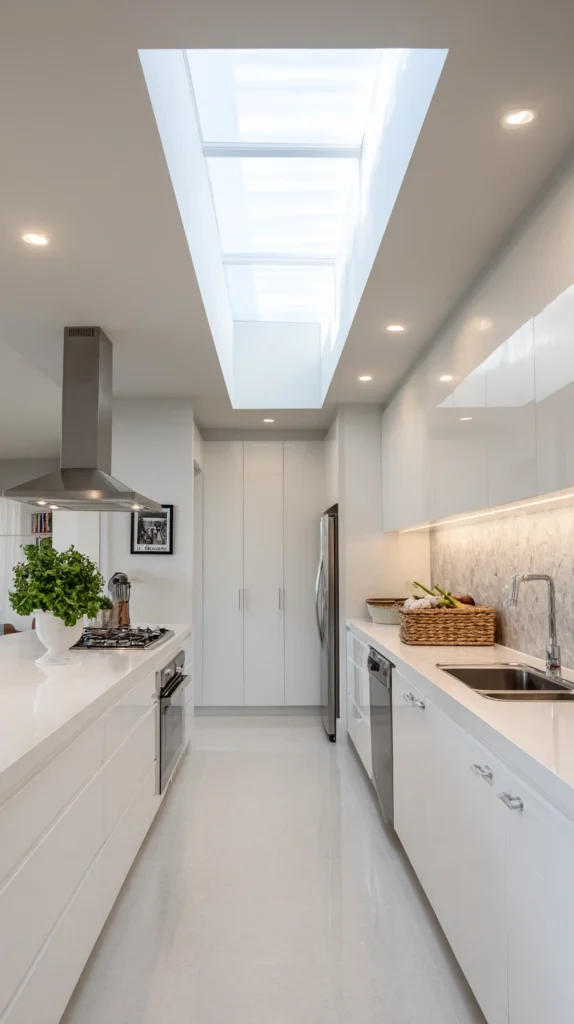
A skylight that opens to release heat and stale air along with letting in light.
Build it:
- An electric or solar-powered opening mechanism controlled by a wall switch or handheld remote
- A rain sensor that automatically closes the unit if precipitation is detected while open
- Installed above a kitchen, bathroom, or other room prone to trapped heat and humidity
Why ventilation adds real function beyond just light:
- Hot air naturally rises and collects near the ceiling, so an operable skylight vents it far more effectively than a wall window ever could
- It reduces reliance on exhaust fans in bathrooms and kitchens, cutting down on both moisture and cooking odors
- The rain sensor removes the common worry of forgetting to close a skylight before a storm
Cost breakdown: Ventilating skylights with remote operation run $900 to $1,800 installed depending on size and power source.
3. Tubular Skylight for Tight or Small Spaces
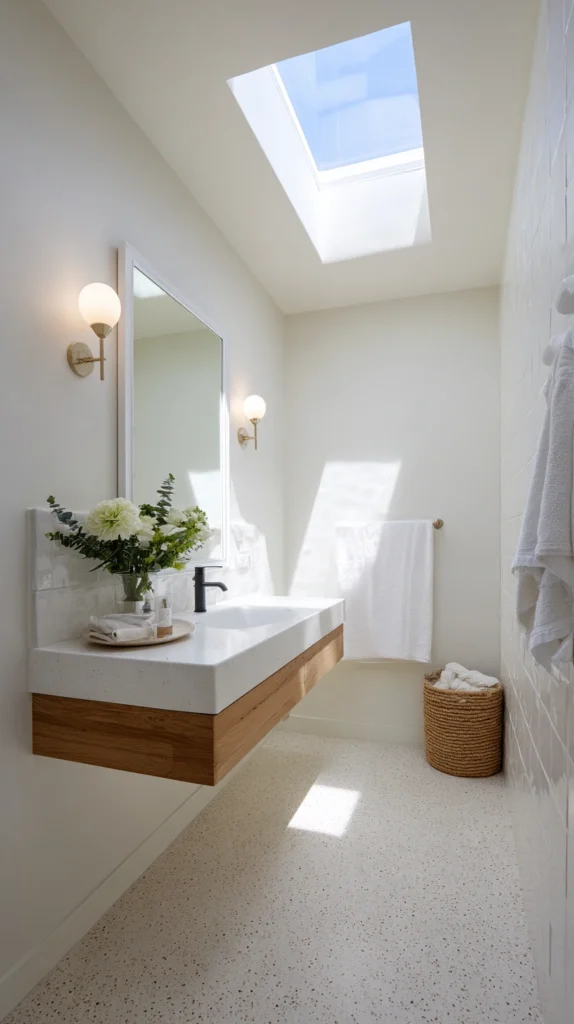
A compact daylighting solution for closets, small bathrooms, or narrow hallways.
Build it:
- A small reflective metal tube running from a rooftop dome down to a diffuser panel in the ceiling
- Installed between roof rafters without needing to reframe the structure, unlike a full-sized skylight
- A diffuser lens selected to spread light evenly rather than casting a single bright spot
Why tubular units solve daylighting problems standard skylights can’t reach:
- The compact size fits spaces too small or structurally awkward for a full skylight installation
- Installation is typically much faster, often completed in a single day without major roof modification
- It brings genuine daylight into interior rooms with no roof access directly above them, using the tube to redirect light from a nearby roof section
Cost breakdown: Tubular skylights run $300 to $700 installed depending on tube length and diffuser style.
4. Skylight Over a Kitchen Island
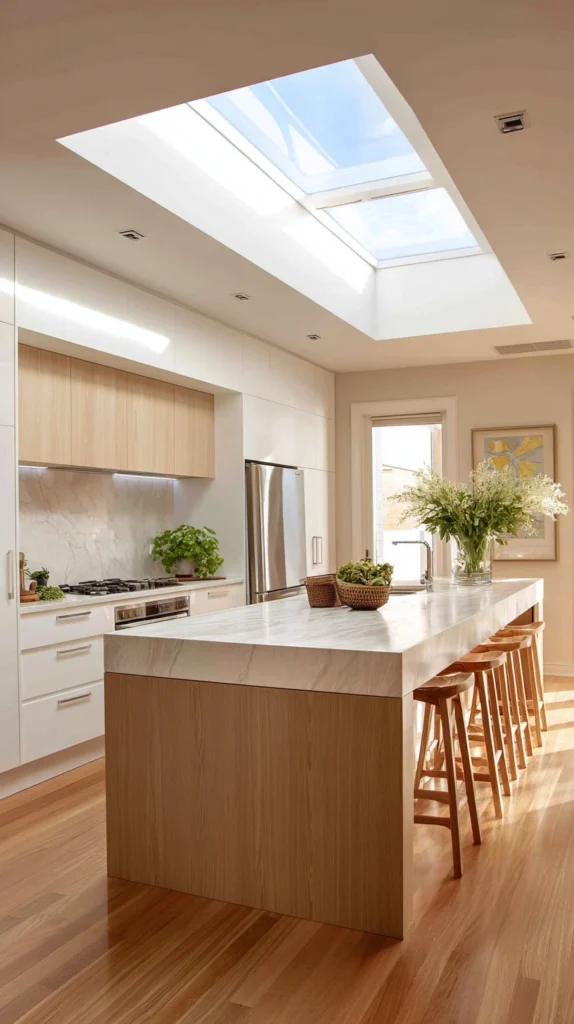
Overhead light positioned specifically above a functional workspace.
Build it:
- A fixed or ventilating skylight sized and centered directly above the island’s footprint
- Positioned to avoid direct glare into a nearby seating or dining area during peak sun hours
- Paired with a pendant light fixture below for balanced daytime and evening illumination
Why the kitchen island is one of the best rooms to prioritize:
- Task lighting matters most where food preparation actually happens, and natural light reduces harsh shadows better than most artificial fixtures
- It highlights countertop materials and finishes in a way that flattering, even daylight does better than a single overhead bulb
- A ventilating version above the island also helps clear cooking heat and odors directly at the source
Cost breakdown: A kitchen island skylight installation runs $700 to $1,500 depending on ventilation features and glazing quality.
5. Skylight in a Windowless Bathroom
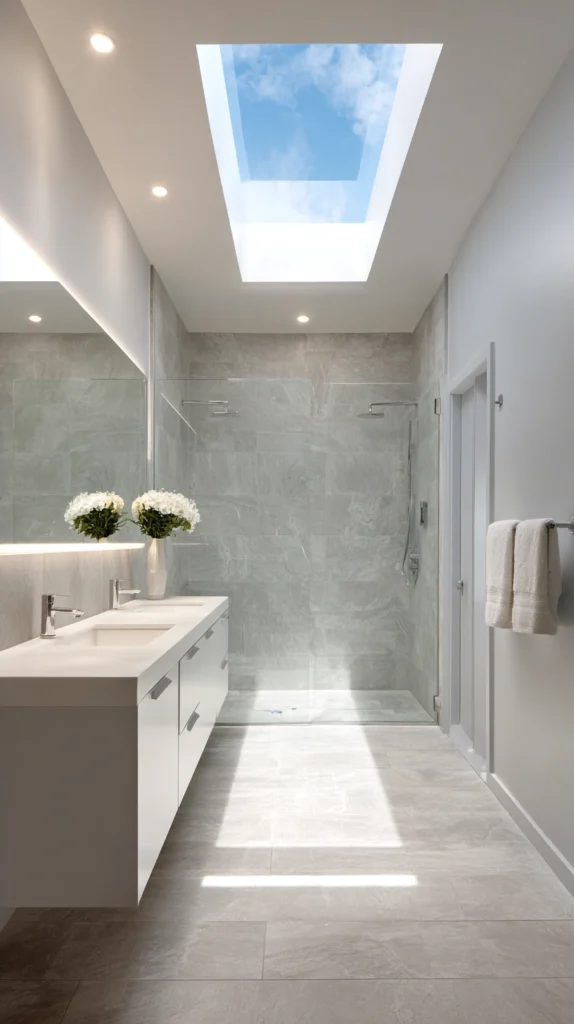
Bringing daylight into one of the most commonly dark rooms in the house.
Build it:
- A ventilating skylight positioned above the shower or tub area, where moisture control matters most
- Frosted or textured glass for privacy without sacrificing the amount of light let in
- A humidity sensor added alongside the rain sensor, automatically venting if moisture levels spike
Why bathrooms benefit disproportionately from this upgrade:
- Many bathrooms have no exterior wall available for a standard window, making a skylight the only daylighting option
- Ventilation directly above the shower addresses the exact spot where humidity and mildew risk are highest
- Frosted glazing solves the privacy concern that would otherwise rule out a bathroom window entirely
Cost breakdown: A frosted, ventilating bathroom skylight runs $800 to $1,600 installed.
6. Skylight With Built-In Solar Shade
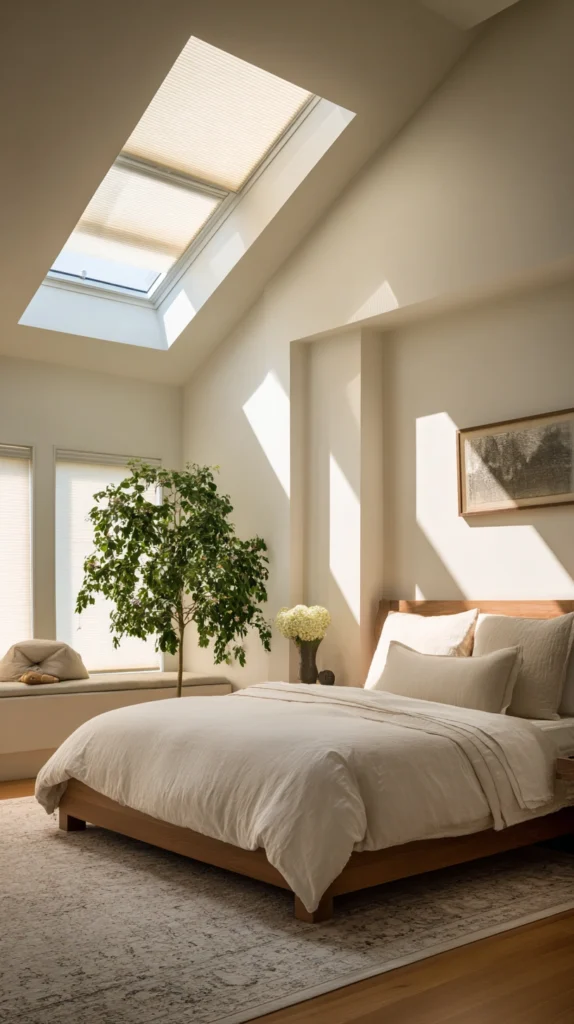
Light control built directly into the skylight unit itself.
Build it:
- A retractable interior or between-glass shade, operated manually or via remote control
- A light-filtering fabric option for softening harsh midday sun without fully blocking the view of the sky
- A blackout fabric option available separately for bedrooms or media rooms needing full light control
Why a built-in shade solves the biggest skylight complaint:
- Direct overhead sun can create uncomfortable glare or heat buildup at certain times of day without any way to adjust it
- A retractable shade gives full control between bright daylight and a softened, filtered glow
- Between-glass shade options stay protected from dust and moisture, unlike an exposed interior shade
Cost breakdown: Adding a built-in shade system to a skylight adds $200 to $500 to the base unit cost.
7. Multiple Small Skylights in a Row
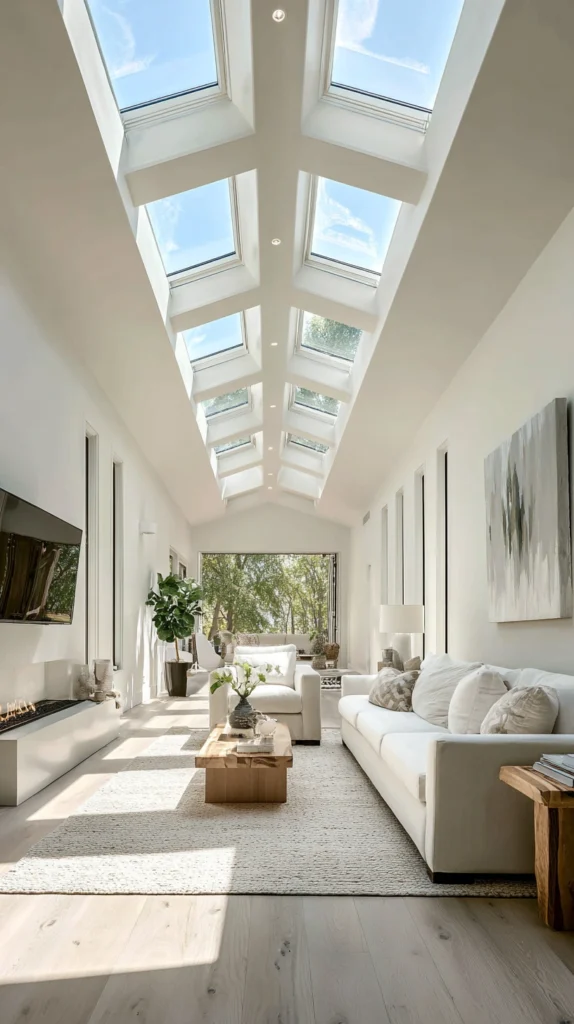
Several smaller units instead of one large skylight.
Build it:
- Three to five smaller fixed skylights installed in an evenly spaced row along a hallway or open living area
- Consistent sizing and spacing to create a rhythmic, architectural pattern across the ceiling
- Positioned to align with existing roof rafter spacing, simplifying the structural installation
Why multiple smaller units can outperform one large skylight:
- It distributes daylight more evenly across a longer room, rather than creating one intensely bright spot
- The repeated pattern adds a genuine architectural detail to the ceiling itself, beyond just functional lighting
- Smaller individual units are often easier and less disruptive to install than reframing for one oversized opening
Cost breakdown: A row of four small fixed skylights runs $1,800 to $3,200 installed, depending on individual unit size.
8. Skylight Positioned Above a Stairwell
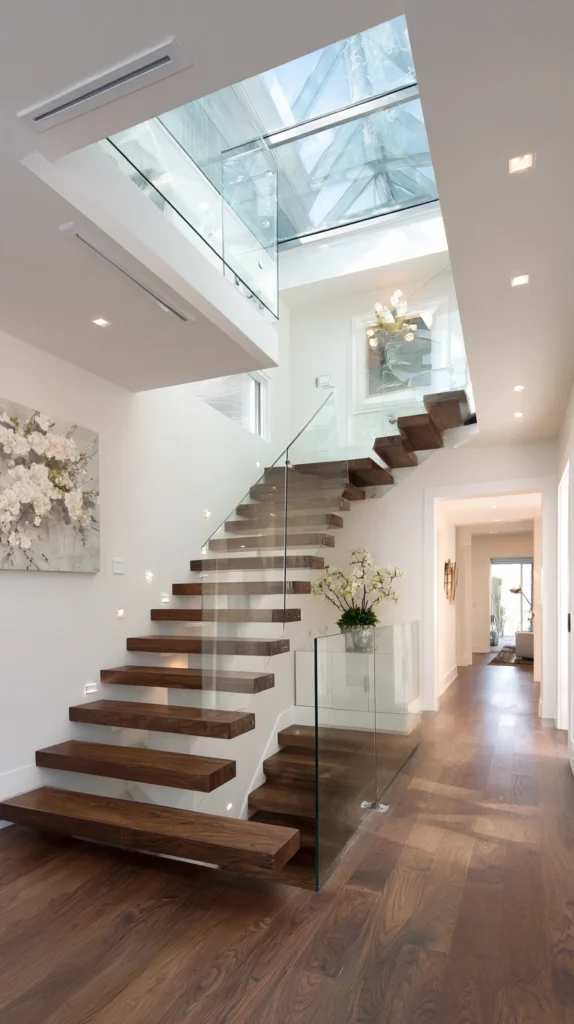
Daylighting a vertical space that traditional windows often struggle to illuminate.
Build it:
- A fixed skylight installed at the top of the stairwell, sized proportionally to the stairwell’s width
- A light well or shaft built if the roof sits significantly higher than the stairwell ceiling, channeling light downward
- Paired with a pendant light fixture at a mid-level landing for consistent lighting after dark
Why stairwells are an especially good candidate for this upgrade:
- These vertical spaces often have no good wall for a window, making overhead light one of the few options
- Daylight cascading down a stairwell creates a genuinely dramatic architectural moment, not just functional lighting
- It naturally illuminates every landing level below it, rather than lighting only a single floor
Cost breakdown: A stairwell skylight with a light shaft runs $1,200 to $2,800 depending on shaft length and roof height.
9. Skylight With Motorized Blinds and Smart Home Integration
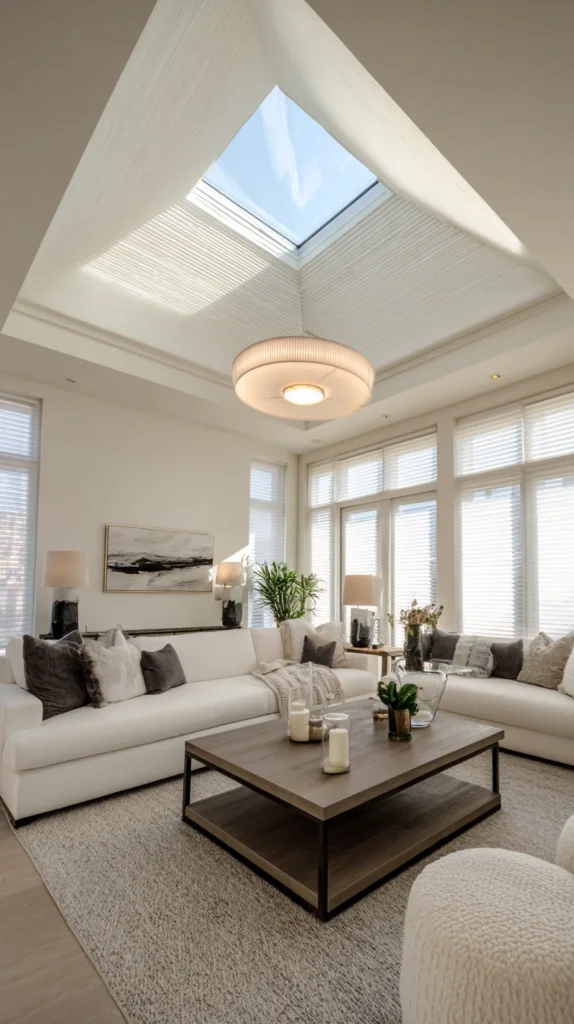
Automated light control connected to a broader smart home system.
Build it:
- Motorized interior blinds controlled through a smart home app or voice assistant integration
- Scheduling set to automatically adjust light levels throughout the day, closing during peak afternoon heat and opening during softer morning light
- Paired with the skylight’s rain sensor and ventilation controls within the same connected system
Why smart integration adds genuine daily convenience:
- It removes the need to manually adjust shades throughout the day as the sun’s position changes
- Scheduled operation helps manage indoor temperature automatically, reducing strain on cooling systems during hot afternoons
- It centralizes skylight control alongside other smart home lighting and climate features already in use
Cost breakdown: Smart motorized blinds and integration hardware add $300 to $700 on top of the base skylight installation.
10. Custom-Shaped Skylight for Architectural Interest
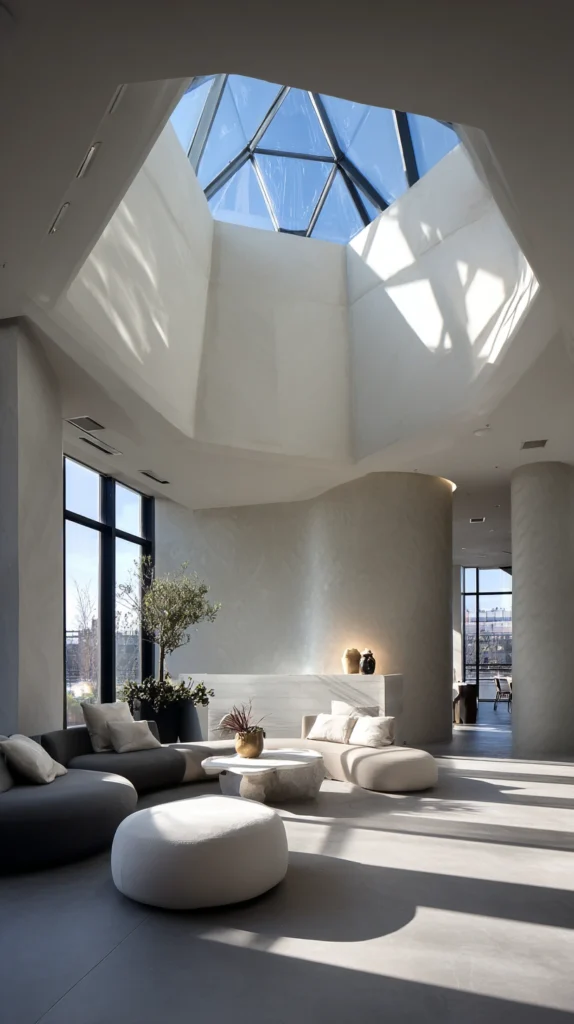
A non-standard shape used as a deliberate design feature.
Build it:
- A triangular, hexagonal, or curved skylight shape rather than a standard rectangle
- Positioned as a genuine focal point, often centered above a specific architectural feature like a fireplace or reading nook
- Custom-fabricated glazing and frame, since non-standard shapes typically aren’t available as off-the-shelf units
Why an unusual shape earns its place in specific rooms:
- It signals genuine architectural intention rather than a purely functional daylighting fix
- Unusual shapes pair especially well with modern or architecturally distinctive homes where a standard rectangle might feel out of place
- It becomes a design feature worth building the rest of the room’s layout around
Cost breakdown: Custom-shaped skylights run $1,500 to $4,000 depending on complexity and glazing size.
11. Skylight Combined With Exposed Ceiling Beams
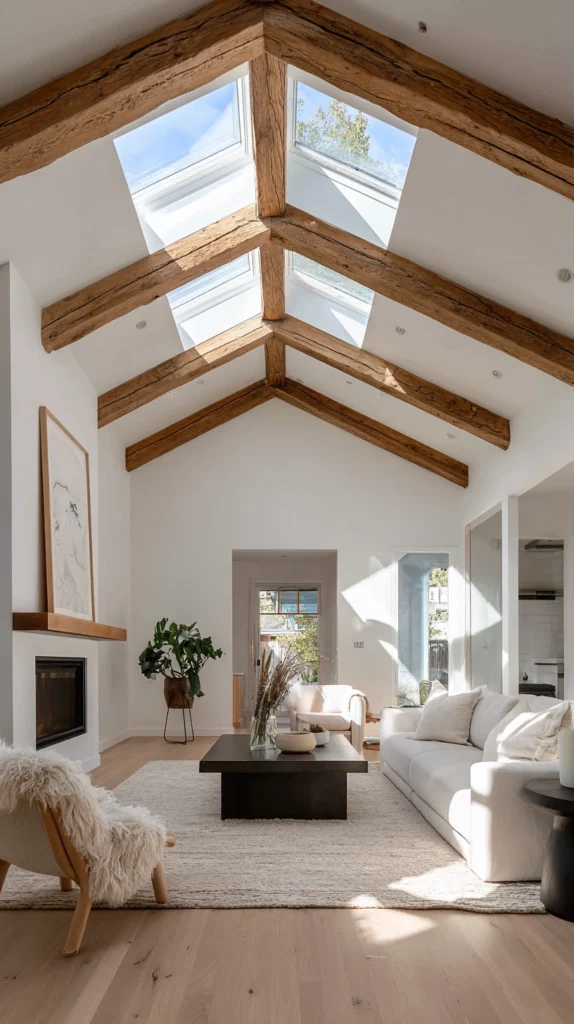
Pairing overhead daylight with the same rustic architectural detail as exposed beams.
Build it:
- A skylight installed between two structural or decorative ceiling beams, framing the glass naturally
- Beam finish chosen to complement rather than compete with the light coming through, often a warm or whitewashed tone
- Positioned centrally within the beam spacing for a balanced, symmetrical look from below
Why this combination adds more depth than either feature alone:
- The beams frame the skylight visually, giving the glass a clear architectural context rather than appearing as an isolated cutout
- Daylight passing between the beams creates shifting shadow patterns throughout the day, adding movement to an otherwise static ceiling
- It suits farmhouse, craftsman, and rustic-modern interiors particularly well, tying two design choices into one cohesive statement
Cost breakdown: Combining a skylight installation with beam framing adds $200 to $500 beyond the individual costs of each feature separately.
12. Skylight Above a Reading Nook or Window Seat
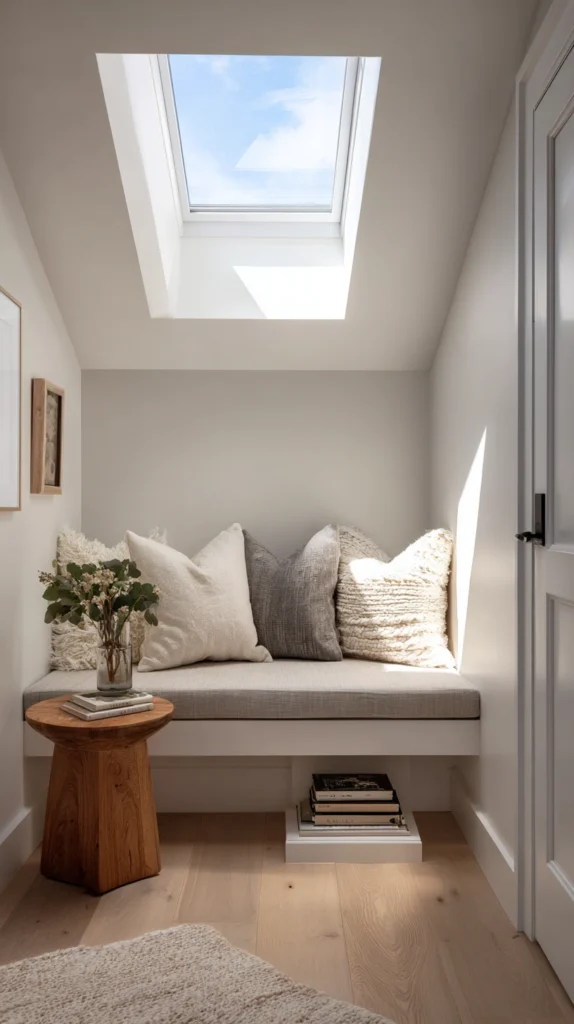
Daylighting a small, dedicated relaxation spot rather than a whole room.
Build it:
- A smaller fixed or tubular skylight positioned directly above a built-in bench or reading chair
- A soft, cushioned seating area arranged beneath to take full advantage of the direct overhead light
- A small side table or shelf added nearby for books, keeping the whole nook self-contained
Why a smaller, targeted skylight suits this specific use case:
- It doesn’t require lighting an entire room, just a single dedicated spot, keeping the project smaller and more affordable
- Direct overhead natural light is genuinely excellent for reading, reducing eye strain compared to a single side lamp
- It gives an otherwise ordinary corner of the house a clear sense of purpose and destination
Cost breakdown: A skylight sized for a reading nook runs $500 to $1,000 installed.
13. Skylight in a Home Office for Better Focus
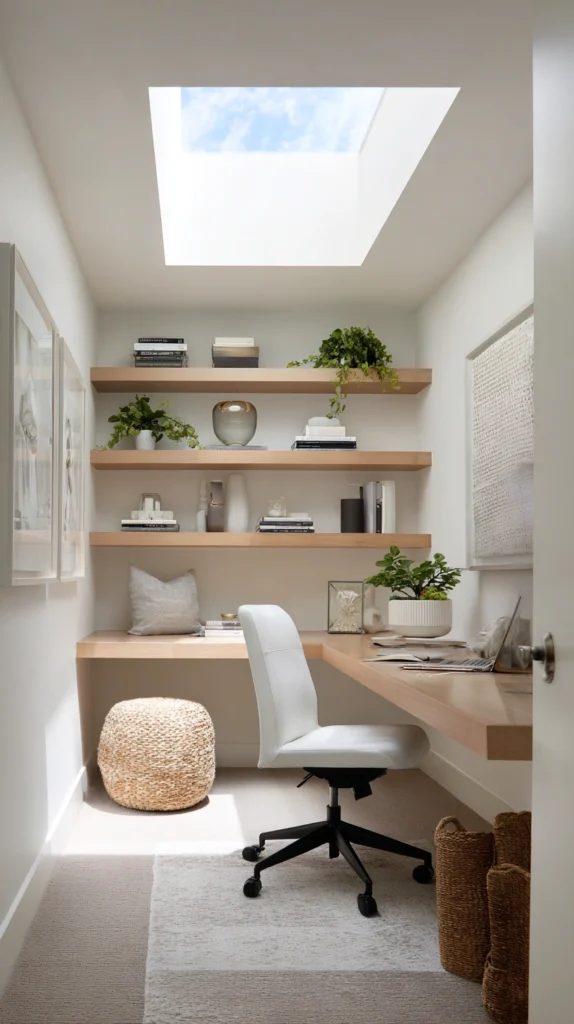
Positioning daylight specifically to support concentration and screen use.
Build it:
- A skylight positioned to avoid direct glare on a computer monitor, often placed slightly behind or to the side of the desk rather than directly above it
- A light-filtering shade included to soften midday brightness during video calls or focused work
- Paired with a desk lamp for supplemental task lighting on darker winter days
Why home offices benefit from careful skylight placement more than most rooms:
- Natural light exposure during work hours is linked to improved alertness and mood compared to relying solely on artificial lighting
- Careful positioning avoids the common problem of overhead glare washing out a screen or causing eye strain
- It reduces the need for harsh overhead fixtures during the workday, relying on daylight as the primary source instead
Cost breakdown: A home office skylight with a light-filtering shade runs $800 to $1,500 installed.
14. Skylight Paired With Interior Glass Walls to Share Light
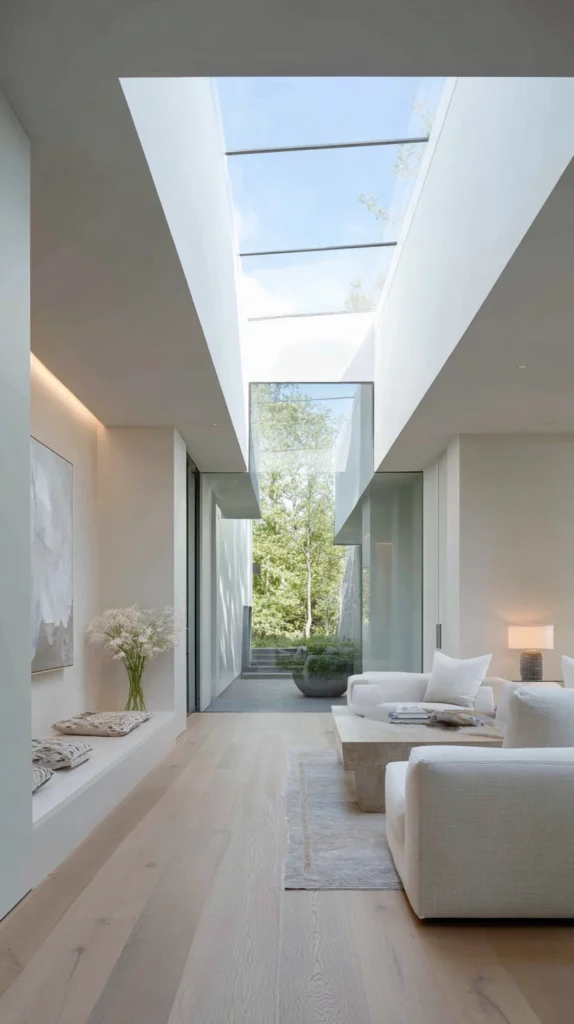
Extending daylight from a skylit room into an adjacent windowless space.
Build it:
- A skylight installed in one room with an interior glass wall, partition, or transom window shared with a neighboring windowless room
- Frosted or clear glass chosen depending on how much privacy the adjoining space requires
- Positioned so light passes through naturally rather than needing a second skylight in the interior room itself
Why sharing light between rooms extends the value of a single skylight:
- It brings daylight benefits to a room that otherwise has no roof access or exterior wall available at all
- It avoids the cost of a second full skylight installation, using an interior glass feature instead
- It creates a genuine sense of connection between two spaces, rather than treating each room as fully isolated from natural light
Cost breakdown: An interior glass wall or transom addition runs $400 to $1,000 depending on size and glass type, in addition to the primary skylight’s own installation cost.
Getting started this weekend
You don’t need a full roof renovation before the first burst of daylight shows up.
- Start with a single tubular skylight in the darkest, smallest room of the house to test the impact before a larger investment
- Add a shade system or ventilation feature once you know the basic light level works for that space
- Save larger projects like a stairwell light shaft or custom-shaped skylight for a dedicated renovation phase
My own hallway went from the dimmest spot in the house to somewhere people actually pause, all from one carefully placed skylight.
Budget reality
Skylights scale from a compact tubular unit to a full architectural feature.
- Under $700: Tubular skylight, reading nook installation, fixed skylight in a small room
- $700-1,500: Kitchen island skylight, bathroom ventilating unit, home office installation
- $1,500-3,000: Row of multiple skylights, stairwell light shaft, custom-shaped unit
- $3,000+: Full smart home integration across several units, extensive structural reframing for larger openings
Most of the everyday brightness comes from correct placement and glazing choice, not the largest or most elaborate unit available.
What actually brightens the room
It was never really about installing the biggest skylight the roof could hold.
It’s the exact dark corner finally lit, the reading nook that now gets used every afternoon, the hallway people slow down in instead of just passing through.
Start with the one room that needs it most, and let that first skylight prove the difference before adding another.