
13 Wabi-Sabi Home Decor Ideas for Imperfect Beauty

I used to hide the chipped edge of my favorite bowl in the back of the cabinet, ashamed of it somehow.
Then I read about wabi-sabi and realized the chip was the most honest thing about that bowl.
Now it sits on the open shelf, chip facing forward, and it’s the piece guests always pick up first.
That small shift changed how I look at the rest of the house entirely.
Here are 13 ways to bring that same imperfect, honest beauty into your own home.
What wabi-sabi actually means for a home
The concept comes from Japanese aesthetics, built around accepting transience and imperfection rather than fighting it.
- Nothing has to be new, matched, or flawless to be beautiful
- Wear, asymmetry, and age are treated as character, not damage to hide
- The goal is a home that feels lived in and honest, not staged or showroom-perfect
Once you stop chasing flawless, decorating actually gets easier, not harder.
1. Handmade Ceramic Pieces With Visible Imperfections
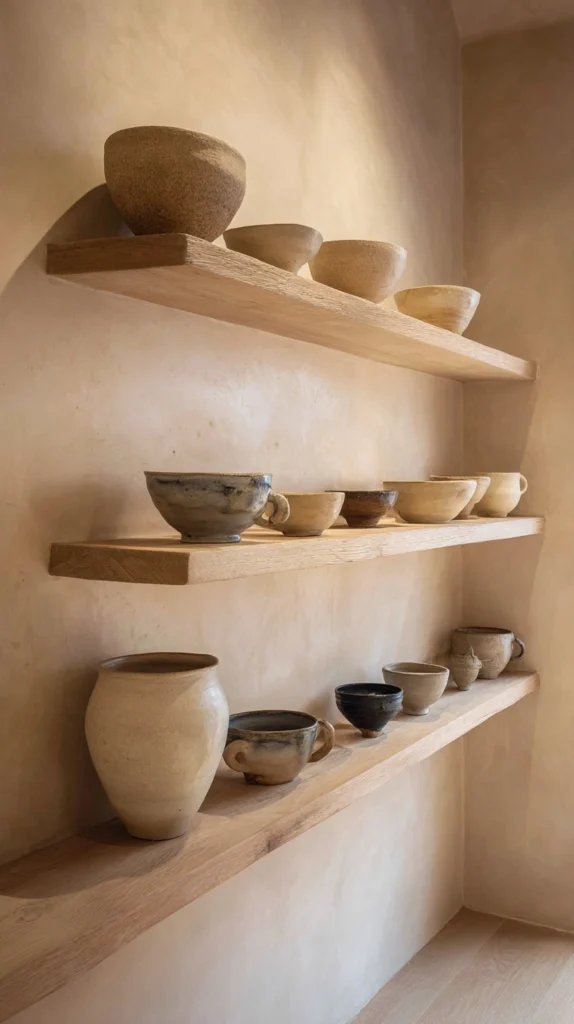
Pottery chosen specifically for its irregularities, not despite them.
Build it:
- Hand-thrown bowls, mugs, or vases with slightly uneven rims or asymmetrical shapes
- Glazes that pool, crack, or vary in tone across the surface rather than a uniform factory finish
- Mixed rather than matched, so no two pieces on a shelf are identical
Why imperfect ceramics anchor the whole aesthetic:
- Machine-made uniformity is the exact opposite of what wabi-sabi is built around
- Each piece carries the visible mark of the hands that made it, which reads as more honest than a flawless mold
- Displaying them openly, rather than hiding chips or unevenness, is the actual point of the style
Cost breakdown: Handmade ceramic pieces run $15 to $60 each depending on size and where they’re sourced, often found at local pottery studios or artisan markets.
2. Kintsugi-Style Repaired Objects
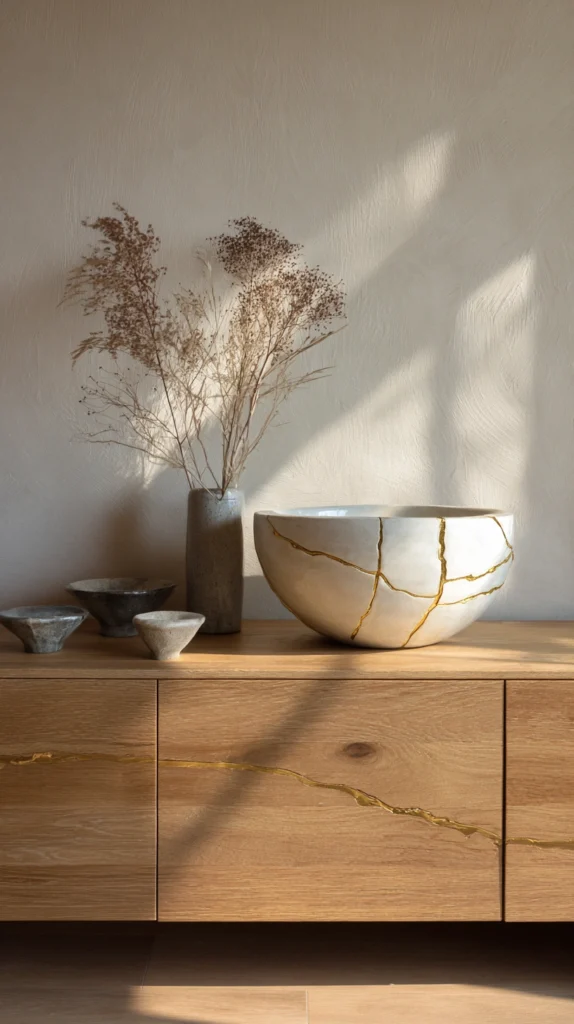
Broken pieces mended with visible gold seams rather than discarded.
Build it:
- A cracked or chipped ceramic piece repaired using a kintsugi-style gold epoxy or lacquer kit
- The repair left fully visible along the break line, rather than blended to disappear
- Displayed prominently, since the repair itself is the design feature, not something to minimize
Why visible repair carries more meaning than a hidden one:
- The philosophy behind kintsugi treats breakage and repair as part of an object’s history, not a flaw to erase
- It gives genuinely sentimental broken items a second life instead of ending up in the trash
- The gold seam adds a striking visual detail that a flawless piece never would have had in the first place
Cost breakdown: Kintsugi repair kits run $15 to $30, or professional kintsugi repair services run $40 to $100 depending on the piece.
3. Raw, Unfinished Wood Furniture
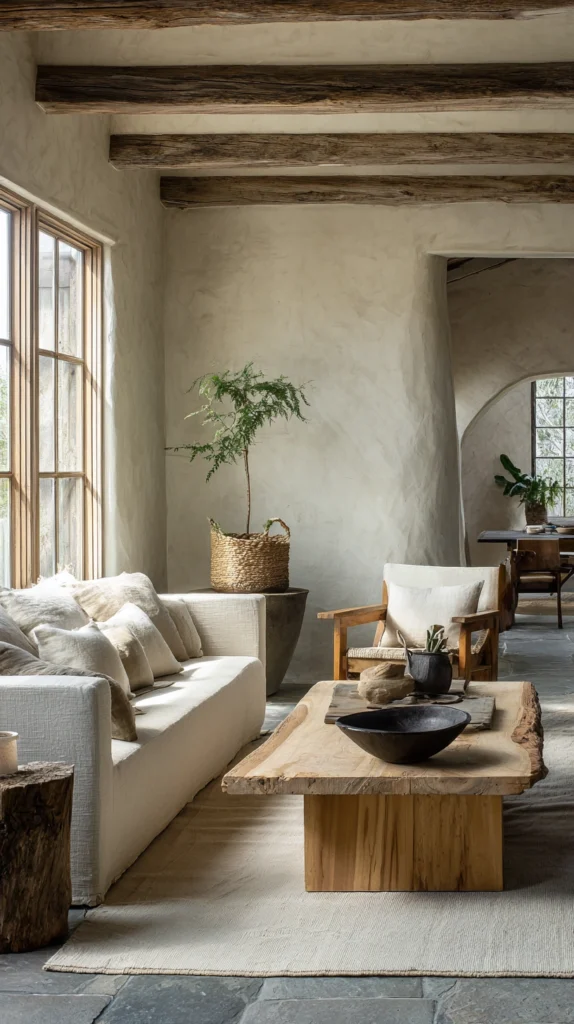
Furniture that shows its material honestly rather than hiding it under paint or heavy lacquer.
Build it:
- Solid wood pieces with visible grain, knots, and natural color variation left exposed
- A simple oil or wax finish rather than a glossy polyurethane coating, preserving the wood’s natural texture
- Live-edge slabs where the tree’s original outer edge is kept intact rather than squared off
Why raw wood suits this aesthetic better than painted furniture:
- The natural variation in grain and tone is inherently imperfect and inherently beautiful at the same time
- A simple oil finish lets the wood continue to age and darken naturally over years of use
- It pairs well with nearly any other wabi-sabi element, from ceramics to linen textiles
Cost breakdown: Raw wood furniture pieces vary enormously by size, with small side tables running $80 to $200 and larger dining tables running $400 and up.
4. Linen Textiles With Natural Wrinkles Left Alone
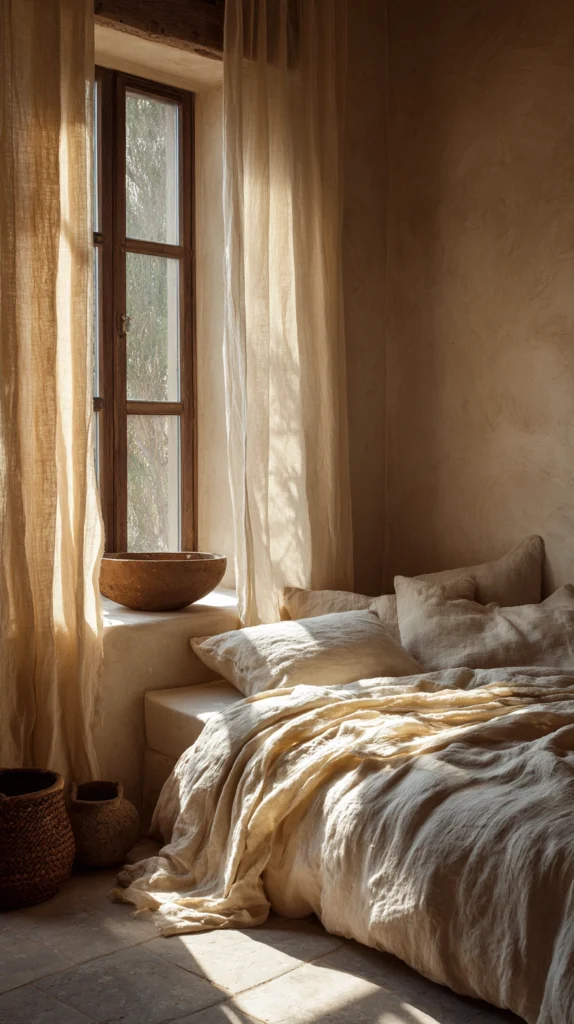
Fabric chosen and used without fighting its natural texture.
Build it:
- Linen curtains, throw pillows, or bedding left unironed, allowing the natural creasing to show
- Undyed or naturally dyed linen in soft, muted tones rather than bright synthetic colors
- Washed repeatedly before use, since linen actually softens and looks better with wear over time
Why wrinkled linen fits the philosophy so directly:
- Fighting a fabric’s natural texture with heavy starching or ironing works against the entire point of the style
- Linen’s slight imperfections in weave and drape read as organic rather than sloppy
- It’s a textile that genuinely improves in both feel and appearance the more it’s used and washed
Cost breakdown: Linen throw pillow covers run $15 to $30 each, and linen curtain panels run $40 to $80 per panel.
5. Weathered and Reclaimed Wood Accents
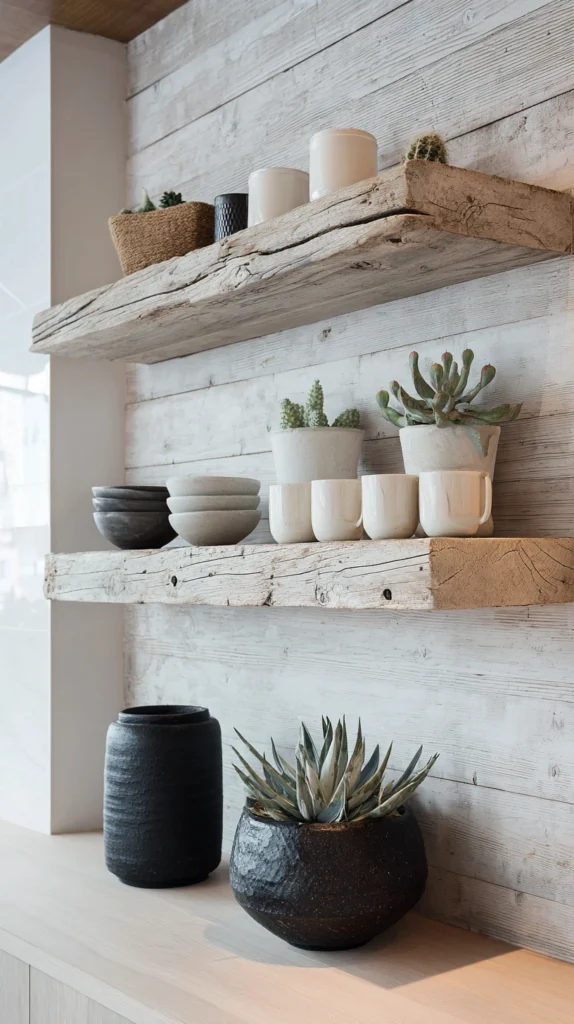
Salvaged wood carrying visible history from its previous life.
Build it:
- Reclaimed barn wood or salvaged flooring repurposed into shelving, picture frames, or small furniture
- Nail holes, saw marks, and weathering left visible rather than sanded smooth
- Sealed only enough to stabilize the wood, avoiding a finish that erases its texture entirely
Why reclaimed wood carries more character than new lumber:
- Every mark and weathering pattern tells a specific story that new wood simply can’t replicate
- It keeps genuinely old material out of landfills, aligning with the philosophy’s respect for impermanence and reuse
- The visible wear reads as authentic in a way that distressed-finish new lumber, made to look old, rarely achieves
Cost breakdown: Reclaimed wood shelving or small accent pieces run $30 to $100 depending on size and source.
6. Asymmetrical Shelf Styling
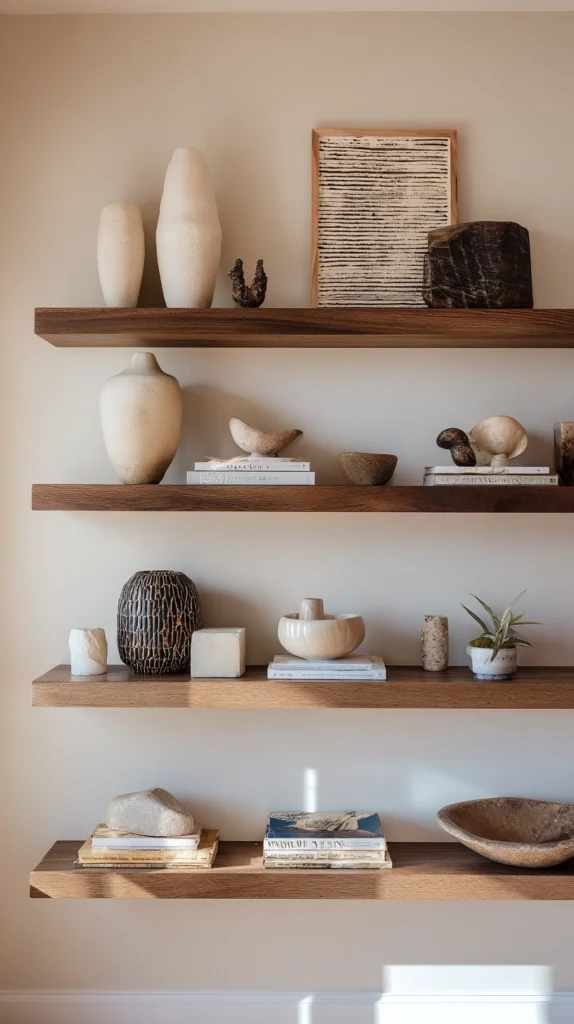
Arranging objects without forcing visual symmetry.
Build it:
- Groupings of varied heights and shapes placed with intentional, uneven spacing
- One larger anchor piece off to one side rather than centered
- Negative space left deliberately uneven rather than mirrored on both ends of the shelf
Why asymmetry reads as more natural than a mirrored arrangement:
- Perfectly symmetrical styling can feel staged, working against the honest, organic feeling this aesthetic is built around
- Uneven groupings mimic how objects actually accumulate in a well-used home over time
- It also makes it easier to style a shelf with mismatched pieces, since nothing needs to pair up evenly
Cost breakdown: Free, since this is a rearranging exercise using objects already on hand.
7. Muted, Earthy Color Palette Throughout
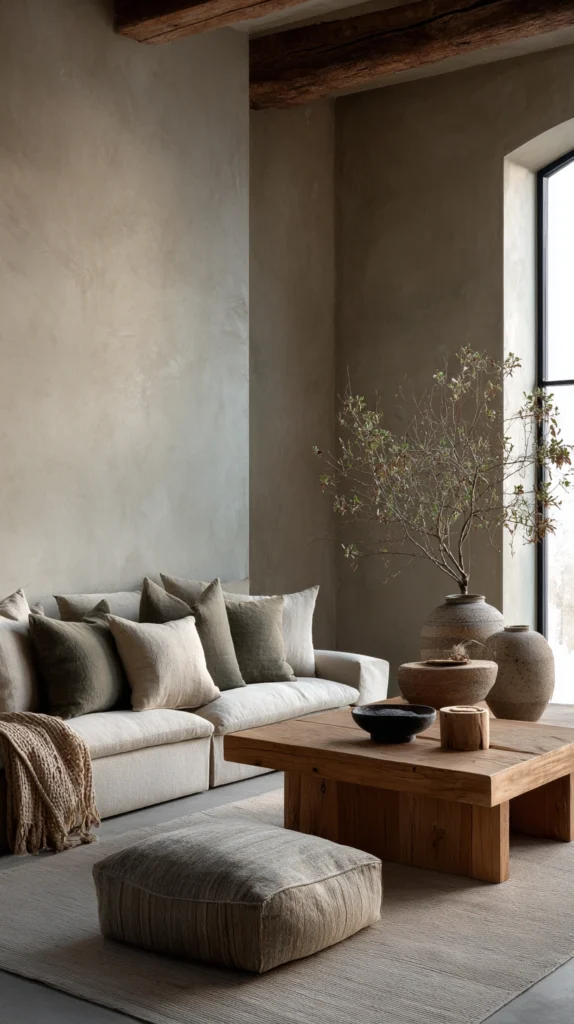
A restrained color story built around natural tones.
Build it:
- Walls and larger surfaces kept in soft clay, stone, sand, or muted sage tones
- Avoiding bright, saturated, or purely white color choices in favor of slightly warmer, imperfect-feeling neutrals
- Textures varied within the same tonal family, rather than relying on color contrast for visual interest
Why a muted palette supports the whole aesthetic:
- Bright, flawless color reads as more manufactured, working against the natural, aged feeling wabi-sabi relies on
- Earthy tones age gracefully and don’t show wear or fading the way bright saturated colors eventually do
- It creates a calm backdrop that lets the textural imperfections of furniture and objects stand out more clearly
Cost breakdown: Repainting a single room in a muted earthy tone runs $150 to $350 in paint and basic supplies.
8. Stone and Concrete Surfaces Left Unpolished
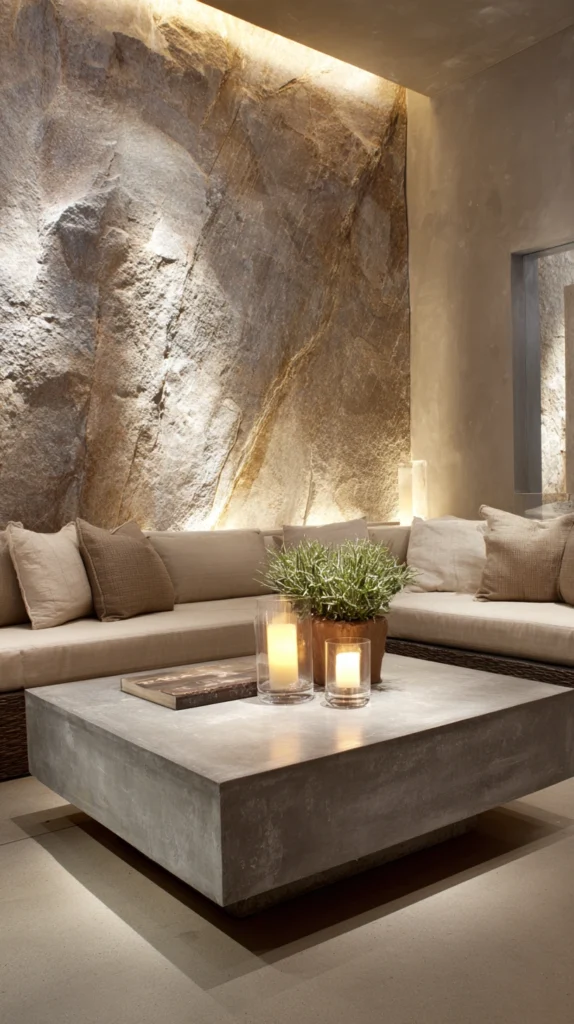
Hard materials chosen for their natural, imperfect finish.
Build it:
- Concrete countertops or side tables left with a matte, slightly textured finish rather than a high-gloss polish
- Natural stone with visible veining and color variation, rather than a uniformly toned slab
- Small chips or texture variations accepted as part of the material’s character rather than sanded away
Why unpolished surfaces suit this style better than a glossy finish:
- A high polish creates an artificial perfection that works against the aesthetic’s core philosophy
- Matte, textured surfaces show age and use gracefully rather than highlighting every scratch
- The natural variation in stone or concrete mimics the same imperfection valued in handmade ceramics
Cost breakdown: A concrete side table or small surface piece runs $80 to $200 depending on size and whether it’s DIY or professionally poured.
9. Dried and Foraged Botanicals Instead of Fresh-Cut Flowers
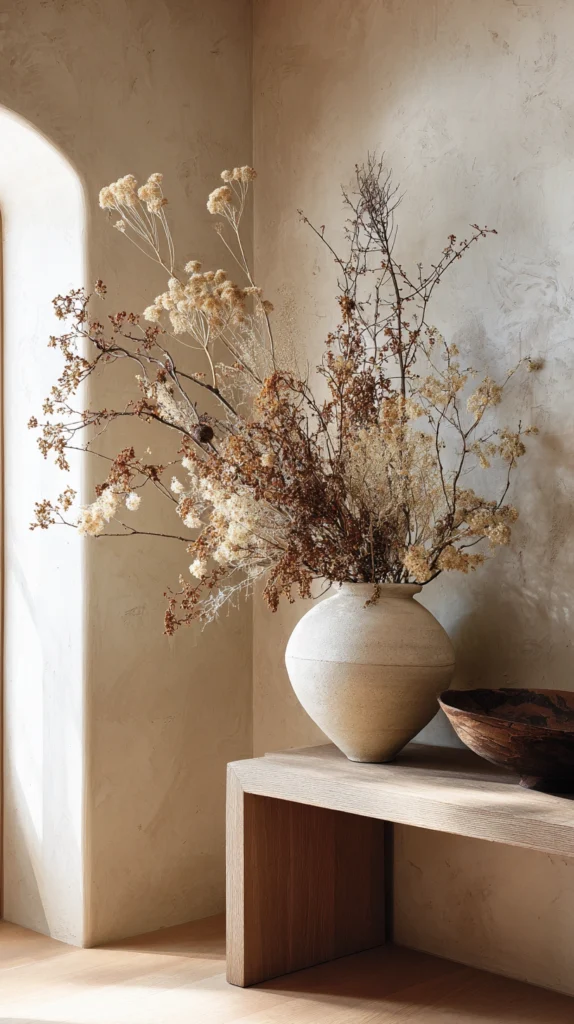
Plant material chosen for its natural decay, not despite it.
Build it:
- Dried pampas grass, eucalyptus, or seed pods arranged in a simple ceramic vessel
- Foraged branches or seed heads gathered from a walk rather than purchased from a florist
- Left in place for months rather than replaced weekly, allowing natural fading and texture change over time
Why dried botanicals fit the philosophy more than fresh flowers:
- Fresh flowers are chosen for a fleeting moment of peak bloom, while dried botanicals embrace the entire aging process
- The muted, faded tones of dried material naturally complement an earthy color palette
- It removes the ongoing cost and waste of replacing fresh arrangements on a weekly basis
Cost breakdown: Dried botanical stems run $3 to $8 each if purchased, or free if foraged responsibly from your own yard or a public trail.
10. Handwoven Baskets and Natural Fiber Storage
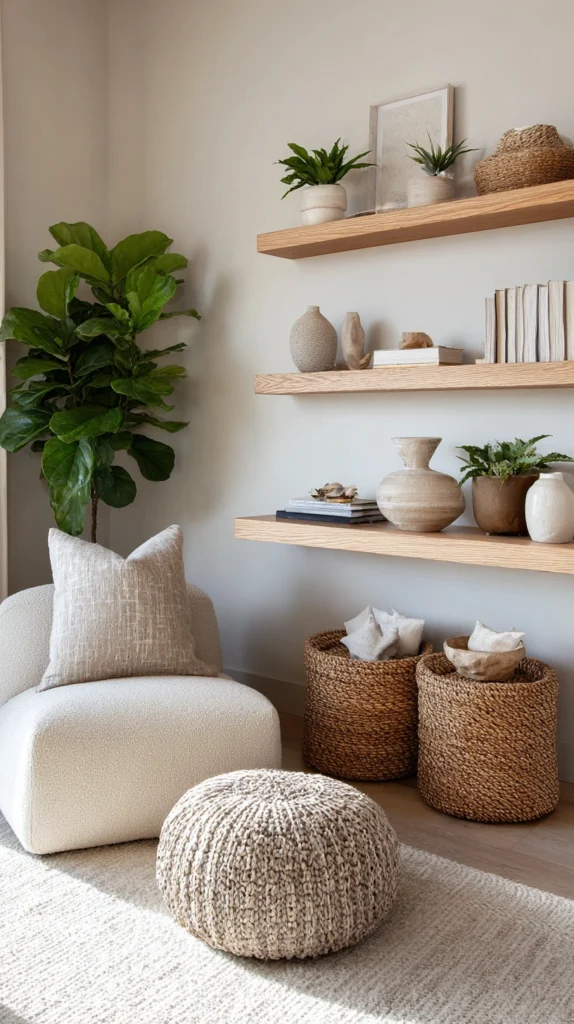
Storage solutions made from raw, textural materials.
Build it:
- Seagrass, rattan, or jute baskets used for everyday storage rather than uniform plastic bins
- Slight variations in weave tightness and color left visible, avoiding perfectly matched sets
- Used openly on shelves rather than tucked inside closets, letting the texture contribute to the room’s overall look
Why natural fiber storage suits this aesthetic over plastic or metal bins:
- Woven natural materials carry inherent texture and slight irregularity that manufactured storage lacks entirely
- They age visually over time, developing a soft patina rather than looking worn out
- Displaying them openly turns a purely functional need into a genuine decorative element
Cost breakdown: Woven storage baskets run $15 to $40 each depending on size and material.
11. A Single Imperfect Statement Piece Per Room
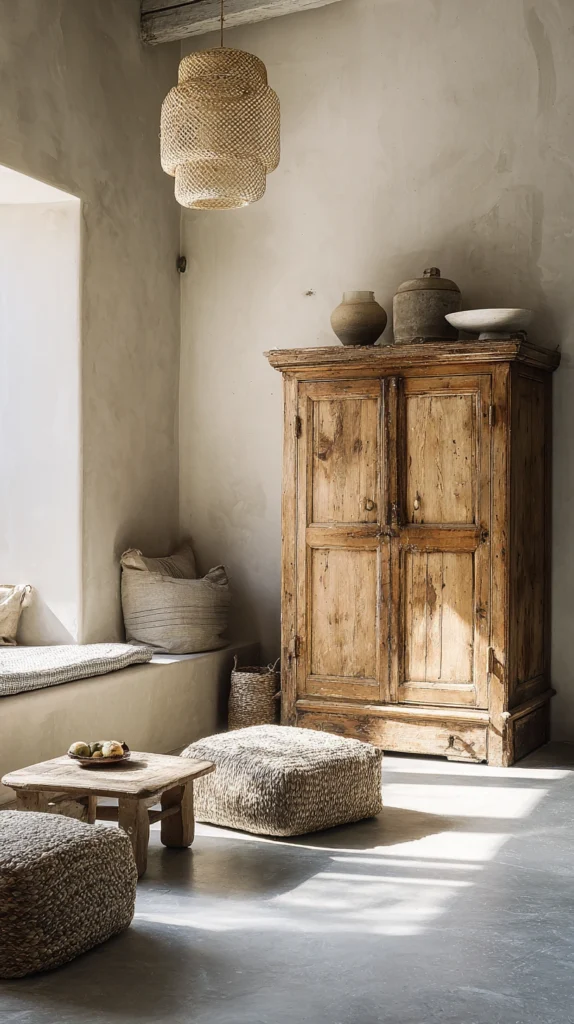
One deliberately flawed or aged object anchoring each space.
Build it:
- An antique piece of furniture with visible wear, like a worn armrest or faded finish
- A large ceramic vessel with an irregular shape or an intentional crack repair
- Positioned prominently in the room rather than tucked into a corner, so it draws the eye first
Why one anchor piece matters more than several smaller accents:
- A single, well-chosen imperfect piece communicates the whole aesthetic more clearly than scattered small details
- It gives the eye a clear starting point before taking in the rest of the room’s texture and color
- It’s often the piece with the most genuine history or story, worth highlighting rather than diluting among other objects
Cost breakdown: A statement antique or handmade piece varies widely, typically $100 to $400 depending on size and source.
12. Candlelight and Soft, Uneven Lighting
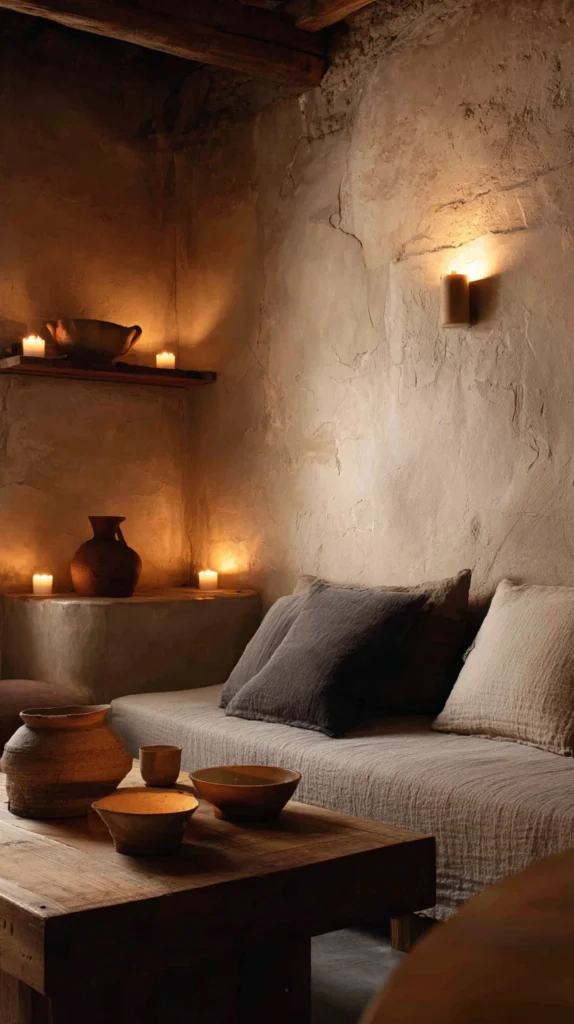
Light sources chosen for warmth and imperfection over uniform brightness.
Build it:
- Beeswax or soy candles in simple, handmade holders rather than uniform manufactured pillars
- Warm-toned bulbs in exposed or simple fixtures rather than bright, even overhead lighting
- Light sources placed at varied heights around a room instead of a single centralized fixture
Why uneven, warm lighting suits this aesthetic so directly:
- Bright, uniform lighting flattens texture and creates the same flawless feeling the whole style avoids
- Candlelight and lower, warmer bulbs cast soft shadows that actually highlight the texture of wood, stone, and ceramics
- It changes the whole feel of a room in the evening without needing any new furniture or decor at all
Cost breakdown: Simple beeswax candles and holders run $10 to $25 for a starter set.
13. Visible Repairs and Patches Left Unhidden
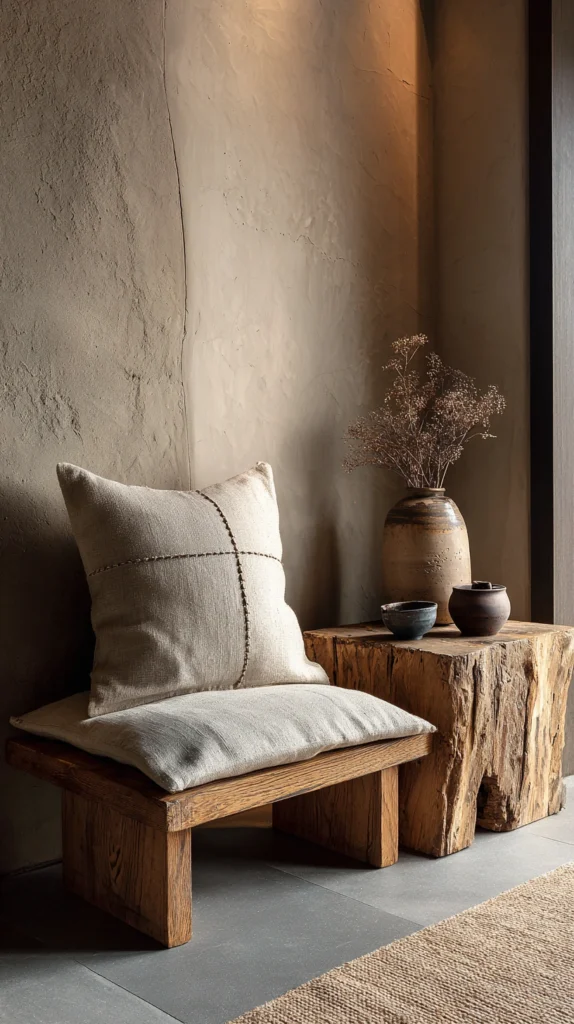
Everyday wear treated as part of the home’s story rather than something to fix invisibly.
Build it:
- A visible mend on a favorite textile, like a sashiko-style stitched patch on worn denim or linen
- A wood surface’s scratch or water ring left as is rather than refinished away
- Small repairs done by hand, in a contrasting thread or material, rather than an attempt to blend in seamlessly
Why leaving repairs visible reinforces the whole philosophy:
- It’s the most literal expression of finding beauty in imperfection and impermanence
- Visible mending, especially in a contrasting material, turns a flaw into an intentional design detail
- It reduces the pressure to replace or perfectly restore every worn item in the home
Cost breakdown: Visible mending supplies like sashiko thread and needles run $10 to $20 for enough to repair several items.
Getting started this weekend
You don’t need to overhaul the whole house before the feeling starts to show up.
- Start by pulling one imperfect, handmade, or well-worn piece out of storage and displaying it openly
- Add dried botanicals and a muted paint color to one room before touching furniture
- Save larger investments like reclaimed wood furniture or concrete surfaces for a longer-term project
My own shift started with one chipped bowl moved from the back of a cabinet to the front of an open shelf.
Budget reality
Wabi-sabi decor can start entirely free and grow from things you already own.
- Free: Asymmetrical shelf restyling, displaying existing imperfect pieces, foraged botanicals
- Under $50: Woven baskets, linen pillow covers, candles and holders, visible mending supplies
- $50-200: Handmade ceramics, kintsugi repair kits, reclaimed wood accents
- $200+: Raw wood furniture, concrete surfaces, a larger antique statement piece
Most of the aesthetic shift comes from what you choose to display and how you arrange it, not new spending.
What actually creates that imperfect beauty
It was never really about finding objects that look intentionally distressed.
It’s the chipped bowl moved to the front of the shelf, the linen left unironed, the crack repaired in gold instead of hidden away.
Start by making peace with one imperfect thing already in your home, and let the rest of the room follow from there.