
14 Mediterranean Interior Design Ideas for a Sun-Soaked Look
Our living room used to feel cold no matter how high we turned the heat, all gray tones and hard edges.
I spent a week in a small coastal town years ago and couldn’t stop thinking about how warm every interior felt, even in shade.
I came home and started swapping one element at a time, chasing that same sun-warmed feeling.
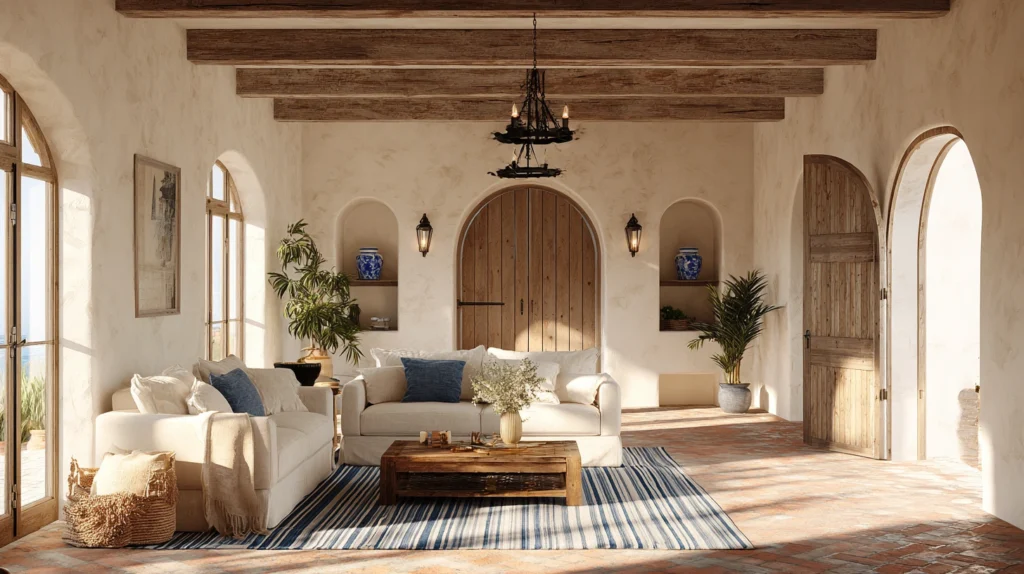
The room never actually got warmer in temperature, but it stopped feeling cold the moment you walked in.
Here are 14 ways to bring that same sun-soaked Mediterranean feeling into a home anywhere.
What actually defines the Mediterranean look
The style draws from coastal Spain, Italy, Greece, and North Africa, built around light, texture, and warmth.
- Whitewashed or warm-toned walls that reflect natural light rather than absorbing it
- Natural materials like terracotta, stone, and wood left visibly textured
- Color used sparingly but boldly, often in blues, ochres, and deep greens against neutral backdrops
Once the light and texture are right, the rest of the room falls into place around them.
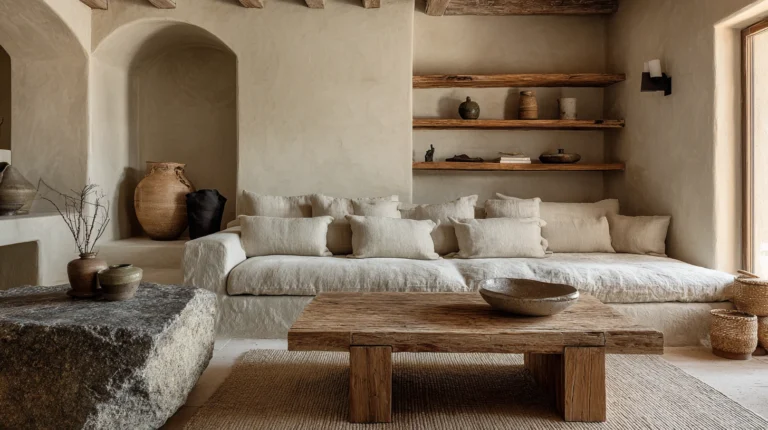
1. Whitewashed Plaster Walls
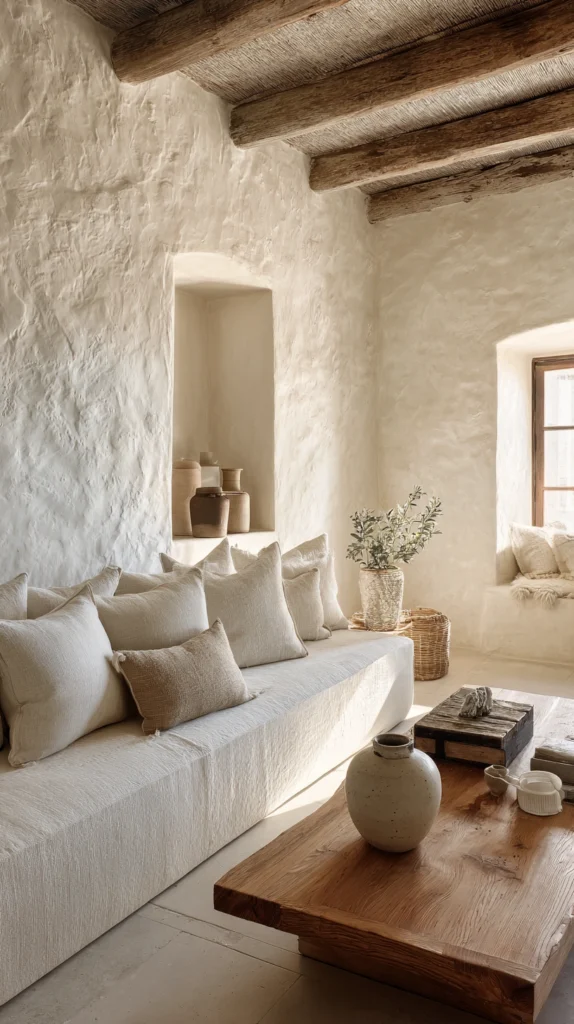
The foundational backdrop for the entire aesthetic.
Build it:
- A lime-based whitewash or textured plaster finish applied over existing drywall or an existing plaster surface
- Slight variation and brush texture left visible rather than sanded to a flat, uniform finish
- A warm white or soft ivory tone rather than a stark, cool white
Why whitewashed plaster anchors the whole look:
- It reflects natural light throughout the day, brightening a room without needing additional fixtures
- The slight texture catches shadow in a way flat paint never does, adding depth to an otherwise plain wall
- It’s historically accurate to coastal Mediterranean homes, where lime wash was originally used for both aesthetics and heat reflection
Cost breakdown: A limewash or textured plaster finish for an average room runs $200 to $500 in materials, or considerably more if professionally applied.
2. Terracotta Tile Flooring
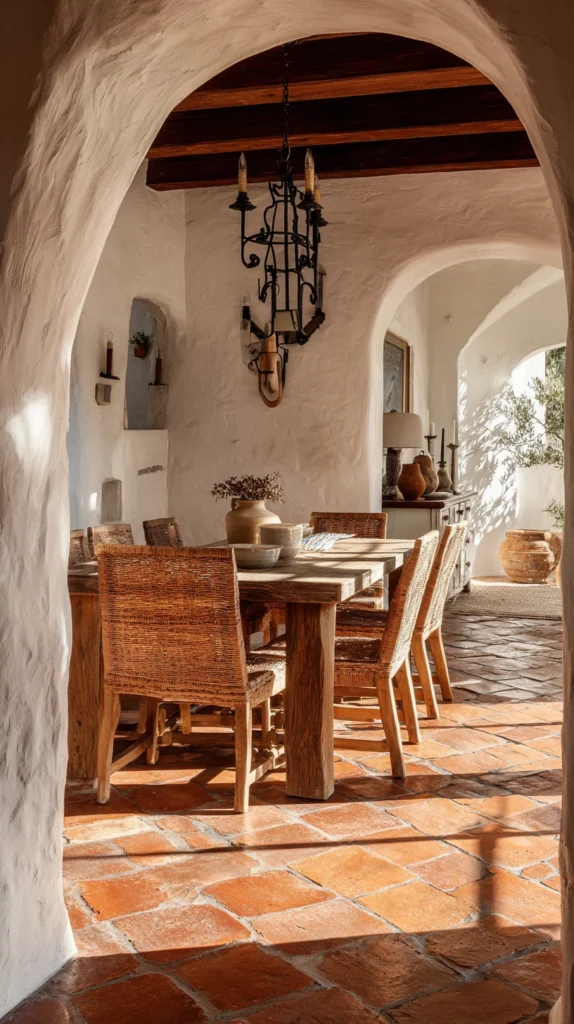
Warm-toned flooring that grounds the whole room.
Build it:
- Unglazed or lightly glazed terracotta tiles laid in a simple grid pattern
- Sealed with a breathable, matte sealant that preserves the tile’s natural warm tone
- Paired with a warm-toned grout rather than stark white, keeping the floor’s overall tone cohesive
Why terracotta suits this style better than any other flooring option:
- Its warm orange-red tone is one of the most immediately recognizable Mediterranean design markers
- The material stays naturally cool underfoot in summer while still reading as warm and inviting visually
- It develops a deeper patina with age and foot traffic, improving rather than wearing out over time
Cost breakdown: Terracotta tile runs $4 to $10 per square foot installed, depending on tile origin and installation complexity.
3. Arched Doorways and Niches
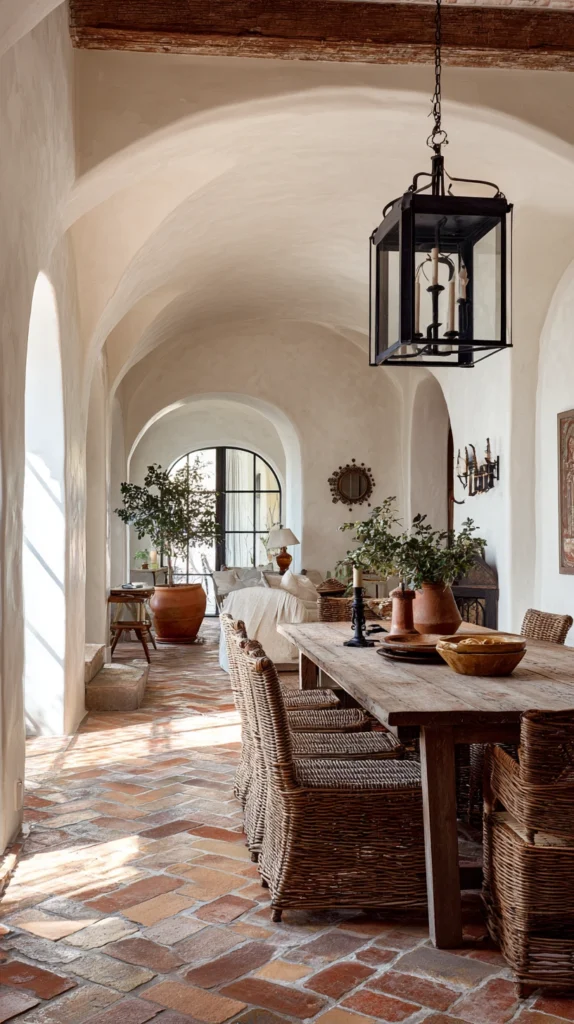
Architectural curves borrowed directly from coastal Mediterranean building traditions.
Build it:
- An existing rectangular doorway reframed with a curved arch, either through drywall modification or a decorative arch insert
- Small wall niches carved or built into thicker walls, sized to display a single vase or candle
- Rounded edges carried through consistently rather than mixed with sharp rectangular framing nearby
Why arches change the whole feel of a room’s architecture:
- The soft curved lines echo traditional adobe and stucco construction found throughout the Mediterranean coast
- A single arched doorway can transform an otherwise standard room into something that reads as intentional and specific
- Wall niches give small decorative objects a genuine architectural home rather than sitting on an open shelf
Cost breakdown: A doorway arch conversion runs $300 to $800 depending on whether it’s structural or purely decorative, while a simple wall niche runs $100 to $250.
4. Blue and White Ceramic Accents
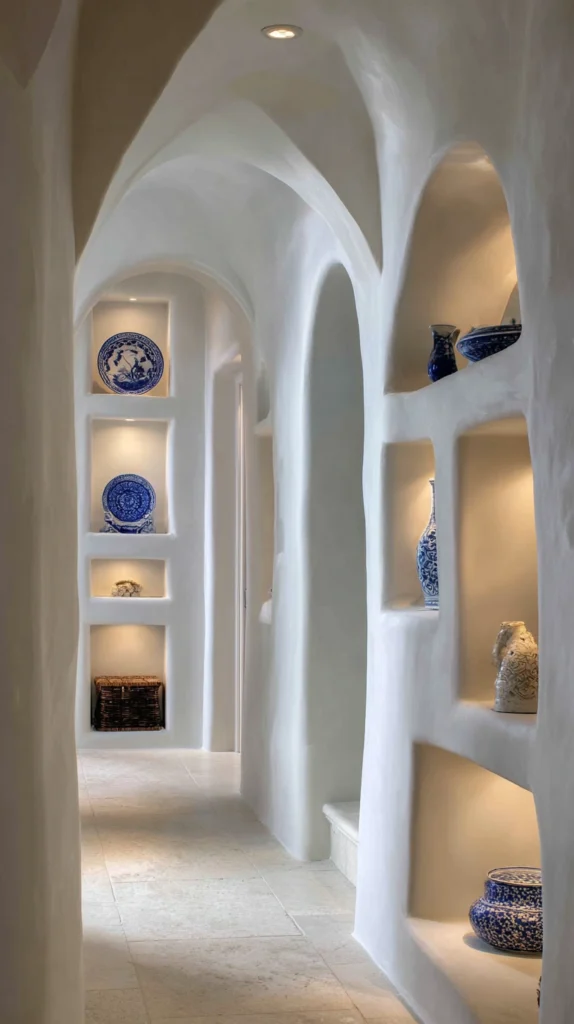
The signature color pairing most associated with the coastal Mediterranean look.
Build it:
- Hand-painted ceramic tiles used as a kitchen backsplash or bathroom accent wall
- Blue and white pottery displayed openly on shelves or a dining table centerpiece
- Patterns kept traditional, like simple geometric or floral motifs, rather than overly modern graphic designs
Why this specific color combination carries so much recognition:
- Blue and white ceramics are directly tied to regions like the Greek islands and coastal Portugal
- The high contrast between the two colors reads clearly even in smaller decorative doses
- It pairs naturally with the whitewashed walls and terracotta flooring already establishing the room’s palette
Cost breakdown: Hand-painted ceramic tiles run $3 to $8 per tile, and decorative pottery pieces run $20 to $60 each.
5. Wrought Iron Fixtures and Furniture Details
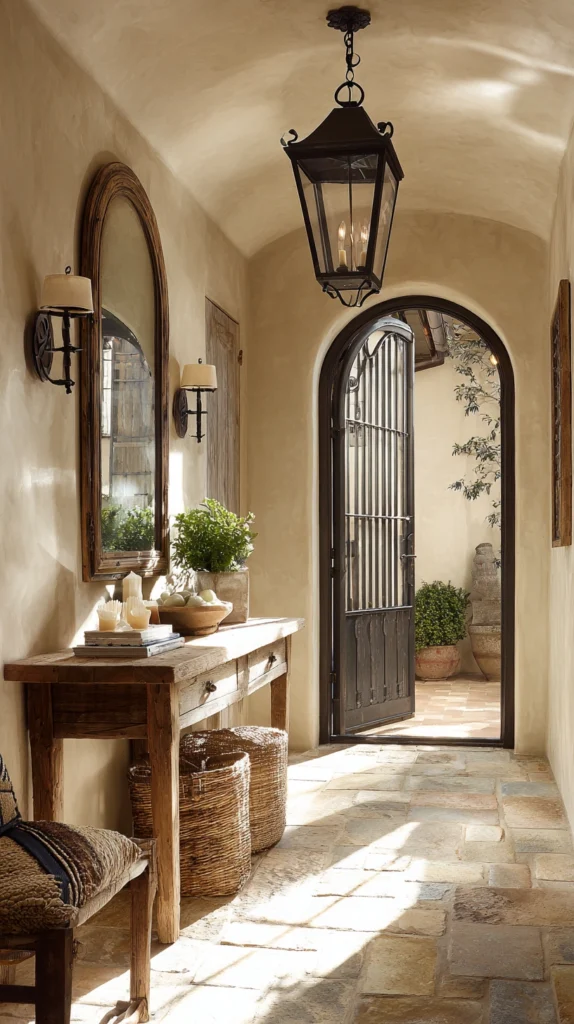
Dark metal accents that add contrast against light walls and warm floors.
Build it:
- Wrought iron light fixtures, particularly lantern-style pendants or wall sconces
- Iron furniture details like curved table legs or a decorative iron mirror frame
- A matte black or aged bronze finish rather than a bright, polished metal look
Why wrought iron suits this aesthetic so specifically:
- The material has deep roots in Spanish and Italian architectural tradition, particularly in balconies and window grilles
- Its dark, matte finish provides visual weight and contrast against an otherwise light, warm-toned room
- It photographs beautifully against whitewashed walls, creating the strong light-and-shadow contrast the style relies on
Cost breakdown: Wrought iron light fixtures run $60 to $200 depending on size and style.
6. Woven Rattan and Wicker Furniture
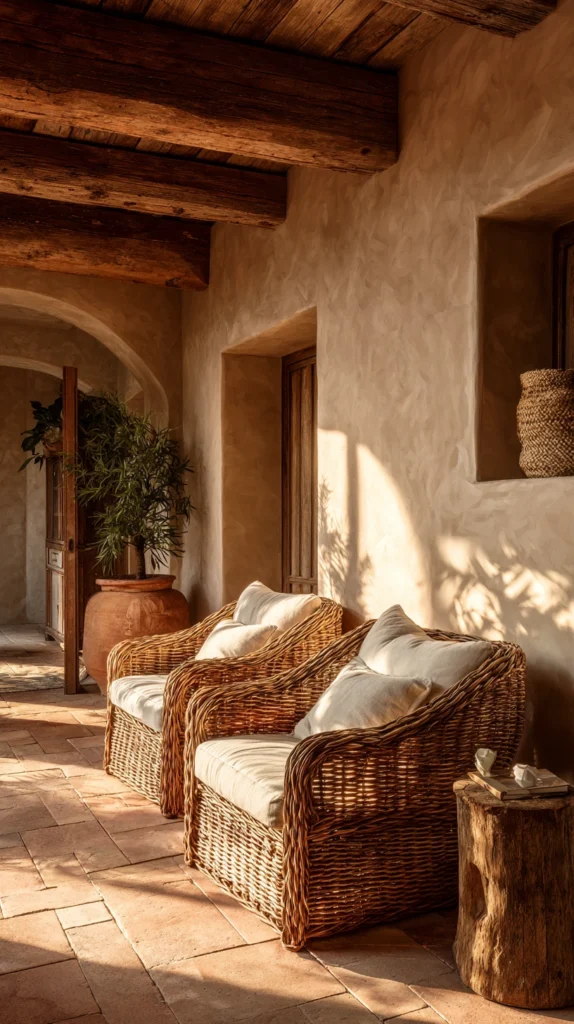
Natural fiber furniture bringing texture and warmth into the seating areas.
Build it:
- Rattan armchairs or a woven headboard, chosen for visible natural texture rather than a smooth, manufactured finish
- Paired with simple linen or cotton cushions in muted, sun-faded tones
- Positioned near natural light sources, where the woven texture catches shadow throughout the day
Why rattan and wicker fit the coastal aesthetic naturally:
- These materials have long been used throughout Mediterranean and North African interiors for their breathability in warm climates
- The organic, slightly irregular weave contrasts nicely against the cleaner lines of whitewashed walls
- It’s a material that ages gracefully, developing a warmer patina rather than looking worn out over time
Cost breakdown: Rattan accent chairs run $150 to $400 depending on size and construction quality.
7. Olive and Citrus-Toned Color Accents
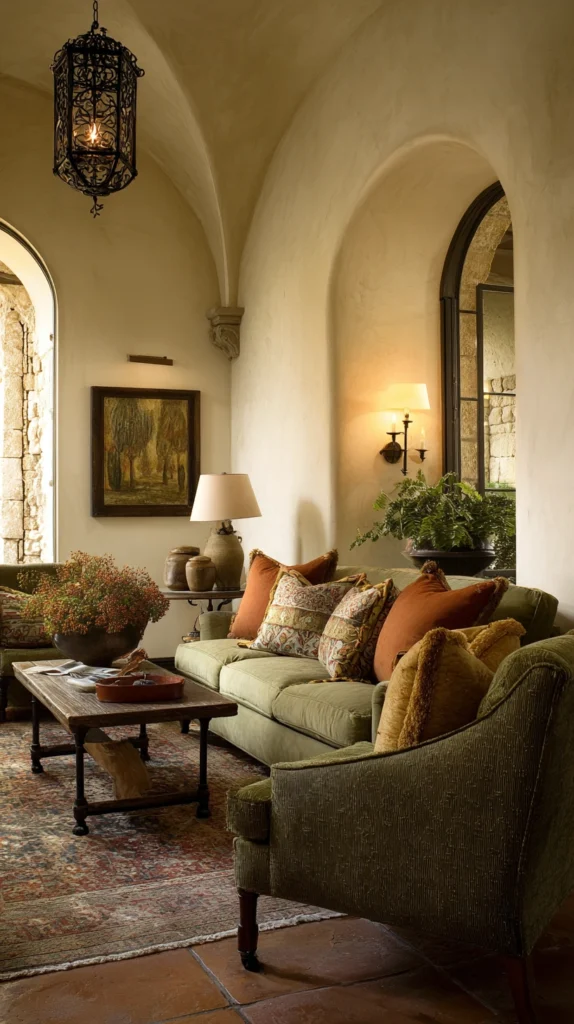
A secondary color palette pulled directly from the region’s landscape.
Build it:
- Deep olive green used sparingly on an accent wall, cabinetry, or a single upholstered piece
- Warm ochre or burnt orange introduced through throw pillows, ceramics, or a woven rug
- Kept as accent colors against the neutral whitewashed backdrop, rather than covering entire rooms
Why these specific tones read as authentically Mediterranean:
- Olive groves, citrus orchards, and sun-baked earth are the literal landscape these colors are drawn from
- Used as accents rather than dominant colors, they add warmth without overwhelming the light, airy feeling of the space
- They pair naturally with terracotta flooring and wrought iron, tying the whole palette together cohesively
Cost breakdown: Introducing accent colors through pillows and small decor runs $40 to $100, while a painted accent wall runs $80 to $150 in paint and supplies.
8. Exposed Wood Ceiling Beams
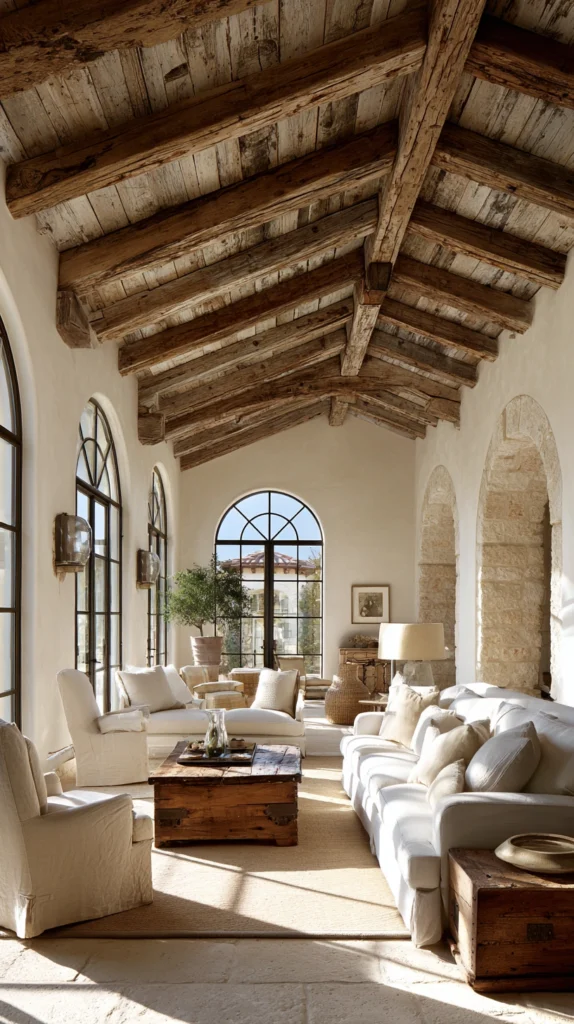
Overhead structure left visible rather than covered by a flat ceiling.
Build it:
- Solid wood beams installed across the ceiling, either structural or decorative depending on the home’s existing framing
- A warm, natural wood stain rather than painted white, keeping the material’s grain visible
- Spaced evenly across the room, running perpendicular to the room’s longest dimension for the most balanced look
Why exposed beams suit this style’s architectural language:
- Traditional Mediterranean homes, particularly in rural regions, commonly left structural wood beams visible rather than concealed
- The warm wood tone against a whitewashed ceiling creates immediate visual depth overhead
- It draws the eye upward, making even a smaller room feel more architecturally considered
Cost breakdown: Decorative faux wood beams run $30 to $60 each, typically needing three to five per average-sized room.
9. Woven Textile Rugs in Geometric Patterns
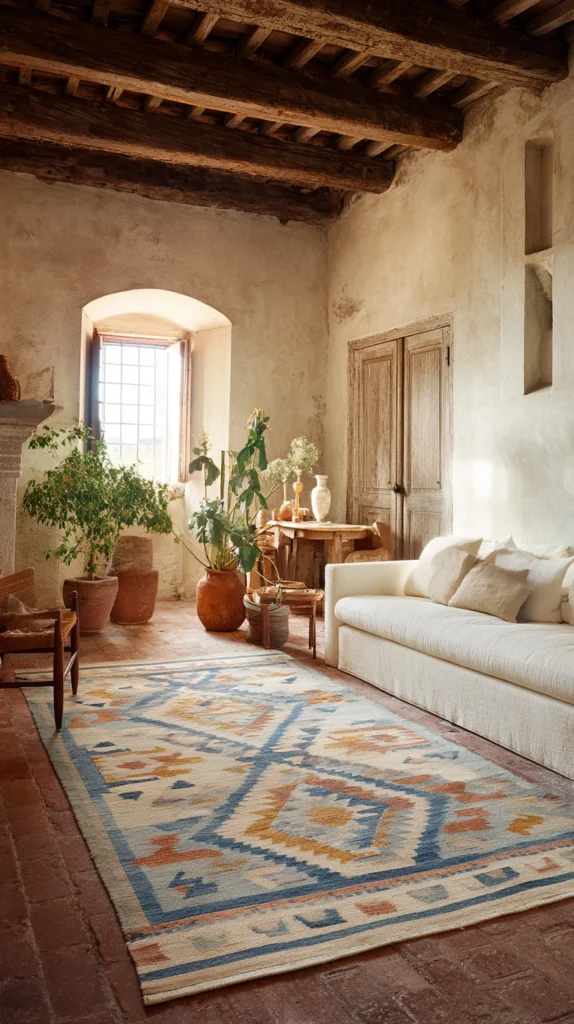
Floor textiles that add pattern without overwhelming the room’s palette.
Build it:
- Flatweave rugs in geometric patterns, using the same muted olive, ochre, and blue tones established elsewhere in the room
- Layered over terracotta or stone flooring rather than wall-to-wall carpeting
- Sized generously enough to anchor a seating area, rather than a small accent rug that floats disconnected from the furniture
Why flatweave patterns suit this aesthetic over plush, solid-color rugs:
- The geometric patterns common to Mediterranean and North African weaving traditions add visual interest without competing with the room’s other textures
- Flatweave construction suits warmer climates and pairs naturally with stone or tile flooring underneath
- The muted, earth-toned color palette keeps the rug feeling grounded rather than like a bold, separate statement piece
Cost breakdown: A quality flatweave area rug runs $150 to $400 depending on size and origin.
10. Potted Olive Trees and Mediterranean Greenery
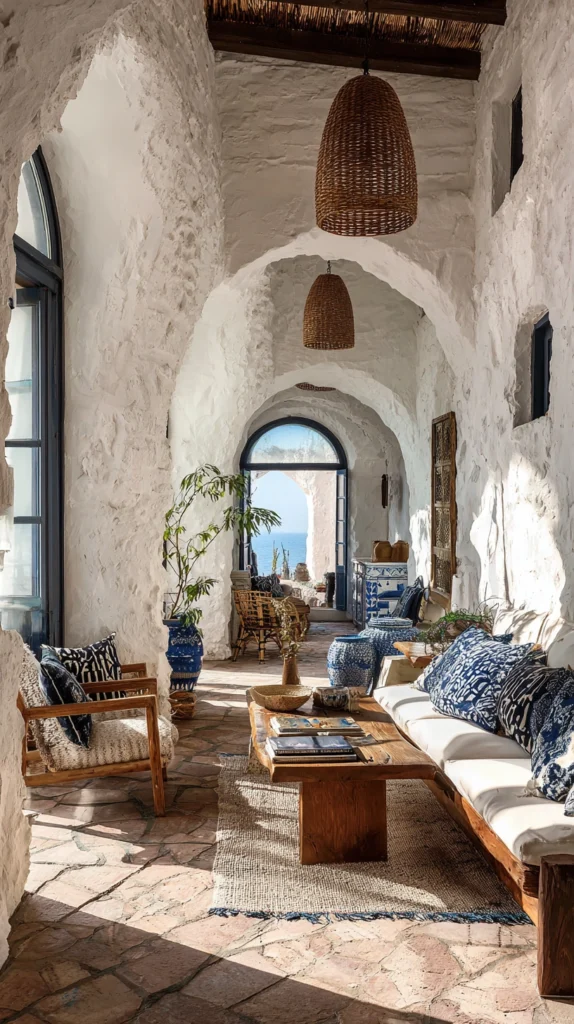
Living plants that bring the region’s landscape indoors.
Build it:
- A potted olive tree positioned near a bright window, in a simple terracotta or glazed ceramic planter
- Rosemary, lavender, or citrus plants added in smaller pots nearby for both visual and fragrant impact
- Grouped together near natural light rather than scattered individually throughout the room
Why these specific plants matter more than generic houseplants:
- Olive trees, rosemary, and lavender are directly tied to the actual Mediterranean landscape, unlike a generic tropical houseplant
- The silvery-green foliage of olive and lavender specifically complements the room’s warm neutral and earth-toned palette
- The fragrance from rosemary or lavender adds a sensory layer that visual decor alone can’t replicate
Cost breakdown: A mature potted olive tree runs $60 to $150, while smaller herb pots run $10 to $20 each.
11. Vaulted or Beamed Ceiling Details in the Kitchen
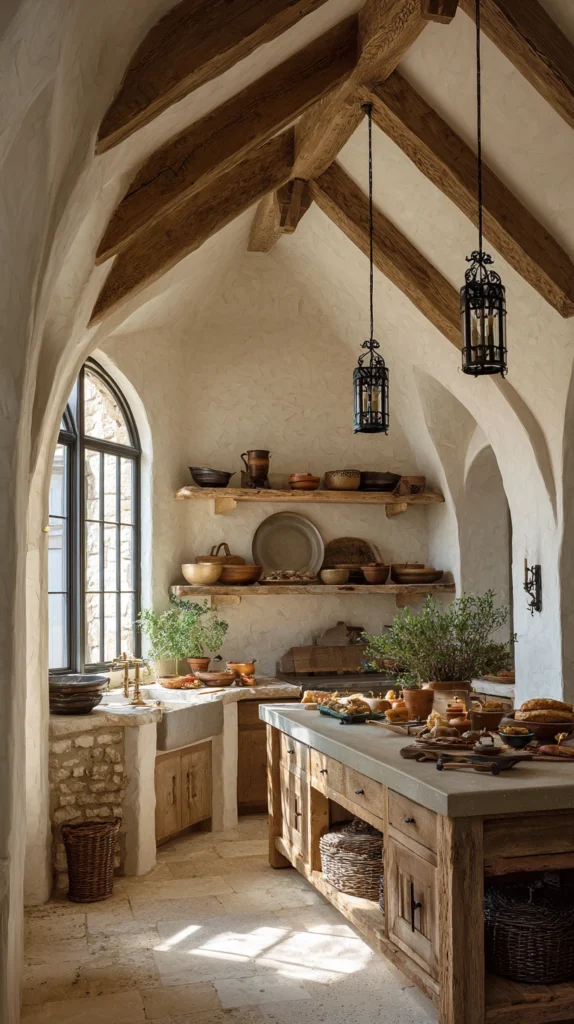
Bringing the same architectural warmth into the most-used room in the house.
Build it:
- Exposed wood beams or a simple vaulted ceiling detail added above the kitchen’s main workspace
- Open shelving beneath, displaying ceramics and glassware rather than closed upper cabinets
- Warm pendant lighting hung at varied heights along the beam line
Why the kitchen deserves the same architectural attention as living spaces:
- Traditional Mediterranean kitchens are often the most character-filled room in the home, not an afterthought
- Open shelving keeps the warm ceramic and glassware collection visible, reinforcing the room’s overall palette
- Warm pendant lighting against exposed beams creates the same light-and-texture interplay found throughout the rest of the home
Cost breakdown: Kitchen beam additions and open shelving conversion run $400 to $1,000 depending on the scope of the change.
12. Stucco or Textured Accent Walls
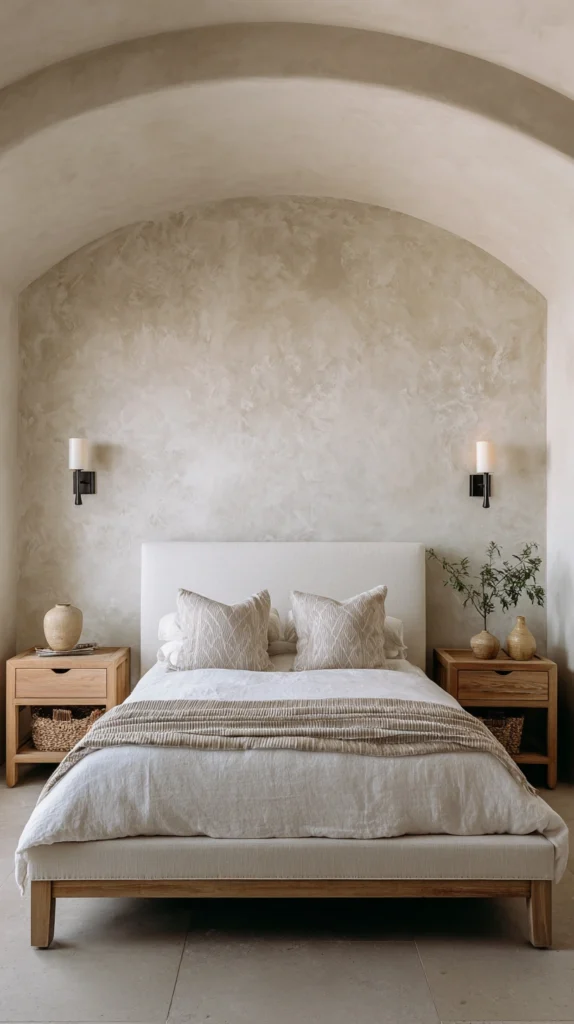
A single wall built with the same texture as the region’s traditional exteriors.
Build it:
- A textured stucco or Venetian plaster finish applied to one accent wall rather than the entire room
- Kept in the same warm white or ivory tone as the rest of the space, letting texture rather than color create the contrast
- Lit with a single warm sconce or picture light angled to highlight the wall’s natural texture and shadow
Why a single textured wall works better than texturing an entire room:
- It gives the eye a clear focal point without overwhelming the space with texture on every surface
- The technique directly references traditional Mediterranean exterior stucco, brought indoors as a design statement
- Angled lighting specifically enhances the texture’s shadow play, something a flat painted wall can never replicate
Cost breakdown: A single stucco or Venetian plaster accent wall runs $150 to $400 depending on room size and application method.
13. Woven Lampshades and Natural Fiber Lighting
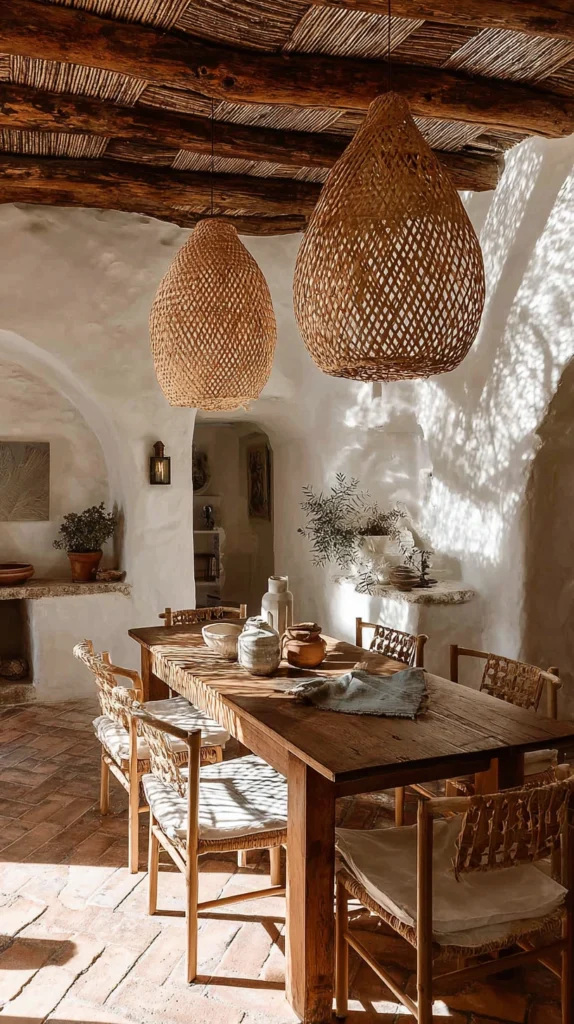
Light fixtures that carry the same textural language as the furniture.
Build it:
- Woven rattan or seagrass lampshades used on both table and pendant lighting
- Warm-toned bulbs that cast a soft, dappled light pattern through the woven material
- Paired with simple ceramic or wood lamp bases rather than polished metal ones
Why woven lighting suits this aesthetic more than a standard fabric shade:
- The dappled light pattern cast through a woven shade mimics the effect of sunlight through shutters or pergola slats
- It continues the same natural material story established by rattan furniture and wood beams elsewhere in the room
- It’s a relatively low-cost way to add texture and warmth to a room’s overall lighting scheme
Cost breakdown: Woven pendant or table lamp shades run $30 to $80 depending on size and material.
14. Shuttered Windows or Louvered Interior Panels
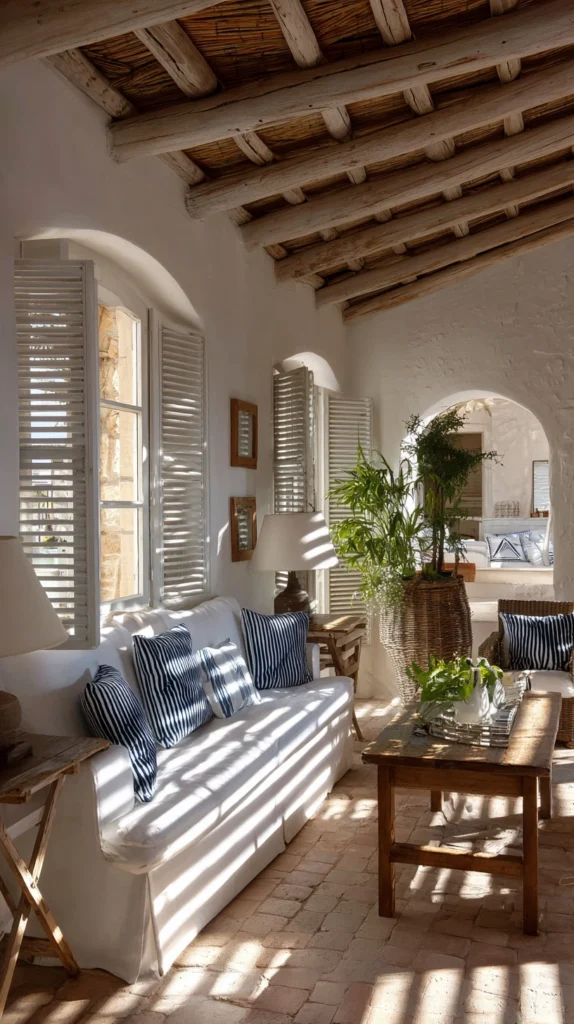
Window treatments that filter and shape natural light rather than simply blocking it.
Build it:
- Solid wood shutters or louvered panels installed on the interior of window frames
- A warm wood stain or a matching whitewashed finish, depending on the rest of the room’s palette
- Adjustable slats that can be angled throughout the day to control both light and privacy
Why shutters do more design work than standard curtains:
- They filter sunlight into the distinctive striped shadow pattern strongly associated with Mediterranean interiors
- The solid wood or whitewashed finish matches the room’s existing material palette far more naturally than fabric drapery
- Adjustable louvers give genuine control over light and airflow, particularly useful in naturally sun-drenched rooms
Cost breakdown: Interior wood shutters run $150 to $350 per window depending on size and material.
Getting started this weekend
You don’t need to renovate the whole house before the feeling starts to show up.
- Start with a whitewash refresh on one wall and a few blue and white ceramic pieces displayed openly
- Add a potted olive tree or rosemary plant near your brightest window
- Save larger structural changes like arched doorways or exposed beams for a dedicated renovation phase
My own living room shifted noticeably after just a fresh coat of warm white paint and a handful of ceramic pieces pulled out of storage.
Budget reality
The Mediterranean look scales from a weekend refresh to a full architectural renovation.
- Under $100: Ceramic accents, potted herbs, woven lampshades
- $100-400: Flatweave rug, wrought iron fixtures, stucco accent wall
- $400-1,000: Terracotta flooring in a single room, exposed ceiling beams, kitchen shelving conversion
- $1,000+: Arched doorway conversion, full room stucco application, whole-home terracotta flooring
Most of the sun-soaked feeling comes from light, texture, and a handful of well-chosen accents, not a full renovation budget.
What actually creates that sun-soaked feeling
It was never really about recreating an exact coastal villa down to the last detail.
It’s the warm white wall catching afternoon light, the terracotta underfoot staying cool, the rosemary on the windowsill filling the room with scent before you’ve even noticed the plant itself.
Start with the wall and the light, then let the texture and color follow from there.