
14 Window Box Flower Ideas for Instant Charm

Our front windows used to sit bare, just glass and trim, nothing softening the line between house and yard.
I hung two plain wooden boxes one spring weekend, filled them without much of a plan, and stepped back surprised.
The house looked finished in a way it hadn’t before, even though nothing else outside had changed.
Window boxes do a strange amount of visual work for how little space they actually take up.
Here are 14 ways to fill them so that charm shows up by the very next weekend.
Why window boxes deliver such fast, visible results
A window box sits directly at eye level from the street, closer to a passerby’s sightline than almost any other planting.
- It frames the window the way a matte frames a photograph, drawing attention rather than distracting from it
- Small changes in color or texture read clearly at this scale, unlike a large bed viewed from a distance
- It’s one of the few plantings that looks complete within a single season, not several years of growth
Once the box is planted well, the whole facade reads as considered rather than incidental.
1. Classic Red Geraniums With Trailing Ivy
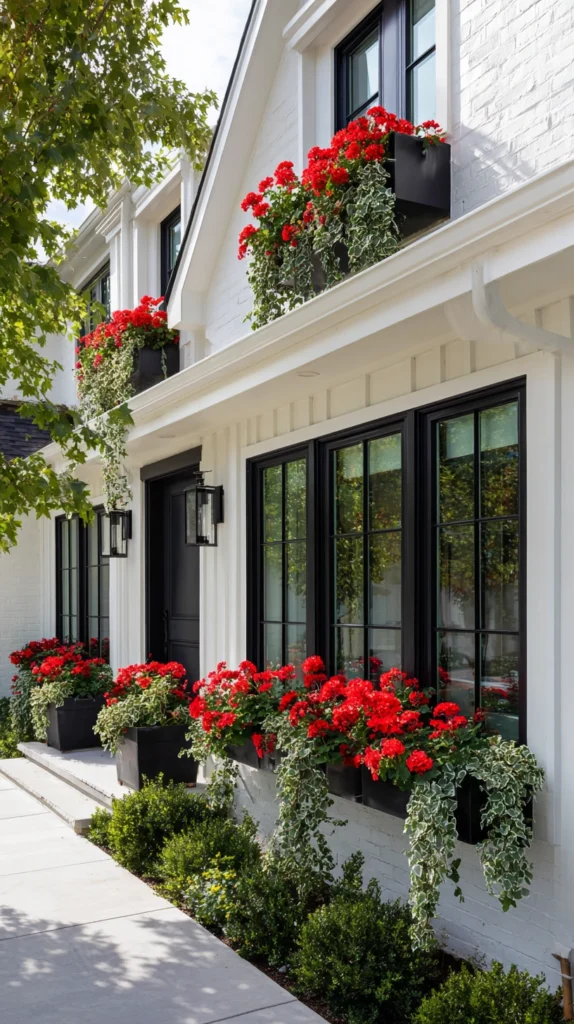
The most traditional and reliable window box combination there is.
Build it:
- Upright red geraniums planted at even spacing across the center of the box
- Variegated ivy tucked along the front edge, allowed to trail down over the box’s lip
- A slow-release fertilizer mixed into the soil at planting time to support blooms through the full season
Why this combination has stayed a classic for good reason:
- Red geraniums bloom prolifically and hold their color even through full summer heat
- Trailing ivy softens the box’s hard edge, blending the planting into the house’s trim below it
- It’s a low-maintenance pairing that tolerates missed watering days better than more delicate flowers
Cost breakdown: Geranium and ivy starts for a standard 3-foot box run $25 to $40.
2. All-White Monochrome Planting
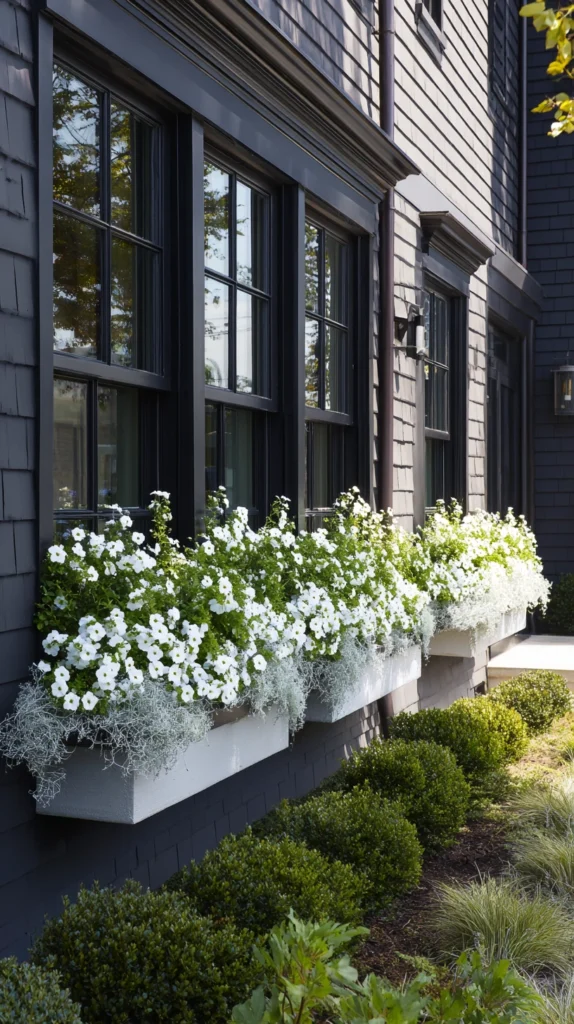
A single-color palette for a more elegant, cohesive look.
Build it:
- White petunias or white geraniums as the main flowering element
- White lobelia or bacopa layered at the front edge for smaller, delicate blooms
- Silver-toned foliage like dusty miller mixed in for subtle textural contrast within the single color story
Why an all-white box reads as more sophisticated than a mixed palette:
- It works with literally any house color, since white never clashes with trim or siding
- The monochrome approach makes the box’s actual shapes and textures more visible than color variety would
- White flowers tend to glow slightly at dusk, adding a soft evening presence to the front of the house
Cost breakdown: An all-white planting scheme runs $20 to $35 for a standard box, comparable to a mixed-color equivalent.
3. Cascading Petunia Waterfall
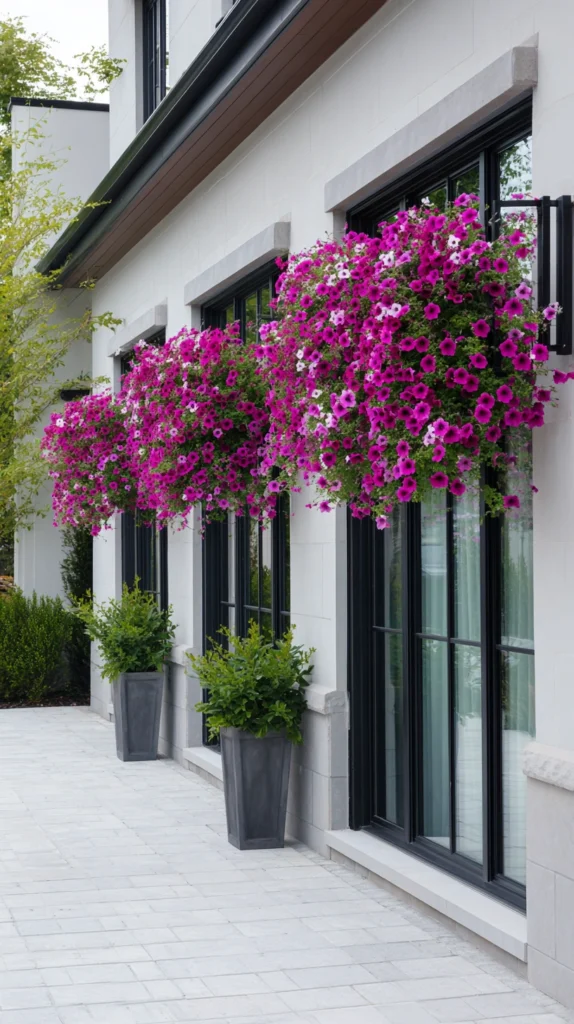
A box built almost entirely around dramatic trailing growth.
Build it:
- Wave or trailing petunia varieties planted densely, spaced closer than standard recommendations for a fuller cascade
- Minimal upright plants included, letting the trailing habit dominate the entire display
- Deadheaded regularly through the season to keep the cascade blooming continuously rather than going leggy
Why a cascade-focused box creates such a dramatic effect:
- The trailing growth can extend two to three feet below the box by midsummer, transforming the whole window
- It draws the eye downward along the house’s facade, adding vertical movement most window boxes lack
- Dense trailing growth also naturally shades the box’s soil, reducing how often it needs watering
Cost breakdown: Trailing petunia starts run $6 to $10 each, typically $30 to $50 for a fully dense box.
4. Herb and Flower Combination Box
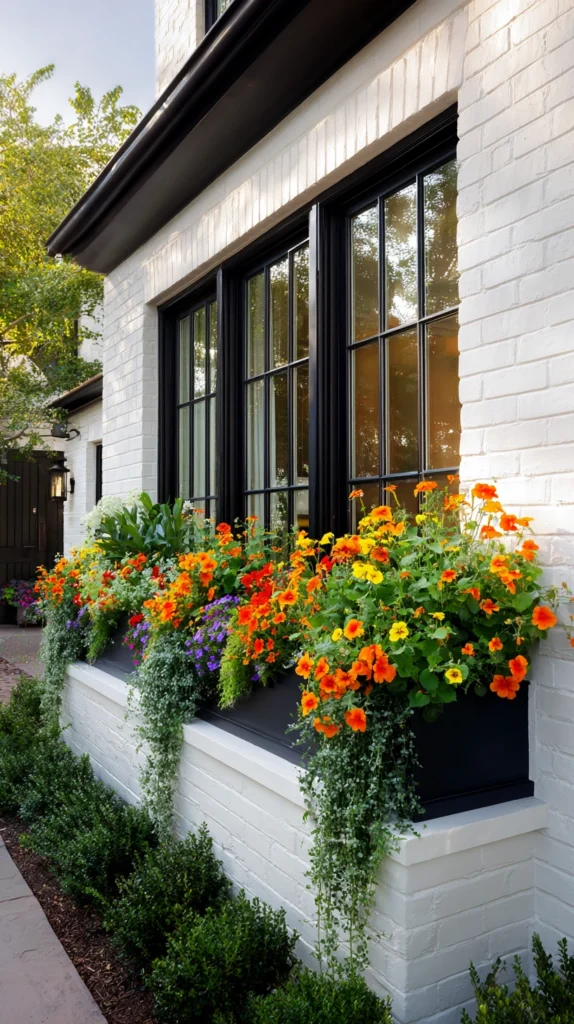
Function mixed directly into a decorative planting.
Build it:
- Trailing rosemary or thyme planted along the front edge, both functional and visually soft
- Upright flowering plants like calibrachoa or nasturtium mixed in among the herbs
- Positioned near a kitchen window specifically, so herbs are within easy reach for actual cooking use
Why combining herbs and flowers works better than a purely ornamental box:
- It gives the planting genuine everyday function beyond just curb appeal
- Nasturtium flowers are themselves edible, blurring the line between ornamental and culinary even further
- Herbs tend to be more drought-tolerant than pure ornamentals, making the box more forgiving overall
Cost breakdown: A mixed herb and flower box runs $25 to $45 depending on herb variety and quantity.
5. Shade-Tolerant Begonia and Fern Box
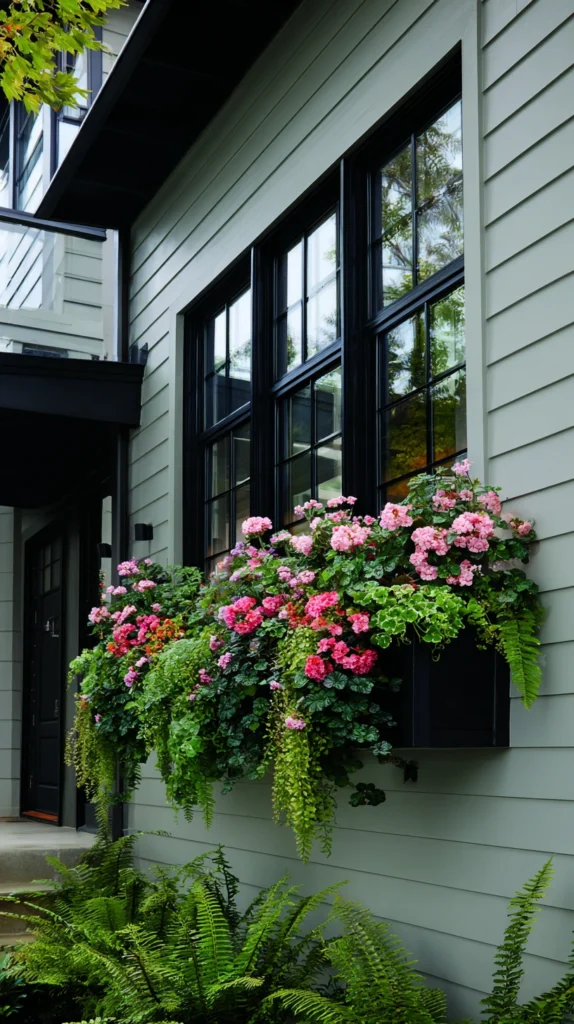
For windows that don’t get strong direct sun.
Build it:
- Wax or tuberous begonias, both well suited to partial shade conditions
- Small Boston or maidenhair fern fronds tucked toward the back of the box for textural height
- Impatiens added along the front edge for continuous color in lower-light conditions
Why shade-specific planning matters for this particular spot:
- Sun-loving flowers like geraniums and petunias often struggle or stop blooming entirely in shaded window locations
- Begonias and ferns are specifically suited to the lower light many north-facing windows receive
- Choosing the right plants for actual light conditions avoids the frustration of a box that never fills in properly
Cost breakdown: Shade-tolerant begonia and fern starts run $30 to $50 for a standard box.
6. Seasonal Rotation Box: Spring Bulbs to Fall Mums
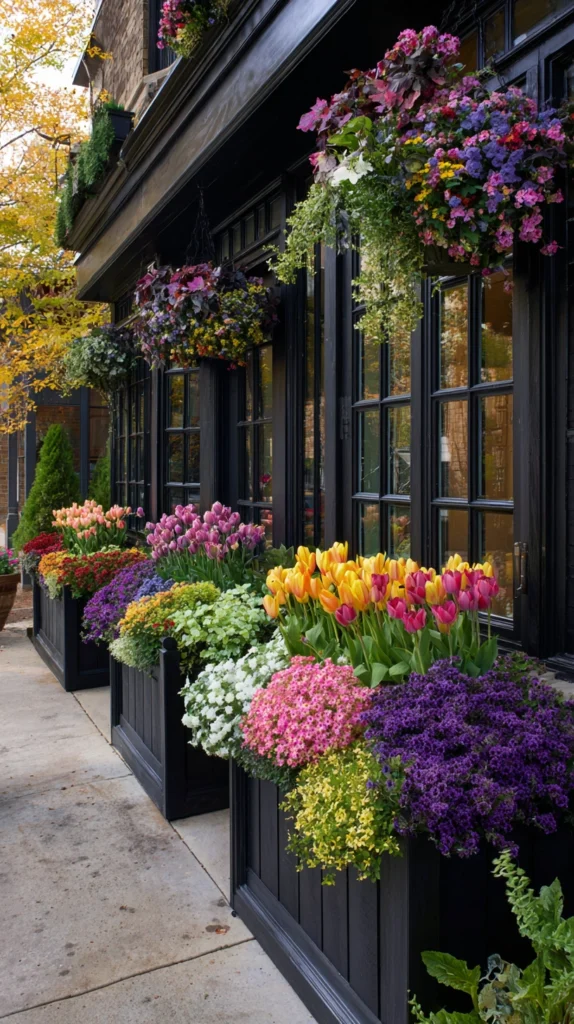
A single box replanted through the year rather than left static.
Build it:
- Early spring planted with dwarf tulips or daffodils for the first bloom of the season
- Summer annuals like petunias or geraniums swapped in once bulbs finish flowering
- Fall mums or ornamental kale planted for a final seasonal display before winter
Why rotating through the year keeps the box relevant every season:
- A box left with the same summer annuals through fall and winter tends to look tired and neglected
- Seasonal swaps mean the window box actually contributes to curb appeal year-round, not just three months of it
- It gives an easy, low-cost project to look forward to at each season’s changeover
Cost breakdown: Budget roughly $15 to $25 per seasonal changeover, three to four times per year.
7. Succulent and Sedum Drought-Tolerant Box
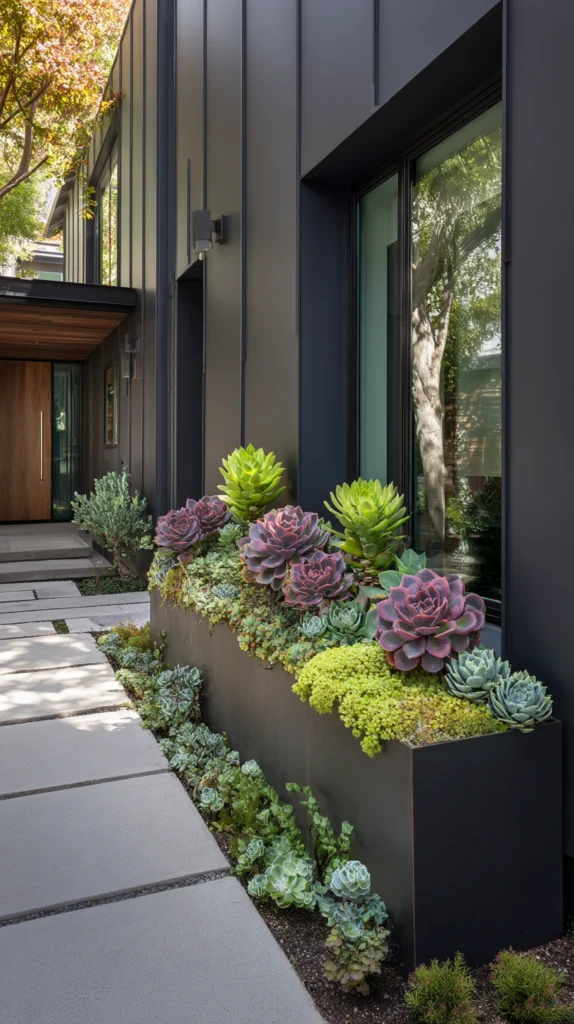
For low-maintenance charm in hot, dry climates.
Build it:
- A mix of low-growing sedum varieties and small echeveria or hens-and-chicks rosettes
- Well-draining cactus or succulent-specific soil mix rather than standard potting soil
- Drainage holes confirmed or added to the box, since succulents are especially prone to rot in standing water
Why succulents suit a window box better than people initially assume:
- They require significantly less frequent watering than traditional flowering annuals
- The varied rosette shapes and colors create visual interest without needing constant blooms
- They tend to hold up considerably better during vacations or busy weeks when watering gets missed
Cost breakdown: Succulent starts run $4 to $8 each, typically $30 to $50 for a fully planted box.
8. Cottage Garden Wildflower Mix
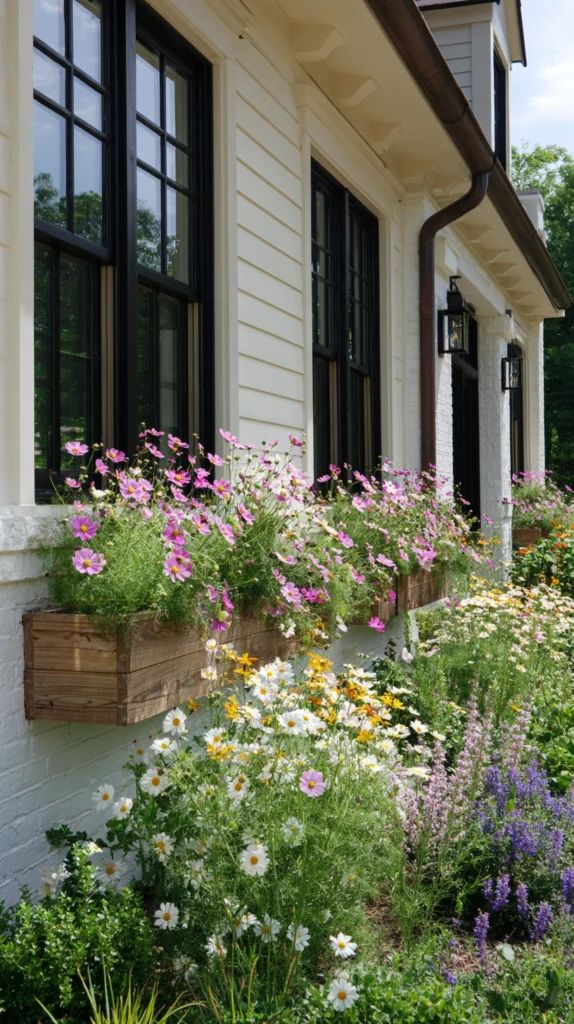
A looser, less structured planting style.
Build it:
- A mix of cosmos, snapdragons, and sweet alyssum planted without strict rows or spacing
- Varied heights allowed to grow naturally rather than trimmed into a uniform shape
- Self-seeding varieties chosen where possible, letting the box evolve slightly differently each season
Why a looser style suits certain home exteriors better than a formal one:
- It pairs naturally with cottage, farmhouse, or craftsman-style homes over more formal architecture
- The relaxed, slightly wild look feels less high-maintenance than a tightly manicured box
- Self-seeding varieties mean some of next year’s planting essentially takes care of itself
Cost breakdown: A cottage-style seed mix runs $10 to $18, considerably cheaper than starting from nursery transplants.
9. Black or Dark Metal Box With Bright Contrast Flowers
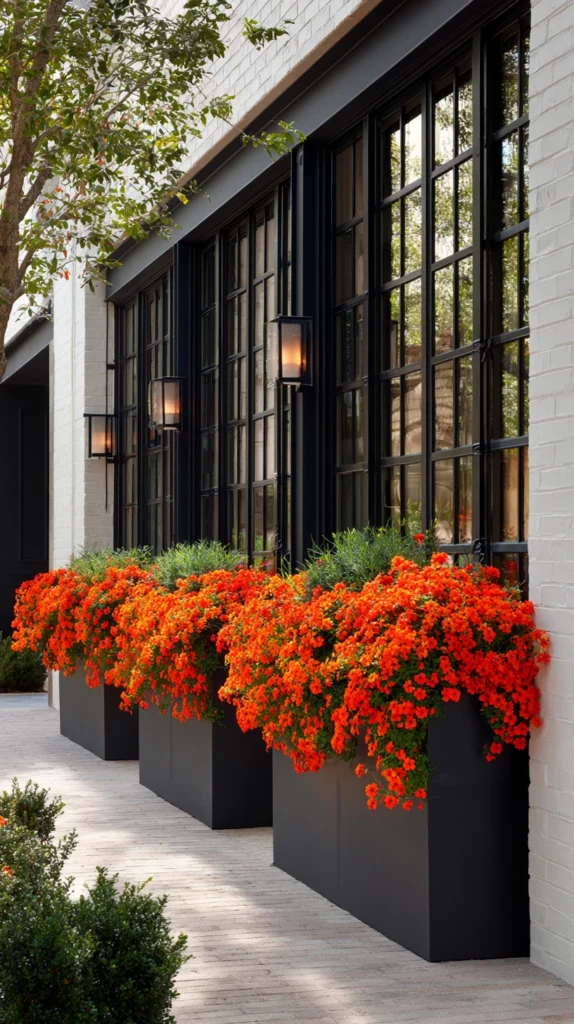
Letting the container itself become part of the color story.
Build it:
- A matte black or dark bronze metal window box, chosen specifically as a design element rather than a neutral backdrop
- Bright orange, hot pink, or yellow flowers planted for maximum contrast against the dark container
- A single flower variety rather than a mix, letting the strong color and dark box do the visual work together
Why a dark box changes the whole planting’s visual impact:
- Standard terracotta or white boxes tend to blend into the background rather than stand apart
- The high contrast between a dark container and bright blooms reads clearly even from across the street
- It suits modern or contemporary homes especially well, where a more rustic wood box might feel mismatched
Cost breakdown: A metal window box runs $25 to $50 depending on size, plus $15 to $25 in high-contrast flower starts.
10. Boxwood and Topiary Evergreen Box
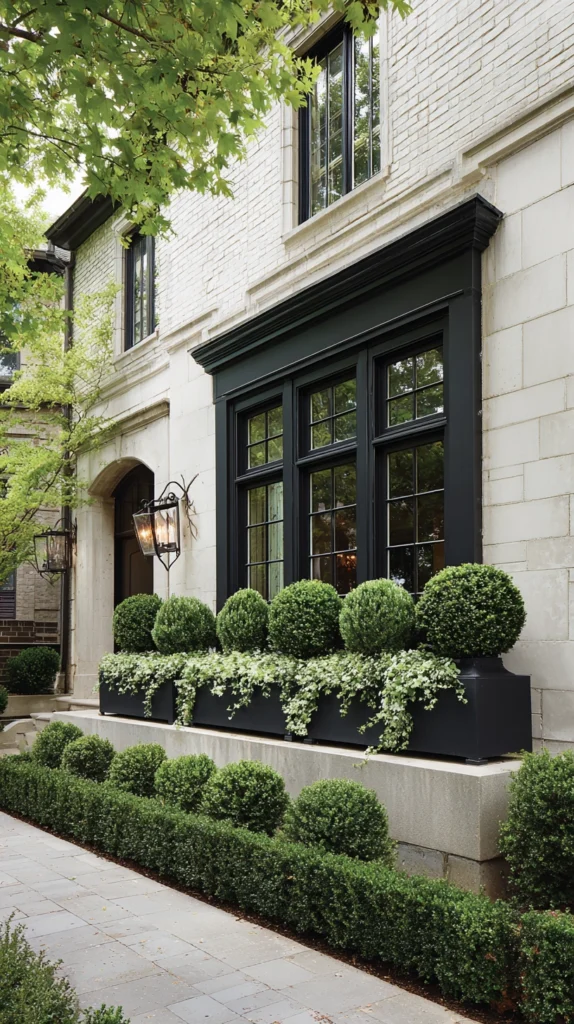
A structured, year-round planting that doesn’t rely on blooms.
Build it:
- Small boxwood shrubs or a single dwarf topiary shaped into a simple ball or cone
- Trailing ivy or vinca added around the base for softness against the more rigid evergreen shape
- Trimmed lightly through the growing season to maintain the topiary’s clean form
Why evergreen structure suits certain homes better than seasonal flowers:
- It provides consistent green presence through winter, when most flowering annuals have long since finished
- The clean, structured shape suits formal or traditional architecture particularly well
- It requires considerably less seasonal replanting than an annual flower box, saving effort over the years
Cost breakdown: Small boxwood or topiary starts run $15 to $35 each, typically $40 to $70 for a fully planted box.
11. Fragrant Flower Box Near an Open Window
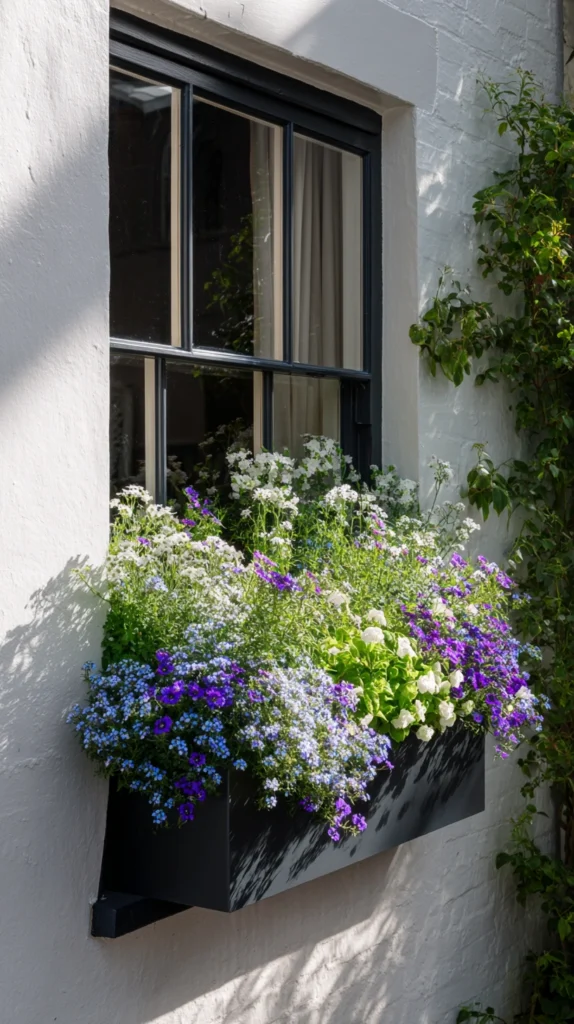
Choosing blooms specifically for scent, not just visual appeal.
Build it:
- Sweet alyssum planted densely along the front edge for its honey-like fragrance
- Nicotiana or heliotrope added for stronger evening scent, especially near a bedroom or living room window
- Positioned directly beneath a window that’s regularly left open, letting the fragrance drift indoors naturally
Why scent adds a dimension most window boxes never consider:
- Fragrance reaches inside the house in a way visual appeal alone never can
- Evening-fragrant varieties are especially rewarding near windows used during dinner or bedtime hours
- It’s a detail few passersby will consciously notice, but everyone in the house benefits from daily
Cost breakdown: Fragrant flower starts run $20 to $35 for a standard box.
12. Two-Tier Window Box With Layered Heights
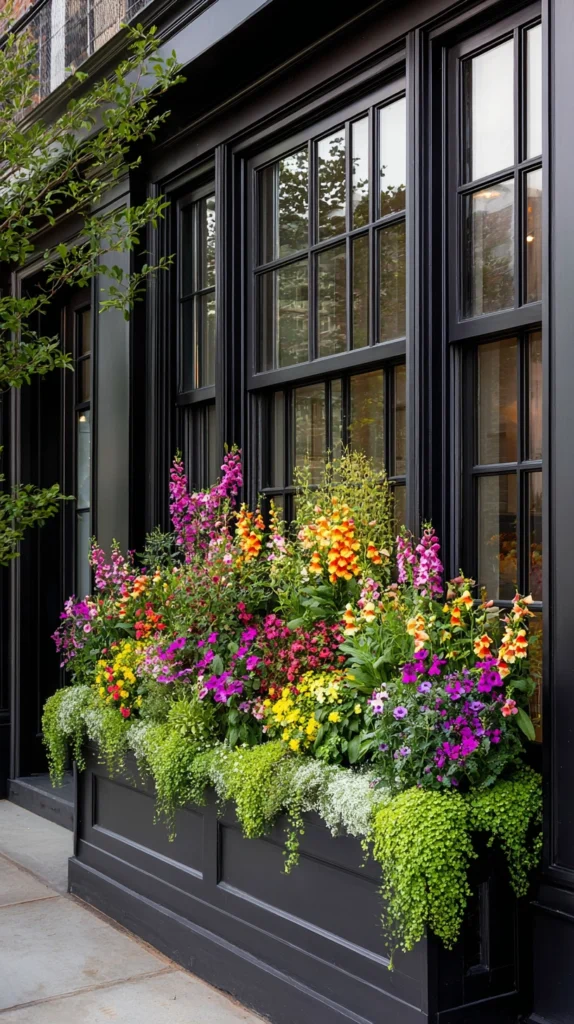
A single box planted with deliberate vertical structure.
Build it:
- Taller upright plants like snapdragons or salvia placed toward the back of the box
- Medium-height mounding flowers like calibrachoa or verbena filling the middle
- Low trailing plants like lobelia or bacopa spilling over the front edge
Why layered height creates a noticeably fuller, more professional look:
- A box planted at uniform height reads as flat, regardless of how many flowers are packed in
- The tiered structure mimics how professional planters and florists build container arrangements
- It maximizes visual interest without necessarily needing more plants than a flat, single-height box
Cost breakdown: A layered box runs comparably to any standard planting, typically $25 to $45 depending on plant selection.
13. Window Box Paired With Matching Shutter Color
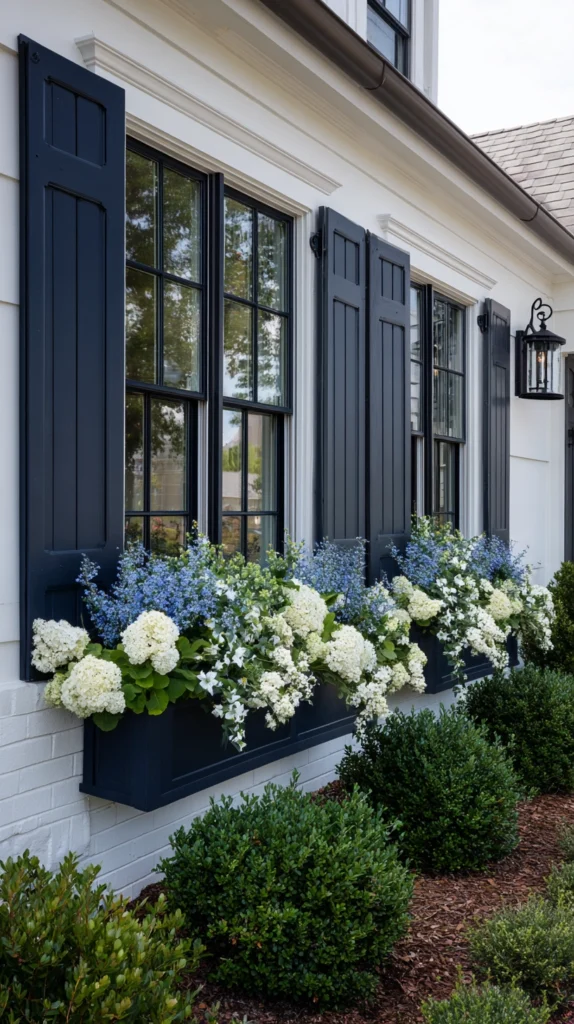
Coordinating the planting with existing architectural details.
Build it:
- Flower colors chosen to either match or intentionally contrast with the home’s shutter color
- The window box itself painted or stained in a finish that complements, rather than competes with, the shutters
- Hardware, like mounting brackets, finished in a metal tone that echoes other exterior fixtures
Why coordinating with shutters ties the whole window into one cohesive look:
- Mismatched box, shutter, and flower colors can make even a well-planted box look accidental rather than intentional
- A coordinated color story reads as a deliberate design choice rather than three separate unrelated decisions
- It’s a detail that costs nothing extra, just requires choosing flower colors with the shutters already in mind
Cost breakdown: No added cost beyond the planting itself, since this is a color-planning decision rather than a material one.
14. Self-Watering Window Box System
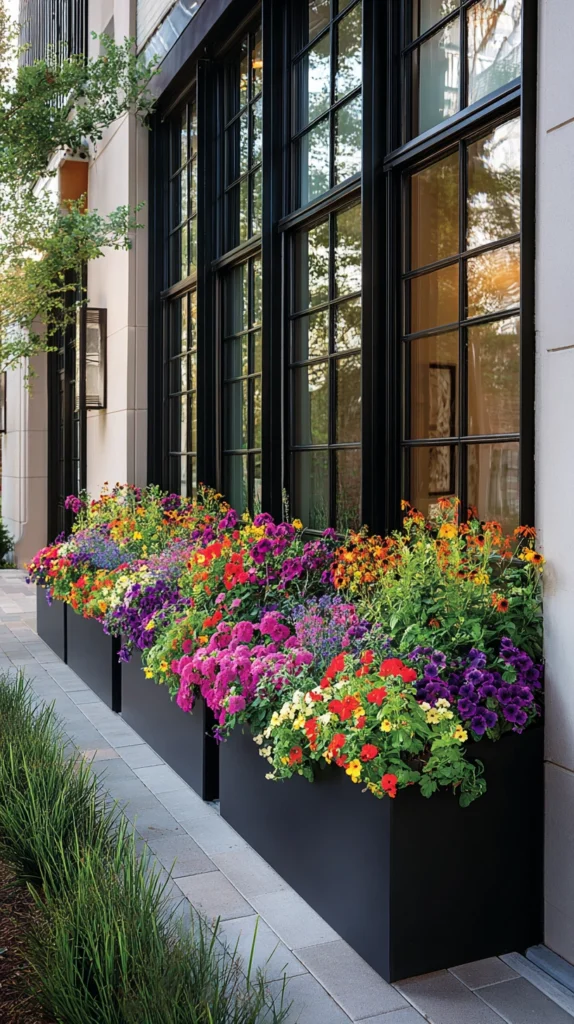
A practical upgrade that keeps any style of planting alive with less effort.
Build it:
- A window box with a built-in water reservoir at the base, refilled through a small access tube
- Standard potting soil layered over a wicking material that draws water up from the reservoir as needed
- Refilled roughly once a week rather than daily hand watering, depending on box size and plant water needs
Why a self-watering system solves the most common reason window boxes fail:
- Inconsistent watering is the single biggest cause of window boxes looking patchy or dying out mid-season
- The reservoir system buffers against missed watering days during busy weeks or short trips
- It works with virtually any planting style on this list, from geraniums to succulents, adjusting only the refill frequency
Cost breakdown: Self-watering window box inserts or full units run $30 to $70 depending on size.
Getting started this weekend
You don’t need to test every style on this list before the charm shows up.
- Start with one reliable combination, like geraniums and trailing ivy, in your sunniest window box
- Add a self-watering insert once you know the planting is one you want to keep alive long-term
- Save seasonal rotation and matching shutter coordination for a second pass once the basic planting is established
My own boxes took a single Saturday afternoon to plant, and the charm was visible from the driveway before I’d even put the trowel away.
Budget reality
Window box charm scales from a modest weekend planting to a fully coordinated seasonal system.
- Under $30: Succulent box, all-white monochrome planting, single seasonal changeover
- $30-50: Classic geranium and ivy combination, herb and flower mix, layered height box
- $50-100: New metal or wood box plus premium plant starts, boxwood topiary setup
- $100+: Self-watering system installed across multiple boxes, full year-round seasonal rotation plan
Most of the visible charm comes from plant selection and color coordination, not the box or hardware cost.
What actually creates that instant charm
It was never really about finding some rare or expensive flower variety.
It’s the color chosen to match the shutters, the trailing ivy that finally softens the box’s hard edge, the fragrance drifting in through a window left open on a warm evening.
Plant one box well this weekend, and let the rest of the windows follow once you see the difference it makes.