
15 Art Deco Bedroom Ideas for Glamorous Vintage Style
Our bedroom used to be entirely beige, safe in every choice, forgettable the moment you left it.
I found a single brass sunburst mirror at an estate sale and hung it above the dresser almost as a joke.
It made the rest of the room look embarrassingly plain by comparison within a week.

One piece of real glamour has a way of exposing everything around it that’s been playing it too safe.
Here are 15 ways to bring genuine Art Deco drama into a bedroom without it feeling like a costume.
What actually makes a room read as Art Deco
The style emerged in the 1920s and 30s, built around geometry, luxury materials, and bold symmetry.
- Sharp geometric shapes like sunbursts, chevrons, and stepped forms rather than soft organic curves
- Rich materials such as brass, velvet, and lacquer used deliberately, not scattered randomly
- High contrast, often black paired with gold, or deep jewel tones against a neutral base
Once the geometry and materials are right, the glamour follows almost automatically.
1. Sunburst Mirror as a Statement Piece
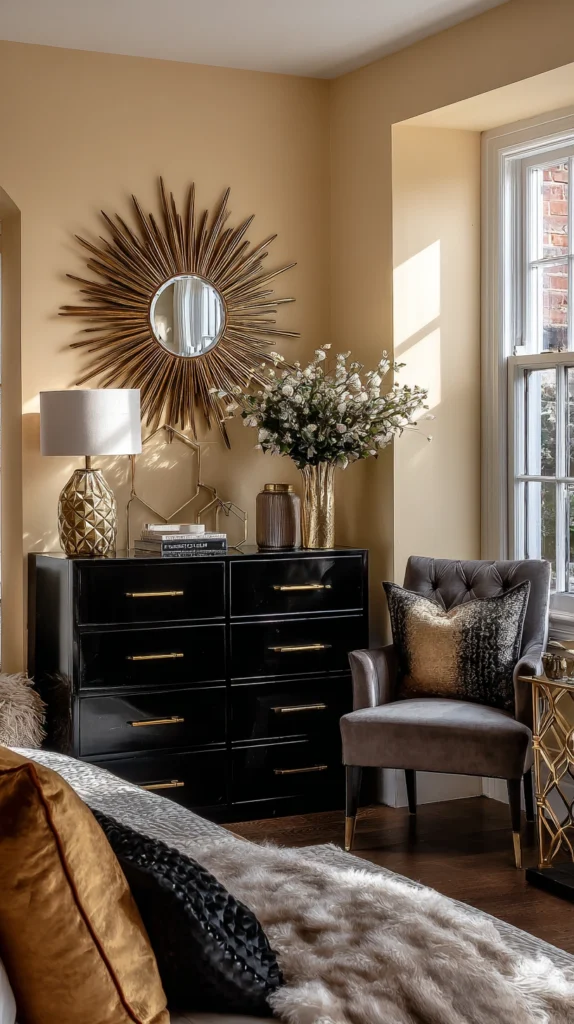
The single most recognizable Art Deco motif, used as a room’s focal point.
Build it:
- A large brass or gold-toned sunburst mirror hung above the dresser or as a headboard alternative
- Positioned at a height where it reflects window light back into the room during the day
- Kept as the room’s only major mirror, avoiding competing reflective surfaces nearby
Why this single piece carries so much visual weight:
- The radiating geometric lines are instantly recognizable as Art Deco, more than almost any other single object
- It reflects and amplifies whatever light source is nearest, brightening the room without additional fixtures
- It photographs as a genuine design statement even in an otherwise simple, uncluttered room
Cost breakdown: Sunburst mirrors run $60 to $180 depending on size and finish quality.
2. Velvet Upholstered Headboard
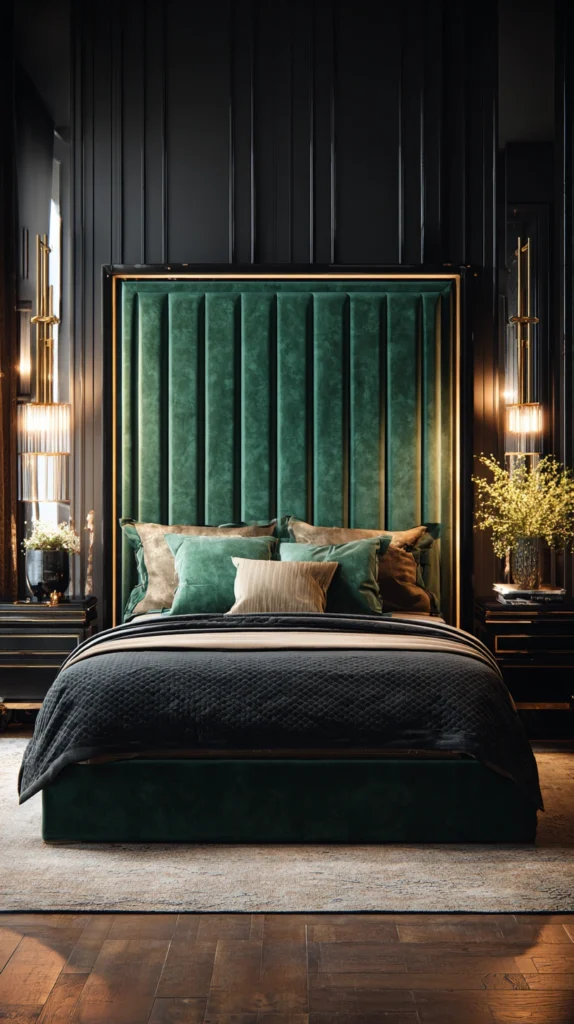
A tactile, luxurious anchor for the whole bed.
Build it:
- A tall, often curved or geometric-shaped headboard upholstered in deep jewel-toned velvet
- Channel tufting or a simple diamond-quilted pattern for added texture and shadow play
- A brass or gold nailhead trim along the edges to reinforce the metallic accent throughout the room
Why velvet upholstery reads as immediately glamorous:
- The fabric’s depth of color and light-catching sheen is one of the defining textures of the era
- A tall, shaped headboard adds real architectural presence to the bed itself, not just the walls around it
- Jewel tones like emerald, sapphire, or deep burgundy pair naturally with brass and black accents elsewhere
Cost breakdown: A velvet upholstered headboard runs $200 to $600 depending on size and fabric quality.
3. Geometric Patterned Wallpaper
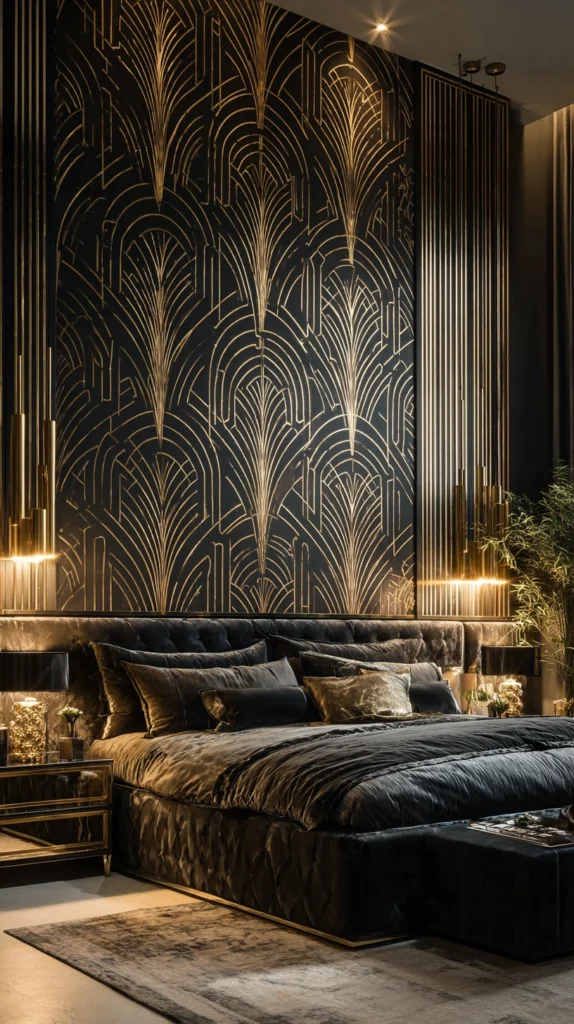
Bold pattern used deliberately on one wall or the full room.
Build it:
- Wallpaper featuring repeating chevron, fan, or stepped geometric motifs
- A metallic gold or silver ink layered over a deep, saturated background color
- Applied to a single accent wall behind the bed if a full room feels too bold, rather than all four walls
Why geometric pattern is essential rather than optional here:
- Pattern is one of the clearest ways to signal the era’s design language at a glance
- Metallic ink specifically catches and reflects light throughout the day and evening
- A single accent wall lets the pattern read as intentional rather than overwhelming the whole room
Cost breakdown: Art Deco style wallpaper runs $40 to $80 per roll, typically needing two to three rolls for a standard accent wall.
4. Black and Gold Color Palette
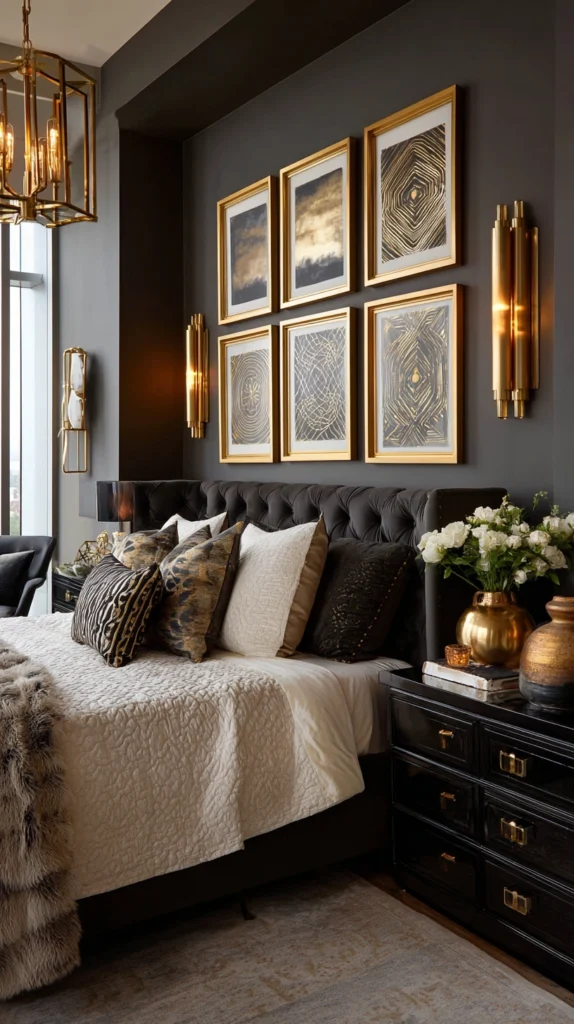
The signature high-contrast combination most associated with the era.
Build it:
- Walls kept in a deep charcoal or true black, either fully or as an accent
- Gold or brass accents introduced through hardware, lighting, and frame details
- A single warm cream or ivory element added to keep the palette from feeling too stark
Why black and gold reads as more sophisticated than a lighter palette:
- The high contrast mimics the dramatic lighting and lacquered surfaces common in original 1920s interiors
- Gold accents against black naturally catch and hold light, adding a subtle glow throughout the room
- It’s a palette that photographs dramatically well, particularly under warm lamp lighting in the evening
Cost breakdown: A black accent wall runs $80 to $150 in paint, with gold hardware swaps adding $30 to $100 depending on scope.
5. Lacquered Furniture With High-Gloss Finish
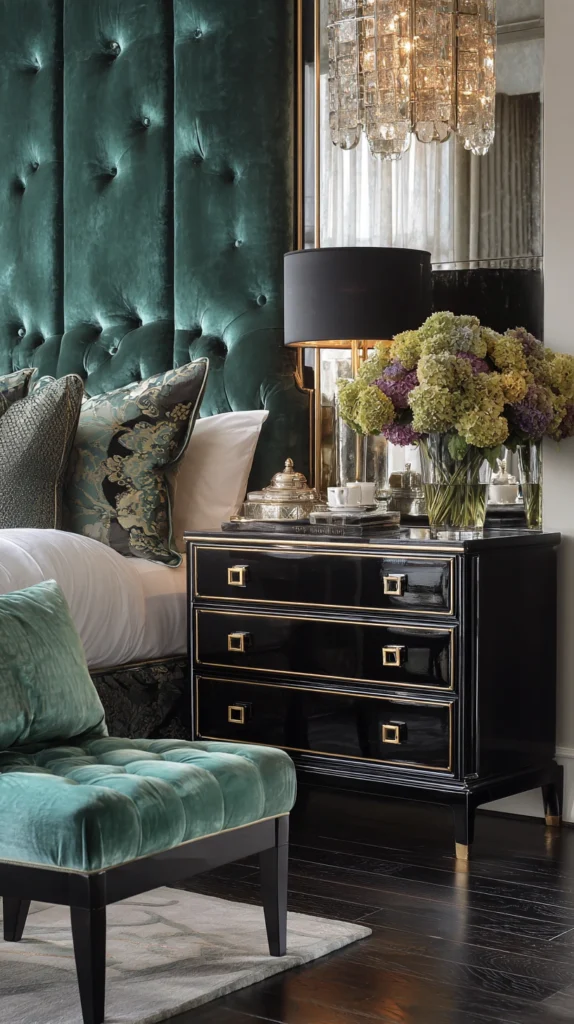
Furniture chosen specifically for its reflective, polished surface.
Build it:
- A dresser or nightstand finished in a deep black or emerald lacquer, built up in multiple thin coats for genuine depth
- Brass or chrome hardware pulls rather than matte finishes, reinforcing the reflective quality
- Kept free of clutter on top, letting the polished surface itself remain visible
Why lacquer finishes are historically accurate to the era:
- High-gloss lacquered furniture was a defining feature of original Art Deco interiors, prized for its reflective luxury
- The polished surface bounces both natural and lamp light, adding brightness without more fixtures
- It contrasts beautifully against the softer texture of a velvet headboard or upholstered bench nearby
Cost breakdown: A lacquered dresser or nightstand runs $150 to $500 depending on size and whether it’s new or a refinished vintage piece.
6. Brass or Gold Metallic Lighting Fixtures
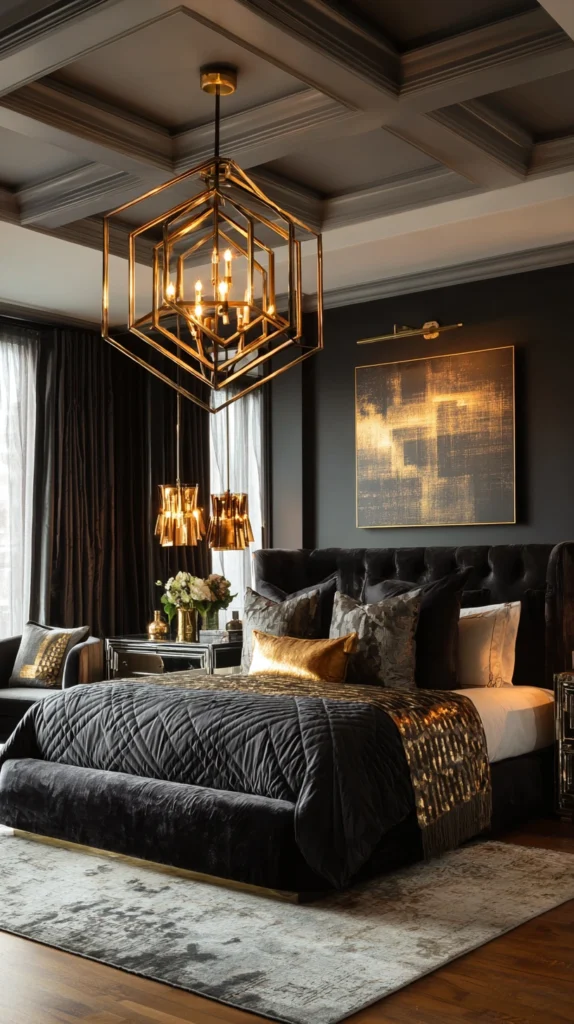
Lighting that doubles as jewelry for the room.
Build it:
- A brass or gold-finished pendant or chandelier with geometric detailing, hung as the room’s central fixture
- Matching brass sconces flanking the bed, replacing standard table lamps where wiring allows
- Warm-toned bulbs throughout, avoiding cool white light that flattens the metallic warmth
Why metallic fixtures matter more here than in most other styles:
- Lighting hardware itself becomes a visible decorative element, not just a functional necessity
- The warm brass tone ties together every other metallic accent in the room, from mirror frames to hardware pulls
- Geometric fixture shapes reinforce the same angular, symmetrical language found throughout the era’s design
Cost breakdown: A brass pendant or small chandelier runs $100 to $300, with matching sconces adding $60 to $150 for a pair.
7. Chevron or Herringbone Flooring Pattern
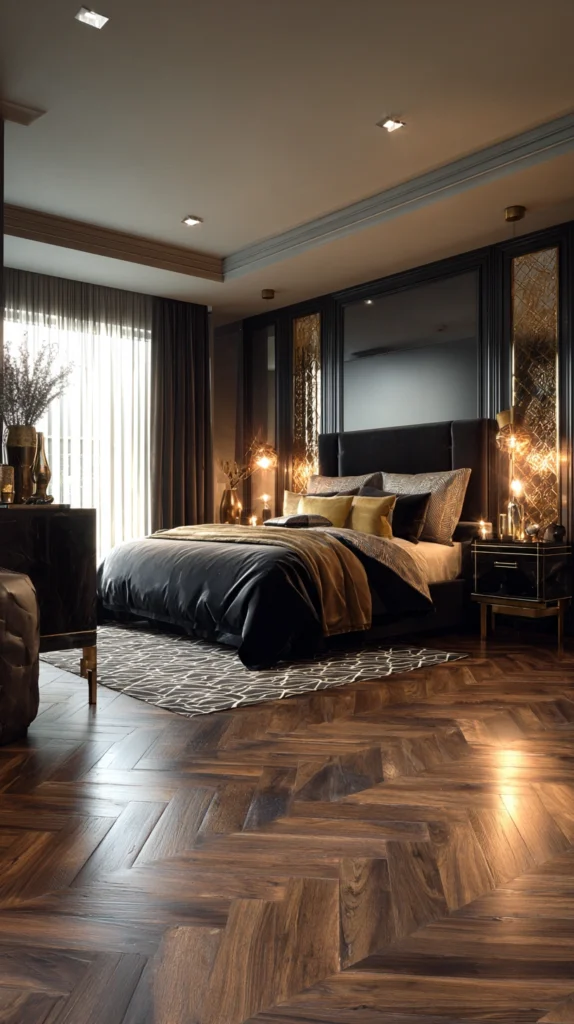
Geometric pattern brought down to the floor itself.
Build it:
- Wood flooring installed in a chevron or herringbone pattern rather than standard straight planks
- A rich, dark wood stain to match the room’s overall high-contrast palette
- A large area rug layered on top if a full floor replacement isn’t feasible, using the same geometric motif at a smaller scale
Why geometric flooring reinforces the whole room’s design language:
- The angular pattern echoes the same sunburst and chevron motifs found in mirrors, wallpaper, and headboard shapes
- Dark wood flooring grounds the room, providing contrast against lighter walls or bedding
- It’s historically consistent with the parquet flooring commonly found in original Art Deco interiors
Cost breakdown: Chevron or herringbone flooring installation runs $8 to $15 per square foot, while a patterned area rug alternative runs $150 to $400.
8. Mirrored Furniture Accents
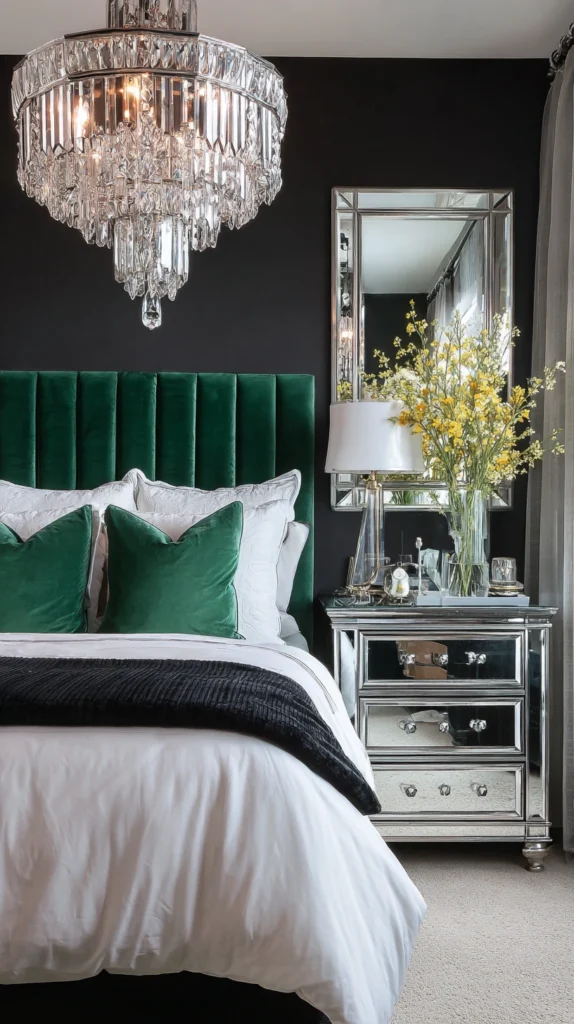
Reflective surfaces used on functional pieces, not just wall mirrors.
Build it:
- A mirrored nightstand or dresser with beveled glass panels on the drawer fronts
- Positioned to reflect ambient light from a nearby window or lamp
- Paired with brass or gold hardware pulls to tie in with the room’s other metallic accents
Why mirrored furniture suits this era beyond just decorative mirrors:
- Mirrored surfaces on functional furniture were a genuine hallmark of glamorous 1920s and 30s interiors
- It multiplies the room’s available light without adding any additional fixtures
- The beveled edges catch light in small, sparkling lines throughout the day
Cost breakdown: A mirrored nightstand runs $100 to $250, with a matching dresser running $250 to $500.
9. Curved or Waterfall-Edge Furniture Silhouettes
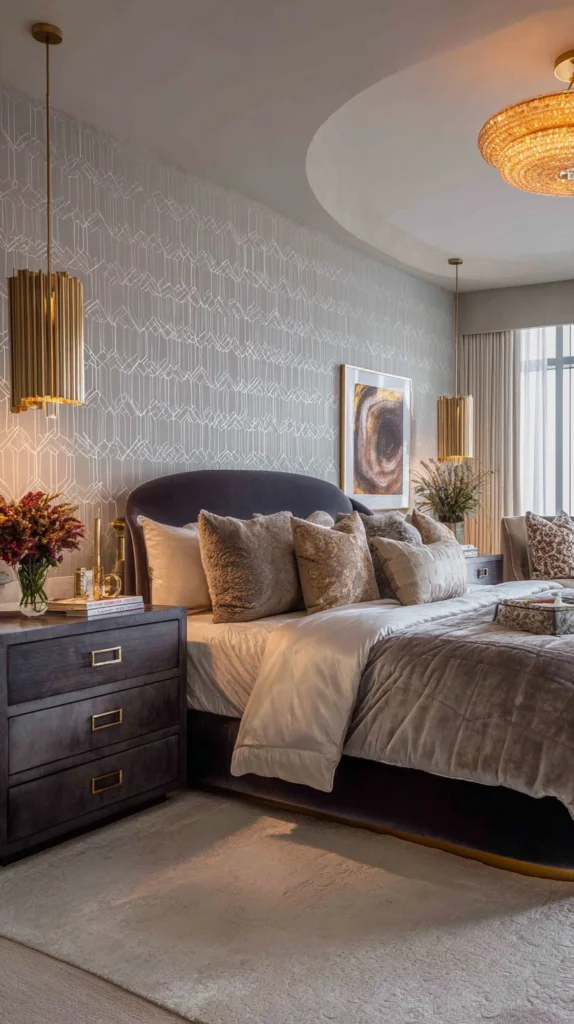
Rounded furniture edges softening the room’s otherwise sharp geometry.
Build it:
- A dresser or nightstand with a rounded waterfall edge, where the top curves smoothly down into the sides
- Paired with straight, angular hardware to maintain contrast against the curved silhouette
- Finished in the same lacquer or veneer as other furniture pieces for a cohesive look
Why curved silhouettes belong alongside sharp geometric patterns:
- The waterfall edge is a specific, recognizable furniture style from the era, distinct from more generic curved designs
- It balances the sharper angles of sunburst mirrors and chevron patterns elsewhere in the room
- It photographs beautifully under side lighting, which highlights the curve’s smooth transition
Cost breakdown: A waterfall-edge dresser or nightstand, whether vintage or reproduction, runs $150 to $450.
10. Fringe or Tassel Detailing on Lampshades and Textiles
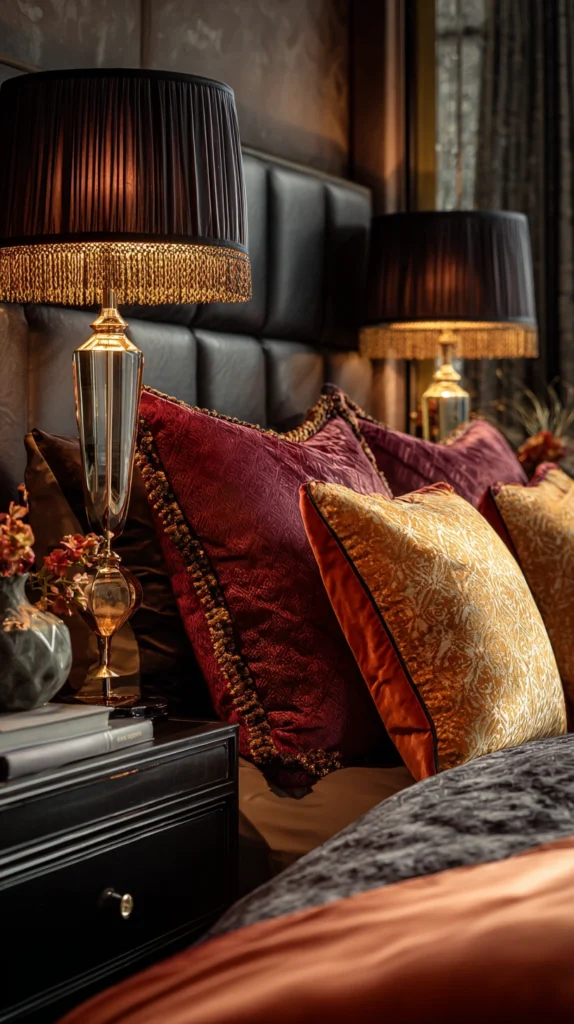
Small decorative flourishes borrowed directly from the era’s textile traditions.
Build it:
- A lampshade trimmed with a beaded or silk fringe along the bottom edge
- Tasseled tiebacks added to curtain panels rather than plain metal hardware
- Kept to one or two pieces in the room, avoiding fringe on every textile surface at once
Why fringe and tassel details add authentic period character:
- These small flourishes were common finishing touches on original Art Deco lighting and textiles
- They add movement and texture that a plain fabric edge doesn’t provide
- Used sparingly, they read as an intentional vintage detail rather than costume-like excess
Cost breakdown: A fringed lampshade runs $20 to $50, and tasseled curtain tiebacks run $15 to $30 per pair.
11. Deep Jewel-Toned Bedding
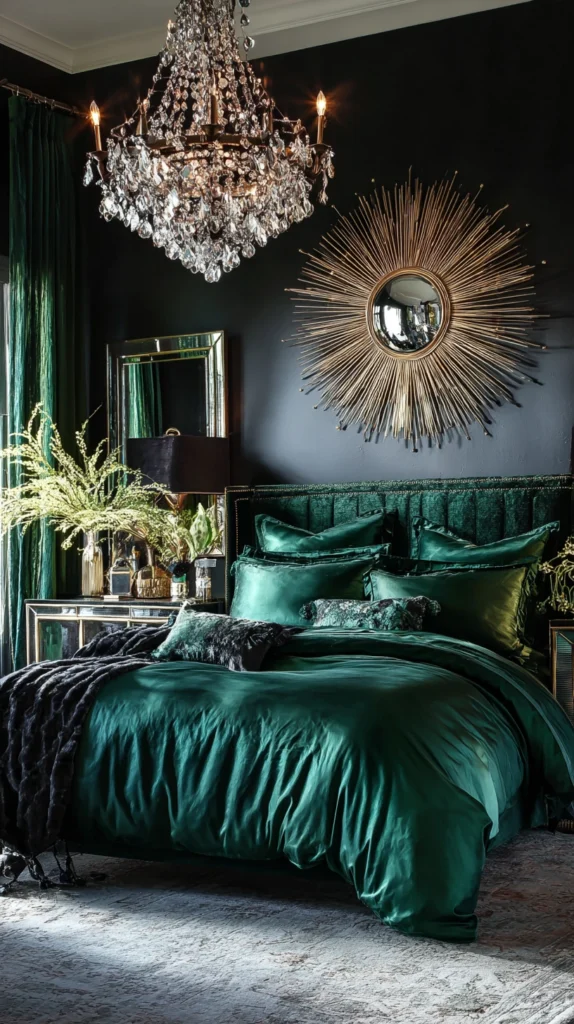
Rich color used at the bed’s largest textile surface.
Build it:
- A duvet or coverlet in emerald green, sapphire blue, or deep burgundy
- A satin or sateen finish for a subtle sheen that complements the room’s other metallic and lacquered surfaces
- Paired with simple ivory or gold-trimmed pillowcases to keep the overall palette from feeling too heavy
Why jewel tones work better here than pastel or neutral bedding:
- Saturated, deep colors were a defining palette choice throughout the era’s fashion and interior textiles alike
- A slight sheen finish echoes the same light-catching quality found in lacquered furniture and metallic fixtures
- It provides the boldest, most visible color statement in the whole room, anchoring everything else around it
Cost breakdown: A jewel-toned satin duvet cover set runs $60 to $150 depending on size and material quality.
12. Stepped or Ziggurat-Shaped Furniture Details
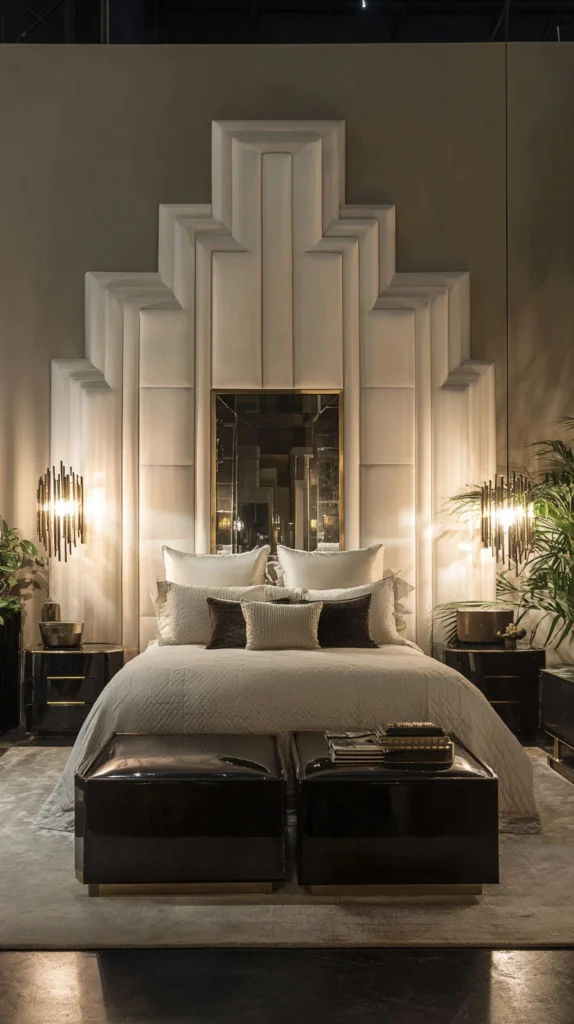
A specific geometric motif borrowed from the era’s architectural influences.
Build it:
- A headboard, mirror frame, or dresser silhouette with a stepped, pyramid-like profile along the top edge
- Symmetrical detailing on both sides, reinforcing the balanced, structured feeling central to the style
- Paired with a matching stepped detail somewhere else in the room, like a mirror frame or light fixture base
Why the stepped silhouette is worth seeking out specifically:
- This motif is directly borrowed from Art Deco skyscraper architecture of the same era, like the Chrysler Building
- It reinforces the geometric, symmetrical language found throughout the rest of the room’s design choices
- It’s a detail that immediately signals authentic period inspiration rather than a generic modern reproduction
Cost breakdown: Furniture with genuine stepped detailing runs comparably to standard pieces, typically $150 to $400 depending on size and material.
13. Bold Symmetry in Furniture Arrangement
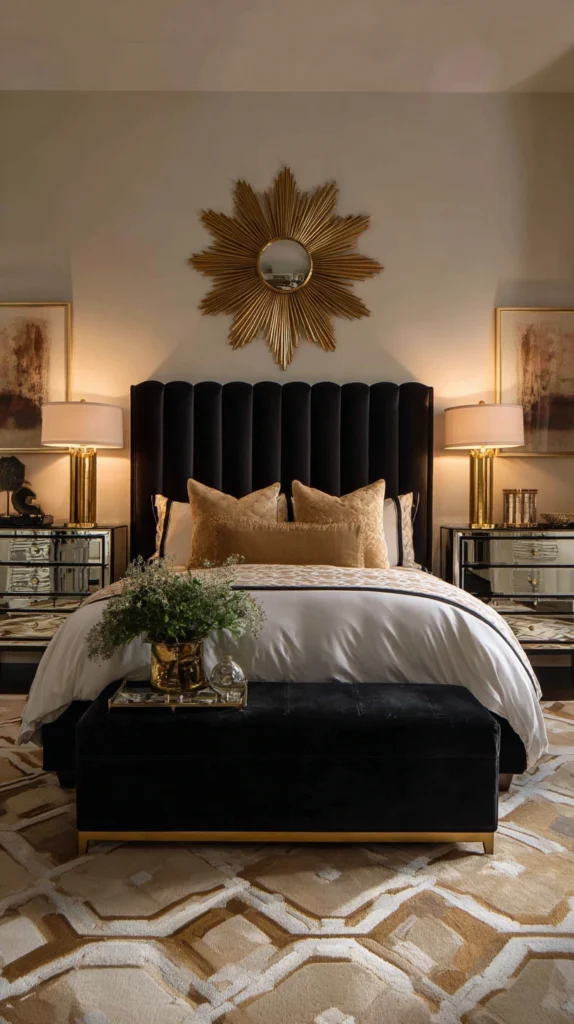
Layout itself treated as part of the design statement.
Build it:
- Matching nightstands and lamps positioned in exact mirror-image placement on either side of the bed
- A centered headboard and rug placement, rather than an off-center or asymmetrical arrangement
- Paired artwork or sconces flanking a single central point, like the headboard or a dresser mirror
Why symmetry matters more in this style than most others:
- Art Deco design is built around balance and precision, making symmetrical layout a core structural choice rather than a preference
- It reinforces the geometric patterns found in wallpaper, flooring, and furniture silhouettes throughout the room
- A symmetrical arrangement photographs as more polished and considered than an asymmetrical, eclectic layout would in this specific style
Cost breakdown: Free, since this is a furniture placement decision rather than a material purchase.
14. Vintage or Reproduction Art Deco Artwork
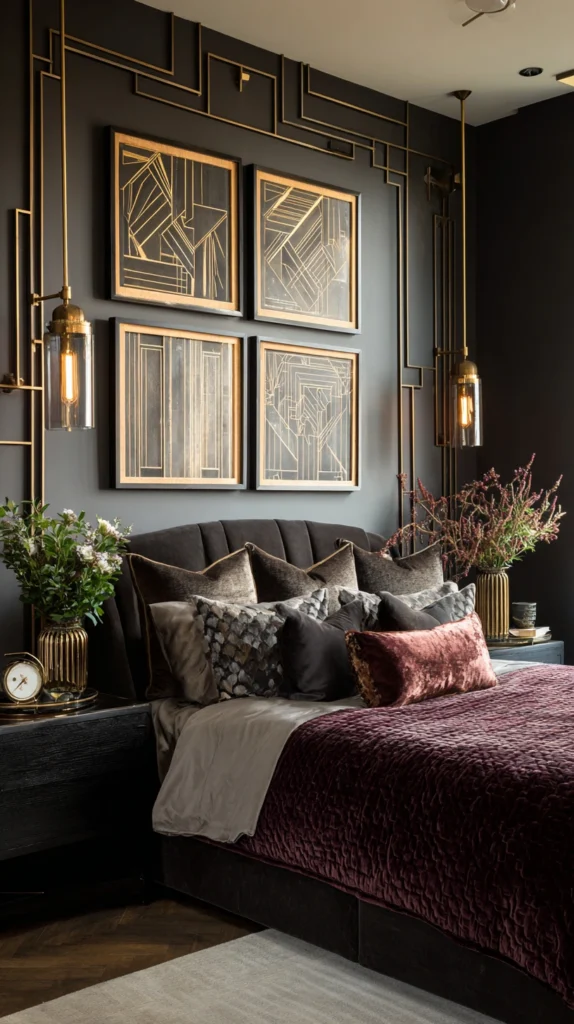
Wall art chosen specifically to reflect the era’s graphic style.
Build it:
- Reproduction travel posters or fashion illustrations from the 1920s and 30s
- Framed in simple black or brass frames, avoiding ornate detailing that would clash with the era’s clean lines
- Hung in a symmetrical arrangement, matching the room’s overall balanced layout
Why period-specific artwork reinforces the whole aesthetic:
- Original Art Deco graphic design, particularly travel and fashion posters, carries the same bold geometric language found in the room’s furniture and textiles
- Simple framing keeps the focus on the artwork itself rather than competing with an overly decorative frame
- It’s one of the most affordable ways to add authentic period character to an otherwise modern room
Cost breakdown: Reproduction Art Deco prints run $15 to $40 unframed, with framing adding $20 to $50 per piece.
15. Faceted Glass or Crystal Accent Pieces
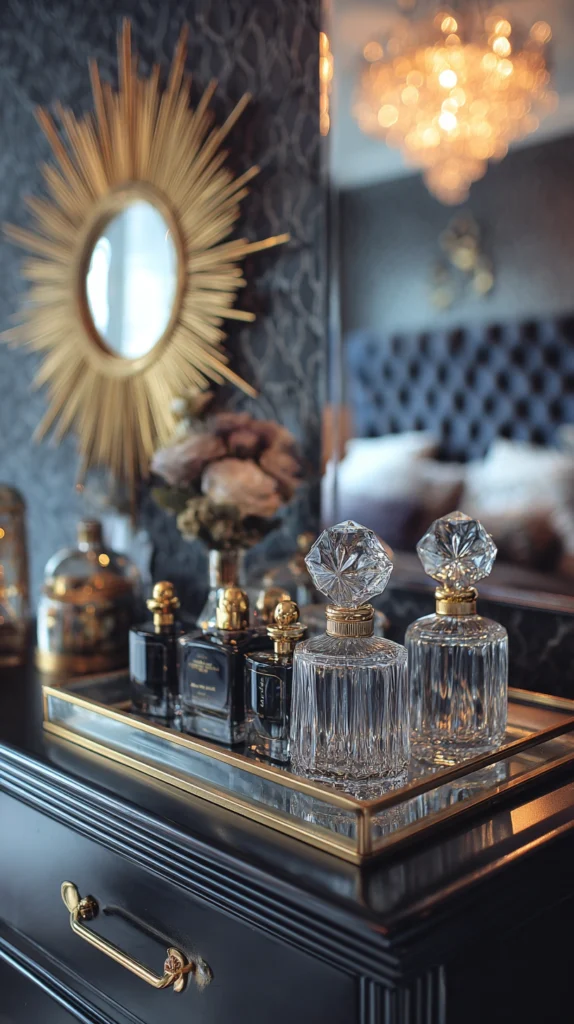
Small decorative objects chosen for their cut, reflective surfaces.
Build it:
- A faceted glass or crystal perfume bottle, jewelry box, or small decorative bowl on the dresser top
- Positioned near a light source, letting the facets catch and scatter light throughout the day
- Grouped in a small odd-numbered cluster rather than scattered individually across the surface
Why faceted glass belongs among the room’s other reflective materials:
- Cut glass and crystal were common decorative choices in original Art Deco vanities and dressers
- The faceted surfaces add another layer of light-catching detail alongside the brass fixtures and mirrored furniture
- Small in scale, these pieces let you introduce genuine glamour without a large furniture investment
Cost breakdown: Faceted glass or crystal decorative pieces run $15 to $50 each depending on size and material.
Getting started this weekend
You don’t need to renovate the whole bedroom before the glamour starts to show up.
- Start with a sunburst mirror and a set of brass hardware pulls on your existing dresser
- Add jewel-toned bedding and a fringed lampshade before considering wallpaper or flooring
- Save larger investments like lacquered furniture or a full accent wall for a dedicated second phase
My own room went from forgettable beige to genuinely glamorous within a single afternoon, starting with just that one sunburst mirror.
Budget reality
Art Deco glamour scales from a few small accents to a full room transformation.
- Under $50: Faceted glass accents, fringed lampshade, reproduction artwork
- $50-150: Sunburst mirror, jewel-toned bedding, brass hardware swaps
- $150-400: Velvet headboard, lacquered nightstand, mirrored furniture piece
- $400+: Geometric wallpaper accent wall, chevron flooring, full lacquered furniture set
Most of the glamour comes from a handful of well-chosen metallic and textural accents, not a full room renovation.
What actually creates that glamorous vintage feeling
It was never really about filling the room with every geometric pattern available.
It’s the brass mirror catching afternoon light, the velvet headboard adding real texture against the pillows, the symmetry that makes the whole layout feel deliberate rather than accidental.
Start with one genuinely glamorous piece, let it expose what the rest of the room needs, and build from there.