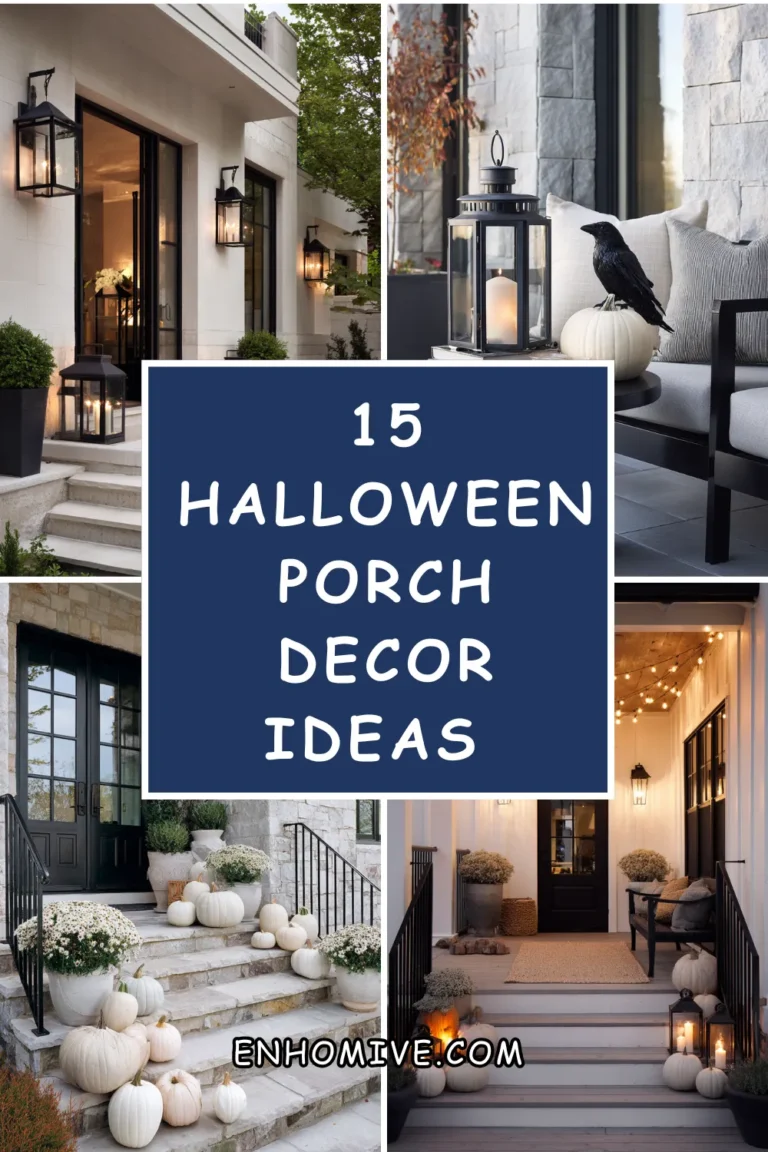

15 Halloween Window Display Ideas That Wow the Neighborhood
The window display changed how the whole house registered on the street more than the porch decorations ever did on their own. Not the pumpkins on the steps. Not the wreath on the door. Not the lawn decorations or the walkway lighting or anything positioned at ground level.
What was visible through the glass.
Because a genuinely considered window display did something ground-level decor never quite managed. Before it: a house that looked fine up close but disappeared into the row of similarly decorated homes when viewed from down the block. After it: a house that stood out specifically because of what glowed and moved behind the glass, visible from a genuine distance in a way porch decor, however nice, rarely achieves.
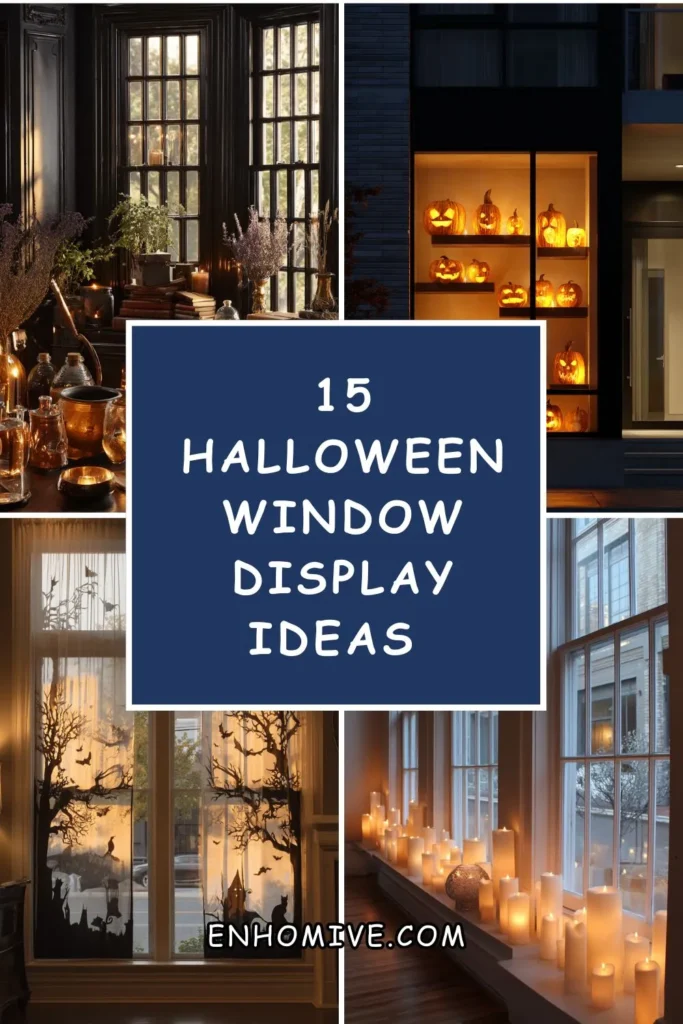
A Halloween window display is not simply pulling the curtains back to reveal whatever decorations are already inside. It is a distinct design opportunity, using the window itself as a frame and the interior’s depth and lighting as tools no exterior porch display can access in the same way. The window: no longer an afterthought behind the porch’s decorations, but its own considered scene, visible and effective from much farther away.
Here are 15 Halloween window display ideas that wow the neighborhood — from the simplest silhouette to the most fully realized illuminated scene — built on that understanding.
Why Window Displays Reach Further Than Any Porch Decoration
The distance advantage
A well-lit window display is visible from considerably farther down the street than most porch-level decorations, which rely on a passerby actually approaching the house to register clearly.
The framing opportunity
Without a considered window display:
Whatever holiday decor happens to already be near the window, visible incidentally rather than through any deliberate composition.
The house: decorated, but the window itself doing no specific visual work of its own.
With a considered window display:
The window treated as its own frame, with silhouettes, lighting, and depth specifically composed to be seen and appreciated from the street.
The house: registering distinctly among a row of similarly decorated homes, precisely because the window itself became a deliberate design element rather than incidental backdrop.
The lighting-from-within advantage
A window display benefits from a specific effect no exterior decoration can replicate: backlighting and silhouette, using the interior’s own light source to project shapes and shadows outward through the glass.
The evening timing case
Nearly all of these display types depend on being seen after dark, when interior lighting creates the dramatic silhouette or glow effect central to their impact — worth planning the display’s timing and lighting specifically around evening visibility rather than daytime appearance alone.
The Five Window Display Techniques
Before designing any specific display:
Silhouette projection
Black paper cutouts or shapes placed against the window, backlit from inside to create dramatic shadow silhouettes visible from the street.
The most classic and most reliably effective technique on this list.
Requires minimal materials, relying primarily on lighting and composition.
Layered depth staging
Objects arranged at varying distances from the glass, creating a sense of dimension and depth rather than a single flat plane.
Suits a deeper window sill or an entire room positioned behind the glass.
Rewards closer inspection as much as distant viewing.
Projected light and motion
Halloween-themed video or light projectors, casting moving images onto the window or a nearby surface.
The most technologically involved option.
Provides genuine movement, distinguishing it from every static display type.
Color and light temperature
Colored bulbs, string lights, or gel filters, shifting the entire window’s glow to a specific eerie or dramatic color.
A relatively low-cost technique with high visual impact.
Works well combined with almost any other approach on this list.
Themed vignette staging
A specific scene — a witch’s kitchen, a mad scientist’s lab — fully staged within the window’s visible frame.
The most elaborate and most narrative-driven option.
Rewards genuine planning and a cohesive prop selection.
1. The Classic Silhouette Cutout Display
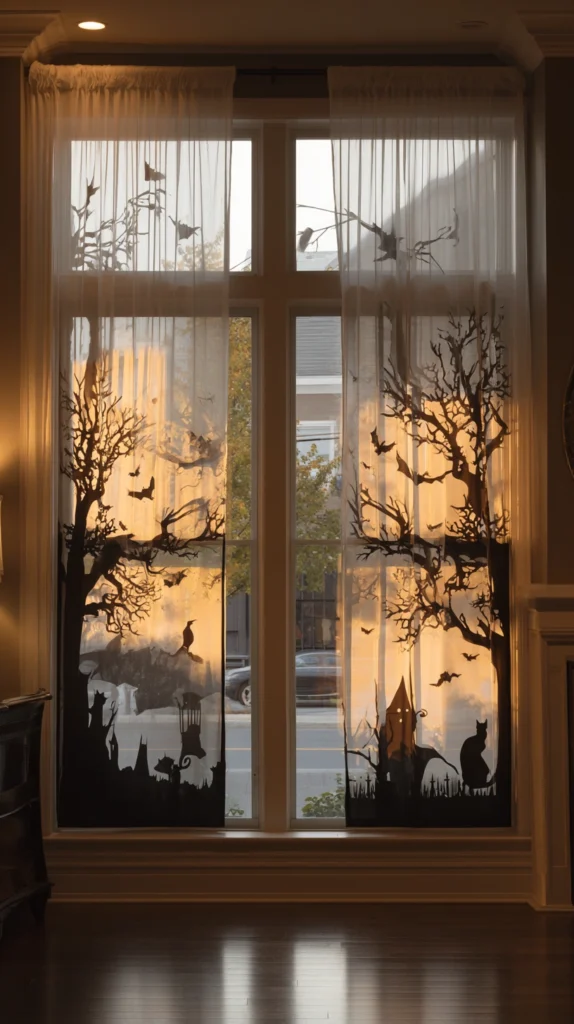
Black paper or cardstock silhouettes — witches, cats, bats, or a haunted tree — taped to the window and backlit from inside, creating dramatic shadow shapes visible from a genuine distance.
Why silhouettes remain one of the most effective window techniques available
A silhouette’s stark black-against-glowing-window contrast reads clearly and dramatically from considerably farther away than a more detailed but less contrasted display, making this one of the highest-impact, lowest-cost options on this entire list.
The silhouette shapes
Witches on broomsticks, black cats, bats in flight, or a bare, twisted tree, cut from black cardstock or purchased as pre-made silhouette decals.
The backlighting
A single warm or colored light source positioned behind the silhouettes, close enough to the window to cast their shapes clearly and with real definition against the glass.
The composition
Silhouettes arranged with genuine visual rhythm — varying heights, a sense of movement or narrative (a witch flying past a full moon, for instance) — rather than scattered randomly across the window’s surface.
The scale
At least one large-scale silhouette as the composition’s anchor, supplemented by smaller shapes, following the same height-and-scale-variation principle relevant to any well-composed display.
The overall effect
A display that reads clearly and dramatically from the street, achieved with minimal material cost through the strategic use of shadow and light alone.
Cost breakdown: Black cardstock or pre-made silhouettes: $10–25 Backlighting (lamp or LED): $15–35 Total: $25–60
2. The Full Moon Backlit Scene
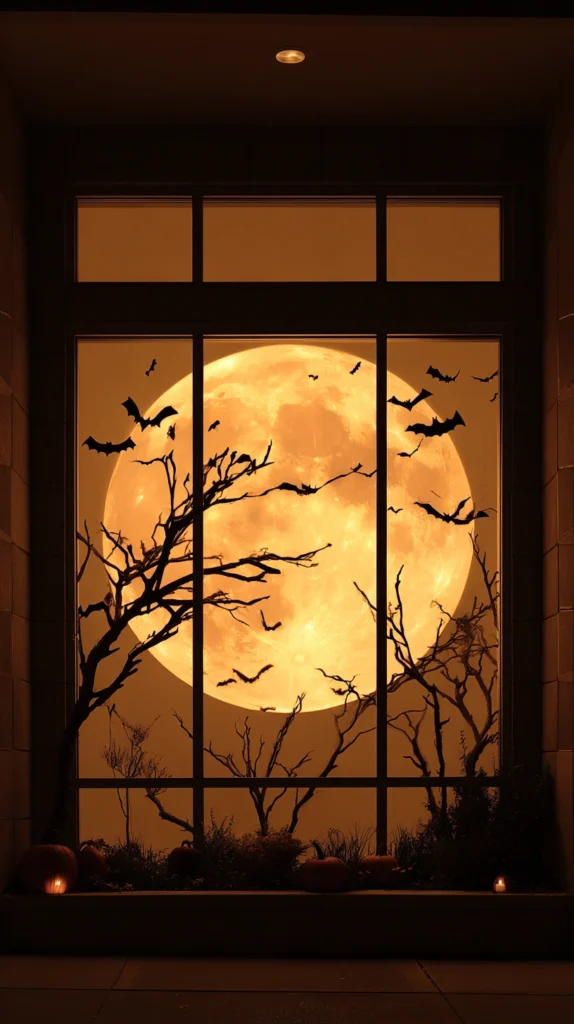
A large circular cutout or a genuine round light fixture positioned centrally in the window, serving as a glowing “moon” backdrop for silhouettes or other Halloween shapes arranged in front of it.
Why a moon backdrop provides a unifying focal point for the rest of the display
Rather than scattered silhouettes with no central organizing element, a large glowing moon gives the composition a clear focal point, with everything else in the display arranged in relation to it.
The moon element
A large circular light — a round paper lantern, a backlit circular cutout, or a simple round fixture with a warm or amber bulb — positioned centrally within the window’s visible frame.
The foreground silhouettes
Bats, a witch on a broomstick, or a haunted tree branch positioned in front of the moon, creating the classic visual arrangement of dark shapes crossing a glowing lunar backdrop.
The scale relationship
The moon sized large enough to serve as a genuine backdrop rather than a small, secondary detail, with the foreground silhouettes scaled appropriately relative to it.
The color choice
A warm amber or pale yellow glow for the moon, rather than a stark white, providing a moodier, more atmospheric quality consistent with a genuinely eerie night scene.
The overall effect
A window display with a clear, recognizable, and visually striking central composition, immediately readable even from a significant distance down the street.
Cost breakdown: Large circular light or lantern: $20–45 Foreground silhouettes: $10–20 Total: $30–65
3. The Layered Ghost and Sheer Fabric Display
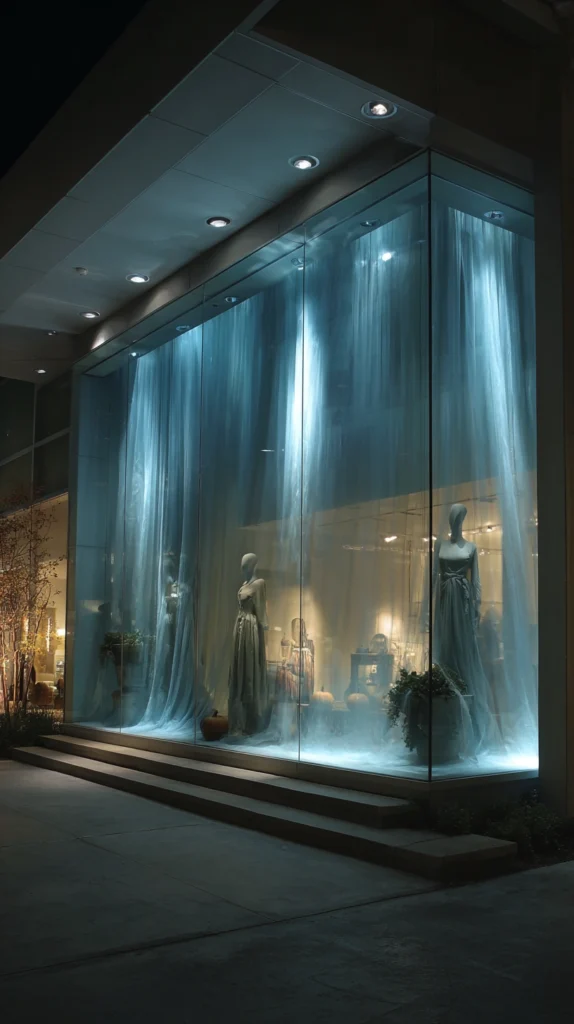
Multiple ghost figures, made from sheer white or ivory fabric draped over simple frames, positioned at varying depths within the window to create a layered, ethereal scene.
Why layered depth distinguishes this display from a flat, single-plane arrangement
Positioning ghost figures at genuinely different distances from the glass — some close, some further back within the room — creates real dimensional depth, an effect a flat, single-plane display cannot replicate.
The ghost construction
Sheer fabric draped over simple wire or foam head forms, creating the classic floating ghost silhouette, in varying sizes for visual variety.
The depth arrangement
Smaller ghosts positioned closer to the glass, larger ones set further back within the room, creating a genuine sense of perspective and dimension when viewed from outside.
The lighting
Warm or cool-toned uplighting from the floor, illuminating the ghosts from below for a dramatic, eerie glow that emphasizes their layered positioning.
The movement consideration
A small fan positioned nearby, creating gentle fabric movement, adding a subtle, unsettling animation to what would otherwise be an entirely static display.
The overall effect
A window scene with genuine dimensional depth, the varying distances and gentle movement creating an effect considerably more dynamic than a flat arrangement of decorations pressed against the glass.
Cost breakdown: Sheer fabric and forms (3–4 ghosts): $30–60 Uplighting: $20–40 Small fan: $10–20 Total: $60–120
4. The Projected Video Window Display
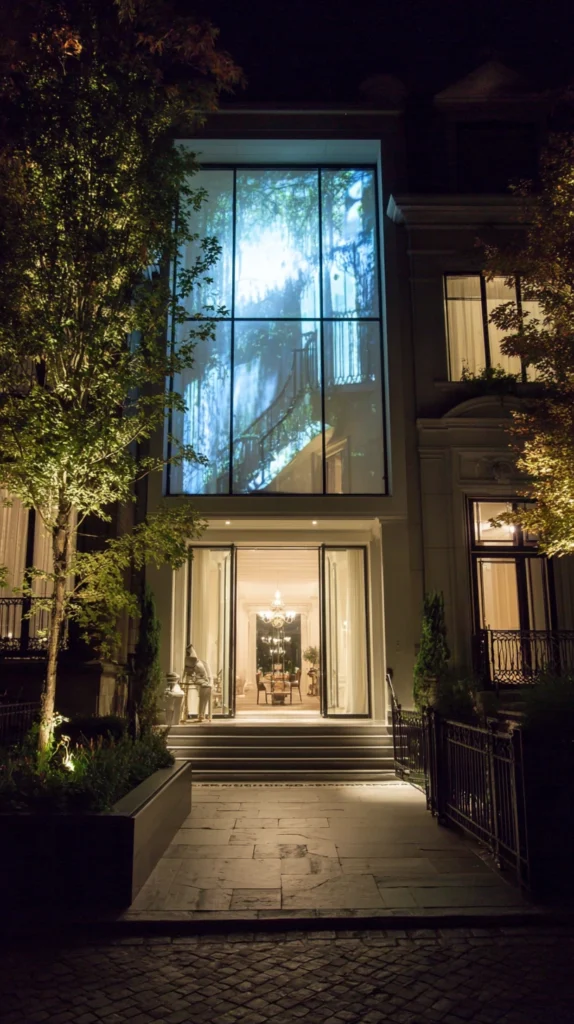
A Halloween-themed video projector, displaying moving images — flickering candles, a witch stirring a cauldron, ghostly figures — directly onto the window glass or a rear-projection screen positioned behind it.
Why projection provides genuine motion no static display can replicate
Every other display type on this list is fundamentally static, however cleverly lit or arranged. A video projection introduces actual movement, immediately distinguishing the display from anything a neighbor might achieve with cutouts or lighting alone.
The projector
A dedicated Halloween projection device, or a standard projector paired with pre-made Halloween video loops, positioned within the room to project either directly onto the window glass or onto a rear-projection screen material mounted just inside it.
The content selection
Looping animations — a flickering jack-o’-lantern face, a silhouette of dancing skeletons, drifting fog effects — chosen for genuine visual interest sustained over a repeated loop rather than a single brief clip.
The room darkening
The room behind the window kept dark except for the projector’s own light, maximizing the projected image’s visibility and contrast against the night.
The timer or remote control
A timer or smart plug, allowing the projection to activate automatically at dusk without requiring a manual start each evening.
The overall effect
A display with genuine, ongoing motion, one of the most distinctive and memorable techniques available precisely because static decorations, however elaborate, cannot replicate it.
Cost breakdown: Halloween projector device: $40–150 Total: $40–150
5. The Colored Light Wash
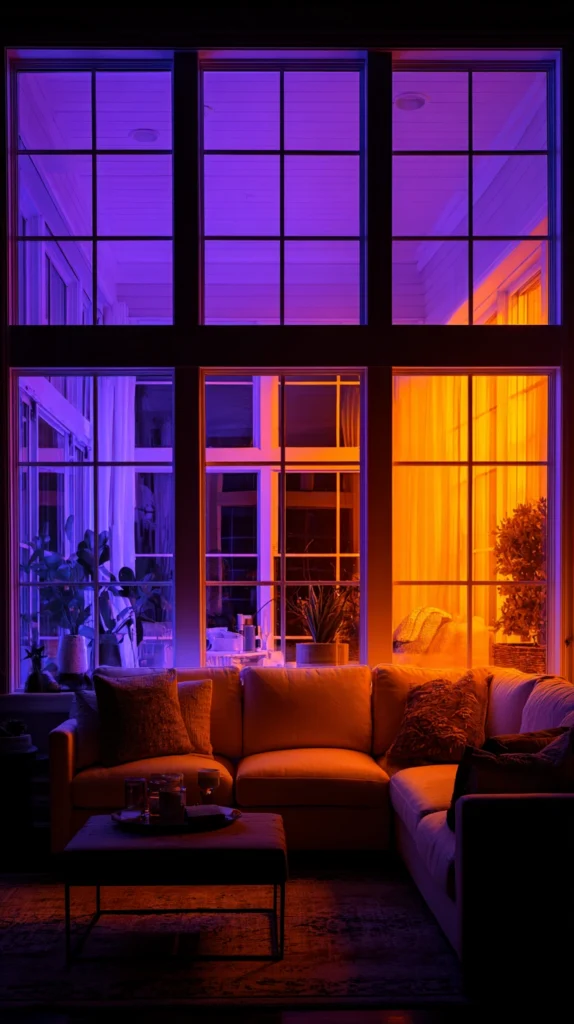
The window’s interior lighting shifted entirely to a specific eerie color — deep green, purple, or blood orange — using colored bulbs or gel light filters, transforming the window’s overall glow.
Why a single dramatic color shift can transform an otherwise ordinary window
Simply changing the color temperature and hue of a room’s interior lighting, visible through the window from outside, creates an immediately noticeable, genuinely eerie effect without requiring any additional props or decorations at all.
The colored bulbs
Green, purple, or deep orange colored LED bulbs, replacing the room’s standard bulbs specifically for the display’s duration.
The gel filter option
A colored gel filter placed over an existing lamp or fixture, achieving a similar colored wash effect without requiring a full bulb replacement.
The color selection
A single, deliberately chosen color rather than a mix of several, maintaining the same restraint principle relevant to any well-executed spooky-chic display, avoiding a chaotic, carnival-like mixed-color effect.
The room visibility
Any silhouettes, props, or shapes within the room now cast in the chosen colored light, adding a genuinely different visual register to whatever else is staged within the window.
The overall effect
An immediately noticeable, dramatically different window glow, achieved through the simplest possible technique — a bulb swap — for one of the highest-impact-to-effort ratios on this entire list.
Cost breakdown: Colored LED bulbs (2–3): $15–35 Total: $15–35
6. The Witch’s Kitchen Vignette
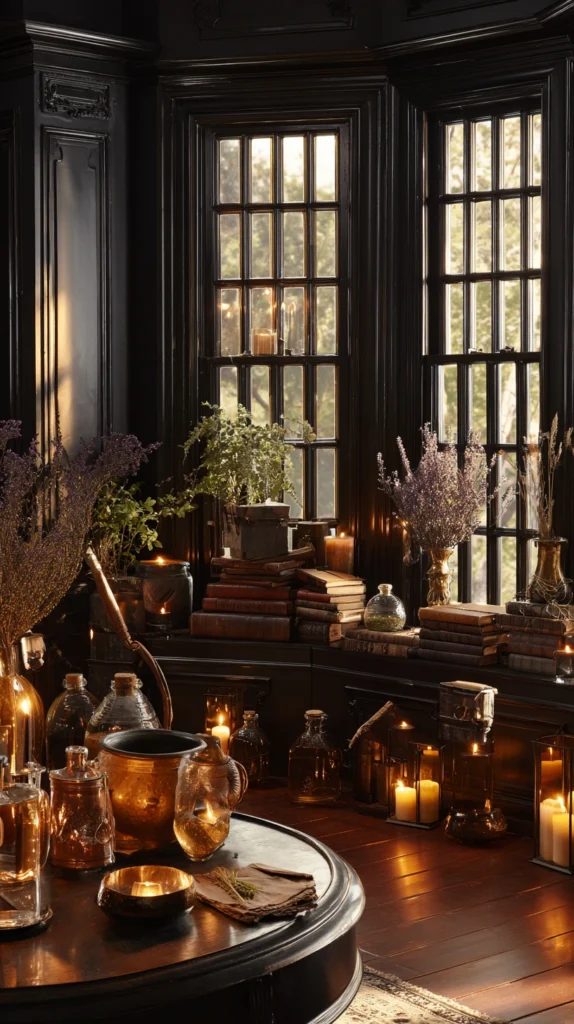
A fully staged scene within the window — a cauldron, hanging dried herbs, old books, and a witch figure or silhouette — creating a specific narrative tableau rather than a collection of individual Halloween objects.
Why a fully staged scene outperforms scattered individual decorations
Rather than a window with several unrelated Halloween objects placed near the glass, a specific, cohesive scene tells a clear visual story, rewarding a passerby’s attention with genuine narrative detail rather than a random assortment.
The core elements
A small cauldron (real or a prop), hanging bundles of dried herbs, a stack of old-looking books, and glass apothecary bottles, arranged as though a witch’s kitchen genuinely occupies the window’s visible space.
The figure
A witch silhouette or a well-made witch figure, positioned as the scene’s central character, tending the cauldron or standing among the props.
The lighting
A green or amber glow, evoking a bubbling potion or firelight, reinforcing the specific narrative the props establish.
The prop quality
Genuinely good props — real dried herbs, quality glass bottles, aged-looking books — rather than cheap plastic versions that would undercut the scene’s overall believability and impact.
The overall effect
A window that tells a specific, cohesive story, rewarding sustained attention from anyone who pauses to look rather than offering only a quick, generic Halloween impression.
Cost breakdown: Cauldron, herbs, and bottles: $30–70 Books and witch figure: $20–50 Colored lighting: $15–30 Total: $65–150
7. The Skeleton Silhouette Family Scene
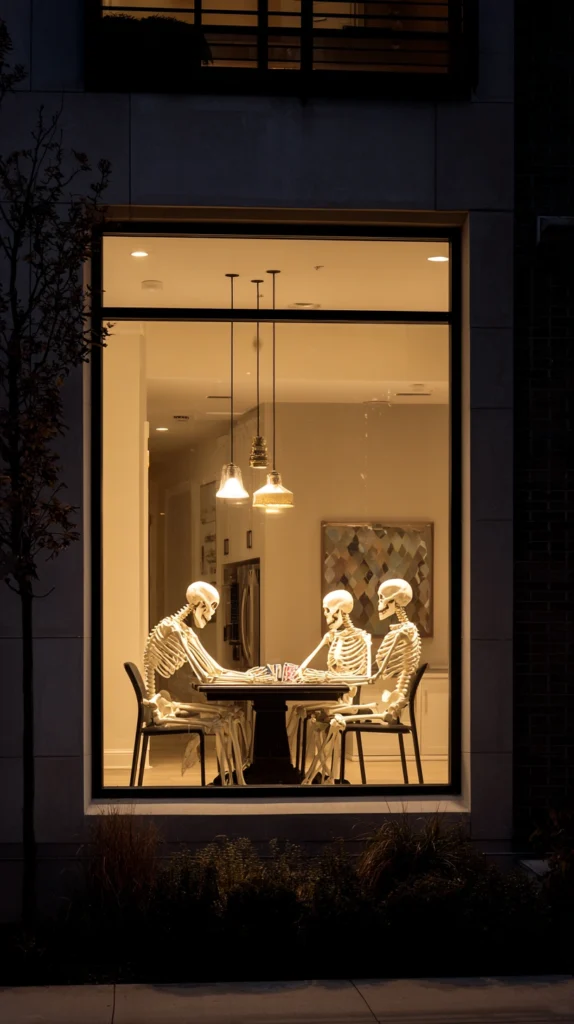
Multiple skeleton silhouettes or figures, arranged within the window in a specific, often humorous domestic tableau — reading, playing a board game, or gathered as though watching television.
Why a narrative skeleton scene reads as clever rather than simply spooky
A specific, often lighthearted scenario — skeletons reading together, playing cards, or lounging — adds genuine humor and personality to the display, distinguishing it from a purely frightening or generic spooky arrangement.
The skeleton figures
Full-size or large skeleton props, positioned in a specific pose and activity rather than standing stiffly or scattered without context.
The scenario
A specific, considered scene — skeletons seated around a table playing cards, one reading by lamplight, another appearing to watch television — giving the display genuine narrative charm.
The supporting props
Small details supporting the scenario — a deck of cards, a book, a small lamp — reinforcing the specific activity the skeletons appear to be engaged in.
The lighting
Warm, domestic-style lighting, similar to how the room might actually be lit for everyday use, reinforcing the sense of a genuine, if unusual, domestic scene rather than a purely eerie tableau.
The overall effect
A display that generates genuine delight and conversation, the specific narrative scenario elevating simple skeleton props into a memorable, story-driven scene.
Cost breakdown: Skeleton figures (2–3): $40–120 Supporting props: $20–40 Total: $60–160
8. The Spider Web and Giant Spider Display
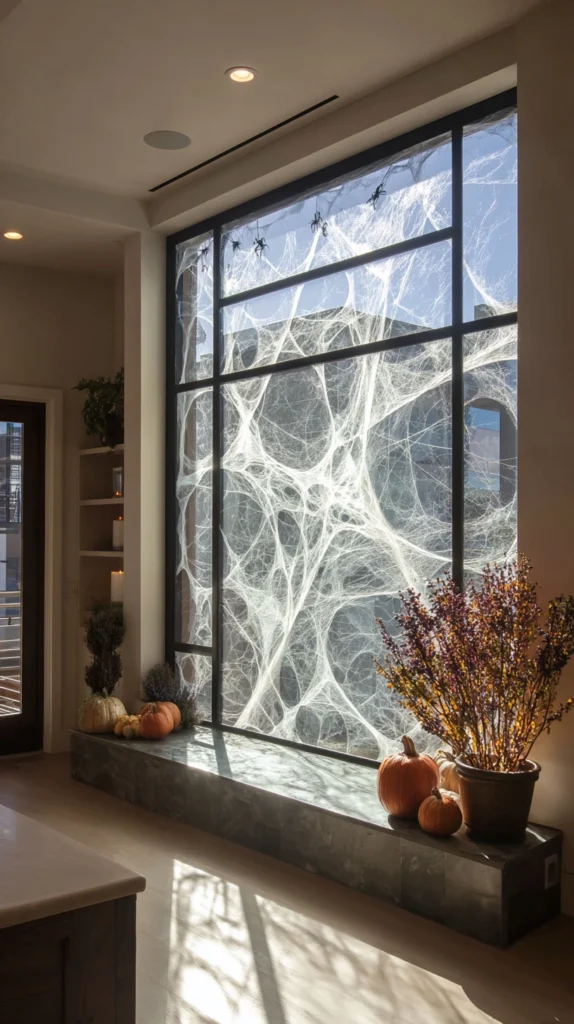
A dense, realistic spider web covering the window’s frame or a section of the glass, with one or two oversized spider figures positioned within or crawling along its structure.
Why a genuinely dense, realistic web reads as more effective than a sparse decorative version
A thin, obviously synthetic web stretched loosely across a window reads as a minor afterthought. A genuinely dense, well-constructed web, covering a meaningful portion of the window frame, creates real visual impact and a convincing sense of neglect and infestation.
The web construction
A realistic, greyish web material, applied densely across the window frame’s corners and extending partially across the glass itself, rather than a thin, obviously stretchy synthetic layer.
The spider figures
One or two oversized, well-made spider props, positioned within the web’s structure rather than scattered separately, integrating them into the overall composition.
The backlighting
A single light source positioned to cast the web’s own shadow pattern onto the wall or curtain behind it, adding an additional layer of shadow and texture beyond the web itself.
The scale commitment
Genuinely large spiders, rather than small, easily overlooked figures, ensuring the display registers clearly even from a distance.
The overall effect
A window that reads as convincingly overtaken by spiders, the density and scale of the web and its inhabitants creating real visual impact rather than a token, easily missed detail.
Cost breakdown: Realistic web material (bulk): $15–30 Oversized spider props (1–2): $20–50 Total: $35–80
9. The Flickering Candlelight Row
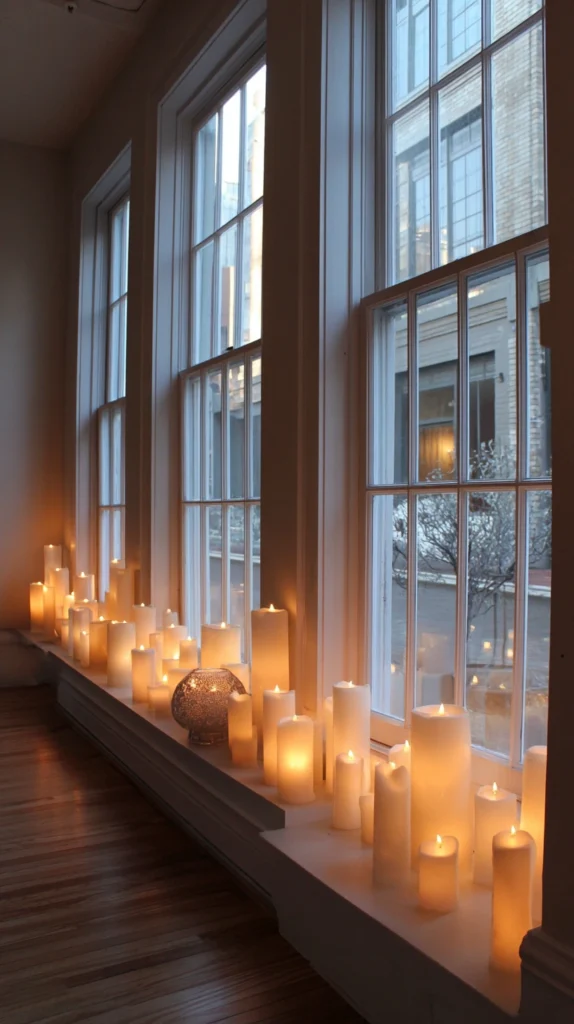
A row of flameless candles positioned along the windowsill, providing a warm, flickering glow visible from the street, evoking a haunted house’s classic candlelit window.
Why a simple candlelit row can be as effective as a more elaborate display
The image of flickering candlelight in a window is one of the most immediately evocative and universally recognized haunted house signifiers, achieving genuine atmosphere through simplicity alone.
The candles
A row of flameless LED candles, providing the flickering warm glow without any open-flame safety concern, positioned evenly along the windowsill.
The height variation
Varying candle heights, rather than a uniform row, creating the same rhythmic visual interest relevant to any well-composed candle grouping.
The color temperature
A warm, amber-toned flicker effect, rather than a cool white light, maximizing the classic, eerie candlelit atmosphere this display depends on.
The timer function
A timer or smart plug activating the candles automatically at dusk, ensuring the display is consistently active during the evening hours it matters most.
The overall effect
A simple, low-cost display achieving genuine atmospheric impact through one of Halloween’s most classic and recognizable visual signifiers.
Cost breakdown: Flameless LED candles (8–10): $30–60 Total: $30–60
10. The Bat Swarm Silhouette Cluster
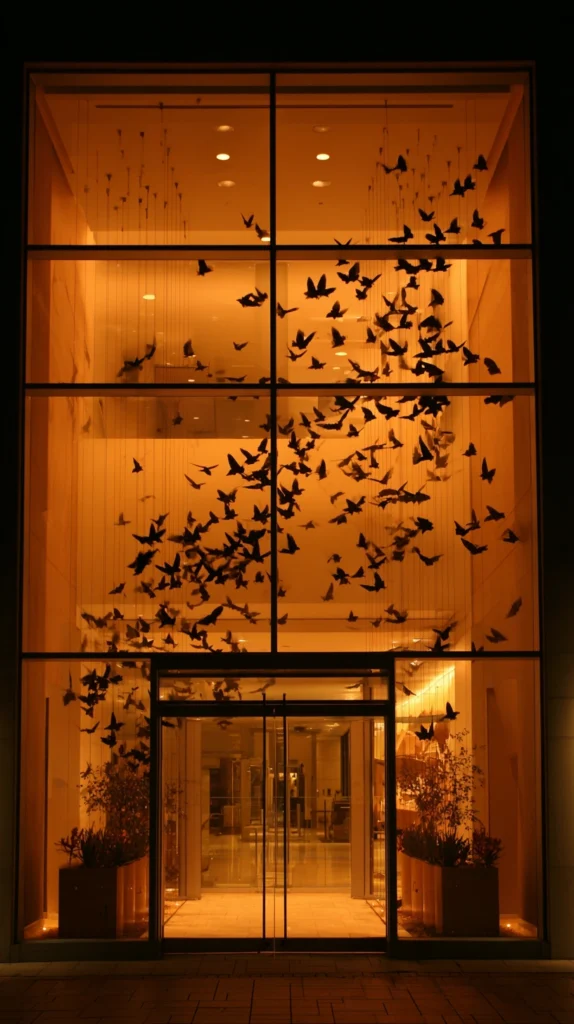
Dozens of small black bat silhouettes, arranged in a dense, swirling cluster across the window, creating the impression of a swarm caught mid-flight.
Why quantity and composition matter more than any individual bat silhouette’s quality
A single bat silhouette registers as a minor decorative detail. Dozens arranged in a genuine swirling, dynamic composition create real visual drama and movement, the sheer density and arrangement doing the display’s actual work.
The bat silhouettes
Small, simple black cutout bats, purchased in bulk or cut from cardstock, sized modestly since the display’s impact comes from quantity and arrangement rather than any single large shape.
The composition
Arranged in a swirling, diagonal pattern, suggesting genuine flight and movement rather than a static, evenly spaced grid.
The density
A genuinely large quantity — 30 or more — since a sparse scattering of bats fails to create the swarm effect this display depends on.
The backlighting
A single warm or amber light source behind the composition, ensuring the full swarm reads clearly as silhouettes against the glowing window.
The overall effect
A display achieving genuine visual drama through density and composition, the swirling arrangement of many small, simple shapes outperforming a smaller number of more elaborate individual bats.
Cost breakdown: Bat silhouettes (bulk, 30+): $15–30 Backlighting: $15–30 Total: $30–60
11. The Mad Scientist Laboratory Scene
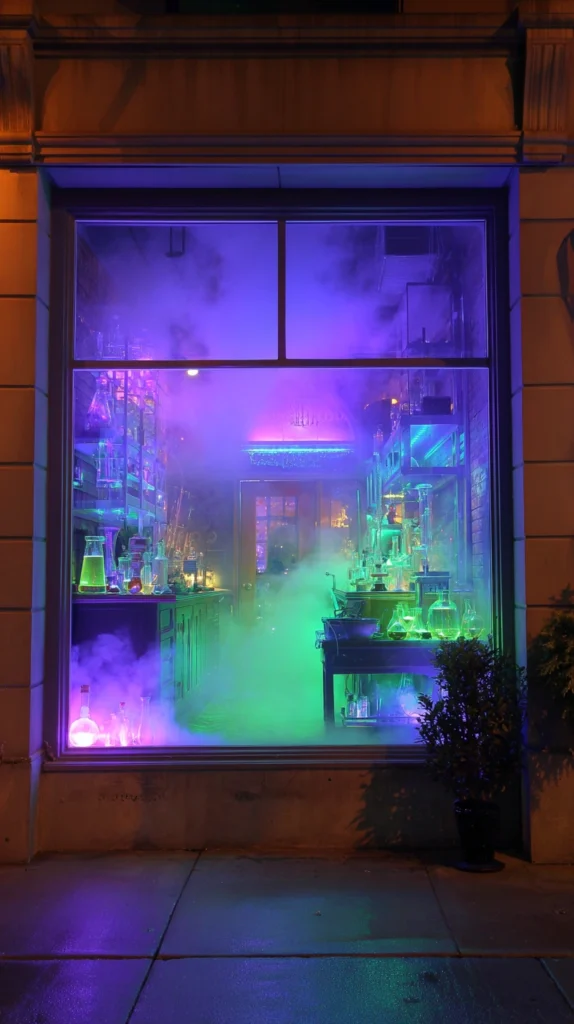
A staged scene featuring glowing beakers, dramatic fog, and scientific-looking apparatus, using colored light and simple props to evoke a laboratory experiment gone wrong.
Why a laboratory scene offers a genuinely different narrative than the more common witch or ghost themes
Where many window displays default to witches, ghosts, or skeletons, a mad scientist laboratory scene offers a distinct visual and narrative alternative, standing out specifically by not repeating the neighborhood’s more common display choices.
The glowing elements
Glass beakers and flasks, filled with colored liquid and small submerged LED lights, creating a genuinely glowing, bubbling laboratory effect.
The apparatus props
Tubing, simple electrical-looking equipment, and old-fashioned scientific instruments, sourced from a costume or prop supplier, arranged to suggest an active, ongoing experiment.
The fog effect
A small fog machine or dry ice setup, providing atmospheric low-lying fog around the laboratory props, particularly effective for evening viewing.
The color palette
Green and purple lighting, the classic mad-scientist color combination, rather than the warmer amber tones more common to witch or candlelit displays.
The overall effect
A distinct, narratively different display from the neighborhood’s more common Halloween window themes, the glowing beakers and fog creating genuine visual drama through a less frequently used scenario.
Cost breakdown: Glowing beaker props and LED lights: $30–60 Apparatus and tubing props: $20–40 Small fog machine: $30–70 Total: $80–170
12. The Vintage Circus or Carnival Sideshow Display
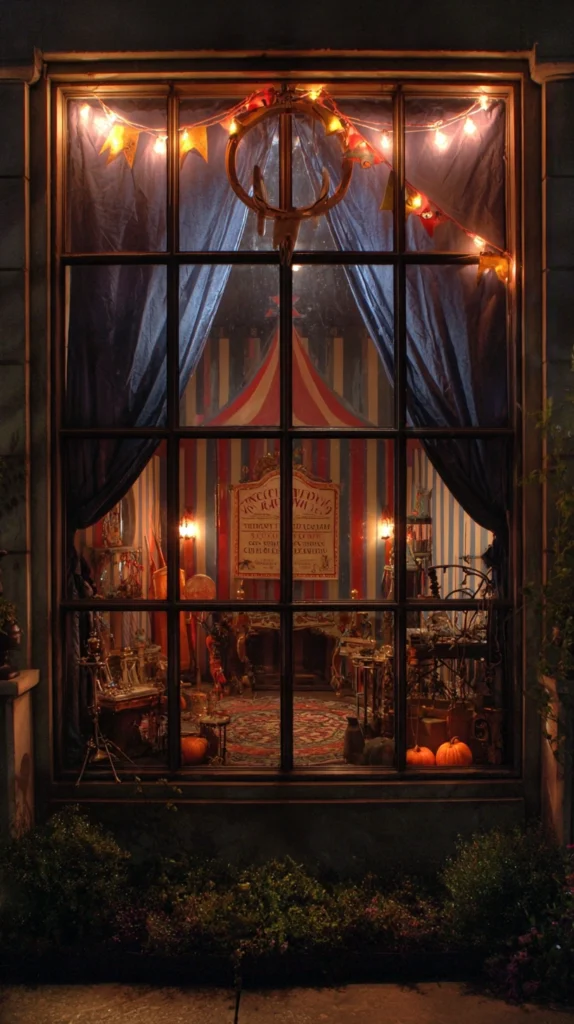
A window styled to evoke an eerie, abandoned carnival or circus sideshow, using vintage-style signage, striped fabric, and unsettling figures rather than traditional Halloween imagery.
Why an unconventional theme distinguishes a display from the neighborhood’s more predictable options
A carnival or sideshow theme draws on a specific, less commonly used unsettling aesthetic, offering a genuinely distinctive alternative to the witches, pumpkins, and skeletons that dominate most Halloween window displays.
The signage
Vintage-style carnival signage or banners, in an aged, slightly worn finish, evoking an old traveling sideshow rather than a contemporary Halloween theme.
The striped fabric
Red and white or black and white striped fabric, draped or used as a backdrop, reinforcing the carnival tent visual association.
The figures
A single unsettling figure — an old-fashioned ventriloquist dummy, a fortune teller mannequin, or a jester figure — positioned as the scene’s central, eerie character.
The lighting
Warm, slightly flickering bulb-style lighting, evoking old carnival string lights rather than a cooler, more contemporary light source.
The overall effect
A display that stands out precisely because it draws on a different, less commonly used unsettling visual tradition, distinguishing the house clearly from more conventional neighborhood Halloween displays.
Cost breakdown: Vintage-style signage: $20–45 Striped fabric: $15–30 Unsettling central figure: $30–80 Total: $65–155
13. The Haunted Portrait Gallery
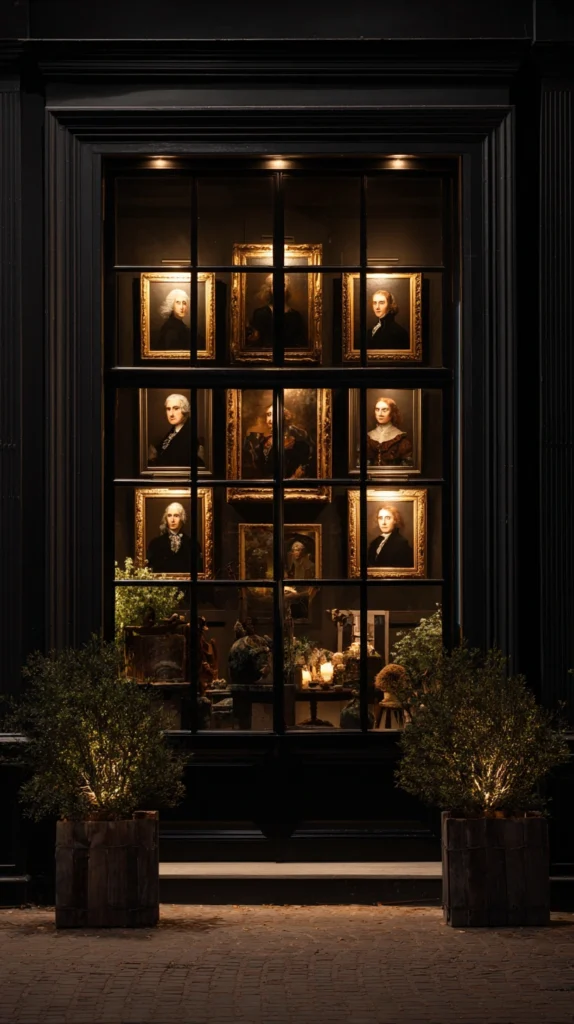
Several framed portraits, each altered or lit to appear subtly eerie — eyes that seem to follow, a face slightly shifted or shadowed — arranged in the window as a haunted gallery display.
Why altered portraits create a genuinely unsettling, distinctive effect
A row of ordinary-looking portraits, each with one small unsettling detail, creates a slow-building unease genuinely different from more overt Halloween imagery like skeletons or witches, rewarding a longer, closer look.
The portrait sourcing
Secondhand frames and portrait prints, sourced from thrift stores or printed specifically, chosen for a slightly formal, old-fashioned quality.
The alteration technique
Cut-out eyes with a small light or a moving element behind them, or a double-exposure-style ghostly overlay, creating the sense that each portrait’s subject is subtly watching or shifting.
The lighting
Dim, angled lighting on each portrait, creating shadow and a sense of unease rather than bright, even illumination that would undercut the eerie effect.
The arrangement
A gallery-style arrangement, similar to any well-composed picture display, but populated entirely with these subtly altered, unsettling portraits.
The overall effect
A slow-building, genuinely unsettling display rewarding close attention, distinct from the more immediate, overt spookiness of most other display types on this list.
Cost breakdown: Secondhand frames and portraits: $20–50 Alteration materials (lights, overlay): $15–35 Total: $35–85
14. The Illuminated Pumpkin Patch Window
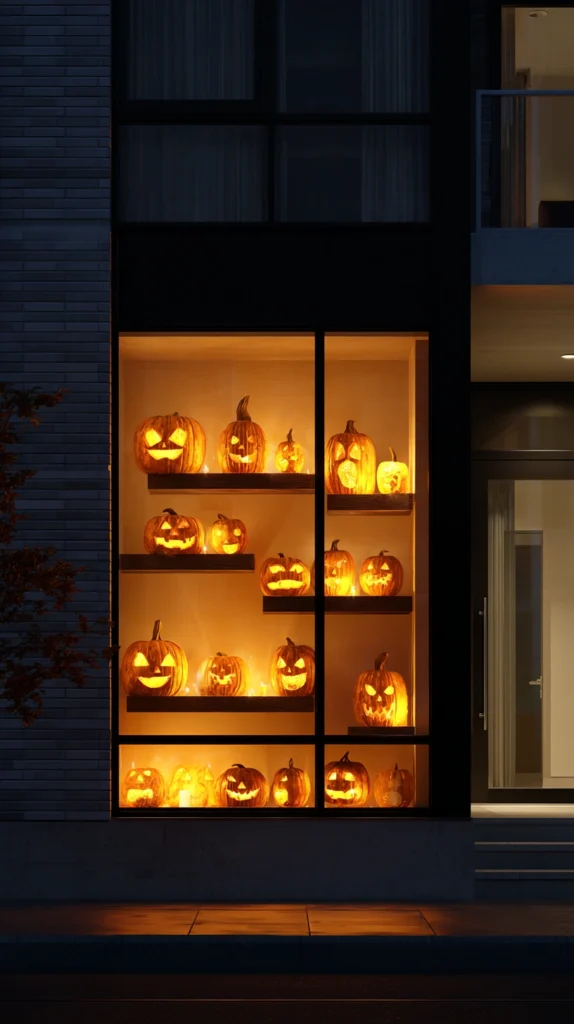
A cluster of illuminated jack-o’-lanterns, real or faux, positioned along the windowsill or on a tiered display within the window frame, providing a warm, classic glowing display.
Why an illuminated pumpkin display remains one of the most universally appealing options
Unlike some of the more overtly eerie displays on this list, a warmly glowing pumpkin patch reads as welcoming and classically festive, appealing to a broader range of neighbors including families with young children.
The pumpkins
A mix of real carved pumpkins and battery-operated faux versions, arranged at varying heights on a small tiered stand or simply clustered along the windowsill.
The lighting
LED tea lights or small battery-operated bulbs within each pumpkin, providing safe, consistent illumination without any open flame risk.
The carving variety
A range of carved expressions and patterns across the pumpkins, from classic jack-o’-lantern faces to more intricate carved designs, adding visual variety within the cohesive display.
The arrangement
Clustered with genuine height variation, some pumpkins elevated on small stands or books, rather than all placed at a single uniform level.
The overall effect
A warm, classic, widely appealing display, suited to a household wanting genuine Halloween festivity without leaning into the more overtly eerie or macabre themes elsewhere on this list.
Cost breakdown: Pumpkins (real and faux, assorted): $30–70 LED tea lights or bulbs: $15–30 Total: $45–100
15. The Complete Neighborhood-Wowing Window Display (The Fully Realized Scene)
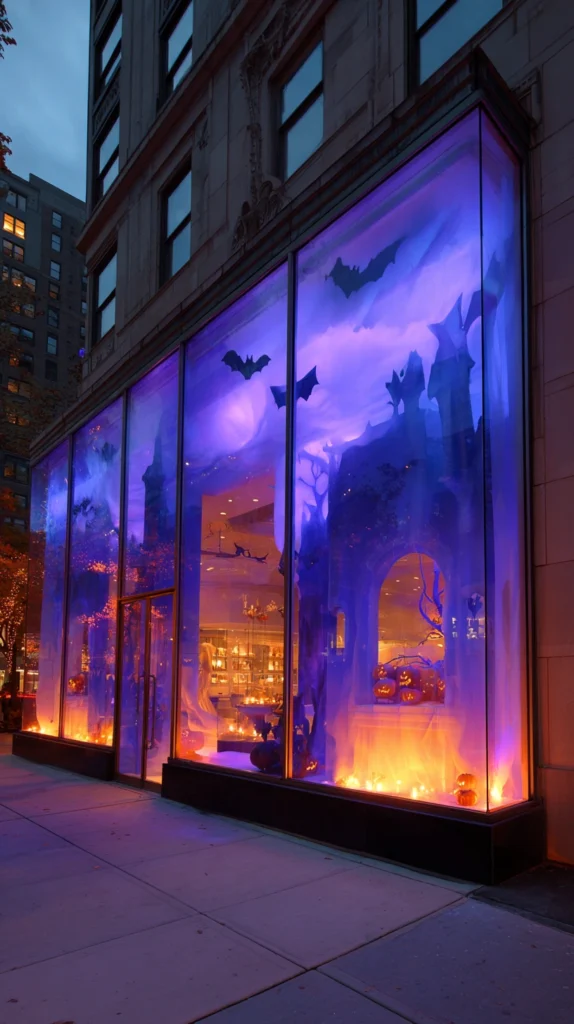
A complete window display combining several of the approaches above — layered depth, dramatic backlighting, a cohesive narrative scene, and genuine movement — treating the window as its own fully considered composition rather than a single technique applied in isolation.
What separates the complete display from a single silhouette or a string of candles
A single silhouette taped to an otherwise plain window: a good start. A complete neighborhood-wowing display: every element — depth, lighting, narrative, and movement — working together as one considered scene, visible and genuinely impressive from a real distance down the street.
The elements of the complete window display
The narrative core
A specific, cohesive scene — a witch’s kitchen, a laboratory, or a haunted gallery — giving the display genuine story rather than a scattered assortment of unrelated Halloween objects.
The depth layering
Elements positioned at varying distances from the glass, creating genuine dimension rather than a flat, single-plane arrangement.
The lighting
A deliberate color choice and backlighting technique, whether warm candlelight, an eerie green wash, or dramatic silhouette projection, establishing the scene’s overall mood.
The movement
Some element of genuine motion — a small fan animating fabric, a video projection, or flickering candlelight — distinguishing the display from a purely static arrangement.
The scale and composition
Objects and shapes scaled and arranged with genuine visual rhythm, following the same height-variation and compositional principles relevant to any well-designed display.
The complete design in action
A trick-or-treater’s approach down the street:
From a distance: The window’s distinctive glow and silhouettes already visible, standing out clearly among the row of houses.
Approaching closer: The specific narrative scene becoming apparent — a witch’s cauldron bubbling, ghostly figures shifting gently in the layered depth behind the glass.
Right at the window: The full composition’s detail rewarding a close look, the display having drawn attention from far away and held it up close.
The complete neighborhood-wowing display: not a single decoration pressed against the glass, but a genuinely considered scene using the window’s specific advantages — depth, backlighting, and framing — to stand out from every other house on the street.
Cost breakdown for the complete display: Assuming a starting point of a bare window: Narrative scene props: $60–150 Depth and layering elements: $40–100 Lighting (colored or dramatic): $30–60 Movement element (fan, projection, or candles): $30–150 Total: $160–460
Phased for planning purposes:
Two to three weeks before: Sourcing the core narrative props and testing the lighting setup
The week of: Full staging and depth arrangement, tested specifically after dark from the street
The night of: Final adjustments, movement elements activated, timers set for consistent evening operation
The neighborhood-wowing window display: not a last-minute string of lights, but a considered scene built specifically to be seen and remembered from the street.
The Question Before Any Window Display Decision
Before choosing a specific approach:
What is the primary mood wanted for this year’s display?
If the answer is: classic and universally appealing — the illuminated pumpkin patch or the flickering candlelight row.
If the answer is: genuinely eerie and unsettling — the haunted portrait gallery or the layered ghost display.
If the answer is: distinctive and different from the neighborhood’s usual displays — the mad scientist laboratory or the vintage carnival sideshow.
If the answer is: maximum visual impact from a distance — the silhouette cutout display or the bat swarm cluster, both relying on strong, simple, high-contrast shapes.
The design follows the specific mood and level of eeriness wanted, more than any single universal window display template. Every idea on this list achieves real neighborhood impact through a different combination of technique. The question is which specific mood and scene fit this household’s taste.
The single well-lit silhouette display: still reads clearly and dramatically from down the street. The complete, fully realized scene: a window that draws attention from a genuine distance and rewards close inspection once trick-or-treaters actually arrive.
That sustained impact from every distance: the whole point of treating the window as its own considered design opportunity.
Getting Started This Weekend
The immediate wowing window display solution:
Test the display after dark from the actual street, not just from inside the room.
The single most important check, since every technique on this list depends entirely on how it reads from a genuine viewing distance.
Start with a strong, simple silhouette and good backlighting before adding any additional elements.
The foundational technique most of the other ideas on this list build upon or complement.
Choose one specific narrative or mood, rather than combining several competing themes.
A witch’s kitchen and a mad scientist’s lab in the same window will likely undercut each other; commit to one cohesive scene.
Add one element of genuine movement, even something as simple as a small fan or a flickering candle.
The rest of the design: the elaboration of this moment.
The silhouette: the beginning. The neighborhood-wowing window: what gets staged, lit, and set in motion behind it.