

15 Hotel-Inspired Nightstand Styling Ideas
The nightstand changed how my whole bedroom felt more than any other single surface in the house. Not the new duvet. Not the upgraded mattress. Not the curtains or the headboard or the artwork above the bed.
The small table beside it.
Because a genuinely styled nightstand did something the rest of the room’s careful decorating never quite managed. Before it: a surface with a phone charger, a half-empty water glass, a stack of mail that migrated there and never left, and whatever book happened to be nearby. After it: a considered arrangement that looked, and felt, like checking into a genuinely nice hotel room, the whole bedroom elevated by that one small, well-tended surface.

A hotel-quality nightstand is not about owning more objects. It is a curation and habit exercise, borrowing the specific restraint and consistency hotels use because they have to manage hundreds of rooms the same way, and applying that same discipline to a single home nightstand. The surface: no longer a catch-all for whatever lands there, but a small, consistently maintained arrangement that makes the whole bedroom feel considered.
Here are 15 hotel-inspired nightstand styling ideas — from the simplest single-lamp reset to the most fully realized luxury hotel replica — built on that understanding.
Why Hotels Get Nightstand Styling Right and Most Homes Don’t
The reset principle
A hotel room’s nightstand looks the same every single day because housekeeping resets it daily, removing anything left out of place and restoring the same considered arrangement. A home nightstand, without that daily reset, tends to accumulate clutter that never gets addressed.
The restraint discipline
Without a hotel-style approach:
A nightstand holding whatever accumulates — chargers, receipts, old water glasses, a stack of unread mail — with no clear limit on what belongs there.
The surface: functional, but visually and mentally cluttered, working against the room’s overall sense of calm.
With a hotel-style approach:
A small, fixed set of items — a lamp, a carafe, one or two books, a single candle — with everything else regularly cleared away.
The surface: reading as considered and calm, precisely because of what has been deliberately left off it rather than what has been added.
The consistency case
Hotels succeed at this specific styling because the arrangement is genuinely consistent, night after night, rather than styled once for a photo and then left to accumulate clutter immediately afterward. The ongoing maintenance is as important as the initial setup.
The sensory layering
A well-styled hotel nightstand typically engages more than one sense — a candle’s scent, a small dish’s texture, the specific warm light of a bedside lamp — rather than relying purely on visual arrangement alone.
The Five Elements of Hotel-Quality Nightstand Styling
Before styling any specific nightstand:
The lamp
Warm, properly scaled bedside lighting, chosen deliberately rather than whatever lamp happened to be available.
The single most important functional and atmospheric element.
Sets the tone for the whole surface’s evening use.
The water service
A carafe and glass, or a simple water bottle, replacing a lone glass left out indefinitely.
One of hotels’ most consistently replicated details.
Addresses a genuine nightly need while looking considerably more considered than a bare glass.
A single curated stack
One or two books, kept current and neatly stacked, rather than an accumulating pile.
Reflects genuine, ongoing use rather than static decoration.
Requires regular editing to maintain.
A small tray or catchall
A defined spot for a phone, glasses, or jewelry removed before bed.
Contains small daily items to one specific zone rather than scattered across the whole surface.
One of the most practically useful additions on this list.
A sensory or personal touch
A candle, a small fresh flower, or a personal photo, adding one point of warmth beyond pure function.
The detail most responsible for the space feeling like a considered room rather than a hotel showroom.
Kept to one object, following the same restraint relevant to any well-composed small display.
1. The Warm Ceramic Lamp Reset
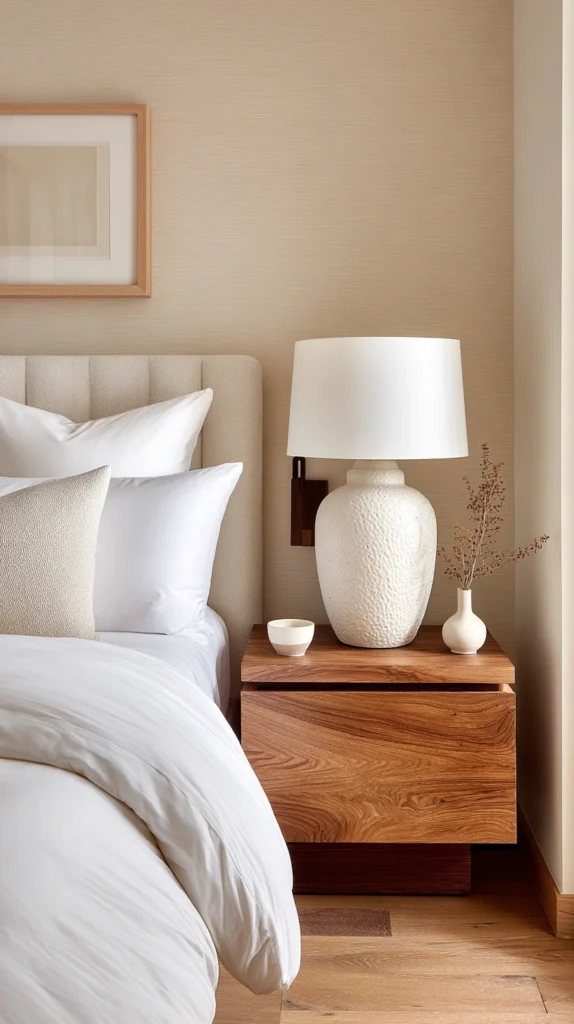
Replacing whatever lamp currently sits on the nightstand with a genuinely well-chosen ceramic or fabric-shaded lamp, providing warm, properly scaled evening light.
Why the lamp is the single highest-impact nightstand change available
A hotel room’s bedside lamp is almost always warm, properly scaled, and positioned specifically for reading in bed — a detail many home nightstands overlook in favor of whatever lamp was already on hand, regardless of its light quality or scale.
The lamp style
A ceramic or textured base with a fabric drum shade, providing warm, diffused light rather than a bare bulb or a harsh, overly bright fixture.
The bulb temperature
A warm bulb, rated 2700K or below, avoiding the cooler, more clinical light temperature common in many standard household bulbs.
The scale
Sized proportionally to the nightstand itself, avoiding a lamp too small to provide adequate reading light or so oversized it overwhelms the surface’s remaining space.
The switch accessibility
A lamp with an easily reachable switch, or one connected to a smart plug, allowing it to be turned off without requiring an awkward reach or a fumble in the dark.
The overall effect
A single change that immediately shifts the nightstand’s evening atmosphere, the warm, well-scaled light doing more to establish a hotel-quality feeling than almost any other individual element.
Cost breakdown: Ceramic or fabric-shaded lamp: $40–120 Total: $40–120
2. The Carafe and Glass Water Station
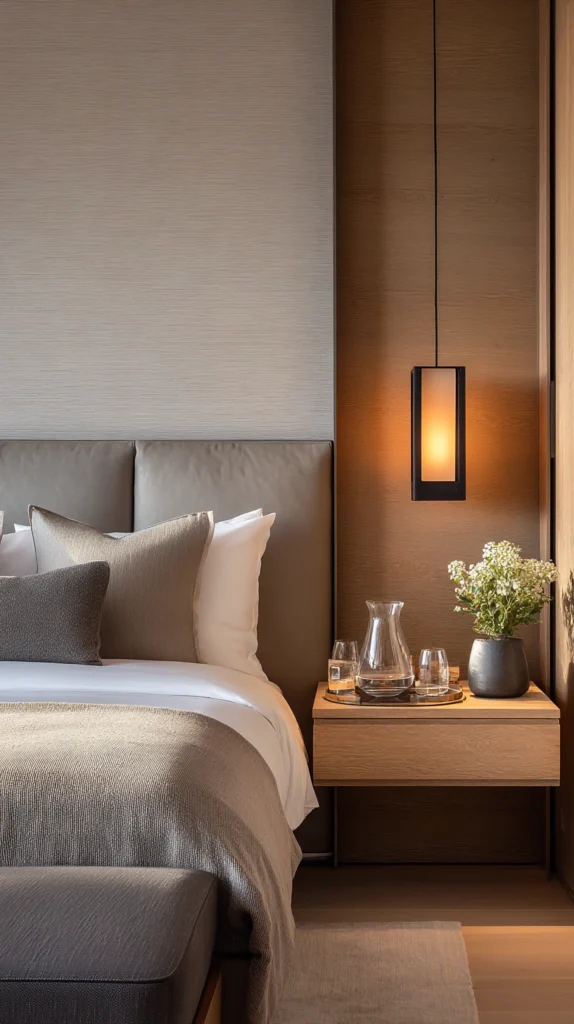
A glass carafe filled with water, paired with a single drinking glass, replacing a lone, half-used glass left indefinitely on the nightstand’s surface.
Why a carafe reads as considerably more elevated than a standalone glass
A carafe signals fresh water, replenished regularly, whereas a single glass left out night after night reads as exactly what it usually is — stagnant water nobody has thought to refresh.
The carafe
A simple glass carafe with a fitted glass or cork lid, sized modestly to suit the nightstand’s available space.
The glass
A single matching or complementary drinking glass, inverted over the carafe’s neck in the traditional hotel bedside service style, or placed simply beside it.
The refresh routine
Water changed nightly or every few days, maintaining the genuine freshness this detail depends on to feel considered rather than merely decorative.
The material choice
Clear glass, allowing the water itself to remain visible and clean-looking, rather than an opaque material that would obscure whether the water has actually been refreshed.
The overall effect
A small, low-cost addition that immediately signals nightly care and attention, addressing a genuine need — water within reach overnight — with considerably more polish than a bare glass alone.
Cost breakdown: Glass carafe and glass set: $20–45 Total: $20–45
3. The Curated Two-Book Stack
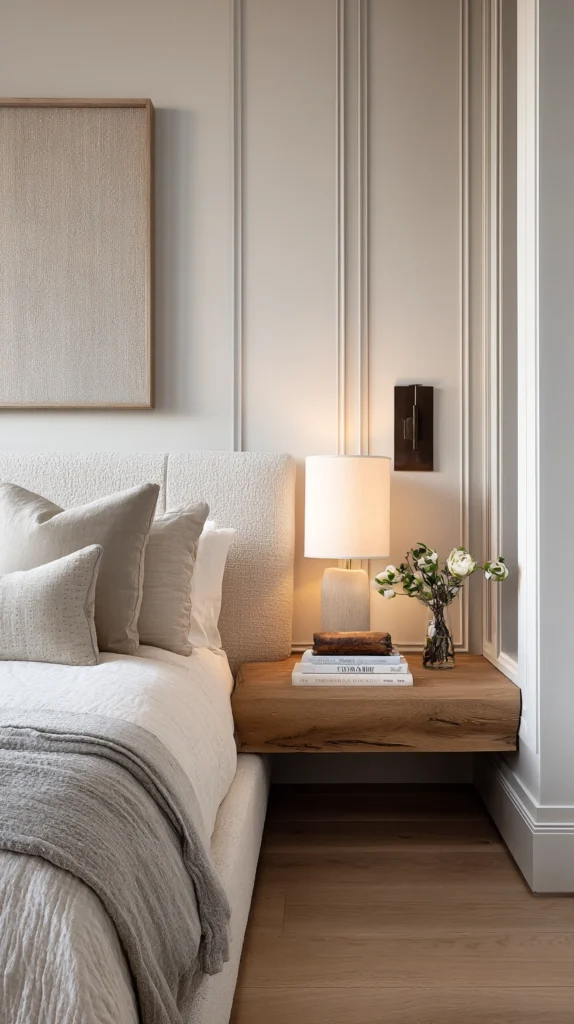
Exactly two books on the nightstand — one currently being read, one recently finished or next in line — rather than an accumulating pile of every book started and abandoned.
Why limiting the stack to two books matters more than the books themselves
A hotel nightstand, when it includes reading material at all, keeps it minimal and current. A home nightstand often accumulates a growing stack of half-read books, magazines, and unrelated papers that communicates clutter rather than genuine reading engagement.
The active book
The book genuinely being read currently, kept accessible and marked with a simple bookmark rather than left face-down and open, which can damage the spine over time.
The queued book
One additional book, either recently finished or next planned, providing a small sense of intention without allowing the stack to grow further.
The regular edit
A finished book removed and replaced promptly, rather than allowed to remain and begin a slow accumulation that eventually overwhelms the surface.
The stacking orientation
Books stacked horizontally rather than standing upright, providing a lower, more streamlined profile that a small hotel-style nightstand surface typically favors.
The overall effect
A detail that signals genuine, current reading engagement rather than a vague, guilt-inducing pile of good intentions, kept deliberately small through regular, ongoing editing.
Cost breakdown: No additional cost — an editing practice rather than a purchase Total: $0
4. The Small Catchall Tray for Daily Items
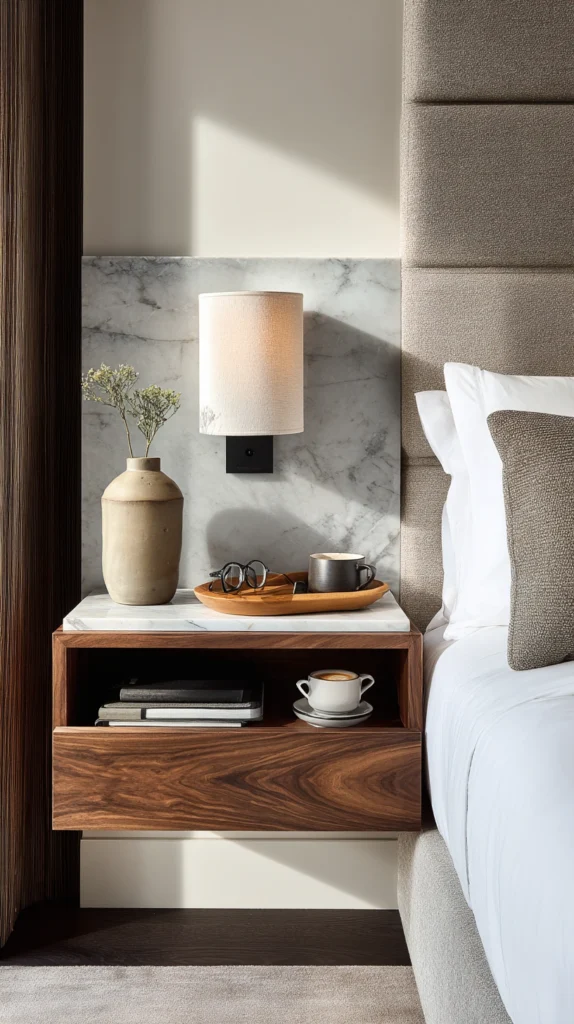
A small tray or dish specifically designated for a phone, glasses, or jewelry removed before bed, containing these daily items to one defined spot rather than scattered loosely across the nightstand’s surface.
Why a defined catchall spot prevents the most common source of nightstand clutter
Phones, glasses, watches, and jewelry removed before bed are among the most frequent culprits behind an otherwise well-styled nightstand slowly accumulating visual clutter. A small dedicated tray contains these items to one specific, visually intentional zone.
The tray or dish
A small ceramic, brass, or wood tray, sized for a phone and a few small items, positioned in a consistent spot on the nightstand each night.
The nightly habit
Items placed in the tray specifically, rather than set down wherever convenient, requiring a small but consistent behavioral shift alongside the physical addition of the tray itself.
The material choice
A material that complements the room’s broader palette, treating the tray as a genuine styling object in its own right rather than a purely utilitarian afterthought.
The size discipline
Kept small enough that it cannot become a larger catchall for miscellaneous clutter beyond its intended daily items, maintaining the same restraint principle relevant to the nightstand’s overall styling approach.
The overall effect
One of the most practically useful additions on this list, directly addressing the specific daily habit most responsible for undoing an otherwise well-styled nightstand.
Cost breakdown: Small tray or dish: $15–35 Total: $15–35
5. The Single Candle for Evening Ambiance
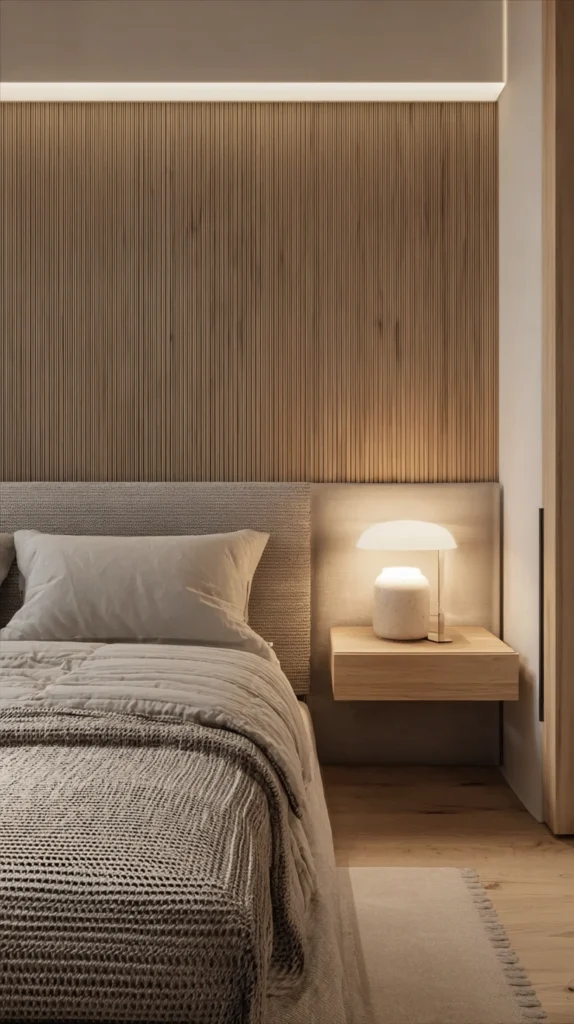
One quality candle, in a simple glass or ceramic vessel, positioned on the nightstand and lit during an evening wind-down routine.
Why a single candle adds a sensory dimension pure visual styling cannot replicate
Hotel rooms, particularly higher-end ones, often include a candle specifically for its scent and the ritual of lighting it, engaging a sense beyond sight alone and signaling a deliberate evening transition.
The candle
A single quality candle, in a scent genuinely enjoyed rather than an overpowering or mismatched fragrance, in a simple glass or ceramic vessel that complements the room’s palette.
The lighting ritual
Lit specifically as part of an evening wind-down routine, rather than left unlit and purely decorative, giving the object genuine function alongside its aesthetic contribution.
The safety consideration
Positioned with adequate clearance from any nearby books, curtains, or bedding, and never left burning unattended, a genuine practical consideration regardless of how considered the overall styling.
The scent restraint
One scent, used consistently, rather than several competing candles, avoiding an overwhelming or conflicting sensory experience in a small bedroom space.
The overall effect
A small addition that engages scent alongside sight, adding a genuine sensory dimension to the nightstand’s overall evening atmosphere.
Cost breakdown: Quality candle: $20–40 Total: $20–40
6. The Fresh Flower or Small Plant Accent
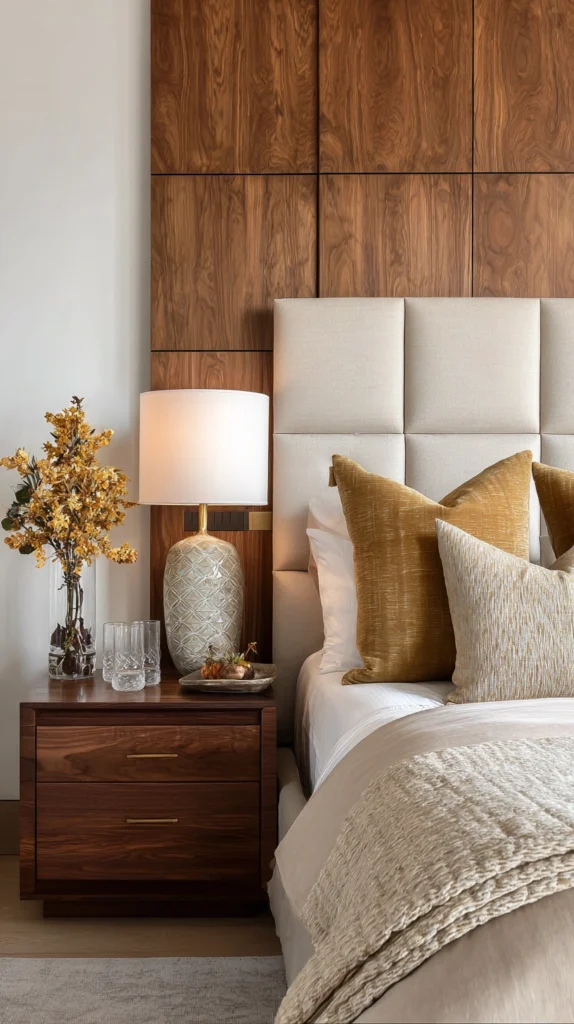
A single small vase with one or two fresh flower stems, or a small low-maintenance plant, adding a living element to the nightstand’s otherwise static arrangement.
Why a living element distinguishes a genuinely considered nightstand from a purely staged one
Fresh flowers or a living plant require ongoing care and replacement, signaling active, continued attention to the space rather than a one-time styling effort left untouched afterward.
The flower option
One or two stems in a small bud vase, replaced weekly or as they fade, rather than a larger, more elaborate arrangement that would consume more of the nightstand’s limited surface area.
The plant option
A small, low-maintenance plant — a mini succulent or a small trailing pothos cutting — for a lower-maintenance alternative to fresh cut flowers.
The scale restraint
Kept genuinely small, since the nightstand’s limited surface area cannot accommodate a substantial arrangement without crowding the other essential elements.
The replacement discipline
Fresh flowers replaced promptly once they fade, rather than left in place well past their best appearance, which would undercut the detail’s entire purpose.
The overall effect
A small living element that signals ongoing care and attention, distinguishing the nightstand from a purely static, one-time styled arrangement.
Cost breakdown: Small vase and fresh flower stems: $10–20 (recurring) Or small plant: $10–25 (one-time) Total: $10–25
7. The Matching Nightstand Pair for Shared Bedrooms
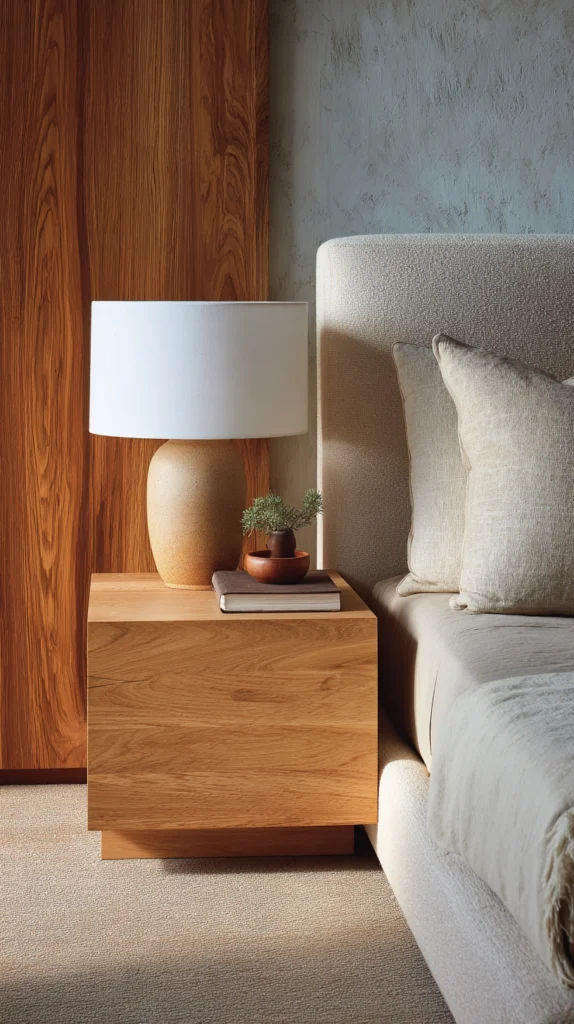
Two nightstands styled identically or with deliberately coordinated details, reinforcing the same symmetrical, considered arrangement found in most hotel rooms with two bedside tables.
Why symmetry matters specifically in a shared bedroom
Hotel rooms with two queen or king-adjacent nightstands almost always style them identically, creating an immediate sense of order and formal balance that a mismatched or unevenly styled pair does not achieve.
The matching approach
Identical lamps, carafes, and trays on both nightstands, providing the same considered symmetry a hotel room depends on for its overall polished appearance.
The personalization allowance
A small degree of individual variation permitted within the matched framework — different books, for instance — while the core styling elements (lamp, carafe, tray) remain consistent across both sides.
The maintenance consistency
Both nightstands reset and tidied with the same regularity, avoiding a scenario where one side maintains the hotel-quality standard while the other slides into clutter.
The furniture matching
The nightstands themselves ideally matching in style and finish, providing the foundational symmetry the rest of the styling then reinforces.
The overall effect
A bedroom that reads as genuinely considered and balanced from both sides of the bed, rather than one side clearly more curated than the other.
Cost breakdown: Matching lamps, carafes, and trays (per side): $75–200 Total: $150–400 for both nightstands
8. The Minimalist Single-Object Nightstand
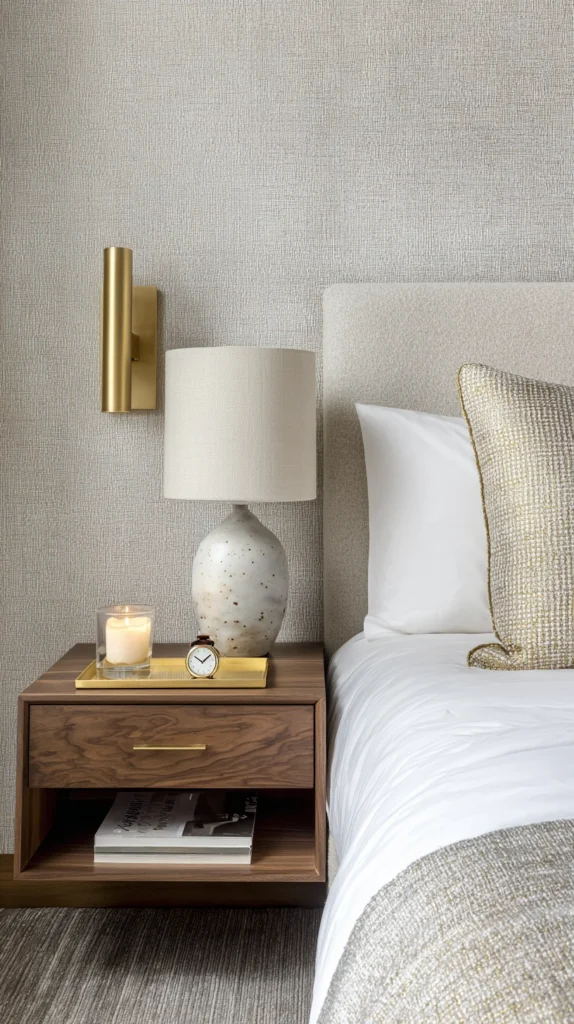
A nightstand styled with just one object beyond the lamp — a single book, a single candle, or a single small plant — embracing genuine minimalism over a fuller arrangement.
Why an extremely minimal approach can still read as hotel-quality
Some of the most luxurious hotel rooms favor genuine minimalism over a fuller styled arrangement, the restraint itself communicating confidence and calm rather than requiring a dense collection of objects to feel considered.
The lamp
The nightstand’s one non-negotiable functional element, chosen with the same care relevant to any hotel-quality lighting choice.
The single additional object
One book, one candle, or one small plant — and nothing else — embracing restraint as the styling’s defining feature rather than a stepping stone toward a fuller arrangement.
The empty space
Deliberate, generous negative space across the remainder of the nightstand’s surface, since this approach depends specifically on that emptiness to read as intentional minimalism rather than an underdeveloped, incomplete display.
The nightstand size consideration
Particularly well suited to a smaller nightstand, where a fuller arrangement might otherwise feel cramped or difficult to keep tidy.
The overall effect
A nightstand that achieves calm, hotel-quality restraint specifically through what has been left off it, suited to a household already leaning toward a broader minimalist aesthetic.
Cost breakdown: Lamp and single object: $50–140 Total: $50–140
9. The Brass Tray Ecosystem
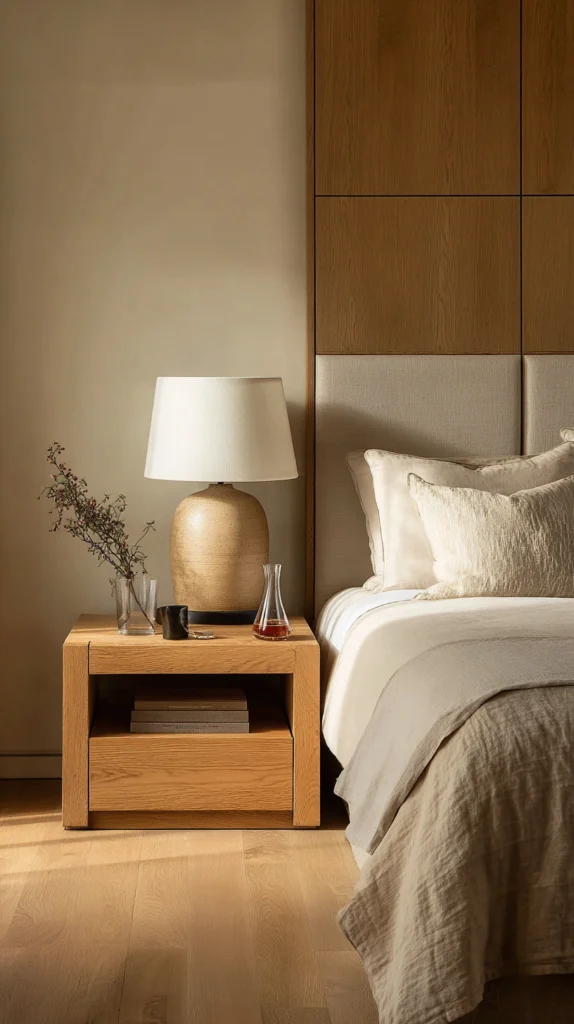
A single brass or metal tray holding several of the nightstand’s smaller elements together — a candle, a small dish, a tiny vase — corralling them into one cohesive, contained grouping.
Why a tray-based approach differs from simply placing objects directly on the nightstand
A tray gives several small objects a defined visual boundary, the same containment principle relevant to any well-styled surface, ensuring the various small items read as one considered grouping rather than scattered individually across the nightstand.
The tray
A brass, gold, or aged metal tray, sized to the nightstand’s available surface area, providing the base for the smaller styled elements.
The contained objects
A small candle, a tiny bud vase, and perhaps a small dish for jewelry, all grouped within the tray’s boundary rather than spread individually across the full nightstand surface.
The remaining nightstand space
The lamp and, if included, the water carafe positioned outside the tray, since these larger functional elements typically work better as their own distinct anchors rather than crowded within the smaller tray’s boundary.
The material coordination
The tray’s metal finish matched to the lamp’s hardware or other metal accents in the room, tying the styling together with a consistent material thread.
The overall effect
A nightstand where several small objects read as one cohesive, intentional grouping rather than individually scattered items, echoing the same containment principle valuable on any small styled surface.
Cost breakdown: Brass or metal tray: $15–35 Small contained objects: $25–60 Total: $40–95
10. The Fresh Linen and Textural Base Layer
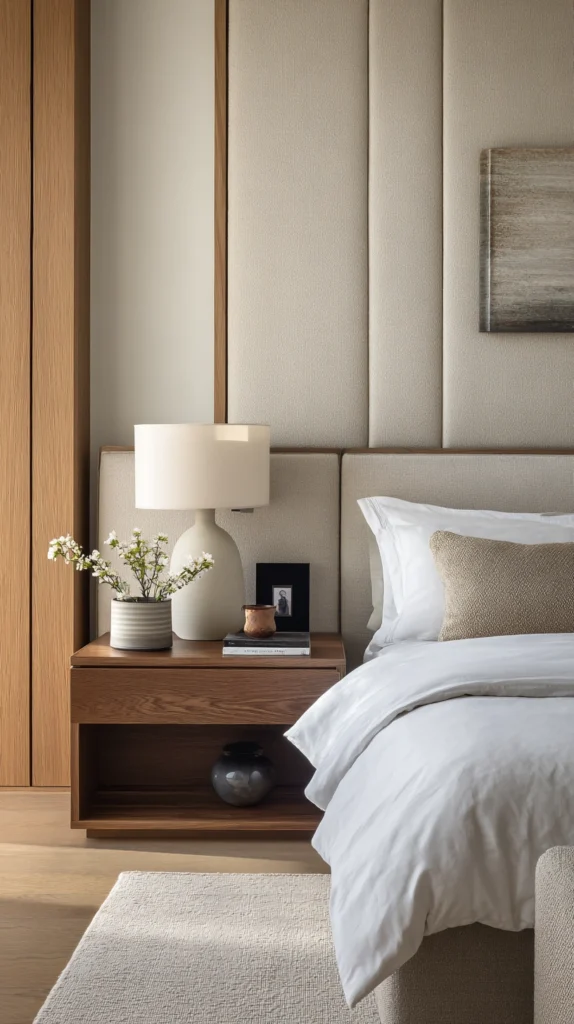
A small folded linen runner or a textured coaster beneath the nightstand’s key objects, adding a soft textile layer beneath the lamp, carafe, or tray.
Why a base textile layer adds a dimension purely object-based styling overlooks
Most nightstand styling focuses entirely on the objects placed on the surface, overlooking that a small textile layer beneath them — similar to a table runner on a dining table — adds texture and visual grounding many hotel rooms specifically include.
The runner or mat
A small linen runner or a woven placemat, sized to fit beneath the lamp and one or two other key objects, rather than covering the nightstand’s entire surface.
The material choice
Natural linen, cotton, or a woven natural fiber, adding soft texture that complements rather than competes with the harder surfaces of the lamp base, glass carafe, or metal tray.
The color coordination
A neutral or subtly patterned textile that ties into the room’s broader color palette, rather than an unrelated, competing pattern or color.
The practical benefit
Also protecting the nightstand’s surface from water rings or minor scuffs, providing genuine function alongside the purely visual texture it adds.
The overall effect
A small textural layer that grounds the styled objects and adds a dimension many purely object-focused nightstand arrangements overlook entirely.
Cost breakdown: Small linen runner or woven mat: $15–35 Total: $15–35
11. The Personal Photo in a Considered Frame
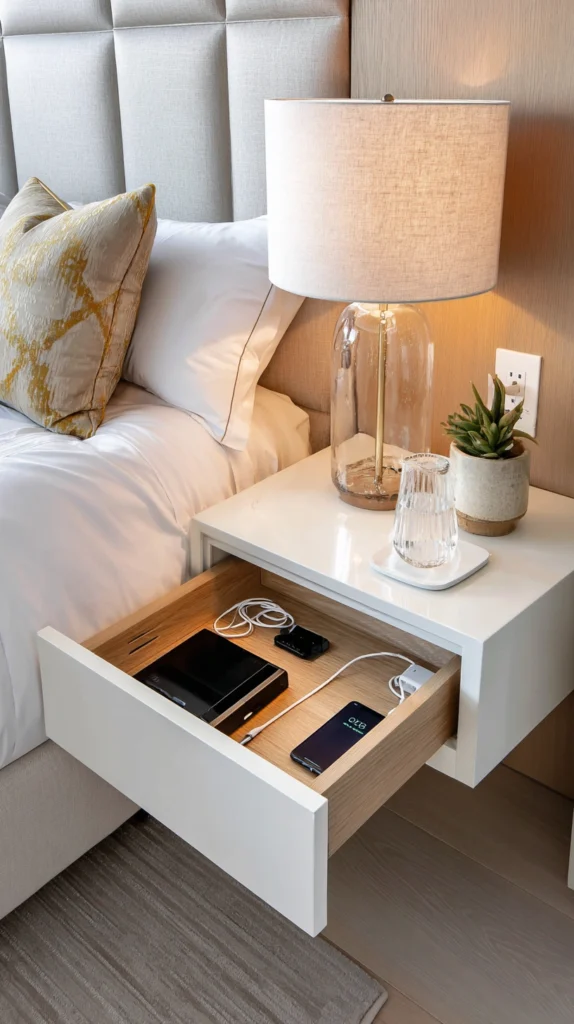
A single small framed photograph, chosen deliberately and framed well, adding one point of genuine personal warmth to an otherwise more neutral, hotel-inspired arrangement.
Why one photo differs from a nightstand crowded with several personal mementos
A single well-chosen, well-framed photograph adds personal warmth without undermining the overall hotel-quality restraint the rest of the styling depends on, whereas several competing personal items can quickly shift the surface back toward clutter.
The photo selection
One genuinely meaningful image, chosen deliberately rather than whatever photo happens to be printed or readily available.
The frame
A simple, quality frame — brass, dark wood, or a plain matte finish — complementing the room’s broader material palette rather than an ornate or mismatched frame style.
The placement
Positioned in a corner of the nightstand’s surface, small enough not to compete with the lamp or other functional elements for visual or physical space.
The restraint principle
Limited to one photo, maintaining the same disciplined approach relevant to every other element on this list, rather than a small gallery of multiple framed images crowding the limited surface.
The overall effect
A single point of genuine personal connection within an otherwise more neutral, hotel-inspired arrangement, adding warmth without undoing the overall sense of considered restraint.
Cost breakdown: Small quality frame: $15–35 Total: $15–35
12. The Hidden Charging Station Drawer
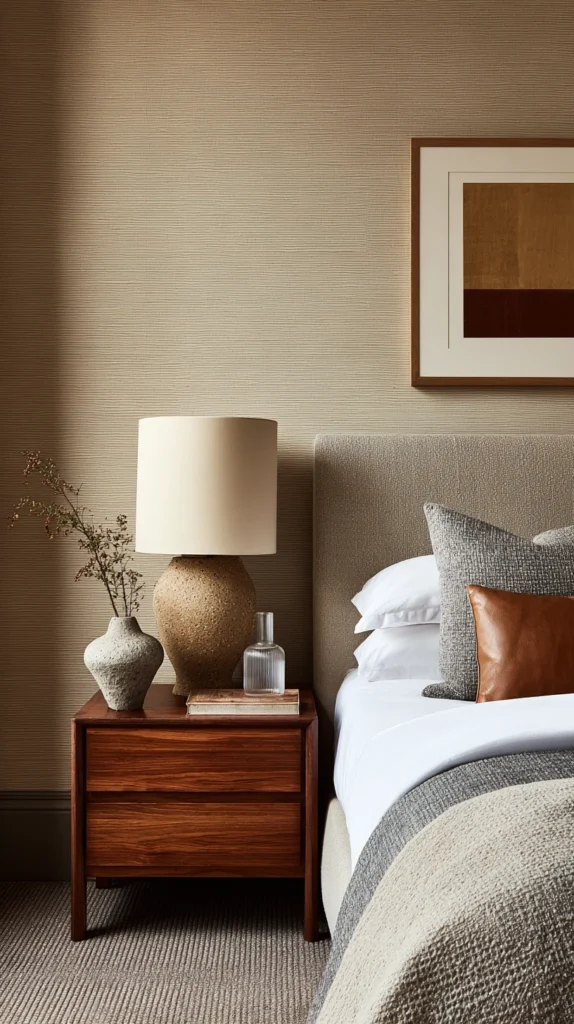
A charging cable and small power bank routed discreetly into the nightstand’s drawer, keeping the phone charging overnight without a visible cord and charger cluttering the surface itself.
Why concealing the charging setup addresses one of the most common nightstand clutter sources
Phone chargers and their cords are among the most visually disruptive items on a typical home nightstand, precisely the kind of clutter a hotel room’s styling avoids by either concealing charging stations or providing built-in, discreet options.
The drawer routing
A small hole drilled in the back of the drawer, or the cord simply routed through a slightly open drawer, allowing the phone to charge inside the drawer itself rather than visibly on the surface.
The cord management
A cord clip or small organizer keeping the charging cable tidy within the drawer, rather than a tangled mess each time the drawer opens.
The overnight routine
The phone placed in the drawer to charge before bed, rather than left charging visibly on the nightstand surface, directly addressing one of the most common sources of nightstand clutter.
The built-in alternative
Some furniture pieces now include a built-in charging pad or port specifically designed for this purpose, worth considering if purchasing new nightstand furniture rather than retrofitting an existing piece.
The overall effect
A nightstand surface free of visible cords and chargers, addressing one of the most persistent clutter sources through concealment rather than requiring the household to simply stop charging devices overnight.
Cost breakdown: Cord organizer or drill modification: $10–25 Total: $10–25
13. The Seasonal Rotating Accent
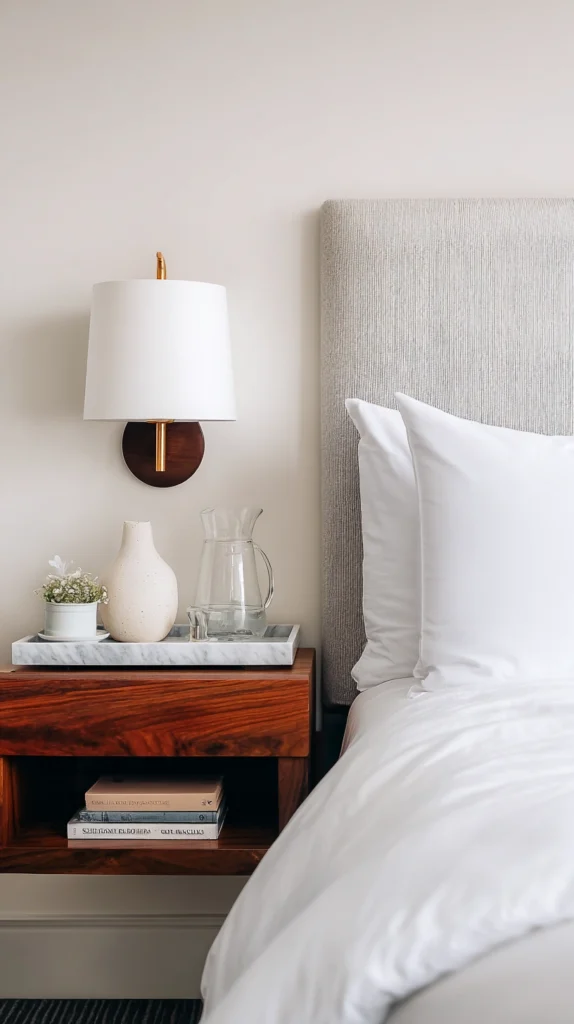
A single small seasonal object — a sprig of greenery in winter, a small dried flower in fall — swapped periodically, while the nightstand’s core elements (lamp, carafe, tray) remain constant.
Why isolating seasonal change to one small accent keeps the nightstand feeling current without full restyling
Similar to the seasonal rotation principle relevant to a bathroom vanity tray, designating one small nightstand accent for seasonal change lets the rest of the surface remain stable while still providing periodic visual freshness.
The constant base
The lamp, carafe, and tray remaining the same throughout the year, providing consistency across every seasonal rotation.
The seasonal accent
One small object specifically swapped with the season — a small pumpkin in fall, a sprig of holly in winter, a fresh flower in spring — kept to a single small addition rather than a full seasonal overhaul.
The consistency of restraint
The same minimal, considered styling principles applied regardless of the season, ensuring each seasonal version remains equally well-composed.
The low-effort refresh
A meaningfully lower-effort way to keep the nightstand feeling current than restyling the entire arrangement each season, isolating that change to one small, manageable element.
The overall value
A nightstand that feels attended to and seasonally aware without requiring disproportionate effort relative to its small size.
Cost breakdown: Seasonal accent (per season): $5–15 Total: $5–15 per seasonal refresh
14. The Nightly Reset Routine
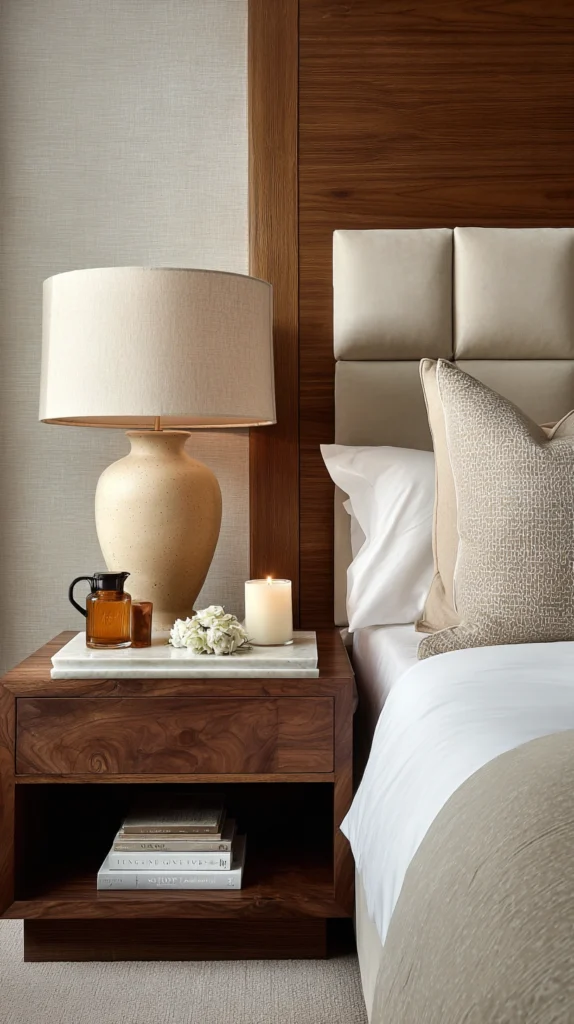
A specific, repeated evening habit of clearing the nightstand’s surface, wiping it down, and returning only the designated hotel-style items to their place, replicating the housekeeping reset a hotel room receives daily.
Why the routine itself matters as much as any single object added to the surface
Every idea on this list depends on ongoing maintenance to remain effective. Without a genuine nightly reset habit, even the most carefully chosen objects will eventually be buried under accumulating daily clutter, just as they would without regular attention in any home.
The reset process
Each evening, everything not part of the designated arrangement removed and returned to its proper place elsewhere in the home, followed by a quick wipe of the nightstand’s surface.
The designated items
Only the specifically chosen hotel-style elements — lamp, carafe, tray, book, candle — returned to the surface, rather than allowing new, undesignated items to accumulate.
The consistency requirement
Performed nightly, or at minimum every few days, since infrequent resets allow clutter to accumulate to a point where the full effort required to address it becomes a genuine deterrent to maintaining the habit at all.
The mental benefit
A calm, cleared nightstand as one of the last things seen before sleep, a genuine wellbeing benefit alongside the purely aesthetic one, reinforcing the routine’s value beyond pure visual styling.
The overall value
The single practice most responsible for whether any of the other fourteen ideas on this list actually succeed in the long term, rather than looking good for one initial styling session before reverting to clutter.
Cost breakdown: No cost — a habit rather than a purchase Total: $0
15. The Complete Hotel-Quality Nightstand (The Fully Realized Bedside Surface)
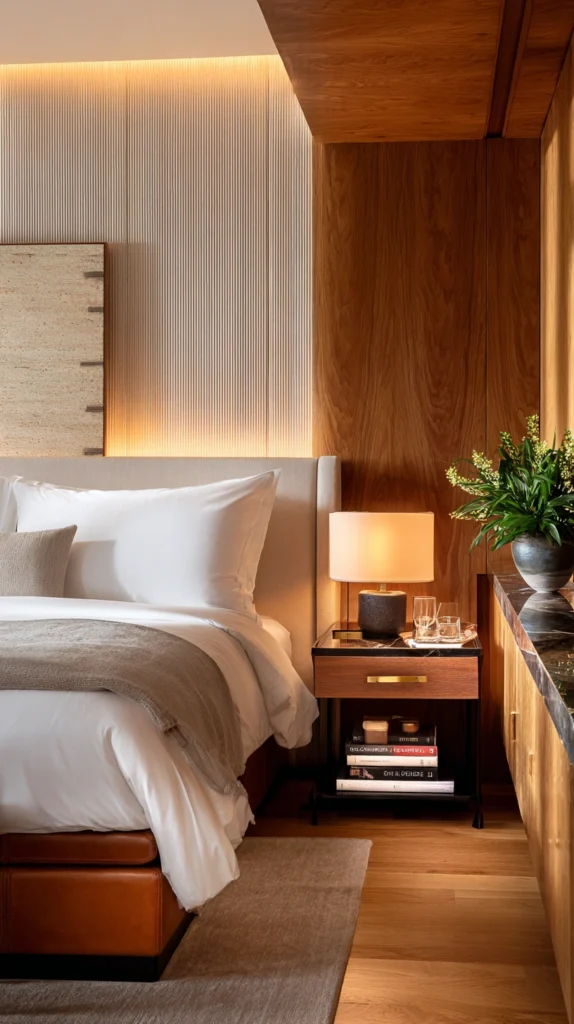
A complete nightstand combining several of the approaches above — a warm lamp, a water carafe, a curated book stack, a small catchall tray, and a nightly reset habit — treating the surface as a consistently maintained small composition rather than a one-time styling effort.
What separates the complete hotel-quality nightstand from a single nice lamp
A single nice lamp on an otherwise cluttered surface: a modest improvement. A complete hotel-quality nightstand: every element — lighting, water, reading material, small item containment, and a genuine sensory touch — working together, and just as importantly, maintained consistently through an actual nightly routine.
The elements of the complete hotel-quality nightstand
The lighting
A warm, properly scaled lamp, providing both function and evening atmosphere.
The water service
A carafe and glass, refreshed regularly, addressing a genuine overnight need with real polish.
The curated reading material
A maximum of two books, actively read and regularly rotated rather than accumulated.
The containment
A small tray or dish for daily items like a phone or glasses, preventing the most common source of surface clutter.
The sensory touch
A single candle, fresh flower, or personal photo, adding warmth beyond pure function.
The maintenance habit
A genuine nightly reset routine, the practice ultimately responsible for whether the rest of the styling holds up over time.
The complete design in action
An ordinary evening:
Getting ready for bed: The lamp switched on, its warm light the room’s primary source as the overhead light goes off.
Settling in: A glass poured from the freshly filled carafe, the current book picked up from its small, tidy stack.
Before sleep: The phone placed in its designated tray, or tucked into the drawer to charge out of sight.
The next morning: The surface still calm and considered, having accumulated nothing overnight beyond what the routine allows.
The complete hotel-quality nightstand: not a surface styled once for a single impressive evening, but a small, consistently maintained arrangement that makes the whole bedroom feel like a considered retreat, night after night.
Cost breakdown for the complete nightstand: Assuming a starting point of an unstyled, cluttered surface: Lamp: $40–120 Carafe and glass: $20–45 Small tray: $15–35 Candle or sensory accent: $10–40 Total: $85–240
Phased for a gradual approach:
Immediate: The lamp and a genuine clearing of the existing clutter, the foundational reset
Following days: The carafe, tray, and curated book stack
Ongoing: The nightly reset habit, the practice that determines whether everything else holds up over time
The complete hotel-quality nightstand: not a large investment, but a small, consistently maintained styling choice that changes how the entire bedroom feels every single night.
The Question Before Any Nightstand Styling Decision
Before adding a single object:
What is the primary problem the current nightstand actually has?
If the answer is: it has become a catch-all for whatever accumulates — start with a full clearing and the small catchall tray, addressing containment before anything else.
If the answer is: the lighting is harsh or poorly scaled — the warm ceramic lamp reset, likely the single highest-impact change available.
If the answer is: it looks fine but feels sterile or impersonal — the single personal photo or the fresh flower accent.
If the answer is: it looked great once but has slid back into clutter since — the nightly reset routine, the practice that determines whether any styling effort actually lasts.
The design follows the nightstand’s actual current problem, more than any single universal hotel-style formula. Every idea on this list solves a different specific issue undermining a considered bedside surface. The question is which particular problem matters most for this specific nightstand.
The single warm lamp and one nightly reset habit: still transforms how the whole bedroom feels every evening. The complete hotel-quality nightstand, styled and genuinely maintained: a small surface that makes the entire room feel like a considered retreat, night after night.
That nightly consistency: the whole point of styling a nightstand the way a hotel would.
Getting Started This Weekend
The immediate hotel-quality nightstand solution:
Clear the nightstand completely and see what has actually accumulated there.
The single most revealing first step, showing exactly what habits have been undoing the surface’s potential.
Swap in a warm-toned lamp if the current one is harsh or mismatched.
The change most responsible for shifting the surface’s overall evening atmosphere.
Add a small tray specifically for the phone and any nightly-removed items.
Addressing the most common source of ongoing clutter directly.
Commit to clearing the surface every single night this week, before assuming any object needs to be added.
The rest of the design: the elaboration of this moment.
The reset: the beginning. The hotel-quality nightstand: what gets maintained, night after night, beside it.