

15 Warm Minimalist Bedroom Ideas That Don’t Feel Empty or Boring
Minimalism has an image problem in the bedroom. The word conjures a specific aesthetic that many people find genuinely beautiful in photographs and genuinely uncomfortable in practice — the stark white room with the platform bed and the single carefully placed object on an otherwise bare surface, the space that looks serene in a magazine and feels cold, clinical, and slightly inhospitable to actually sleep in.

The failure of this version of minimalism is not minimalism’s fault but the fault of a misunderstanding about what the style actually requires — the assumption that minimalism is about absence, about reduction for its own sake, about the removal of everything warm and personal and human from a space in pursuit of a visual ideal that has nothing to do with genuine comfort or genuine rest.
Warm minimalism is the corrective — the version of the aesthetic that understands reduction not as the elimination of warmth but as the distillation of it, that uses fewer objects and simpler forms precisely so that the quality of each material, each texture, and each surface can be fully experienced without competition or visual noise.
The warm minimalist bedroom is the room where nothing is missing but nothing is excessive — where the eye moves through the space and finds genuine beauty at every point without ever finding clutter, chaos, or the accumulated evidence of indecision. These fifteen ideas demonstrate exactly how to build that room.
1. Start With a Warm White Rather Than a Cool One
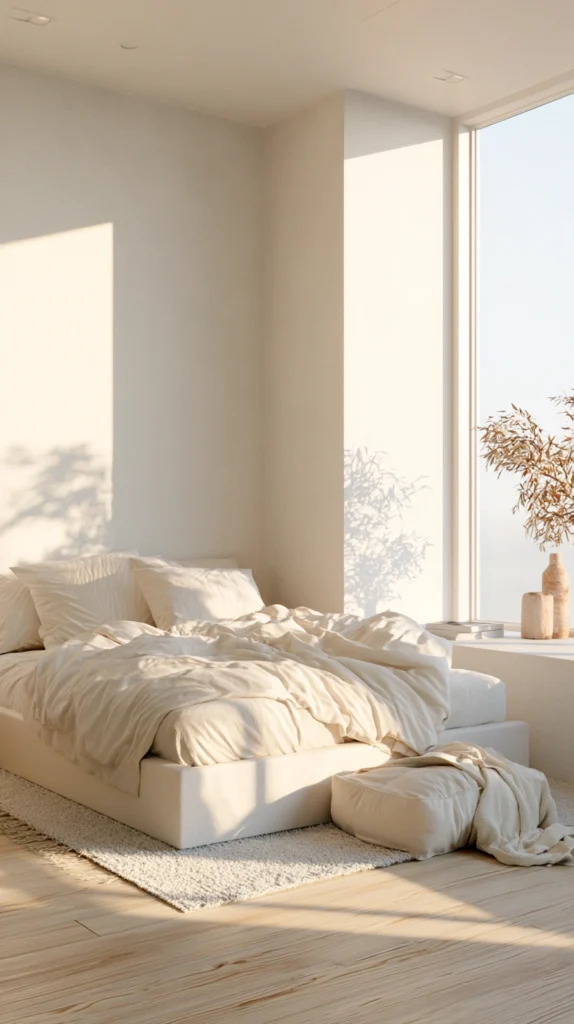
The foundation of every warm minimalist bedroom is the wall colour — and the distinction between warm white and cool white is the single most consequential colour decision the room contains, because it determines whether every surface, every textile, and every material in the room reads as warm and inviting or cool and clinical.
Warm white — with its underlying tones of yellow, pink, or the very faintest terracotta — absorbs and returns artificial and natural light in a quality of gentle warmth that makes the room feel genuinely comfortable at every hour.
Cool white — blue or grey-toned — does precisely the opposite, making the same room feel harsher, more institutional, and less restful regardless of the quality of the materials surrounding it. Farrow and Ball’s All White, Dulux Natural White, or any white with a confirmed warm undertone tested on the actual wall surface in the actual room’s light before full application: the right warm white is the foundation on which every subsequent warm minimalist decision rests.
2. Choose a Bed Frame in Natural Timber or Rattan
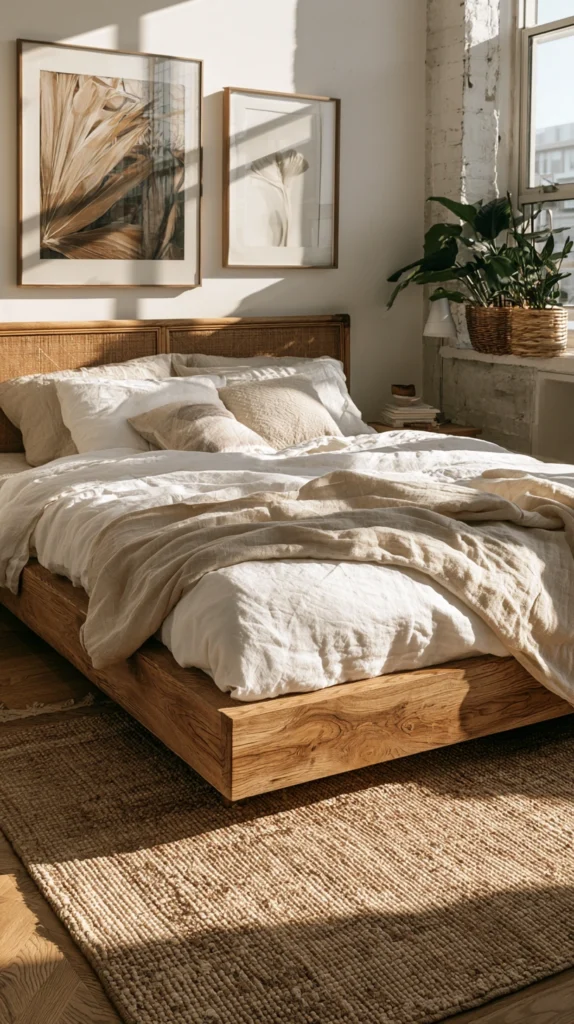
The bed frame in a warm minimalist bedroom carries more visual weight than any other piece of furniture in the room — it occupies the most floor space, it commands the most immediate attention on entry, and it sets the material register for every other furniture and textile decision in the space.
Natural timber — pale oak, walnut, or ash in a simple platform or low-profile frame with clean lines and no decorative detail beyond honest joinery — creates the warm material character that distinguishes warm minimalism from cold minimalism with a single furniture decision.
A rattan bed frame in a natural or lightly lacquered finish adds woven texture and organic warmth to the same visual simplicity, connecting the bedroom to the coastal and Californian minimalist tradition that handles warm minimalism most naturally and most beautifully.
Keep the frame profile low and the design genuinely simple — ornamentation is the enemy of the warm minimalist bedroom, and the frame that earns its visual presence through material quality and honest proportion rather than through decorative detail is always the correct choice.
3. Layer Natural Fibre Bedding in Tonal Variations
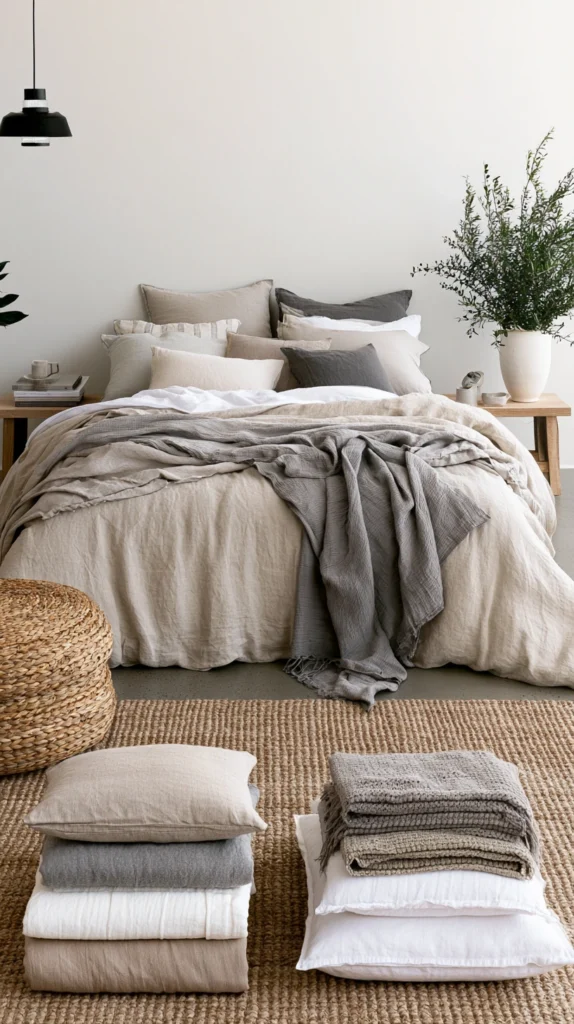
The bedding in a warm minimalist bedroom is not simple — it is tonally layered, texturally varied, and generously proportioned in a way that creates visual richness and genuine physical comfort without introducing colour complexity or pattern that would contradict the room’s essential calm.
Start with a washed linen fitted sheet in warm white. Add a cotton or linen duvet cover in the same tone or the very faintest step toward natural oatmeal. Layer a waffle-weave cotton blanket in a slightly warmer tone — cream, pale camel, or the softest warm grey. Fold a chunky wool or cotton throw in a deeper accent tone — warm terracotta, dusty sage, or camel — across the lower third of the bed.
The tonal layering creates the visual depth and the genuine textural richness that prevents the warm minimalist bedroom from reading as simply bare — the bed becomes the room’s primary textile composition, and its depth of material and tonal variation is sufficient visual interest for the entire space.
4. Use a Single Statement Textile as the Room’s Accent
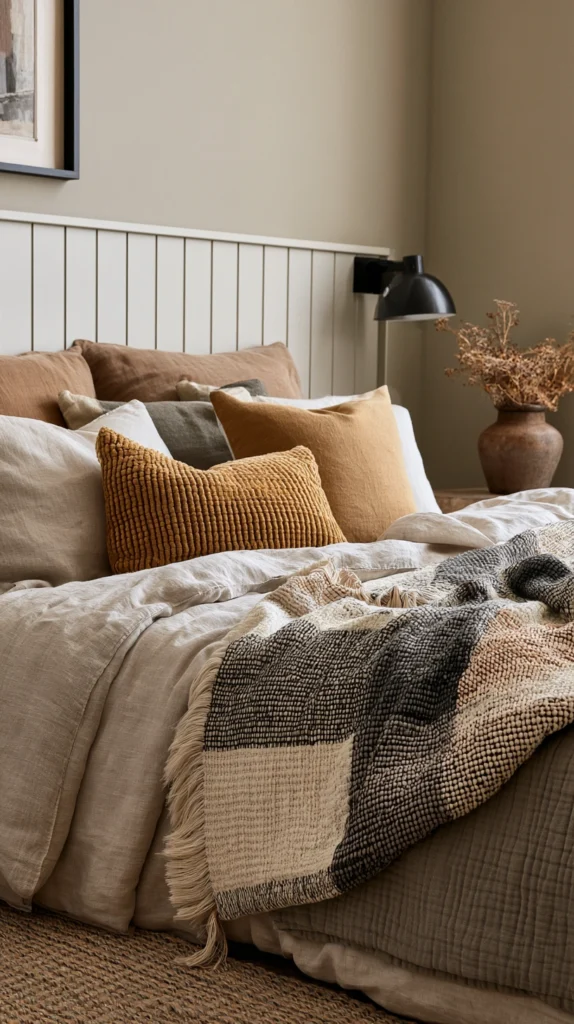
The warm minimalist bedroom that risks feeling empty and boring is the one that has been edited to the point where every surface is equally neutral and equally undemanding — where the eye moves through the space and finds nothing to rest on, nothing of particular warmth or interest or character.
The solution is not to add more objects but to introduce one textile of genuine visual presence — a throw in a richly textured boucle, a cushion in a deeply toned linen, a rug in a warm-toned Oushak or simple geometric pattern — that provides the room’s single accent moment and draws the eye with enough warmth and enough character to satisfy the room’s need for visual interest without introducing complexity or clutter.
The single accent textile is the warm minimalist bedroom’s most important decorative decision precisely because it is the only one — it carries the full weight of the room’s personality and should be chosen with corresponding care and corresponding confidence.
5. Install Wall-Mounted Bedside Sconces
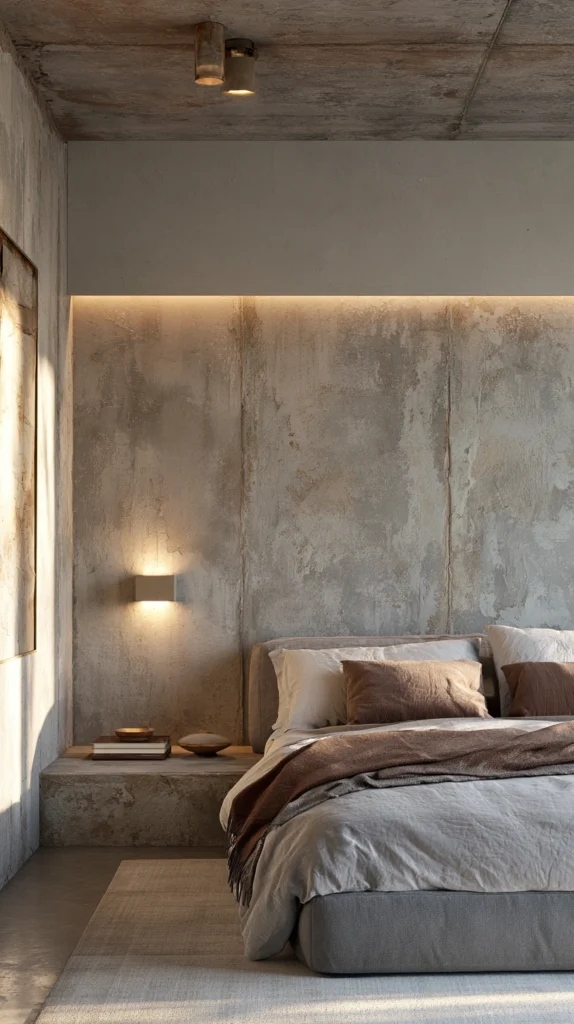
Wall-mounted bedside sconces — replacing the table lamps that would otherwise occupy the bedside surface with fixtures that deliver warm, directed light at reading height from the wall surface above the bedside table — are the lighting decision that most completely transforms the warm minimalist bedroom’s visual composition by freeing the bedside table surface from the occupation of lamp bases and shades.
The bedside table edited to a single object — a small ceramic vessel, a glass of water, a book — is a composition of genuine minimalist beauty, and that composition is only achievable when the light source has been removed from the surface and mounted where it belongs: on the wall, at the correct height, in a finish and a form that contribute to the room’s warm material palette rather than interrupting it.
Choose sconces in aged brass, matte black, or a simple ceramic body in a warm tone, and fit with bulbs between 2200K and 2700K for the amber-warm quality of light that the warm minimalist bedroom requires at every hour of the evening.
6. Bring in One Large Architectural Plant
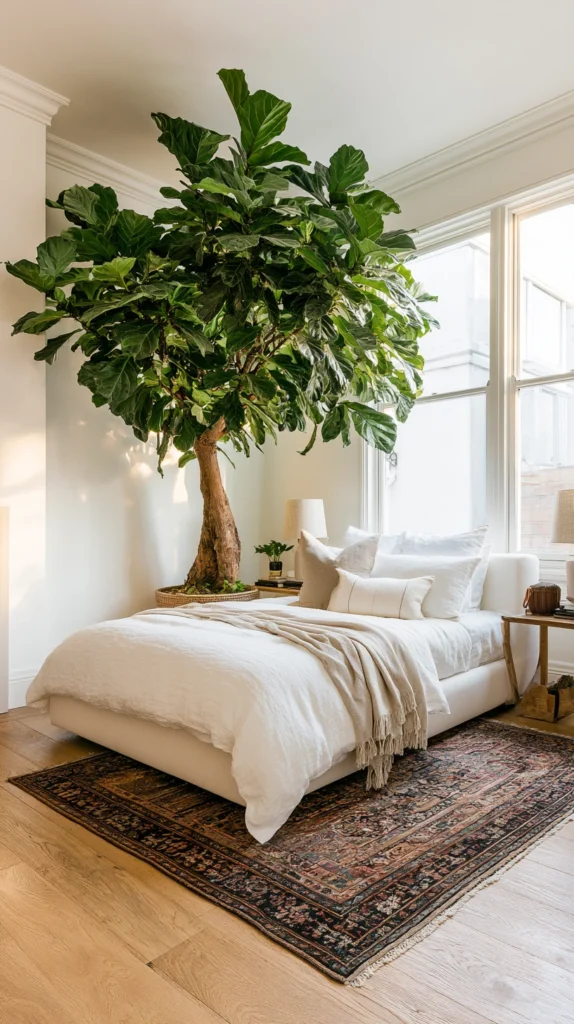
A single large, well-chosen plant — positioned with deliberate intention at the room’s most visible corner, its scale significant enough to register as a genuine architectural presence rather than a small decorative gesture — is the warm minimalist bedroom’s most effective antidote to the emptiness that excessive editing can create, bringing organic life, natural warmth, and the particular quality of vitality that no object, however beautiful, can substitute for.
The key decisions are scale and placement: the plant should be large enough to occupy its corner with genuine authority — a tall fiddle-leaf fig, a mature monstera with leaves of genuine size, a slim olive tree in a ceramic pot — and positioned where it is the first thing seen on entry to the room rather than tucked into a peripheral corner where it reads as an afterthought.
Keep the pot simple — unglazed terracotta, plain white ceramic, or natural rattan — and the surrounding floor area completely clear so the plant reads as a deliberate focal point rather than one element among many competing for the same visual territory.
7. Choose Flooring in Pale Timber or Natural Stone
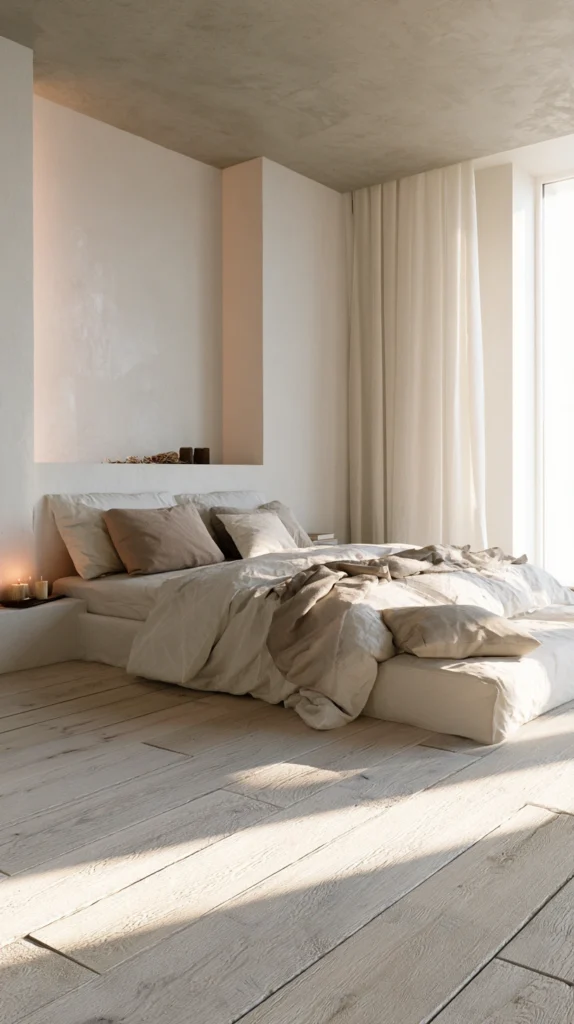
The floor of a warm minimalist bedroom should be pale — light enough to reflect available light upward and distribute it through the room’s lower half, warm enough in tone to contribute to the room’s overall warmth rather than cooling it with the grey or blue undertones that characterise many contemporary floor finishes. Wide-plank pale oak, whitewashed ash, or naturally aged pine: timber flooring in any of these species and finishes creates the warm, pale floor surface that anchors the warm minimalist bedroom with material honesty and genuine natural beauty.
Honed limestone or travertine in a warm buff or honey tone serves the same function in floor materials, adding the particular quality of natural stone — cool to the touch, warm in visual tone, developing character and patina with age — that connects the bedroom to the Mediterranean and Californian minimalist traditions most naturally. Keep the floor largely uncovered — a single natural fibre rug beside the bed is sufficient — so the pale floor surface can do its reflective work without interruption.
8. Edit the Bedside Table to Its Absolute Minimum
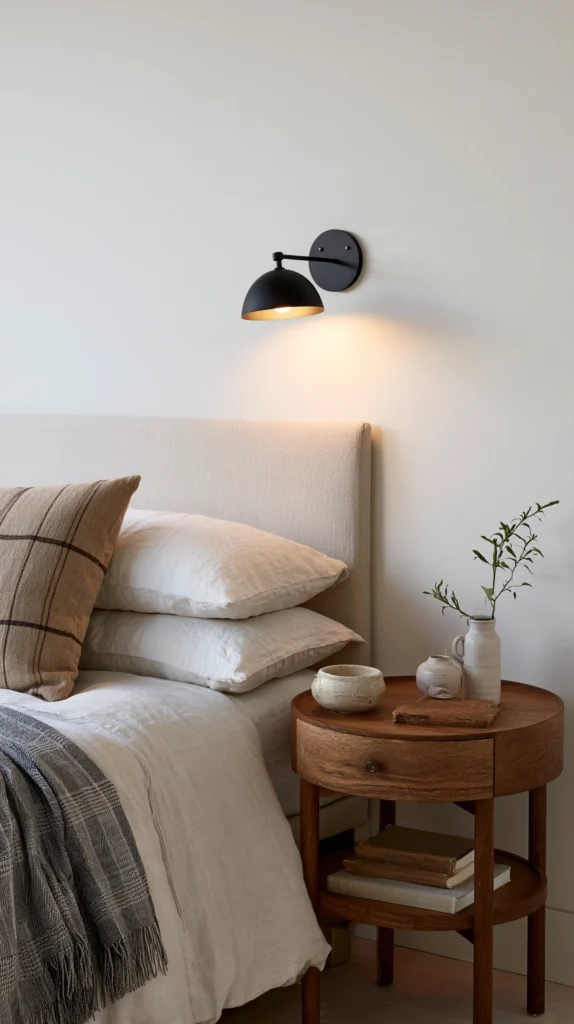
The bedside table in a warm minimalist bedroom is a surface of profound design significance — not because of what is on it but because of how little is on it, because the discipline required to maintain it at near-emptiness day after day is the discipline that most directly and most visibly expresses the warm minimalist bedroom’s fundamental character. One small ceramic lamp or the wall sconce that replaced it.
One book — the one currently being read, not the stack of candidates. One small object of genuine beauty — a hand-thrown ceramic piece, a smooth stone, a simple vessel. Nothing else.
The bedside table edited to this degree of restraint requires genuine commitment and genuine daily discipline to maintain — the phone, the water glass, the charging cable, the second book, the hand cream that migrated from the bathroom: all of these must be returned to their proper locations or accommodated within the bedside table’s drawer rather than allowed to colonise the surface. The reward is a bedroom that looks, every morning, as if it was designed rather than simply slept in.
9. Use Curtains as the Room’s Primary Textural Statement
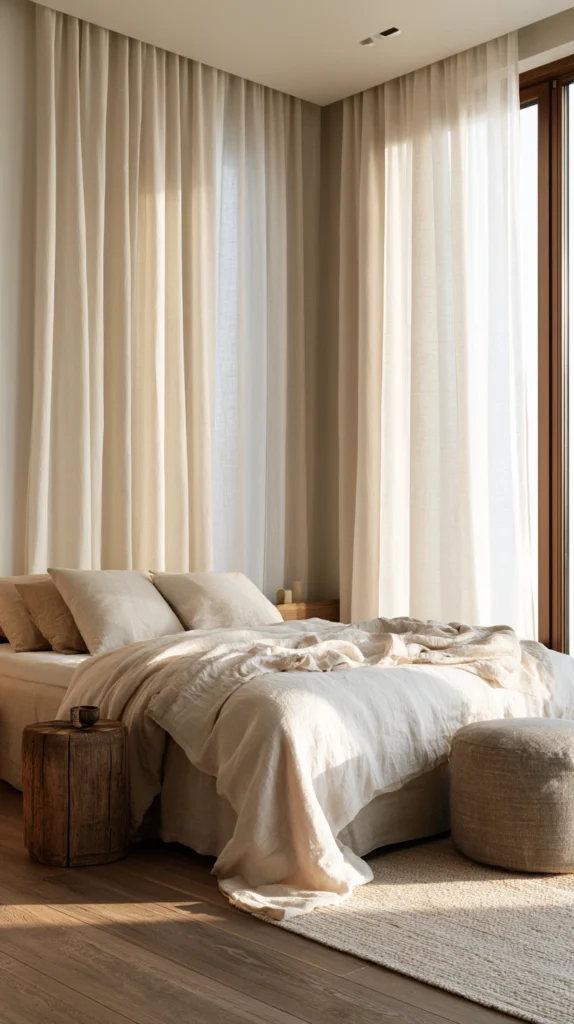
Floor-to-ceiling curtains in a heavyweight natural linen, a textured cotton velvet, or a loosely woven natural fibre — hung from ceiling height, falling to the floor in generous folds, in a warm neutral tone that deepens the room’s palette by one step from the wall colour — create the warm minimalist bedroom’s primary textural statement and its most dramatic single surface of textile richness.
The curtain’s scale — from ceiling to floor, across the full width of the window wall — gives it a visual presence and a spatial quality that no other textile element in the room can match, and the depth of texture in a quality heavy linen or textured cotton velvet creates visual richness that reads beautifully in both natural and artificial light.
Keep the curtain colour within the room’s tonal palette — warm white, natural, oatmeal, or the very palest terracotta — and allow the texture of the fabric rather than its colour to provide the surface’s visual interest.
10. Add a Low Timber Bench at the Foot of the Bed
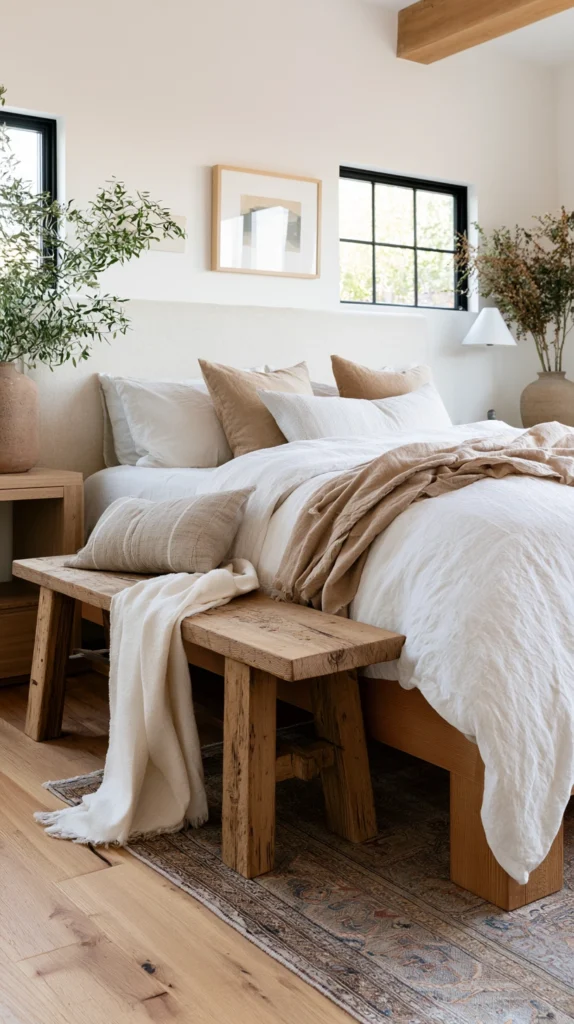
A low timber bench at the foot of the bed — simple in its construction, honest in its material, long enough to span the bed’s full width — creates a secondary piece of furniture that contributes warmth and material presence to the room without adding visual complexity, providing a surface for a folded throw, a pair of clothes, or a morning seat for putting on shoes that is both practically valuable and visually grounding.
The bench’s horizontal line at the foot of the bed creates a composed, anchored quality to the bedroom’s primary furniture arrangement — the bed and the bench reading as a single designed composition rather than a floating mattress with nothing to resolve its lower visual edge.
Choose a bench in the same timber species as the bed frame for material consistency, or in a contrasting natural material — rattan, stone, or painted timber — if the contrast adds warmth and textural interest rather than visual competition.
11. Introduce Warmth Through Ceramic and Clay Objects
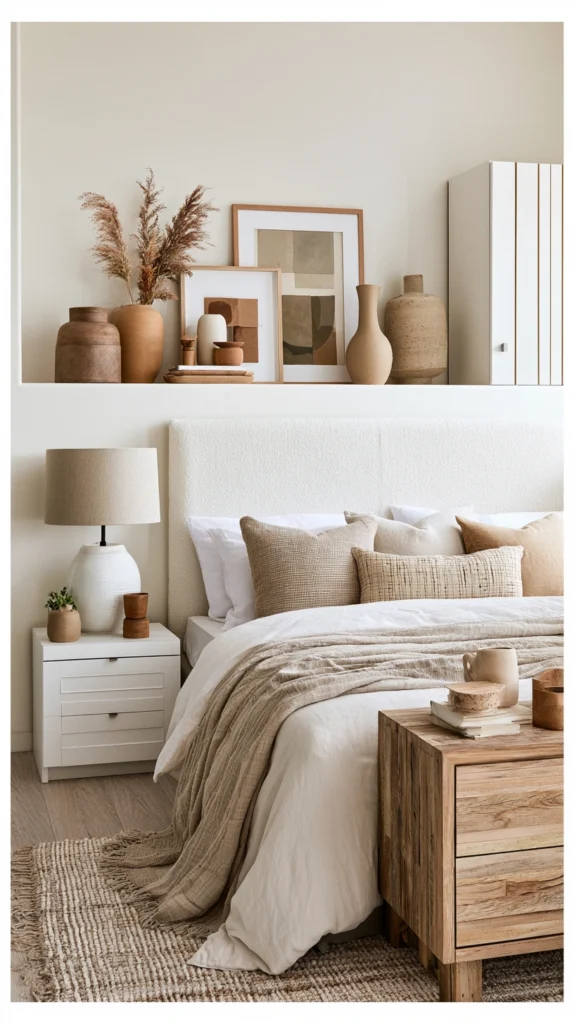
Handmade ceramics and clay objects — a hand-thrown vessel on the bedside table, a ceramic lamp base on the dresser, a small sculptural object on the windowsill — are the warm minimalist bedroom’s most effective decorative category because they carry the warmth of handcraft and the natural beauty of earth materials in objects of sufficient restraint and sufficient simplicity to belong in a minimalist context without contradicting it.
The ceramic object in a warm earth tone — terracotta, dusty rose, warm ochre, sage green — introduces colour, texture, and the evidence of human making into a room that might otherwise feel too uniform and too controlled to feel genuinely warm.
Limit the ceramic objects to three or four total throughout the entire room, distribute them between the two or three surfaces that are designed to receive them — the bedside table, the dresser top, the windowsill — and choose each one for its individual beauty and its contribution to the room’s material palette rather than for matching or thematic coherence.
12. Keep the Dresser Top as Carefully Considered as Every Other Surface
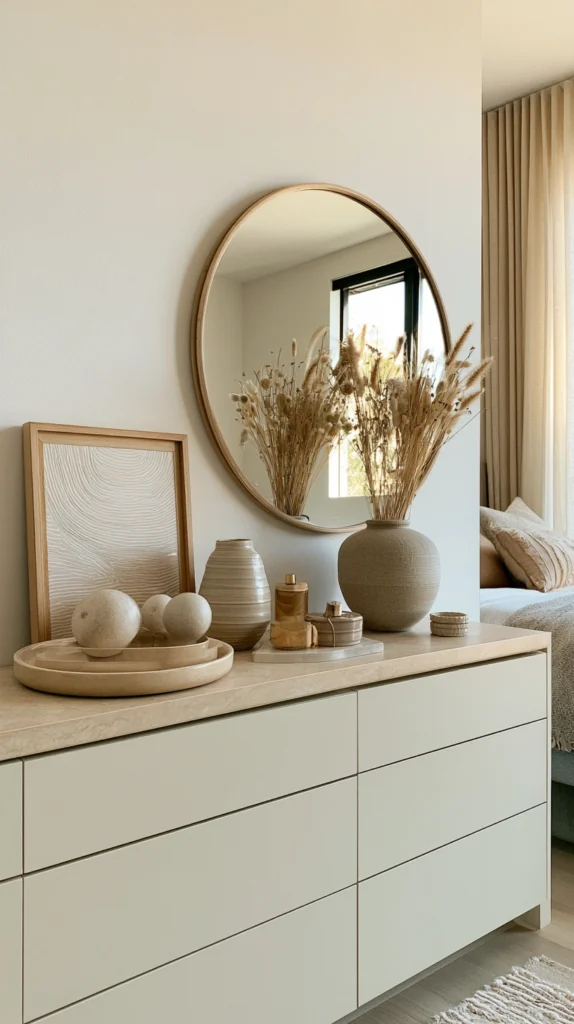
The dresser or chest of drawers in a warm minimalist bedroom is the surface most susceptible to the accumulation of objects without intention — the surface where the contents of pockets, the miscellany of daily grooming, and the objects that have no other designated home congregate with the persistence of water finding a low point.
Treating the dresser top as a carefully considered display surface rather than a convenient landing zone — three objects maximum, each chosen for its visual contribution to the room, a small tray to contain keys and daily items so they read as organised rather than scattered — transforms the bedroom’s secondary surface from its most problematic element to one that contributes to rather than contradicts the room’s overall warm minimalist character.
A mirror leaning against the wall above the dresser rather than hung on it, a simple ceramic object, a small plant or botanical element: this is the dresser top composition that suits the warm minimalist bedroom and that maintains itself with genuine ease once the discipline of its initial curation has been established.
13. Design for Genuine Darkness at Night
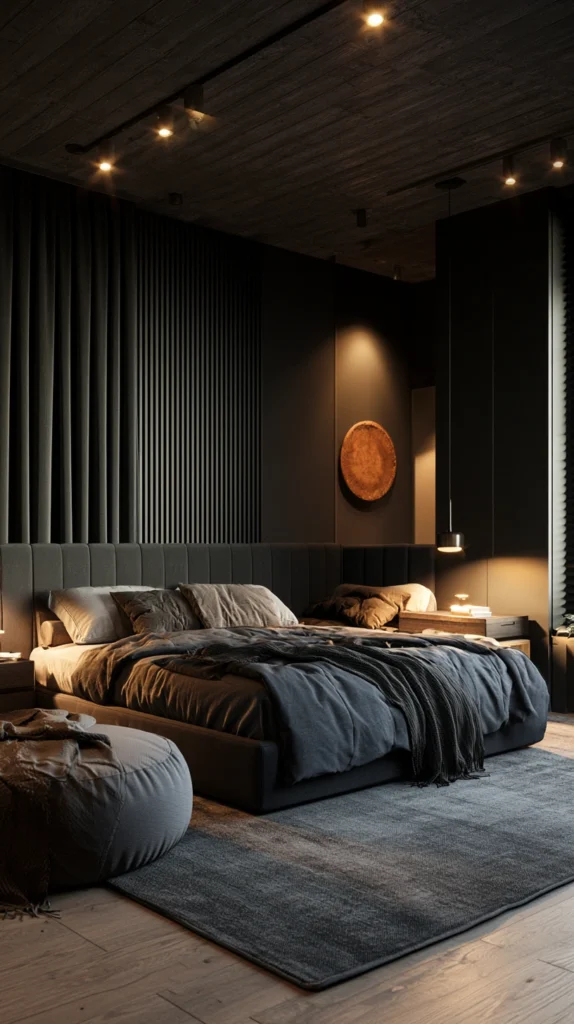
The warm minimalist bedroom’s quality as a restorative sleeping environment depends as much on its ability to become genuinely dark at night as on its beauty during the day — and the blackout curtain liner, the door draught excluder, and the removal of every unnecessary light source from the room (the charging phone, the standby LED on the television, the light bleeding under the door from the hallway) are the practical investments that make the warm minimalist bedroom as genuinely functional as it is genuinely beautiful.
Add a blackout lining to the beautiful linen curtains rather than replacing them with a blackout blind that contradicts the room’s textile character. Install a door sweep if hallway light intrudes. Place the phone on charge outside the bedroom rather than on the bedside table. The darkness that results from these simple, inexpensive interventions is the warm minimalist bedroom’s most important practical quality — the condition that makes every other design decision in the room genuinely worth making.
14. Use Texture to Replace Pattern
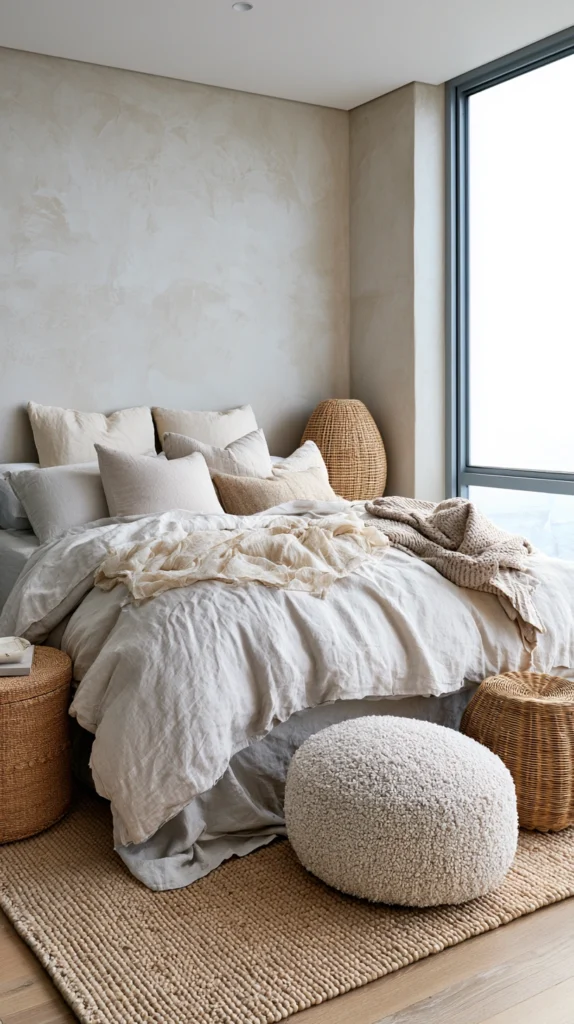
The warm minimalist bedroom that avoids both emptiness and the visual complexity of pattern achieves its visual richness entirely through texture — the difference between a surface that is smooth and one that is rough, between fabric that is flat and fabric that is woven in relief, between a wall that is painted with a standard roller and one that has been limewashed or Venetian plastered to a surface of genuine tactile depth. A boucle cushion beside a smooth linen duvet.
A rough terracotta pot beside a smooth oak bedside table. A limewash wall surface beside a flat-painted ceiling. A woven rattan headboard beside linen curtains of flat weave. These textural contrasts create the visual interest and the sensory richness that make the warm minimalist bedroom feel genuinely alive without introducing colour variation or pattern complexity that would undermine the room’s essential calm and essential simplicity.
15. Edit Regularly and Edit Honestly
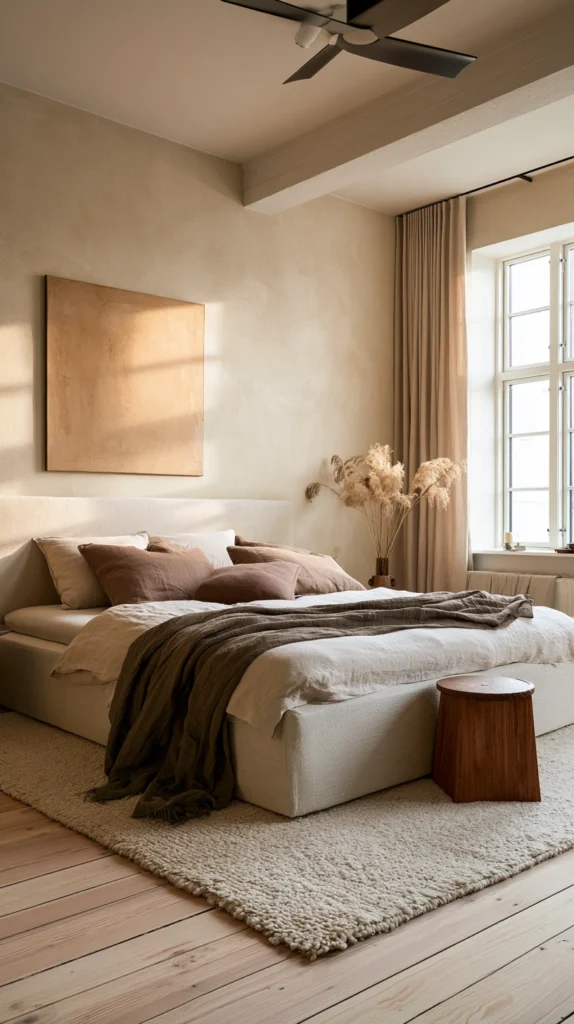
The warm minimalist bedroom is not a static achievement — it is an ongoing practice, the daily and seasonal discipline of returning the room to its intended state of warm, considered simplicity against the natural entropy that living in a space always produces.
Edit the room seasonally — remove objects that have accumulated without invitation, replace textiles that have lost their freshness, reassess every surface against the standard of genuine beauty or genuine function and remove anything that meets neither criterion.
Edit honestly — the object kept because it was a gift, the decorative piece retained because it was expensive, the accumulated pile of books that has colonised the bedside table: none of these survive an honest edit applied with genuine commitment to the room’s warm minimalist character. The bedroom that is edited regularly and edited honestly is the bedroom that looks most effortlessly beautiful — because effortlessness in a minimalist room is always the result of consistent effort applied invisibly and applied well.
Final Thoughts: Building Warmth Into Minimalism From the Beginning
The warm minimalist bedroom that genuinely does not feel empty or boring is built on the understanding that warmth and minimalism are not in tension but are, when properly understood, the same thing — that the genuine reduction of a space to its most essential and most beautiful elements is an inherently warm act, because what remains after genuine editing is always the things of greatest quality, greatest beauty, and greatest personal resonance.
Start with the wall colour and the floor material — the two largest surfaces that establish the room’s fundamental warmth before any furniture or textile decision is made. Build the bed as a composed textile sculpture of tonal layering and natural fibre richness. Choose furniture of genuine natural material quality in simple, honest forms.
Edit every surface to near-emptiness and introduce warmth through the quality and the character of the few objects that remain. The warm minimalist bedroom done properly is the most restful room in the house — because it has been designed to allow rest rather than to display the evidence of acquisition, and that distinction makes every difference.