
15 Pergola Ideas to Define Your Outdoor Living Space
Our patio used to just stop at the edge of the house, no transition, no reason to linger.
We built a pergola over one weekend with borrowed tools and a lot of guessing.
It wasn’t perfect. The first coat of stain streaked, and one post sat slightly off level.
None of that mattered once the string lights went up and the whole family started eating dinner out there.
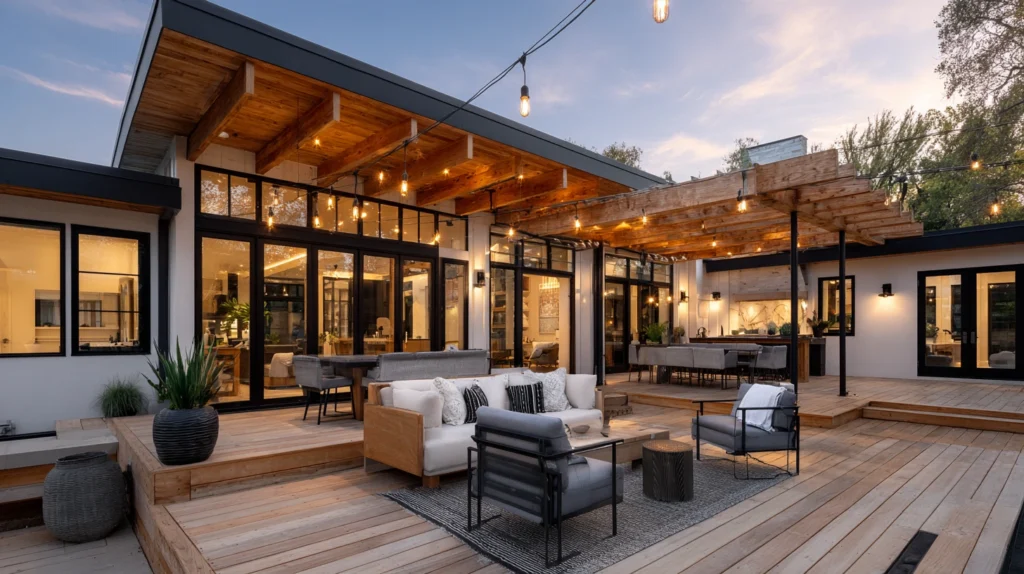
Here are 15 ways a pergola can turn an empty patch of yard into the room you actually live in.
Why a pergola works harder than most outdoor structures
A pergola gives a space edges without closing it in.
- It signals “this is a room” without walls or a solid roof
- It gives climbing plants, string lights, and curtains something to attach to
- It scales from a small four-post kit to a full custom-built structure
Once the overhead structure exists, everything underneath it starts to feel intentional.
1. Classic Wood Pergola With Climbing Vines
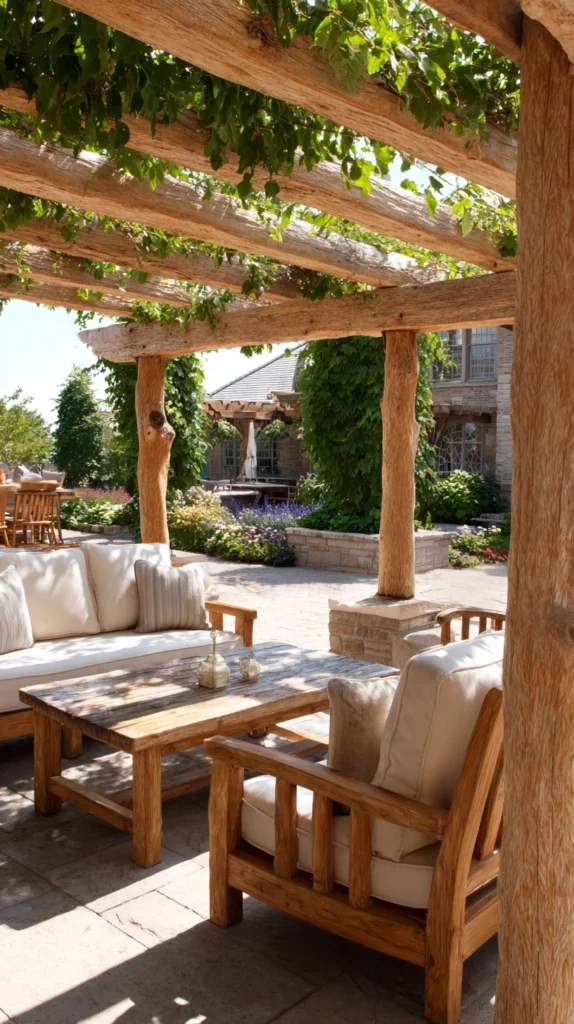
The most traditional version, built to disappear under greenery over time.
Build it:
- Cedar or pressure-treated pine posts, at least 6×6 inches for real structural presence
- Cross beams spaced 12 to 18 inches apart across the top for both shade and a vine-climbing grid
- Wisteria, climbing roses, or trumpet vine planted at the base of two or more posts
Why this version ages better than almost any other:
- The structure becomes more beautiful every year as vines fill in naturally
- Wood tones weather to a soft silver-gray if left unstained, which suits nearly any yard
- It provides genuinely functional dappled shade once the greenery matures
Cost breakdown: A basic 10×12 foot cedar pergola kit runs $800 to $1,500, plus $30 to $50 per vine planting.
2. Metal and Steel Modern Pergola
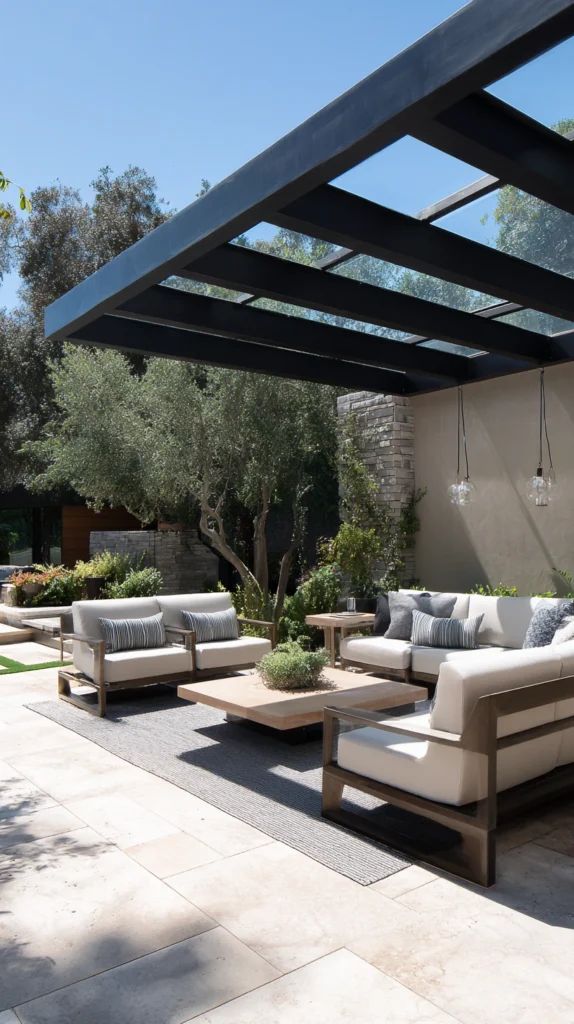
A cleaner, more architectural silhouette.
What to look for:
- Powder-coated aluminum or steel posts in black or bronze rather than raw metal
- Slim, minimal cross beams instead of the thicker wood lattice pattern
- Straight, geometric lines throughout rather than any decorative curves
Why metal suits a modern outdoor space so well:
- It reads as intentional and architectural rather than rustic or DIY
- Powder-coated finishes hold up to weather with almost no maintenance
- The slim profile lets more light through than a heavier wood structure
Cost breakdown: Prefabricated aluminum pergola kits run $1,200 to $2,500 depending on size and finish.
3. Retractable Canopy Pergola
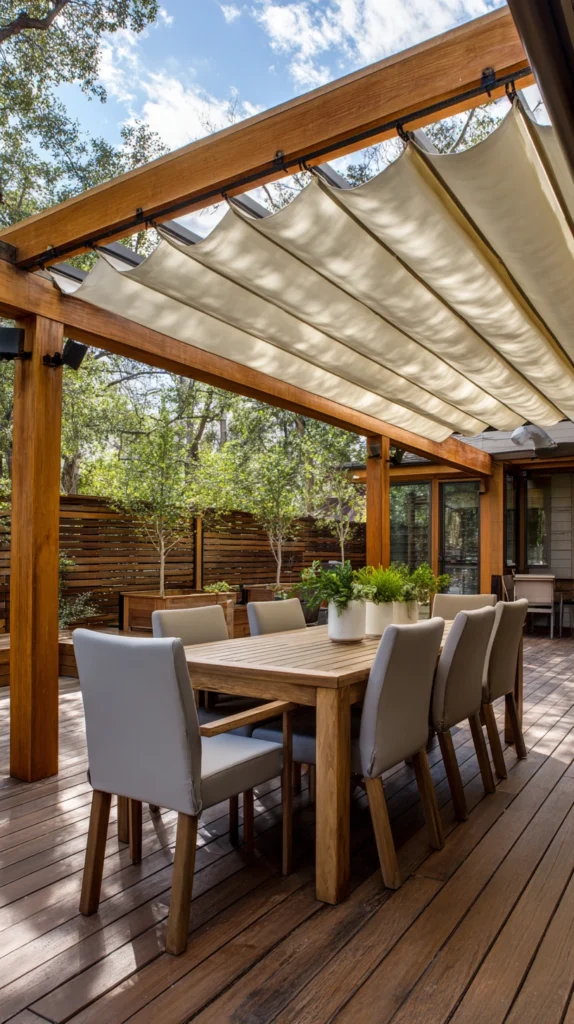
Shade that adjusts with the weather.
Setup:
- A pergola frame fitted with a track-mounted retractable fabric canopy
- Manual pull-cord or motorized remote-control operation depending on budget
- UV-resistant, water-repellent canopy fabric rated for full sun exposure
Why adjustable shade beats a fixed roof here:
- Full sun in spring and full shade in peak summer are two different needs, and this solves both
- It protects outdoor furniture from sun fading when fully closed
- Motorized versions add real convenience for daily use without manual effort
Cost breakdown: Retractable canopy attachments run $300 to $700 for manual versions, $800 to $1,500 for motorized.
4. Pergola With String Lights Woven Overhead
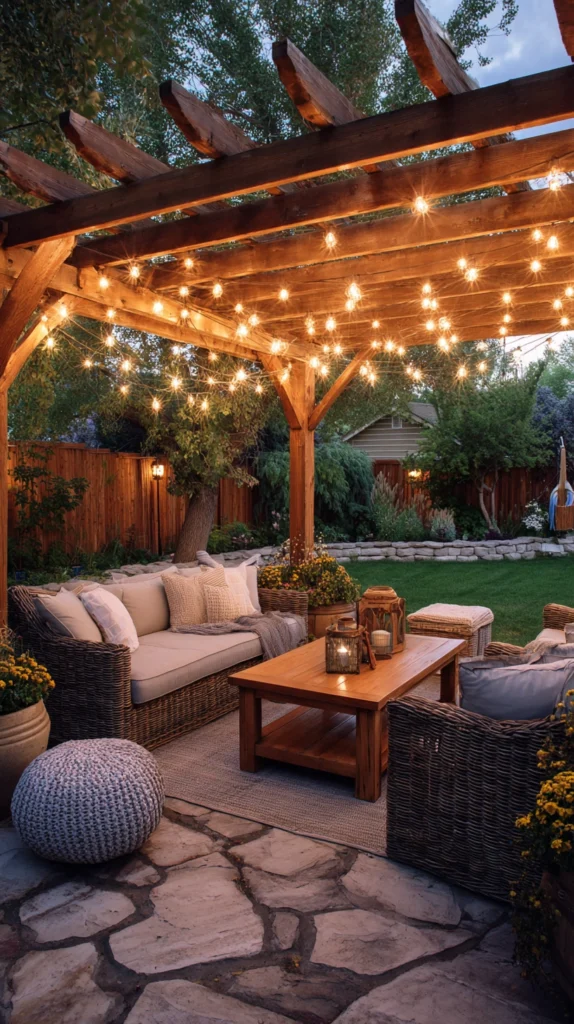
The lowest-cost way to transform the mood after dark.
Setup:
- Outdoor-rated string lights in warm white, run in a crisscross pattern across the beams
- Hooks or cup hangers screwed into the underside of each cross beam for secure attachment
- A timer or smart plug to automate lights on and off at dusk
Why lighting deserves its own dedicated plan:
- A pergola’s daytime shade function and nighttime ambiance function are equally important
- Crisscrossing rather than running lights in straight lines fills the overhead space more evenly
- Warm bulb temperatures make the whole seating area feel considerably cozier after sunset
Cost breakdown: 48-foot outdoor string lights run $25 to $40 each, with most pergolas needing two to three runs.
5. Pergola With Hanging Curtains for Privacy
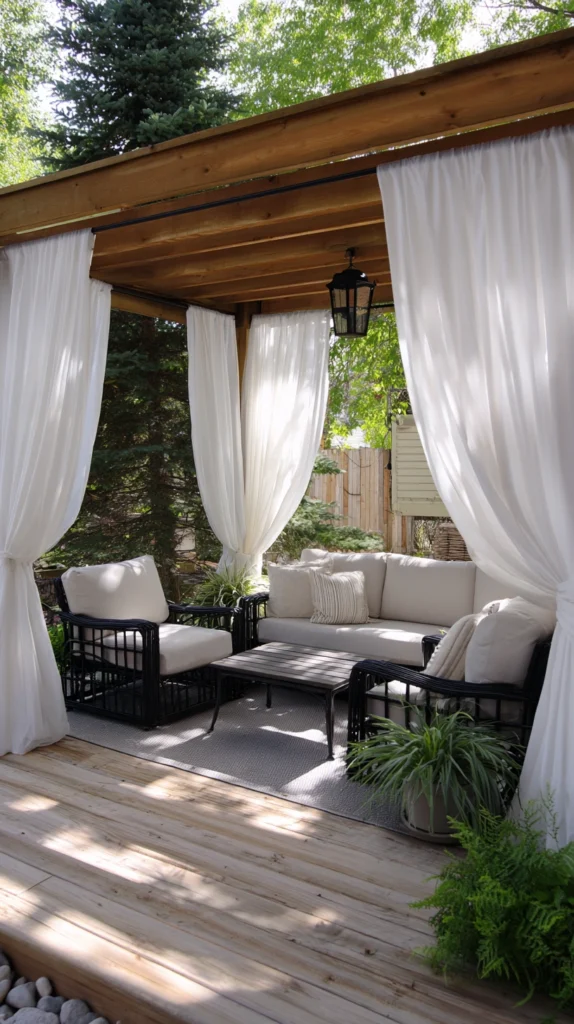
Soft fabric panels instead of solid walls.
Build it:
- Outdoor curtain rods mounted along two or more sides of the pergola frame
- Weather-resistant outdoor fabric panels, sized to reach nearly to the ground
- Tiebacks for daytime use, released fully closed for evening privacy
Why curtains solve privacy without losing the open feel:
- They can be pulled back entirely, keeping the airy quality intact when not needed
- Fabric softens the structure’s hard lines in a way solid walls or lattice can’t
- They add a layer of wind and light sun protection on the exposed sides
Cost breakdown: Outdoor curtain panels run $20 to $40 per panel, typically needing four to six panels per pergola.
6. Attached Pergola Extending From the House
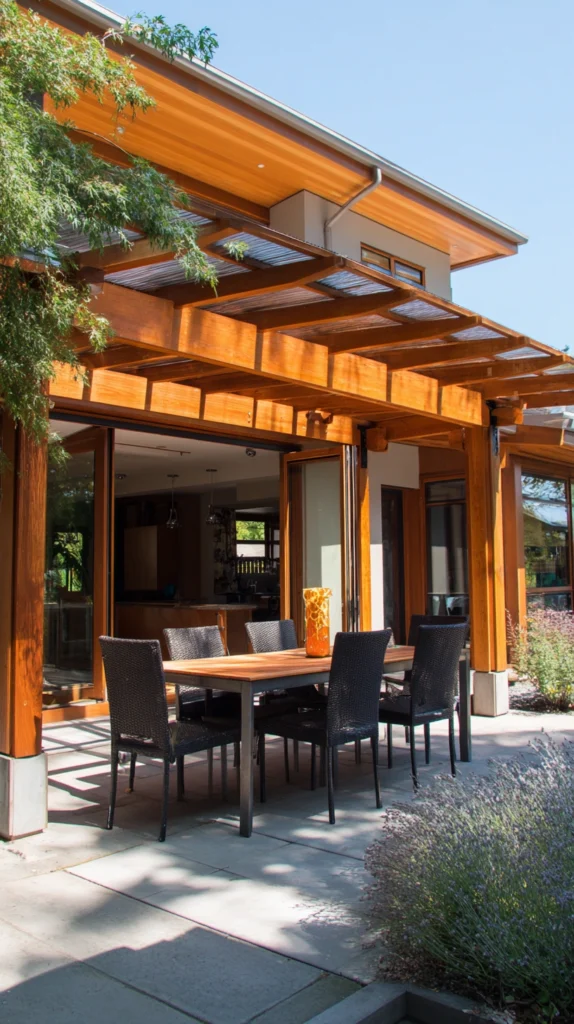
A structure that bridges indoor and outdoor space directly.
Build it:
- One side of the pergola ledger-mounted directly to the house’s exterior wall
- Support posts on the opposite side, typically two or four depending on the span
- Roofline and beam spacing matched visually to the house’s existing architecture
Why an attached structure functions differently than a freestanding one:
- It creates a true transition zone between the kitchen or living room and the yard
- It shelters a doorway or set of sliding doors from direct sun and rain
- It typically costs less than a freestanding structure since one side needs no posts
Installation note: Ledger mounting requires confirming your home’s siding and framing can support the load, so this often needs a contractor’s structural check before building.
7. Freestanding Pergola as a Destination Point
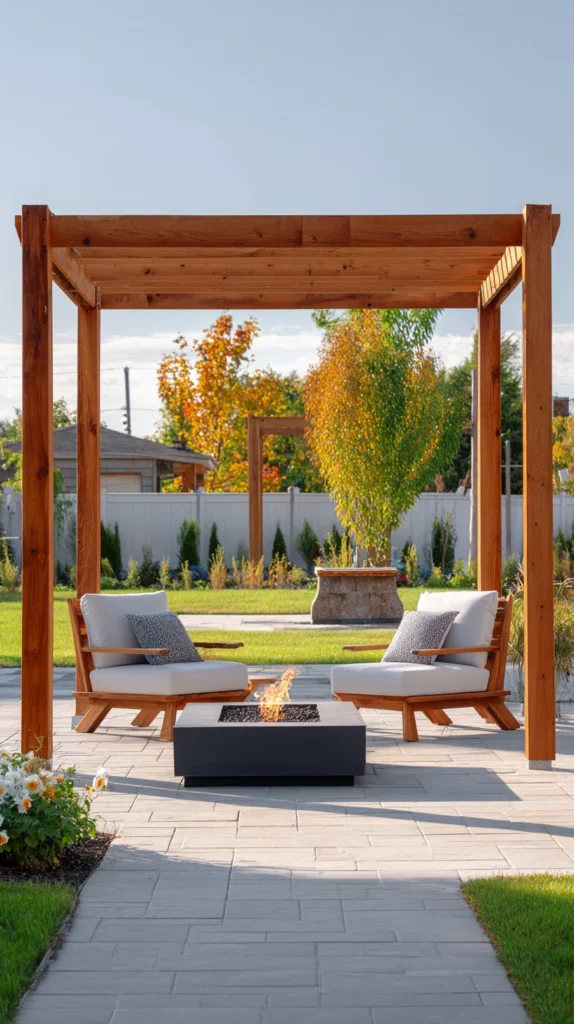
A separate structure placed away from the house entirely.
Setup:
- Positioned at the far end of the yard, reached by a short path
- Built with its own seating, and often its own small fire feature or table
- Landscaping planted around the base to root it visually into the yard
Why a destination pergola earns its own trip across the yard:
- It gives the whole property a sense of depth and multiple distinct zones
- It works well for a quiet reading or morning coffee spot, separate from the main patio
- The walk to reach it becomes its own small ritual, similar to a garden path
Cost breakdown: Freestanding kits run comparably to attached versions, typically $1,000 to $2,000, plus the cost of a connecting path.
8. Pergola Over a Hot Tub or Spa
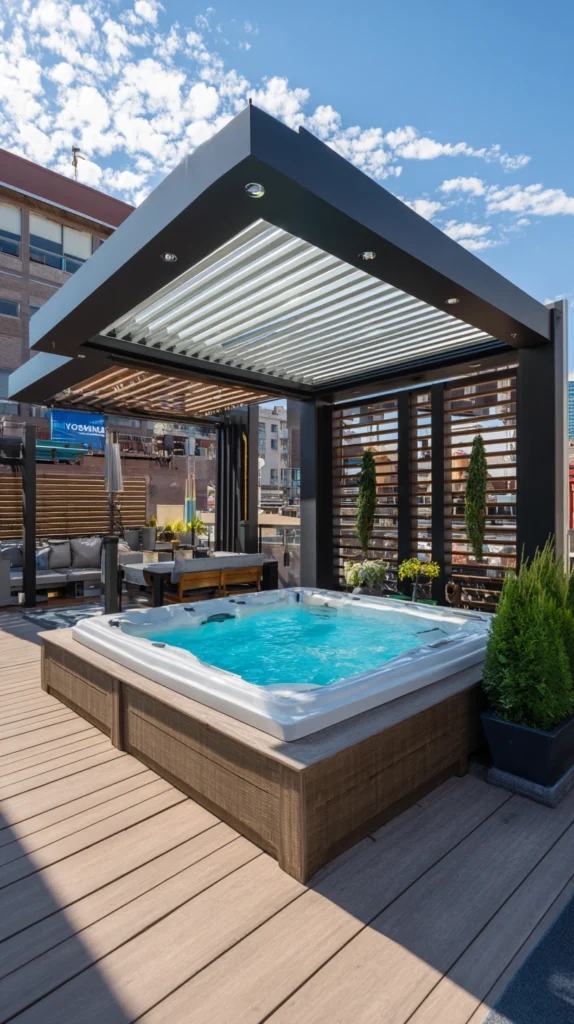
Weather protection for a specific feature.
Build it:
- A pergola sized generously beyond the hot tub’s footprint for splash and weather coverage
- Solid or louvered roof panels rather than open beams, for genuine rain protection
- Privacy screening on at least one or two sides for a more secluded soak
Why a dedicated structure changes how often it actually gets used:
- Direct sun and rain exposure are the two biggest reasons hot tubs go unused
- A solid or louvered roof extends usable months into cooler or rainier seasons
- Privacy screening makes evening use far more comfortable in close-set neighborhoods
Cost breakdown: A solid-roof pergola sized for hot tub coverage typically runs $2,000 to $4,000 depending on roofing material.
9. Pergola With a Built-In Swing or Hanging Bed
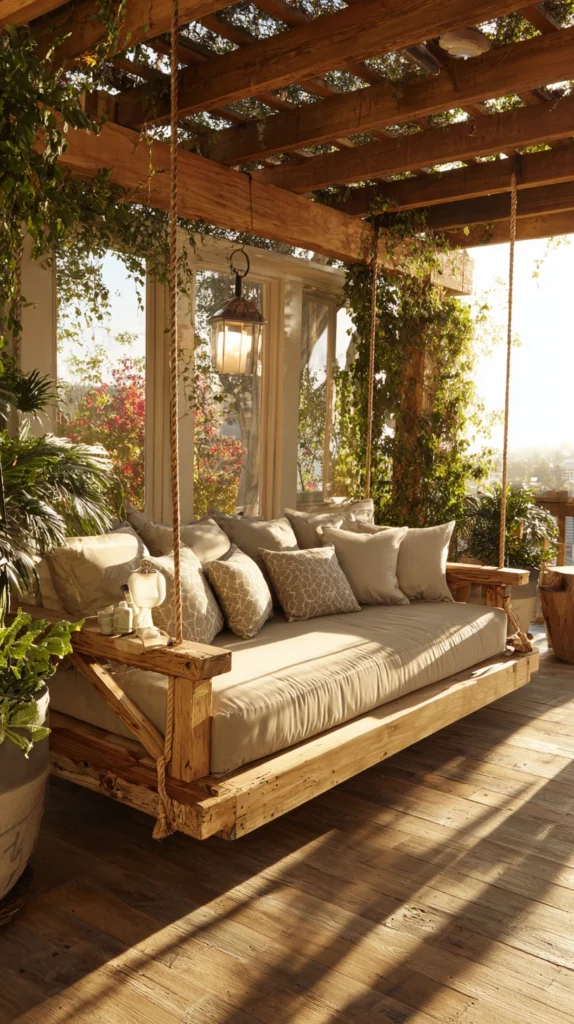
A structure that supports furniture, not just shade.
Build it:
- Reinforced beams rated for the swing or hanging bed’s weight, using larger dimensional lumber than a standard build
- Heavy-duty eye bolts and rated chain or rope hardware anchored directly into the beam
- Positioned centrally beneath the structure for balanced weight distribution
Why this changes what the space is actually used for:
- It turns a shade structure into a genuine lounging destination, not just a walkway cover
- A hanging bed or daybed swing becomes the main draw of the entire yard
- It’s one of the few outdoor furniture pieces that photographs as well as it functions
Cost breakdown: Rated hanging hardware runs $40 to $80, plus $200 to $600 for the swing or hanging bed itself.
10. Pergola With Integrated Outdoor Kitchen
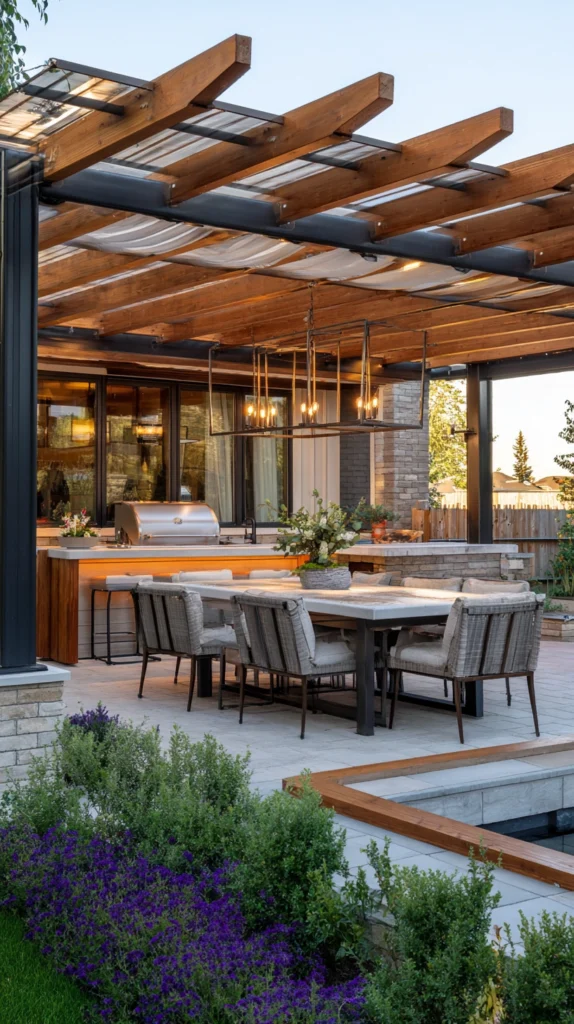
Structure built specifically around cooking and dining.
Build it:
- A pergola sized to fully cover a grill station, counter, and dining table together
- Heat-resistant materials used near the grill area, keeping wood beams a safe distance from direct flame
- Task lighting positioned directly over the cooking and prep zones, separate from ambient string lights
Why this combination earns the larger investment:
- It shelters cooking equipment from rain and sun damage year-round
- It keeps the cook connected to the dining and seating area instead of isolated at a separate grill station
- It becomes the default entertaining hub for the whole property
Cost breakdown: A pergola sized for a full outdoor kitchen typically runs $2,500 to $5,000 before counters and appliances are factored in.
11. Louvered Roof Pergola With Adjustable Slats
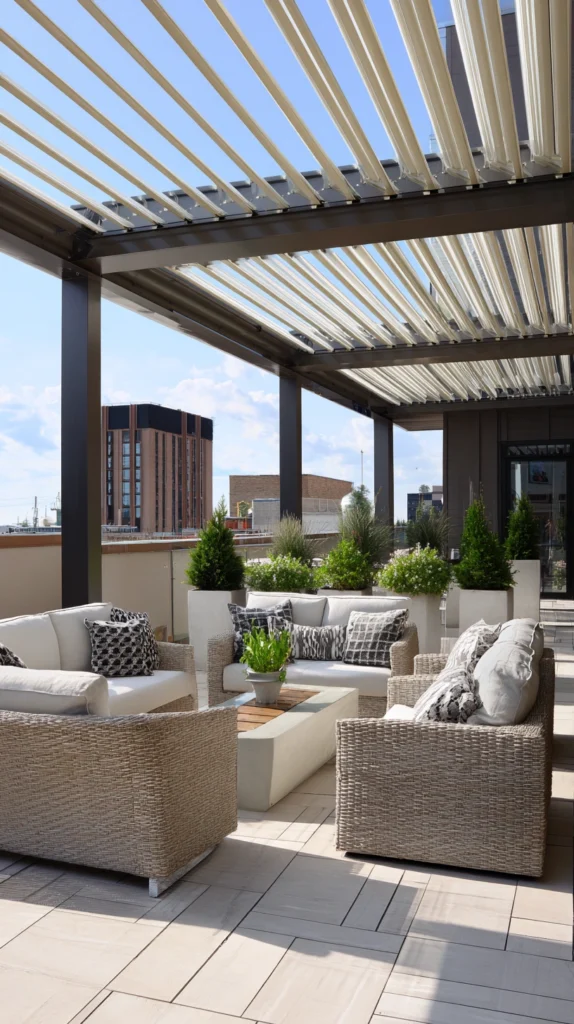
A roof that opens and closes on demand.
What to look for:
- Motorized aluminum louvers that rotate from fully open to fully closed
- A built-in rain sensor on higher-end models that closes the roof automatically
- Integrated gutters within the frame to channel water away when closed
Why louvered roofs are worth the higher investment:
- They offer genuine weather protection, unlike open-beam pergolas
- The adjustable slats let you dial in exact shade levels throughout the day
- Rain sensors mean outdoor furniture stays protected even when nobody’s home
Cost breakdown: Motorized louvered pergola systems run $4,000 to $10,000 depending on size and automation features.
12. Pergola With Potted Plants Instead of Ground Planting
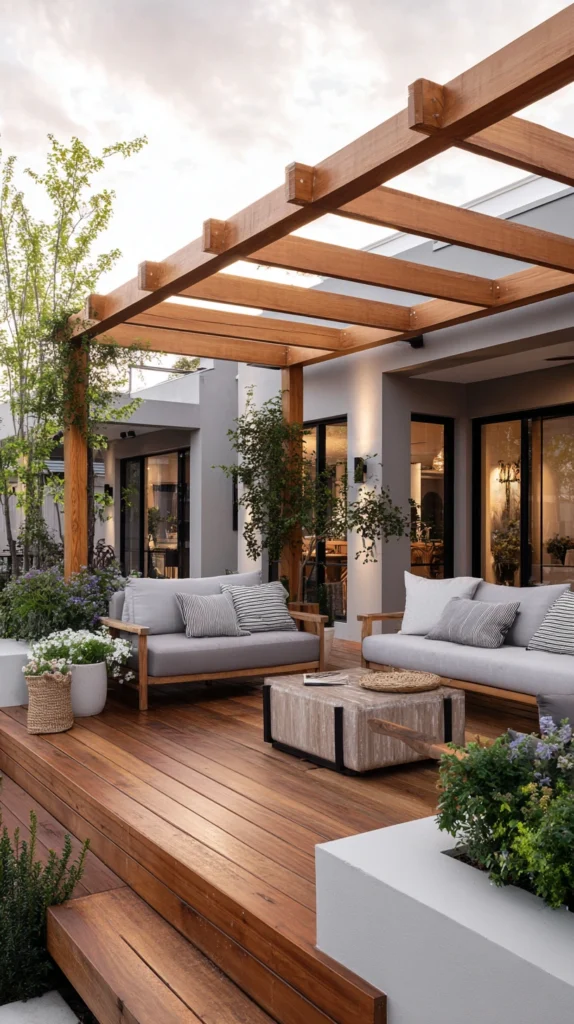
For patios and decks where in-ground planting isn’t possible.
Setup:
- Large planters positioned at the base of each post
- Fast-growing climbing plants suited to container growth, like certain jasmine or clematis varieties
- A drip irrigation line run to each planter for consistent watering without daily manual effort
Why potted vines work almost as well as ground-planted ones:
- It brings the same greenery and shade benefits to decks, patios, or rented properties
- Containers can be swapped seasonally for different bloom times or colors
- It’s fully reversible, making it ideal for anyone who might move or renovate later
Cost breakdown: Large planters run $30 to $60 each, plus $15 to $25 per climbing plant.
13. Pergola With Mosquito Netting Panels
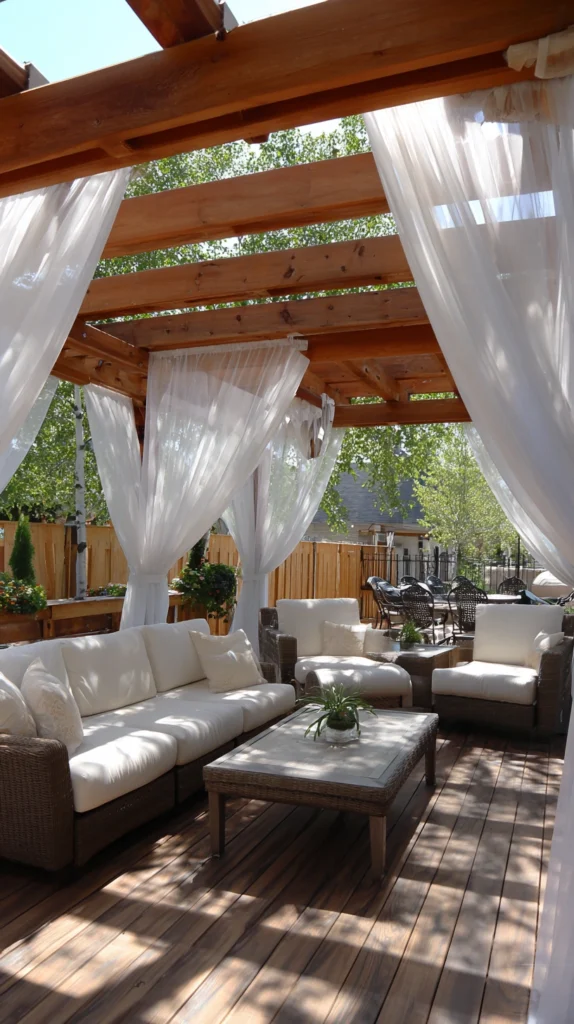
Bug protection without fully enclosing the space.
Build it:
- Sheer mosquito netting hung from a track system along the pergola’s perimeter
- Magnetic or zippered closures at the entry point for easy access
- Netting drawn back and tied during the day, released fully at dusk
Why netting solves the single biggest complaint about outdoor evenings:
- It keeps the open, airy feel of the structure while still blocking insects
- It’s considerably less expensive than a fully screened porch addition
- It can be removed entirely in cooler months when bugs aren’t a concern
Cost breakdown: Mosquito netting panels and track hardware run $150 to $350 for a standard-sized pergola.
14. Small-Scale Pergola for a Balcony or Courtyard
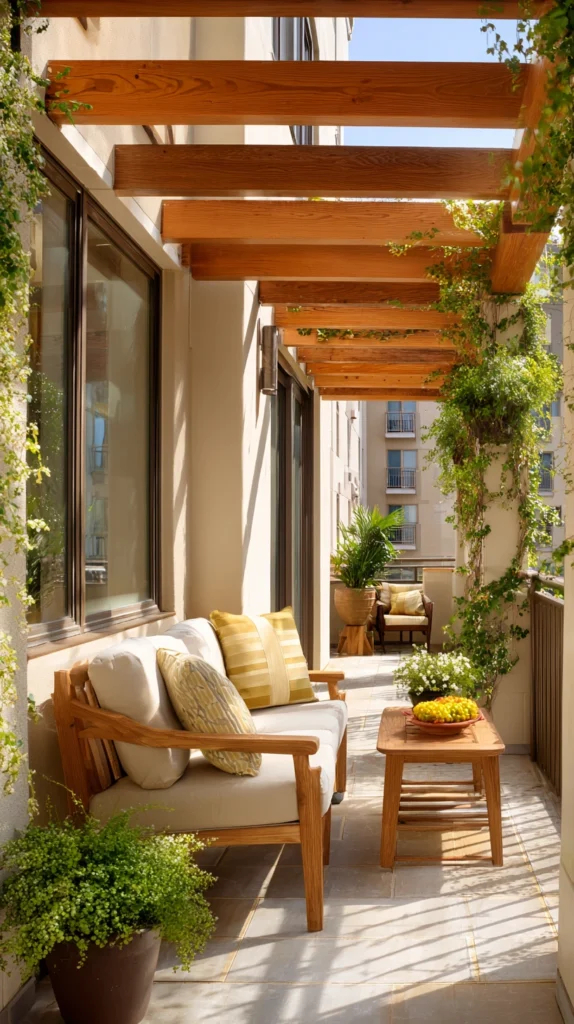
A scaled-down structure for limited outdoor space.
Build it:
- A compact 6×8 or 8×8 foot frame, often wall-mounted on one or two sides
- Lightweight materials like aluminum or cedar slats to avoid overloading a balcony’s weight limits
- A single climbing plant in a large container rather than multiple ground plantings
Why smaller spaces benefit just as much from a pergola:
- It gives even a small balcony a defined, intentional outdoor room rather than an afterthought
- The overhead structure makes a compact space feel more private from neighboring units
- It supports the same lighting and curtain upgrades as a full-size version, just scaled down
Cost breakdown: Compact balcony pergola kits run $300 to $700 depending on material and mounting type.
15. Pergola Paired With a Fire Pit Seating Area
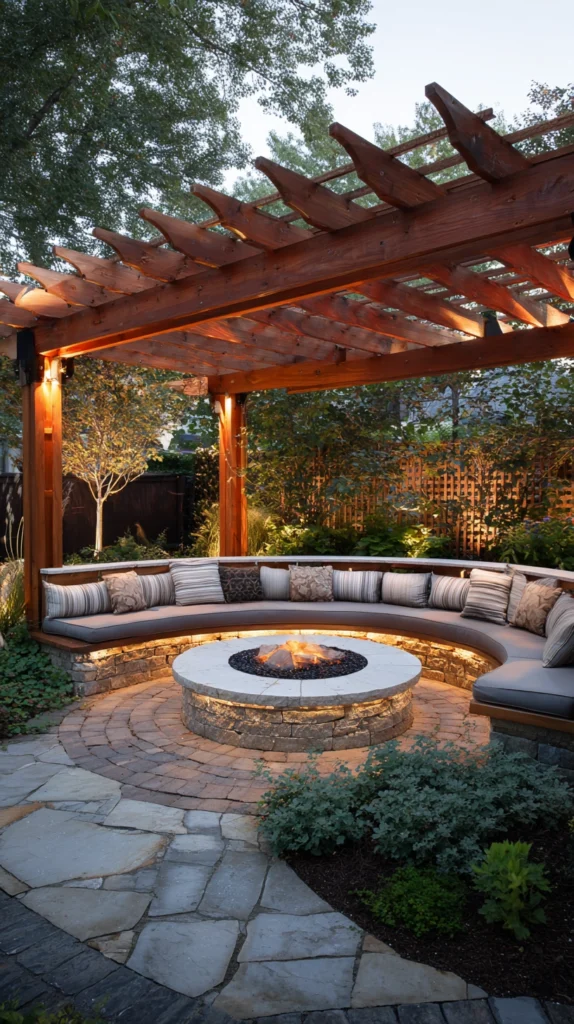
Overhead structure combined with a grounded gathering spot.
Build it:
- The pergola positioned to cover the seating area while keeping the fire pit itself in an open-air section beyond the roofline
- Fire-resistant paver or gravel base beneath and around the fire pit
- Weatherproof seating arranged in a half-circle facing the fire, with the pergola framing the view from behind
Why the fire pit needs to sit outside the covered roofline:
- Open flame directly beneath any roof structure, wood or otherwise, is a genuine fire hazard
- Positioning the pergola just behind the fire pit still frames the whole scene without the risk
- It creates a natural flow between the shaded daytime seating and the evening fire gathering
Cost breakdown: A basic fire pit setup adds $150 to $400 beyond the pergola’s own cost, depending on materials chosen.
Getting started this weekend
You don’t need the full structure built before the space starts to feel different.
- Start with a basic four-post kit sized to your patio or deck footprint
- Add string lights and one climbing plant before considering curtains or louvers
- Save motorized or structural upgrades like louvered roofs for a second phase once you know how the space gets used
My own pergola went from bare posts to a fully lived-in space over the course of one summer, one addition at a time.
Budget reality
Pergolas scale from a simple weekend kit to a major backyard investment.
- Under $500: String lights, potted climbing plants, mosquito netting panels
- $500-1,500: Basic wood or aluminum kit, curtain panels, small balcony version
- $1,500-4,000: Attached structure, hot tub coverage, outdoor kitchen integration
- $4,000+: Motorized louvered roof, full custom-built freestanding structure
Most of the everyday impact comes from the lighting, plants, and seating layered beneath it, not the structure’s price tag alone.
What actually defines the outdoor room
It was never really about the posts and beams themselves.
It’s the string lights turning on at dusk, the vines finally reaching the top beam, the dinner that moves outside because there’s finally a reason to stay.
Build the basic frame first, then let the space tell you what it needs next.