
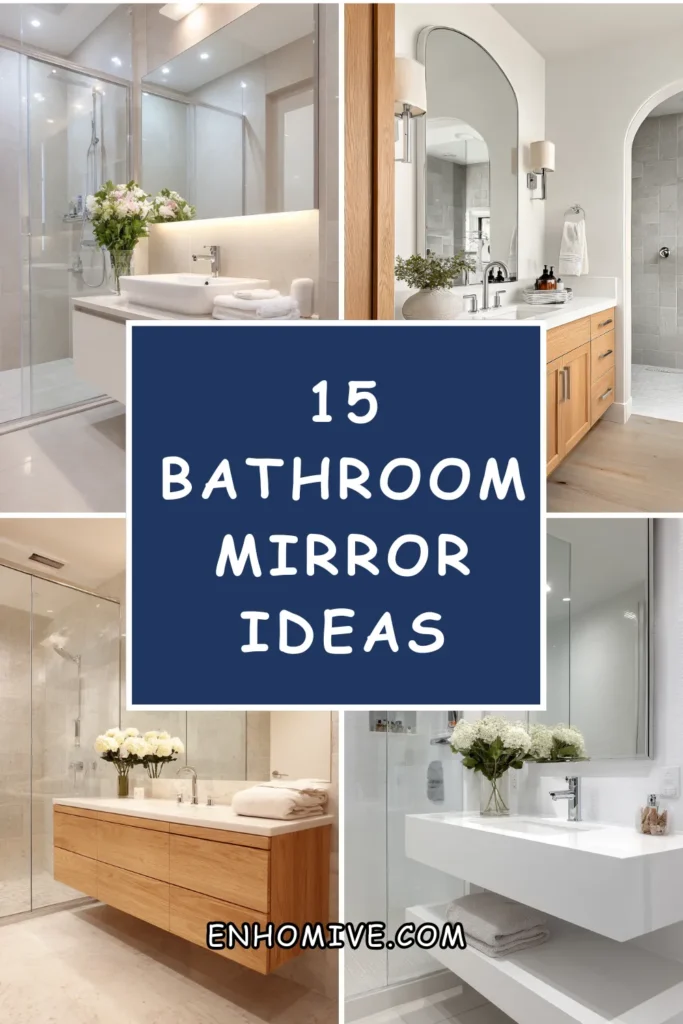
15 Bathroom Mirror Ideas That Elevate the Space
I replaced our builder-grade rectangle mirror on a whim, just to see what would happen.
One swap, twenty minutes of install time, and the whole bathroom suddenly looked finished.
No new tile, no new paint, just a different shape hanging on the wall.
That’s when I started paying attention to mirrors as an actual design decision, not an afterthought.
Here are 15 ways to use a mirror to do more work than any other single fixture in the room.
Why the mirror matters more than people think
A mirror is one of the few things in a bathroom that’s purely decorative and purely functional at once.
- It reflects and doubles whatever light source is already in the room
- Its shape and frame set the tone for every other metal finish nearby
- It’s one of the fastest, least disruptive upgrades in the entire house
Get the mirror right and the rest of the room reads as intentional, even if nothing else changed.
1. Oversized Arched Mirror
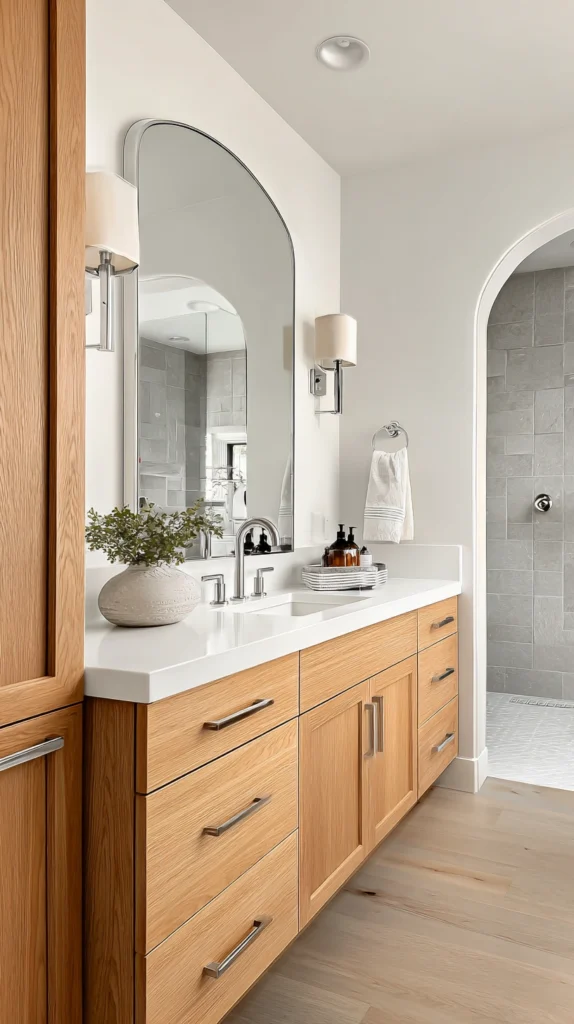
A single large arch instead of a standard rectangle.
What to look for:
- A mirror sized to nearly the full width of your vanity, not a small centered piece
- A rounded top arch rather than a full oval, which feels more architectural
- A thin metal frame in black, brass, or unlacquered nickel
Why the oversized scale works so well:
- Small mirrors on a wide vanity leave awkward empty wall space on either side
- The soft arch line contrasts nicely against the hard rectangular lines of most vanities and tile
- It bounces significantly more light back into the room than a smaller mirror ever could
Installation note: Confirm your wall has proper anchors or a stud run, since oversized mirrors are heavier than they look and need real support.
2. Round Mirror Pairing Over Double Vanities
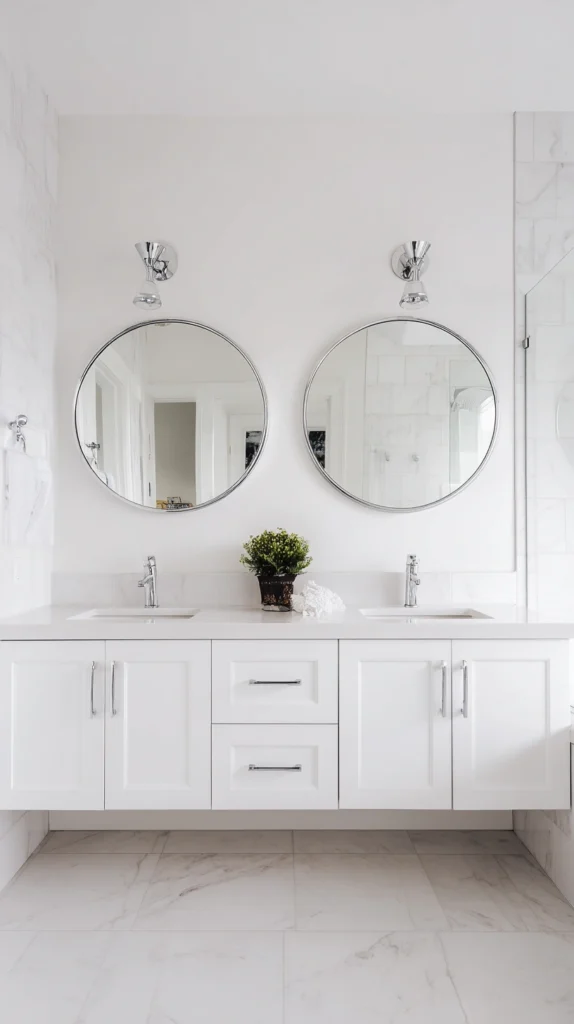
Two circles instead of one long mirror.
Setup:
- Two identical round mirrors, centered above each sink individually
- Simple wall sconces flanking each mirror rather than one shared light bar above both
- Frame finish matched to the faucet hardware below
Why round pairs beat one long mirror here:
- Individual mirrors give each person their own defined space at a shared vanity
- Round shapes soften a room that’s often dominated by straight vanity and tile lines
- The repetition of two identical circles reads as more intentional than one asymmetrical piece
Cost breakdown: Round mirrors in the 24 to 30 inch range run $60 to $120 each, so budget $120 to $240 for a matching pair.
3. Backlit LED Mirror
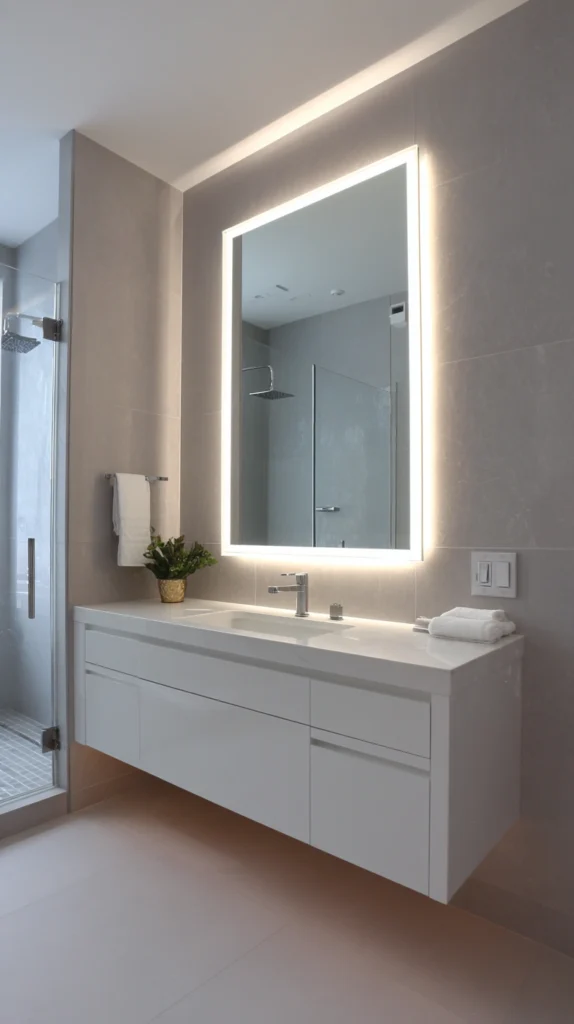
A mirror with light built directly into the glass.
What to look for:
- Edge-lit LED technology rather than a simple light strip taped to the back
- Adjustable color temperature, so you can shift between warm and cool white
- A built-in defogger pad, which is now common on mid-range models
Why this solves a real daily problem:
- Overhead lighting alone casts shadows under the eyes during makeup or grooming
- Edge lighting distributes light evenly across the face instead of from one direction
- It eliminates the need for separate vanity sconces in smaller bathrooms
Cost breakdown: Backlit LED mirrors run $150 to $350 depending on size and defogger features.
4. Vintage Ornate Frame Mirror
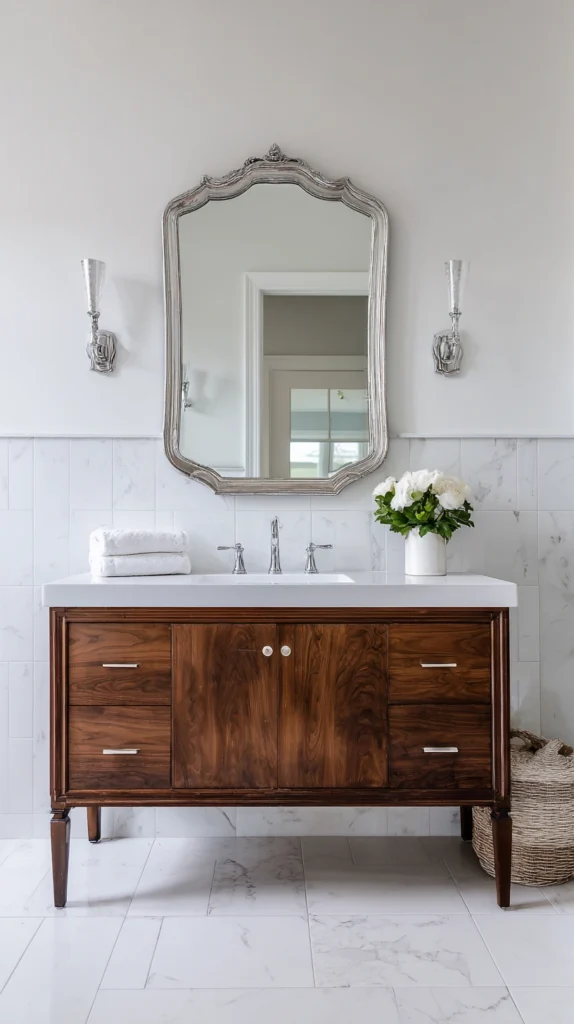
A single statement piece with real character.
Where to find one:
- Salvage yards and estate sales for original antique frames
- Reproduction ornate frames from home decor retailers if an antique isn’t available
- Thrifted frames that can be resized to fit a new mirror insert
Why an ornate frame works even in a modern bathroom:
- The contrast between an ornate frame and clean modern tile or fixtures reads as curated, not mismatched
- It becomes the single focal point of the room without needing anything else to compete with it
- Gold and gilded finishes patina beautifully with age rather than looking dated
Cost breakdown: Reproduction ornate mirrors run $80 to $200. Genuine antique frames vary widely but often land in the same range at estate sales.
5. Mirrored Medicine Cabinet Recessed Into the Wall
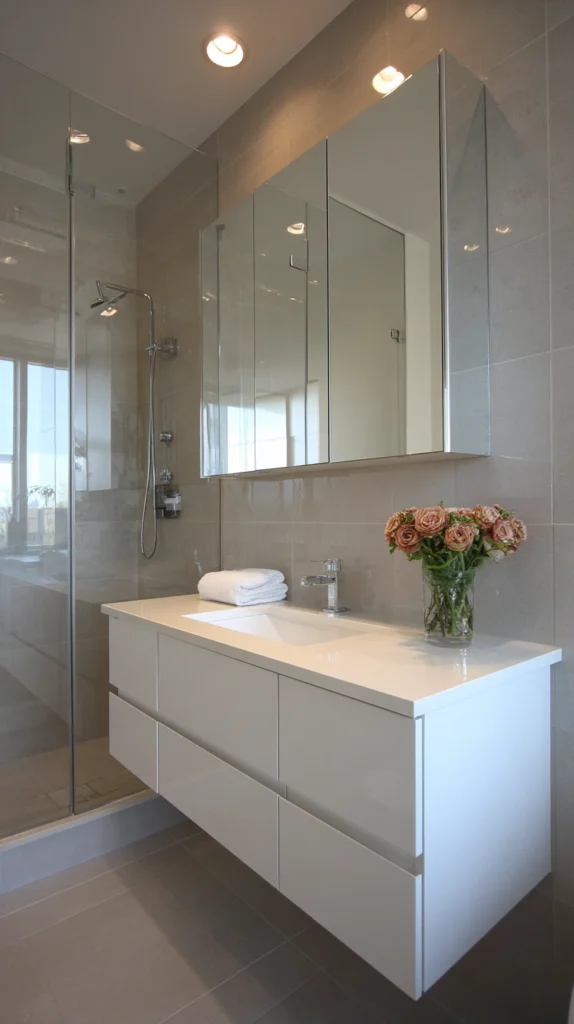
Storage and reflection combined into one flush unit.
Build it:
- A recessed cabinet cut into the wall between studs rather than surface-mounted
- Interior adjustable glass shelves for daily products
- A mirrored door on a soft-close hinge for quiet daily use
Why recessed beats surface-mounted here:
- It sits flush with the wall instead of protruding several inches into the room
- It solves storage and mirror needs in one single footprint
- It looks intentional and built-in rather than added on afterward
Installation note: Recessed cabinets require cutting into the wall cavity, so confirm there’s no plumbing or wiring running through that section first.
6. Mirror Wall Extending to the Ceiling
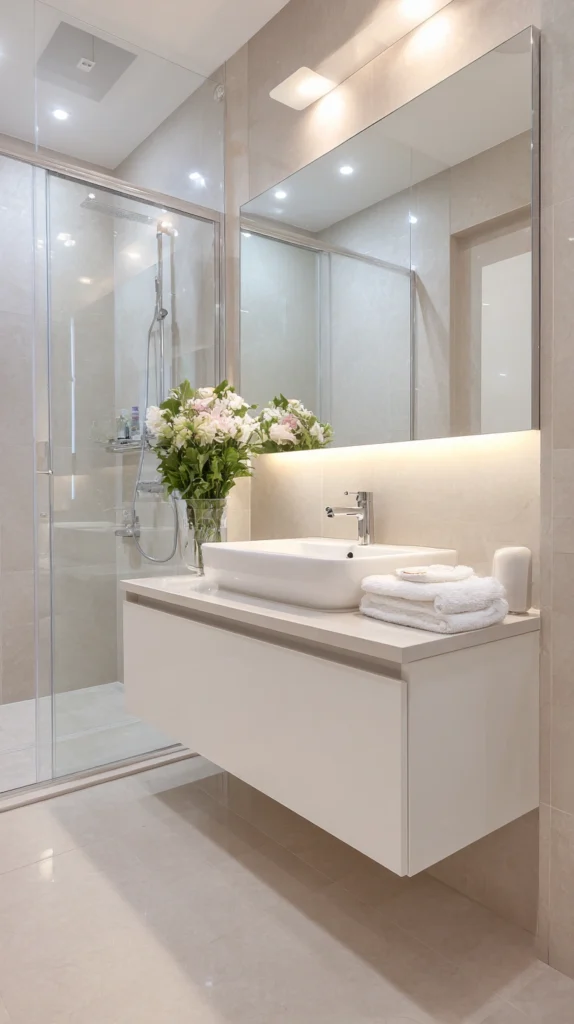
Floor-to-ceiling reflection in a small bathroom.
Setup:
- A single large mirror panel or mirrored tile installed from the vanity backsplash up to the ceiling line
- Beveled edge tiles for a subtle decorative detail without needing a frame
- Paired with a single strong light fixture mounted just above it
Why this works so well in small spaces:
- It visually doubles the perceived height and depth of a cramped bathroom
- It removes the need for a separate frame, keeping sightlines clean
- It reflects natural light from a window back across the entire room
Cost breakdown: Mirrored tile installations run $8 to $15 per square foot including installation.
7. Wood-Framed Mirror for Warmth
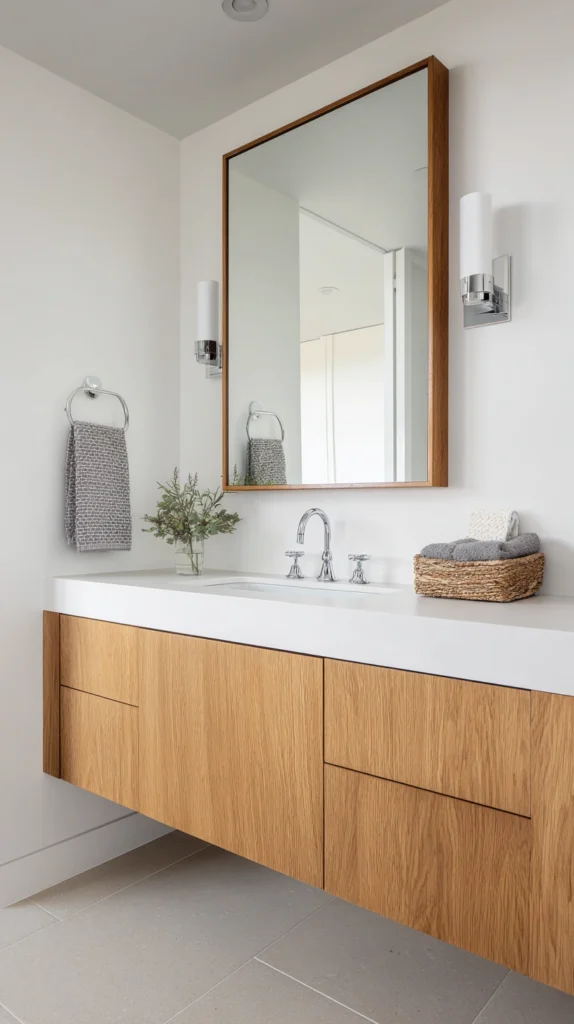
A softer material choice against typically cold bathroom surfaces.
What to look for:
- Reclaimed or natural wood frames in oak, walnut, or a whitewashed finish
- Simple, clean-lined frames rather than heavily carved ones for a more current feel
- Sealed or varnished wood specifically rated for humid environments
Why wood works against tile and metal:
- It breaks up a room that’s otherwise entirely stone, tile, and metal finishes
- It pairs naturally with matte black or brass fixtures rather than competing with them
- It brings a texture into the room that a metal-only mirror frame can’t
Cost breakdown: Solid wood-framed mirrors run $70 to $180 depending on size and wood type.
8. Asymmetrical or Organic-Shaped Mirror
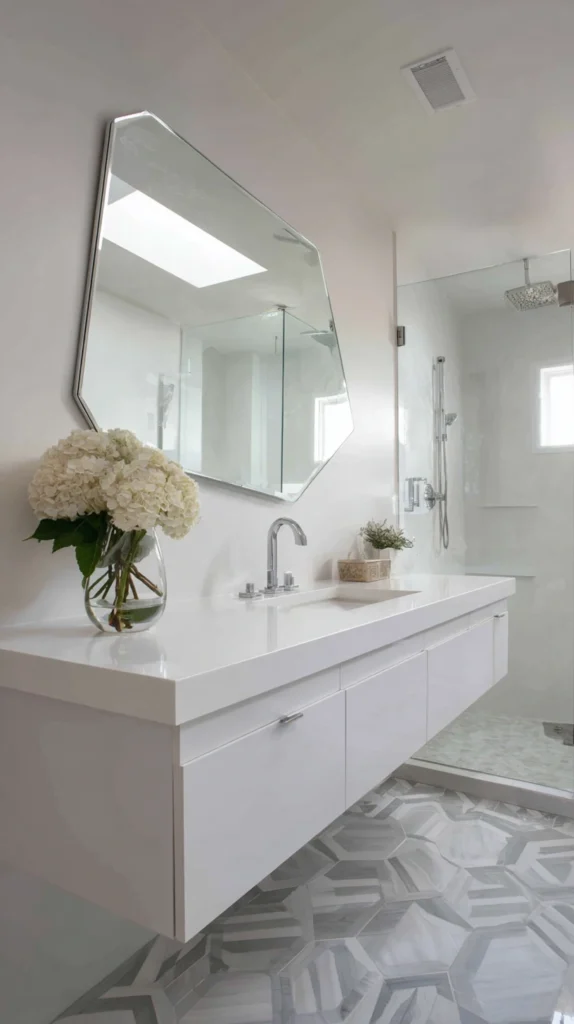
A freeform shape instead of a standard geometric one.
Shape options:
- Irregular pebble or amoeba-style outlines
- Asymmetrical arches with one side taller than the other
- Hand-forged metal frames with an organic, wavy outline
Why an unusual shape earns its place:
- It becomes an art piece in its own right, not just a functional reflection surface
- It works especially well in bathrooms that already lean toward an eclectic or maximalist style
- It photographs as a standout feature for anyone documenting the renovation
Watch for: Organic shapes need more wall space clearance than rectangles, so measure carefully before ordering.
9. Mirror With Integrated Shelving
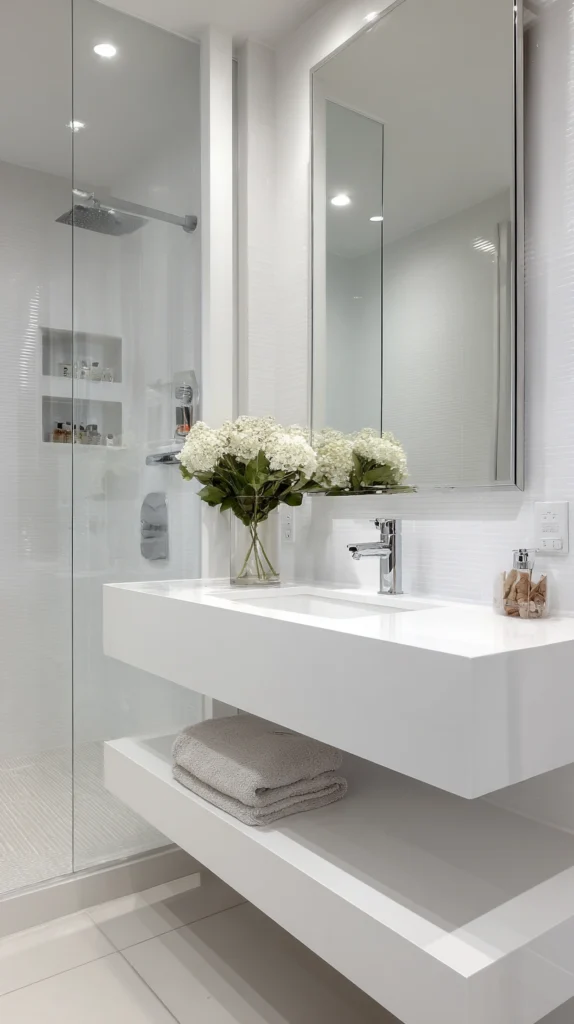
A mirror that also functions as display space.
Build it:
- A mirror mounted with a small floating glass or wood shelf fixed just below it
- Styled with a single plant, a candle, or a small tray rather than clutter
- Shelf bracket finish matched to the mirror’s frame
Why this small addition changes the whole feel:
- It gives the wall a layered, styled look rather than a flat mirror alone
- The shelf becomes a spot for daily items without needing full vanity counter space
- It works especially well in powder rooms with minimal counter space to begin with
Cost breakdown: A simple floating shelf addition runs $15 to $40 depending on material.
10. Matching His-and-Hers Mirrors With Individual Lighting
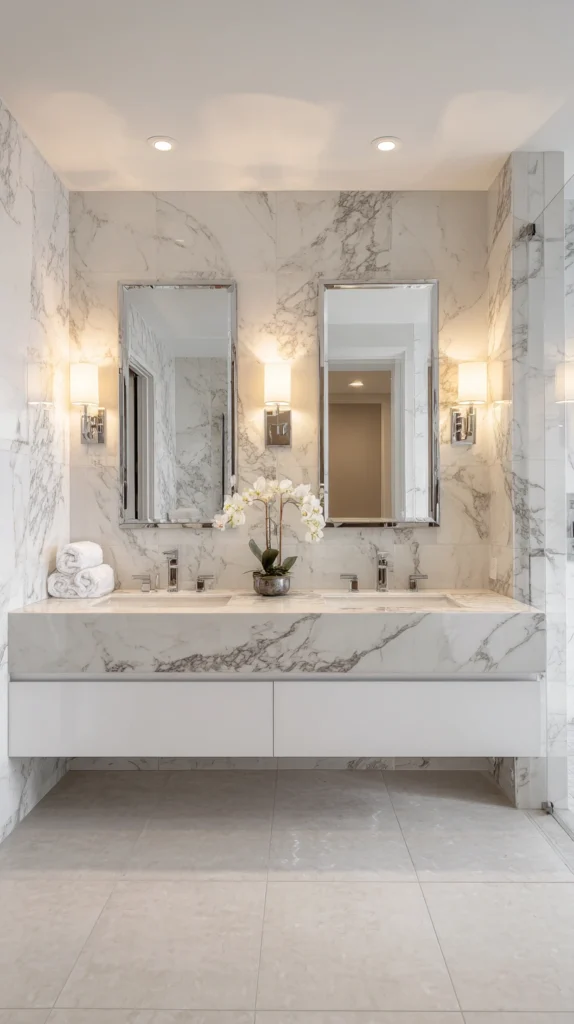
A fully separated setup at a shared double vanity.
Setup:
- Two identical rectangular or arched mirrors, each with its own dedicated sconce or backlit frame
- A small gap of wall space between the two mirrors rather than one continuous piece
- Personal touches like a small shelf or hook beside each mirror for individual products
Why full separation works better than one shared mirror:
- It gives each person a genuinely private reflection and lighting zone
- It reduces morning routine friction in households sharing one bathroom
- The symmetry still reads as a cohesive design choice rather than two mismatched pieces
Cost breakdown: Matching mirror and sconce pairs typically run $200 to $400 total for both sides combined.
11. Mirror With a Brass or Black Metal Frame to Match Fixtures
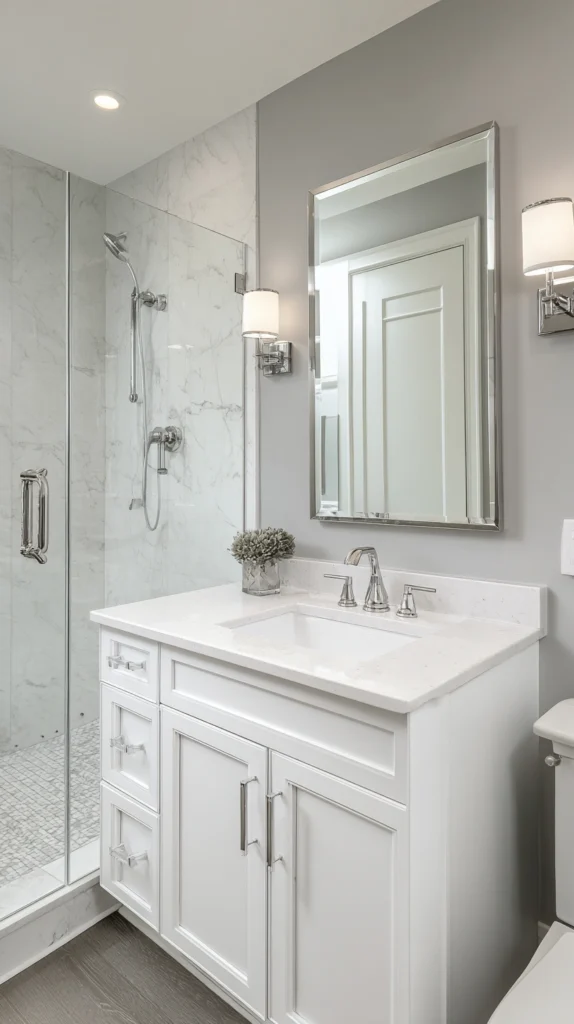
Coordinating the mirror frame directly with your hardware.
How to plan it:
- Choose your faucet and hardware finish first, then match the mirror frame to it
- Stick to one metal finish throughout the room rather than mixing brass, nickel, and black together
- Use the mirror frame as the visual bridge between the lighting fixture and the faucet below
Why finish-matching matters this much:
- Mismatched metals is one of the most common reasons a bathroom feels unfinished
- A matched frame ties the whole wall together in a single glance
- It’s one of the cheapest ways to make separately purchased pieces feel like a coordinated set
Cost breakdown: Framed mirrors in coordinated finishes run $90 to $220 depending on size and metal type.
12. Mirror With a Built-In Magnifying Panel
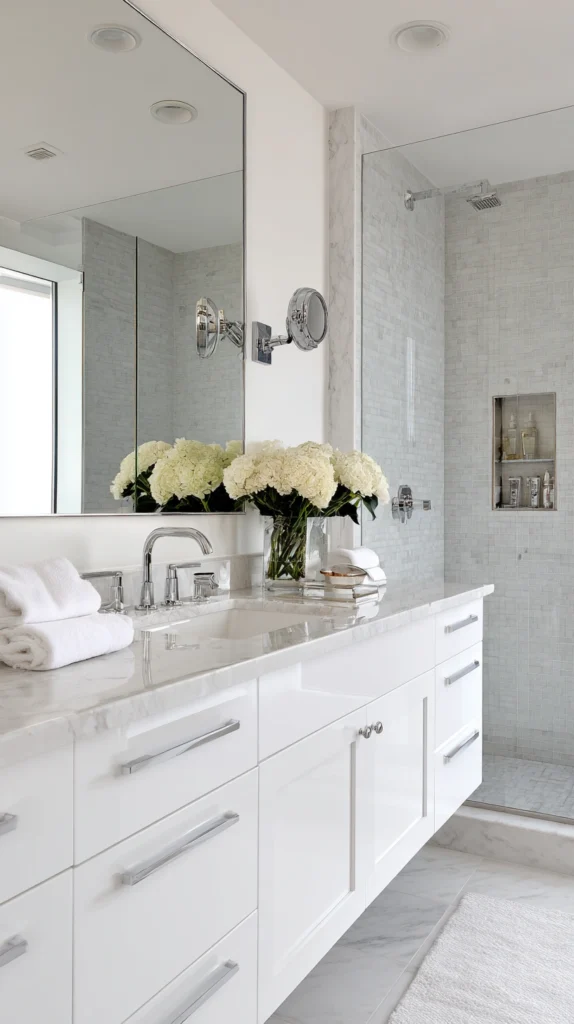
Function layered directly into the design.
What to look for:
- A small secondary magnifying mirror mounted on a swing arm, attached beside or on the main mirror
- Lighted versions for detailed grooming tasks
- A finish that matches the primary mirror frame so it doesn’t look like an add-on
Why this earns a spot even in a styled bathroom:
- It removes the need for a separate handheld magnifying mirror cluttering the counter
- The swing arm folds flat against the wall when not in use
- It solves a genuine daily task without disrupting the room’s overall look
Cost breakdown: Swing-arm magnifying mirrors run $30 to $70 depending on lighting features.
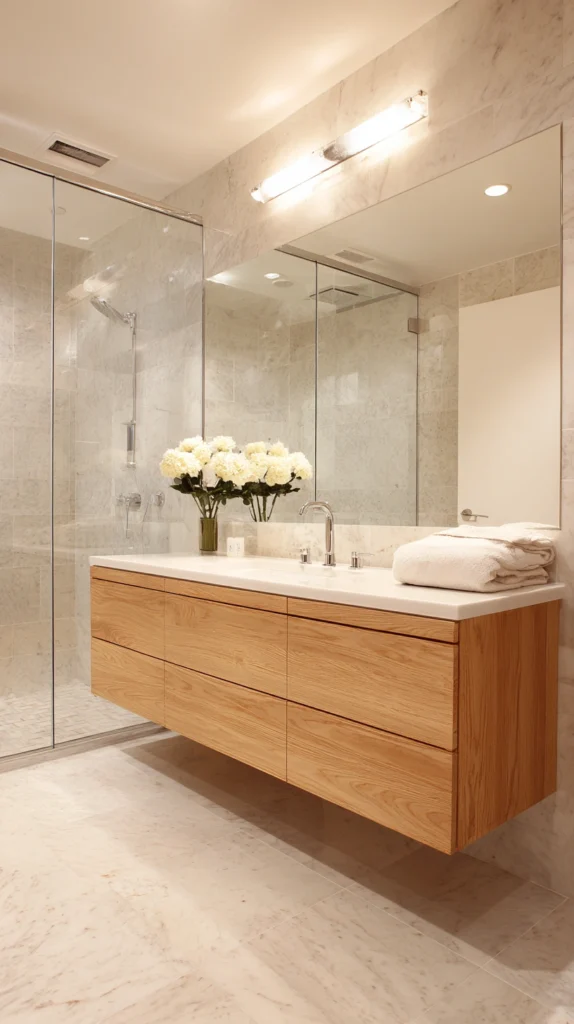
13. Mirror Framed With Tile Trim
Blending the mirror directly into the surrounding tilework.
Build it:
- A mirror cut to size and inset directly into the tile layout above the vanity
- A pencil tile or metal trim strip framing the mirror’s edge for a finished look
- Planned during the original tile installation rather than retrofitted afterward
Why this integrated approach looks so custom:
- It removes any visible frame or hardware, reading as a seamless architectural feature
- It’s a detail typically only found in higher-end custom bathroom builds
- It works particularly well with patterned or textured tile surrounding it
Cost breakdown: This approach adds $100 to $300 in labor and trim material compared to a standard hung mirror, since it requires precise tile cutting.
14. Mirror With a Leaning Freestanding Frame
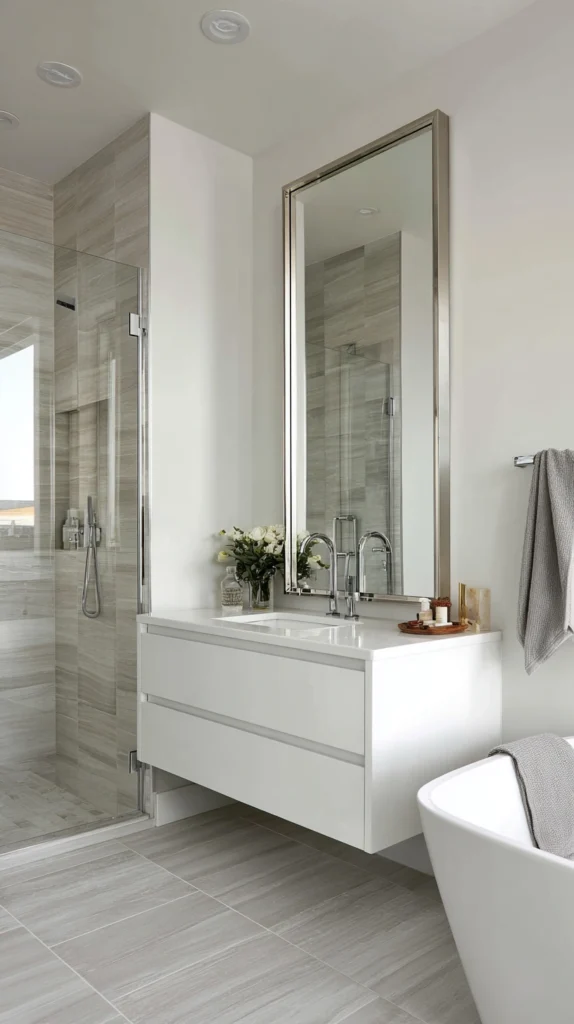
Skipping wall mounting entirely.
Setup:
- A tall freestanding mirror leaned against the wall rather than hung
- Positioned beside the vanity rather than directly above the sink
- Weighted or braced at the base for safety in case of bumps
Why a leaning mirror works in the right bathroom:
- It suits larger bathrooms with the floor space to spare
- It gives full-length reflection, which most vanity mirrors can’t offer
- It can be repositioned entirely without any wall damage or reinstallation
Watch for: Freestanding mirrors need a stable, dry base and are not ideal in bathrooms with limited floor clearance around the tub or shower.
15. Antiqued or Smoked Glass Mirror
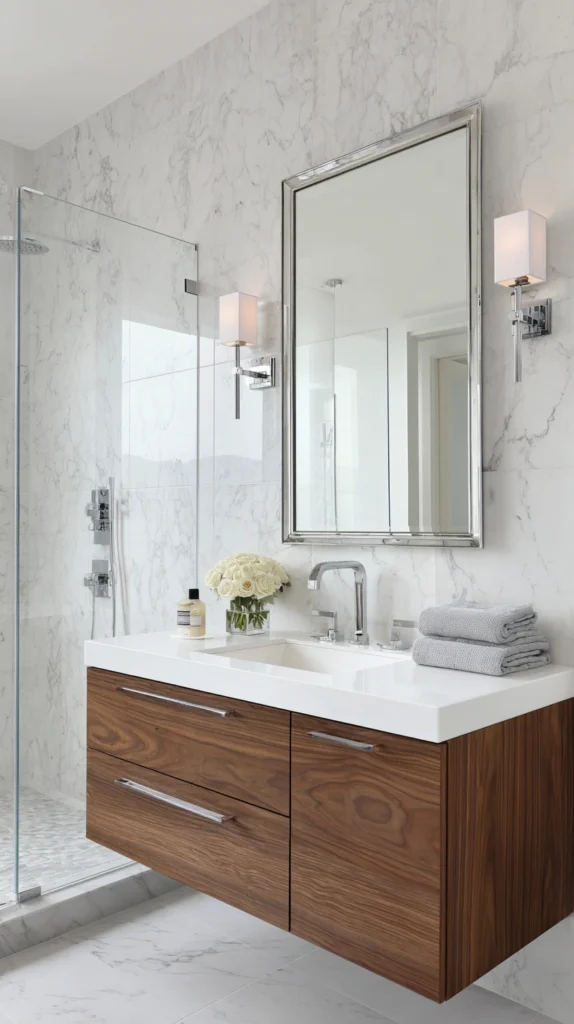
A mirror with an intentionally aged, imperfect surface.
What to look for:
- Antiqued glass with a mottled, foxed finish that mimics decades of natural wear
- Smoked glass for a darker, moodier reflection than standard clear mirror
- Frames kept simple, since the glass itself is the statement here
Why an imperfect mirror can outshine a flawless one:
- It adds instant history and texture to a brand-new bathroom
- The muted reflection is more flattering than the harsh clarity of standard mirror glass
- It pairs especially well with vintage-style fixtures and warmer color palettes
Cost breakdown: Antiqued glass mirrors run $120 to $300 depending on size, since the aging process is a specialized finish.
Getting started this weekend
You don’t need to redo the whole bathroom to feel the difference a mirror makes.
- Start by matching your mirror frame finish to your existing faucet hardware
- Size up before you size down, since most builder-grade mirrors are smaller than they should be
- Save integrated features like lighting or magnification for a second round once the basic shape and frame feel right
My own bathroom mirror swap took less time than a single grocery run, and it’s still the upgrade people notice first.
Budget reality
Mirror upgrades scale from nearly free to a genuine investment piece.
- Under $50: Floating shelf addition, magnifying swing-arm mirror
- $50-150: Wood-framed mirror, round mirror pairs, vintage thrifted frame
- $150-300: Backlit LED mirror, antiqued glass mirror, matched his-and-hers set
- $300+: Recessed medicine cabinet, tile-inset custom mirror, full mirrored wall
Most of the visual payoff happens well before the highest price tier.
What actually elevates the space
It was never really about finding the biggest or fanciest mirror available.
It’s the frame that matches the faucet, the light that flatters instead of shadows, the shape that finally fits the wall it hangs on.
Pick the one detail that’s bothering you most right now, fix that first, and let the rest follow.