
14 Large Blank Wall Ideas for Living Rooms
The blank wall stopped intimidating me the moment I stopped trying to fill it all at once. Not a single oversized poster stretched to cover the space. Not a a last-minute clearance-rack canvas bought purely because of its size. Not simply giving up and leaving it bare indefinitely out of decision fatigue.
The plan.
Because approaching the wall with an actual strategy did something staring at its blankness never resolved on its own. Before it: a genuinely large expanse of wall, technically fine, but visually void, the room’s furniture arranged as though the wall behind it did not exist. After it: a wall doing real work, whether through one substantial piece, a considered gallery, or a full architectural treatment, the room finally reading as complete rather than half-finished.
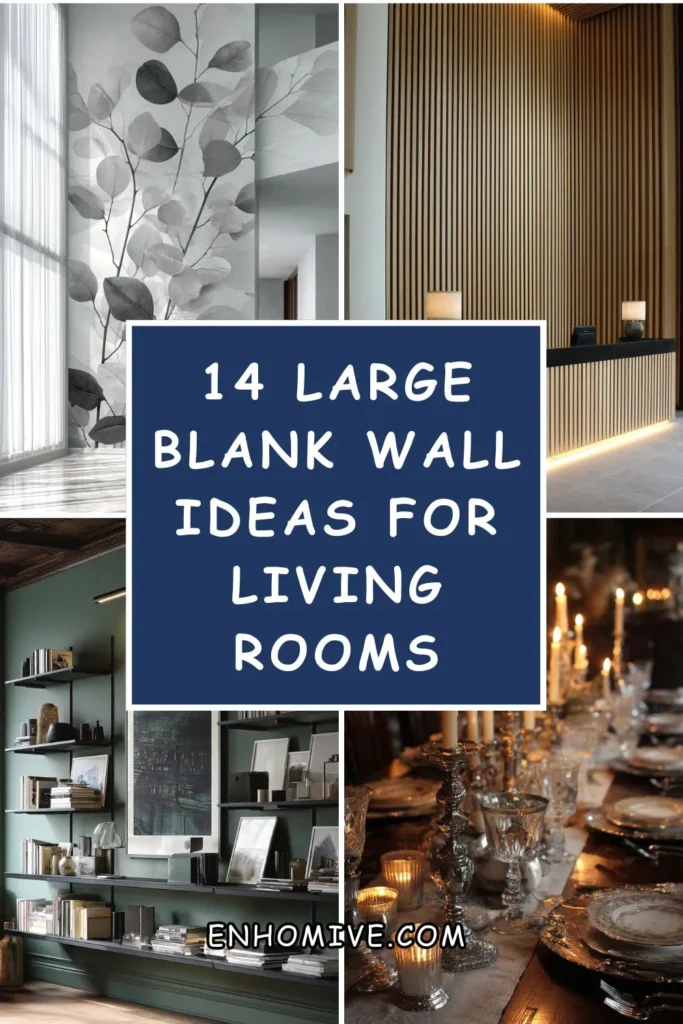
A large blank wall is not a problem to be solved with the first oversized object available. It is a genuine design opportunity, and the specific approach that works best depends entirely on the wall’s scale, the room’s style, and how much visual weight the space can actually support. The wall: no longer an intimidating void, but a canvas with several genuinely good ways to be filled.
Here are 14 large blank wall ideas for living rooms — from the simplest oversized art piece to the most fully realized architectural treatment — built on that understanding.
Why Large Walls Intimidate and How to Approach Them Confidently
The scale mismatch problem
A large wall styled with objects scaled for a smaller space reads as sparse and unfinished, regardless of how many individual pieces are added. The single most common mistake on a genuinely large wall is under-scaling everything placed on it.
The single-solution myth
Without a considered plan:
Assuming one piece of art, however large, must single-handedly solve the entire wall, leading to an oversized, often disappointing purchase made under pressure.
The wall: technically covered, but the solution itself often feeling forced or visually unconvincing.
With a considered plan:
Multiple approaches genuinely capable of filling a large wall successfully — a scaled-up gallery, a paint or wallpaper treatment, a furniture-based solution, or a genuinely oversized single piece — each one valid depending on the room’s specific needs.
The wall: filled through whichever specific technique actually suits the room, rather than forced into a single default solution.
The proportion rule of thumb
A general guideline: art or a primary wall feature should span roughly two-thirds of the furniture arrangement beneath it, providing a useful, if flexible, starting point for judging what scale of solution a specific wall actually needs.
The commitment spectrum
Some solutions on this list — a single art piece, a gallery wall — are easily changed or removed. Others, like a full accent wall treatment or built-in shelving, represent a more permanent commitment, worth weighing against how settled the household feels in the specific room and home.
The Five Categories of Large Wall Solutions
Before choosing any single approach:
Oversized single art or a mural
One substantial piece, or a wall-spanning mural, filling the space with a single strong visual statement.
The most straightforward conceptually, though it requires confidence in scale.
Works well when the wall calls for one clear focal point.
A scaled-up gallery arrangement
Multiple framed pieces, arranged with genuine density and scale to fill the wall’s full area.
Allows for variety and a collected, personal quality.
Requires more planning than a single piece but offers more flexibility.
Paint, wallpaper, or a textured treatment
Color, pattern, or texture applied directly to the wall itself, rather than adding objects on top of it.
Solves the wall at the architectural level rather than through added decor.
Often the lowest-cost solution for a genuinely large surface.
Furniture-based solutions
Bookshelves, a media wall, or another substantial furniture piece positioned against the wall.
Combines genuine function with visual fill.
Particularly effective when the room also needs additional storage or display capacity.
Architectural additions
Wood paneling, a fireplace feature, or built-in millwork constructed directly onto or into the wall.
The most substantial, most permanent category.
Best suited to a full room renovation or a significant design investment.
1. The Oversized Single Art Piece
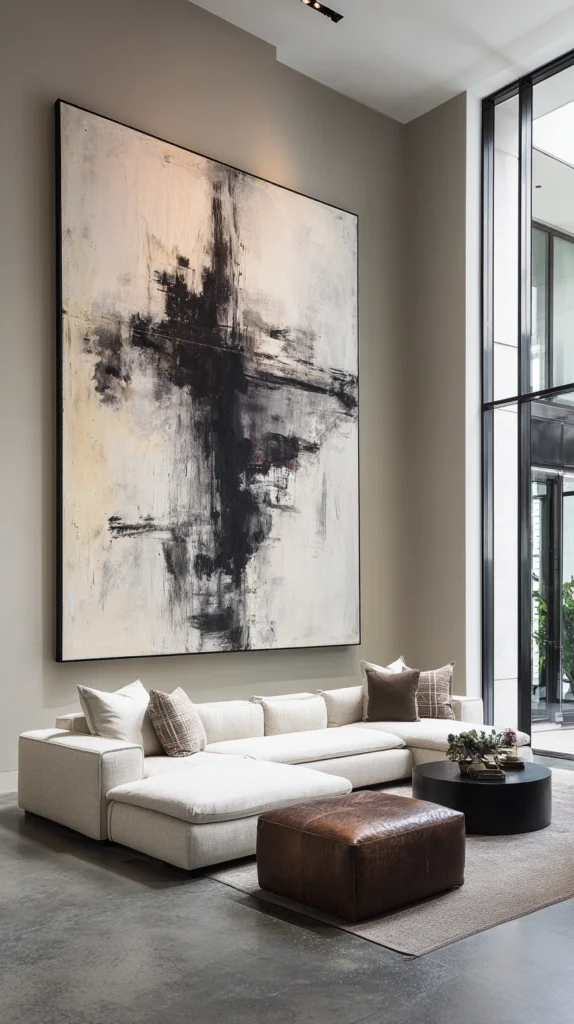
One substantial, large-format piece of art or a framed print, sized to genuinely command the wall’s full scale rather than a modestly sized piece that reads as insufficient.
Why scale confidence matters more than any other single factor here
The most common mistake on a large wall is choosing art sized for a much smaller space, which then reads as visually lost regardless of how good the piece itself is. A genuinely oversized piece, sized specifically to the wall’s actual dimensions, solves this immediately.
The sizing approach
The art spanning at least two-thirds of the furniture grouping’s width beneath it, providing a useful proportion guideline for judging whether a specific piece is actually large enough for the wall in question.
The piece selection
A large abstract painting, an oversized photographic print, or a substantial framed textile piece, chosen for genuine visual weight and quality rather than a piece that happens to be available in a large format.
The frame consideration
A substantial frame, proportional to the piece’s own scale, rather than a thin, understated frame that would undercut the overall sense of visual weight the large piece is meant to provide.
The hanging height
Centered at standard eye-level height relative to the seating below, rather than centered on the wall’s total height, which can result in the piece hanging higher than feels natural relative to the furniture beneath it.
The overall effect
A wall solved decisively with one confident statement, providing a clear focal point without requiring the more involved planning a gallery or architectural treatment would demand.
Cost breakdown: Large-format art or print: $200–800 Substantial frame (if not included): $100–300 Total: $300–1,100
2. The Dense Scaled-Up Gallery Wall
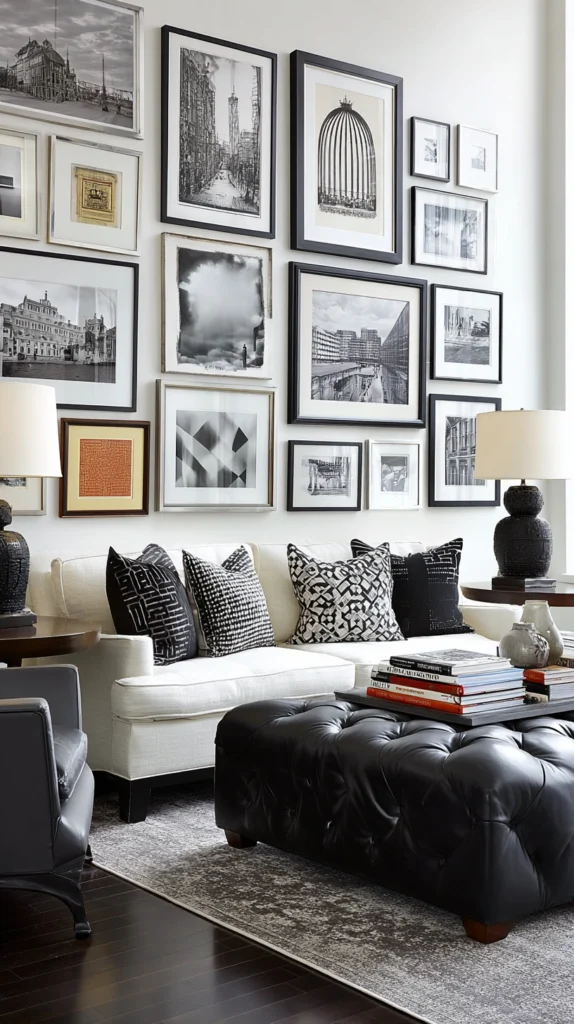
A collection of framed art and photography, arranged with genuine density and varied scale, filling the wall’s full area through quantity and considered composition rather than a single piece.
Why a gallery approach suits a wall wanting variety and personal collection over a single statement
Not every household wants or has access to one single piece large enough to fill an entire wall confidently. A dense, well-planned gallery achieves the same full coverage through a genuinely collected variety of smaller and medium pieces.
The planning process
Arranged on the floor first, adjusted until the composition feels balanced, before any piece is actually hung, a standard gallery-wall planning technique that becomes especially important at this larger scale.
The density requirement
Frames spaced closely, generally 2 to 3 inches apart, since a large wall gallery depends on genuine density to read as full and intentional rather than sparse.
The scale mix
A range of frame sizes, with a few larger anchor pieces distributed among smaller supporting frames, rather than a uniform size repeated throughout, which can read as flat despite the overall density.
The frame variety
Mixed frame finishes and styles, echoing the same collected, gathered-over-time quality valued in any well-executed gallery wall, rather than a uniformly matched set.
The overall coverage
The full gallery arrangement genuinely spanning the wall’s actual width and height, rather than a smaller cluster positioned in the center that leaves substantial bare wall space on either side.
Cost breakdown: Frames and art (12–20 pieces, mixed sourcing): $200–600 Total: $200–600
3. The Bold Paint Color or Color Blocking
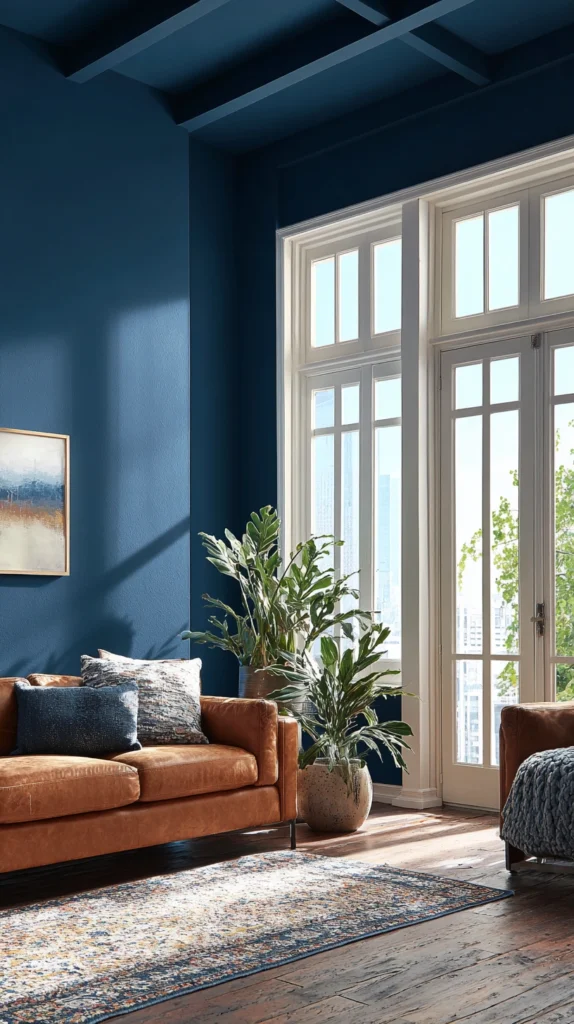
The wall painted in a bold, saturated color, or in a color-blocked pattern of two or three tones, solving the wall through color alone rather than any added object.
Why paint remains one of the most cost-effective large-wall solutions available
Compared with art, furniture, or architectural additions, paint solves an entire wall’s visual presence at a fraction of the cost, while remaining relatively easy to change later if the room’s needs evolve.
The color choice
A deep, saturated color — forest green, navy, terracotta, or a rich burgundy — providing enough visual weight and presence to genuinely register as the room’s focal wall.
The color-blocking option
Two or three colors applied in geometric sections, rather than one uniform color, adding additional visual interest and structure to a wall large enough to support that added complexity.
The furniture relationship
Furniture and decor chosen to complement rather than compete with the bold wall color, since the paint itself is doing substantial visual work that the rest of the room’s styling should support rather than overshadow.
The commitment level
A more easily reversible choice than most other approaches on this list, requiring only repainting rather than any structural or furniture-based undoing if the household’s preferences change over time.
The overall effect
A wall solved through color confidence alone, providing genuine visual presence without requiring any additional art, furniture, or construction.
Cost breakdown: Paint (single large wall): $60–120 Total: $60–120
4. The Full Wall Mural or Wallpaper
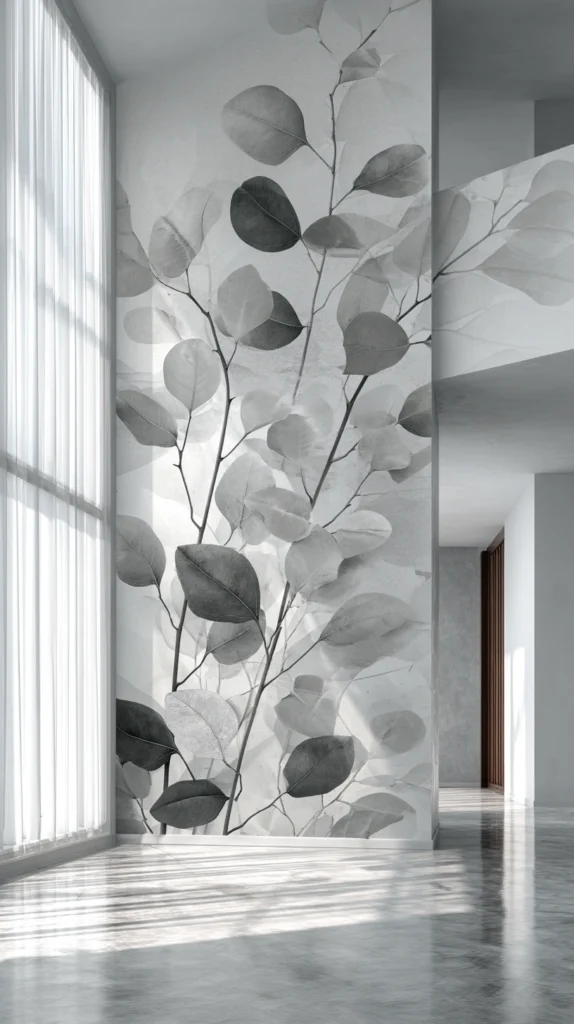
A large-scale mural or bold wallpaper pattern covering the wall’s full surface, providing pattern, scene, or texture rather than relying on flat paint or added objects.
Why a mural suits a wall wanting genuine drama and scene rather than color alone
Where a flat paint color provides tone and depth, a mural or patterned wallpaper adds an actual scene, texture, or narrative quality, offering considerably more visual complexity for a household wanting real drama on their largest wall.
The mural style
A botanical scene, an abstract pattern, or a scenic mural, chosen at a scale specifically suited to the wall’s genuine size, since a mural designed for a smaller space may not translate successfully to a much larger surface.
The pattern scale
A large-scale repeat or a single continuous scene, rather than a small, tight pattern that would read as busy rather than impactful across such a large expanse.
The application
Professional installation generally recommended for a wall this size, given the precision required across a larger surface area and the higher cost of a visible installation error.
The remaining room
The room’s other walls and furniture kept simpler and more neutral, allowing the mural wall to remain the room’s clear singular statement rather than competing with equally bold choices elsewhere.
The overall effect
A wall transformed into the room’s unmistakable focal point, the mural doing more visual work than paint or art alone typically achieves at this scale.
Cost breakdown: Mural or wallpaper (large wall quantity): $200–600 Professional installation: $400–1,000 Total: $600–1,600
5. The Floor-to-Ceiling Bookshelf Wall
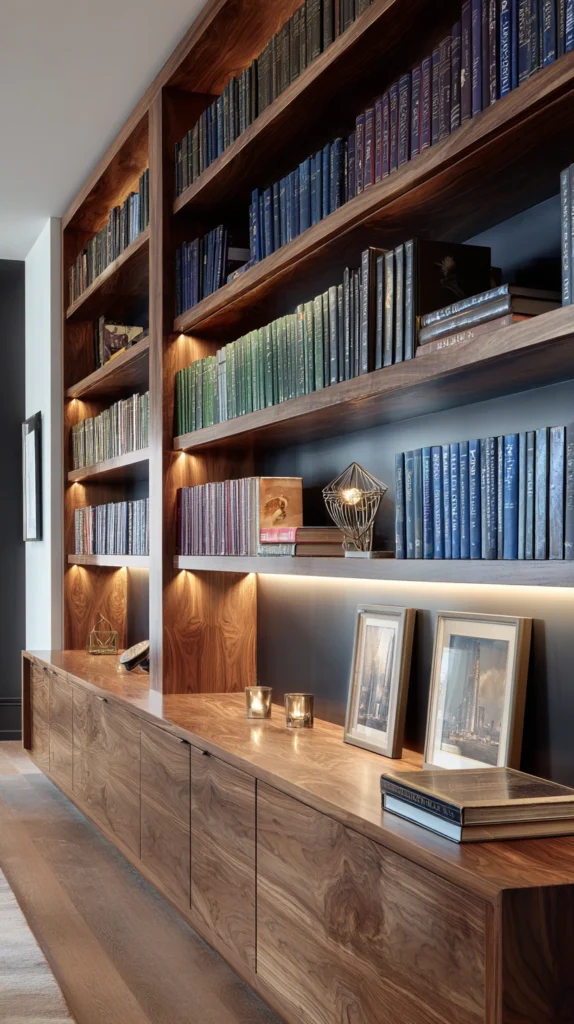
Built-in or modular shelving spanning the wall’s full height and width, providing genuine storage and display capacity while completely filling the wall’s visual presence.
Why a bookshelf wall solves both the visual and functional challenge simultaneously
Rather than solving the wall purely decoratively, a full shelving unit addresses genuine storage and display needs at the same time, making this one of the most functionally valuable large-wall solutions available.
The shelving system
Built-in custom shelving, or a modular freestanding system, spanning the wall’s full height and width, providing a substantial visual presence through sheer scale and the varied objects it will eventually hold.
The styling
Books, ceramics, and considered decorative objects arranged across the shelving with genuine height and density variation, avoiding the flat, uniform look of shelving filled with books alone at a single consistent height.
The lower cabinet option
Closed cabinets at the base, with open shelving above, providing concealed storage for less visually appealing items alongside the more curated open display higher up.
The lighting integration
Small shelf-integrated lighting, illuminating the display even when the room’s main overhead lights are off, adding warmth and depth to the wall during evening hours.
The overall value
A wall that solves both its visual presence and a genuine household storage need simultaneously, particularly valuable in a home lacking sufficient book or display storage elsewhere.
Cost breakdown: Built-in shelving: $1,500–4,000 Or modular freestanding shelving: $400–1,200 Styling objects: $60–200 Total: $460–4,200 depending on approach
6. The Media Wall With Integrated Storage
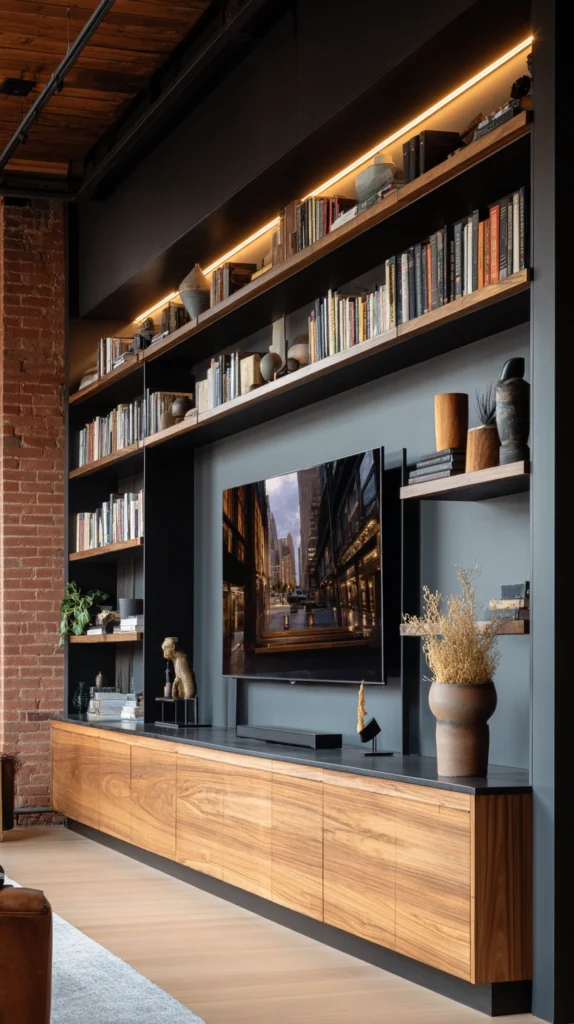
A television and media components integrated into a substantial wall unit, combining the room’s entertainment function with a full visual solution for the large wall behind it.
Why a media wall suits the room’s most commonly needed large-wall function directly
Many large living room walls exist specifically to hold a television, making a considered media wall — rather than a television mounted alone on an otherwise bare wall — one of the most practical and commonly needed solutions available.
The wall unit
A substantial built-in or modular unit surrounding the television, incorporating shelving, cabinets, and a designated television mounting area, rather than the television standing alone with no surrounding architectural context.
The concealment options
Closed cabinets specifically for a cable box, gaming console, or other components, keeping cords and less visually appealing equipment out of view.
The surrounding display
Shelving flanking the television, styled with books and objects, ensuring the wall’s visual interest extends beyond the television screen itself.
The scale consideration
The unit sized to genuinely fill the wall’s full width, rather than a media console sized only to the television’s own width, which would leave substantial bare wall space on either side.
The overall effect
A wall that fully addresses both the room’s entertainment function and its visual scale simultaneously, rather than treating the television as a standalone object with no considered surrounding context.
Cost breakdown: Built-in or modular media wall unit: $1,000–3,500 Total: $1,000–3,500
7. The Vertical Wood Slat Accent Wall
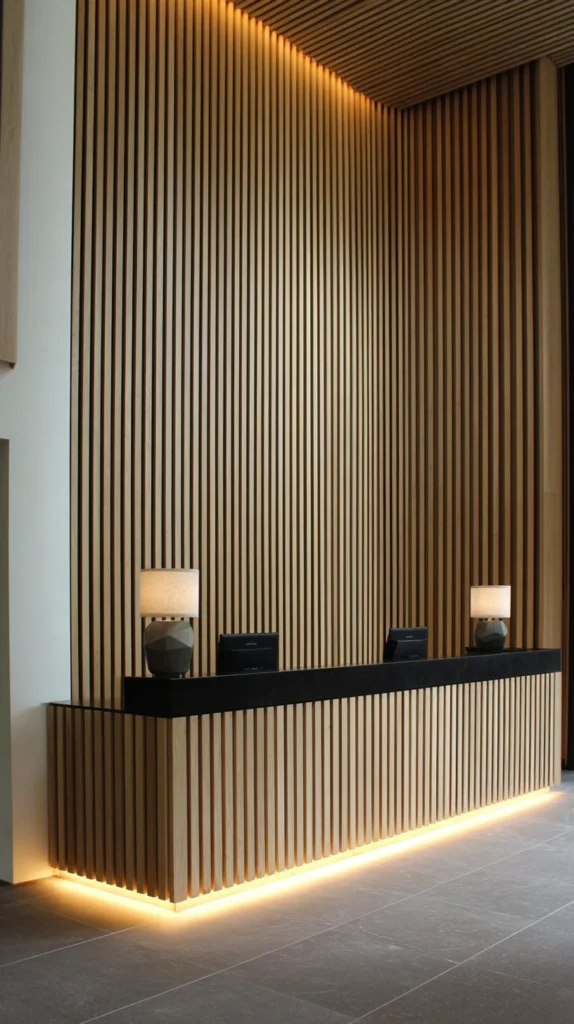
Wood slats installed vertically across the wall’s full height, providing genuine architectural texture and warmth through material rather than paint or added objects.
Why vertical slats suit a large wall’s proportions particularly well
Vertical lines draw the eye upward, emphasizing a room’s height and making a large wall feel intentional and architectural rather than simply expansive and empty.
The slat material
Wood slats, either painted, stained, or left natural, installed at consistent intervals across the wall’s full width, providing genuine dimensional texture.
The spacing
Even spacing between slats, calculated to divide evenly across the wall’s actual width, avoiding an awkward partial slat at either end.
The lighting integration
Small LED strip lighting installed behind or between the slats, providing a warm, indirect glow that enhances the texture’s shadow and highlight variation, particularly effective in the evening.
The finish choice
A natural or warm-stained wood finish for an organic, warm effect, or a painted finish matching the room’s existing wall color for a more subtle, purely textural treatment.
The overall effect
A wall with genuine architectural presence and material interest, the vertical slats providing texture and structure without requiring any additional art or furniture.
Cost breakdown: Wood slats (full wall): $200–500 Installation: $300–700 LED lighting (if adding): $60–150 Total: $560–1,350
8. The Fireplace or Faux Fireplace Feature Wall
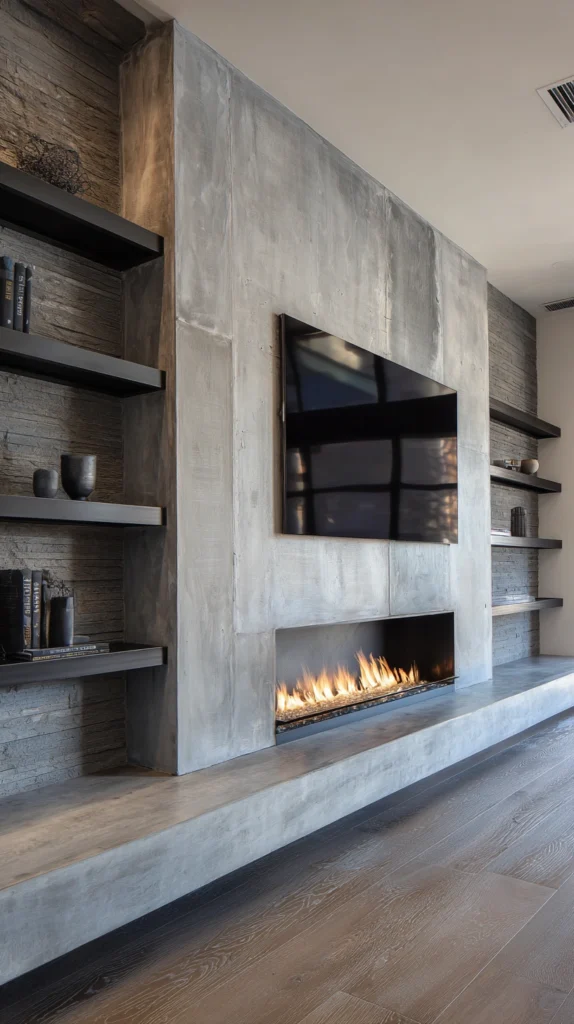
A fireplace, electric insert, or faux fireplace surround built as the wall’s central feature, providing both genuine ambiance and a clear architectural anchor for the room’s largest wall.
Why a fireplace feature solves a large wall through genuine focal-point architecture
A fireplace is one of the few features that naturally commands a room’s attention without requiring any additional styling, making it one of the most effective solutions for a wall that needs a clear, undeniable focal point.
The fireplace type
A genuine gas or electric fireplace insert, or a faux surround housing a candle-based or LED flame-effect display, depending on the household’s budget and whether genuine supplemental heat is desired.
The surround construction
A substantial mantel and surround, in stone, tile, or wood, sized generously to the wall’s actual scale, avoiding an undersized fireplace feature that would read as lost against a genuinely large wall.
The flanking shelving
Built-in shelving or cabinets on either side of the fireplace, extending the wall’s full width and providing additional storage and display capacity beyond the fireplace feature alone.
The television integration
A television mounted above the fireplace if desired, combining the room’s entertainment and ambiance functions into one unified wall feature, though worth considering viewing height and heat exposure before finalizing this specific configuration.
The overall effect
A wall transformed into the room’s clear, undeniable architectural center, addressing both the room’s visual and ambiance needs simultaneously.
Cost breakdown: Fireplace insert or faux surround: $400–2,000 Mantel and surround construction: $600–1,800 Flanking shelving: $400–1,000 Total: $1,400–4,800
9. The Large-Scale Tapestry or Textile Hanging
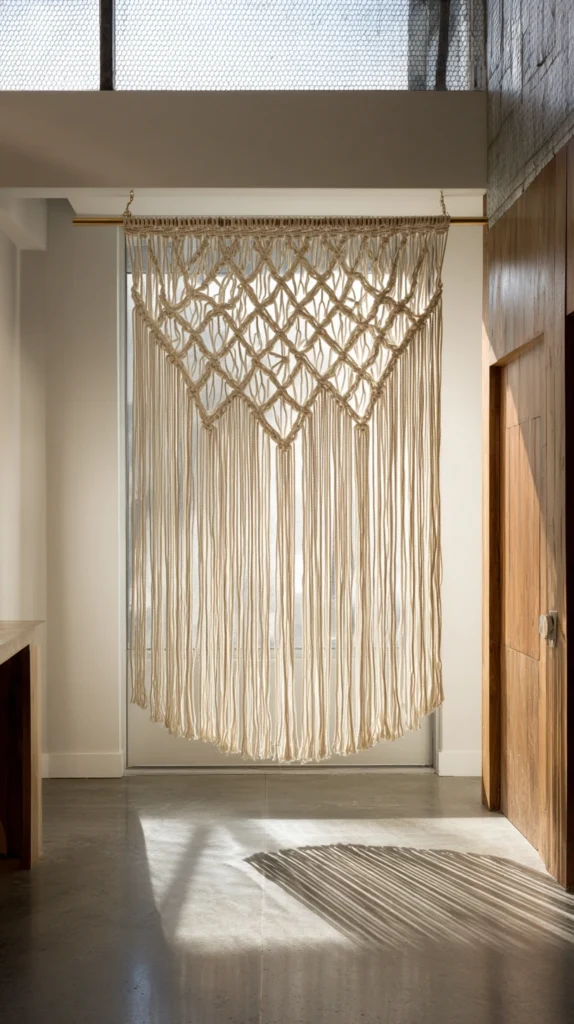
A substantial woven tapestry, textile hanging, or fabric panel spanning much of the wall’s height and width, providing texture and pattern through fabric rather than paint, art, or wood.
Why a textile solution suits a wall wanting warmth and softness over a harder material treatment
Every other large-scale solution on this list relies on a hard material — paint, wood, framed art under glass. A substantial textile hanging introduces genuine softness and warmth, along with a different kind of visual and even acoustic quality.
The textile selection
A large woven tapestry, a macrame wall hanging, or a substantial fabric panel, chosen at a scale genuinely proportional to the wall rather than a smaller textile piece that would read as insufficient.
The hanging method
A wood dowel or a simple curtain rod, allowing the textile to hang with natural drape and movement rather than stretched flat and taut.
The color and pattern
Chosen to complement the room’s existing palette, whether a bold, patterned tapestry as a genuine statement piece or a more subtle, textural neutral piece providing warmth without competing color.
The acoustic benefit
A substantial fabric piece providing genuine sound-absorbing benefit, a practical advantage beyond the purely visual one, particularly valuable in a room with hard flooring and minimal other soft furnishings.
The overall effect
A wall with genuine textural warmth and softness, offering a meaningfully different quality than any of the harder-surfaced solutions elsewhere on this list.
Cost breakdown: Large tapestry or textile hanging: $150–500 Hanging hardware: $20–50 Total: $170–550
10. The Salon-Style Mirror Cluster
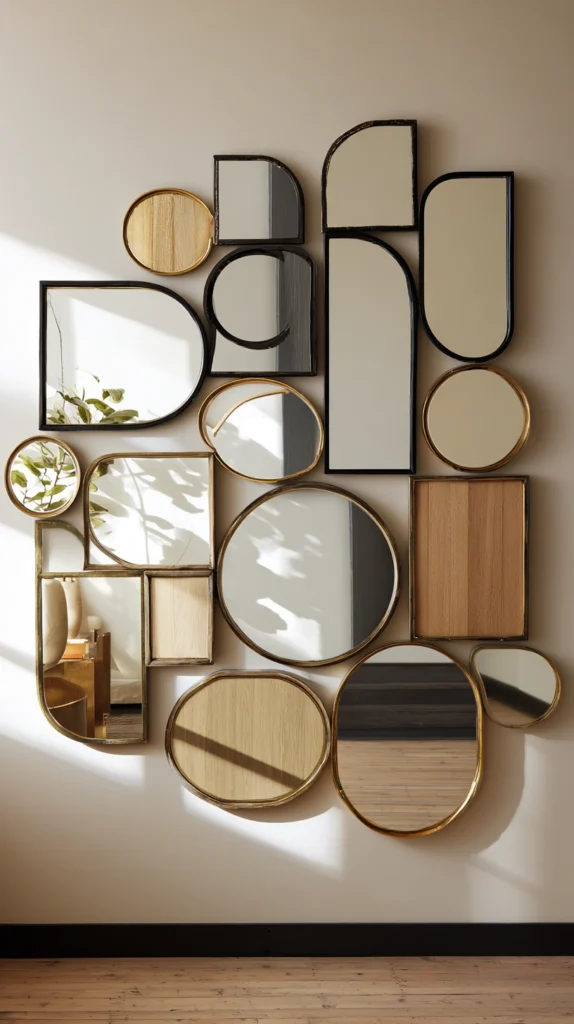
Multiple mirrors of varying shapes and sizes, arranged in a dense cluster similar to a gallery wall’s composition, filling the wall while adding genuine light-reflecting and space-expanding function.
Why a mirror cluster serves a dual purpose most other wall solutions do not
Beyond pure visual coverage, a substantial mirror arrangement reflects both natural and artificial light throughout the room, and creates a genuine sense of expanded depth and space, a functional benefit unique to this specific approach.
The mirror selection
A mix of round, arched, and rectangular mirrors in varying sizes, arranged with the same density and varied-scale principles relevant to a standard gallery wall.
The frame variety
Different frame finishes — brass, black metal, natural wood — providing visual variety within the cluster while the mirrors’ reflective quality unifies the overall composition.
The placement consideration
Positioned to reflect a genuinely pleasant view — a window, a piece of art, or the room’s best feature — rather than reflecting a blank wall or an unremarkable corner, maximizing the mirrors’ functional benefit alongside their visual one.
The light amplification
The cluster’s combined reflective surfaces meaningfully brightening the room, particularly valuable in a living room with limited natural light or a desire to make the space feel larger than its actual dimensions.
The overall effect
A wall filled with genuine visual interest and functional benefit simultaneously, the mirrors’ reflective quality adding value beyond what framed art or a painted surface alone would provide.
Cost breakdown: Mirrors (8–12, varied sizes): $150–450 Total: $150–450
11. The Board and Batten or Wainscoting Treatment
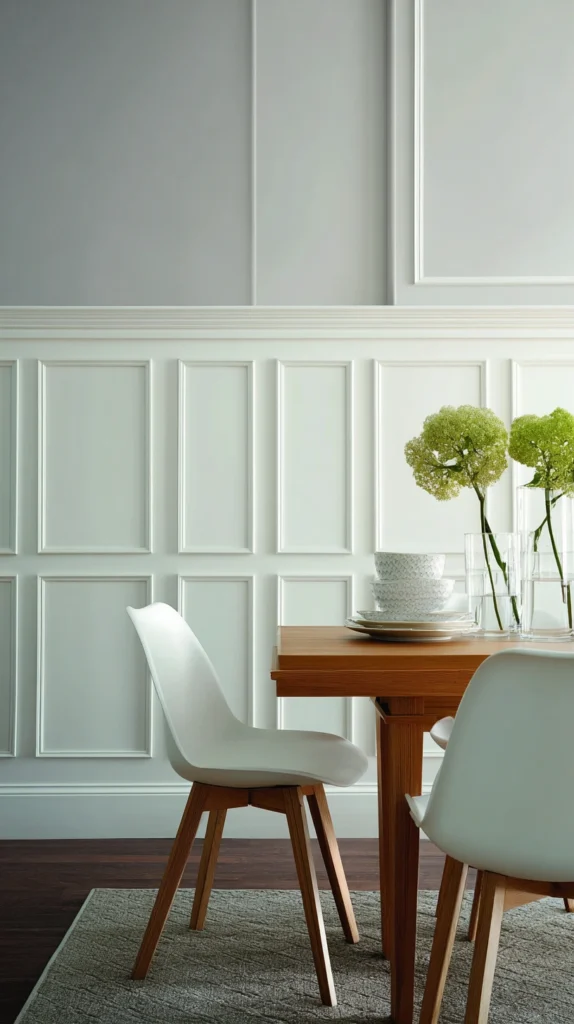
Architectural molding — board and batten, wainscoting, or a paneled wall treatment — applied to the wall’s lower portion or full height, adding dimensional detail through millwork rather than paint or added decor.
Why millwork suits a wall wanting formal, architectural detail
Board and batten and similar paneled treatments introduce genuine three-dimensional architectural interest, a quality distinct from anything achieved purely through paint, art, or fabric, suited to a household wanting the wall to read as a genuine architectural feature.
The treatment type
Board and batten (vertical strips over a flat panel), traditional raised-panel wainscoting, or a grid-pattern paneled treatment, chosen based on the room’s overall style direction.
The height application
Applied to the lower half of the wall, up to chair-rail height, with paint or wallpaper above, or extended the wall’s full height for a more dramatic, fully paneled effect.
The paint finish
Typically painted a single color across the molding and the wall behind it, allowing the raised millwork lines to create shadow and texture rather than relying on any color contrast.
The room suitability
Particularly effective in a more traditional or classically styled living room, though simplified, cleaner-lined versions of board and batten also suit more contemporary spaces.
The overall effect
A wall with genuine architectural detail and craftsmanship, reading as a considered, built-in feature rather than a surface treatment applied on top of an otherwise plain wall.
Cost breakdown: Board and batten or wainscoting materials: $300–800 Paint: $60–120 Installation (if hiring out): $500–1,200 Total: $360–2,120 depending on DIY versus professional installation
12. The Oversized Clock or Sculptural Wall Object
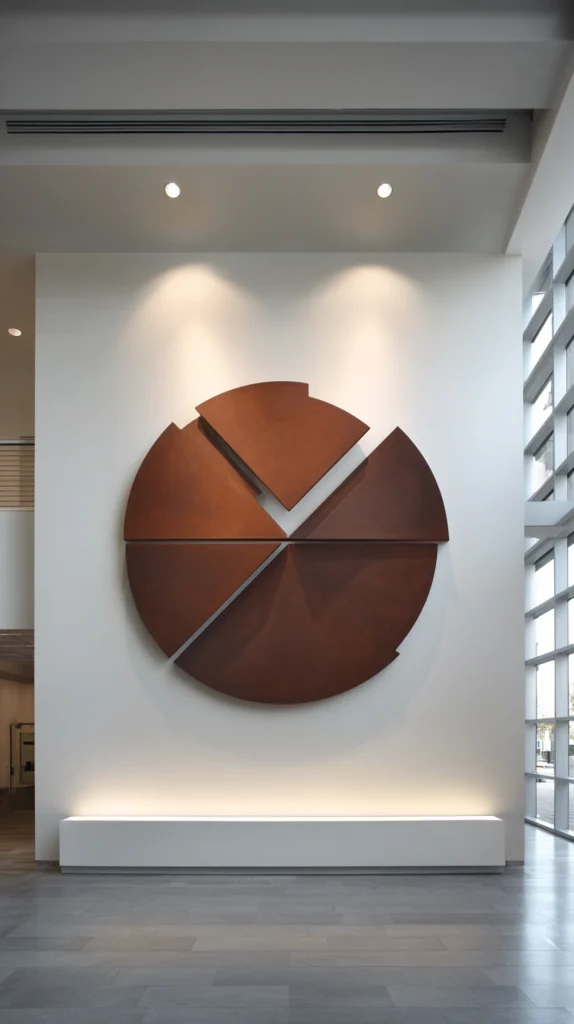
A single, genuinely oversized decorative object — a large wall clock, a sculptural metal piece, or an architectural salvage element — mounted as the wall’s sole, confident focal point.
Why one truly oversized object can solve a wall as effectively as art or a gallery
Similar to the oversized single art piece, a genuinely large sculptural or functional object — sized with real confidence rather than modestly — can command a large wall’s attention entirely on its own.
The object selection
A large wall clock, a substantial metal sculptural piece, salvaged architectural element (an old window frame, a piece of ironwork), or another sizable decorative object, chosen for genuine visual weight and quality.
The scale commitment
Sized to command the wall confidently, following the same two-thirds proportion guideline relevant to any single large-scale wall solution, rather than a modestly sized object that would read as insufficient against the wall’s actual scale.
The mounting
Secure wall mounting appropriate to the object’s specific weight and material, worth confirming with a professional installer for a particularly heavy or unusually shaped piece.
The surrounding restraint
Minimal additional decor surrounding the object, allowing it to remain the wall’s clear singular statement rather than competing with additional smaller pieces.
The overall effect
A wall solved through one genuinely confident, substantial choice, offering a distinctive alternative to more conventional framed art or a gallery arrangement.
Cost breakdown: Oversized decorative object: $150–500 Mounting hardware: $30–80 Total: $180–580
13. The Layered Curtain Wall Treatment
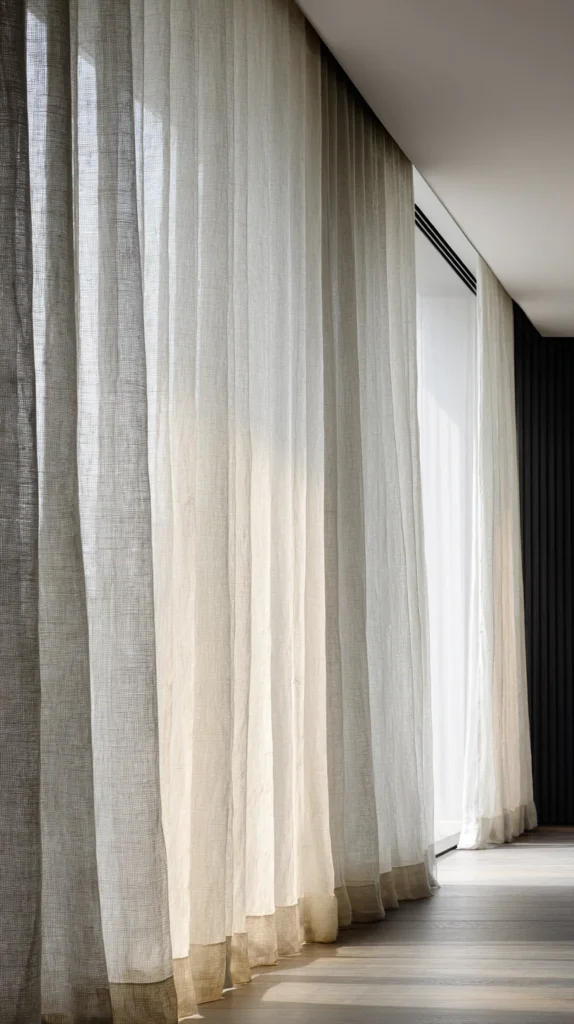
Floor-to-ceiling curtains hung across the wall’s full width, even where no window exists, using fabric to soften and visually complete a large, otherwise bare wall.
Why curtains can solve a wall even without an actual window behind them
Curtains are typically associated exclusively with windows, but hung across a blank wall’s full width, they provide the same visual softening and fabric volume regardless of what, if anything, lies behind them — an unconventional but genuinely effective large-wall solution.
The curtain fabric
A substantial, floor-to-ceiling curtain panel or set of panels, in linen, velvet, or another substantial fabric, hung from a rod spanning the wall’s actual width.
The hanging height
Mounted at true ceiling height, maximizing the fabric’s dramatic vertical presence regardless of whether an actual window exists behind the treatment.
The color and texture
Chosen to complement the room’s broader palette, whether a bold color for genuine visual statement or a soft neutral for a more subtle, textural softening effect.
The practical consideration
This approach depends entirely on the fabric’s own visual quality and volume to fill the wall, since there is no window or view to provide additional visual interest behind it, making fabric choice especially important here.
The overall effect
A wall softened and visually completed through fabric alone, offering a genuinely different texture and quality than any of the harder-surfaced solutions elsewhere on this list.
Cost breakdown: Substantial curtain fabric (full wall width, floor to ceiling): $100–300 Curtain rod: $40–100 Total: $140–400
14. The Complete Large Wall Solution (The Fully Resolved Feature Wall)
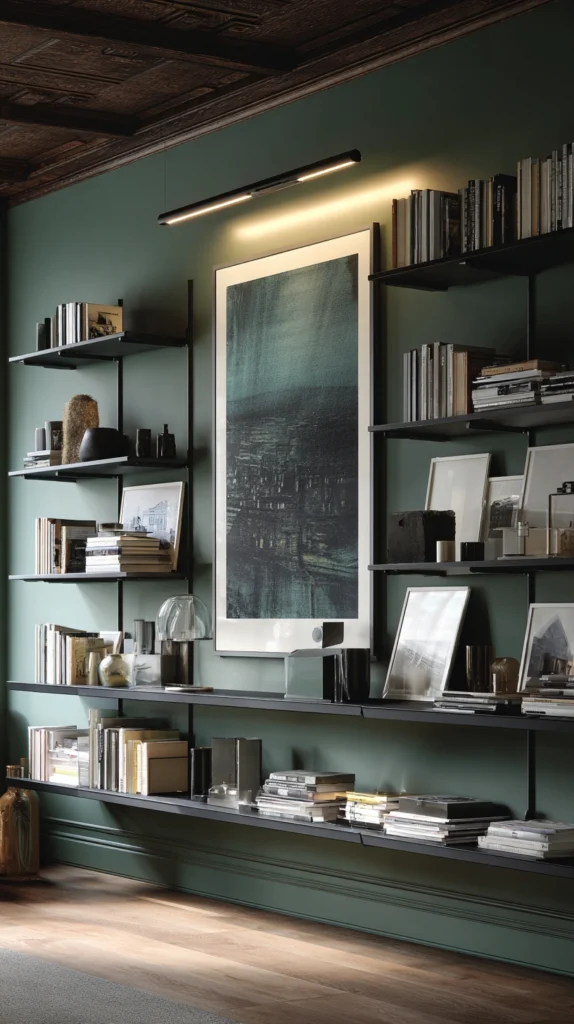
A complete large wall treatment combining several of the approaches above — an architectural base treatment, genuine furniture or storage function, and a considered focal point — treating the wall as a single, fully resolved design opportunity rather than a problem solved with one isolated purchase.
What separates the complete solution from a single piece of art hung in isolation
One oversized painting on an otherwise unconsidered wall: a solid, straightforward fix. A complete large wall solution: every element — the wall’s base treatment, its furniture or storage function, and its focal point — working together as one considered composition, addressing the wall’s full potential rather than the minimum needed to avoid it looking bare.
The elements of the complete large wall solution
The base treatment
Paint, wallpaper, or a textured or paneled treatment applied to the wall itself, providing genuine architectural or color foundation before any furniture or art is added.
The functional layer
Built-in shelving, a media unit, or another substantial furniture piece, addressing genuine storage or entertainment needs while filling the wall’s lower and middle portions.
The focal point
A single confident piece of art, an oversized object, or a fireplace feature, providing the wall’s clear visual anchor.
The lighting
Picture lights, shelf-integrated lighting, or simply well-placed lamps nearby, ensuring the wall reads as intentional and well-considered during evening hours as much as during the day.
The proportion check
Every element sized and positioned according to the wall’s actual, full-scale dimensions, rather than any single piece scaled for a smaller space and left looking insufficient.
The complete design in action
A living room’s largest wall, fully resolved:
The base: A deep, considered paint color, providing genuine depth and richness as the foundation.
The function: Built-in shelving flanking a media unit, housing books, objects, and the television in one unified composition.
The focal point: A substantial piece of art centered above the console, sized confidently to the wall’s actual scale.
In the evening: Shelf lighting and a picture light above the art, the wall remaining the room’s clear visual anchor regardless of the hour.
The complete large wall solution: not a single object placed to avoid an empty wall, but a fully considered composition that uses the wall’s genuine scale as an opportunity rather than treating it as a problem to be minimized.
Cost breakdown for the complete solution: Assuming a starting point of a bare, unpainted wall: Paint or base treatment: $60–150 Built-in shelving or media unit: $1,000–3,500 Focal art or object: $200–800 Lighting: $60–200 Total: $1,320–4,650
Phased over a renovation or furnishing timeline:
Phase one: The base paint or wall treatment, establishing the wall’s foundational color and texture
Phase two: The functional furniture layer — shelving, a media unit, or built-ins
Phase three: The focal art or object, plus lighting, completing the wall’s full composition
The complete large wall solution: not a single purchase made to fill an intimidating blank space, but a genuinely resolved design opportunity, addressed with the same intention given to any other significant room feature.
The Question Before Any Large Wall Decision
Before choosing a single approach:
What does this specific wall actually need to accomplish for the room?
If the answer is: the room needs more storage or display capacity — the floor-to-ceiling bookshelf or the media wall.
If the answer is: a genuine focal point, decisively resolved — the oversized single art piece or a fireplace feature.
If the answer is: texture and architectural interest without added furniture — the wood slat treatment or board and batten millwork.
If the answer is: the lowest-cost, most easily reversible solution — bold paint or a color-blocking treatment.
The design follows what the room and household actually need from this specific wall, more than any single trending large-wall solution. Every idea on this list solves the same basic challenge — genuine scale — through a different combination of function, cost, and commitment. The question is which combination fits this particular wall and this particular room.
The single oversized piece of art, sized with genuine confidence: still solves a large wall decisively and immediately. The complete solution, layered with base treatment, function, and focal point: a wall that works as hard as any other feature in the room, rather than simply avoiding looking empty.
That full resolution: the whole point of approaching a large wall with an actual plan rather than the first available object.
Getting Started This Weekend
The immediate large wall solution:
Measure the wall’s actual dimensions before choosing any single approach.
The specific numbers, rather than a general impression of “big,” should guide every subsequent scale decision.
Decide whether the wall needs a functional solution or a purely visual one.
Storage and media needs point toward furniture-based solutions; a wall with no such need may be better suited to art, paint, or a mural.
Test paint or wallpaper on a small section before committing to the full wall.
A sample viewed in the room’s actual light prevents a costly, large-scale mismatch.
If choosing art, measure twice against the two-thirds furniture-width guideline before purchasing.
The rest of the design: the elaboration of this moment.
The wall: the beginning. The completed room: what gets built, layered, and hung to finally resolve it.