
13 Living Room Corner Styling Ideas
The empty corner changed how my entire living room felt more than any furniture rearrangement I attempted before it. Not a bigger sofa. Not a new rug. Not repositioned seating or a fresh coat of paint or better overhead lighting.
The corner itself.
Because giving that one dead space an actual purpose did something rearranging the rest of the room never managed. Before it: a corner where nothing quite fit, where a lamp got shoved because there was nowhere else for it to go, where the eye simply skipped over an awkward gap between two walls. After it: a small, deliberate moment, a plant or a chair or a considered vignette, the room finally reading as complete rather than almost finished.
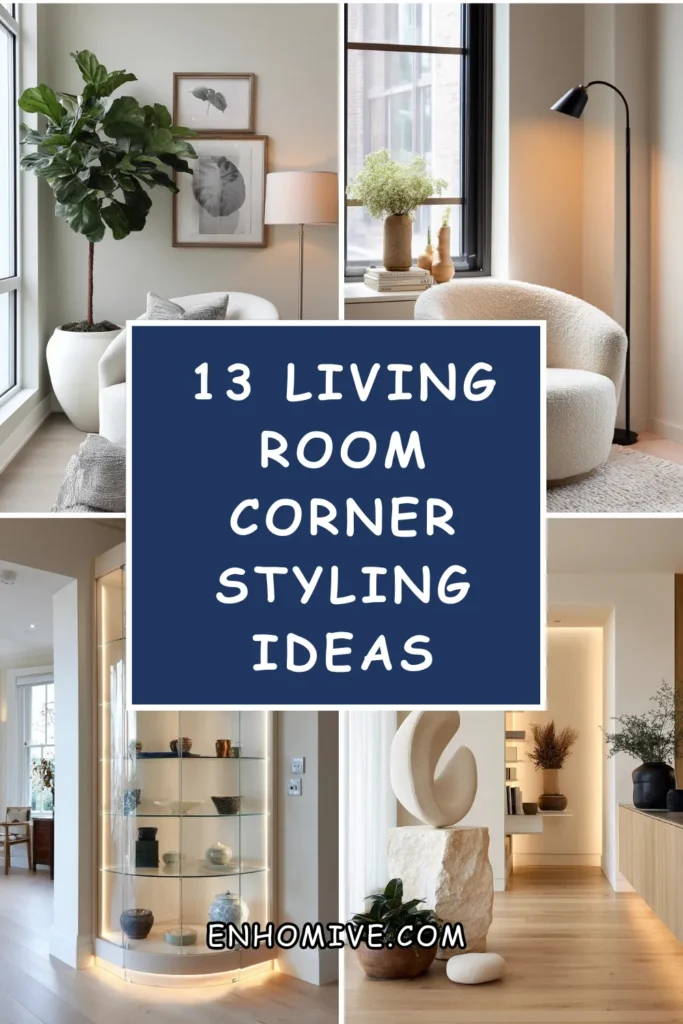
A living room corner is not leftover space to be filled with whatever does not fit elsewhere. It is a genuine design opportunity, and the rooms that use their corners well consistently read as more complete and more considered than rooms that leave them empty or treat them as storage overflow. The corner: no longer an afterthought, but a small, specific answer to what the room was actually missing.
Here are 13 living room corner styling ideas — from the simplest single plant to the most fully realized corner nook — built on that understanding.
Why Corners Get Overlooked and Why They Matter
The default neglect
Most living rooms are furnished around the largest, most obvious pieces first — the sofa, the coffee table, the media console — leaving the corners as whatever space happens to remain, filled last or not at all.
The completeness principle
Without corner styling:
A room with furniture arranged around its central and most prominent walls, corners left empty or serving as accidental overflow for whatever object had nowhere else to go.
The room: functional, but reading as unfinished, the eye noticing the gaps even if it cannot immediately articulate why.
With corner styling:
Each corner given a small, deliberate purpose — a plant, a chair, a considered vignette — completing the room’s overall composition.
The room: reading as fully resolved, every area accounted for rather than merely the central, most visible spaces.
The proportion consideration
A corner typically calls for a different scale of object than the room’s central furniture — often something narrower, taller, or more vertically oriented, taking advantage of a shape most furniture designed for open floor space does not fully exploit.
The function-or-beauty choice
Every corner does not need the same treatment. Some serve the room best purely decoratively — a plant, a sculptural object — while others benefit from genuine function, becoming a small reading nook or a practical storage solution. Deciding which role a specific corner should play is the first and most important styling decision.
The Five Corner Styling Approaches
Before styling any specific corner:
The single statement plant
One substantial floor plant, filling the corner’s vertical space with organic texture and height.
The simplest, lowest-cost, and most universally workable option.
Suits nearly any corner regardless of size or room style.
The reading or accent chair nook
A single chair and a small lamp, creating a functional small seating area within the corner’s footprint.
Turns unused space into genuinely usable square footage.
Requires slightly more floor space than a purely decorative approach.
The vertical shelving or ladder display
Tall, narrow shelving or a leaning ladder shelf, taking advantage of the corner’s height without requiring significant floor depth.
Adds storage and display capacity to an otherwise wasted space.
Particularly effective in a room needing additional book or object storage.
The gallery or art corner
A cluster of framed art or a single large piece, angled or positioned specifically to suit the corner’s two-wall configuration.
Uses the corner’s unique geometry as a natural framing device.
Works well even in a very narrow or shallow corner.
The functional work or bar nook
A small desk, bar cart, or utility station tucked into the corner, giving the space a genuine daily function beyond pure decoration.
Maximizes the corner’s practical value.
Suited to a household needing a small dedicated zone for a specific task.
1. The Single Statement Floor Plant
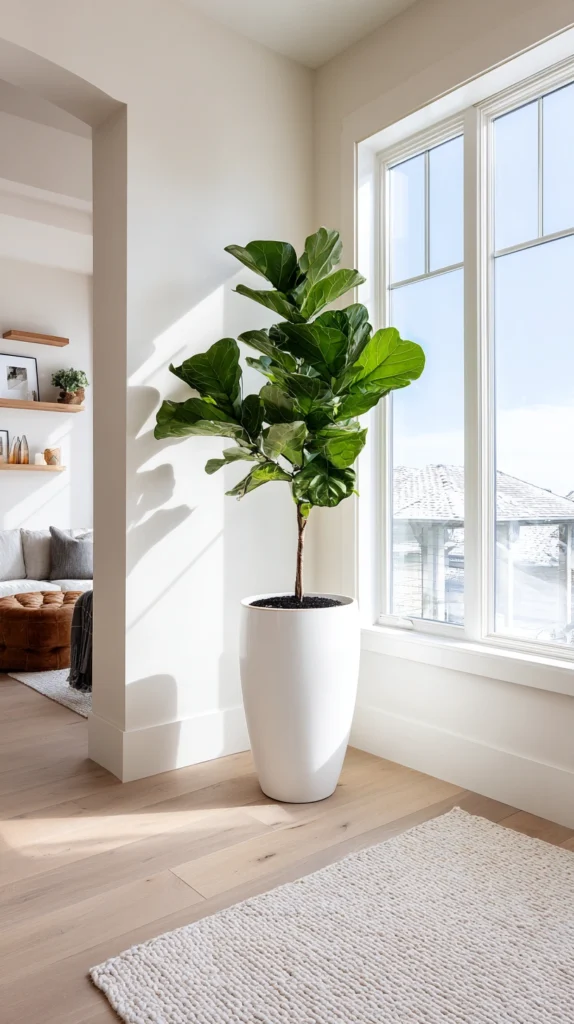
One substantial floor plant — a fiddle-leaf fig, a bird of paradise, or an olive tree — positioned in the corner, filling its vertical space with organic height and texture.
Why a single large plant is the most universally effective corner solution
A plant’s naturally irregular, vertical growth habit suits a corner’s shape better than nearly any piece of furniture, filling the space’s height without requiring the floor depth a chair or shelving unit would need.
The plant selection
A tall, structurally interesting variety — fiddle-leaf fig, bird of paradise, rubber plant, or olive tree — chosen for genuine height and a distinctive silhouette rather than a smaller, less visually substantial option.
The pot
A substantial ceramic, woven, or brass planter, scaled generously to the plant’s size, avoiding a pot so small it reads as an afterthought relative to the plant’s own visual weight.
The light assessment
Confirming the specific corner’s actual light levels before selecting a plant variety, since corners are often among a room’s dimmer spots, away from windows, requiring a genuinely low-light-tolerant plant if natural light is limited.
The styling addition
A small stack of books or a woven basket at the plant’s base, adding a second, lower element without competing with the plant’s own height and presence.
The overall effect
A corner filled with genuine organic life and texture, requiring minimal cost or effort relative to the visual completeness it provides the room.
Cost breakdown: Large floor plant: $40–150 Substantial planter: $25–70 Total: $65–220
2. The Reading Chair and Floor Lamp Nook
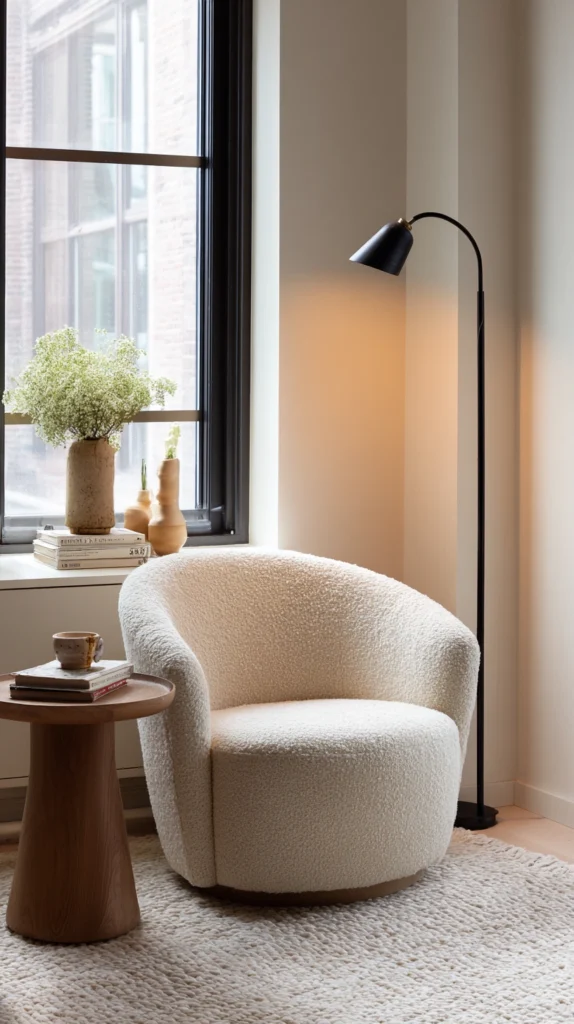
A single comfortable chair paired with a floor lamp, positioned in the corner to create a small, functional reading spot within the room’s overall footprint.
Why a corner suits a single-chair reading nook particularly well
A corner’s two walls provide a sense of partial enclosure a chair positioned in open floor space does not offer, creating a more intimate, cocoon-like feeling ideally suited to a reading or quiet activity spot.
The chair
A single, deep, comfortable chair, scaled to the corner’s available depth, angled slightly rather than facing directly into either wall, for the most natural, inviting orientation.
The floor lamp
Positioned just behind or beside the chair, providing genuine reading light without requiring an additional side table if space is limited.
The footrest option
A small ottoman, if the corner’s depth allows, extending the nook’s comfort without requiring significant additional floor space.
The personal touch
A small side table or a simple stack of current reading material beside the chair, signaling the corner’s genuine daily use rather than a purely staged, decorative arrangement.
The overall value
A corner that adds genuine functional square footage to the room, rather than simply filling the space visually, giving the household an actual reason to use that specific spot regularly.
Cost breakdown: Accent chair (existing or new): $0–400 Floor lamp: $40–100 Total: $40–500
3. The Leaning Ladder Shelf Display
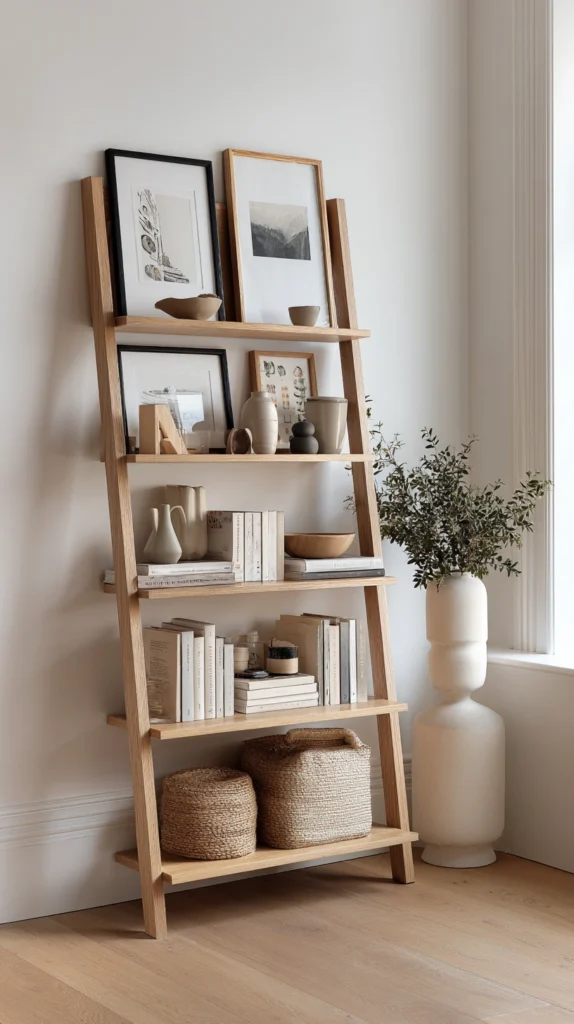
A tall, narrow ladder-style shelving unit leaned into the corner, providing vertical storage and display without requiring the floor depth a traditional bookshelf would need.
Why a ladder shelf suits a corner’s specific proportions
Most traditional bookshelves are designed for placement against a flat wall and do not naturally suit a corner’s two-wall configuration. A ladder shelf, leaned at an angle, uses the corner’s height while requiring minimal floor depth, fitting naturally into the available space.
The shelf unit
A leaning ladder shelf, available in wood, metal, or a mixed-material design, chosen to complement the room’s existing furniture finishes.
The styling
Books, small plants, and a few considered decorative objects arranged across the shelf’s tiers, following the same varied-height and negative-space principles relevant to any well-composed display.
The stability consideration
Confirming the specific unit leans securely against the wall at a stable angle, particularly important in a household with children or pets who might bump into or climb on the shelving.
The scale
Chosen to reach a genuine height within the room, taking full advantage of the corner’s vertical space rather than a shorter unit that would leave the corner’s upper portion still feeling empty.
The overall effect
A corner that adds both storage capacity and visual interest, the ladder shelf’s angled form working with the corner’s geometry rather than against it.
Cost breakdown: Ladder shelf unit: $80–250 Styling objects: $40–100 Total: $120–350
4. The Angled Gallery Wall Corner
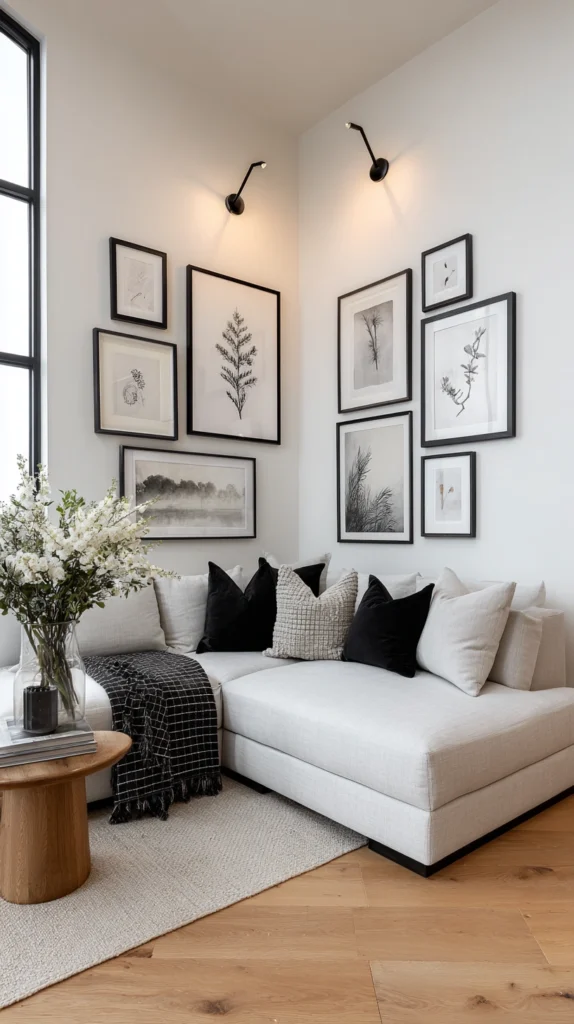
A cluster of framed art or photographs arranged across both walls of the corner, using the two-wall configuration as a natural, three-dimensional gallery display.
Why a corner gallery arrangement differs meaningfully from a standard flat-wall gallery
Most gallery walls are planned for a single flat wall. Arranging frames across both of a corner’s walls creates a genuinely three-dimensional display, with pieces visible and appreciated from multiple angles as a person moves through the room.
The frame arrangement
Frames placed on both flanking walls, with one or two pieces positioned close to or straddling the corner’s actual meeting point, creating continuity between the two walls rather than two entirely separate, unrelated displays.
The frame variety
A mix of sizes and frame finishes, following the same collected, varied approach relevant to any well-executed gallery wall, rather than a single uniform matched set.
The viewing consideration
Planned with the awareness that guests will view the corner from multiple angles while moving through the room, rather than assuming a single fixed viewing point the way a flat-wall gallery typically allows.
The lighting
A small picture light on one or both walls, illuminating the art and reinforcing the corner as a genuine display destination rather than simply incidental wall space.
The overall effect
A corner that rewards exploration from different vantage points, the art arrangement using the room’s actual architecture rather than a single flat plane.
Cost breakdown: Frames and art (assorted, 4–6 pieces): $60–180 Picture light: $30–70 Total: $90–250
5. The Small Bar Cart Corner
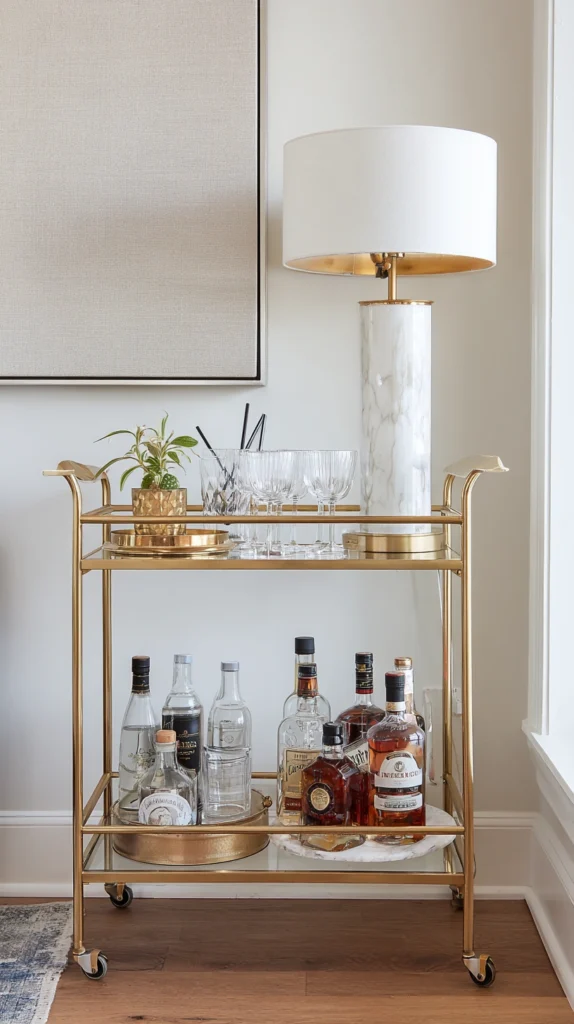
A compact bar cart, positioned in the corner, providing a genuine functional zone for drinks and entertaining without requiring dedicated floor space elsewhere in the room.
Why a bar cart suits a corner’s specific footprint particularly well
A bar cart’s typically narrow, vertical profile fits naturally into a corner’s available space, providing genuine entertaining function without the larger footprint a full bar or buffet cabinet would require.
The cart
A narrow, wheeled bar cart, in metal, wood, or a mixed material, chosen for a scale that fits comfortably within the corner’s available depth.
The styling
Glassware, a few bottles, and a small ice bucket or tray, arranged with some negative space rather than densely packed, following the same restrained styling principle relevant to any well-considered display.
The mobility benefit
The cart’s wheels allowing it to be rolled out for use during a gathering and returned to the corner afterward, maximizing the room’s flexibility for both everyday use and entertaining.
The lighting
A small lamp or a strip of warm LED lighting positioned near the cart, adding both function for evening use and a warm glow to the corner.
The overall value
A corner that adds genuine entertaining function to the room, giving the household a dedicated, considered spot for drinks service rather than assembling one temporarily on the coffee table during a gathering.
Cost breakdown: Bar cart: $80–200 Glassware and bar accessories: $40–90 Total: $120–290
6. The Corner Reading Nook With a Window Seat Feel
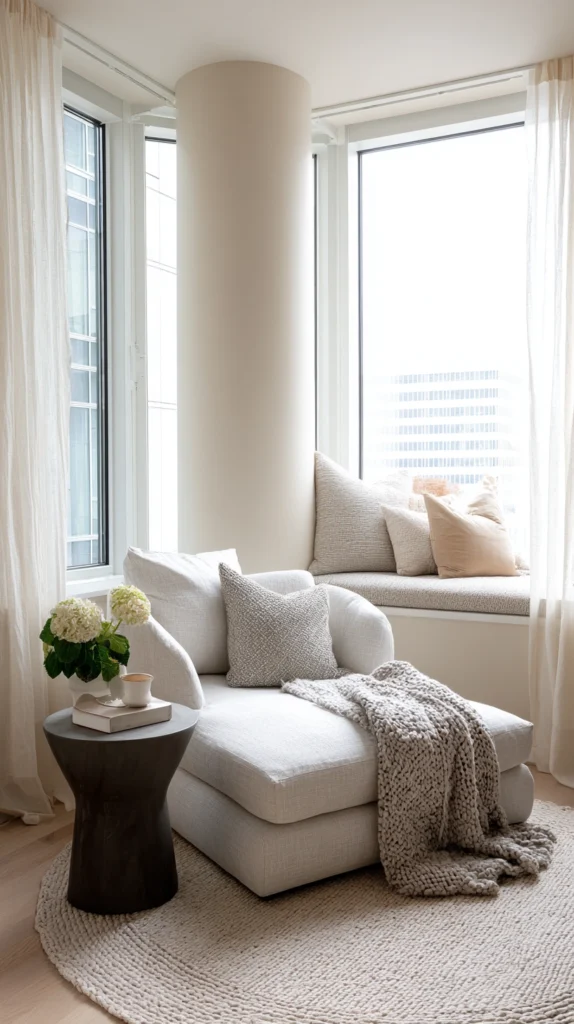
A corner positioned near a window, styled with a chair or small bench, cushions, and a throw, creating a light-filled reading spot that takes advantage of the corner’s proximity to natural light.
Why a window-adjacent corner deserves specific styling attention
A corner near a window combines two valuable qualities — the enclosure a corner naturally provides and the light a window offers — making it one of the most inherently appealing spots in the room for a quiet activity, worth styling specifically to take advantage of both.
The seating
A single chair or a small bench, positioned to face or angle toward the window, taking advantage of the natural light for reading or simply looking outside.
The cushions and throw
Generously layered cushions and a folded throw, adding comfort and softness, particularly valuable if the corner’s proximity to a window also means slightly cooler temperatures near the glass.
The small table
A tiny side table, if the corner’s depth allows, providing a spot for a cup of tea or a book within easy reach.
The curtain consideration
Sheer curtains at the nearby window, softening the light without blocking it entirely, particularly valuable for a reading nook where filtered rather than harsh direct light typically suits the activity better.
The overall effect
A corner that combines the appeal of natural light with the intimacy of enclosed seating, creating one of the room’s most genuinely inviting small spots.
Cost breakdown: Chair or small bench: $0–300 Cushions and throw: $50–100 Small side table: $30–70 Total: $80–470
7. The Sculptural Object Display
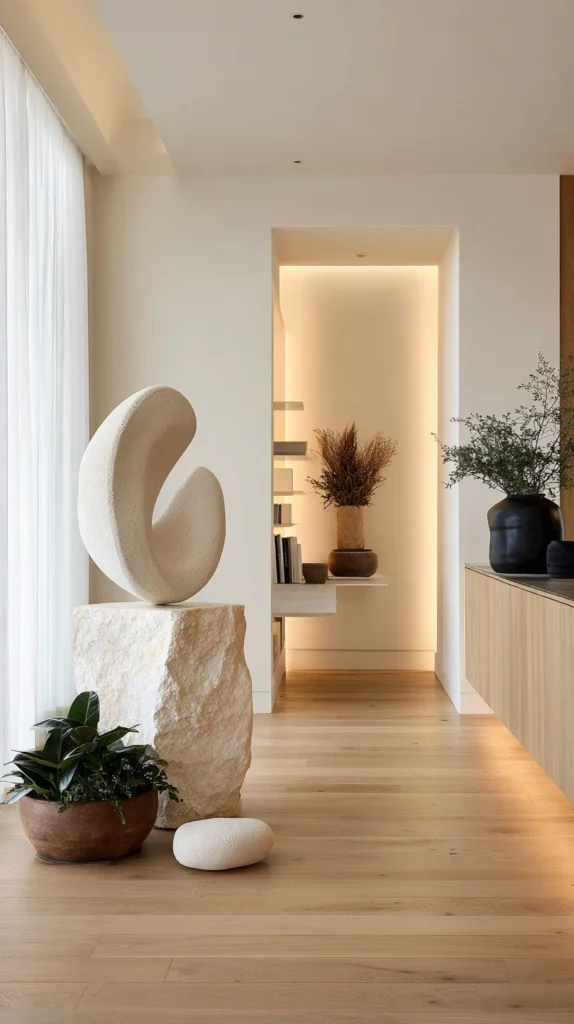
A single substantial sculptural object — a large vase, an abstract sculpture, or an interesting found object — positioned on a small pedestal or stand within the corner, treated as a piece of art rather than functional furniture.
Why a purely sculptural approach suits a corner that does not need additional function
Not every corner needs to serve a practical purpose. In a room already well equipped with seating and storage, a corner can instead serve a purely aesthetic role, displaying a single beautiful object the way a small gallery might.
The object
A large ceramic vessel, an abstract sculpture, or a substantial found or collected object, chosen for genuine visual presence and quality rather than as a filler item.
The pedestal or stand
A simple stand or plinth, elevating the object slightly and giving it the same sense of considered display a gallery might provide for a similar piece.
The surrounding restraint
Minimal additional styling around the object, allowing it to stand as the corner’s clear singular focus rather than being surrounded by competing smaller items.
The lighting
A small picture light or an angled floor light, specifically illuminating the object and reinforcing its status as the corner’s intentional focal point.
The overall effect
A corner that functions almost as a small gallery installation within the living room, elevating a single well-chosen object into the room’s understated but memorable centerpiece.
Cost breakdown: Sculptural object: $60–250 Pedestal or stand: $30–80 Total: $90–330
8. The Corner Fireplace or Faux Fireplace Feature
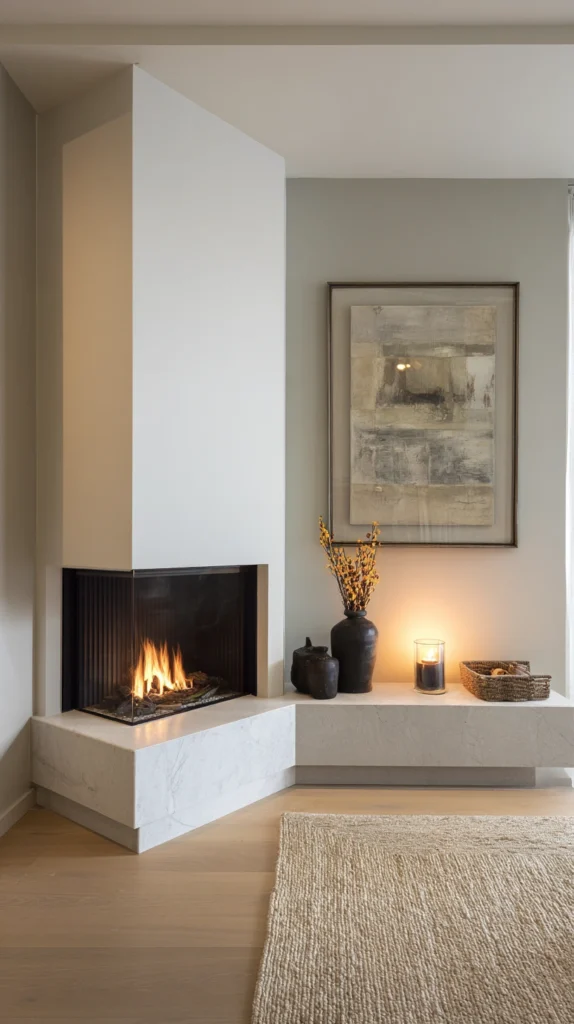
A small electric or faux fireplace insert positioned in the corner, providing genuine ambiance and, in the case of an electric model, actual supplemental warmth.
Why a corner suits a smaller fireplace feature particularly well
A corner fireplace occupies a footprint a full wall-mounted or built-in fireplace would not require, making it a genuine option even in a room without an existing chimney or the space for a full traditional fireplace wall.
The fireplace type
A corner-specific electric fireplace insert, designed to fit the angled space, or a simpler faux fireplace mantel surrounding a candle-based or LED flame-effect display for a purely decorative version.
The surround
A simple mantel surround, in wood or a painted finish, providing the fireplace with a sense of architectural presence rather than appearing as a standalone appliance.
The mantel styling
Candles, a small mirror, or a few decorative objects on the mantel shelf, similar to any considered fireplace mantel styling elsewhere in the home.
The heat function
Genuine supplemental warmth from an electric model, providing real practical value beyond the purely visual ambiance a candle-based version would offer.
The overall effect
A corner transformed into a genuine focal point with real warmth and ambiance, addressing a room’s potential lack of an existing fireplace feature.
Cost breakdown: Corner electric fireplace insert: $200–600 Mantel surround: $150–400 Total: $350–1,000
9. The Wall-Mounted Corner Desk
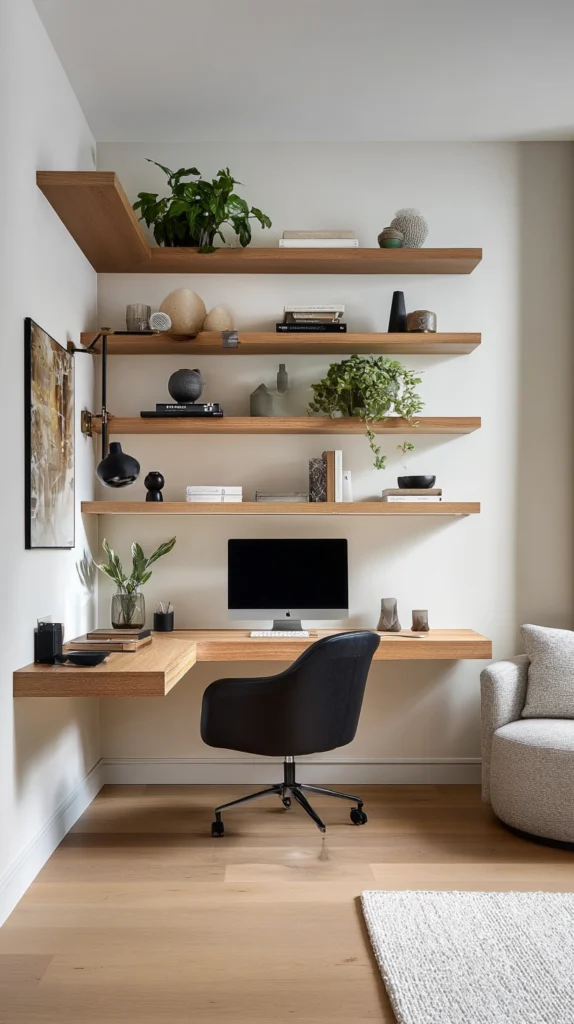
A small, corner-fitted desk, taking advantage of the space’s two walls to create a compact, functional work area within the living room.
Why a corner desk suits a household needing a small work zone without a dedicated office
Not every household has room for a separate home office, and a corner desk provides a genuine, if modest, work surface using space that might otherwise go entirely unused.
The desk
A corner-specific desk design, fitted to the exact angle where the two walls meet, or a simple floating shelf positioned across the corner at desk height.
The seating
A single chair, chosen to complement the room’s existing furniture, tucked fully under the desk when not in use to minimize the setup’s visual footprint.
The storage
Small wall-mounted shelving above the desk, providing organization for work materials without requiring additional floor-standing furniture.
The cable management
Outlets and cable routing planned specifically for the corner’s position, since a corner is often farther from existing outlets than a flat wall, worth confirming before finalizing the desk’s exact placement.
The overall value
A genuine, if compact, work zone integrated into the living room, using space that would otherwise likely remain empty or serve no specific function.
Cost breakdown: Corner desk: $100–350 Chair: $0–200 Wall-mounted shelving: $30–80 Total: $130–630
10. The Layered Rug and Floor Cushion Corner
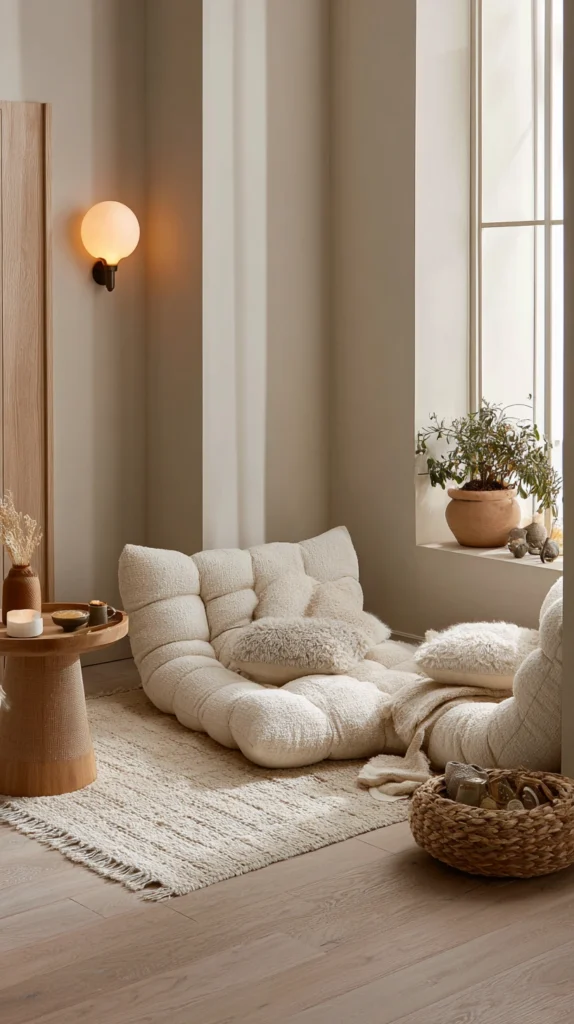
A small floor cushion or pouf, layered atop a section of rug extending into the corner, creating an informal, low seating spot distinct from the room’s main furniture arrangement.
Why a low, informal corner treatment suits a more casual living room
Not every corner needs a chair or substantial furniture piece. A floor cushion or pouf, positioned on a defined rug section, creates a low, casual seating spot well suited to a more relaxed, floor-oriented living room style.
The floor cushion or pouf
A substantial floor cushion or a woven pouf, providing genuine, if informal, seating within the corner’s footprint.
The rug definition
A small rug or a distinct section of the room’s existing rug extending into the corner, visually defining the seating spot as intentional rather than simply a cushion placed on bare floor.
The supporting elements
A small plant or a low side table beside the cushion, completing the corner without requiring substantial furniture.
The household suitability
Particularly well suited to a household with children, who often prefer floor-level seating, or a more bohemian, casual overall living room style.
The overall effect
A corner that adds genuine additional seating capacity for a gathering, in a low-cost, flexible format well suited to a relaxed, informal living room.
Cost breakdown: Floor cushion or pouf: $40–100 Small rug: $30–80 Total: $70–180
11. The Corner Curio or Display Cabinet
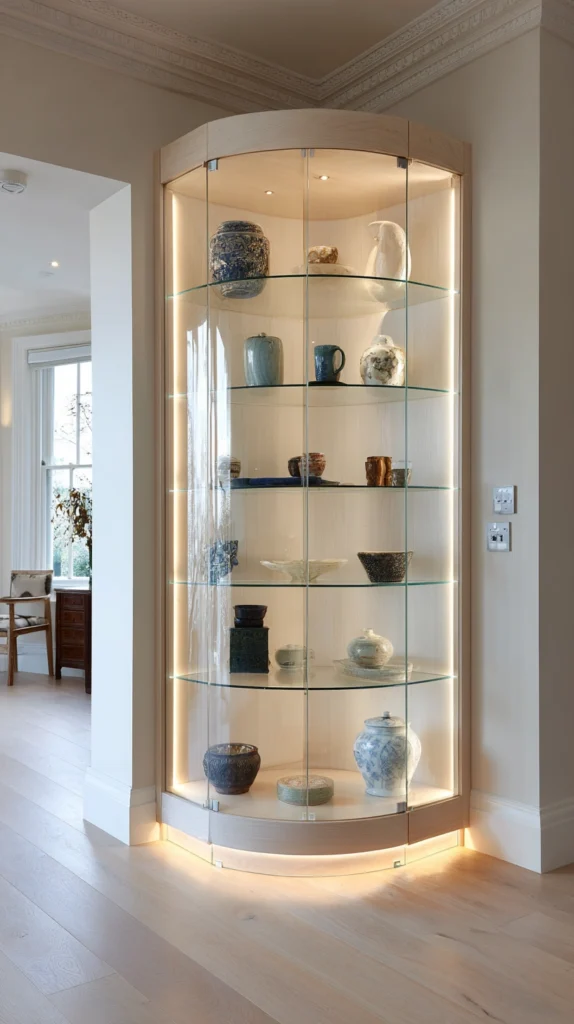
A tall, narrow glass-front curio cabinet, fitted into the corner, displaying a curated collection of ceramics, glassware, or collected objects.
Why a curio cabinet suits a corner better than most other display furniture
Curio cabinets are traditionally designed with a narrow, often specifically corner-fitted profile, making them one of the few furniture categories genuinely built with this exact spatial configuration in mind.
The cabinet
A corner-specific curio cabinet, with glass front and side panels, sized to the exact angle and depth the corner provides.
The interior lighting
Small LED lighting within the cabinet, illuminating the displayed collection even when the room’s main lights are off, adding a warm glow to the corner during evening hours.
The curated collection
A considered display of ceramics, glassware, or a specific collected category, arranged with the same varied-height and restrained-density principles relevant to any well-styled shelving display.
The traditional versus contemporary style
Available in both ornate, traditional designs and simpler, more contemporary versions, worth choosing specifically to match the room’s overall style rather than defaulting to a more traditional design regardless of the room’s broader aesthetic.
The overall effect
A corner that showcases a genuine personal collection, the cabinet’s traditional corner-fitted design solving the spatial challenge more precisely than most general-purpose furniture would.
Cost breakdown: Corner curio cabinet: $200–600 Interior lighting: $30–70 Total: $230–670
12. The Draped Fabric and Canopy Corner
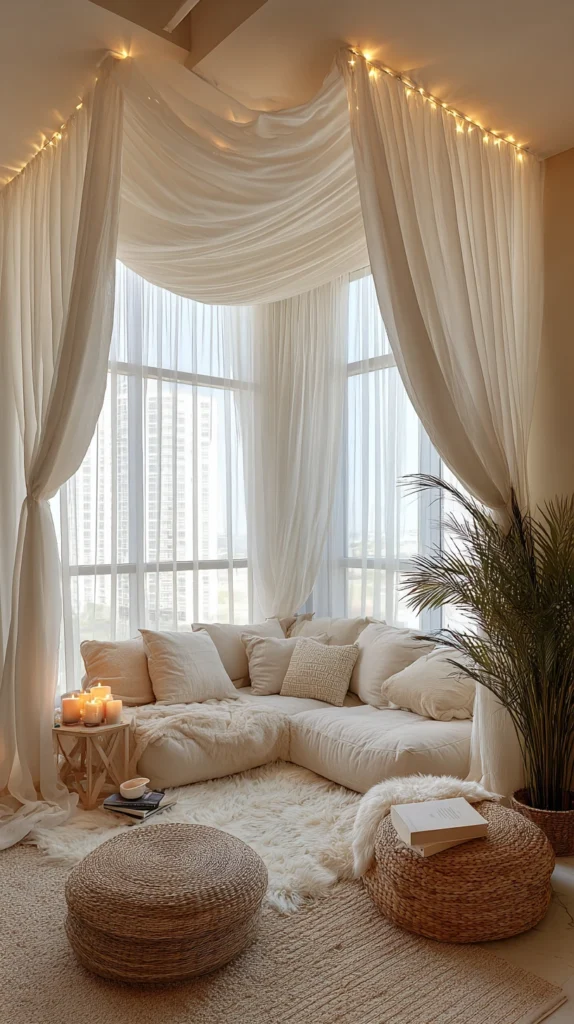
Fabric draped from the ceiling down into the corner, creating a soft, tent-like reading or lounging nook distinct from the room’s more structured furniture.
Why draped fabric suits a corner’s natural geometry
A corner already has two walls meeting at a defined point, similar to a tent’s basic structure. Draped fabric extends that geometry, creating a soft, enveloping nook that feels genuinely separate from the rest of the room despite requiring no actual construction.
The fabric
Lightweight, sheer, or a soft cotton fabric, draped from a ceiling-mounted point down into the corner, secured along the walls or simply left loosely gathered.
The mounting
A small hook or curtain track installed at the ceiling, providing a secure anchor point for the draped fabric.
The seating beneath
Floor cushions or a small low chair positioned within the draped area, completing the sense of a soft, enclosed nook.
The lighting
A small string of warm lights woven into the fabric’s folds, or a battery-operated lantern placed within the nook, providing soft illumination suited to the space’s cozy, enclosed character.
The overall effect
A corner with a genuinely different character from the rest of the room, softer and more enveloping, particularly appealing in a household with children or anyone drawn to a cozy, retreat-like small space.
Cost breakdown: Fabric (sufficient yardage): $30–70 Mounting hardware: $15–30 Floor cushions: $30–70 Total: $75–170
13. The Complete Living Room Corner (The Fully Realized Small Space)
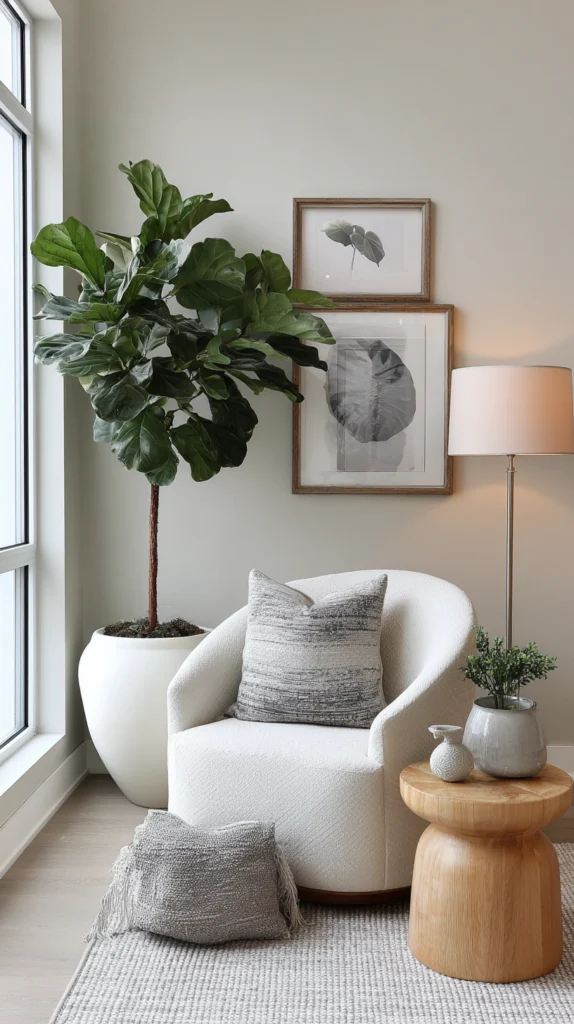
A complete corner treatment combining several of the approaches above — a substantial plant, a considered seat, thoughtful lighting, and genuine styling — treating the corner as a fully resolved small composition rather than a single object placed to fill empty space.
What separates the complete corner from a single plant or chair alone
A single plant placed in an otherwise empty corner: a good start. A complete living room corner: every element — furniture, lighting, plants, and styling objects — working together as one considered small composition, giving the space genuine character and function rather than simply filling visual emptiness.
The elements of the complete living room corner
The anchor piece
A substantial plant, a chair, or a piece of furniture specifically scaled and chosen for the corner’s actual dimensions and function.
The height layer
Vertical interest, whether from the plant’s own height, a tall lamp, or leaning shelving, taking advantage of the corner’s full vertical space rather than only its floor footprint.
The lighting
A dedicated light source — a floor lamp, a picture light, or interior cabinet lighting — ensuring the corner reads as intentional even after dark rather than falling into shadow.
The styling layer
A small grouping of considered objects, following the same restrained, varied-height principles relevant to any well-composed vignette.
The functional consideration
A genuine decision about whether this specific corner should serve a practical purpose — seating, storage, work space — or a purely decorative one, rather than a default, unconsidered choice.
The complete design in action
A living room fully resolved:
The once-empty corner: Now home to a tall plant, a small reading chair angled toward the window, and a floor lamp providing warm evening light.
A guest’s first visit: The corner registering as one of the room’s most inviting small spots, rather than going unnoticed as empty space.
An ordinary evening: The corner genuinely used — a book picked up, a cup of tea set on the small side table — rather than serving as a purely decorative afterthought.
The complete living room corner: not leftover space filled with whatever did not fit elsewhere, but a small, deliberate answer to exactly what the room was missing.
Cost breakdown for the complete corner: Assuming a starting point of an empty, unstyled corner: Anchor plant or chair: $65–500 Floor lamp or lighting: $40–100 Styling objects: $30–80 Rug or cushion layer (if applicable): $30–80 Total: $165–760
Phased for a gradual approach:
Immediate: The single anchor piece — a plant or a chair — establishing the corner’s basic presence
Following weeks: Lighting and a small side table or shelf, adding function and evening usability
Ongoing: Styling objects and seasonal refreshes, keeping the corner feeling current and considered
The complete living room corner: not a large renovation, but a small, deliberate styling decision that changes how finished the entire room feels.
The Question Before Any Corner Styling Decision
Before choosing a specific approach:
What does this particular corner actually need to do for the room?
If the answer is: nothing functional, just visual completeness — the single statement plant or a sculptural object display.
If the answer is: the room needs more usable seating — the reading chair nook or the floor cushion corner.
If the answer is: the household needs a small work or entertaining zone — the corner desk or the bar cart.
If the answer is: more storage or display capacity — the leaning ladder shelf or the curio cabinet.
The design follows what the room is actually missing, more than any single universal corner-filling formula. Every idea on this list serves a different specific need. The question is which particular gap this exact corner is best suited to fill.
The single plant placed in a previously empty corner: still completes the room’s overall sense of resolution. The fully styled corner, considered with real intention: a small space that adds genuine character and function to the room, rather than simply occupying it.
That resolution: the whole point of styling a corner rather than leaving it empty.
Getting Started This Weekend
The immediate living room corner solution:
Stand in the room and identify which corner currently reads as most obviously empty or unresolved.
Not every corner needs attention at once — start with the one the eye notices most.
Decide whether that corner should serve a function or simply look good.
The single most important early decision, shaping which of the thirteen approaches actually fits.
Bring in one substantial item — a plant, a chair, or a piece already owned — before buying anything new.
Test the corner’s basic presence and scale before committing to a full styled composition.
Add a light source specifically for that corner.
The rest of the design: the elaboration of this moment.
The corner: the beginning. The living room: what feels finally complete because of it.