
15 Warm White Kitchen Ideas That Feel Soft, Not Sterile
The warm white kitchen is one of the most deceptively challenging color and material achievements in contemporary residential design — not because warm white is a difficult color to apply but because the difference between a warm white kitchen that feels genuinely soft, genuinely luminous, and genuinely beautiful and one that feels merely pale, merely clean, and slightly clinical is determined by a series of specific material and design decisions of considerable subtlety and genuine technical sophistication that the simple act of choosing a warm white paint color cannot by itself produce.

The sterile white kitchen — bright, cool, uniformly reflective, material-poor, and atmospherically inert — is the product of choices that prioritize cleanliness and brightness over warmth and beauty.
The genuinely soft, warm white kitchen is the product of choices that understand warmth as a quality of material, texture, light, and specific chromatic undertone rather than of color saturation — choices that create an interior of extraordinary luminous beauty and genuine daily pleasure from the most restrained and the most apparently simple palette available in any kitchen design vocabulary.
These fifteen ideas will help you create a warm white kitchen of genuine softness, genuine luminosity, and the specific quality of enveloping, materially rich, atmospherically generous warmth that distinguishes the truly extraordinary white kitchen from every pale imitation.
1. Choose White with Warm Undertones Exclusively
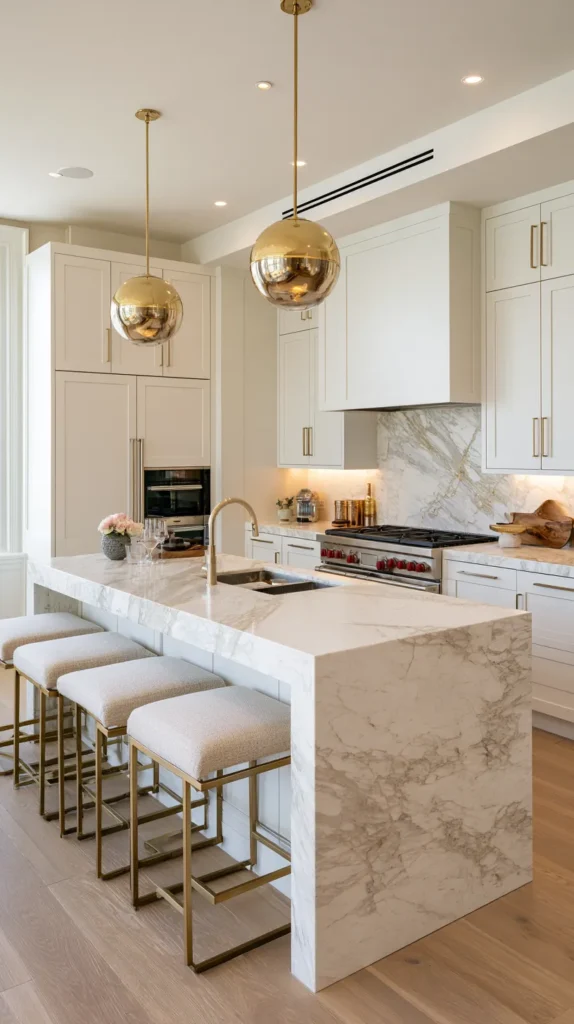
The single most important and most technically consequential decision in any warm white kitchen is the specific selection of white — and the distinction between whites with warm undertones and whites with cool undertones is the difference between a kitchen that feels genuinely soft and a kitchen that feels genuinely sterile. Warm whites — those with yellow, cream, peach, or red undertones — absorb the warm quality of natural and artificial light and return it to the room with a softness, a luminosity, and a genuine warmth of considerable atmospheric beauty.
Cool whites — those with blue, grey, or green undertones — reflect light with a clinical brightness and a specific quality of cool, slightly harsh, atmospherically flat whiteness that the sterile kitchen consistently exhibits. Test paint samples in the specific natural and artificial light conditions of your kitchen before committing, and choose always from the warm side of the white palette.
2. Use Limewash or Venetian Plaster on the Walls
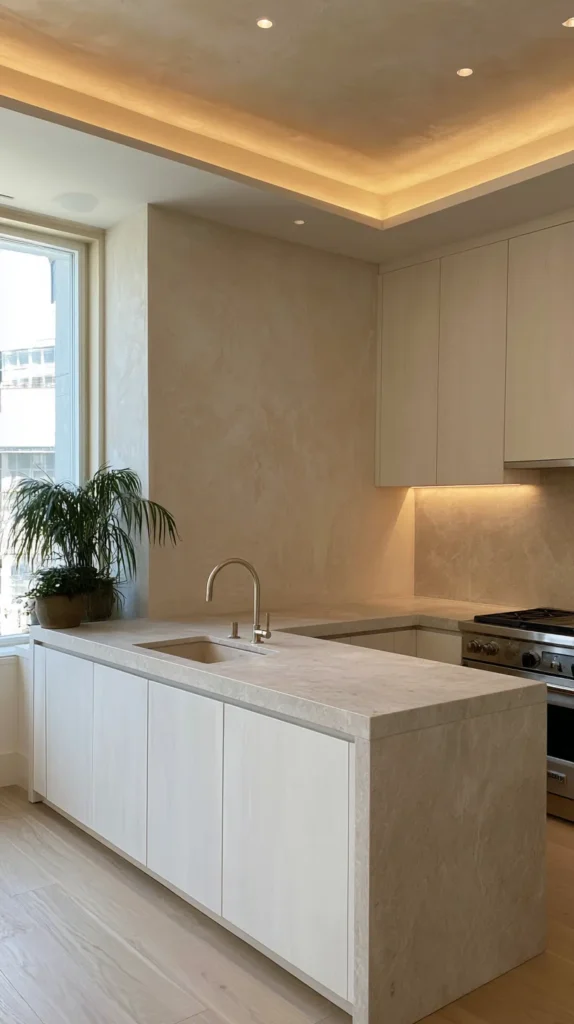
The wall finish of the warm white kitchen should be specified in a natural, organic, hand-applied material of genuine surface depth and living chromatic variation rather than the flat, uniform, atmospherically inert surface of standard emulsion paint.
Limewash — the ancient wall treatment of slaked lime applied in multiple thin coats to create a surface of extraordinary translucent depth, subtle color variation, and the specific quality of soft, slightly chalky, genuinely organic warmth — in a warm white tone creates kitchen walls of remarkable atmospheric beauty and genuine material authenticity.
Venetian plaster creates a similar quality of surface depth with a slightly smoother, more polished quality of warm luminosity. Either finish creates a warm white kitchen wall that is alive, textured, and genuinely beautiful in a way that painted drywall cannot approach.
3. Specify Shaker Cabinets in Warm White
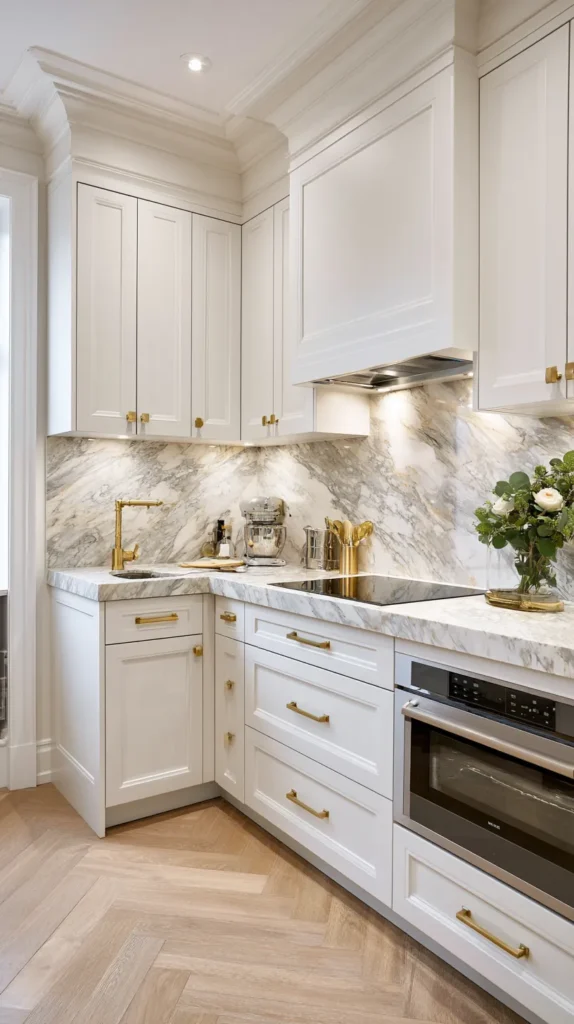
The cabinet style of the warm white kitchen should be specified in a form of sufficient craft detail and sufficient surface interest to create the visual warmth and the genuine decorative character that flat-fronted, handle-less, ultra-minimal cabinetry consistently fails to provide in a predominantly white kitchen.
The shaker cabinet — with its simple recessed panel door of genuine craft heritage and considerable architectural refinement — creates a warm white kitchen of genuine decorative warmth and considerable visual interest through the subtle shadow lines of the panel profile that catch and vary the kitchen light throughout the day. Specify the shaker door in a warm white paint of eggshell or satin finish for a surface of sufficient reflectivity to be luminous without being glossy and sufficient depth to be genuinely beautiful.
4. Install Unlacquered Brass Hardware Throughout
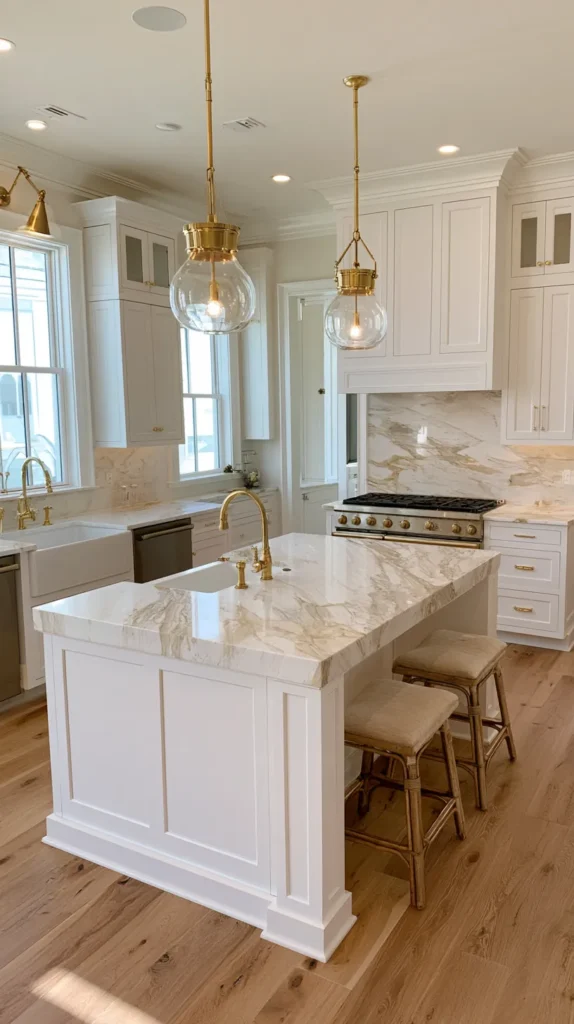
The hardware specification of the warm white kitchen is its most important single material warmth injection — and unlacquered brass is the hardware finish that creates the most beautiful, most materially warm, and most genuinely designer-quality accent available in the white kitchen.
The warm, golden, gradually patinating surface of unlacquered brass against warm white cabinetry creates a material relationship of extraordinary chromatic warmth and genuine material sophistication.
The gold of the brass amplified and warmed by the white surrounding it, the white softened and enriched by the golden accent of the brass within it. Specify unlacquered brass on every hardware element in the kitchen without exception — cabinet pulls, drawer handles, faucet, and towel rail — for the most beautiful and most materially coherent warm white kitchen result.
5. Choose Warm Timber Open Shelving
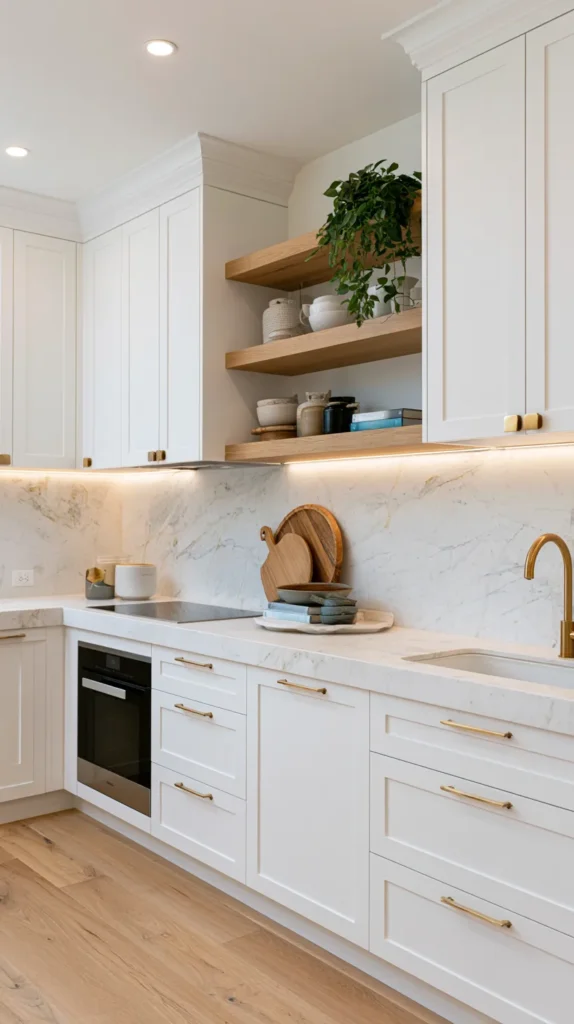
Open shelving in warm, naturally grained timber — oak in a natural oiled finish, warm walnut, or simple pine with a warm honey-toned wax — creates the most important and most immediately impactful material warmth contribution available in the warm white kitchen, introducing the organic beauty, the tactile richness, and the living grain quality of natural timber into the upper zone of the kitchen with considerable visual power and genuine material contrast.
A section of the upper cabinetry replaced with warm timber open shelving creates a visual breathing space of extraordinary material warmth within the white kitchen — the honey-toned timber creating a warm natural accent of remarkable beauty against the warm white cabinetry surrounding it.
6. Use Natural Stone or Marble Countertops
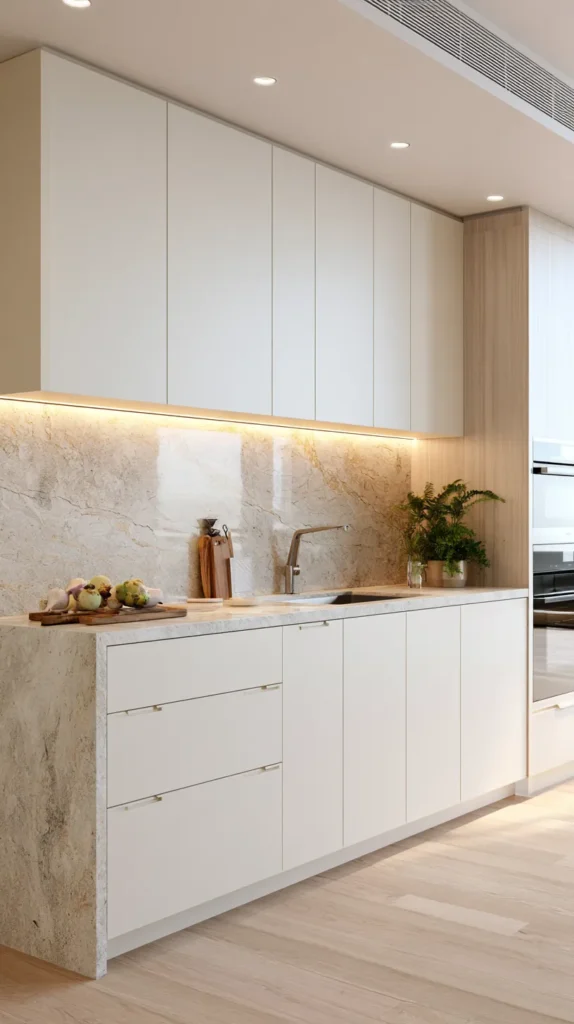
The countertop material of the warm white kitchen should be specified in a natural stone of genuine material warmth, genuine surface complexity, and genuine color depth that manufactured quartz and engineered stone alternatives cannot replicate with the same quality of living, naturally varied, genuinely beautiful material authenticity. Warm Calacatta marble with its creamy white ground and warm grey-gold veining.
Travertine with its characteristic warm cream tone and its slightly porous, fossil-rich surface. Warm Carrara marble with its soft, cool-toned white ground and its fine grey veining. Each of these natural stone countertops creates a warm white kitchen working surface of extraordinary natural beauty and genuine material luxury that makes the kitchen feel genuinely soft rather than sterile.
7. Install Warm Ceramic or Zellige Tile Backsplash
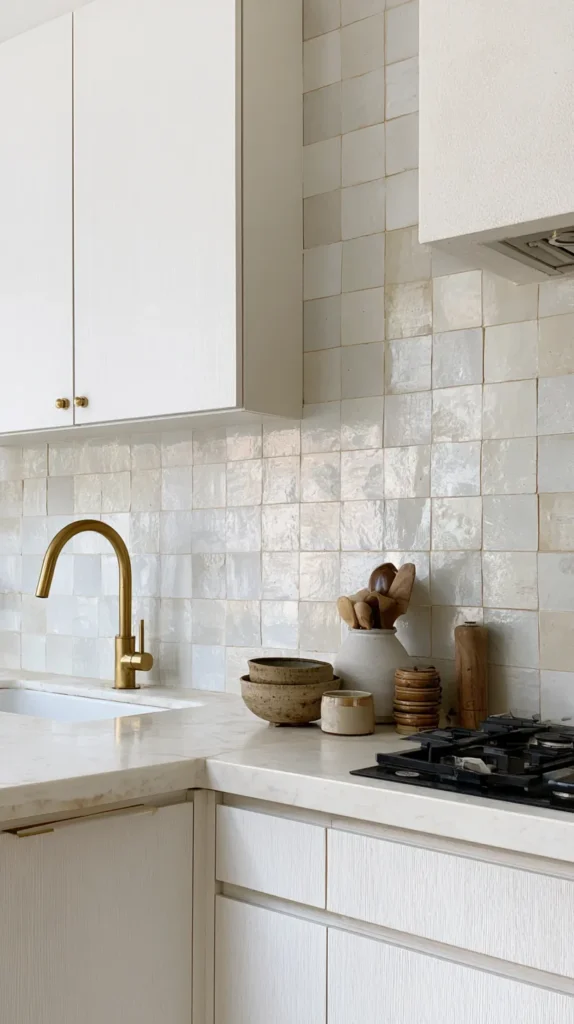
The backsplash of the warm white kitchen should be specified in a handmade ceramic or zellige tile of genuine surface warmth, genuine craft character, and genuine color depth — the slight irregularity of the handmade tile, its surface variation between adjacent tiles, and its specific quality of artisanal imperfection creating a backsplash of considerable decorative warmth and genuine visual interest that the uniform, machine-made tile entirely lacks.
Warm white zellige tile — its slightly uneven surface catching the kitchen light with the characteristic sparkle of genuinely hand-cut Moroccan ceramic — creates a backsplash of extraordinary luminous beauty and genuine craft warmth that is the most beautiful and most materially authentic backsplash treatment available in the warm white kitchen.
8. Specify Warm Timber or Stone Flooring
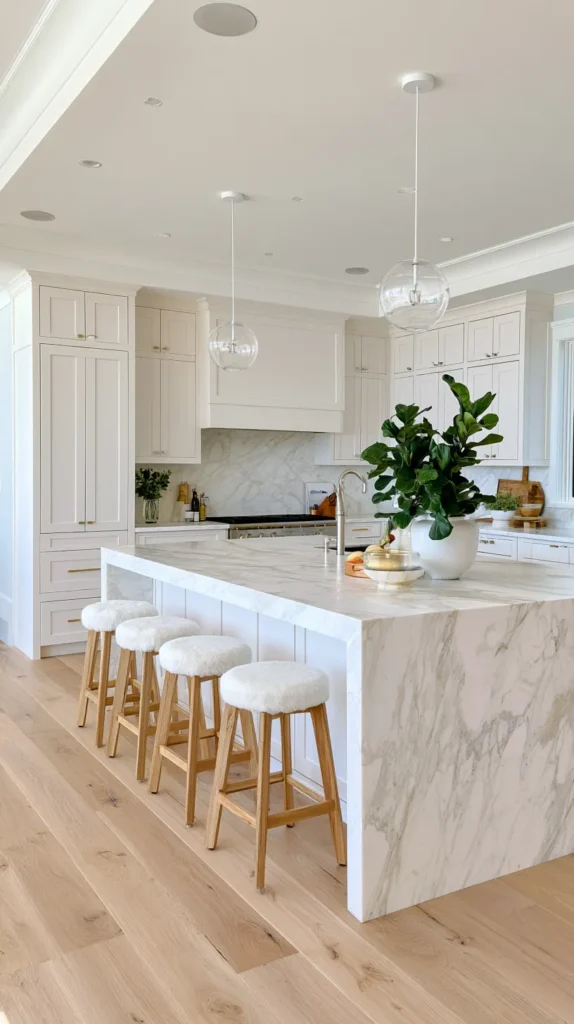
The kitchen floor in a warm white kitchen should anchor the warm, luminous palette above it with a material of genuine natural warmth and considerable organic beauty — wide-plank warm timber flooring in a natural or lightly oiled finish, large-format warm limestone or travertine tile, or warm terracotta in a matte sealed finish.
The warm floor material creates the most important chromatic and material foundation of the warm white kitchen — the specific quality of natural material warmth at the floor plane that prevents the white kitchen from reading as cold, clinical, or atmospherically flat. Wide-plank white oak in a natural oiled finish creates the most beautiful and most materially coherent warm white kitchen floor available.
9. Use Warm Amber Lighting at 2700 Kelvin
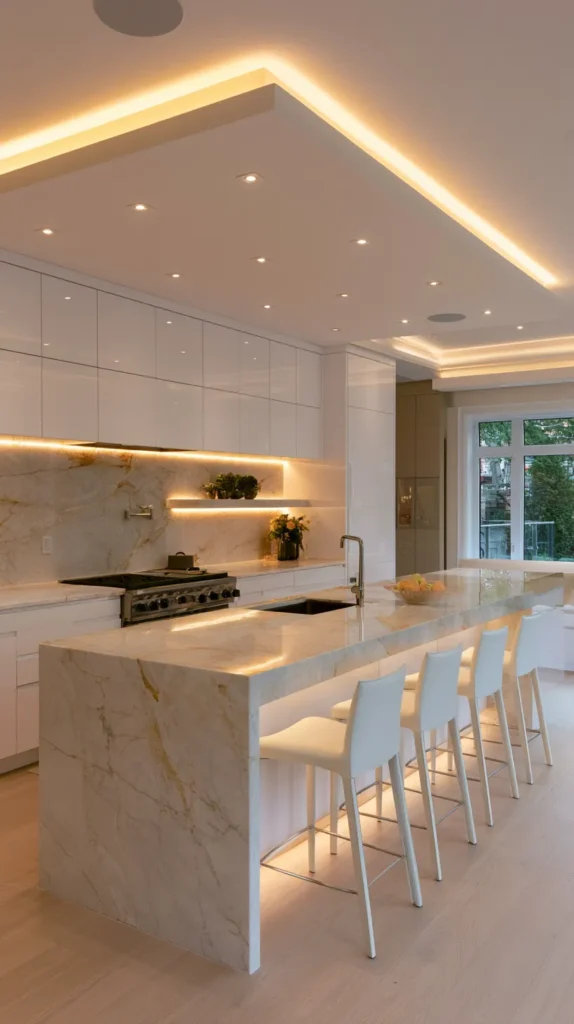
The lighting specification of the warm white kitchen is its most atmospherically critical technical decision — because the same warm white surfaces that glow with genuine warmth and beauty under 2700 Kelvin warm white lighting appear cold, flat, and sterile under the 4000 Kelvin cool white or daylight-temperature sources that hardware stores stock in greatest abundance.
Specify every light source in the warm white kitchen — recessed downlights, under-cabinet LED strips, pendant lights above the island, and any decorative fixtures in the dining area — at 2700 Kelvin without exception. The warm amber quality of 2700 Kelvin light transforms the warm white kitchen from a well-lit room into an atmospherically extraordinary one.
10. Add Woven and Textile Accessories
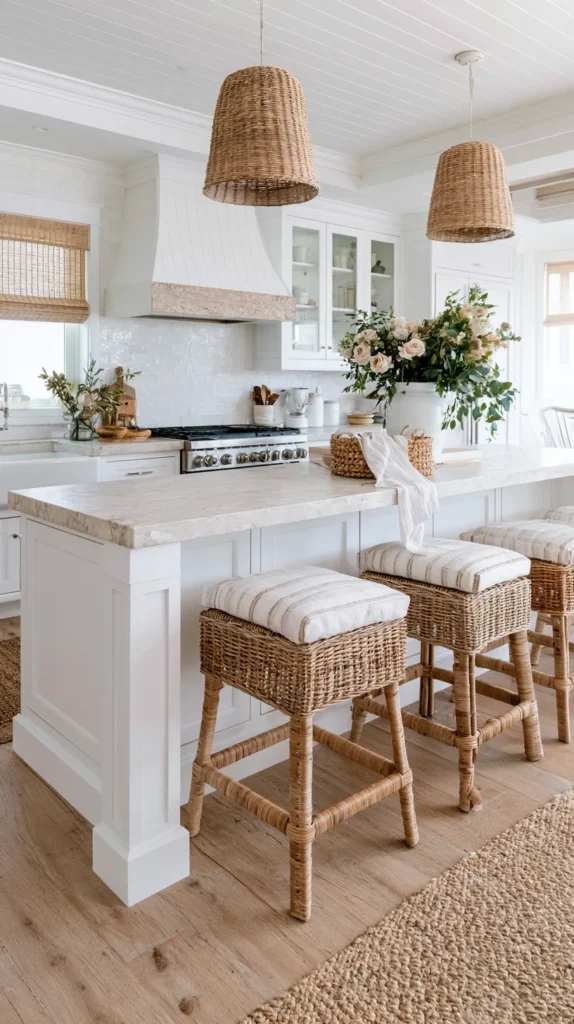
The textile accessories of the warm white kitchen — natural linen dish towels in warm oatmeal or natural undyed tones, a woven seagrass basket for bread or produce on the countertop, a simple cotton runner on the kitchen island — create layers of organic material warmth and genuine tactile richness within the white kitchen environment that prevent the all-white surfaces from feeling flat or material-poor.
The specific warmth of natural linen and woven natural fiber against warm white cabinetry and warm stone countertops creates a kitchen of extraordinary organic warmth and genuine everyday beauty — the specific quality of a kitchen that has been inhabited and loved rather than merely designed.
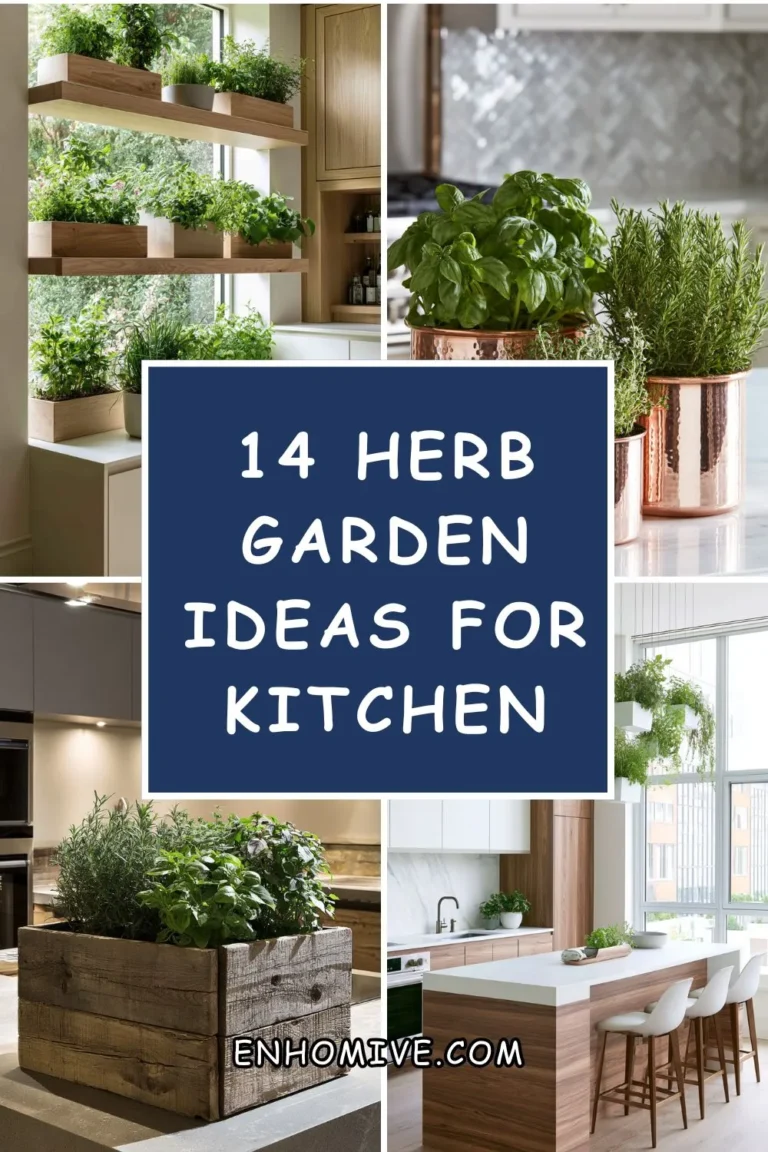
11. Incorporate Fresh Herbs and Living Plants
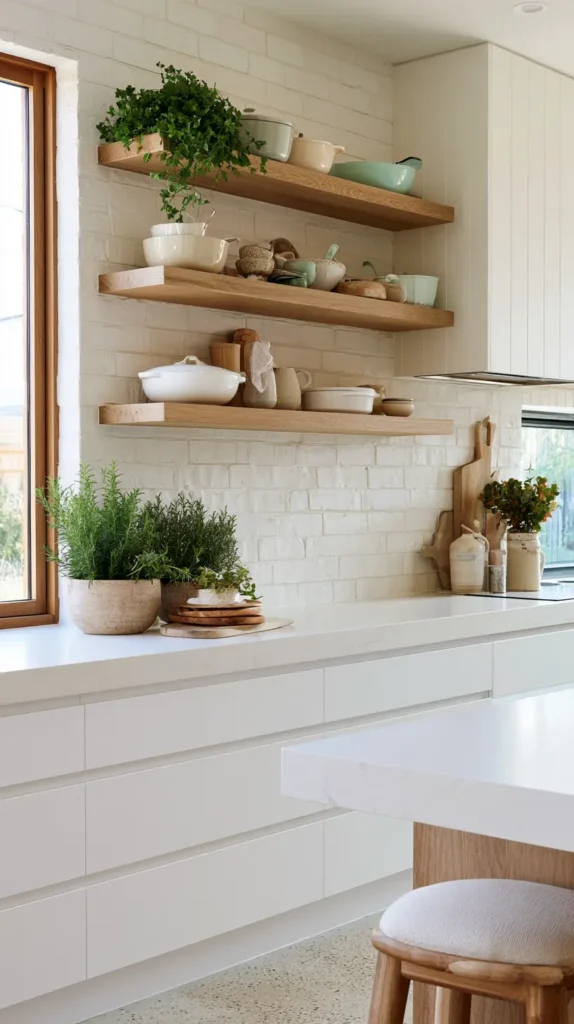
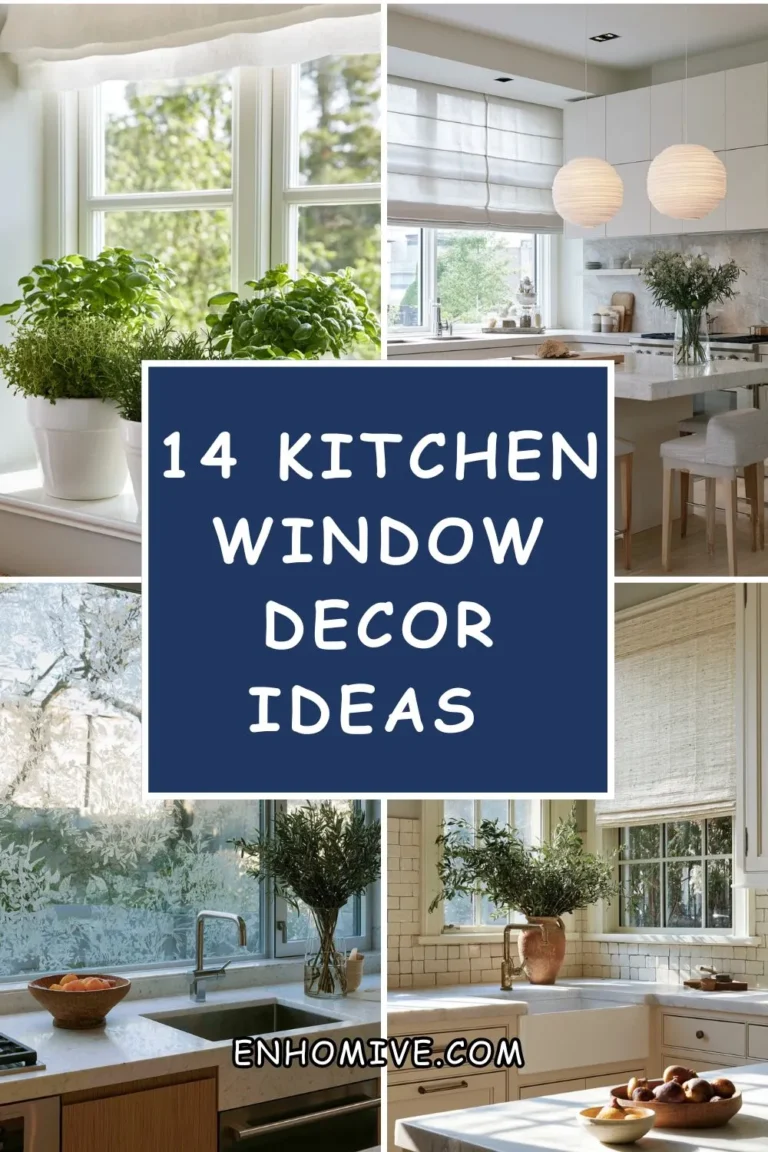
Fresh herbs and living plants in the warm white kitchen create the most natural and most immediately beautiful organic warmth available in any kitchen setting — the deep green of a potted basil plant on the windowsill, the trailing silver-green of a rosemary in a simple terracotta pot on the open shelving, the brilliant green of fresh parsley in a simple white ceramic pot on the countertop.
These living plant accents create a warm white kitchen of genuine biophilic warmth and daily organic beauty that makes the white environment feel genuinely alive, genuinely warm, and genuinely inhabited in the most natural and most beautiful sense.
12. Choose a Farmhouse or Butler Sink
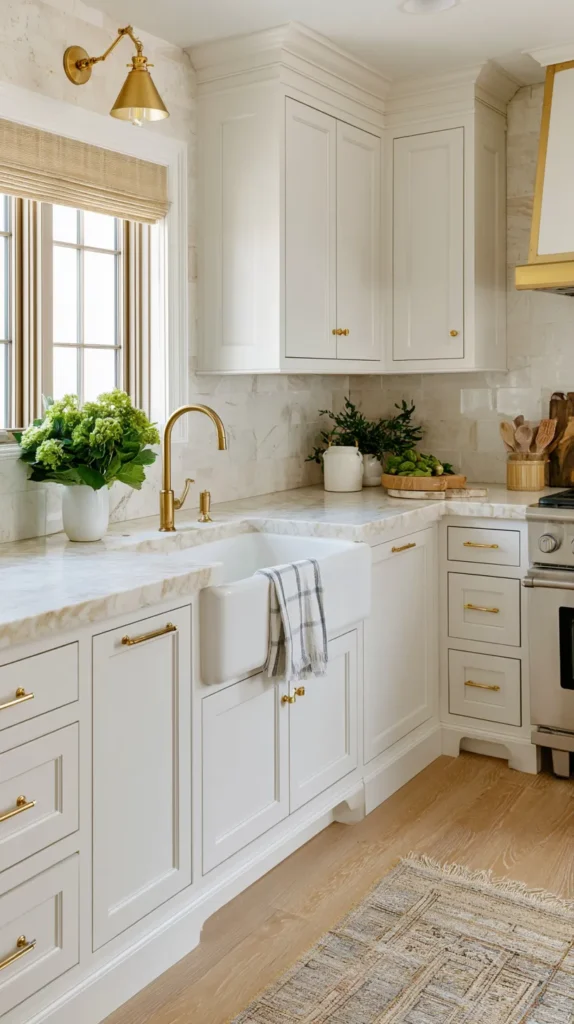
The sink specification of the warm white kitchen is a detail of considerable visual consequence and genuine material character — and the farmhouse or butler sink in warm white fireclay or ceramic creates a kitchen centerpiece of extraordinary craft beauty and genuine material warmth that the standard undermount stainless sink entirely lacks.
The generous, slightly raised bowl of the farmhouse sink, its warm white ceramic surface, and its specific quality of robust, functional, genuinely beautiful material character create a kitchen focal point of considerable domestic warmth and genuine everyday beauty.
13. Style Open Shelves with Warm-Toned Ceramics
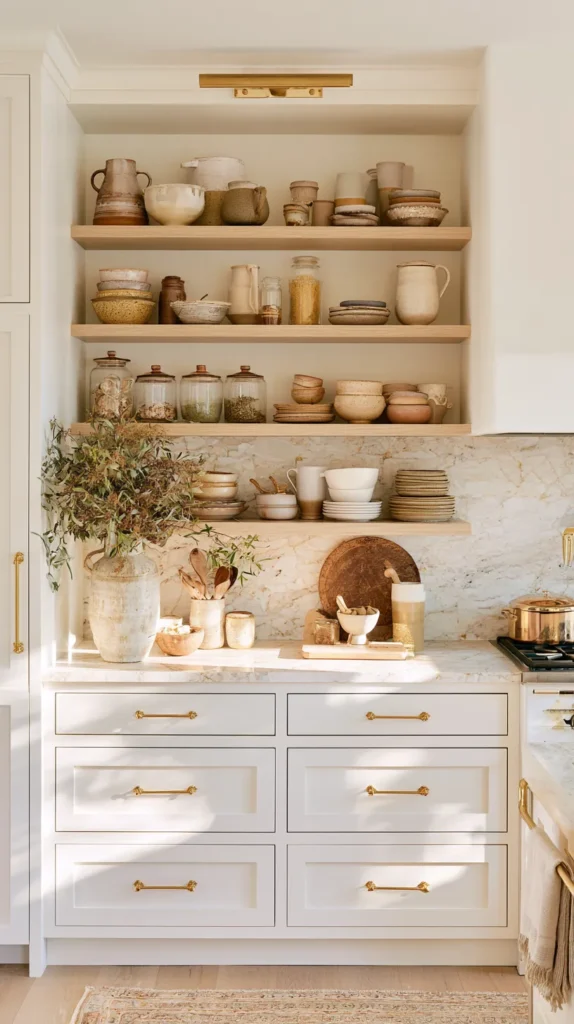
The open shelving display of the warm white kitchen should be styled with a considered collection of warm-toned ceramic serveware, simple glass vessels, and natural material accessories — cream and oatmeal ceramic bowls and plates, simple amber glass bottles, natural linen napkins folded on a shelf edge — that creates a shelf display of considerable material warmth and genuine personal expressiveness within the white kitchen environment.
Avoid the pure bright white ceramics that amplify the clinical quality of the white kitchen — choose instead the warm, slightly off-white, slightly imperfect ceramics of the artisan tradition that coordinate with the warm white palette through the shared quality of genuine organic warmth.
14. Install a Kitchen Island in a Contrast Warm Tone
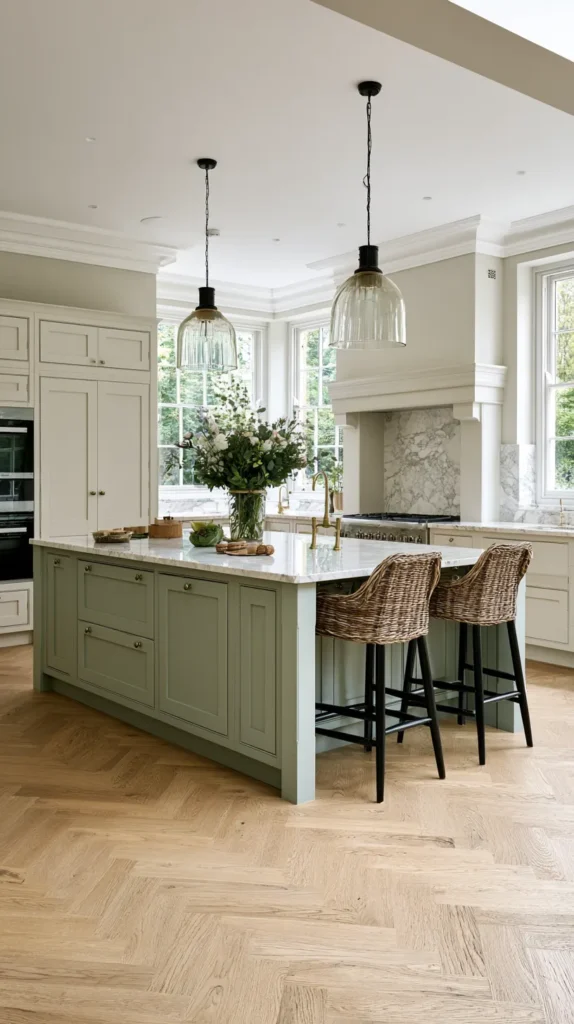
A kitchen island in a warm contrast tone — a soft warm grey, a pale dusty sage, a gentle warm mushroom, or a warm oatmeal linen — creates a warm white kitchen of greater visual depth, greater tonal complexity, and considerably more genuine design sophistication than the all-white kitchen of uniform palette.
The contrast island creates the kitchen’s primary focal point with a gentle but clearly defined tonal distinction of considerable decorative intelligence — the warm white surrounding cabinetry receding softly while the slightly deeper island tone asserts a gentle but clearly present visual presence of genuine design sophistication.
15. Let the Softness Be the Statement
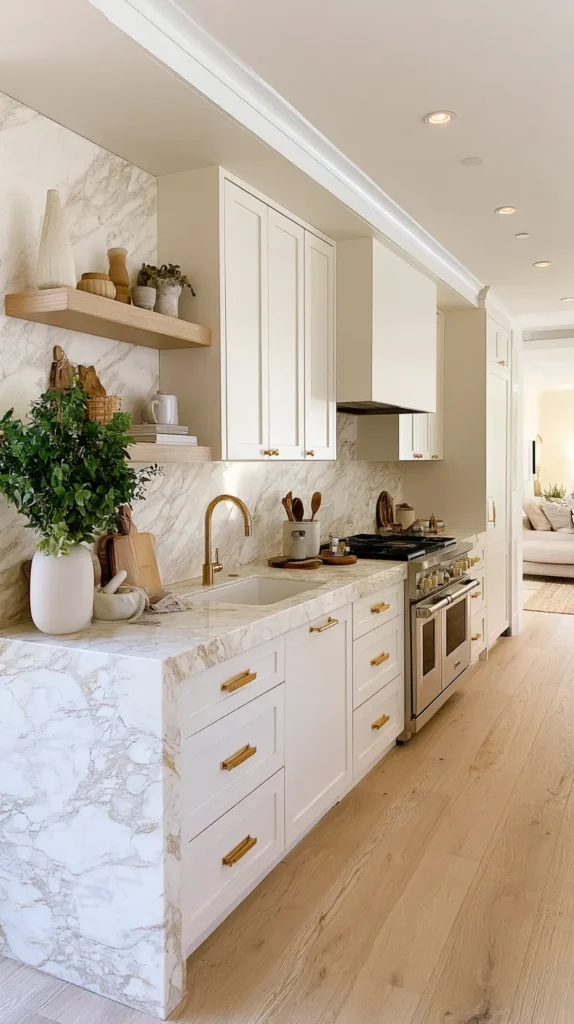
The final and most essential principle of the warm white kitchen of genuine softness and genuine beauty is the understanding that softness is not the absence of design ambition but its highest and most demanding expression.
That the warm white kitchen of extraordinary beauty requires more material intelligence, more lighting sophistication, more careful hardware selection, and more genuine understanding of how white behaves in specific light conditions than any bolder, more chromatic kitchen palette demands.
The genuinely soft, warm white kitchen is not the easy choice. It is the most demanding and the most rewarding choice available — the kitchen that, when executed with complete material intelligence and complete atmospheric care, creates an interior of such genuine luminous beauty and such enduring daily pleasure that it justifies every careful decision that produced it.