
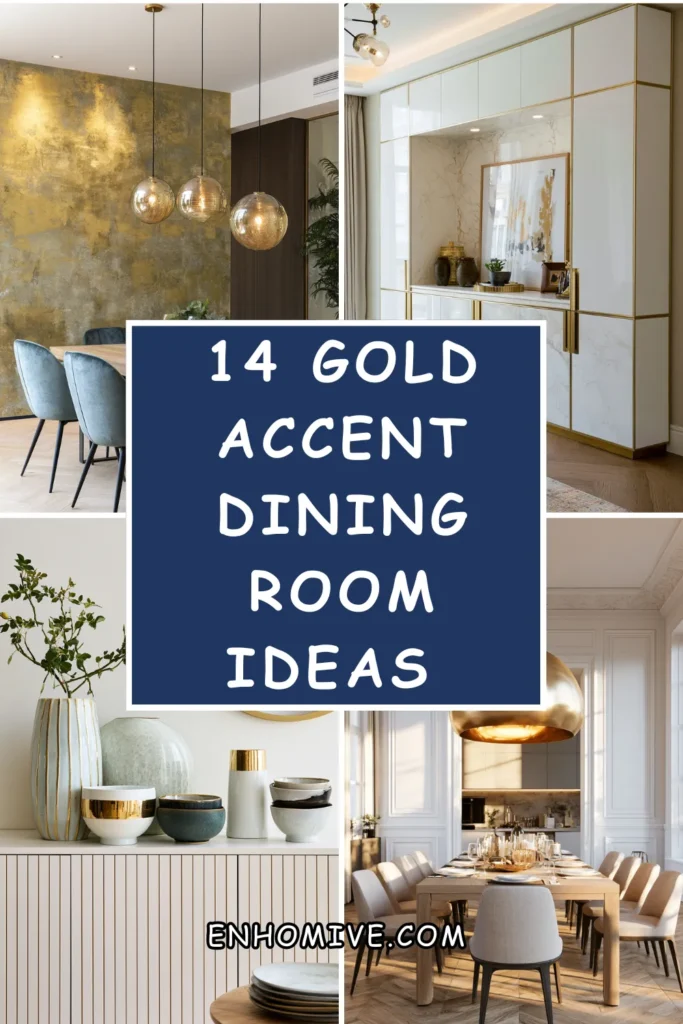
14 Gold Accent Dining Room Ideas for Elegant Gatherings
Gold in a dining room is not about expense.
It is about warmth.
The specific quality of warm metallic light that gold brings to a room, whether from a gilded mirror frame, a brass pendant above the table, or the warm reflection from a gold-toned ceramic on the sideboard, is the quality of a fire without the fire. A warmth that is visible before it is felt. A warmth that makes food look better and faces look better and the entire occasion of the meal feel more considered and more celebratory.
This quality does not require gold leaf ceilings or gold-plated cutlery. It requires the strategic placement of warm metallic tones in the room that receives guests and serves food, at the height and in the positions where the warmth matters most.
The dining room designed around gold accents is the dining room that makes every dinner feel slightly more like an occasion than the same dinner in a room without them.
Here are 14 ideas that build this quality throughout the dining room.
Why Gold Works So Well in the Dining Room Specifically
Every material choice in design has a context where it is most correct.
Gold is most correct in the dining room for the same reason that candlelight is most correct there. Both are warm. Both are specifically beautiful in low and artificial light. Both make the objects and the people around them look better than they do in the flat, cool light of a functional space.
The dining room is primarily used in the evening. In evening light, whether from candles, a pendant, or warm lamps, gold surfaces catch and multiply the warmth of the light. A brass pendant above a table throws warm amber light that the gold’s own tone amplifies. A gilded mirror frame on the dining room wall reflects every candle on the table in a warm glow that multiplies the room’s apparent light sources.
This amplification effect is specific to warm metallic tones. Chrome and stainless steel in the same positions reflect light with a cold precision that does the opposite of what gold does. The cool metal in a warm room reduces warmth. The warm metal amplifies it.
The dining room is the room where this amplification matters most because the dining room at its best is a room of warmth, light, and occasion. Gold belongs there more completely than in any other room.
1. A Brass or Gold Pendant Above the Table
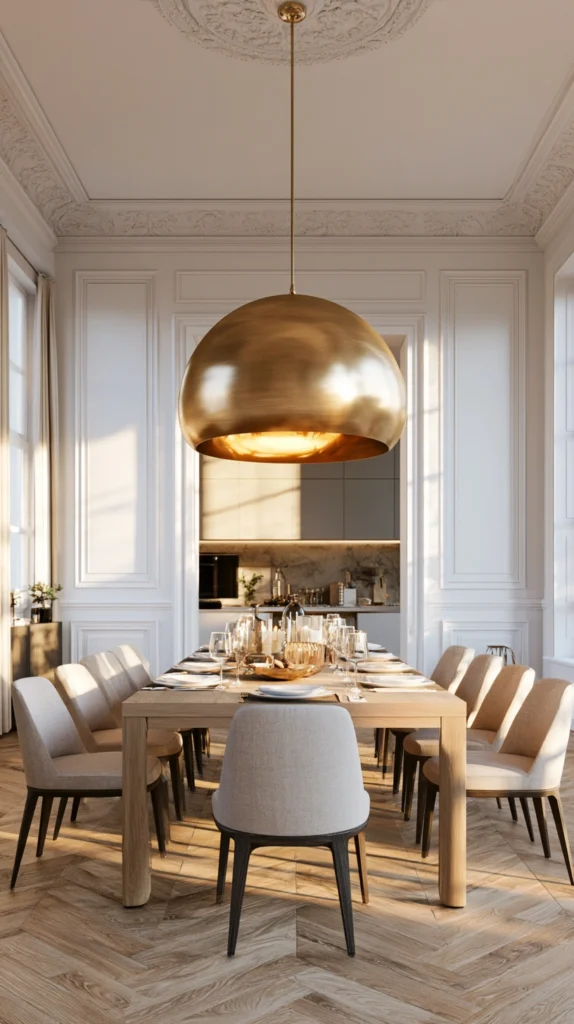
The pendant light above the dining table is the room’s most important gold element.
Not because of its size, though a substantial pendant is visually significant. Because of its position. The pendant is directly above the table. Every person seated at the table is within the circle of its light. The pendant’s warm amber glow falls on the food, on the faces, on the table setting, on the glassware that multiplies the light in its crystal.
A brass pendant in a warm tone, whether polished brass that is new and bright, aged brass that has developed its deeper patina, or antique brass that is darker and richer, sets the thermal quality of the room’s primary light from the moment it is switched on.
The scale of the pendant should be generous relative to the table below it. A pendant that is too small for the table looks tentative. A pendant that properly proportions to the table’s length creates the visual statement that makes the pendant a room feature rather than merely a lighting fixture.
The height of the pendant above the table is as important as its size. Seventy-five to eighty-five centimetres above the table surface is the range where the pendant illuminates the table intimately without being in the sightline of seated guests looking across the table at each other.
Install on a dimmer without exception. A brass pendant at full brightness is functional. The same pendant at fifty percent on a dimmer is the primary atmosphere-creator of the dining room.
Why a brass pendant is the most important gold element in a dining room:
- The pendant is directly above the table, ensuring its warm tone affects every element of the dining experience
- Brass at any stage of its patina development provides the warm amber quality that gold’s dining room contribution requires
- A pendant at the right height and on a dimmer is the room’s primary atmospheric tool
- The pendant’s reflection in wine glasses, crystal, and polished surfaces multiplies the warmth visually
- A brass pendant above a dark table or a pale linen table cloth is one of the most consistently beautiful dining room compositions available
- The pendant reads as an architectural and aesthetic element of the room rather than a purely functional fitting
2. Gold-Framed Mirrors on the Dining Room Wall
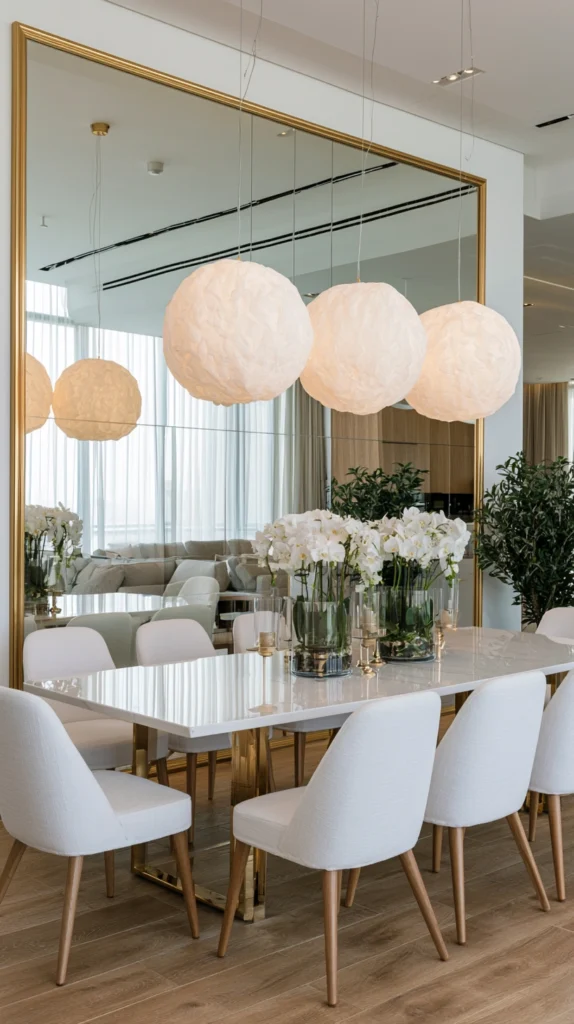
The mirror in a dining room is the element that most effectively multiplies space, light, and warmth simultaneously.
A large, gold-framed mirror positioned on the wall opposite the dining table reflects the table, the pendant, the candles, and the guests. From the seats facing the mirror the reflected image shows the table extending further than it actually does. From the seats facing away from the mirror the room appears deeper and more luminous than a solid wall would allow.
The frame is as important as the mirror for the gold accent purpose. A gold frame in an ornate period style adds historical richness and the specific warmth of gilded detail that plain or dark frames cannot provide. A gold frame in a simpler, more architectural form adds the warmth of the metallic without the complexity of the period style.
Antique gold frames with their slight tarnish and variation in tone are more beautiful in a dining room context than new, uniformly bright gold frames. The slight imperfection of the antique patina reads as genuine rather than as decoration. The warmth is organic rather than applied.
Multiple smaller gold-framed mirrors in a considered arrangement on one wall create a gallery of warmth and reflection that distributes the gold tone across a wider surface rather than concentrating it in a single large object.
3. Gold Cutlery and Tableware for a Special Occasion
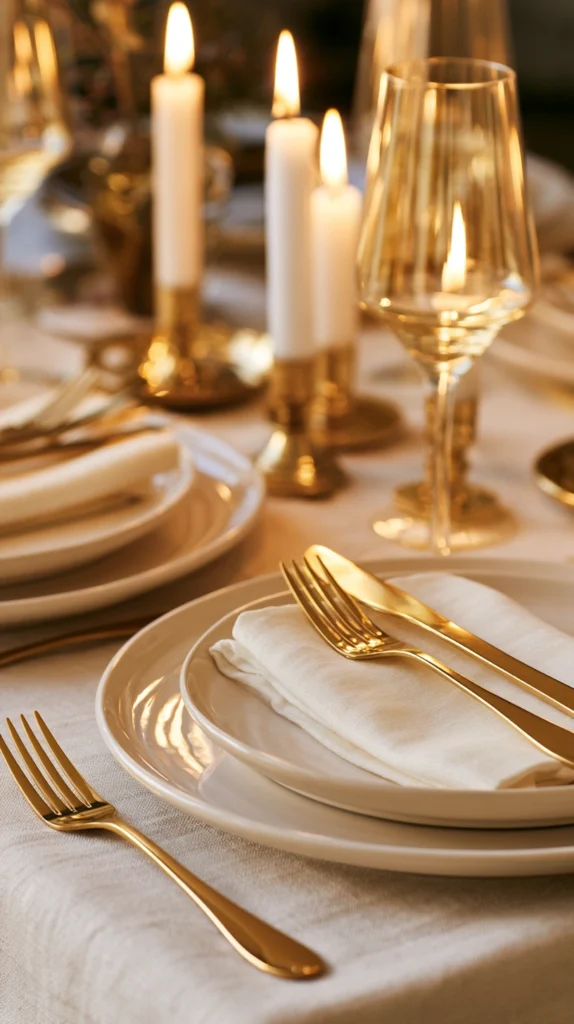
The gold-tone cutlery set is the dining room accent that is most directly in the hands and in the eyeline of every guest at every moment of the meal.
Gold-tone cutlery, whether in real gold plating, gold PVD coating, or a convincing gold-toned stainless steel, on a white, cream, or dark tablecloth creates a table setting of extraordinary warmth and elegance. The warmth of the cutlery beside the white of the china. The gold against the crystal of the glassware.
This is the gold accent with the most immediate tactile impact. The guest lifts a gold-toned fork and the warmth of the metal is in their hand as they eat. The gold knife blade catches the candlelight as it moves. The table setting in gold cutlery is actively engaged with by every guest throughout the meal rather than being observed from a distance.
Gold cutlery should be reserved for the occasions that warrant it. Daily use dulls the coating faster and reduces the quality of the cutlery’s appearance over time. Used for the gatherings that occasion it, gold cutlery retains its warmth and its visual quality for years.
Store in the cloth rolls or the organiser tray that maintains the coating and prevents the scratching that contact with other metal causes.
4. A Gilded Sideboard or Console Table
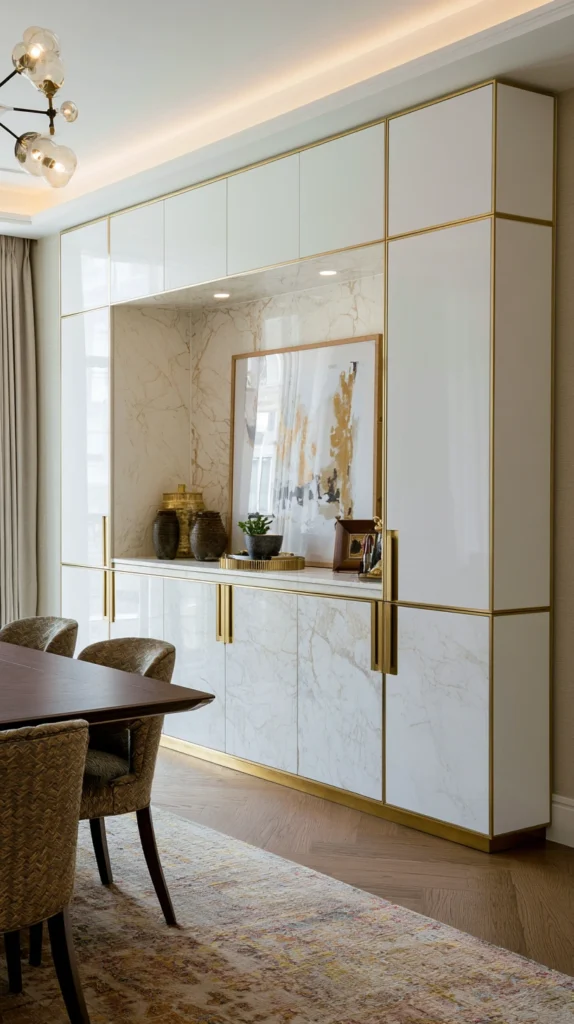
The sideboard in a dining room is the secondary furniture piece that holds the serving dishes between courses, the wine that is not yet opened, and the objects that make the room feel furnished rather than merely equipped.
A sideboard with gilded detail, whether in the form of gold-toned hardware on the drawer fronts and door handles, a gold-leafed surface on the lower shelf or the top surface, or a gold-painted border detail on the cabinetry, introduces the gold accent at a lower, more furniture-level position than the pendant above.
The layering of gold at different heights in the dining room, at pendant height above the table and at sideboard height on the wall, creates the full vertical distribution of the warm tone that makes the gold accent feel like a design decision rather than a single accessory.
A sideboard painted in a dark tone, forest green, navy, or deep charcoal, with gold hardware throughout, creates one of the most beautiful pieces of dining room furniture available. The dark paint and the gold hardware are specifically complementary. The dark absorbs light and makes the gold hardware glow by contrast.
5. Gold-Toned Candlestick Holders for Table Warmth
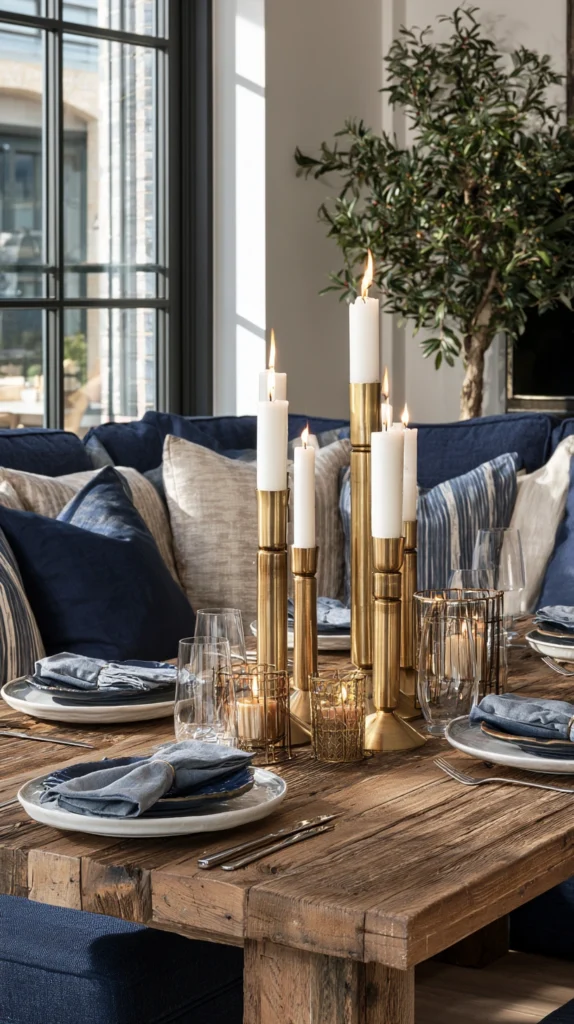
The dining table candle in a gold candlestick holder is the gold accent with the highest warmth-per-cost ratio of any element in this list.
Gold or brass candlestick holders of varying heights, grouped in a cluster on the dining table alongside the centrepiece flowers or the herb runner, create multiple warm metallic elements at the table’s surface level. The candle flame above the gold holder. The reflected warmth of the flame in the gold’s surface. The warm ambient light falling on everything at table level.
Mixing gold candlestick heights creates a composition that reads as styled rather than matching-set. A tall brass taper candlestick beside a shorter, wider brass pillar holder beside a very low, wide brass votive holder creates a varied skyline of warm metallic objects that catches light at different heights simultaneously.
The patina of brass candlestick holders varies considerably and the variation is part of their beauty. New polished brass beside aged unlacquered brass beside an older, darker patinated piece creates a collection that looks accumulated rather than purchased as a set. The accumulated quality is more beautiful than the matching-set quality for table centrepieces.
6. Gold Picture Frames for a Gallery Wall
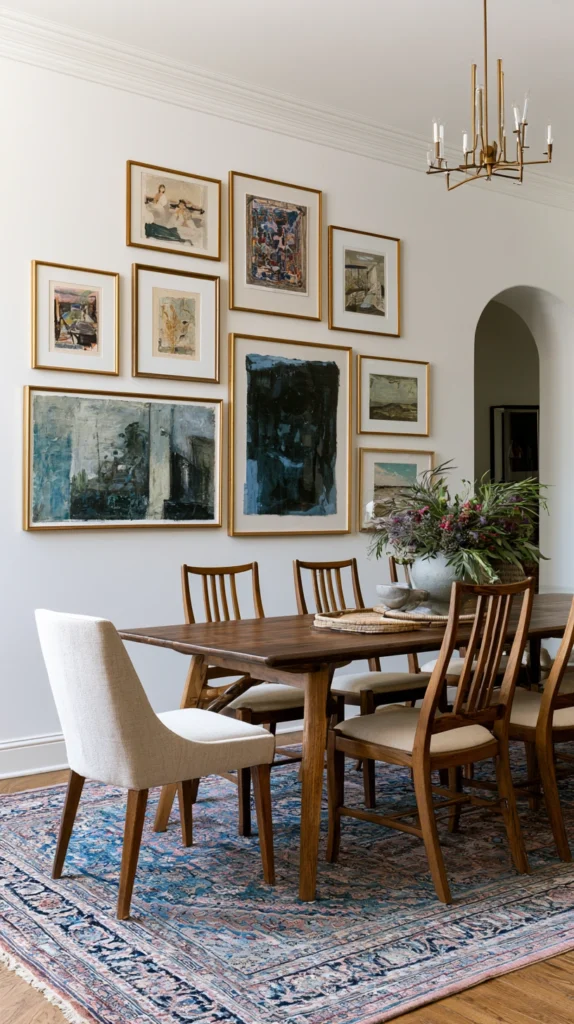
The dining room gallery wall with gold frames is the most traditional and most consistently successful version of this display format.
Gold frames create a cohesive, warm gallery regardless of the diversity of the artworks within them. A collection of artworks in varied styles, periods, and subjects is unified by the consistent gold of the frames. The frames are the organising principle that holds the gallery together visually.
The frames can be identical in profile and finish for maximum formality. Or they can vary in width, in the complexity of their moulding detail, and in the specific tone of their gold, from bright gilt to antique gold to warm champagne, for a more eclectic and more layered quality.
The artwork within gold frames in a dining room should be chosen for its warmth and its suitability to the dining context. Botanical prints. Still life paintings. Portraits. Landscapes in warm tones. Abstract works in ochre, terracotta, and warm cream. These subjects and palettes suit the dining room context and the gold frames simultaneously.
A gold gallery wall in a dining room is one of the oldest and most enduring interior design traditions precisely because the warm metallic frames and the evening-lit dining room are specifically well-matched.
7. A Gold Leaf or Metallic Wallpaper Feature Wall
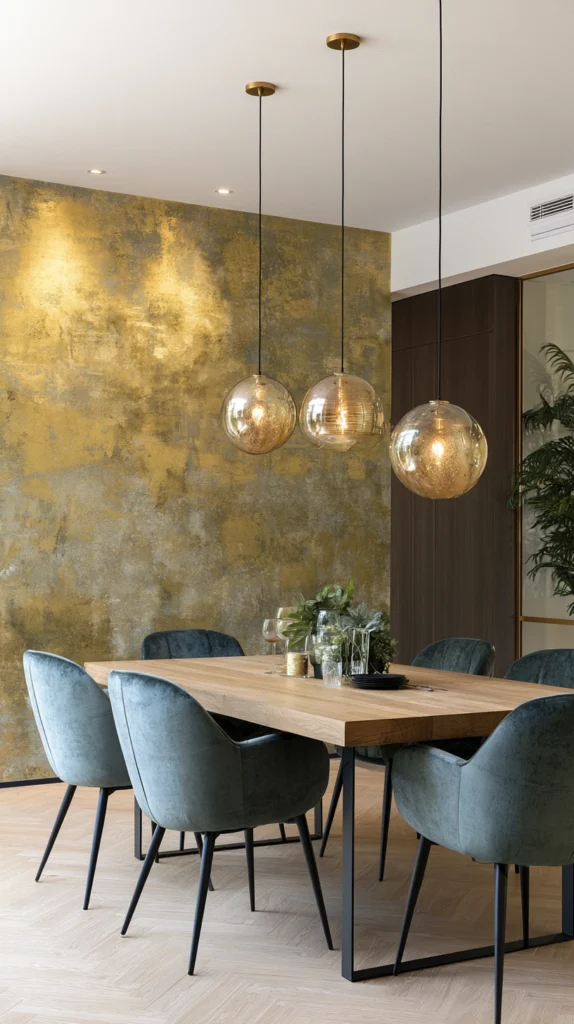
The gold metallic wallpaper is the most dramatic gold accent available for a dining room wall.
Not gold-colour paint. Gold metallic wallpaper, whether in the form of genuine gold leaf wallpaper with its irregular, organic surface, or a printed metallic wallpaper that replicates the visual quality of gold leaf at a fraction of the cost, creates a wall surface that catches and reflects light in a way that paint cannot.
Metallic wallpaper in a dining room changes character throughout the day and evening. In daylight it is rich and warm. In candlelight it glows with a quality that no other wall surface produces. The light source is reflected and refracted across its surface in constantly shifting patterns.
A single feature wall in gold metallic wallpaper, typically the wall that the dining table faces or the wall behind the sideboard, creates the room’s most dramatic decorative statement. The three other walls in a calming, complementary neutral, deep navy, forest green, or warm charcoal, allow the metallic wall to read as the jewel of the room rather than a wallpaper that covers every surface.
The texture of the metallic wallpaper matters. Embossed metallic wallpaper with a raised pattern creates shadows that give the wall a three-dimensional quality. Flat metallic wallpaper creates a more uniform reflective surface. Both are beautiful but in different ways and for different room characters.
8. Gold Bar Cart or Drinks Trolley as a Room Feature
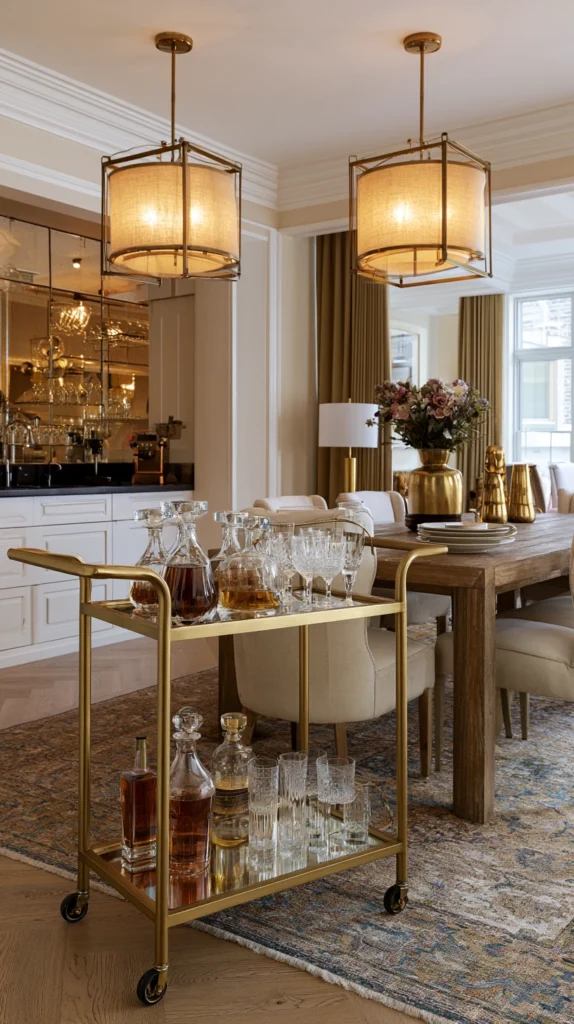
The bar cart or drinks trolley is the dining room furniture piece that serves the drinks service while also functioning as a display and accent object.
A gold or brass bar cart, with its warm metallic frame and its display of glass decanters, crystal glassware, and bottles, creates a portable table of warm metallic and transparent surfaces that catches light from every angle.
The bar cart in the dining room is most effective when it is visible during the meal rather than hidden in a corner or in an adjacent room. Positioned beside the dining table or at the edge of the room within view of the guests, the gold cart with its drinks display communicates the generous hospitality of the evening.
The objects on the cart should be as considered as the cart itself. A crystal decanter of whisky. A glass pitcher of water. The wine selected for the meal. A small vase of flowers. A candle or two at bar cart height. The cart as a styled object within the dining room rather than a purely functional trolley.
9. Upholstered Dining Chairs With Gold Legs
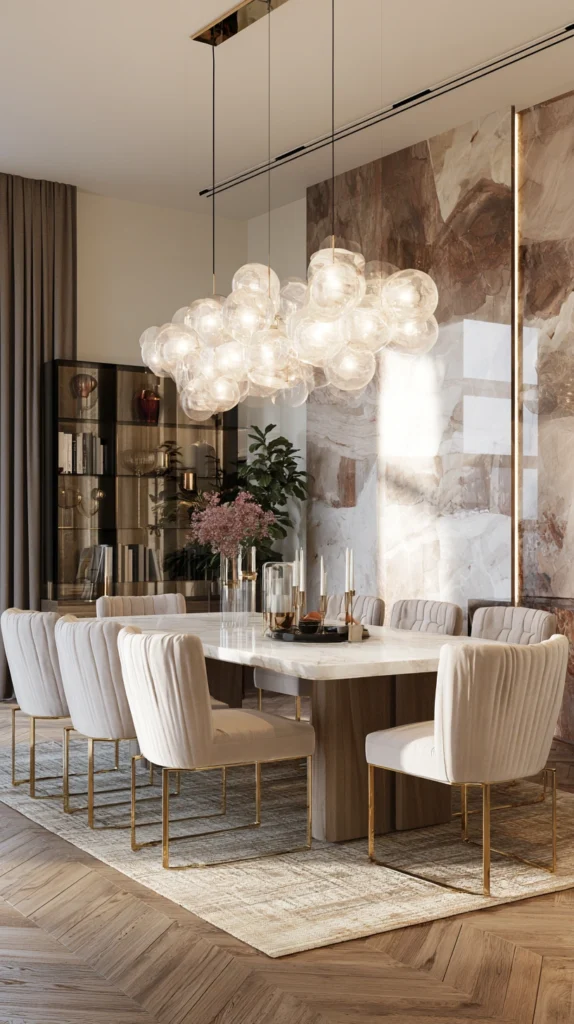
The dining chair with gold-toned or brass-toned legs is the gold accent that combines material quality with structural function.
The upholstered seat and back of the chair in a quality fabric, velvet, linen, or bouclé in a warm neutral or a jewel tone, combined with the warm metallic of the brass or gold legs, creates a dining chair that is both comfortable and visually beautiful.
The gold legs at floor level create a warm metallic element that distributes across the dining room at the lowest possible height. When every chair at the table has gold legs, the perimeter of the table at floor level is defined by a regular repetition of warm metallic that frames the table from below.
This framing effect, the gold at floor level defining the table’s perimeter, is different from and complementary to the gold at ceiling level from the pendant. Together they create a vertical range of warm metallic reference that spans the room from floor to ceiling.
Choose a leg finish that relates to the other gold elements in the room. Polished brass legs beside a polished brass pendant. Aged brass legs beside aged brass candlestick holders. The tonal consistency between the gold elements at different heights creates a considered palette rather than a collection of different metals.
10. Gold Taper Candles in a Table Setting
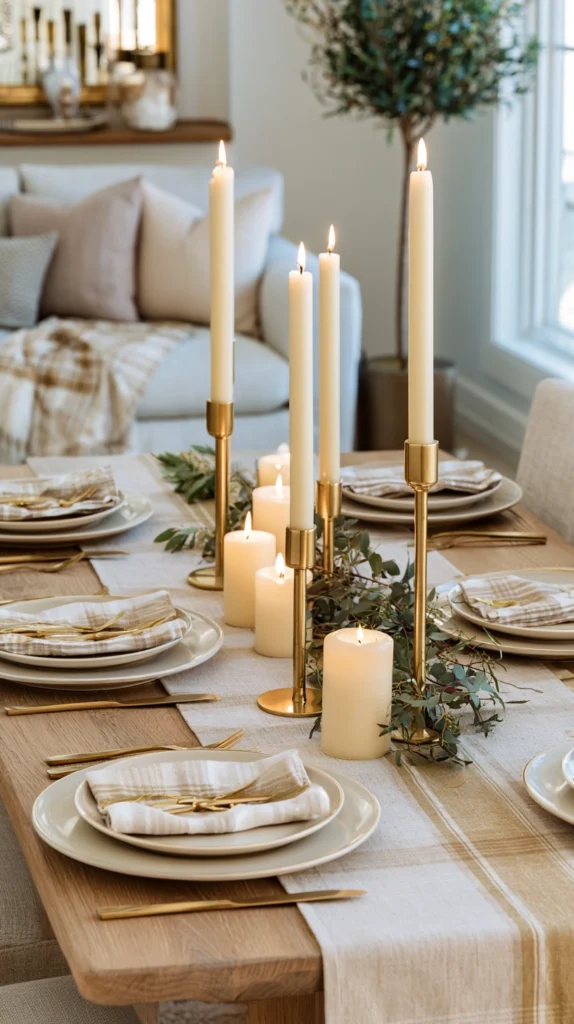
The gold taper candle is the most accessible and most seasonal gold accent for a dining table setting.
Taper candles are available in metallic gold versions that combine the functional warmth of candlelight with the visual warmth of the gold tone. A gold taper in a simple candlestick holder has an immediate quality of celebration and occasion that white or cream tapers, however beautiful, do not quite achieve.
For specific occasions, a Christmas dinner, a birthday gathering, an anniversary meal, the gold taper candle on the dining table is the single addition that signals immediately that this meal is not an ordinary Tuesday dinner. The warm glow of the gold candle against the table setting communicates the intention of the occasion before the first course arrives.
Pair gold tapers with simple, clean candlestick holders. The taper’s colour and warmth is the accent. A holder that competes with it in complexity or ornamentation takes something from the impact of the candle. A simple polished or aged brass holder in a classic form, or a simple white ceramic holder, is all the support the gold taper needs.
11. A Gold-Framed Chalkboard Menu for Event Dining
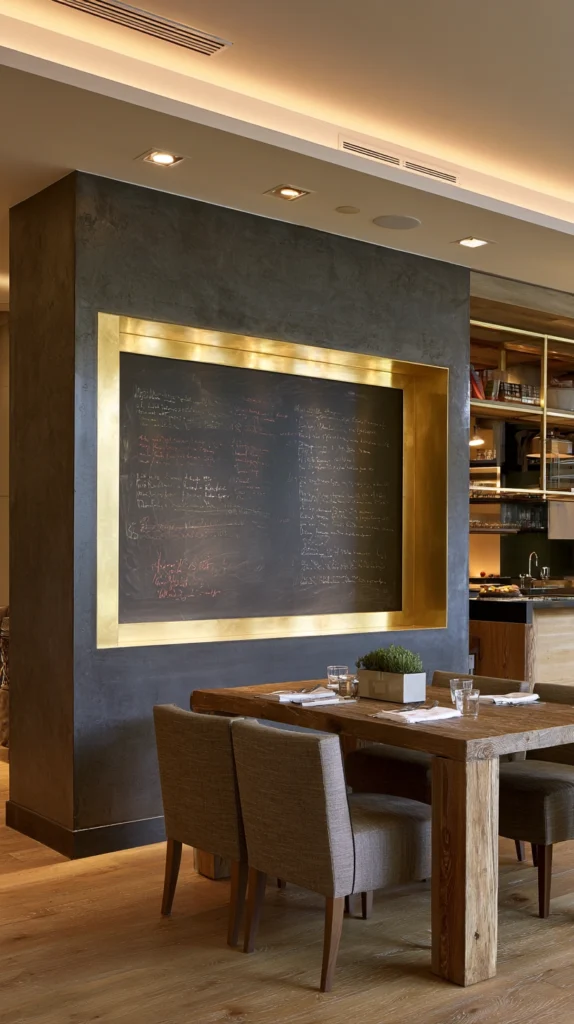
The framed chalkboard menu is the dining room element that is specific to the occasion of a planned dinner party.
A large chalkboard in a gold frame, positioned in the dining room where guests can see it before or during the meal, with the evening’s menu written on it in chalk, creates an experience of considered hospitality that communicates the effort that has gone into the gathering.
The gold frame elevates the chalkboard from a kitchen accessory to a dining room feature. It places the practicality of the menu display within the gold accent language of the rest of the room. The chalkboard in a plain frame or without a frame reads as a kitchen item in the wrong room. The same chalkboard in a generous gold frame reads as a hospitality gesture.
The calligraphy or lettering on the chalkboard should be as considered as the frame. The name of each course. The wines paired with each course if wine pairing is part of the evening. A small decorative element, a botanical sketch, a simple ornamental border, that suits the occasion.
This element is not for every dinner. It is for the dinners worth this level of intention. Used selectively it retains its quality as a signal of occasion rather than becoming a routine decoration.
12. Gold Table Runners as a Base Layer
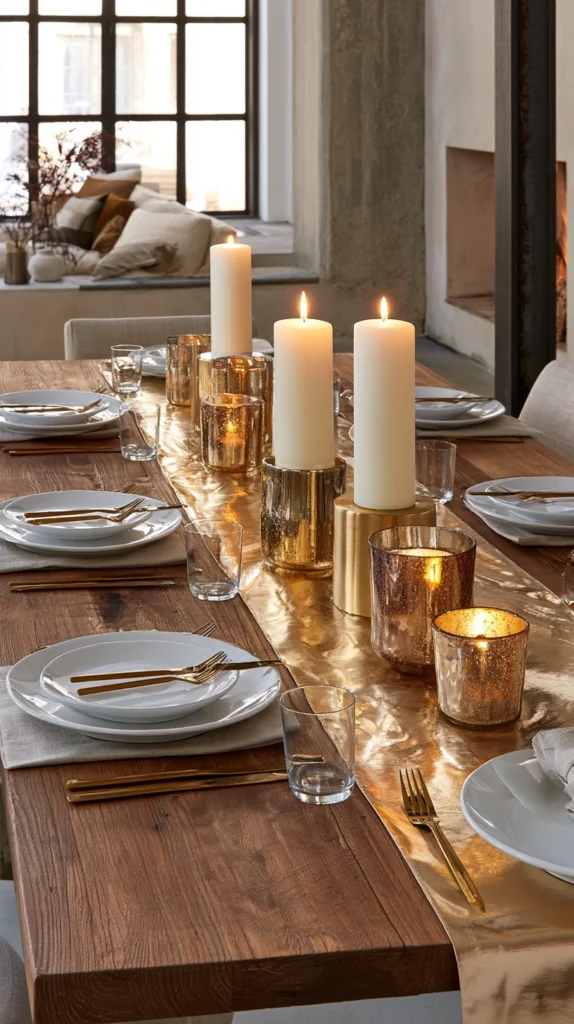
The gold table runner is the quick, accessible gold accent for the dining table that requires no permanent installation and no significant investment.
A runner of gold metallic fabric, or a woven table runner with gold thread running through it, laid along the centre of the dining table beneath the centrepiece, creates a warm metallic ground that the candles, the flowers, and the centrepiece objects rest on.
The runner at table level distributes the gold tone across the full length of the table rather than concentrating it at a specific point. Every object placed on the runner is elevated by the warm metallic surface beneath it. The candles glow more warmly against the gold ground. The white china of the table setting contrasts with the warm metallic runner.
For maximum impact the table runner should be in the same tonal direction as the room’s other gold elements. A warm, aged gold runner with aged brass candlesticks. A bright, polished gold runner with polished brass hardware. The consistency of tone between the different gold elements creates a cohesive warm palette rather than a collection of different metallic shades.
13. Gold Accent Ceramics and Vases on the Sideboard
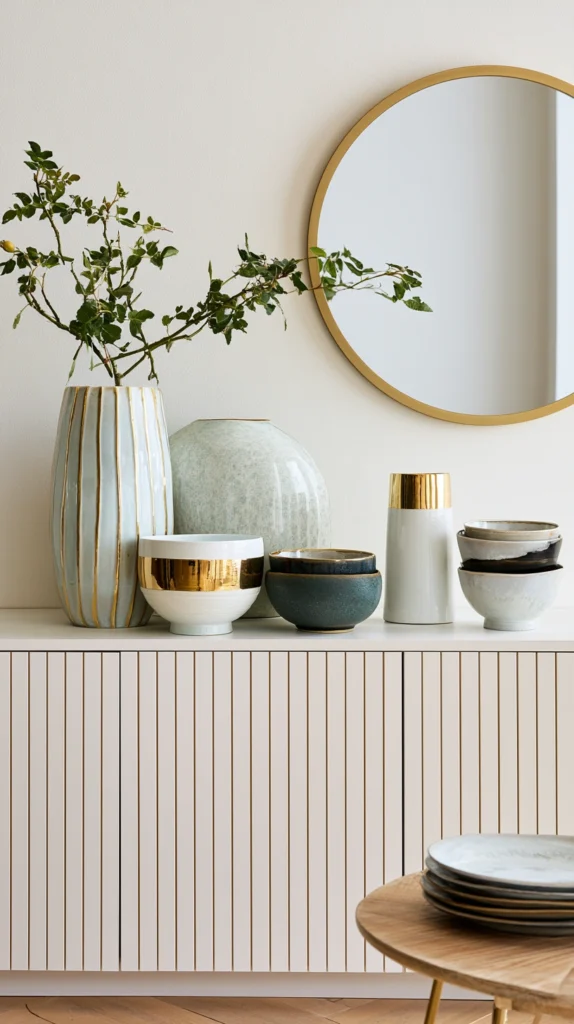
The ceramics and vases on the dining room sideboard are the room’s secondary display, visible throughout the meal and part of the room’s overall visual composition.
Ceramics with gold accents, whether hand-painted gold rims on a simple stoneware bowl, gold lustre glaze on a ceramic vase, or a terracotta pot with a gold-dipped base, bring the warm metallic into the room at sideboard height in an organic, varied form.
The gold in ceramics has a specific quality that differs from the gold of metal objects. The matte or lustrous quality of a gold-glazed ceramic surface is warmer and more organic than the reflective precision of polished brass. The two qualities, the warm ceramic gold and the reflective metallic gold, work together in a room more richly than either works alone.
A collection of ceramics in varying sizes, all with some gold element, creates a layered still-life on the sideboard that reads as collected rather than purchased as a set. A tall vase with a gold rim. A medium ceramic bowl with a gold interior. A small decorative object with gold lustre details. These three objects at different heights create a composed still-life that uses the sideboard as a stage.
14. Gold-Toned Chair Cushions or Tie-On Pads
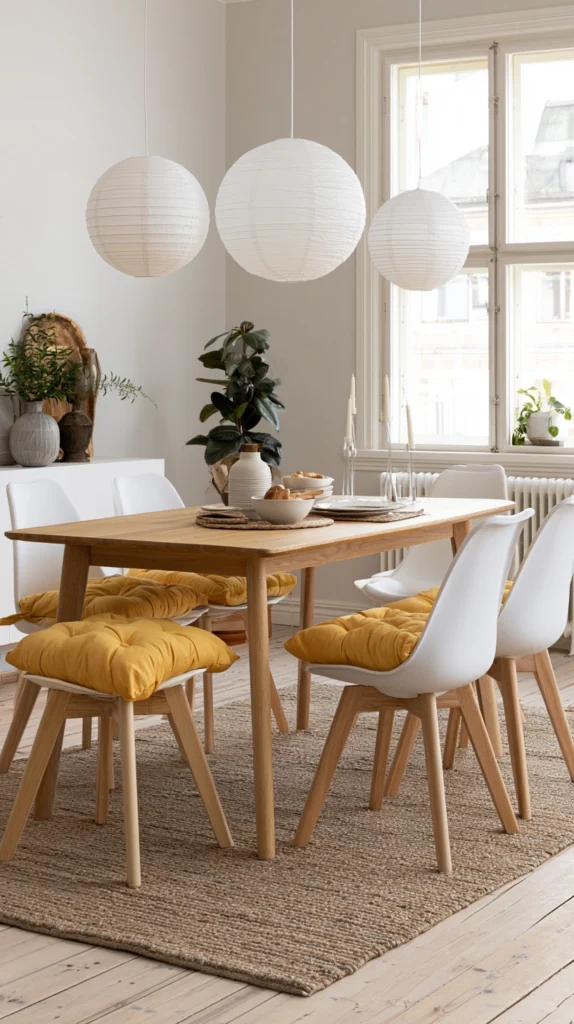
The dining chair cushion is the softest and most practical gold accent in any dining room.
Chair cushions in gold, warm ochre, or amber fabric provide the warmth of the gold palette at the most physically intimate level, the seat beneath each guest. They are in contact with the guest throughout the meal. They provide the physical comfort of a padded seat for extended dining. And they distribute the warm tonal accent across the full table perimeter at the height where it is most visible from a seated position.
The fabric should be a quality material that handles the frequent removal and washing that dining chair cushions require. A velvet in warm gold or amber. A linen in an ochre or warm mustard. A printed fabric with a warm botanical or geometric pattern that includes gold tones.
The cushion ties, the fabric loops that secure the cushion to the chair back, are a detail visible from every angle around the table. In a matching or complementary fabric with a clean tie and a neat bow, the ties contribute to the overall quality of the table setting. In an inferior material or in a colour that does not suit the room, the ties undermine it.
How to Build a Gold Accent Dining Room Gradually
The gold accent dining room does not require a simultaneous renovation.
It builds gradually from the items with the highest impact per investment and develops over time as each addition reinforces and enriches the previous ones.
The pendant light is the first investment. The room spends most of its time with the pendant on and the pendant’s warmth affects every other element of the room from the moment it is installed. A quality brass pendant is the foundation of the gold accent dining room.
Then the mirror. A good gold-framed mirror is a single purchase with a permanent positive effect. Positioned to catch the pendant light and the table candles, the mirror doubles the room’s warmth immediately.
Then the smaller, cumulative additions. The candlestick holders. The ceramics on the sideboard. The table runner for special occasions. The cutlery upgrade for gatherings that warrant it.
Each addition reinforces the ones before it. The gold palette deepens and becomes more convincing with each element because each new gold accent has others to relate to.
Common Mistakes in Gold Accent Dining Room Design
Mixing gold tones without intention. Polished brass beside antique gold beside rose gold beside champagne gold. Multiple gold tones in the same room create a room that looks unsettled rather than designed. Choose one gold tone direction and source all elements from within it.
Using gold in cool-toned rooms. Gold is warm. Cool grey, cool blue, and cool green rooms create a conflict between the room’s tone and the gold elements within it. Gold works best in rooms with warm wall colours or in neutral rooms with warm furnishings. A cool-toned room with gold accents always looks slightly wrong.
Over-gilding. Too much gold in a room removes its quality as an accent and makes the room feel like a themed environment. The gold should be present at key points throughout the room at different heights and in different forms. It should not be the dominant tone of every surface.
Choosing poor-quality gold plating on tableware. Gold-plated cutlery and tableware at low price points often peels, fades, and tarnishes within one season. The investment in quality gold-toned tableware that holds its finish is justified by the visual quality it maintains over years of use.
Ignoring the quality of light. Gold works in warm light and looks wrong in cool light. Every bulb in a dining room that uses gold accents should be warm, 2700K maximum. Cool white light makes gold look harsh and cheapens every metallic element in the room.
Adding gold accents without considering the room’s existing palette. Gold is generous to rooms with the right colour context. Added to a room whose palette already works, gold enriches. Added to a room whose palette does not work, gold cannot fix what is already wrong.
Quick Summary
- A brass or aged-gold pendant above the table at the right height and on a dimmer is the most important single gold investment in the dining room
- Gold-framed mirrors on the dining wall multiply the room’s light and reflect the table’s warmth across the full meal
- Gold-tone cutlery and tableware brings the warm metallic directly to the hands and eyeline of every guest throughout the meal
- A dark sideboard with gold hardware creates one of the most beautiful dining room furniture combinations available
- Brass candlestick holders in varying heights grouped together at the table level create warm metallic layering at the most intimate height
- A gallery wall with consistent gold frames creates a cohesive, warm display regardless of the diversity of the artworks within
- Gold metallic wallpaper on a single feature wall creates the most dramatic gold statement and changes completely in quality from daylight to candlelight
- A gold bar cart with crystal decanters and glassware is a portable display of warm metallic and transparent surfaces visible during the meal
- Dining chairs with gold or brass legs distribute the warm metallic across the table perimeter at floor height complementing the pendant above
- Gold taper candles at a specific occasion signal immediately the intention and the celebration of the evening
- A chalkboard in a generous gold frame as a menu display communicates considered hospitality at the highest level of occasion dining
- A gold metallic table runner creates a warm metallic ground beneath the entire centrepiece and table arrangement
- Gold-accented ceramics on the sideboard, in varying sizes at different heights, create an organic warm still-life that is genuinely beautiful
- Chair cushions in gold, amber, or ochre fabric bring the warm palette to every seated position around the table
- Build from the pendant first, then the mirror, then the cumulative smaller additions over time
- Choose one gold tone direction and source all elements from within it for a cohesive rather than unsettled result
The gold accent dining room is not a formal room.
It is a warm room. A room where the light is amber and the surfaces catch that warmth and hold it and return it to the people gathered around the table.
The gathering feels more like an occasion in this room. Not because it is more expensive or more elaborate than any other dining room. Because the room has been designed for the specific quality of warmth that makes a meal more than sustenance.
Gold is the material that does this most directly.
Use it with intention and the dining room earns its place as the room that makes the gathering feel like a celebration.