

14 Indoor Tree Styling Ideas That Bring Drama to Your Interiors
The indoor tree is the interior design element that operates on an entirely different scale, an entirely different level of visual authority, and an entirely different quality of spatial and atmospheric impact from every other plant that can be brought into a domestic interior.
It is not a decorative accent, not a tabletop arrangement, not a shelf-styling detail — it is a genuine architectural presence, a vertical element of living biological mass that occupies the interior space with the same scale, the same authority, and the same spatial consequence as a piece of significant furniture or a major architectural feature.
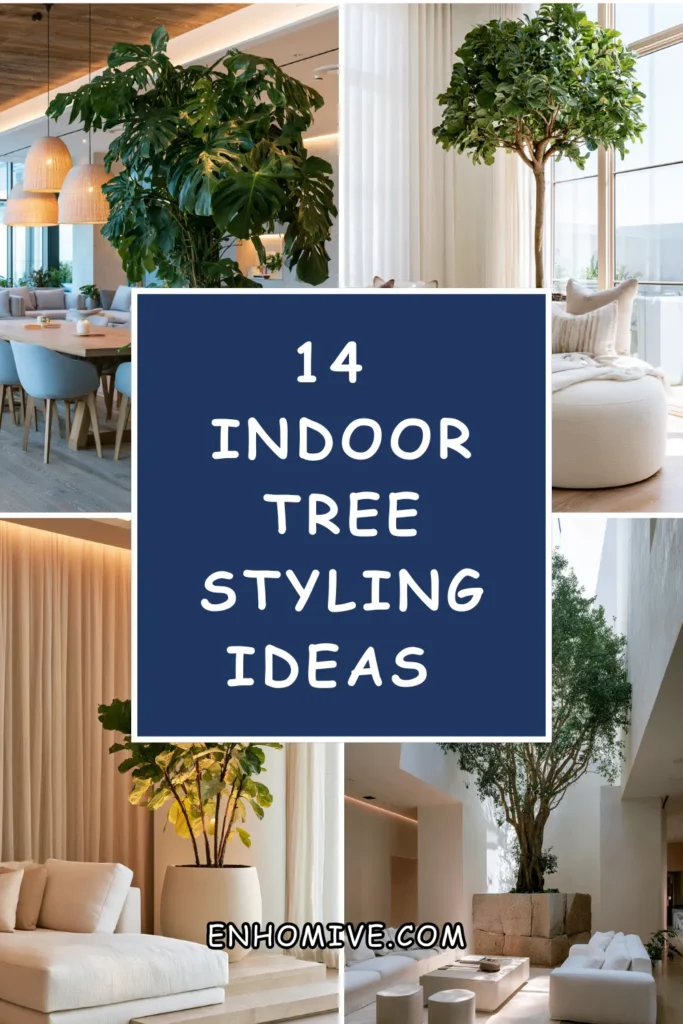
The indoor tree changes the room around it — it creates shade and filtered light, it divides space without the hard boundary of a wall, it introduces the specific quality of living, breathing, biologically complex natural beauty that manufactured objects and even cut flowers cannot replicate, and it creates a domestic atmosphere of extraordinary biophilic richness that the human nervous system responds to with immediate and instinctive pleasure.
The correct indoor tree in the correct interior space creates a room that feels simultaneously more beautiful, more alive, more atmospherically complex, and more genuinely extraordinary than the same room without it — as though the tree was always the missing element the interior was waiting for.
These fourteen ideas will help you choose, style, and place indoor trees with genuine design confidence, genuine horticultural intelligence, and the full dramatic power they possess when handled with genuine care and genuine spatial understanding.
1. Place a Fiddle Leaf Fig as a Sculptural Focal Point
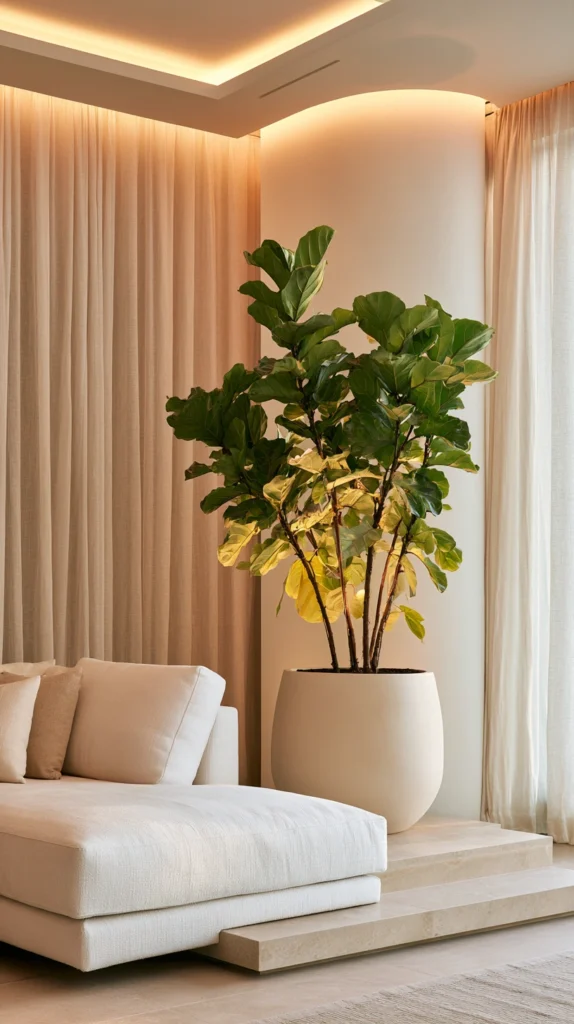
The fiddle leaf fig remains the most sculpturally beautiful, the most architecturally commanding, and the most genuinely dramatic indoor tree available in contemporary interior design — a plant of extraordinary visual presence whose large, waxy, deeply lobed leaves on a slender, elegantly branching trunk create a silhouette of remarkable sculptural beauty and considerable spatial authority that no other commonly available indoor tree replicates with the same combination of visual power and genuine ornamental beauty.
Position a large, well-grown fiddle leaf fig in the corner of the living room where two walls meet, allowing its canopy to spread at ceiling height and its trunk to create the specific quality of indoor tree drama that makes it the most photographed plant in residential interiors worldwide. Place in a generously proportioned ceramic or rattan planter on a simple timber base for the most beautiful and most resolved styling result.
2. Use an Olive Tree for Mediterranean Warmth
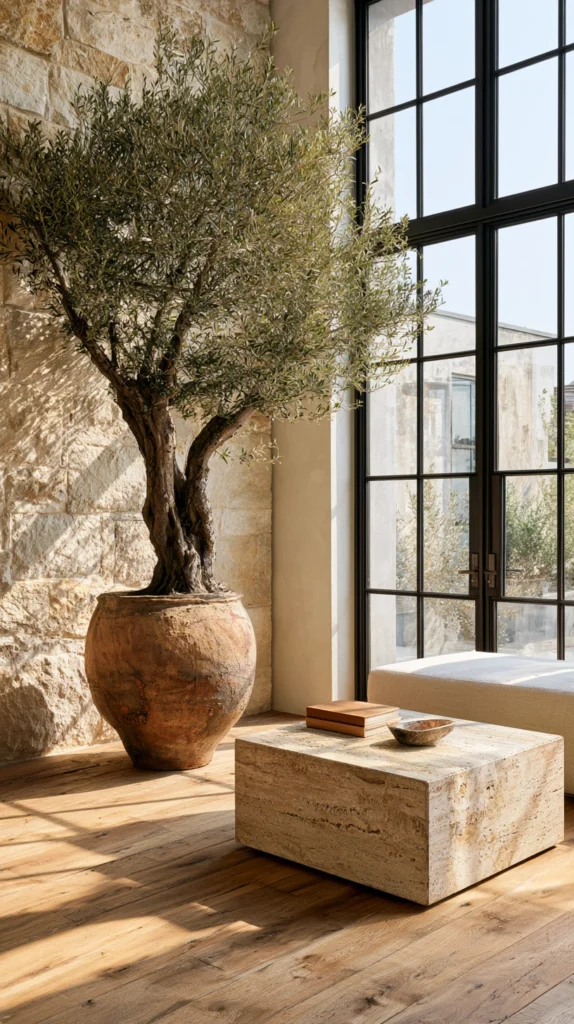
The indoor olive tree — a mature specimen with a gnarled, characterful trunk of genuine age and a canopy of small, silver-grey, slightly dusty leaves of extraordinary delicate beauty — creates an interior of remarkable Mediterranean warmth and genuine botanical character that no other indoor tree provides with the same cultural resonance or the same specific quality of ancient, sun-warmed, organically beautiful natural presence.
The olive tree’s trunk is its greatest visual asset — the specific quality of an old olive trunk, with its twisting, deeply furrowed, silver-grey bark and its gnarled, characterful form, creates an interior sculptural element of extraordinary natural beauty and considerable age-related drama. Place in a large, simple terracotta pot with excellent drainage and position near the largest available window for the Mediterranean light levels the olive requires to thrive.
3. Create a Forest of Multiple Birch Trunks
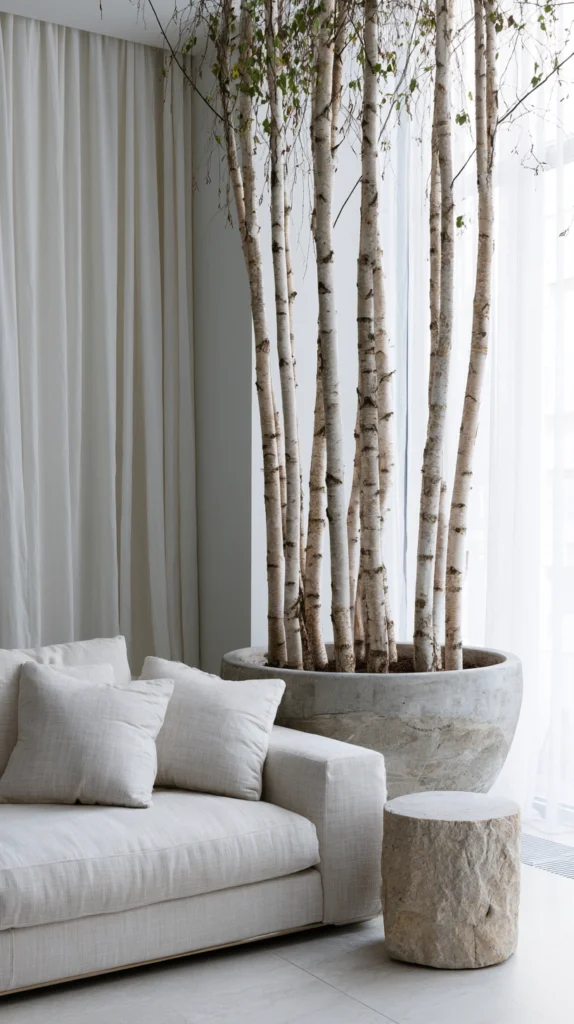
Multiple white-barked birch trunks — either living multi-stem birch trees in a large planter of generous proportion, or dried and preserved birch stems arranged in a tall ceramic or concrete vessel.
It creates an interior forest feature of extraordinary visual drama and genuine woodland atmosphere that the single tree in a pot cannot approach with the same spatial immersiveness or the same quality of being genuinely within a landscape rather than merely adjacent to a plant.
The white bark of the birch creates a vertical element of remarkable visual lightness and considerable sculptural beauty — its bright, paper-smooth surface catching the light with extraordinary delicacy and creating the specific quality of dappled, forest-filtered illumination that makes a room feel genuinely connected to the natural landscape beyond its walls.
4. Style the Tree Planter as Carefully as the Tree
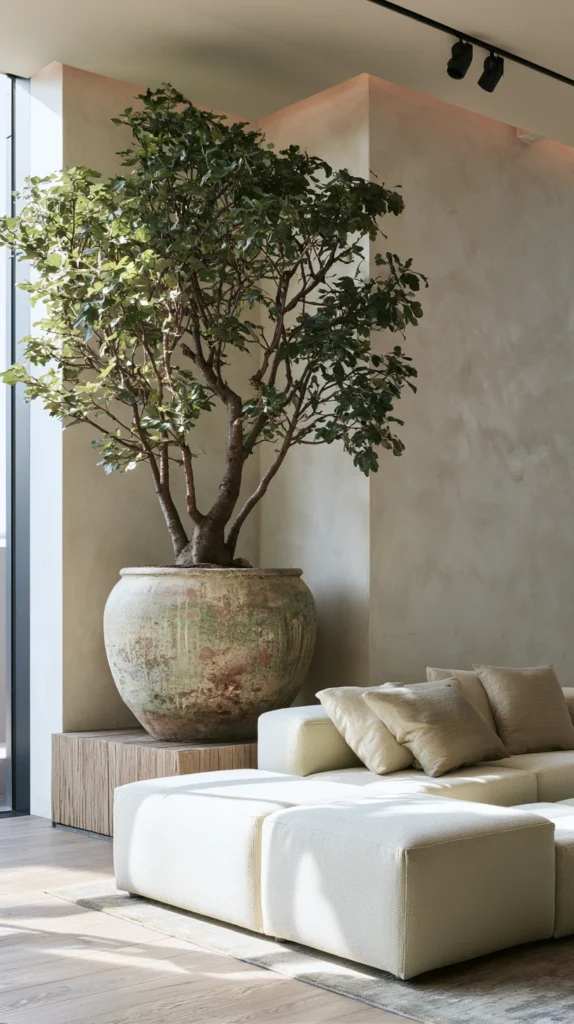
The planter or pot in which the indoor tree is housed is the styling element of greatest immediate visual impact and most direct design consequence in the entire indoor tree composition — because the planter is what the eye encounters first, at human eye level, before the gaze moves upward to appreciate the trunk and canopy above it.
A beautifully chosen planter — a large, hand-thrown ceramic vessel in a warm, earthy glaze, a simple but generously proportioned concrete bowl of considerable weight and genuine material presence, a natural rattan basket of appropriate scale and organic warmth — transforms an ordinarily potted tree into a styled interior composition of genuine design sophistication.
Scale the planter generously — a planter that appears slightly too large for the tree creates a composition of greater visual authority and considerably more beautiful planted proportion than one that appears too small.
5. Use a Monstera Deliciosa as a Statement Canopy
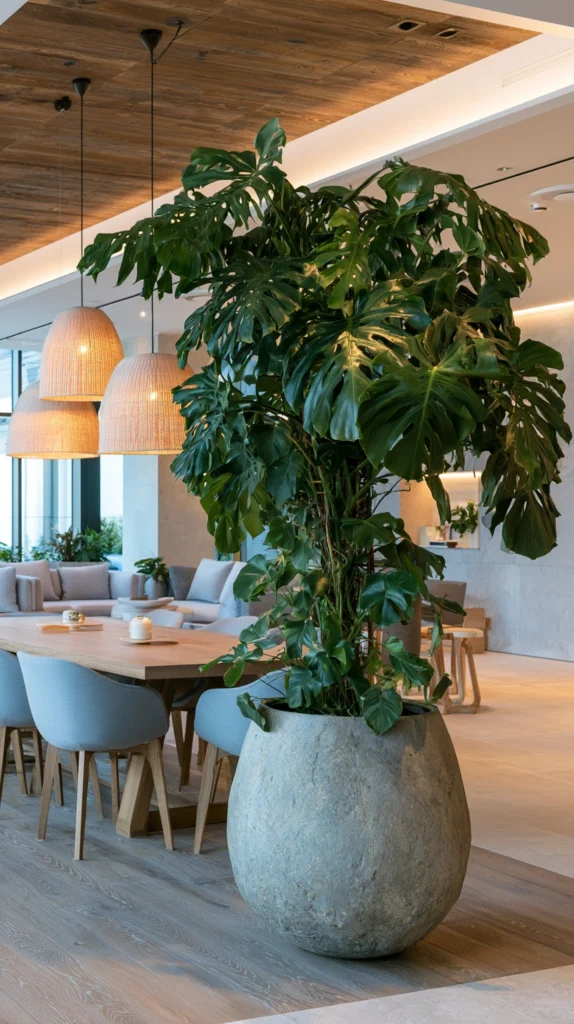
The monstera deliciosa — the split-leaf philodendron, whose large, fenestrated, deeply incised leaves create the most immediately recognizable and most visually dramatic tropical foliage available in any indoor plant — becomes, at full mature size in the right conditions, an indoor tree of considerable canopy spread and extraordinary visual drama.
A large, well-grown monstera on a simple moss pole in a generous planter, its largest leaves extending over the sofa or the dining table to create a living canopy of remarkable tropical beauty, transforms the indoor space with a quality of lush, enveloping, genuinely extraordinary tropical foliage drama that no other commonly available indoor plant provides at an equivalent scale or with equivalent visual power.
6. Position Trees to Create Spatial Division
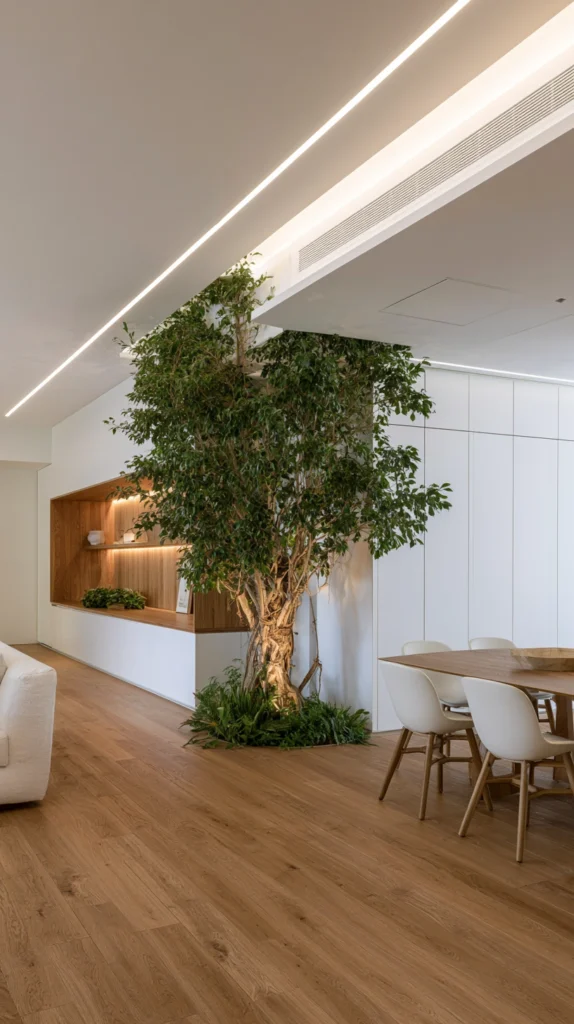
The indoor tree positioned strategically within an open-plan living space — between the kitchen and the dining area, between the seating zone and the circulation route, or at the boundary between the living room and the home office.
It creates a spatial divider of extraordinary natural beauty and genuine functional intelligence that the hard wall, the bookshelf, and the room divider screen cannot approach with the same organic warmth or the same quality of permeable, light-filtered spatial definition.
The tree as spatial divider creates a boundary that is simultaneously present and absent — its canopy and trunk clearly defining the edge of one space while allowing light, air, and visual connection to flow freely between the zones it separates.
7. Uplift the Tree with Dramatic Floor Lighting
A single warm uplight positioned at the base of the indoor tree — a simple floor-mounted LED spotlight directed upward into the canopy and trunk — creates an indoor tree of dramatically transformed evening atmosphere and genuinely extraordinary theatrical beauty that the same tree without lighting entirely fails to achieve after dark.
The uplighted indoor tree creates a ceiling display of moving, dappled, living light shadow as the canopy moves in gentle air currents, transforms the tree’s silhouette into a dramatic shadow composition on the walls and ceiling above, and creates an evening interior of remarkable atmospheric beauty and genuine theatrical presence that no other single lighting element provides with the same visual drama or the same sense of genuine natural magic.
8. Choose a Papyrus or Bamboo for Graphic Drama
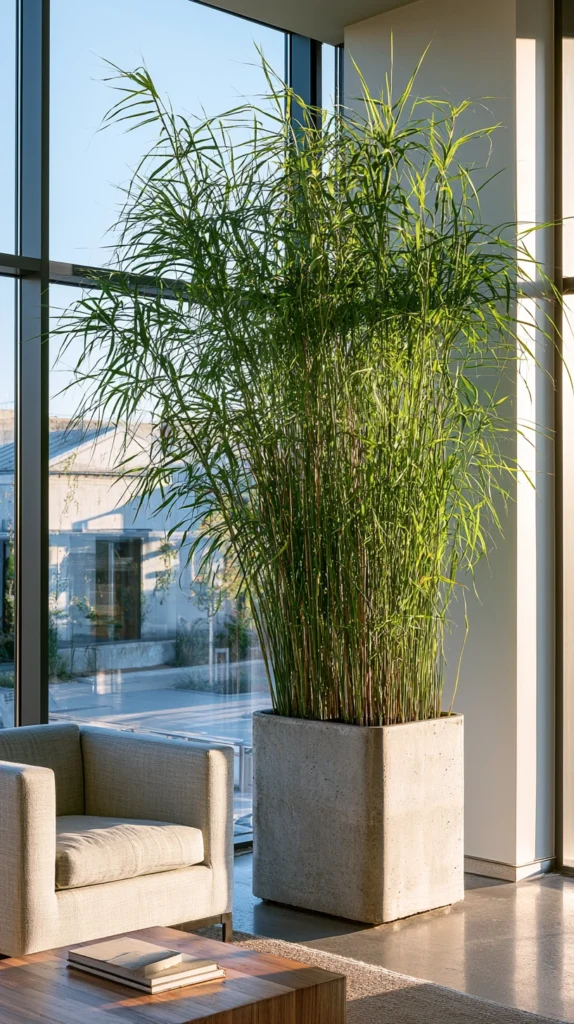
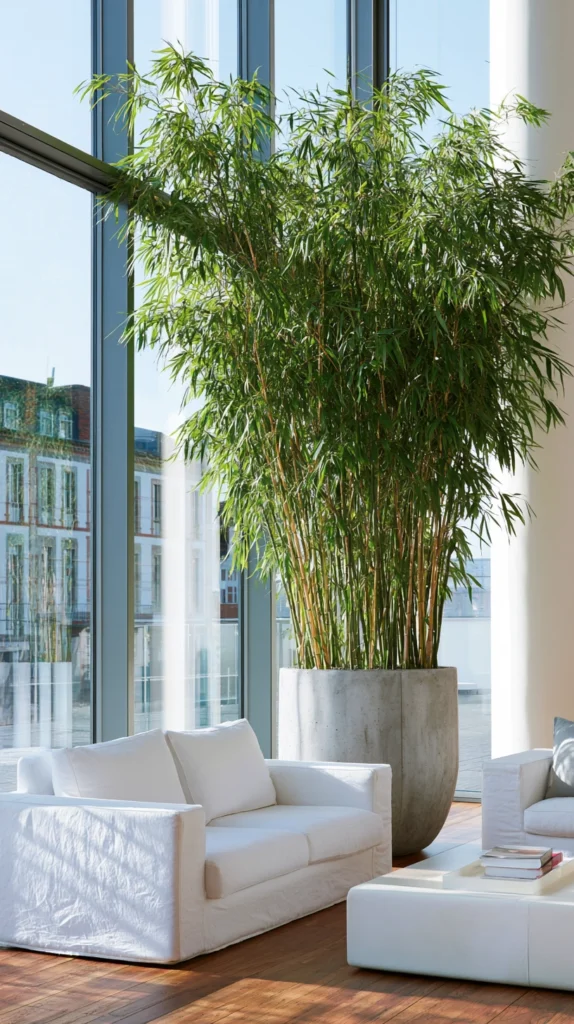
Tall papyrus — the ancient Egyptian water plant with its slender green stems topped by dramatic, starburst-form umbels of fine radiating bracts — or bamboo in a contained root bag creates an indoor tree of extraordinary graphic drama and considerable botanical character that the conventional broadleaf indoor trees cannot provide with the same linear, architectural, almost calligraphic quality of their vertical form.
The graphic drama of tall papyrus or bamboo — the strong vertical line of the stem, the delicate complexity of the top growth, the specific quality of movement and light filtering that the fine-textured canopy creates — suits the contemporary minimal interior with particular excellence, creating a planted element of genuine architectural presence within the clean geometric environment of the modern room.
9. Incorporate the Indoor Tree into Built-In Shelving
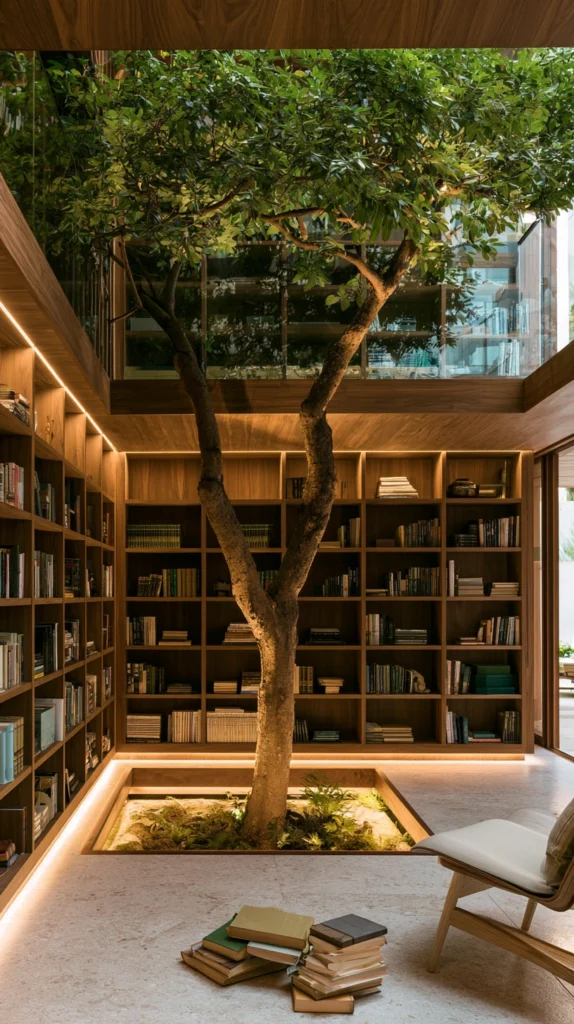
An indoor tree incorporated directly into a built-in shelving installation — the planting bed recessed into the base of a floor-to-ceiling bookshelf, with the tree trunk rising through the shelving and the canopy spreading above the top shelf level — creates an interior of remarkable integrated design intelligence and extraordinary visual surprise.
The tree emerging from the bookshelf creates the specific quality of organic natural material intervening in the architectural constructed environment with genuine drama and considerable visual wit — a design composition of such specific character and such genuine visual surprise that it becomes the defining feature of the entire room and the most memorable single interior design element in the home.
10. Allow the Tree to Touch the Ceiling
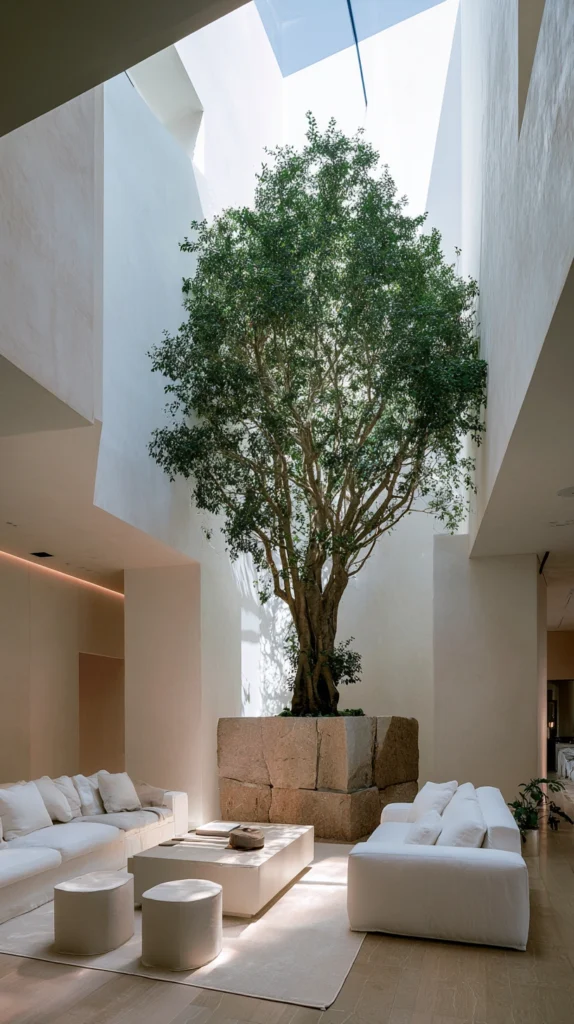
The indoor tree that has been allowed to grow until its uppermost branches touch, brush against, or press gently into the ceiling above — creating the specific quality of a plant that has genuinely outgrown its domestic context and that occupies the interior with a biological confidence and a natural assertiveness that transcends the decorative — creates an interior of extraordinary biophilic drama and genuine living natural presence.
The ceiling-touching indoor tree creates the most powerful and most immediately impressive statement of genuine horticultural commitment and genuine architectural integration available in residential planting — a tree that is not merely styled within the interior but genuinely inhabiting it.
11. Use Dark Foliage Trees for Maximum Drama
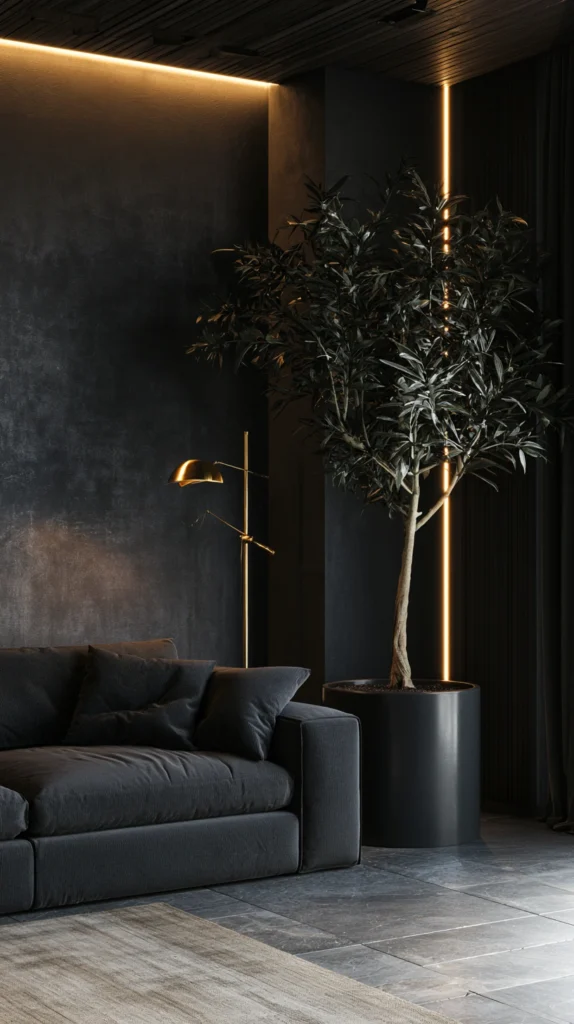
Indoor trees with dark, deep-toned foliage — the deep burgundy of the rubber plant Ficus elastica Burgundy, the near-black of the dark-leaved Alocasia, or the deep, lustrous green-black of the cast iron plant — create interiors of extraordinary dramatic intensity and genuine dark foliage beauty that the conventional mid-green indoor tree cannot approach.
Dark foliage indoor trees suit the moody, sophisticated interior — the black living room, the navy and gold library, the organic brutalist space — with particular excellence, their deep tones coordinating with the dark palette of the surrounding environment and creating a botanical drama of considerable visual power and genuine chromatic sophistication.
12. Cluster Trees Together for a Living Garden Room
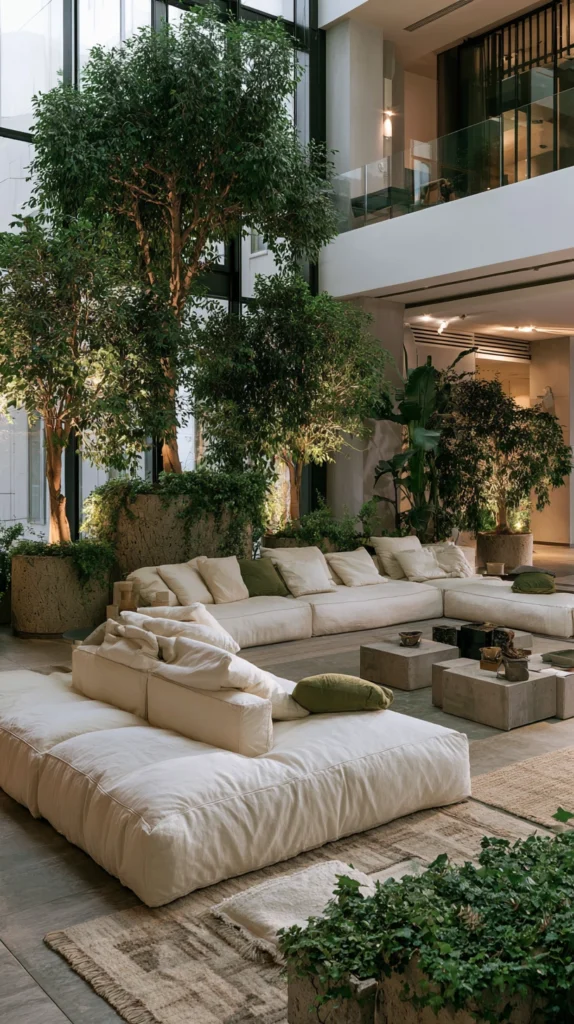
Three or more indoor trees of varying species, varying heights, and varying canopy forms clustered together in one corner of the living room — their canopies overlapping, their trunks creating a small indoor forest of genuine visual depth and remarkable biological richness.
Create an interior living garden of extraordinary atmospheric quality and genuine biophilic abundance that the single tree in isolation cannot approach with the same immersive, forest-like quality of being surrounded rather than merely adjacent to living plant material.
13. Choose the Tree for the Specific Light Available
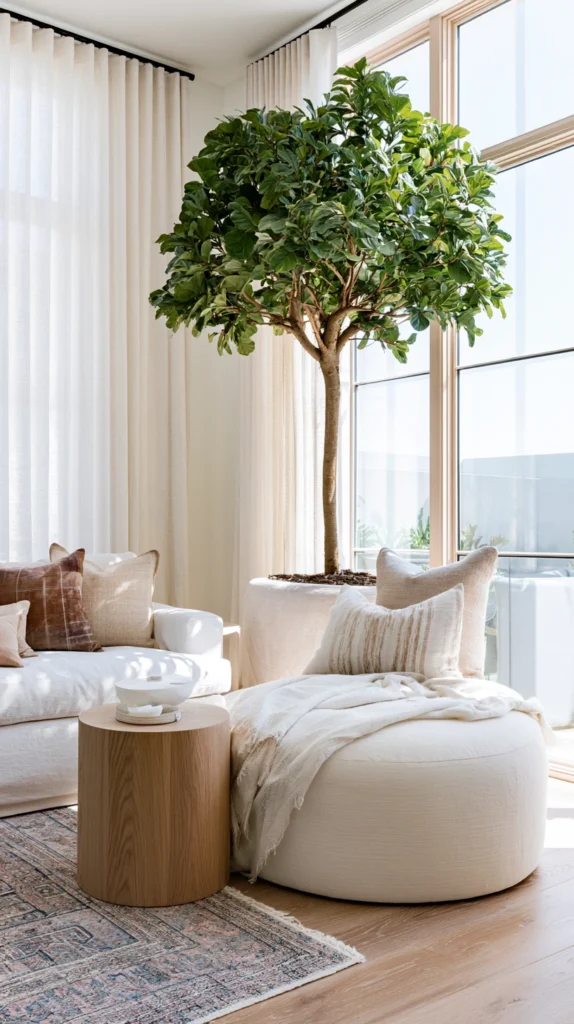
The most important and most consistently neglected principle of indoor tree selection is the fundamental horticultural discipline of choosing a tree that is genuinely suited to the specific light conditions of the specific interior location.
Because the most beautiful indoor tree in the wrong light conditions becomes a progressively less beautiful indoor tree, losing leaves, losing color, and losing the specific vitality and the genuine botanical presence that makes an indoor tree genuinely extraordinary rather than merely surviving.
Assess the light available honestly, research the specific light requirements of the tree species under consideration with genuine horticultural rigor, and choose a tree that will thrive rather than merely survive in the specific conditions of the room.
14. Tend the Tree with Genuine Long-Term Commitment
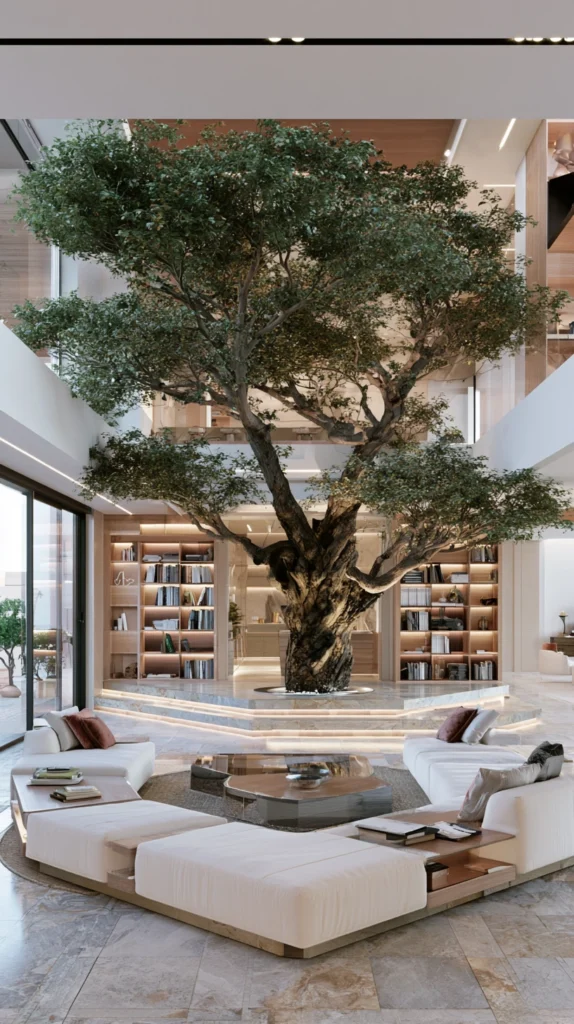
The final and most essential principle of the indoor tree of genuine drama and genuine interior beauty is the one that no styling decision, no planter choice, and no positioning strategy can substitute for — the genuine, long-term, horticultural commitment of regular watering, appropriate feeding, thoughtful pruning, and attentive daily observation that a living tree in a domestic interior genuinely requires and genuinely deserves.
The indoor tree tends to be the most expensive, most spatially significant, and most visually important plant in the home — and it repays genuine long-term horticultural care with continuously increasing beauty, continuously greater dramatic presence, and the specific quality of a living organism that has been given what it needs to be truly extraordinary.