
13 Boho Thanksgiving Table Setting Inspiration
My Thanksgiving table used to follow the same formula every year: a runner down the center, matching white plates, a centerpiece of orange and yellow mums flanked by two candles. Perfectly nice, and perfectly identical to a thousand other tables that same afternoon.

I wanted something that felt collected rather than purchased as a set, warm and layered rather than matched and formal, the kind of table that looked like it belonged to someone with a specific point of view rather than someone following a template.
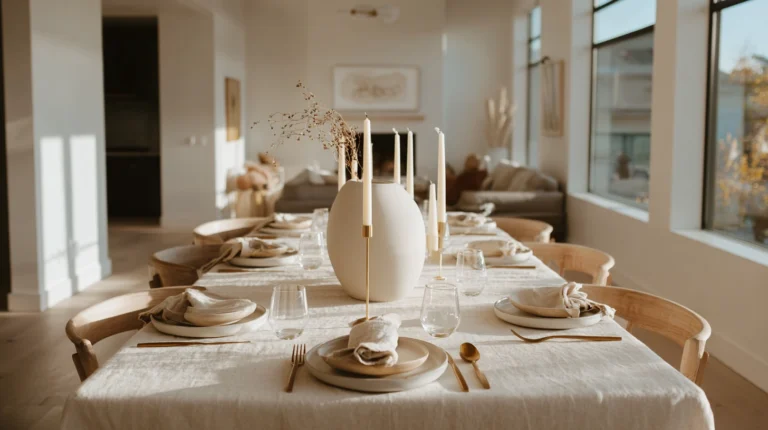
Boho styling turned out to be exactly that shift. Mismatched vintage plates instead of a matching set. Dried, rust-toned botanicals instead of fresh mums. Textured linens layered instead of one crisp cloth. The table stopped looking like a rental catalog spread and started looking like ours.
Here are 13 ideas for a genuinely boho Thanksgiving table, built around the layering, texture, and collected-over-time quality that defines this style.
Why Most Attempts at This Look Fall Flat
The common mistakes:
The literal costume approach:
- Dreamcatchers, feathers, and obviously themed props purchased specifically for the occasion
- Decor that looks borrowed from a party store rather than genuinely reflecting a collected aesthetic
- A table trying too hard to announce “boho” rather than simply embodying its actual textural, layered qualities
- Missing the authenticity that separates genuine bohemian style from costume decoration
The too-perfect, newly matched set:
- Everything purchased together from one collection, all matching in tone and finish
- No sense of pieces gathered over time from different sources
- A table that looks styled for a single photo rather than genuinely lived-in and collected
- Missing the mismatched, accumulated quality that is actually central to this aesthetic
The single flat layer:
- One tablecloth, one centerpiece, nothing built up in texture or height
- A table that reads as “set” rather than genuinely layered and textural
- Missing the specific richness that comes from combining multiple materials and heights
- Flat presentation working directly against a style defined by depth and layering
What a successful boho Thanksgiving table does:
Layers texture, warmth, and collected pieces:
- Mismatched vintage or vintage-style dinnerware rather than a single matching set
- Dried and natural botanicals over fresh, formal florals
- Multiple textile layers, runners, napkins, and place mats in varied materials
- Warm, rust and terracotta-toned colors rather than bright, traditional autumn orange
My revelation: This style is not about adding specific “boho” objects to a table. It is about layering texture, warmth, and pieces that look genuinely gathered rather than matched, the opposite instinct of a traditional, formally coordinated table.
1. The Mismatched Vintage Plate Stack
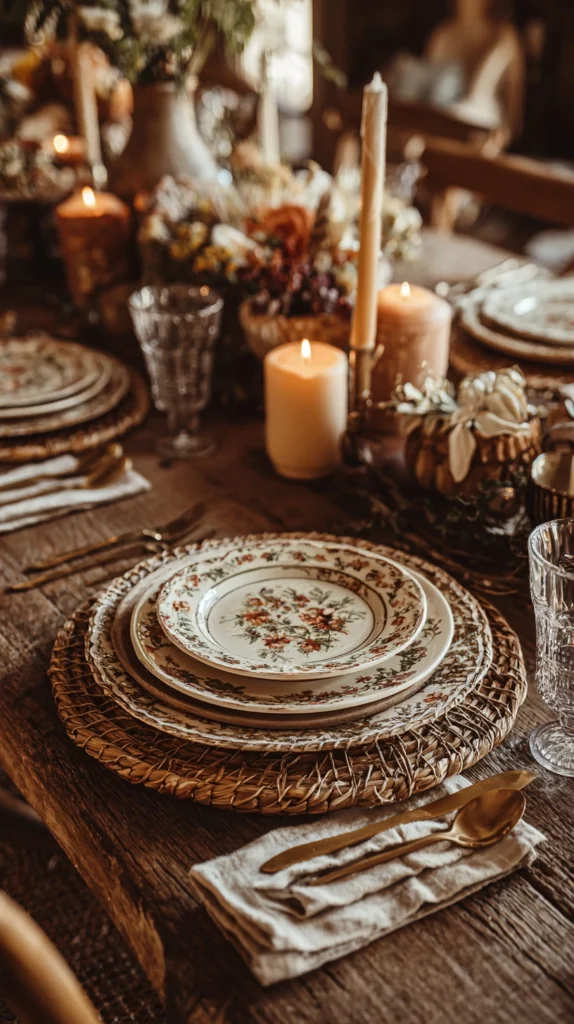
Dinner plates in varied patterns and finishes, gathered rather than purchased as a matching set, stacked at each place setting.
My uniform, matching plate set:
What I had:
- A single set of matching white dinnerware, used identically at every place setting
- A table that looked coordinated but carried no individual character or history
- A missed opportunity for the specific richness mismatched vintage pieces bring to this particular style
The mismatched plate discovery:
Why varied plates deliver more character than any matching set:
- Each plate carries its own pattern, age, and slight imperfection, exactly the collected quality this style depends on
- Stacking a vintage-patterned salad plate over a simpler dinner plate creates instant layered visual interest at every seat
- Mismatched sets are often significantly cheaper to source than a complete matching collection, particularly through secondhand channels
- No two place settings need to be identical, which is precisely the point rather than a compromise
Building the mismatched stack:
Layering approach:
- A simple, larger base plate, in a neutral tone or soft vintage pattern
- A smaller, more patterned or colorful plate stacked on top
- Occasionally a small bowl or saucer added as a third layer for guests receiving a specific course
Sourcing mismatched vintage plates:
Finding pieces affordably:
- Thrift stores and estate sales, consistently the richest source for genuinely varied vintage patterns
- Family pieces, mismatched sets inherited or passed down, carrying real history alongside their visual variety
- Online secondhand marketplaces, searching specifically for vintage floral or transferware patterns
Cost:
- Vintage plates, thrifted (per plate): $1-6
- A full mismatched set for 8-10 place settings: $20-60
My mismatched vintage stack: Sourcing ten different vintage floral and transferware plates from three separate thrift trips over a single month cost less than one matching new set would have, and every place setting at the table now carries its own distinct, collected character.
Mismatched Plate Tips
Maintain one unifying element across the otherwise varied plates:
Cohesion principle:
- Completely unrelated plates in wildly different colors and styles can look accidental rather than intentional
- Choosing pieces sharing a similar color family, warm tones, muted florals, or a consistent vintage era ties the variety together
- This single thread of consistency is what separates an intentional mismatched collection from a genuinely random one
- Lay all candidate plates out together before finalizing the set, checking that they read as a cohesive group despite their individual differences
Buy extra plates beyond the exact guest count when thrifting:
Practical sourcing strategy:
- Vintage and secondhand sourcing means specific patterns are rarely available again once purchased
- Buying a few extra pieces beyond the immediate need provides flexibility for future tables and allows discarding any plates with condition issues discovered later
- This buffer also supports building toward larger gatherings in future years without needing to relocate the exact same discontinued patterns
- Thrift store pricing is typically low enough that this extra buffer represents minimal additional cost
2. The Dried Botanical and Pampas Centerpiece
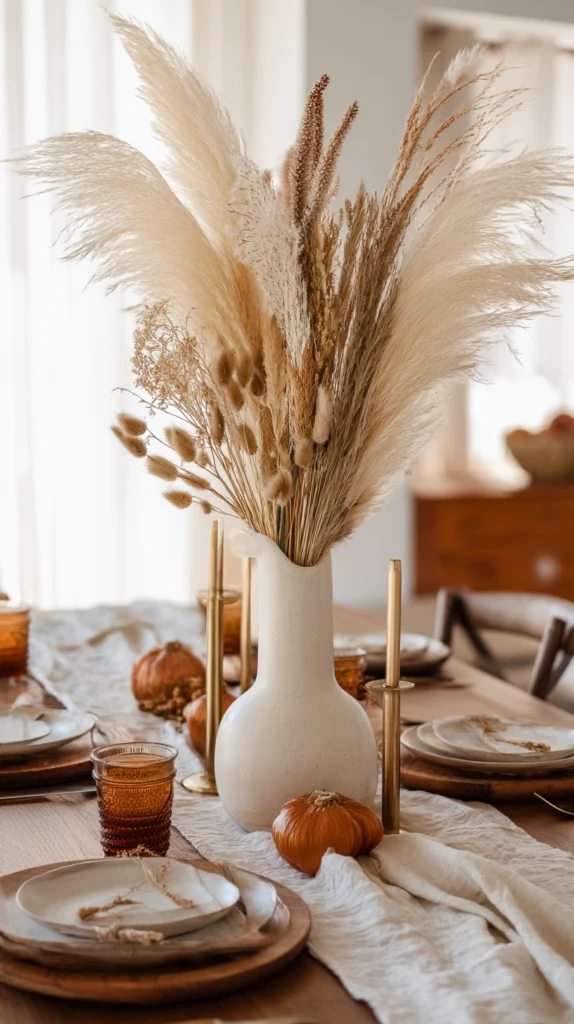
A centerpiece built from dried grasses, pampas plumes, and preserved botanicals rather than fresh seasonal florals.
My fresh flower centerpiece assumption:
What felt automatic:
- An assumption that a proper Thanksgiving centerpiece meant fresh mums or seasonal florals, replaced or refreshed as needed
- A missed opportunity for the specific, long-lasting textural richness dried botanicals bring to this particular aesthetic
- Fresh flowers requiring water, wilting within days, and needing to be purchased fresh each year
The dried botanical solution:
Why dried and preserved materials suit this style specifically:
- Dried pampas grass, wheat, and preserved eucalyptus carry the muted, warm, textural quality central to boho styling
- Lasts for the entire holiday season and well beyond, unlike fresh flowers requiring water and quick use
- Can be reused across multiple years, making the investment more valuable over time than a fresh arrangement purchased annually
- The neutral, earthy palette of dried botanicals pairs naturally with the warm rust and terracotta tones favored throughout this style
Building the dried centerpiece:
Construction approach:
- A tall vase or ceramic vessel as the base, holding pampas plumes or dried wheat stalks as the height anchor
- Shorter dried elements, such as dried baby’s breath, bunny tails, or preserved eucalyptus, filling in around the base
- A loose, asymmetrical arrangement rather than a tightly formal, symmetrical bouquet shape
Sourcing dried botanicals:
Where to find the right materials:
- Craft stores, increasingly carrying a wide range of dried and preserved stems
- Farmers markets and specialty florists, particularly during fall, often stocking pampas grass and dried wheat specifically
- Foraging dried grasses and seed heads from a yard or nearby open space, at no cost at all
Cost:
- Dried pampas plumes (per stem): $4-12
- A full centerpiece arrangement: $30-80
My dried botanical centerpiece: A loose arrangement of pampas plumes, dried wheat, and preserved eucalyptus in a simple ceramic vessel has now been reused for three consecutive Thanksgivings, requiring no water and no last-minute florist trip, while still looking as rich and considered as the year it was first assembled.
Dried Botanical Tips
Build the arrangement asymmetrically rather than in a tight, formal shape:
Style-appropriate technique:
- A tightly symmetrical, formal bouquet shape works against the relaxed, gathered quality this style depends on
- Allow stems to lean and vary in height naturally, creating a looser, more organic overall silhouette
- This asymmetry is a core principle of the aesthetic, not a compromise on a more “correct” formal arrangement
- Step back and assess the arrangement from the table’s typical seating height, adjusting for a naturally varied, unforced look
Store the arrangement properly between uses to maximize its multi-year value:
Longevity practice:
- Dried botanicals can become dusty or crushed if stored carelessly between holiday seasons
- A large box or protected corner, away from significant humidity, keeps the arrangement in good condition for reuse
- A light dusting or gentle shake before each use removes any accumulated dust from storage
- This care extends the arrangement’s usable life across many years, improving its overall value relative to a single-use fresh alternative
3. The Layered Textile Table Runner
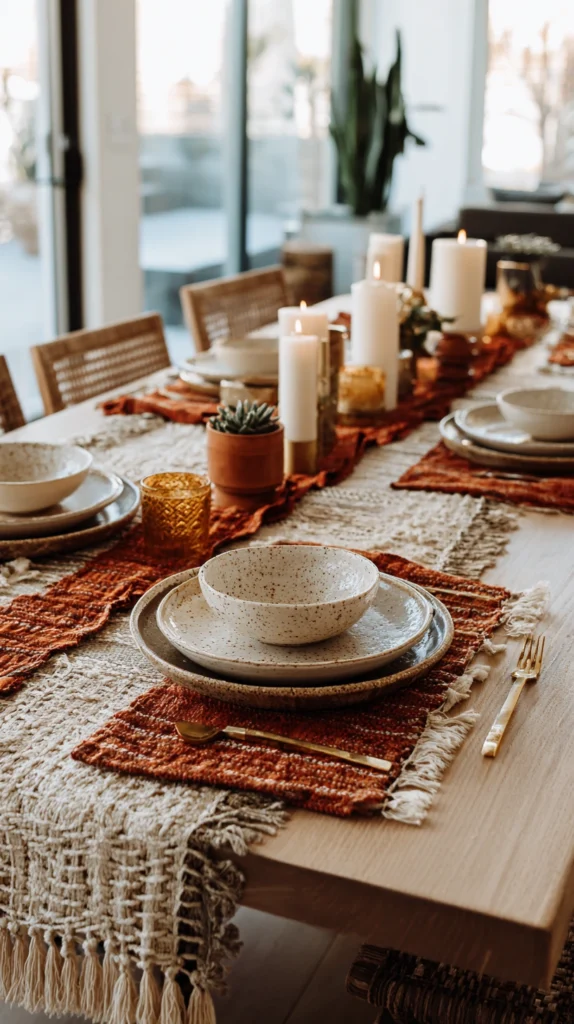
Multiple textile layers, combining a woven runner, a rustic linen underlay, and scattered fabric scraps, rather than a single flat tablecloth.
My single flat tablecloth:
What was limiting the table’s texture:
- One solid tablecloth covering the entire table, providing color but no additional layered texture
- A missed opportunity for the specific richness multiple combined textiles bring to this aesthetic
- A table surface that looked finished but flat, lacking the tactile depth boho styling typically features
The layered textile solution:
Why combining multiple textile layers matters specifically for this style:
- Different textures, woven cotton, rough linen, a knotted or fringed runner, create genuine tactile richness
- Layering textiles is one of the most consistent techniques across authentic bohemian interior and table styling
- Allows mixing colors and patterns in a way a single tablecloth cannot achieve
- Relatively affordable, since textile layering can often incorporate pieces already owned alongside a few new additions
Building the layered runner:
Combining elements effectively:
- A base layer of natural linen or a muted solid-color tablecloth, covering the full table
- A woven, textured runner, in jute, macrame, or a patterned kilim-inspired fabric, running down the center
- Small fabric scraps or a vintage textile fragment, tucked beneath a few place settings for an additional layer of visual interest
Choosing coordinating materials:
Building a cohesive textile story:
- Natural fiber materials, linen, cotton, jute, rather than synthetic or overly polished fabrics
- A warm, muted color palette, rust, terracotta, mustard, and cream, tying the different textile layers together
- Varying weave and texture significantly between layers while maintaining consistent color coordination
Cost:
- Base linen tablecloth: $20-40
- Woven or macrame runner: $15-35
- Vintage textile fragments: $5-20
My layered textile runner: Combining a simple linen base cloth with a knotted macrame runner and a few small vintage kilim fabric scraps created genuine tactile depth across the table, and the combination cost less than a single higher-end formal tablecloth would have on its own.
Layered Textile Tips
Choose natural fiber materials over synthetic fabrics throughout every layer:
Material authenticity:
- Synthetic fabrics often have a sheen and stiffness working against the relaxed, organic quality central to this style
- Linen, cotton, and jute carry a natural texture and drape genuinely suited to boho styling’s overall aesthetic
- This material choice matters as much as the specific colors or patterns selected for each layer
- Prioritize natural fiber options even when they carry a slightly higher cost than a comparable synthetic alternative
Vary texture significantly more than you vary color across the different layers:
Textural technique:
- Multiple textile layers in identical smooth texture but different colors can look flat despite the layering
- Combining rough linen, smooth cotton, and a nubby woven runner creates the genuine tactile richness this style depends on
- This textural variety matters more than color variety for achieving an authentically layered, boho-appropriate table
- Touch and compare fabric samples directly against each other before finalizing the combination
4. The Woven Rattan and Natural Fiber Chargers
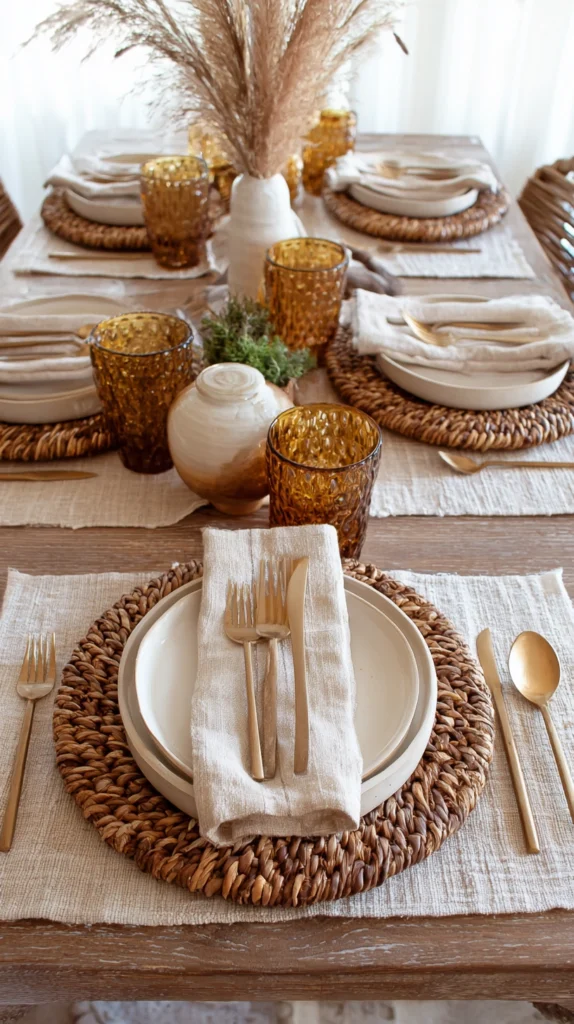
Rattan or woven natural fiber chargers beneath each place setting, adding texture and warmth at the base of every plate stack.
My missing base layer texture:
What felt incomplete:
- Plates placed directly on the table linens, with no additional textural layer beneath each place setting
- A missed opportunity for the specific warmth and texture woven natural materials add at this foundational point
- A table setting that, while layered elsewhere, lacked this particular grounding detail at each individual seat
The woven charger solution:
Why rattan and natural fiber chargers suit this style so specifically:
- The woven, natural texture directly echoes the broader material palette central to boho styling
- Creates a defined visual base for each place setting’s plate stack, adding structure without formality
- Relatively affordable and widely available, given the current popularity of rattan and woven decor generally
- Reusable across many future gatherings, unlike disposable paper chargers
Choosing the right chargers:
Material and style options:
- Woven rattan or wicker chargers, in a natural, unstained finish for the most authentic texture
- Seagrass or jute chargers, offering a slightly different woven texture and tone
- Chargers with a scalloped or irregular edge, adding additional visual interest beyond a simple round shape
Placing the chargers:
Completing the place setting:
- Position as the base layer beneath the mismatched vintage plate stack
- Confirm consistent charger style across every place setting, providing a unifying element beneath the otherwise varied plates
- Allow the charger’s woven edge to remain visible around the plates, rather than fully hidden
Cost:
- Woven rattan chargers (per charger): $5-15
- A full set for 8-10 place settings: $40-150
My woven rattan chargers: Adding simple natural rattan chargers beneath each mismatched plate stack gave every place setting a consistent, grounding base layer, and the woven texture tied together what could have otherwise felt like an overly varied collection of individual plates.
Woven Charger Tips
Choose a consistent charger style across every place setting, even with varied plates on top:
Unifying foundation:
- While the plates themselves are meant to be intentionally mismatched, the chargers beneath them work best as a consistent, unifying element
- This consistency at the base layer provides visual structure supporting the varied plates above
- Reserve the mismatched, collected quality specifically for the plates, keeping the charger layer as the table’s steady foundation
- This distinction between varied plates and consistent chargers is what keeps the overall look intentional rather than chaotic
Store chargers flat and dry between uses to prevent warping:
Material care consideration:
- Natural woven materials like rattan and seagrass can warp or develop mold if stored improperly in humid conditions
- Flat storage in a dry location between holiday uses preserves the chargers’ shape and condition for many years of reuse
- This care extends the value of the initial purchase significantly, supporting repeated use across future gatherings
- Check chargers for any dust or minor damage before each use, addressing issues before they affect the finished table setting
5. The Terracotta and Rust Color Palette
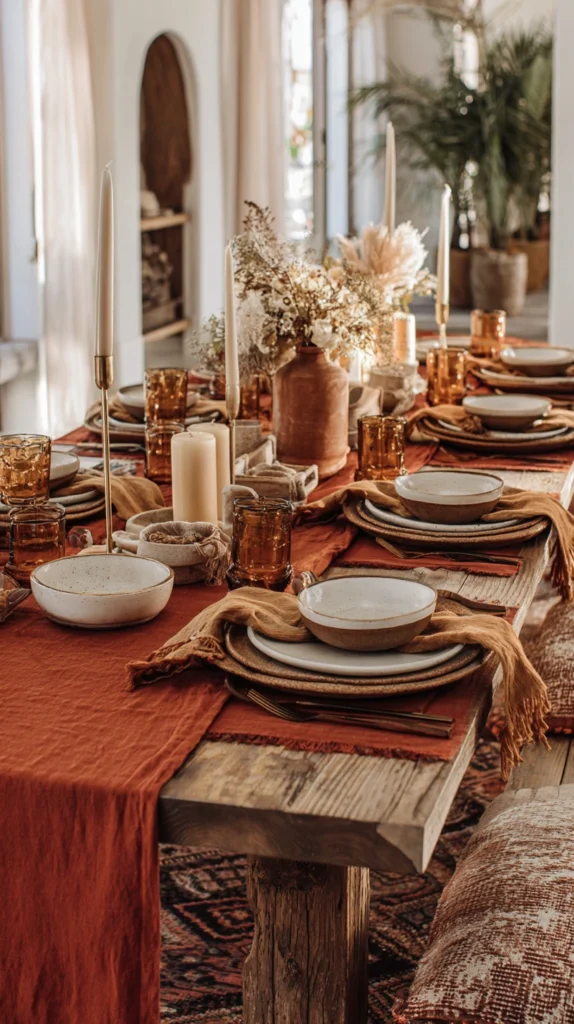
A deliberate color scheme built around terracotta, rust, mustard, and cream, replacing the traditional bright orange and gold Thanksgiving palette.
My default bright orange and gold scheme:
What felt expected but not quite right:
- Every Thanksgiving decor purchase automatically leaning toward bright orange, gold, and traditional harvest colors
- A missed opportunity for the deeper, more muted, and specifically boho-appropriate color story this style actually calls for
- A color palette that, while seasonally appropriate, did not carry the warm, earthy quality central to bohemian styling specifically
The terracotta and rust solution:
Why this specific palette defines the boho version of the holiday table:
- Terracotta, rust, and mustard carry the same warm, earthy quality found throughout traditional bohemian textiles and pottery
- More muted and sophisticated than bright traditional orange, while still remaining genuinely seasonal and warm
- Pairs naturally with the dried botanicals, woven textures, and vintage pieces central to every other element of this style
- Creates cohesion across every table element, from linens to candles to the dried centerpiece, when applied consistently
Applying the palette throughout the table:
Where to incorporate these colors:
- Linens and runners in rust or terracotta tones, rather than bright orange or traditional gold
- Candles in cream, mustard, or deep rust, rather than the standard orange taper
- Dried botanicals naturally falling within this warm, muted color family already
Balancing the palette with neutrals:
Avoiding an overly saturated result:
- Combine the warm rust and terracotta tones with generous amounts of cream, natural wood, and neutral linen
- Avoid using every element in the same saturated tone, which can overwhelm rather than warm the table
- Let the neutral base colors, plates, chargers, provide visual rest between the more saturated rust and mustard accents
Cost:
- No inherent additional cost; achieved through intentional color selection within existing decor and linen budgets
My terracotta and rust palette: Committing to this specific warm, muted color family across the linens, candles, and centerpiece, rather than the traditional bright orange, gave the table a sophistication and cohesion that felt distinctly different from a typical Thanksgiving spread, while still reading as unmistakably seasonal.
Color Palette Tips
Choose the palette before purchasing any individual table element:
Planning sequence:
- Selecting linens, candles, and centerpiece materials item by item without a predetermined palette risks a mismatched final result
- Establishing the terracotta, rust, mustard, and cream palette before any shopping begins ensures every subsequent purchase supports overall cohesion
- This sequencing is the single most important planning step for achieving a genuinely unified boho table
- Reference the specific chosen colors consistently while sourcing each individual element, whether new or thrifted
Balance saturated warm tones with generous neutral space:
Avoiding visual overwhelm:
- A table using rust and mustard in every single element, with no neutral relief, can feel heavy rather than warm
- Cream linens, natural wood, and neutral ceramic plates provide necessary visual breathing room between the more saturated accent colors
- This balance is what keeps the palette feeling warm and inviting rather than overwhelming or monotonous
- Aim for roughly a third of the table’s visual weight in saturated warm tones, with the remainder in neutral and natural materials
6. The Taper Candle Cluster in Varied Heights
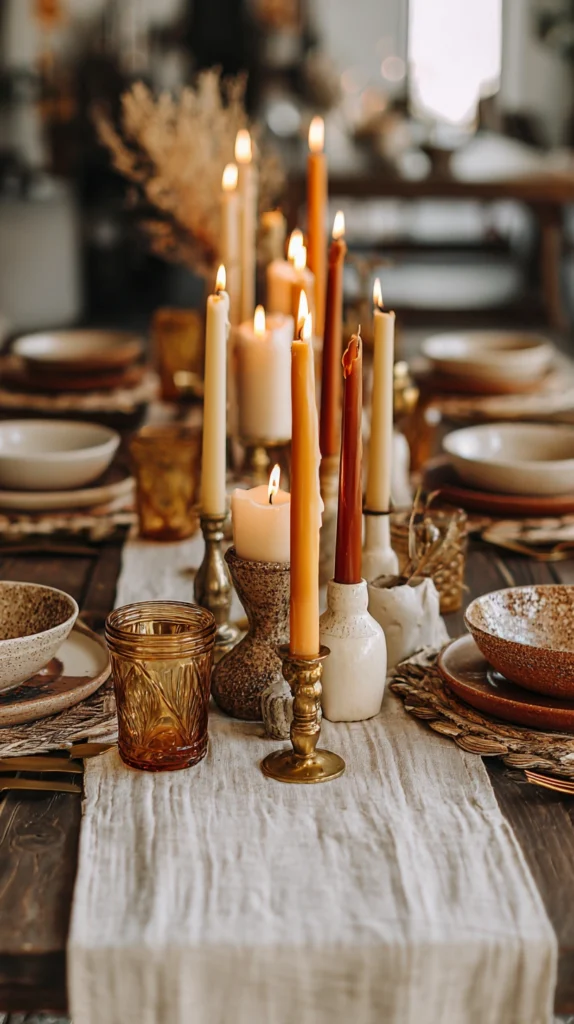
A cluster of taper candles in varying heights and holders, rather than a single matched pair, creating an organic, gathered lighting arrangement.
My matched candle pair:
What felt too formal:
- Two identical taper candles in matching holders, symmetrically flanking the centerpiece
- A formal, mirror-image arrangement working against the more organic, collected quality this style depends on
- A missed opportunity for the specific warmth and visual interest a varied candle cluster provides
The candle cluster solution:
Why varied height clusters suit this aesthetic specifically:
- Mismatched candle heights and holders mirror the same collected, gathered quality found in the mismatched plates and dried botanicals
- Creates a warmer, more organic lighting arrangement than a formal, symmetrical candle pair
- Candlelight itself carries an inherently warm, atmospheric quality well suited to this style’s overall mood
- Relatively affordable, particularly when combining candles and holders already owned with a few new additions
Building the candle cluster:
Arrangement approach:
- Vary candle height significantly, combining tall tapers with shorter pillar or votive candles
- Mix candle holder materials, brass, ceramic, and simple glass, rather than a matched holder set
- Cluster candles together at one section of the table rather than spacing them symmetrically across the full length
Choosing candle colors:
Coordinating with the overall palette:
- Cream, mustard, and deep rust candles, drawing directly from the table’s established color palette
- Avoid bright orange or traditional gold tapers, which can clash with the more muted overall scheme
- Unscented candles for a dining table, avoiding any competition with the meal’s own aromas
Cost:
- Taper and pillar candles: $15-40
- Varied candle holders, thrifted or new: $10-40
My candle cluster: Grouping five candles of varying heights, cream and rust tapers alongside a couple of shorter mustard pillars, in a mix of brass and ceramic holders, created a warm, organic lighting arrangement that felt far more collected and considered than the previous matched pair ever had.
Candle Cluster Tips
Vary candle height significantly rather than choosing several similarly sized candles:
Dimensional technique:
- A cluster using candles of nearly identical height looks more like a matched set than a genuinely gathered collection
- A noticeable range, from tall tapers to short votives, creates the organic visual interest central to this technique
- This variation is what makes the cluster read as collected over time rather than purchased together as a single set
- Arrange and rearrange the cluster a few times before finalizing the placement, assessing the height variation from a seated guest’s perspective
Position the cluster to one side rather than centered symmetrically on the table:
Asymmetrical placement:
- A perfectly centered candle cluster can still read as formal despite the varied heights and holders
- Positioning the cluster slightly off-center, or clustered toward one end of the table, reinforces the relaxed, organic quality this style depends on
- This placement decision matters as much as the cluster’s internal variation for achieving a genuinely boho feel
- Confirm the off-center placement still allows adequate light distribution across the full table before finalizing
7. The Dried Citrus and Cinnamon Garnish Accents
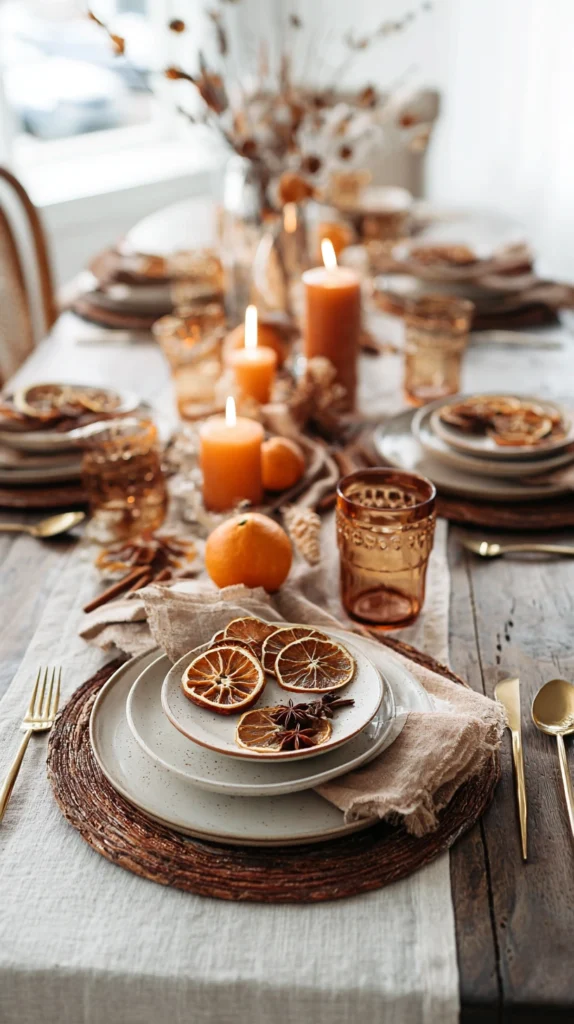
Dried orange and citrus slices, cinnamon sticks, and star anise scattered along the table as small, fragrant decorative accents.
My missing small-scale accent details:
What felt like an opportunity:
- Larger elements, the centerpiece, linens, and candles, addressed thoroughly, but no smaller accent details scattered throughout
- A missed opportunity for the specific warmth and fragrance dried citrus and warm spices bring to this particular table style
- A table that looked complete at the larger scale but lacked these smaller, discoverable details up close
The dried citrus and cinnamon solution:
Why these small accents add genuine value beyond their modest cost:
- Dried citrus slices carry a warm, rust-toned color that fits naturally within the established palette
- Cinnamon sticks and star anise add both visual texture and genuine seasonal fragrance to the table
- Inexpensive to make or purchase, delivering meaningful visual and sensory return relative to their low cost
- Scattered rather than arranged formally, these accents reinforce the relaxed, gathered quality central to the overall style
Making dried citrus slices:
Simple preparation approach:
- Slice oranges, lemons, or a mix of citrus thinly and evenly
- Dry in a low oven or a food dehydrator until fully dried and slightly leathery, several hours depending on the method
- Store in an airtight container until ready to use, since properly dried slices keep well for weeks
Scattering the accents:
Placement throughout the table:
- Tuck dried citrus slices among the dried botanical centerpiece for added color and texture
- Scatter a few cinnamon sticks and star anise pods loosely along the table runner
- Place a single dried citrus slice at each individual place setting, atop the napkin or plate stack
Cost:
- Fresh citrus for drying: $5-10
- Cinnamon sticks and star anise: $5-15
My dried citrus and cinnamon accents: Scattering homemade dried orange slices and whole cinnamon sticks along the table runner and tucked into the centerpiece added both a warm visual detail and a genuine seasonal fragrance that guests specifically commented on throughout the meal.
Dried Citrus Tips
Dry citrus slices in advance, since the process takes several hours and benefits from patience:
Preparation timing:
- Properly dried citrus slices require several hours in a low oven or dehydrator, not a quick same-day task
- Preparing these several days or even weeks before the actual gathering, then storing them properly, removes this task from the day-of preparation list
- Properly dried and stored slices maintain their quality for weeks, making advance preparation entirely practical
- This advance timing also allows correcting any batches that do not dry evenly before the actual event
Scatter accents loosely and asymmetrically rather than placing them in a formal, even pattern:
Style-consistent placement:
- Evenly spaced, formally placed citrus slices and cinnamon sticks work against the relaxed, organic quality this style depends on
- A looser, more scattered placement, clustering more heavily in some areas and leaving others bare, mirrors the same asymmetrical principle used throughout the centerpiece and candle cluster
- This scattered approach is intentional, not careless, and should be assessed for overall balance even while embracing irregularity
- Step back and view the full table before finalizing placement, ensuring the scattered accents read as considered rather than simply random
8. The Woven Basket Bread and Roll Presentation
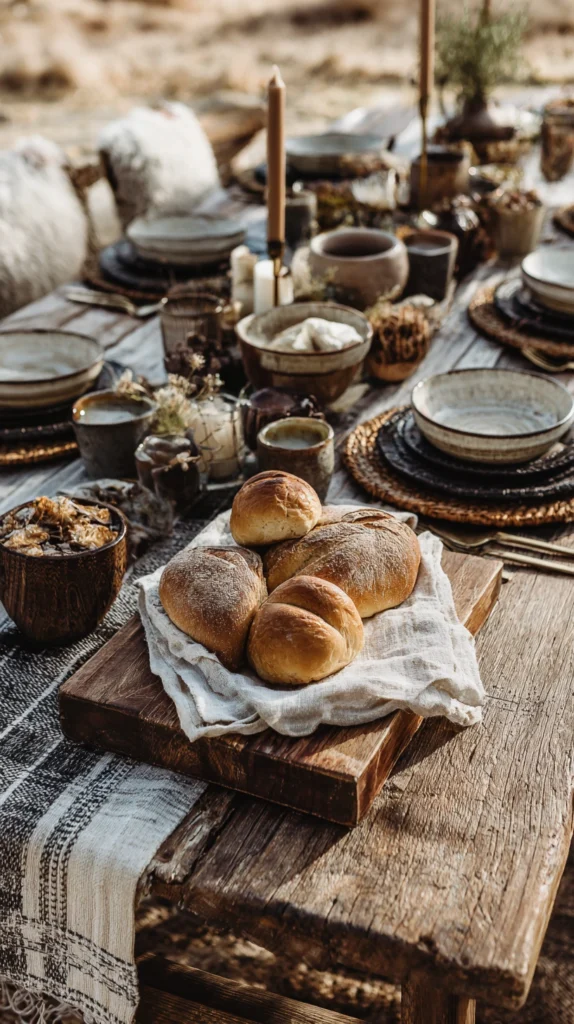
Bread and dinner rolls presented in a woven basket lined with linen, rather than on a formal serving platter.
My formal platter bread presentation:
What felt overly formal:
- Rolls and bread served on a matching ceramic or silver serving platter
- A presentation style carrying more formality than the rest of the table’s relaxed, collected aesthetic
- A missed opportunity for the specific warmth a woven basket presentation brings to this particular style
The woven basket solution:
Why a basket presentation suits this style specifically:
- Woven baskets echo the same natural material palette found in the rattan chargers and dried botanicals elsewhere on the table
- Creates a more casual, gathered presentation appropriate to the overall relaxed styling
- Often more affordable than a formal serving platter, particularly when using a basket already owned for another purpose
- Adds another layer of natural texture to the table’s overall material story
Choosing and styling the basket:
Presentation approach:
- A simple woven basket, in rattan, seagrass, or a similar natural material
- Lined with a linen napkin or small textile scrap, both for practicality and added textural layering
- Rolls or bread arranged loosely within, rather than perfectly stacked or formally arranged
Positioning on the table:
Placement considerations:
- Positioned within easy reach of all guests, typically near the center of the table
- Coordinated with the woven chargers and any other natural material elements already present
- Refilled as needed throughout the meal, maintaining a consistently appealing presentation
Cost:
- Woven bread basket: $15-40
- Linen liner, if not already owned: $10-20
My woven basket bread presentation: A simple rattan basket lined with a linen napkin, holding a rustic loaf and dinner rolls, replaced what had been a formal silver platter, and the more casual presentation fit naturally alongside the rest of the table’s woven and natural textures.
Woven Basket Tips
Line the basket with linen both for practicality and added textural layering:
Dual-purpose detail:
- An unlined basket can allow crumbs and bread oils to affect the woven material directly
- A linen liner protects the basket while also adding another layer of the natural, textural material story central to this style
- This detail serves both a practical maintenance purpose and a genuine styling function simultaneously
- Choose a liner color coordinating with the table’s established rust, terracotta, and cream palette
Choose a basket shape and size proportional to the amount of bread being served:
Practical sizing consideration:
- An oversized basket with only a small amount of bread can look sparse and unintentional
- A basket sized appropriately to genuinely fill with the intended bread and rolls presents more effectively
- This sizing consideration matters as much as the basket’s material and style for achieving a polished final presentation
- Consider the specific quantity of bread typically served before finalizing the basket’s size
9. The Vintage Brass and Copper Accent Objects
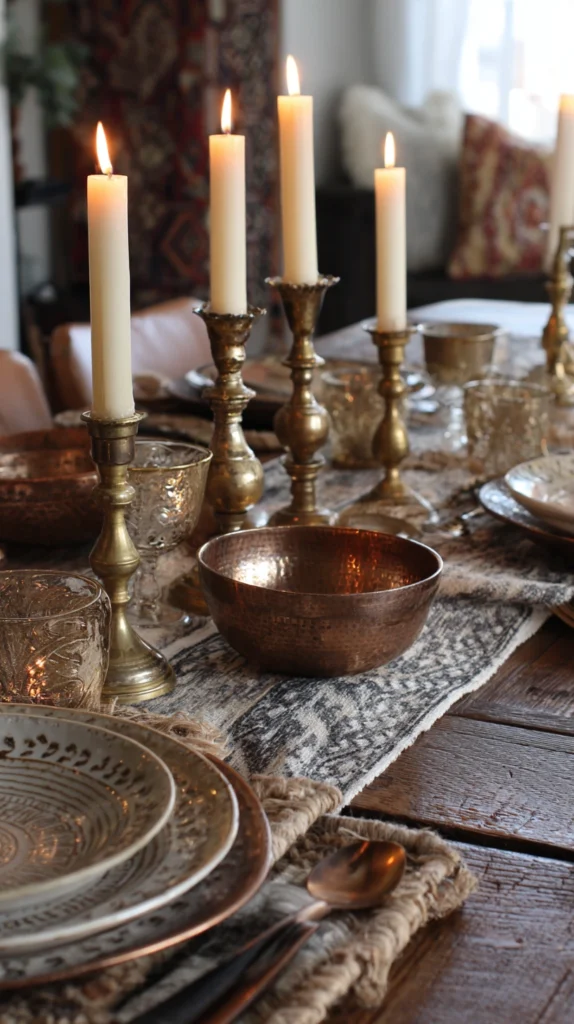
Small vintage brass or copper objects, candlesticks, bowls, or trays, scattered throughout the table for warm metallic accents.
My missing warm metallic layer:
What felt underdeveloped:
- A table rich in natural textures, dried botanicals, and warm color, but lacking any metallic accent throughout
- A missed opportunity for the specific warmth aged brass and copper bring, distinct from the cooler tone of modern silver or chrome
- A table that, while textured, lacked this particular material dimension found consistently in authentic bohemian styling
The vintage metal accent solution:
Why aged brass and copper specifically suit this aesthetic:
- Warm-toned metals coordinate naturally with the terracotta and rust color palette already established
- Vintage, slightly tarnished pieces carry the same collected, gathered-over-time quality found throughout this style’s other elements
- Distinct from the cooler, more formal quality of polished silver, aged brass and copper feel warmer and more relaxed
- Genuinely affordable to source secondhand, given how commonly available vintage brass items are at thrift stores and estate sales
Choosing the right accent pieces:
Selection options:
- Small brass candlesticks, incorporated into the varied-height candle cluster
- A vintage copper bowl, used to hold the dried citrus slices or a small collection of nuts and seasonal items
- Brass trays or small dishes, scattered along the table holding salt, spices, or small votive candles
Placement throughout the table:
Integrating the metal accents:
- Distribute pieces throughout the table’s length rather than clustering them all in one spot
- Combine with the existing candle cluster, dried botanicals, and citrus accents for a cohesive overall composition
- Allow natural tarnish and age to show, rather than polishing pieces to a bright shine
Cost:
- Vintage brass or copper pieces, thrifted (per piece): $3-15
- A collection of five to seven accent pieces: $20-70
My vintage brass accents: Scattering several thrifted brass candlesticks and a small tarnished copper bowl throughout the table added a warm metallic layer that tied together the dried botanicals, citrus accents, and candle cluster into one cohesive, richly textured composition.
Vintage Metal Tips
Allow natural tarnish and age to remain visible rather than polishing pieces to a bright shine:
Authenticity consideration:
- A brightly polished brass piece looks new and formal, working against the collected, aged quality central to this style
- Existing tarnish and patina carry genuine visual interest and history, exactly the qualities this aesthetic values
- Reserve polishing for pieces with excessive grime affecting food safety, rather than attempting a uniform bright shine throughout
- This restraint in cleaning is a small but meaningful detail supporting the overall authentic, gathered feel
Distribute metal accents throughout the table’s length rather than clustering them all together:
Balanced placement:
- Concentrating every metal accent in one area leaves other sections of the table without this particular textural layer
- Spreading brass and copper pieces throughout the table’s full length creates a more balanced, cohesive overall composition
- This distribution ensures every section of the table benefits from the warm metallic accent, not just one concentrated area
- Step back and assess the full table’s balance before finalizing where each individual piece ultimately sits
10. The Handwritten Place Card on Natural Material
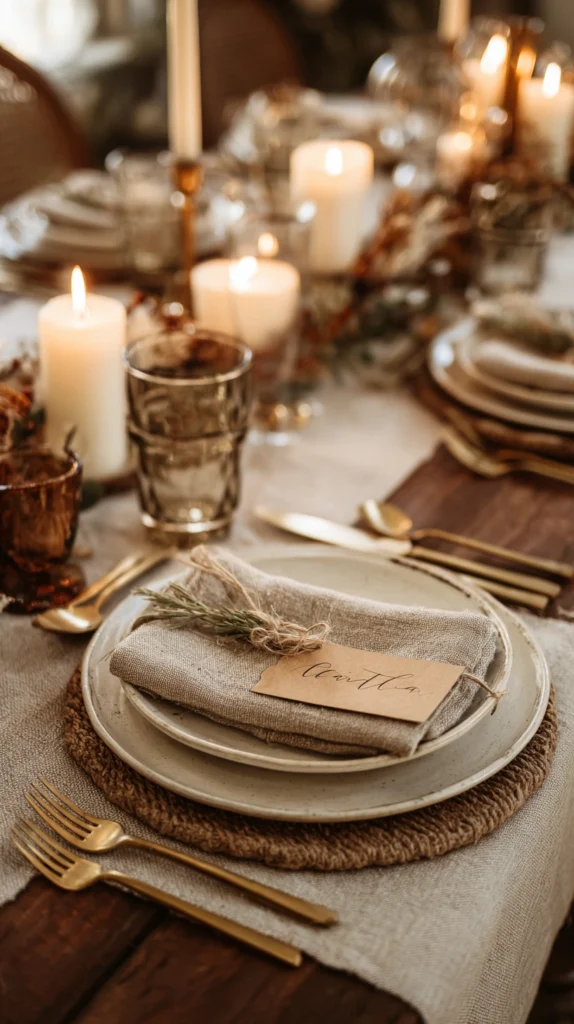
Place cards written by hand on dried leaves, small wood slices, or kraft paper tags, rather than printed formal cards.
My printed, formal place cards:
What felt too polished:
- Formally printed place cards, matching in font and material, at every seat
- A missed opportunity for the specific personal, handmade quality this style particularly values
- A detail that, while functional, did not carry the collected, individual character found throughout the rest of the table
The handwritten natural place card solution:
Why handmade cards on natural materials suit this style specifically:
- Handwriting itself carries a personal, individual quality distinct from uniform printed text
- Natural materials, dried leaves, wood slices, kraft paper, echo the broader material palette found throughout the table
- Inexpensive and achievable using materials often already available or foraged at no cost
- Adds a genuinely personal, thoughtful detail that guests specifically notice and appreciate
Choosing the right material:
Options for place card bases:
- Small, sturdy dried leaves, with names written directly in metallic paint pen
- Thin wood slices, sanded smooth, with names in a simple hand-lettered script
- Kraft paper tags, tied with twine to a napkin or a small sprig of dried botanical
Writing and finishing the cards:
Practical execution:
- A metallic gold or copper paint pen for writing directly on dried leaves or dark wood
- Simple black or brown ink for kraft paper tags, keeping the overall tone muted and natural
- Position each card atop the napkin or plate stack at its corresponding place setting
Cost:
- Foraged leaves or wood slices: $0
- Kraft paper tags and twine: $5-15
- Metallic paint pen: $3-8
My handwritten leaf place cards: Writing each guest’s name directly onto a dried oak leaf in a simple gold paint pen, foraged from the yard at no cost, added a genuinely personal detail that several guests specifically kept as a small keepsake after the meal.
Handwritten Place Card Tips
Practice the lettering on scrap material before writing on the final pieces:
Preparation for a polished result:
- Writing directly on an unfamiliar material, like a leaf or wood slice, behaves differently than writing on paper
- A few practice attempts on scrap material build comfort with how the specific paint pen or ink behaves on that particular surface
- This practice step prevents mistakes on the limited number of actual leaves or wood slices being used for the final cards
- Allow practiced attempts to dry fully before assessing whether the technique and legibility meet expectations
Choose sturdy, intact leaves or materials that will hold up through the meal without crumbling:
Material durability consideration:
- A delicate, overly dried leaf can crack or crumble before or during the meal, undermining the finished presentation
- Select leaves that are dried but still structurally intact, or consider a leaf-shaped die-cut from more durable kraft paper as an alternative
- This durability consideration matters especially if the cards are intended to be moved or handled by guests
- Test a few leaves for sturdiness before committing to this material for the full set of place cards
11. The Layered Floor Cushion or Low Seating Accent
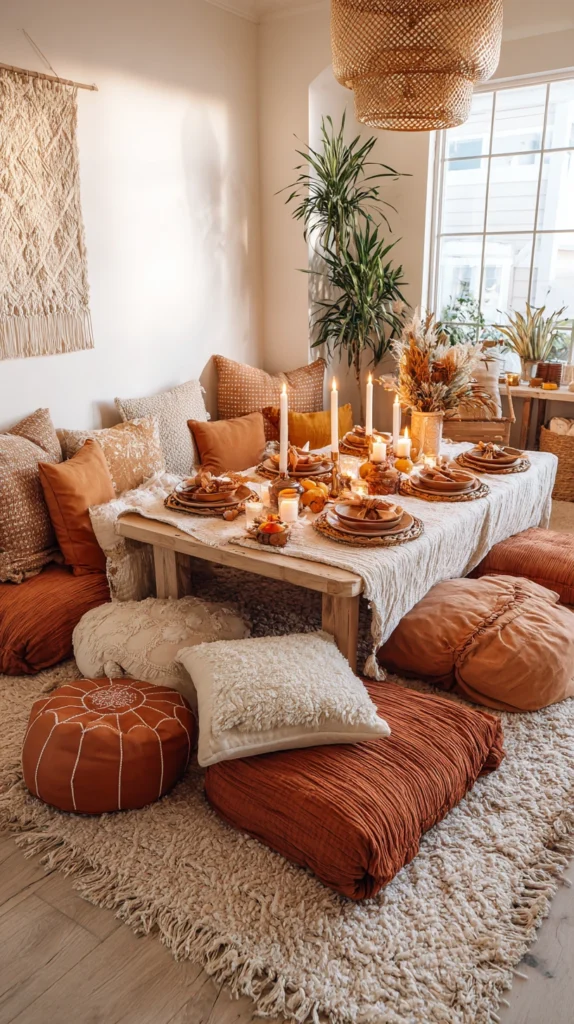
A small area near or adjacent to the main table featuring floor cushions or low seating, extending the boho aesthetic beyond the table itself.
My table-only styling approach:
What felt incomplete:
- Every styling effort concentrated on the table itself, with no consideration of the surrounding space
- A missed opportunity to extend the aesthetic into an adjacent area, reinforcing the overall atmosphere beyond just the tableware
- A dining space that looked considered at the table but ordinary everywhere else in the room
The floor cushion accent solution:
Why extending the style beyond the table itself matters:
- Reinforces the overall boho atmosphere throughout the space, not just in the tableware and centerpiece
- Provides a genuinely useful additional seating or lounging option for a larger gathering
- Floor cushions and low seating are widely associated with bohemian interior style specifically, extending that association naturally into the dining space
- A relatively affordable way to round out the room’s overall styling without any structural changes
Incorporating floor cushions:
Placement and styling approach:
- A small cluster of floor cushions in a corner of the dining room, for children or informal overflow seating
- Layered textiles echoing the same rust, terracotta, and cream palette used at the table
- A low side table or tray nearby, holding drinks or a small dish for anyone using the floor seating
Choosing the right cushions:
Material and style considerations:
- Woven or textured cushion covers, coordinating with the table’s established material palette
- Varied sizes and heights, mirroring the same collected, layered quality found in the candle cluster and centerpiece
- A soft rug or woven mat beneath the cushions, grounding the informal seating area
Cost:
- Floor cushions (per cushion): $20-50
- A small cluster of three to four cushions: $60-200
My floor cushion accent: Adding a small cluster of terracotta and cream floor cushions in the corner of the dining room, near but distinct from the main table, extended the boho atmosphere throughout the entire space and gave the youngest guests a genuinely appealing spot of their own during the meal.
Floor Cushion Tips
Coordinate cushion colors and textures directly with the main table’s established palette:
Whole-room cohesion:
- Cushions in an unrelated color scheme can feel disconnected from the carefully coordinated table nearby
- Drawing directly from the same rust, terracotta, and cream palette used throughout the table ties the entire room together
- This coordination extends the table’s careful styling into a cohesive overall room design
- Reference the table’s specific palette while selecting cushion covers, rather than treating this as an entirely separate decision
Position the cushion area with enough distance to feel like a distinct zone, not an extension of the table itself:
Spatial definition:
- Cushions positioned too close to the main table can feel like an awkward, undersized extension rather than a genuine distinct area
- Some deliberate spacing or a slight change in flooring material reinforces this area as its own considered zone
- This distinction matters for the space to read as an intentional additional feature rather than an afterthought
- Walk through the room’s layout and identify a corner or area with genuine spatial separation from the main table
12. The Woven Wall Hanging Backdrop
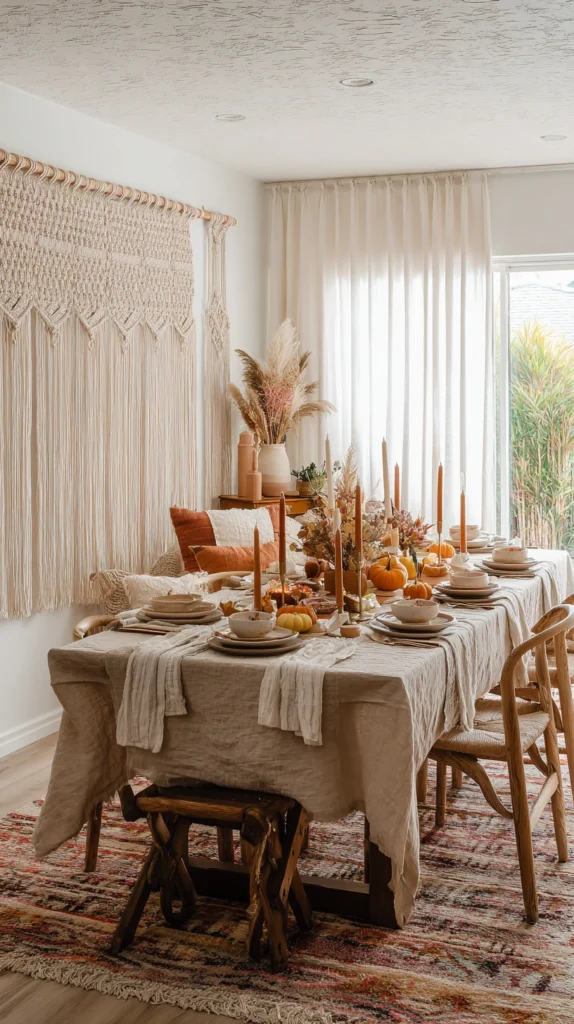
A macrame or woven textile wall hanging, positioned behind the head of the table, creating a considered backdrop for the entire setting.
My missing vertical backdrop element:
What felt like an overlooked opportunity:
- A beautifully styled table with no consideration given to the wall or space directly behind it
- A missed opportunity for the specific vertical dimension a wall hanging backdrop adds to photographs and the overall room composition
- A table that looked complete from directly above but lacked a considered backdrop from a normal seated or standing viewing angle
The woven wall hanging solution:
Why a backdrop specifically elevates the whole table setting:
- Provides a genuine focal backdrop, particularly valuable for photographs taken throughout the gathering
- Macrame and woven wall hangings are among the most recognizable bohemian decor elements, extending the style vertically beyond the table surface itself
- Creates a considered, intentional feel to the entire dining area, not just the table’s horizontal surface
- Relatively affordable and, once purchased, reusable for many future gatherings and as everyday decor between uses
Choosing the right wall hanging:
Style and material considerations:
- A macrame wall hanging in natural, undyed cotton rope, for the most classically bohemian texture
- A woven textile hanging incorporating the same rust, terracotta, and cream tones established throughout the table
- Sized proportionally to the wall space available and the table’s position directly in front of it
Positioning the hanging:
Placement for maximum impact:
- Centered behind the head of the table or the table’s most photographed end
- Hung at a height allowing it to remain visible above the tallest centerpiece elements
- Confirmed to coordinate, rather than compete, with any existing wall color or other nearby decor
Cost:
- Macrame wall hanging: $30-100
- Woven textile hanging: $25-80
My woven wall hanging backdrop: A large macrame wall hanging, positioned behind the head of the table, gave every photograph from that Thanksgiving a considered, intentional backdrop, and the piece has continued serving as everyday decor in that same spot throughout the rest of the year.
Wall Hanging Tips
Size the hanging proportionally to both the wall space and the table’s actual width:
Proportion consideration:
- An undersized hanging can look lost against a large wall or behind a wide table setting
- Measure both the available wall space and the table’s width before selecting the hanging’s dimensions
- A properly scaled piece reads as an intentional design decision rather than an afterthought addition
- When uncertain between two sizes, the larger option often better serves this specific backdrop function
Confirm the hanging’s colors coordinate with, rather than compete against, existing wall color and nearby decor:
Whole-space cohesion:
- A wall hanging in colors clashing with the existing wall paint or nearby furnishings can look disconnected from the rest of the room
- Choose a piece drawing from the table’s established rust, terracotta, and cream palette while also considering the wall’s actual existing color
- This coordination ensures the backdrop enhances rather than competes with the room’s existing overall design
- View the intended hanging against the actual wall, ideally with a sample or photo, before finalizing the purchase
13. The Foraged Pinecone and Seed Pod Scatter
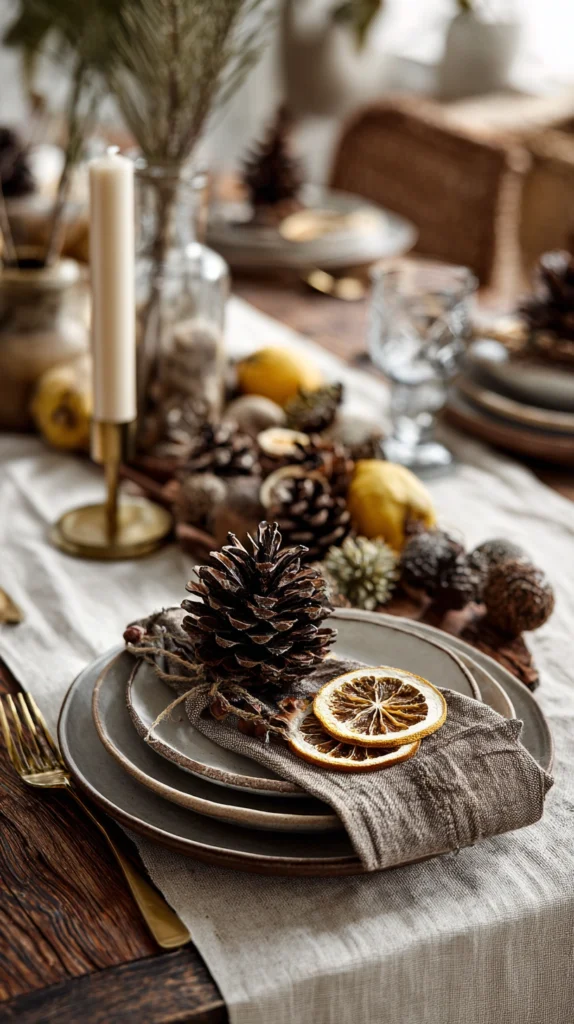
Foraged pinecones, acorns, and seed pods scattered loosely throughout the table, adding genuinely free natural texture and seasonal authenticity.
My purchased-only decor approach:
What felt like a missed opportunity:
- Every table element purchased or thrifted, with no incorporation of genuinely foraged, free natural material
- A missed opportunity for the specific authenticity and seasonal connection foraged elements bring to this style
- A table that, while beautifully sourced, had not yet incorporated the simplest, most literally free material available
The foraged scatter solution:
Why foraged natural material adds genuine value at zero cost:
- Pinecones, acorns, and seed pods carry an authentic, genuinely seasonal quality no purchased decor item can fully replicate
- Completely free, requiring only a walk through a yard or nearby natural area during the appropriate season
- Adds textural variety and a genuine connection to the actual current season, reinforcing the table’s overall natural material story
- A meaningful activity in its own right, particularly enjoyable to complete with children as part of the holiday preparation
Foraging and preparing the materials:
Practical collection approach:
- Gather pinecones, acorns, seed pods, and interesting fallen leaves from a yard, park, or nearby natural area
- Allow foraged material to dry fully indoors for a few days before use, removing any residual moisture or small insects
- A light spray of clear sealant can help preserve more delicate items, like certain leaves, for reuse in future years
Scattering throughout the table:
Placement approach:
- Distribute loosely among the dried botanical centerpiece and along the table runner
- Tuck a few pieces near each place setting, alongside the handwritten place card
- Vary the density of scattered material, avoiding perfectly even distribution in favor of a more natural, organic scatter
Cost:
- Free, requiring only foraging time
My foraged pinecone and seed pod scatter: Gathering pinecones and acorns during a fall walk with the kids, then scattering them loosely throughout the table alongside the dried botanicals, added a genuinely authentic seasonal texture at no cost at all, and the collecting itself became a small, enjoyable pre-holiday tradition.
Foraged Material Tips
Allow foraged material to dry fully indoors before incorporating it into the table setting:
Preparation for cleanliness and safety:
- Freshly foraged pinecones and seed pods can carry residual moisture, sap, or small insects
- Drying indoors for several days, ideally in a well-ventilated area, addresses these concerns before the material touches the table
- This preparation step is simple but should not be skipped, particularly for material that will be near food and place settings
- A light bake at low oven temperature can also help ensure any small insects are addressed before use
Vary the density of scattered material rather than distributing it in a perfectly even pattern:
Natural, organic placement:
- Evenly spaced foraged material throughout the table can look artificially arranged rather than genuinely natural
- Clustering more heavily in some areas while leaving others sparser mirrors how these materials would naturally fall and gather
- This intentional variation in density is what makes the scattered foraged elements feel authentic rather than overly deliberate
- Step back and assess the overall table before finalizing placement, adjusting for a naturally uneven, organic distribution
Choosing Your Boho Thanksgiving Table Elements
By Priority
Foundational layers first:
- Mismatched vintage plate stack (idea 1)
- Layered textile table runner (idea 3)
- Terracotta and rust color palette (idea 5)
Centerpiece and lighting:
- Dried botanical and pampas centerpiece (idea 2)
- Taper candle cluster in varied heights (idea 6)
- Vintage brass and copper accent objects (idea 9)
Small details and personalization:
- Handwritten place card on natural material (idea 10)
- Dried citrus and cinnamon garnish accents (idea 7)
- Foraged pinecone and seed pod scatter (idea 13)
By Effort Level
Lowest effort:
- Terracotta and rust color palette (idea 5)
- Foraged pinecone and seed pod scatter (idea 13)
- Handwritten place card on natural material (idea 10)
Medium effort:
- Woven rattan and natural fiber chargers (idea 4)
- Taper candle cluster in varied heights (idea 6)
- Dried citrus and cinnamon garnish accents (idea 7)
- Woven basket bread and roll presentation (idea 8)
Higher commitment:
- Mismatched vintage plate stack (idea 1)
- Dried botanical and pampas centerpiece (idea 2)
- Layered textile table runner (idea 3)
- Layered floor cushion or low seating accent (idea 11)
- Woven wall hanging backdrop (idea 12)
By Budget
Under $50:
- Terracotta and rust color palette (idea 5)
- Foraged pinecone and seed pod scatter (idea 13)
- Handwritten place card on natural material (idea 10)
- Dried citrus and cinnamon garnish accents (idea 7)
$50-150:
- Mismatched vintage plate stack (idea 1)
- Woven rattan and natural fiber chargers (idea 4)
- Taper candle cluster in varied heights (idea 6)
- Woven basket bread and roll presentation (idea 8)
- Vintage brass and copper accent objects (idea 9)
$150-300:
- Dried botanical and pampas centerpiece (idea 2)
- Layered textile table runner (idea 3)
- Woven wall hanging backdrop (idea 12)
$300+:
- Layered floor cushion or low seating accent, full set (idea 11)
- Full-table combination of every element listed above
Sourcing and Preparation Timeline
Several weeks ahead:
- Begin thrifting for mismatched vintage plates, brass accents, and woven baskets
- Source or dry pampas grass and other botanicals for the centerpiece
One to two weeks ahead:
- Prepare dried citrus slices, allowing several hours of drying time
- Forage and begin drying pinecones, acorns, and seed pods
A few days ahead:
- Write handwritten place cards, allowing ink or paint to dry fully
- Assemble the layered textile runner and confirm the full table layout
Day of:
- Final arrangement of the centerpiece, candle cluster, and scattered accents
- Fresh bread in the woven basket, positioned just before guests arrive
My Complete Boho Thanksgiving Table Journey
What I built across three years:
Year one ($95):
- Mismatched vintage plates, thrifted over several weeks
- Simple dried botanical centerpiece
- Learned that thrifted, collected pieces delivered more character than any new matching set could have
Year two ($140):
- Layered textile runner and woven rattan chargers
- Taper candle cluster and vintage brass accents
- Learned that combining multiple textures mattered more than any single standout purchase
Year three ($70):
- Handwritten leaf place cards and foraged pinecone scatter
- Dried citrus and cinnamon accents throughout
- Learned that the smallest, often free details were consistently the ones guests noticed and mentioned most
Total investment: $305 across three years Most important lesson: This style rewards patience and thrifted sourcing far more than it rewards a single larger purchase Single highest-impact addition across all three years: The mismatched vintage plates from year one, for establishing the collected character every other element built upon
Getting Started This Weekend
Start thrifting, not buying new.
This weekend:
Step 1 — Visit a thrift store or estate sale specifically looking for mismatched vintage plates:
- Focus on warm tones or muted florals rather than a specific matching pattern
- This single sourcing trip often costs less than a fraction of one new matching set
Step 2 — Choose the terracotta and rust color palette before purchasing any additional element:
- This decision guides every subsequent choice, from linens to candles to centerpiece materials
- Write down or photograph the specific colors to reference while sourcing further pieces
Step 3 — Begin drying pampas grass, citrus slices, or foraged material if the season allows:
- These elements require lead time and benefit significantly from early preparation
- Starting this process well before the actual gathering removes pressure from the final week
Step 4 — Layer at least two textile textures for the table’s base, even using items already owned:
- A linen cloth beneath a woven or textured runner delivers immediate tactile improvement
- This layering technique can begin with pieces already in the home, without any new purchase required
My recommendation:
Start with thrifted mismatched plates and the established color palette:
- Both are achievable well in advance and relatively affordable
- Both provide the foundation every other element on this list naturally builds upon
- This starting point ensures every subsequent addition supports rather than competes with the overall collected, layered aesthetic
Set the table with just these foundational elements and notice how different it already feels before adding anything else.
Now go build the Thanksgiving table that finally looks like it belongs to you, gathered rather than matched.
Quick Summary
The 13 boho Thanksgiving table setting ideas:
Foundational layers:
- Mismatched vintage plate stack (idea 1): collected character over a matching set
- Layered textile table runner (idea 3): tactile depth through combined materials
- Woven rattan and natural fiber chargers (idea 4): a consistent, grounding base layer
- Terracotta and rust color palette (idea 5): the warm, muted foundation tying everything together
Centerpiece and lighting:
- Dried botanical and pampas centerpiece (idea 2): long-lasting, reusable natural texture
- Taper candle cluster in varied heights (idea 6): organic warmth over formal symmetry
- Vintage brass and copper accent objects (idea 9): warm metallic layering throughout
Small details and personalization:
- Dried citrus and cinnamon garnish accents (idea 7): fragrant, affordable, seasonal warmth
- Woven basket bread and roll presentation (idea 8): casual, textural function
- Handwritten place card on natural material (idea 10): genuine personal detail
- Foraged pinecone and seed pod scatter (idea 13): authentic seasonal texture at no cost
Extending beyond the table:
- Layered floor cushion or low seating accent (idea 11): the aesthetic extended into the room
- Woven wall hanging backdrop (idea 12): a considered vertical focal point
The universal boho Thanksgiving table rules:
Always:
- Choose mismatched, collected pieces over a single matching set
- Layer multiple textures, natural fibers, dried botanicals, and varied metals throughout
- Commit to a warm, muted color palette rather than bright traditional orange and gold
- Arrange elements asymmetrically rather than in formal, mirrored symmetry
Never:
- Purchase an entire matching dinnerware and decor set from one collection
- Rely on a single flat tablecloth without any additional textile layering
- Default to bright orange and traditional gold without considering the more muted alternative
- Arrange candles, centerpieces, or accents in perfectly even, formal patterns
Common mistakes:
- Buying literal costume-store “boho” props instead of genuinely textural, collected pieces
- Purchasing a brand-new matching set rather than sourcing varied, secondhand pieces over time
- Keeping every table element flat and single-layered rather than building genuine texture
- Polishing vintage metal accents to a bright shine, removing the authentic patina that suits this style
- Overlooking free, foraged natural material in favor of purchased decor alone
Remember: this style rewards patience and thrifted sourcing over new, matched purchases, layering texture matters more than any single standout item, a muted terracotta and rust palette suits the aesthetic more than bright traditional orange, asymmetry and collected imperfection are the goal rather than a compromise, and the best boho Thanksgiving table is the one that looks gathered over years, not assembled in a single shopping trip.