
9 Cozy Thanksgiving Mantel Decor Ideas
Nearly every ounce of Thanksgiving decorating effort goes into the table, the centerpiece, the place settings, the runner, while the mantel a few feet away sits with whatever’s been up there since September.
That’s a genuine missed opportunity. The mantel is exactly where eyes land during the inevitable lulls in dinner conversation, and it’s often the backdrop for every photo taken that day, whether anyone planned for that or not. A table gets seen up close by the people sitting at it. A mantel gets seen by everyone in the room, all day long.
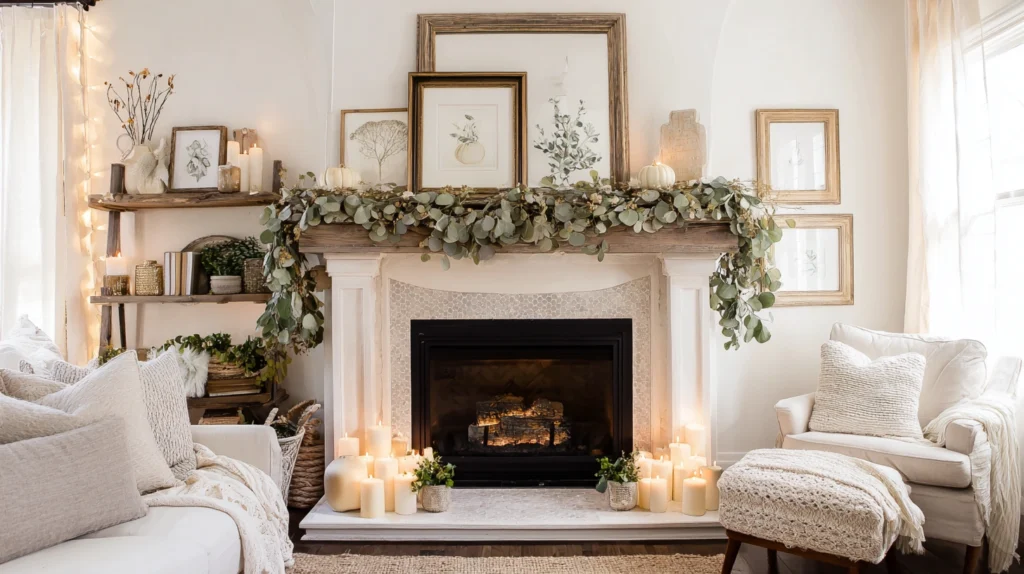
A cozy Thanksgiving mantel doesn’t need to compete with the table for attention. It needs its own simple, warm styling that holds up to being glanced at for hours, not just admired once at the start of the meal.
Here are 9 ways to give the mantel real Thanksgiving presence, without repeating whatever’s already happening on the dining table.
Why the mantel deserves separate styling attention from the table itself
It’s a fundamentally different kind of surface, seen differently and for longer.
- It’s visible from across the room for the entire day, not just during the meal itself, making its styling relevant for hours longer than the table’s
- It typically sits at a height that draws the eye upward, meaning taller, more dramatic elements work here in ways that would overwhelm a table setting
- Because it’s not competing with food and place settings for space, it can carry more textural and decorative complexity than the table has room for
Once the mantel is treated as its own distinct styling project, it stops functioning as leftover space and starts contributing real warmth to the whole room.
1. A Garland Built From Dried Citrus and Cinnamon Sticks

Bringing genuine seasonal fragrance into the mantel’s visual display.
Build it:
- Dried orange and lemon slices strung together with twine, alternating with whole cinnamon sticks tied in small bundles
- Draped loosely along the mantel’s length, allowed to dip slightly rather than pulled taut, for a more natural, relaxed shape
- Small sprigs of dried rosemary or bay leaf tucked in periodically for additional texture and scent
Why this garland style suits a mantel better than a traditional gourd-and-leaf arrangement:
- The dried citrus and warm spice combination adds genuine fragrance to the room, something a purely visual garland doesn’t provide
- It’s considerably lighter and less visually dense than a traditional harvest garland, suiting a mantel that will also need to hold other decorative elements
- It can be made entirely at home with basic dehydrating or oven-drying techniques, keeping the cost low relative to a purchased equivalent
Why the drying process for the citrus slices matters for how long the finished garland actually holds up:
Citrus slices that aren’t dried thoroughly enough can develop mold within days of being strung up, particularly in a warm, humid kitchen environment near where cooking is happening throughout the day. Slicing the citrus thin and drying it fully, either in a low oven for several hours or a dehydrator overnight, until the slices are genuinely brittle rather than merely dry to the touch, prevents this common problem and ensures the garland lasts through the full holiday display period.
Cost breakdown: Citrus, cinnamon sticks, and twine for a full mantel-length garland run $10 to $20 if made at home.
2. Layered Candlesticks in Varying Heights Along the Mantel’s Length

Using height variation to create genuine visual rhythm across a horizontal surface.
Build it:
- Five to seven candlesticks in a range of heights, grouped in small clusters rather than spaced in one perfectly even row
- A consistent candle color, like ivory or a warm cream, keeping the focus on the height variation rather than introducing additional color complexity
- Positioned with the tallest candlesticks toward the back, allowing shorter ones to remain visible in front rather than blocked from view
Why varied candlestick heights suit the mantel’s specific proportions particularly well:
- The mantel’s long, narrow surface benefits from the same kind of height rhythm that works on a bookshelf or console table, translated to this specific location
- Grouped clusters, rather than one long even row, create a more organic, collected feeling than a rigidly uniform arrangement
- Lit in the evening, the varied heights cast genuinely interesting layered shadows and light patterns across the wall behind the mantel
Why grouping candlesticks in clusters rather than a single spaced-out row produces a more successful visual result:
An evenly spaced single row of candlesticks down the entire mantel length can look more like a formulaic display than a genuinely curated one, since it lacks the visual give and take found in more thoughtfully arranged groupings. Clustering three or four together at one end, with a smaller cluster or a single taller candlestick anchoring the other end, creates the same kind of asymmetrical balance that works well in shelf and console table styling.
Cost breakdown: A set of candlesticks in varying heights runs $30 to $70 depending on material and quantity.
3. A Row of Framed Family Photos Interspersed With Greenery

Adding a personal layer to the mantel that has nothing to do with harvest imagery at all.
Build it:
- A handful of framed family photos, ideally a mix of recent and older images, arranged along the mantel’s surface
- Small sprigs of fresh or dried greenery tucked between and slightly in front of the frames, softening the display
- Frames varied slightly in size and style rather than uniformly matched, for a more collected, lived-in feeling
Why personal photography adds a dimension a purely seasonal display doesn’t achieve:
- It ties the mantel’s styling directly to the day’s actual meaning, gratitude and family connection, rather than relying entirely on generic autumn visual cues
- It gives guests something genuinely engaging to look at and discuss during the day, rather than purely decorative objects with no personal story behind them
- Mixing older and more recent photos together adds a sense of continuity and history that resonates particularly well with a holiday centered on family
Why varying the frame sizes and styles produces a warmer result than a uniformly matched set:
A perfectly matched set of identical frames can read as more staged and less genuinely personal than a slightly varied collection, since real family photo displays that accumulate naturally over years rarely arrive in one uniform set. Allowing some variation in frame style and size, while keeping a loose color thread like all-wood or all-black frames, achieves a display that feels authentically collected rather than purchased as a single coordinated unit.
Cost breakdown: A varied set of frames runs $30 to $80 depending on quantity and material, using photos already on hand.
4. A Textured Wool or Knit Throw Draped Along One End

Bringing a soft, tactile element into what’s otherwise typically a hard-surfaced display.
Build it:
- A chunky knit or wool throw casually draped over one end of the mantel, allowing it to spill slightly down the front edge
- A warm, neutral color chosen to complement rather than compete with the rest of the mantel’s styling
- Positioned so the throw is genuinely usable, in case anyone wants to grab it during the day for extra warmth
Why a textile addition matters on a surface that’s usually populated entirely with hard objects:
- Mantels are typically styled with candles, frames, and decorative objects, all hard-surfaced materials that can start to feel visually flat without some textural contrast
- A draped throw introduces genuine softness and warmth, both visually and literally, to a display that would otherwise be entirely rigid
- It suggests function beyond pure decoration, reinforcing the day’s overall sense of coziness and comfort rather than purely visual styling
Why positioning the throw asymmetrically, at just one end rather than centered or draped evenly, produces a more natural look:
A throw draped perfectly symmetrically or centered on the mantel can look overly staged, almost as if it were placed there purely for a photograph rather than genuinely available for anyone to use. Letting it spill more naturally from just one end, as though someone recently set it down after actually using it, gives the display a more lived-in, genuinely cozy quality that suits the day’s overall relaxed atmosphere.
Cost breakdown: A quality chunky knit or wool throw runs $30 to $70 depending on size and material.
5. A Cluster of Dried Wheat and Pampas Grass in Simple Vases

Introducing height and movement without relying on traditional gourds or pumpkins.
Build it:
- Two or three vases of varying height, each holding either dried wheat stalks or pampas grass plumes
- Positioned toward one end of the mantel, leaving the rest of the surface open for other elements like candles or photos
- Left in place for the full season, since dried materials like these hold their shape and color for months without needing replacement
Why dried grasses and wheat suit a modern, cozy mantel display better than the traditional harvest default:
- The soft, textural movement of pampas grass or wheat stalks adds genuine visual interest without leaning on the same gourd-and-pumpkin imagery found everywhere else during the season
- It requires zero ongoing maintenance, unlike fresh flowers that would need regular water changes and eventually wilt
- The neutral, muted tones of dried grasses complement almost any existing mantel color scheme without requiring careful color coordination
Why keeping this element confined to one end of the mantel, rather than spreading it across the whole surface, improves the overall composition:
Dried grasses and wheat have a naturally airy, spreading quality that can visually take over an entire mantel if used too liberally, leaving no room for other elements like candles or personal photos. Concentrating this display to one end, treating it as one component of a larger, more varied arrangement rather than the mantel’s sole decorative feature, keeps the overall display balanced and prevents any single element from dominating.
Cost breakdown: Dried wheat and pampas grass stems run $15 to $35 depending on quantity, with vases adding $10 to $30 if not already owned.
6. Small Pumpkins or Gourds Used Sparingly as Accents, Not the Main Feature

Incorporating the season’s most obvious symbol in a genuinely restrained way.
Build it:
- Two or three small pumpkins or gourds, rather than a large cluster, placed at specific points along the mantel rather than grouped together
- A mix of colors and textures within the small selection, like one white pumpkin, one traditional orange, and one warty or ridged variety
- Positioned near, but not directly touching, other elements like candlesticks or photo frames, giving each piece its own visual space
Why using this traditional element sparingly, rather than avoiding it entirely, can strike the right balance:
- A small, restrained selection still honors the season’s most recognizable symbol without recreating the dense, overflowing look often associated with a traditional harvest display
- Distributing just a few pieces at different points along the mantel, rather than clustering them all together, prevents this single element from visually dominating the whole display
- It offers a middle ground for anyone wanting a cozy mantel that still feels recognizably tied to the holiday, without needing to fully commit to either a heavily traditional or a completely non-traditional aesthetic
Why spacing individual pumpkins apart rather than grouping them together changes how the whole display reads:
A tight cluster of several pumpkins together immediately reads as the traditional harvest display default, while the same number of pumpkins distributed individually throughout a broader, more varied mantel arrangement reads as simply one considered element among several, rather than the display’s entire premise. This small spacing decision meaningfully shifts how traditional or restrained the finished mantel actually feels.
Cost breakdown: A small selection of pumpkins and gourds runs $8 to $20 depending on variety and size.
7. A Single Piece of Art or a Large Mirror as the Mantel’s Anchor
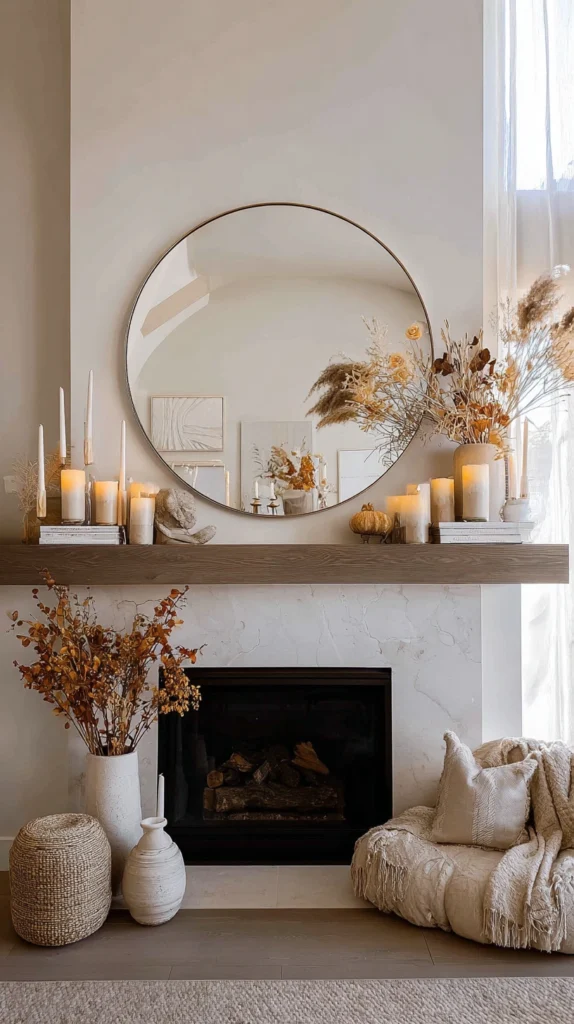
Using the wall space above the mantel as a genuine design feature, not just an afterthought.
Build it:
- One large piece of art or a substantial mirror hung or leaned above the mantel, sized appropriately to the wall space available
- Smaller seasonal elements, like candles or a small garland, arranged on the mantel surface beneath it, complementing rather than competing with the piece above
- The art or mirror left in place year-round if desired, with only the mantel surface itself receiving seasonal updates
Why anchoring the space above the mantel matters as much as the surface styling itself:
- The wall space directly above a mantel is one of the most visually prominent spots in many living rooms, and leaving it bare or poorly considered undercuts even excellent surface styling below it
- A large mirror specifically reflects and amplifies whatever warm lighting is used on the mantel surface, doubling the visual impact of candles or string lights
- It gives the whole display a genuine sense of completion, rather than the mantel surface styling existing in isolation beneath an unconsidered blank wall
Why keeping this anchor piece consistent year-round, rather than swapping it seasonally, often produces a better overall result:
Constantly changing the large art or mirror above the mantel for every season or holiday can become an expensive and logistically difficult habit to maintain consistently. Choosing one substantial, genuinely loved piece to leave in place throughout the year, then updating only the smaller, more affordable surface-level styling seasonally, achieves a fresh seasonal look without requiring the larger anchor piece to change along with it.
Cost breakdown: A large piece of art or a substantial mirror runs $80 to $300 depending on size, though this is often a one-time investment rather than a recurring seasonal cost.
8. Warm String Lights Woven Through the Mantel’s Other Elements

Adding a layer of evening ambiance that complements rather than competes with daytime styling.
Build it:
- A single strand of warm white string lights woven loosely among the garland, candlesticks, or other elements already on the mantel
- Battery-operated lights considered if there’s no convenient outlet near the mantel, avoiding a visible cord running across the display
- Turned on specifically during the evening portion of the gathering, adding warmth as natural light fades
Why string lights add value beyond what daytime styling alone achieves:
- Many Thanksgiving gatherings extend into the evening, and a mantel styled only for daytime viewing can feel comparatively flat once the sun goes down
- Woven subtly among other elements rather than displayed as an obvious standalone strand, string lights add warmth without looking like a separate decoration layered on top of the seasonal display
- It’s one of the more affordable additions on this list relative to how much it changes the mantel’s appearance after dark
Why choosing battery-operated lights specifically solves a common installation problem for this particular location:
Mantels are frequently positioned away from a convenient electrical outlet, and running a visible cord across the display or down the wall can undercut the coziness the lighting was meant to add in the first place. Battery-operated string lights, now widely available and often just as warm and effective as plugged-in versions, solve this specific logistical problem cleanly, allowing the lights to be woven naturally through the display without any visible cord management issue.
Cost breakdown: Battery-operated warm white string lights run $15 to $30 per strand.
9. A Consistent Color Thread Connecting the Mantel to the Dining Table

Tying the two separate displays together without directly repeating either one.
Build it:
- One shared color or material, like the same dried wheat used sparingly on both the mantel and the dining table’s centerpiece, or a matching candle tone used in both locations
- The rest of each display kept genuinely distinct, avoiding an attempt to fully match the two surfaces
- Considered at the very start of planning both displays together, rather than styling the mantel and table as two entirely separate, unrelated projects
Why a shared thread between these two surfaces improves the whole room’s overall cohesion:
- Since both the mantel and the table are visible in the same room simultaneously, a completely unrelated color story between them can make the space feel like two separate, competing projects rather than one considered whole
- A single shared element, rather than a fully matched pairing, achieves cohesion without requiring the mantel to simply repeat the table’s styling
- It reflects the same kind of thoughtful coordination found in well-designed rooms generally, where different surfaces relate to each other without needing to be identical
Why planning both displays together from the start produces a better result than styling the mantel as an afterthought once the table is finished:
Styling the dining table completely first and only then turning attention to the mantel often results in the mantel either awkwardly repeating the table’s exact look or feeling entirely disconnected from it, since the two projects were approached independently rather than as part of one cohesive plan. Deciding on the shared connecting element, whether a specific dried material or a candle tone, before starting either display in earnest, ensures both surfaces feel like part of the same considered room from the very beginning.
Cost breakdown: No additional cost beyond whatever materials are already being purchased for each individual display, since this is a coordination decision rather than a new purchase.
Getting started this weekend
You don’t need every idea from this list applied before the mantel starts feeling genuinely cozy.
- Start with the varied-height candlesticks and one seasonal element, like dried wheat or a few sparingly placed pumpkins, before adding anything more elaborate
- Add family photos and a draped throw once the base styling feels settled
- Save the string lights and the anchor art or mirror decision for a dedicated second pass, since these often benefit from being planned alongside the room’s longer-term, not just seasonal, styling
Most mantels that feel genuinely cozy for Thanksgiving got there by being treated as their own distinct project, styled with the same intention as the table rather than left as whatever’s already been sitting there since the last season changed.
Budget reality
A cozy Thanksgiving mantel can be styled at nearly any budget level.
- Under $30: Homemade dried citrus garland, a small sparing selection of pumpkins, battery-operated string lights
- $30-80: Varied-height candlesticks, a draped throw, dried wheat or pampas grass in simple vases
- $80-150: A varied frame collection for family photos, combined with candlesticks and seasonal accents
- $150+: A large anchor piece of art or a mirror above the mantel, combined with a full seasonal surface styling refresh
Most of the cozy feeling comes from height variation, texture, and a personal touch, not from the total amount spent on any single element.
What actually makes a Thanksgiving mantel feel cozy rather than just seasonal
It was never really about recreating the same harvest imagery found on every other surface in the house that time of year.
It’s the candlesticks staggered in height instead of lined up identically, the family photo tucked in among the greenery, the throw draped like someone actually used it instead of arranged purely for a photograph.
Give the mantel its own distinct styling project, separate from whatever’s happening at the table, and it ends up contributing genuine warmth to the room all day long, not just during the one meal everyone’s actually looking at the table instead.